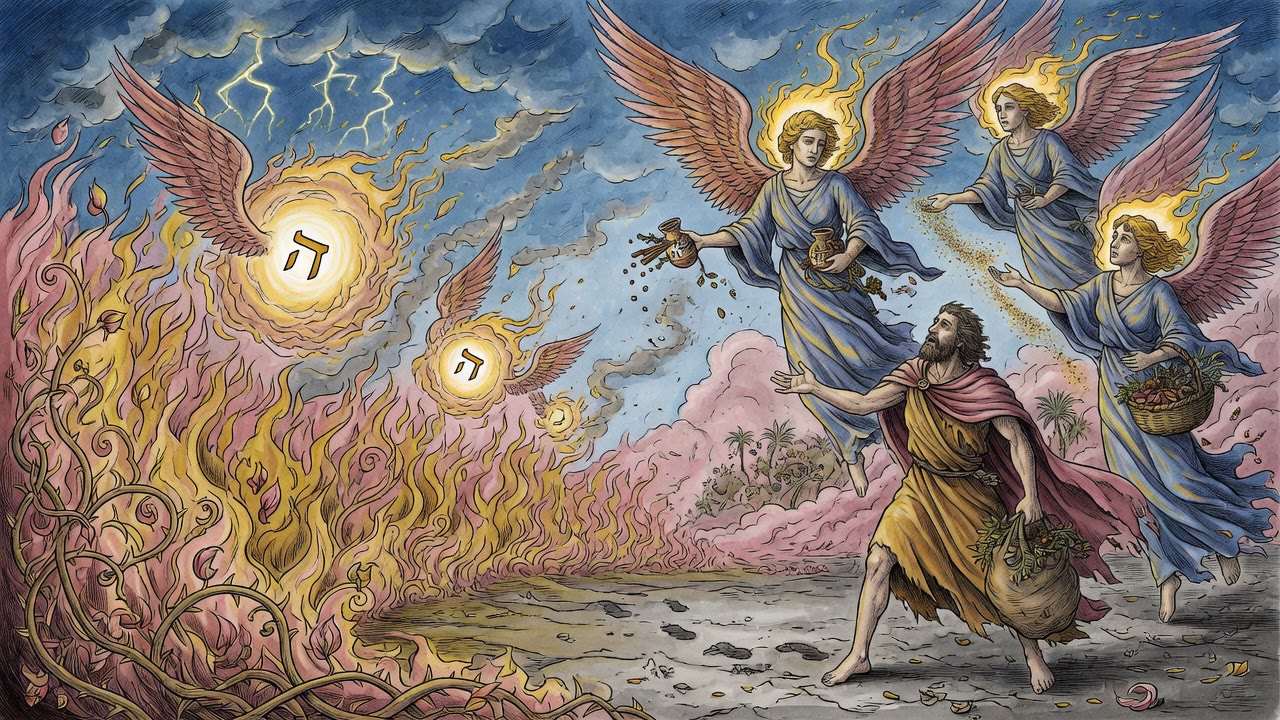
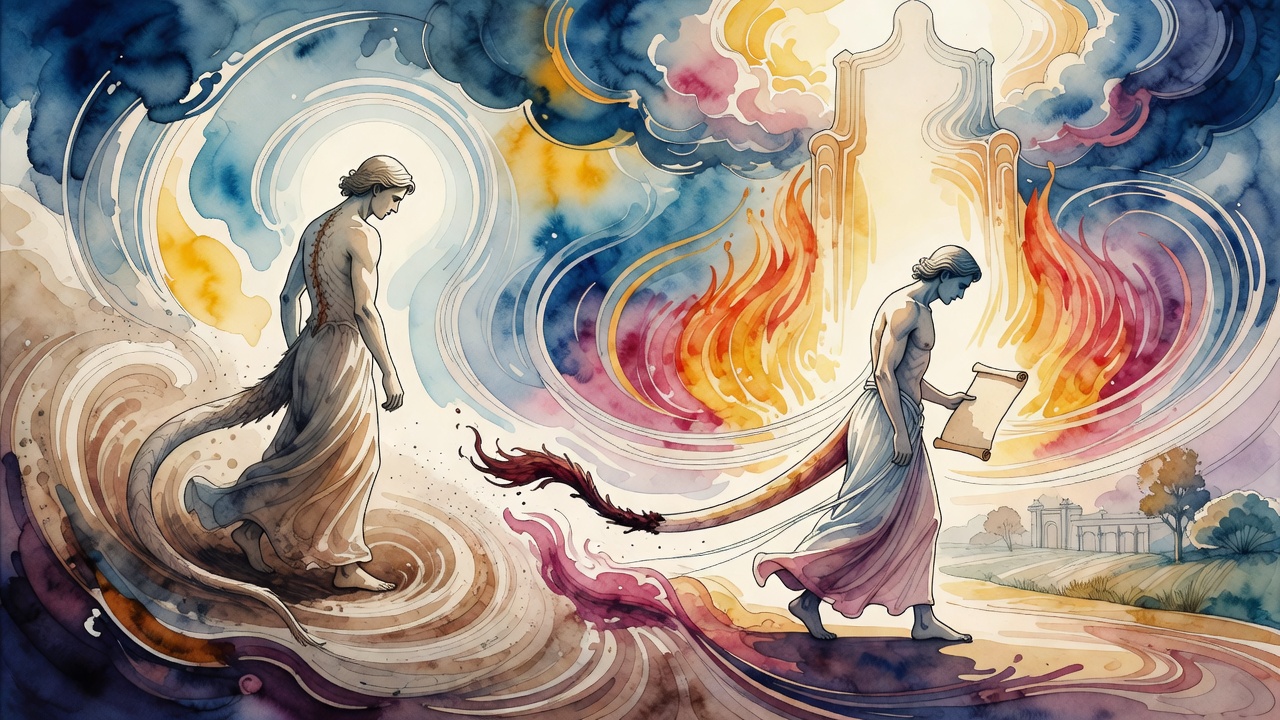
God Declares Adam Has Become as One of Us
After the fruit, God speaks of Adam as one of us, angels ask if the edict is eternal, and exile bars the road to the tree of life.
Table of Contents
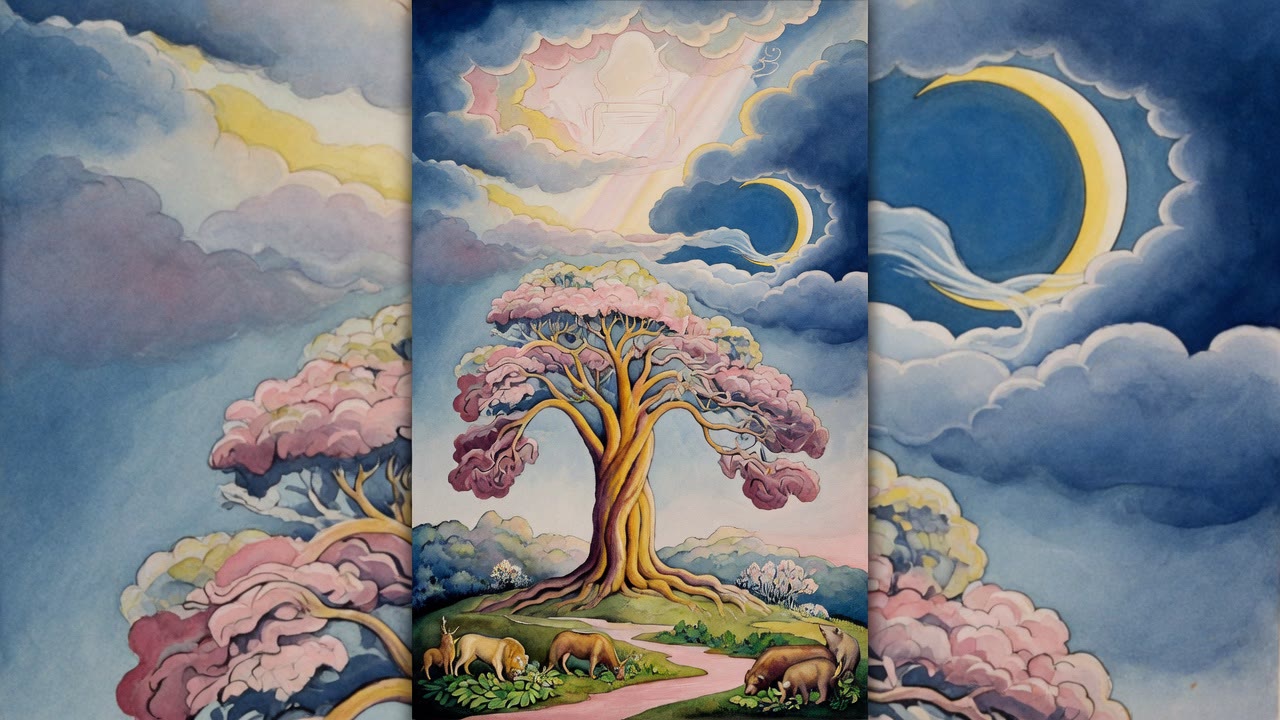 Click for full size
The Sentence After the Fruit
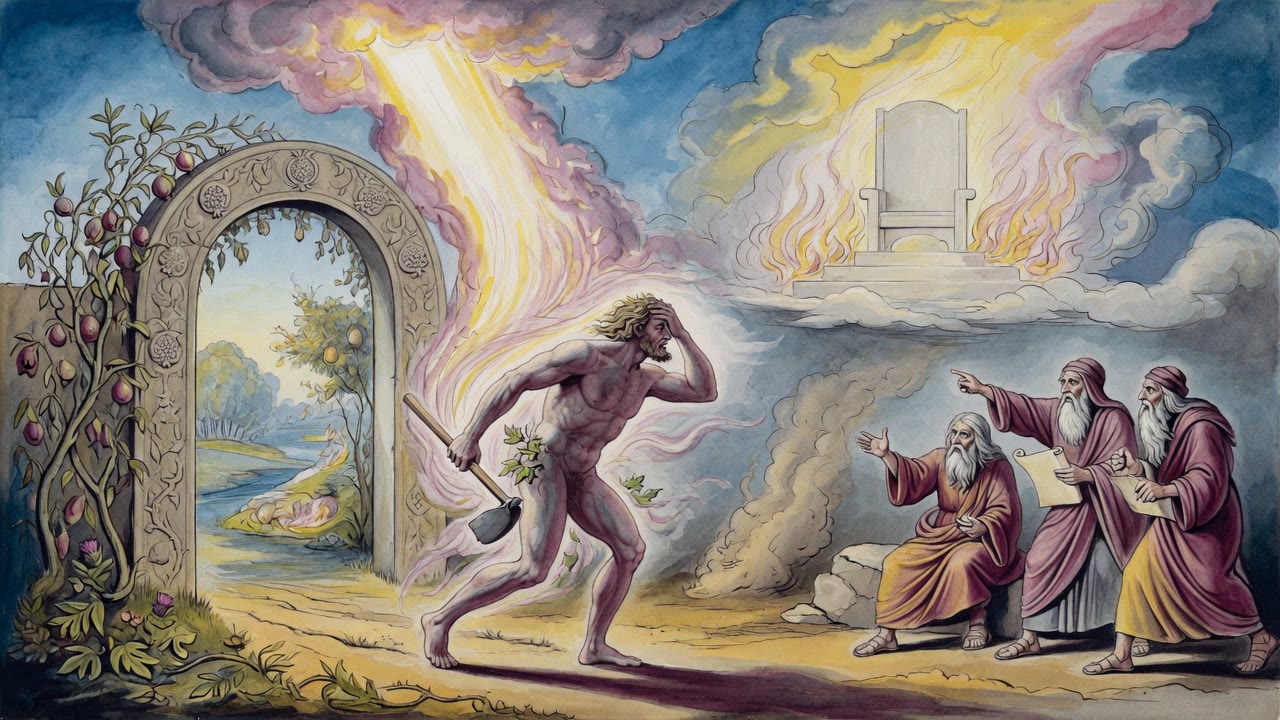
The garden still held the smell of crushed fruit when God spoke the line that has never stopped ringing. Behold, Adam has become as one of us, to know good and evil (Genesis 3:22). One of us. The plural sits in the air like a second sun. Who stands in that us when the first human has just learned shame by tasting it?
Adam's skin knew wind differently now. Eve's hands remembered the branch. The tree of life still stood within reach, a second hunger waiting behind the first. Knowledge had opened. Immortality in rebellion would have locked the wound open forever.
God's next breath closed a road. Lest he put forth his hand and take also from the tree of life, and eat, and live forever. Exile was not only punishment. It was triage.
Who Hears the Plural
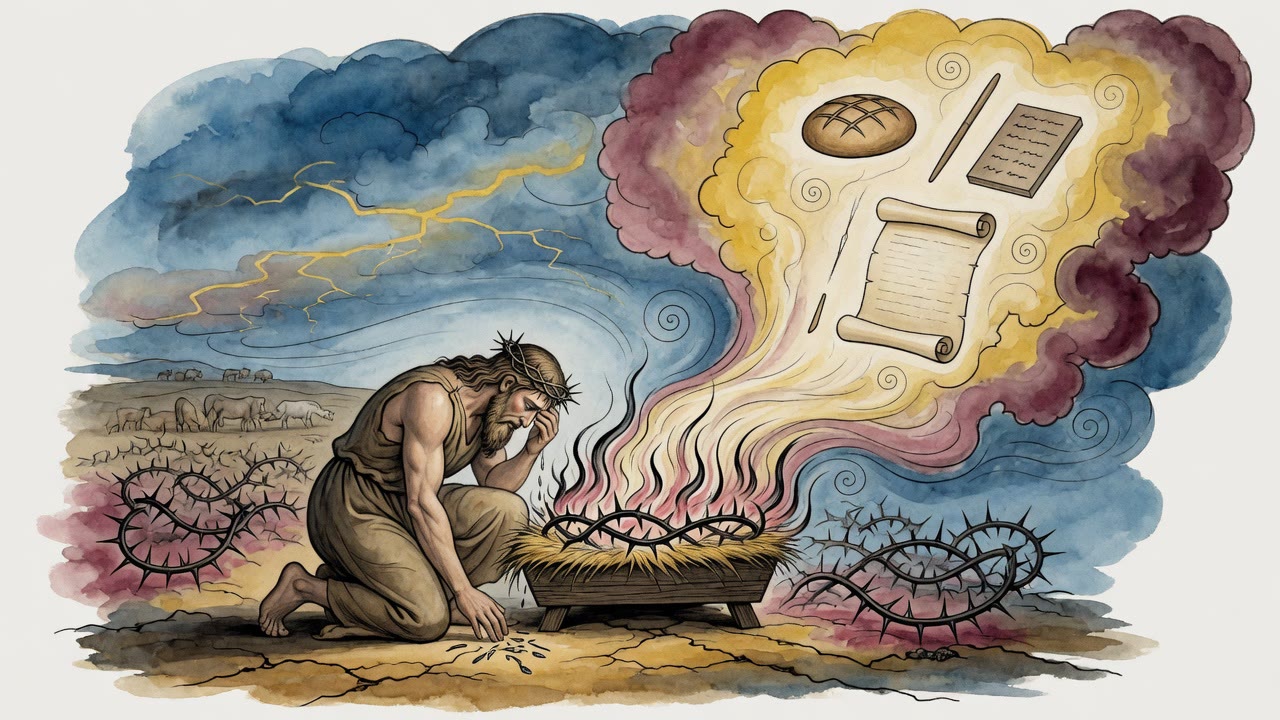
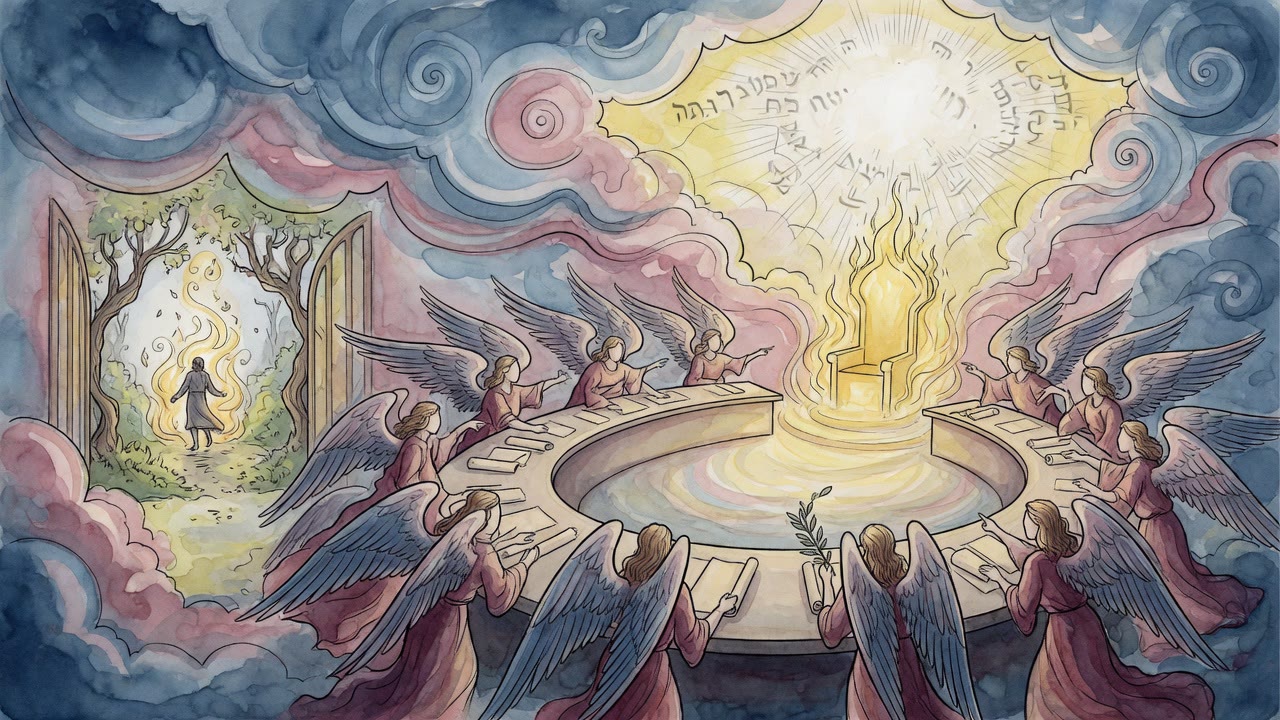
Philo's circle of readers worried the question of address. To whom does the Holy One speak when He says one of us? Attributes of wisdom? A court of powers? The midrash hears holy speech against the backdrop of Daniel's vision, a holy one speaking harsh edicts, thorns and thistles named as the ground's new answer to human sweat (Genesis 3:18).
Akila the proselyte heard in a related verse an innermost one, and teachers applied that inwardness to Adam himself, whose station had been closer to God than the ministering angels. The man who fell had not fallen from mediocrity. He had fallen from nearness.
An angel's astonishment surfaces in the midrashic weave. Until when will the eternal vision run? Is the edict on Adam forever? Will his transgression leave him desolate in the grave without end? Will he and his host be given forever to the trampling of the angel of death?
Evening-Morning Without Simple Dawn
The answer arrives in a strange clock. Until evening-morning, two thousand three hundred. Teachers puzzle the joined words. Evening is not morning. Morning is not evening. But the verse yokes them, as if judgment and mercy share one compound hour.
When the morning of the idolaters becomes evening, and the evening of Israel becomes morning, the ledger of trampling can turn. The midrash will not let the first exile be the only chapter. It also will not pretend the cherubim and the turning sword are stage props.
Adam walks east of Eden with a body that knows good and evil and a calendar that does not yet know relief. The us that named him still surrounds him as judge, not as dining partners at the second tree.
The Road the Sword Keeps
East of the garden, every sunrise is a reminder that knowledge arrived before readiness. Adam can name beasts and now he can name regret. Eve can still hear the question that undid a day. Neither can stroll back for the fruit that would freeze their story mid-fall.
The plural word one of us remains a scar of honor and danger. To be addressed in the language of the divine court is glory. To need exile afterward is the cost of grabbing that likeness by theft rather than by obedience.
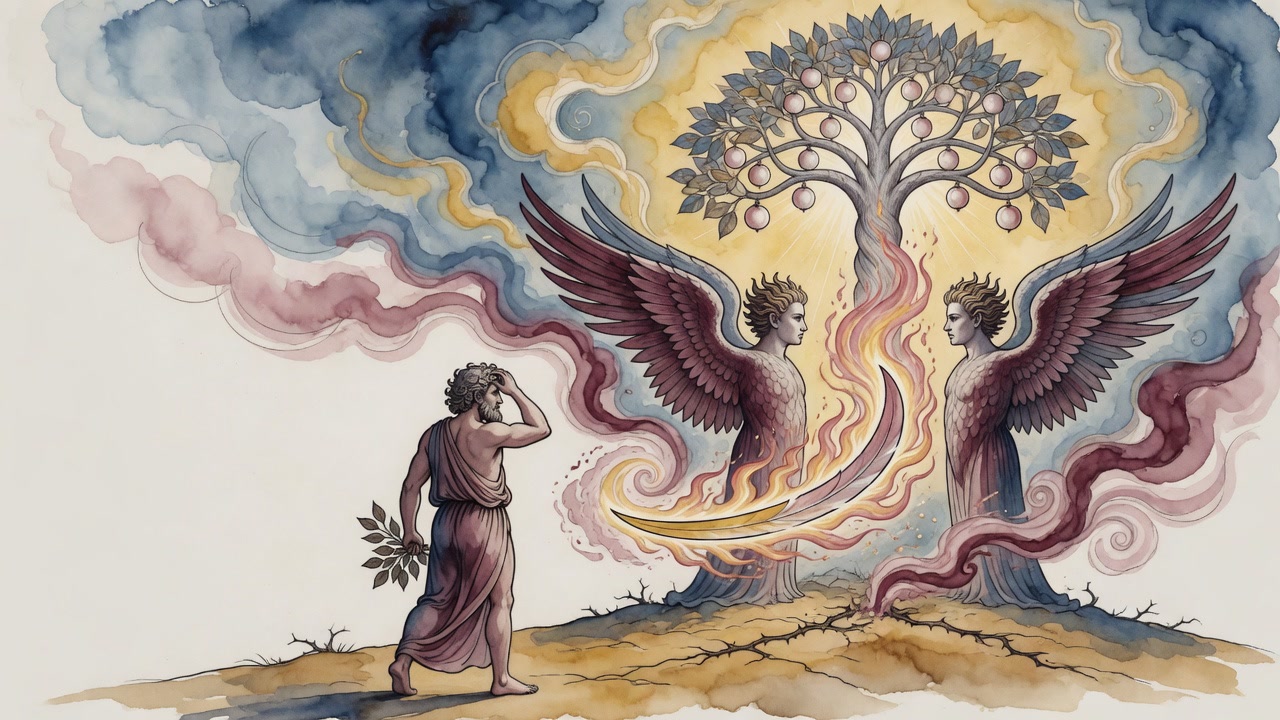
Angels who once watched Adam's inward station now watch a sword turn every way to keep the tree of life. The first man who was nearer than angels becomes the first man who must live by sweat under a sky that still belongs to God but no longer feels like home.
Night on the first exile is long. The ledger of evening-morning has started. Somewhere behind a wall of fire, leaves still move on a tree no human hand may claim until the compound hour completes its strange arithmetic.
Eve sat with her back to a tree that was not the forbidden one and tried to slow her breathing. Knowledge had not arrived as a library. It arrived as a split. She could see her own nakedness and Adam's, and she could see that seeing itself had a cost. Leaves stitched into coverings felt like a child's answer to a cosmic problem, and still they were all the craft they had.
Adam listened for the sound of God walking as He had before. The sound came differently now, or his ears did. The plural us lodged in him like a seed he could not spit out. Was he elevated or indicted by that grammar? Both, the exile would teach. Likeness without obedience is a fire that lights the house and then burns the roof.
The cherubim took their posts without ceremony Adam could understand. Wings. Heat. A sword that would not hold still. The tree of life continued its quiet work of being unattainable. That unattainability was mercy wearing a harsh face. Forever in a broken knowing would have been a longer hell than sweat and thorns.
Eastward steps left prints in dust that had never before recorded shame. Behind them, Eden did not vanish. It became a direction one could no longer travel. Ahead, history began with a man still called almost divine and newly called mortal under law.
← All myths