Adam Wept When Thorns Rose and Raziel Came
After the curse, Adam feared eating from the same manger as cattle. Heaven gave him bread, a book of secrets, and the first craft of writing.
Table of Contents
 Click for full size
The Sweat on His Face
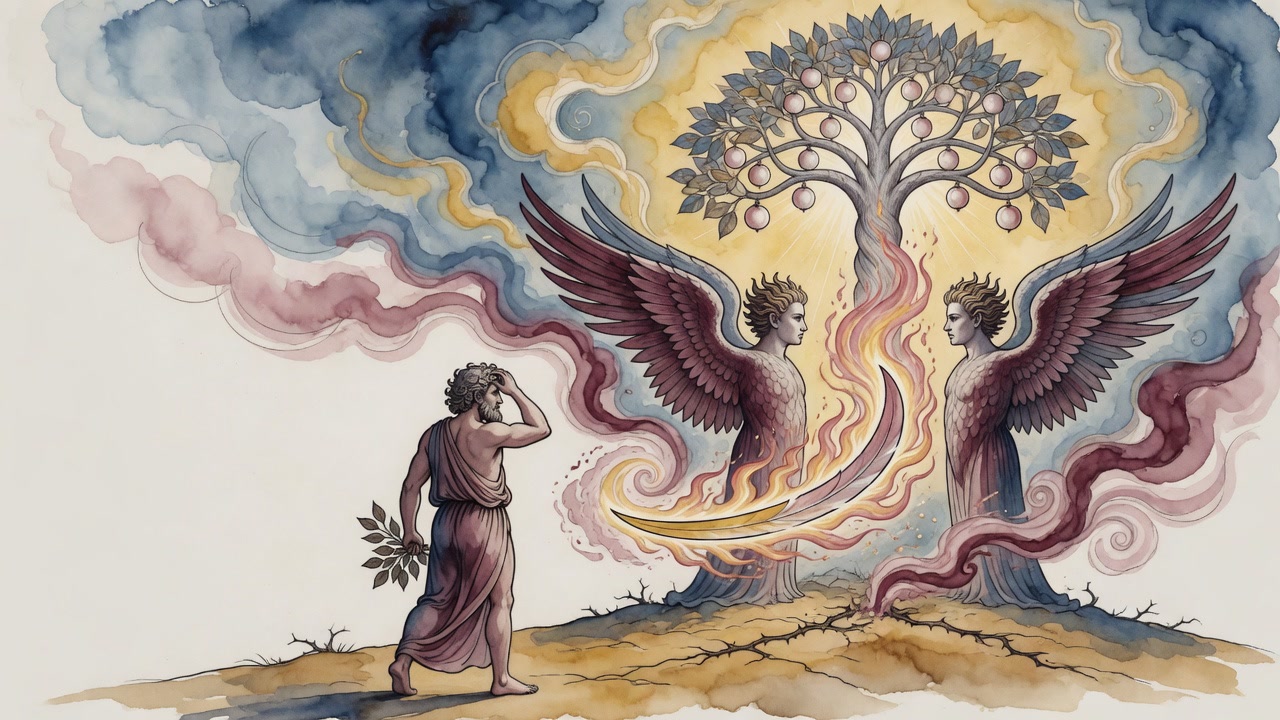
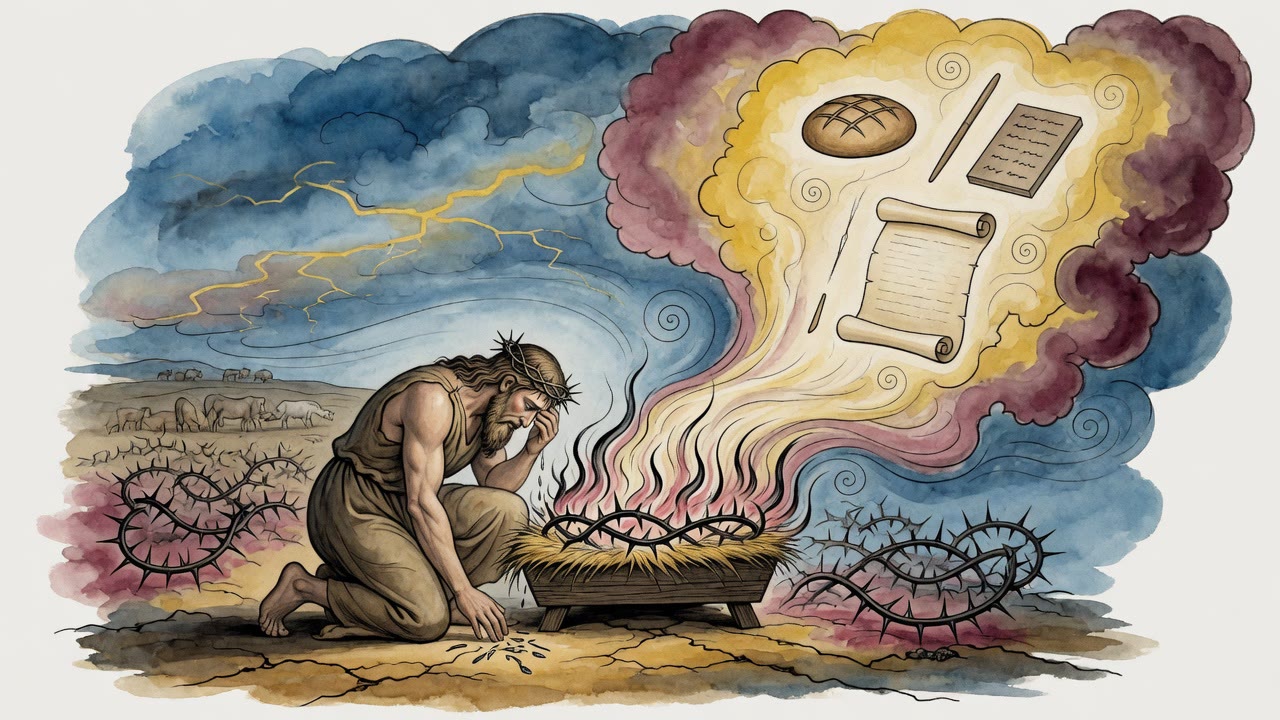
Adam heard the ground sentenced and felt the verdict in his own skin. "Thorns and thistles shall it bring forth," the Holy One said, and sweat broke out on Adam's face before any plow had cut a furrow. He cried out, "What! Shall I and my cattle eat from the same manger?" Hunger and dignity collided in one sentence. The first man did not mourn abstract exile. He mourned equal footing with beasts at a trough of weeds.
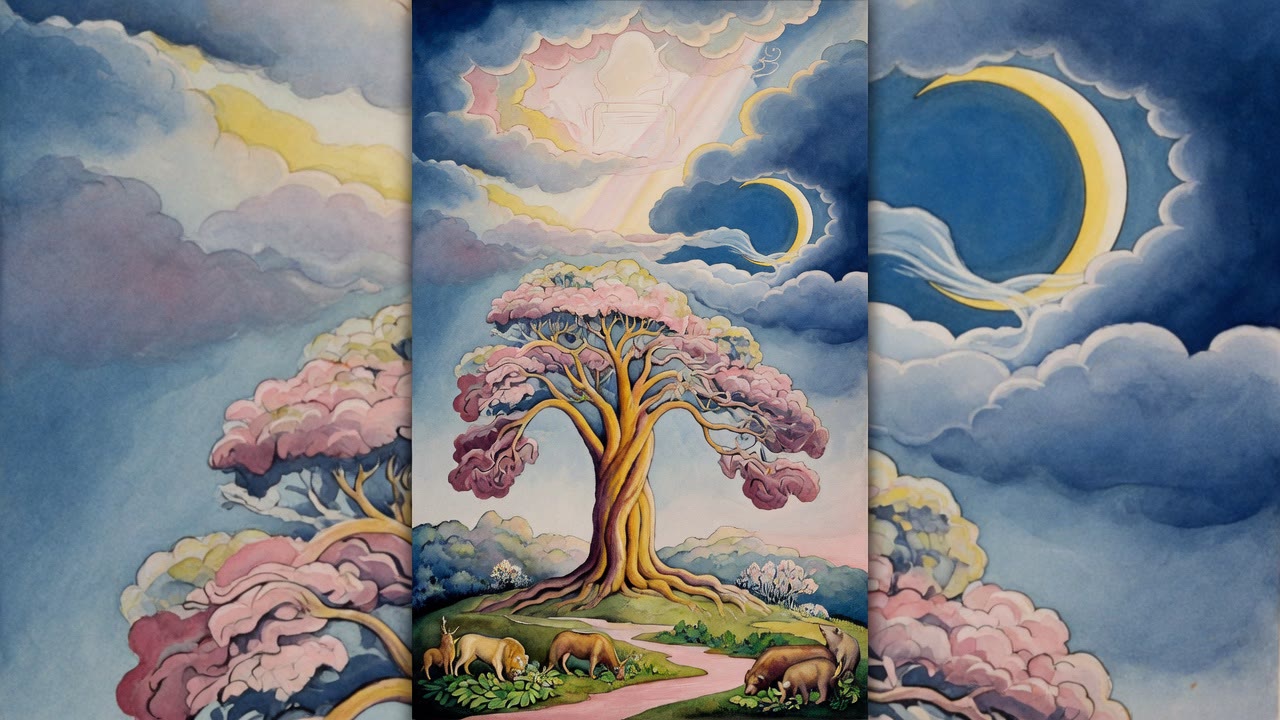
God answered the cry without restoring the garden. "In view of the sweat of thy face, thou shalt eat bread." Bread, not the easy fruit of trees that once offered themselves. Labor would lift him above the manger. The mercy was hard, and it was real. Around him creation grieved. Heavens mourned. Sun and stars cried out. Angels felt sorrow for the transgression that had torn the first pair out of ease. One voice refused the mourning. The moon laughed. God dimmed her light and set her to wax and wane, grow old and be reborn, a cycle of shame for a cold delight in human fall. Clothes for Adam and Eve came from the serpent's own skin, a garment stitched from the tempter's body, worn on the road out of paradise.
Fire Around a New Soul
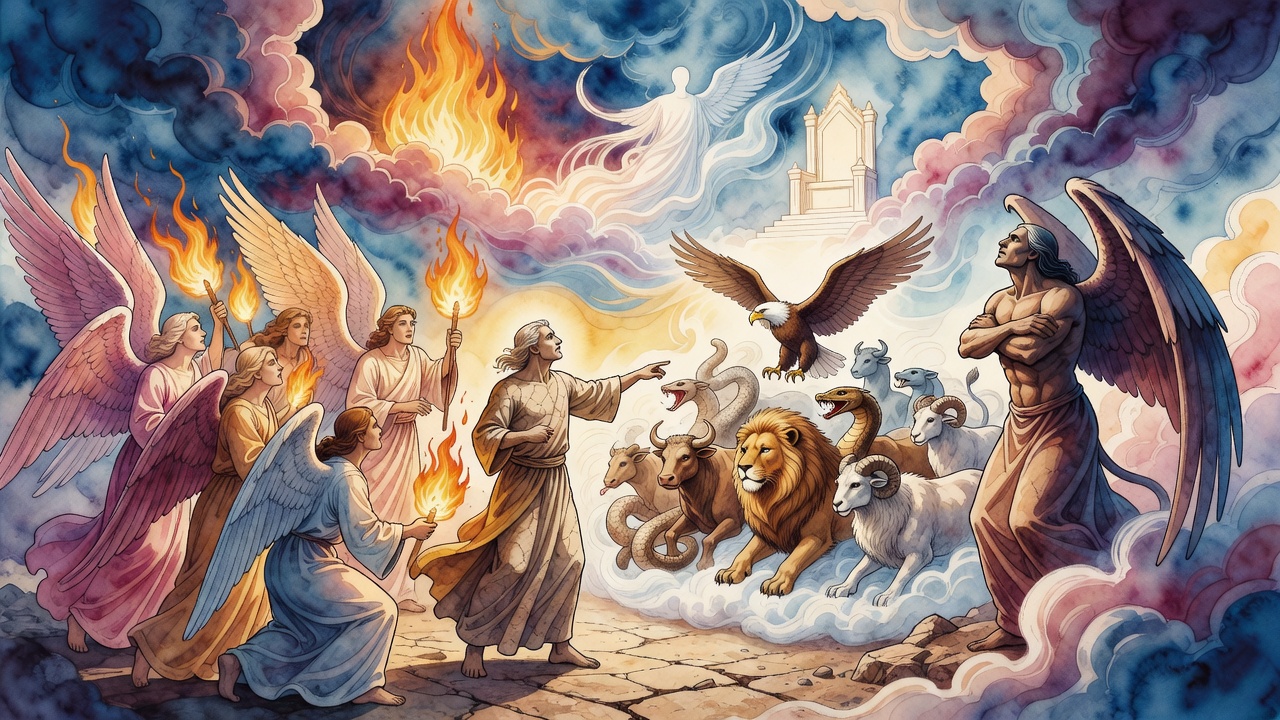
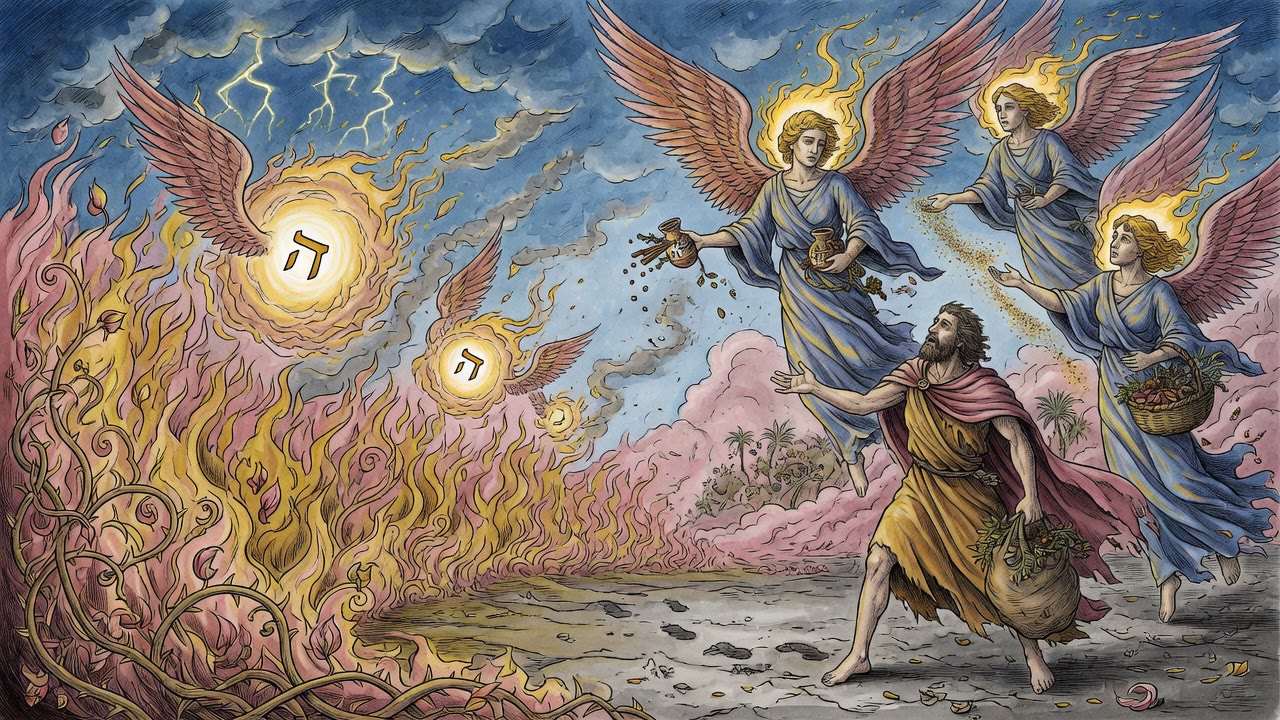
Before exile, angels had already tested him. Adam's gifts, physical and spiritual, stirred envy in the host. Some tried to consume him with fire. The protecting hand of God intervened and forced a truce between dust and flame. Ha-Satan, the Accuser who boasted twelve wings where others carried six, refused to honor the creature made from ground. "Thou didst create us from the splendor of the Shechinah (שכינה), the divine presence," he protested, "and now Thou dost command us to cast ourselves down before dust?"
God set a contest of names. If the Accuser could name the beasts, Adam would honor him. If not, the Accuser would stand under Adam's ranking. Questions were framed so their first letters matched the animals' names, and still the Accuser failed the ox and the cow. Adam named them at once. Humiliation burned hotter than the fire that had failed to erase him. Wisdom and speech became Adam's first weapons, and heaven watched a man of clay out-argue glory.
The Book That Terrified Him
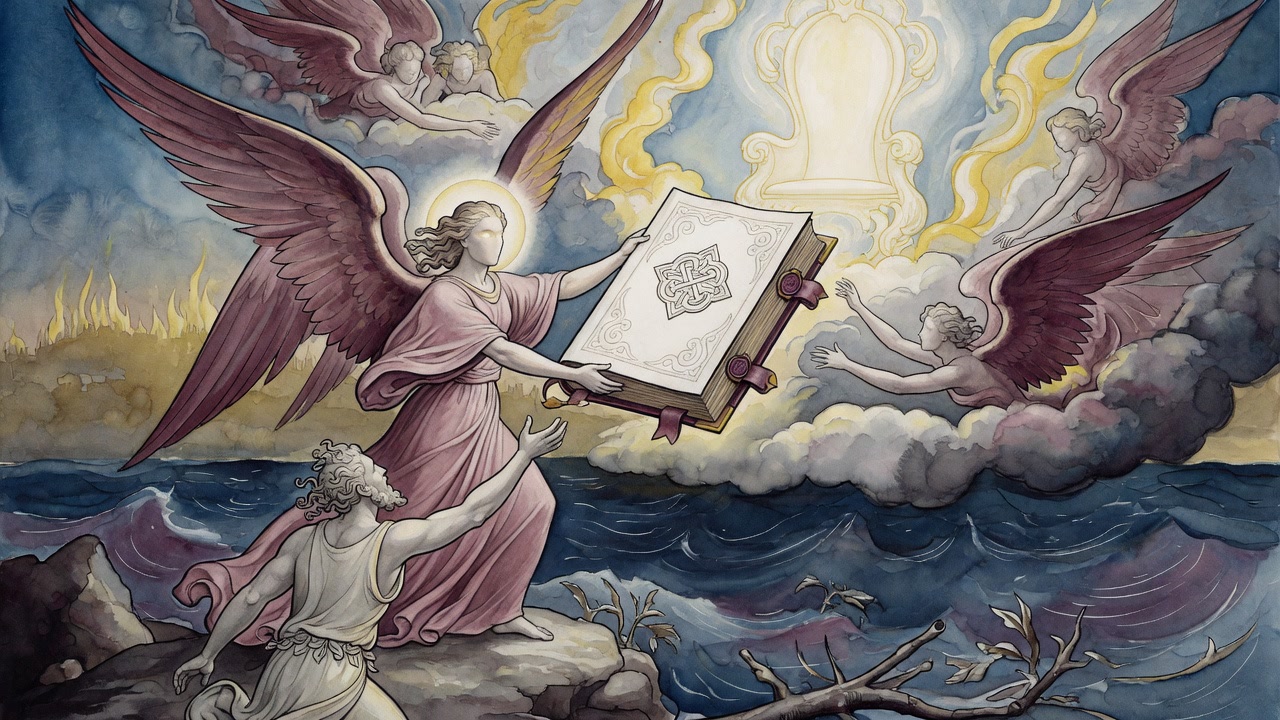
The angel Raziel, whose name means secret of God, descended with a book that held every mystery worth knowing, even the ways to call angels and receive answers. Raziel read aloud. Adam trembled. "Arise, Adam," the angel said, "be of good courage, be not afraid. Take the book from me and keep it, for you will draw knowledge from it yourself and become wise, and you will also teach its contents to all those who shall be found worthy."
Adam's fingers touched the pages. A flame rose near the river and climbed toward heaven. In that light Raziel ascended, and Adam understood the Holy King had sent a gift that was also a burden. The book would open only for the wise and God-fearing who approached in purity. Those who kept it well found protection from wicked counsel, peaceful years, and a passage into death free of the sheydim that stalk the unclean. Knowledge after the fall was not a second tree. It was a guarded library, delivered by an angel who refused to leave the first man empty-handed in a world of thorns.
Seventy Tongues and Settled Maps
Crafts followed. Writing, the legends say, began with Adam. So did the seventy languages that would later split the earth. God showed him the whole world, and Adam marked which places should hold cities and which should remain wild. The man who had named animals now named the human map. Exile did not strip him of purpose. It redirected purpose into tools, letters, and speech that descendants would need when the garden was only a memory and bread had to be earned with sweat.
Thorns still rose. The moon still waned. The manger still threatened whenever labor failed. Between those hard facts stood a book of secrets, a craft of writing, and a first human who had learned that mercy can answer a cry without undoing a curse. Bread for the sweat of the face. Letters for a mind that could still learn. A dimmed moon for a cosmos that was not allowed to mock forever.
Bread Between Thorns
Each morning after the sentence, Adam's hands met soil that answered with resistance. Thorns did not wait for winter. They rose as if the earth itself remembered the fruit taken without permission. Cattle nosed the same hard ground. The manger he had feared was not a proverb. It was a wooden box where man and beast might share bitter green if sweat did not purchase something better. Bread became a theology he could chew. Every loaf argued that labor still distinguished the image of God from the ox, even after the image had failed a command.
Eve wore serpent-skin with him under a sky whose moon no longer held steady light. They named children into a world already half-named by tears. When Raziel's book lay closed, the letters of ordinary craft still worked. Writing did not reopen Eden. It kept memory from rotting as fast as fruit. Seventy languages waited in his mouth like seeds for nations not yet born. The Accuser had lost the contest of names, yet envy does not retire. Adam learned to teach only those worthy of the secret book, and to feed everyone else with bread bought by the face's sweat. Between those two gifts, exile became a school rather than only a wound.
← All myths