4 min read

Ha-Satan Lost the Naming Contest to Dust-Born Adam

Angels try to burn Adam for his gifts. Ha-Satan (the Accuser) refuses to bow, demands a wit contest, and loses when only the man of dust can name the beasts.

Curated by Arthur · Told by Maggid ·
Table of Contents
  1. Twelve Wings Refuse the Ground
  2. The Parade of Beasts
  3. Envy Learns a Longer Game
  4. Dust Keeps the First Word

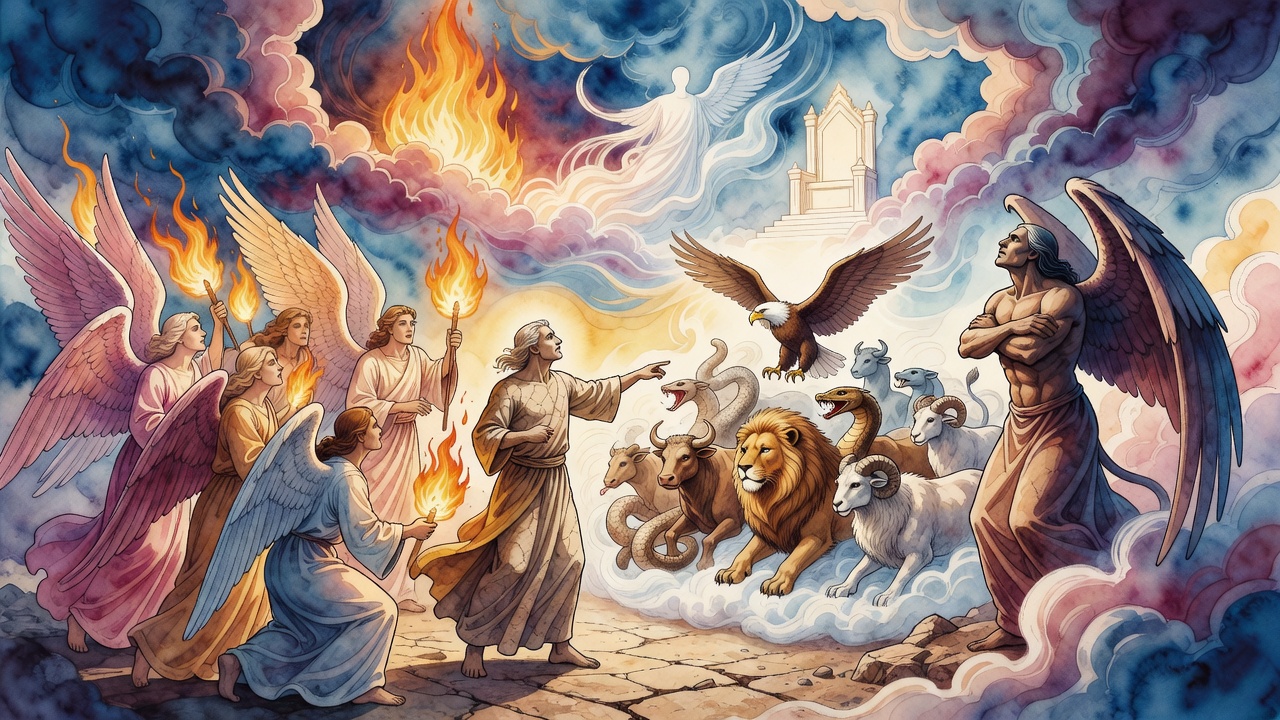
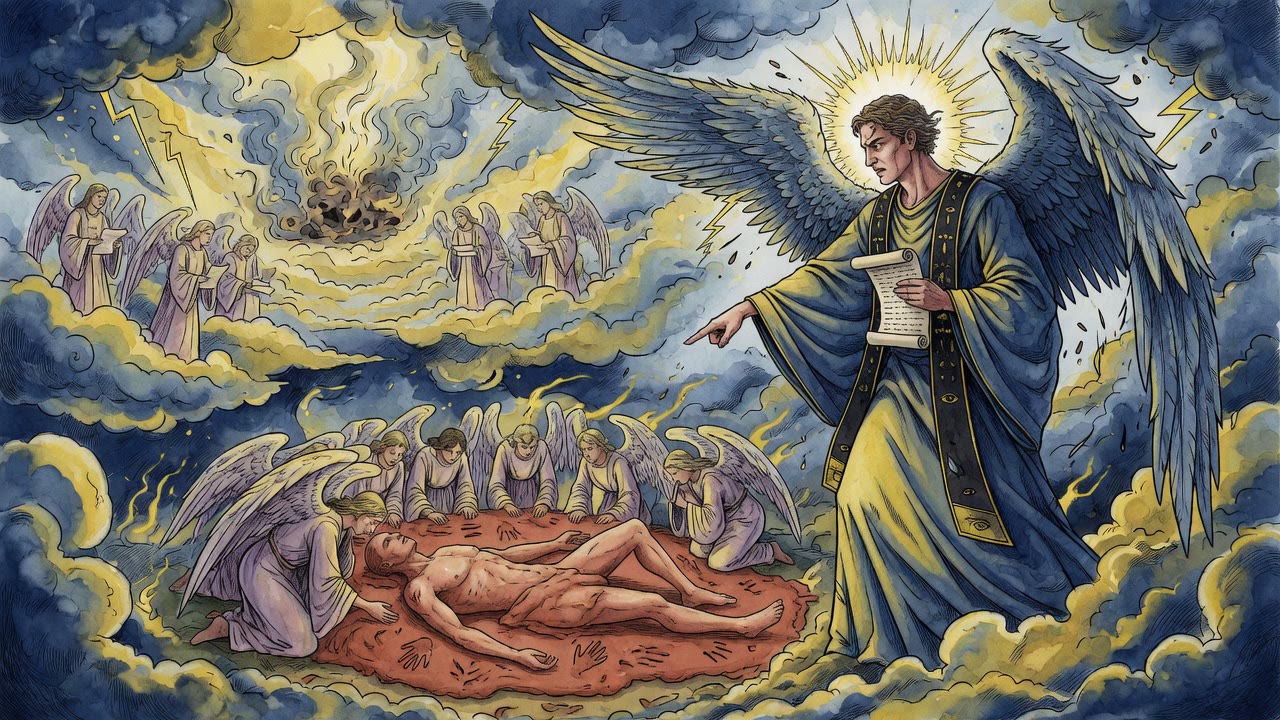
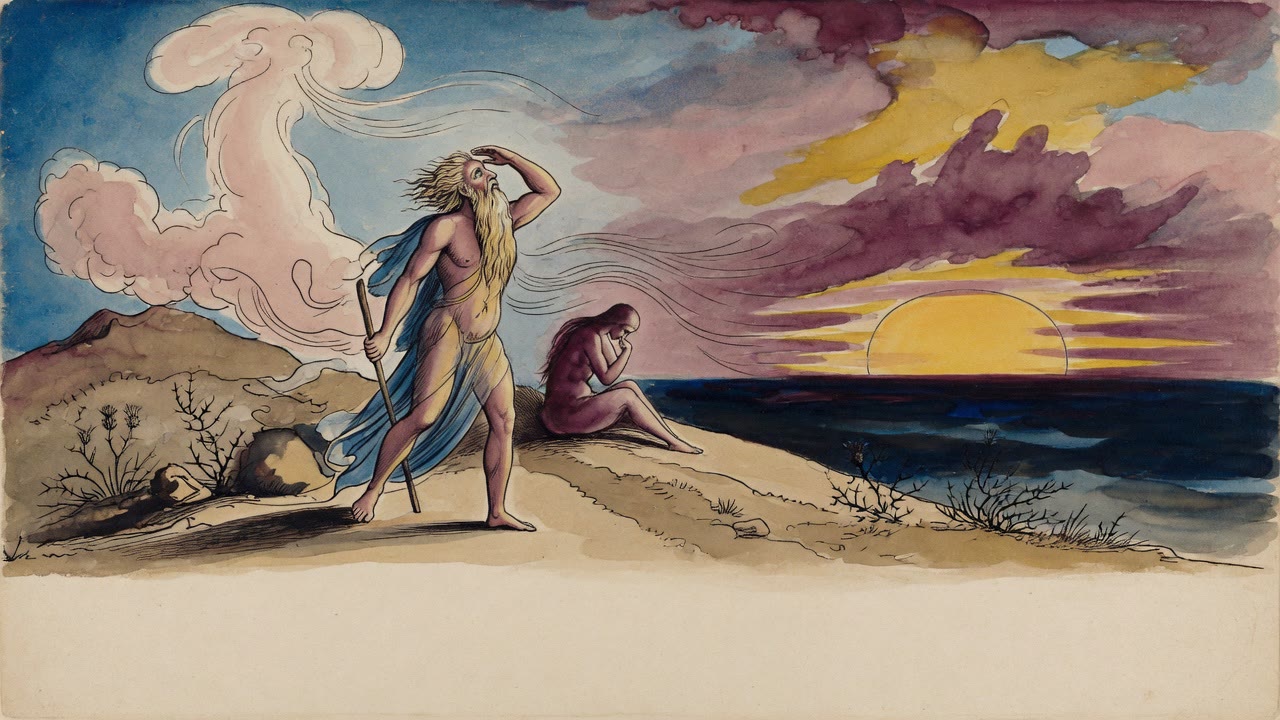
The angels did not start with words. They started with fire. Adam stood newly made, still smelling of ground, and the host closed on him as if brilliance itself were an insult. Physical gifts. Spiritual gifts. A mind that could invent writing and sort seventy languages before any city had a gate. Heaven's envy had a temperature. Flames reached for the man of dust, and only God's hand held the burn back long enough for a truce to stiffen between flame and clay.

Ha-Satan Lost the Naming Contest to Dust-Born Adam Click for full size

Twelve Wings Refuse the Ground

Peace did not satisfy Ha-Satan, the Accuser, greatest of the angels, twelve wings where the others carried six. After Adam received a soul, God invited the host to honor the new creature. Ha-Satan (the Accuser) would not bend. "Thou didst create us angels from the splendor of the Shechinah (שכינה), the Divine Presence," he said, "and now Thou dost command us to cast ourselves down before the creature fashioned out of the dust of the ground."

God answered with a claim sharper than rank. Adam held more wisdom and understanding than the Accuser. Ha-Satan demanded proof. A contest of wit. God allowed it. If Ha-Satan could name the animals, Adam would honor him. If not, the order of heaven would stand as spoken, and dust would keep its strange precedence.

The Parade of Beasts

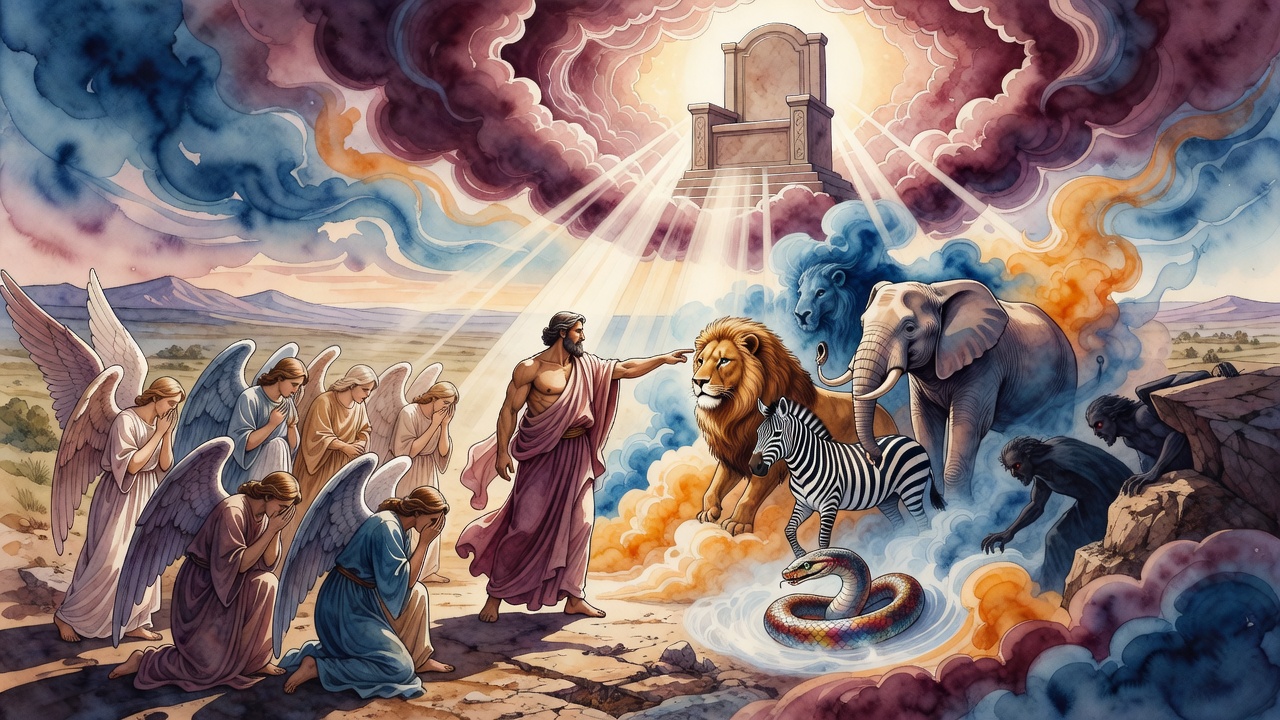
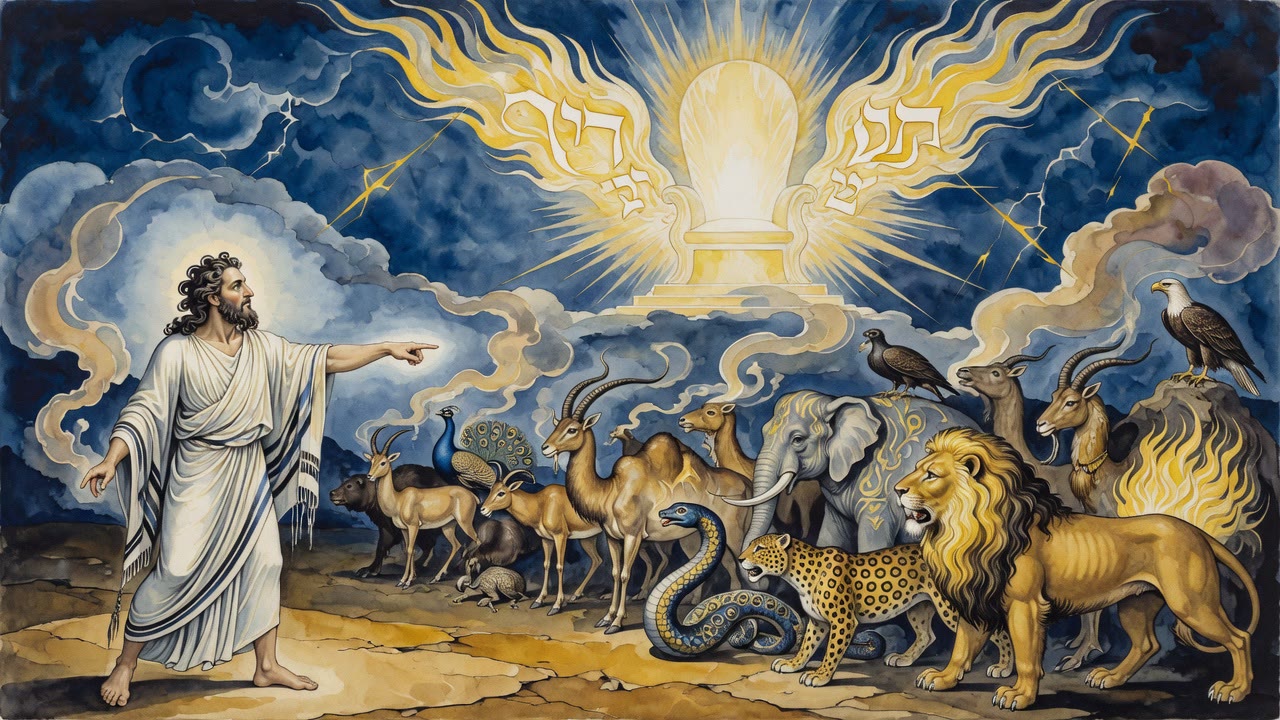
The creatures came as if the first morning had never ended. Hooves. Wings. Scales that caught light like wet stone. Ha-Satan opened his mouth and found the world without handles. He could describe power. He could not pin a name that fit. Each beast waited, breathing, while the greatest angel searched for a word that would not come.

Adam spoke, and the names landed. Not guesses. Fits. The mouth that had been clay an hour ago sorted the living world the way a hand sorts tools on a bench. Writing would follow from that same gift. So would the map of settled places and wild places God would show him across the whole earth. The Accuser watched vocabulary become sovereignty and felt the contest close like a door.

Envy Learns a Longer Game

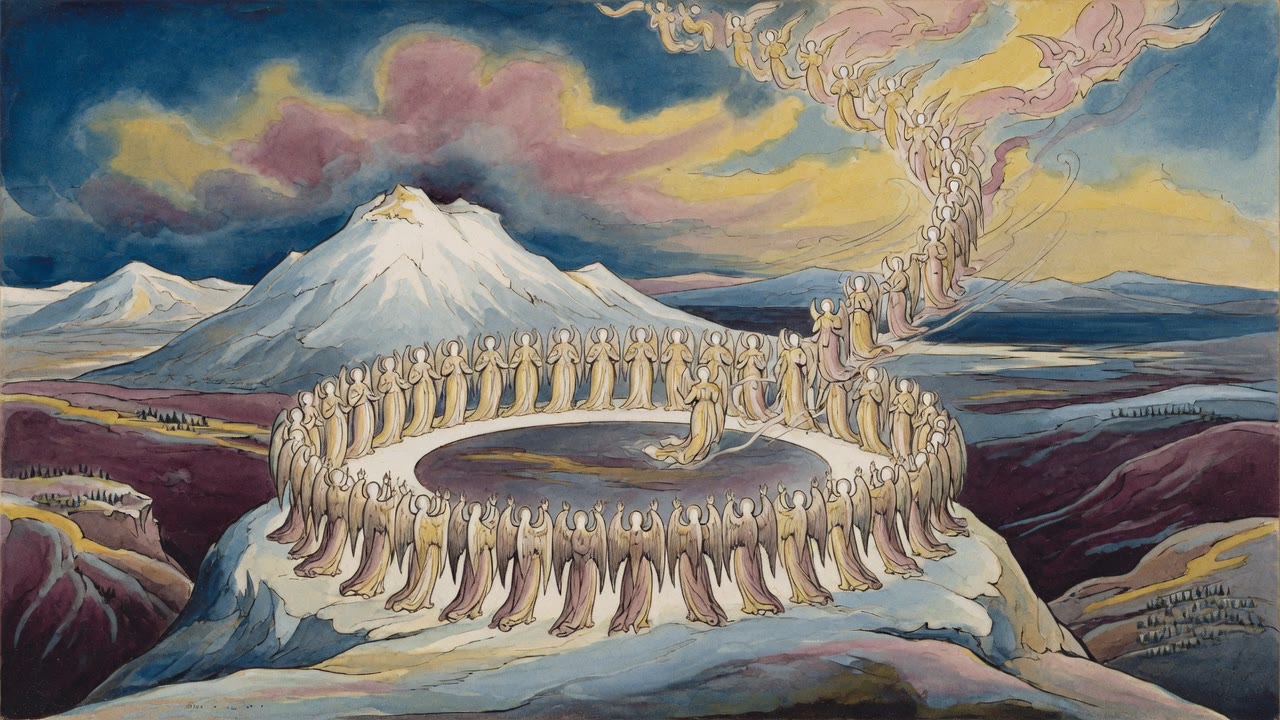
Heaven's jealousy did not die with the naming. It changed tactics. In later generations, when Enosh's line thinned into Jared's days, Watchers looked down at the daughters of men and chose a different theft. Shemhazai feared he alone would bear the sin if the others lost their nerve. Two hundred angels bound themselves by oath on the summit of Mount Hermon, a name the tradition ties to herem, a ban and a binding. They descended under captains, took wives, and taught charms, roots, and formulas no human mouth had been meant to carry.

Where Adam had received knowledge as gift and order, the Watchers poured forbidden craft into human hands until giants rose three thousand ells tall and ate the world bare. Birds, beasts, reptiles, fish, then people themselves. The earth cried out. Azazel taught weapons and the arts of slaughter. The Accuser's old refusal of dust had become lessons in ruin taught by angels who would not stay in their posts.

Dust Keeps the First Word

Adam's victory did not make him safe forever. It set a pattern. When heaven tests a human claim, the proof is not wings or fire. The proof is speech that fits creation, names that hold, crafts that serve rather than devour. Ha-Satan could burn with rank and still fail a single noun. Adam could bleed and still sort the parade.

The man of dust walked the earth God showed him and marked which places would hold cities and which would stay wild. He left languages stacked like tools for children not yet born. Behind him the Accuser nursed a loss that no later oath on Hermon could reverse. The first contest had already decided who could name a living thing without lying.

Somewhere above the still-new ground, twelve wings folded against a command that would not be renegotiated by volume. Below, a creature with soil in his history kept speaking words that stuck to beasts like rightful skins. The fire that had wanted him cooled into a grudge. The grudge would travel. The names would travel farther.


← All myths
From the tradition

Sources

2 sources

The texts behind this telling. Some cards carry a translation of the source; others are our own retelling of it, and each card says which. Every card links out to the original.

Legends of the Jews 2:38Legends of the Jews

Retold in our words. Read the original at the link below.The Legends of the Jews by Louis Ginzberg (1909) · Public Domain

Legends of the Jews turns to Adam Invented Writing and All Seventy Languages.

It wasn't just the animal names Adam passed down. The Legends of the Jews tells us that humankind owes him a great debt for all crafts, particularly the art of writing. He was even said to be the inventor of all seventy languages. That's quite the legacy.

There's more. According to this tradition, God showed Adam the whole Earth, and Adam determined which places should be settled and which should remain wild. He was essentially the first city planner, on a global scale!

Adam's extraordinary gifts, both physical and spiritual, weren't appreciated by everyone. In fact, they stirred up some serious jealousy among the angels.

The Legends of the Jews recounts a dramatic scene where the angels tried to consume Adam with fire. He would have been destroyed if God's protecting hand hadn't intervened, establishing peace – or at least a truce – between Adam and the heavenly host.

But the biggest trouble came from Satan. His envy festered, leading to the infamous fall. The story goes that after Adam was given a soul, God invited all the angels to pay him reverence. Now, Satan, the greatest of the angels – boasting twelve wings compared to the usual six – refused.

"Thou didst create us angels from the splendor of the Shekinah (the Divine Presence)," he protested, referring to the divine presence, "and now Thou dost command us to cast ourselves down before the creature which Thou didst fashion out of the dust of the ground!"

God, in response, pointed out that Adam possessed more wisdom and understanding than Satan. Satan, never one to back down from a challenge, demanded a wit-off.

God agreed, setting up a test: if Satan could name the animals, Adam would honor him. If not, Satan would be subject to Adam. According to Ginzberg's retelling in Legends of the Jews, God even framed the questions to Adam so that the first letter of the question matched the first letter of the animal's name.

Satan failed miserably. He couldn't even name the ox or the cow! When God turned to Adam, he easily named the animals. Humiliated, Satan still refused to bow.

Michael, the archangel, even prostrated himself before Adam to set an example, urging Satan to do the same. Michael implored, "Give adoration to the image of God! But if thou doest it not, then the Lord God will break out in wrath against thee."

But Satan was defiant: "If He breaks out in wrath against me, I will exalt my throne above the stars of God, I will be like the Most High!"

And that was it. God cast Satan and his rebellious angels out of heaven, down to Earth. And that, according to the legend, is where the long-standing enmity between Satan and humankind began.

So, what does this all mean? It's more than just a story about a naming contest gone wrong. It's a story about pride, envy, and the eternal struggle between good and evil – a struggle that, according to this tradition, began with Adam and Satan in the very presence of God. And how those ancient battles continue to resonate today.

Full source
Legends of the Jews 3:9Legends of the Jews

Retold in our words. Read the original at the link below.The Legends of the Jews by Louis Ginzberg (1909) · Public Domain

The descent into depravity that started with Enosh, the grandson of Adam, really kicked into high gear during the time of his grandson Jared. And who was to blame? Watchers, of course!

The story goes that these angels, gazing down from their heavenly abode, became captivated by the beauty of human women. "We will choose wives for ourselves only from among the daughters of men," they declared, "and beget children with them!" (Ginzberg, Legends of the Jews). Sounds straightforward enough. But there was one angel, Shemhazai, who had reservations. He feared that the others wouldn't follow through, and he would be left holding the bag, bearing the consequences of their collective sin. "I fear me, ye will not put this plan of yours into execution, and I alone shall have to suffer the consequences of a great sin," he said (Ginzberg, Legends of the Jews).

So, what did they do? They took an oath. A big one. According to Legends of the Jews, two hundred angels descended to the summit of Mount Hermon – a name that itself comes from the Hebrew word herem, meaning "anathema" or a binding oath – and swore to carry out their plan, or face dire consequences. Under the leadership of twenty captains, they did just that, defiling themselves with the daughters of men.

These Watchers weren't just hanging out. They were teaching these women forbidden knowledge! Charms, conjuring formulas, the secrets of roots and plants.

And what was the result of these unions? Giants. Massive, three-thousand-ell-tall giants who consumed everything in sight. When the humans' possessions were gone, the giants turned on the people themselves, devouring them. As Legends of the Jews tells us, humanity then began to trespass against the birds, beasts, reptiles, and fishes, eating their flesh and drinking their blood. The earth itself cried out against these impious evildoers!

But the corruption didn't stop there. Azazel, another Watcher, taught men how to make weapons – slaughtering knives, arms, shields, coats of mail. He revealed the secrets of metals and how to work them, and showed them how to adorn themselves with armlets, trinkets, rouge, and jewels. (Ginzberg, Legends of the Jews). Basically, he introduced them to the art of war and vanity. Shemhazai, our anxious leader, instructed them in exorcisms, Armaros taught them how to raise spells, Barakel, divination from the stars; Kawkabel, astrology; Ezekeel, augury from the clouds; Arakiel, the signs of the earth; Samsaweel, the signs of the sun; and Seriel, the signs of the moon. The Zohar has much more to say about the roles of these fallen ones, as well.

While all this chaos unfolded, there was one righteous man: Enoch. He lived in a secret place, hidden among the angel watchers and holy ones. And it was to Enoch that a divine call came.

"Enoch, thou scribe of justice," the voice said, "go unto the watchers of the heavens… Go and proclaim unto them that they shall find neither peace nor pardon!" (Ginzberg, Legends of the Jews). Talk about a tough assignment!

Enoch delivered the message to Azazel and the other Watchers, and they were terrified. They trembled and begged Enoch to intercede for them, to present a petition to God. They couldn't even look towards heaven anymore, so great was their shame.

Enoch agreed, and in a vision, he was carried up to God's throne. God's response? Not exactly forgiving. "Verily, it is you who ought to plead in behalf of men, not men in behalf of you!" God declared (Ginzberg, Legends of the Jews). God then laid out the consequences: these giants, born of flesh and spirit, would become evil spirits on earth, forever causing destruction and affliction. "You have no peace!" God proclaimed.

So, what does this all mean? It’s a wild story, no doubt. A cautionary tale about the dangers of forbidden knowledge, the corruption of power, and the consequences of straying from the divine path. And perhaps, it's also a glimpse into the ancient anxieties about the blurring of boundaries – between heaven and earth, spirit and flesh, human and divine. Where do you think the tension of this story lies?

Full source