Parshat Bereshit6 min read

When the Watchers Came Down in the Days of Jared

In the days of Jared the angels came down to teach mankind, and their holy errand soured into lust, giants, and the blood that summoned the Flood.

Curated by Arthur · Told by Maggid ·
Table of Contents
  1. The Oath on the Mountain
  2. When the Teachers Took Wives
  3. The Earth Filled With Blood
  4. The Cry From the Ground
  5. What the Name Remembered

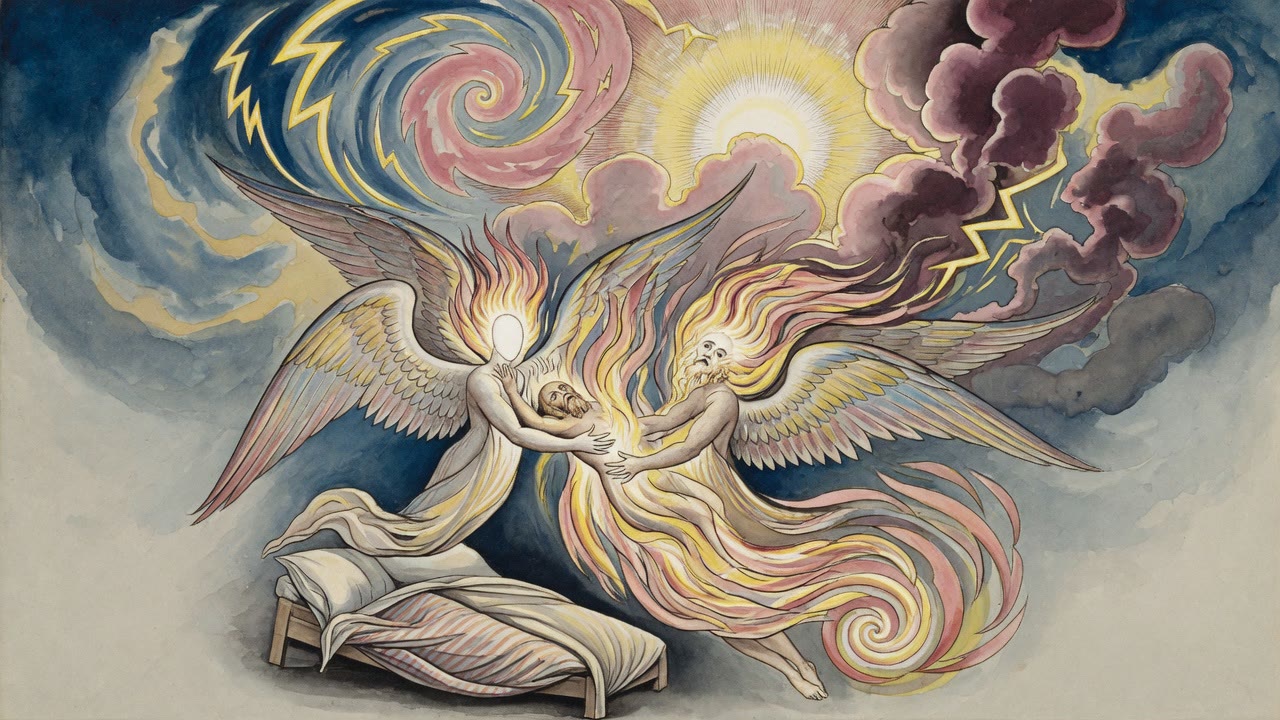
A name in the genealogy holds the eye for half a breath, then the list moves on. Jared lived a hundred and sixty-two years and fathered a son, and the verse hurries toward Noah as if nothing had happened in between. But the rabbis stopped on that one name. They heard the Hebrew root inside it, yarad, to go down, to descend, and they refused to let it pass. In the days of Jared, they said, heaven came down to earth.
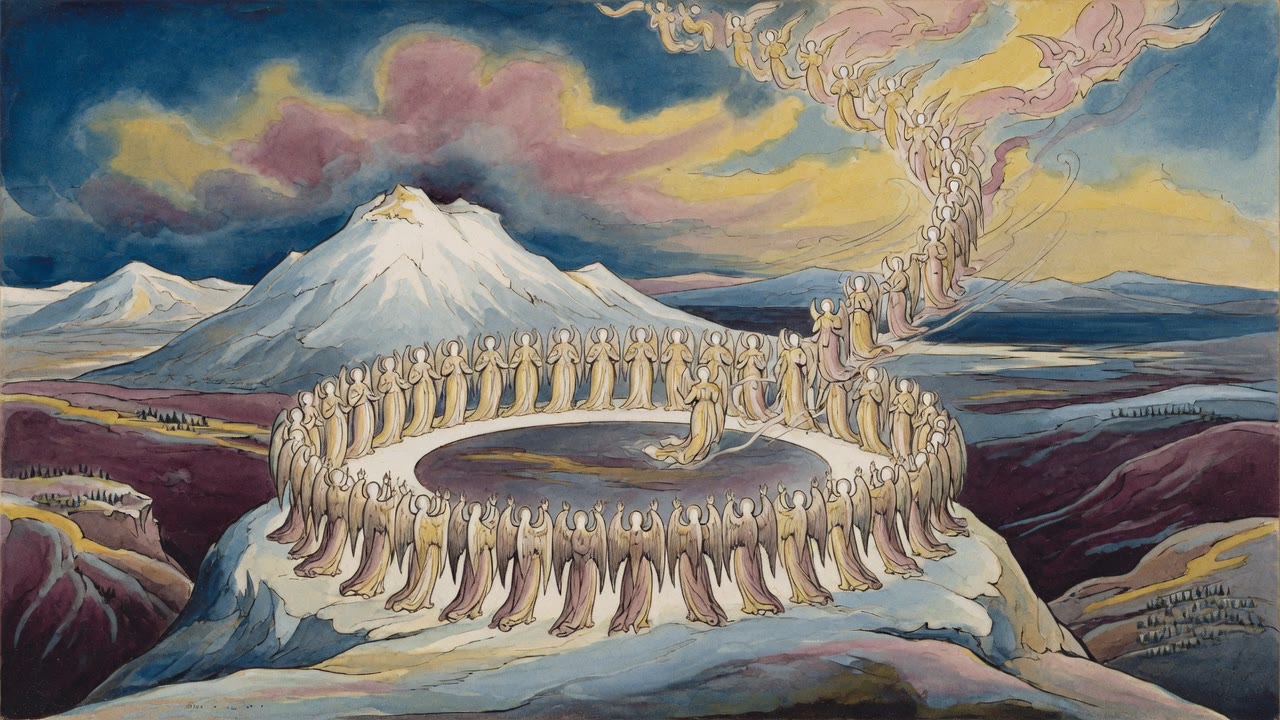
It did not come down to corrupt. It came down to teach. The angels who descended in Jared's lifetime walked among human beings on a holy errand. They had come to show people standing on the ground how to lift their worship to the Holy One above, how to pray, how to serve. For a while the boundary between the upper world and the lower grew thin in the best way, and mortals learned from beings of fire how to reach the God who made them. The name itself became the record of that thinning. One word in a long roll of fathers and sons, holding the memory of when heaven leaned low to teach the earth.

The Oath on the Mountain

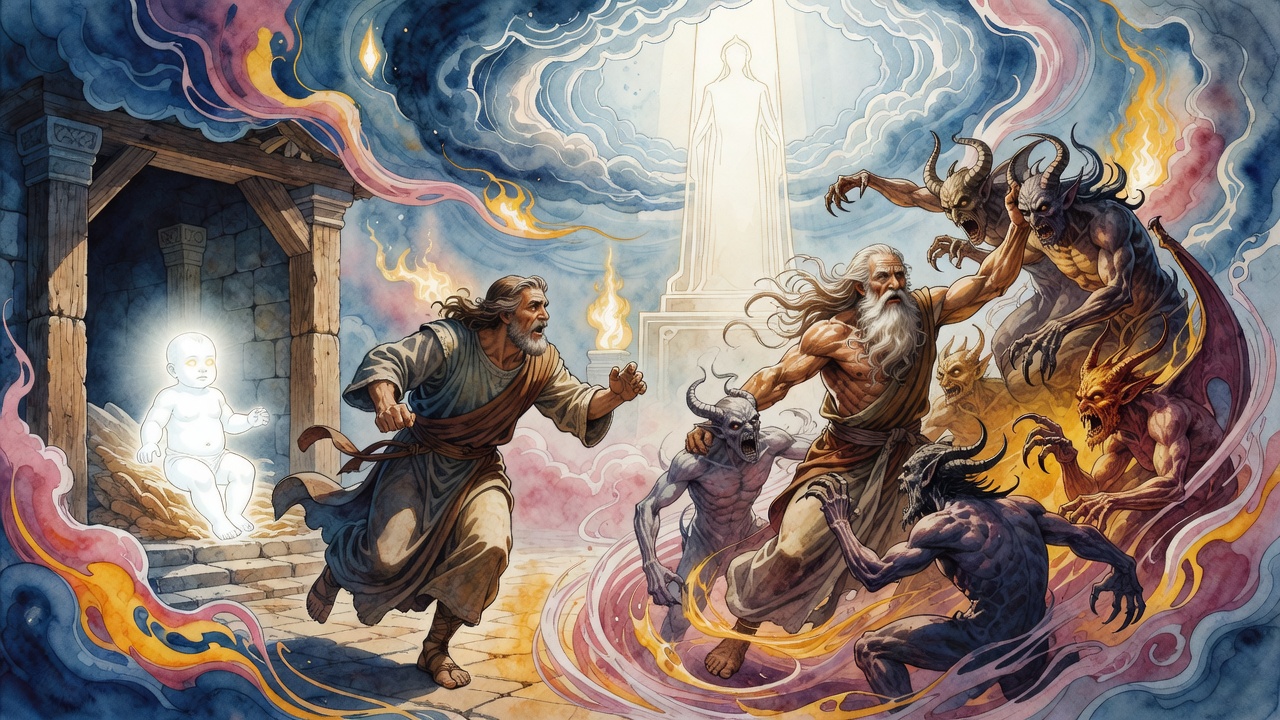
They were a high order, these descenders. Two hundred of them, beings who never needed sleep, keepers of secrets the rest of creation never heard. The eldest among them was Shemhazai, and at his side stood Azazel, and behind them the whole crew, the ones later remembered as the Watchers. They gathered on the summit of Mount Hermon and bound themselves with a solemn oath, each to the other, sworn to a single mission.

The descent cost them. As they came down from their holy state they were lessened, shrunk in stature and in strength, their fiery and weightless forms thickening into flesh. And flesh wants. They had walked down to teach righteousness. Then they looked up from their teaching and saw the daughters of men.

When the Teachers Took Wives

Lust took hold of beings who had never owned a body before, and they chose wives from among the women of the earth. The instruction did not stop. It only turned. Each Watcher began to hand over what he knew, and what they knew was never meant for hands of clay. They taught charms and enchantments and incantations. They taught how to cut roots for sorcery, how to read the omens of sun and moon and stars across all the signs of heaven, how to forge metal into blades. Azazel showed the men how to make weapons that kill at a distance, and he showed the women how to paint their faces and rouse the desires of men. Every secret the upper world had guarded now lay open on the ground.

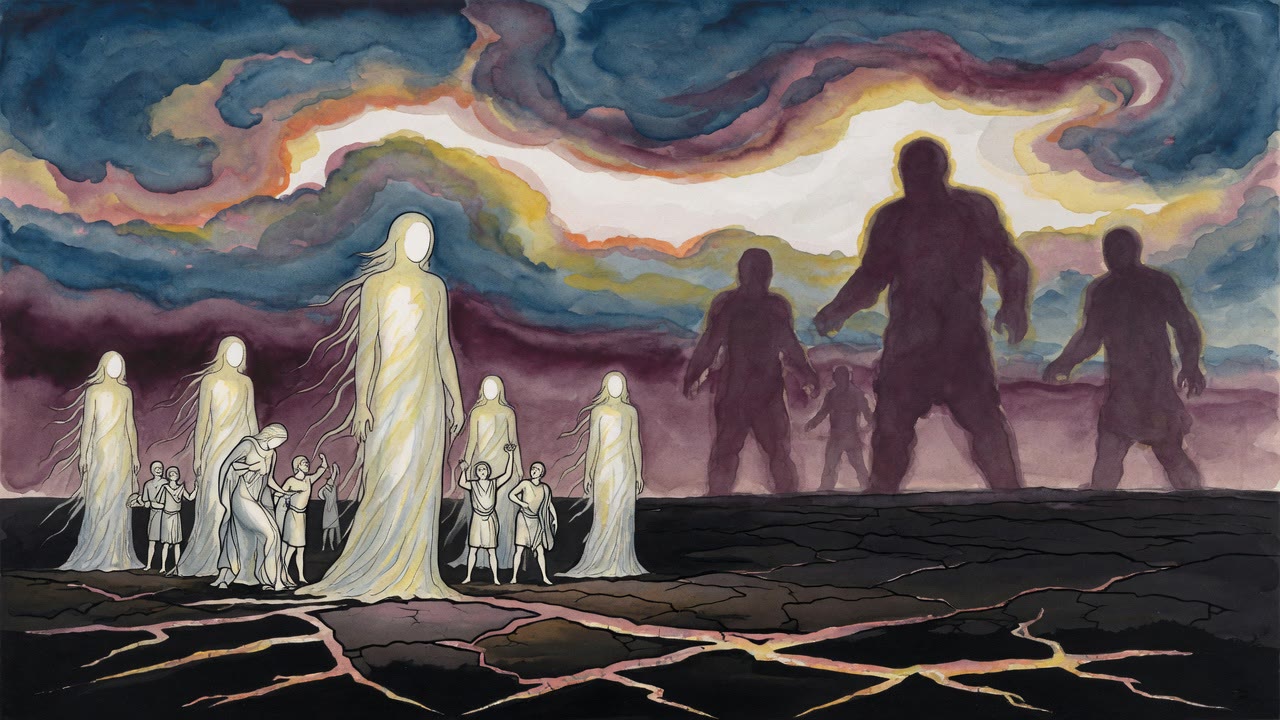
The unions bore fruit, and the fruit was monstrous. The women gave birth to giants, the Nephilim, children of angel and human who towered over everything that walked. They came into the world hungry, and they were vast, and so their hunger was vast. They ate through the harvests. They ate through the herds. They stripped the world bare of everything a giant could swallow, and when nothing was left, they turned on the people who had fed them.

The Earth Filled With Blood

The giants devoured human beings. Then they began to devour each other. The offspring of the Watchers were all unlike, unlike humanity, unlike one another, unlike anything creation had intended, and the difference between them became a war. The Giants slew the Nephil, and the Nephil slew the Eljo, and the Eljo slew mankind, and one man killed the next. The chain of killing spread like fire across dry grass.

It did not stop at murder. People sold themselves to do wrong, gave themselves over to shed blood, and the earth filled up with iniquity. The Nephilim sinned against the beasts and the birds and the reptiles and the fish, against every living thing that breathed. They drank blood. The air over the world went thick with the stench of rotting carcasses, and the ground itself began to cry out against the lawlessness pressing down on it.

The Cry From the Ground

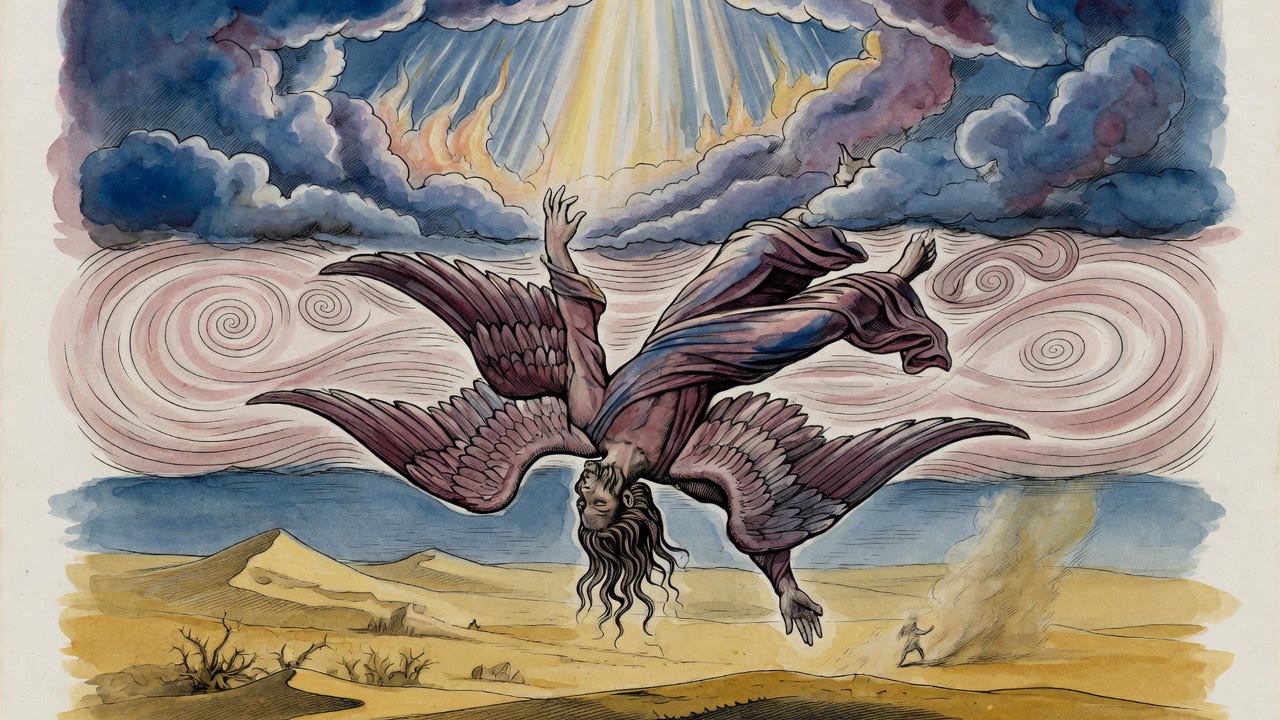
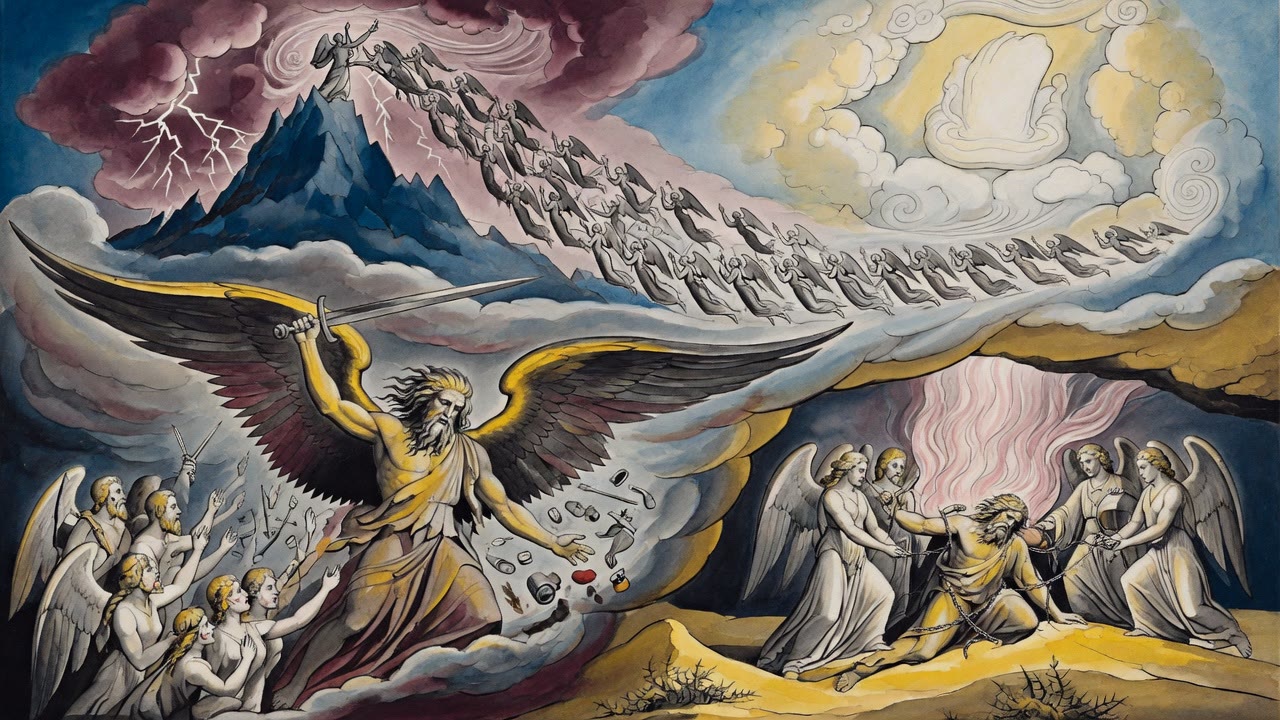
Heaven heard the ground. The same height the Watchers had stooped from now looked down on the ruin their descent had seeded, and judgment began to move. The Holy One commanded the angel Raphael to take Azazel and bind him hand and foot. Raphael split open a hole in the desert of Dudael, beyond the Mountains of Darkness, and cast Azazel down into it, chained upside down in the dark, covered over so no light would reach him. To Azazel was laid the ruin of the earth, for he had taught the works that filled it with blood.

Even bound and buried and hung head downward in that pit, Azazel did not bend. He nursed his fury in the darkness and waited, and the secrets he had spilled did not return to heaven with the angel who had carried them down. They stayed in the world, in the roots and the metals and the painted faces and the omens of the stars, loose among the children of men.

What the Name Remembered

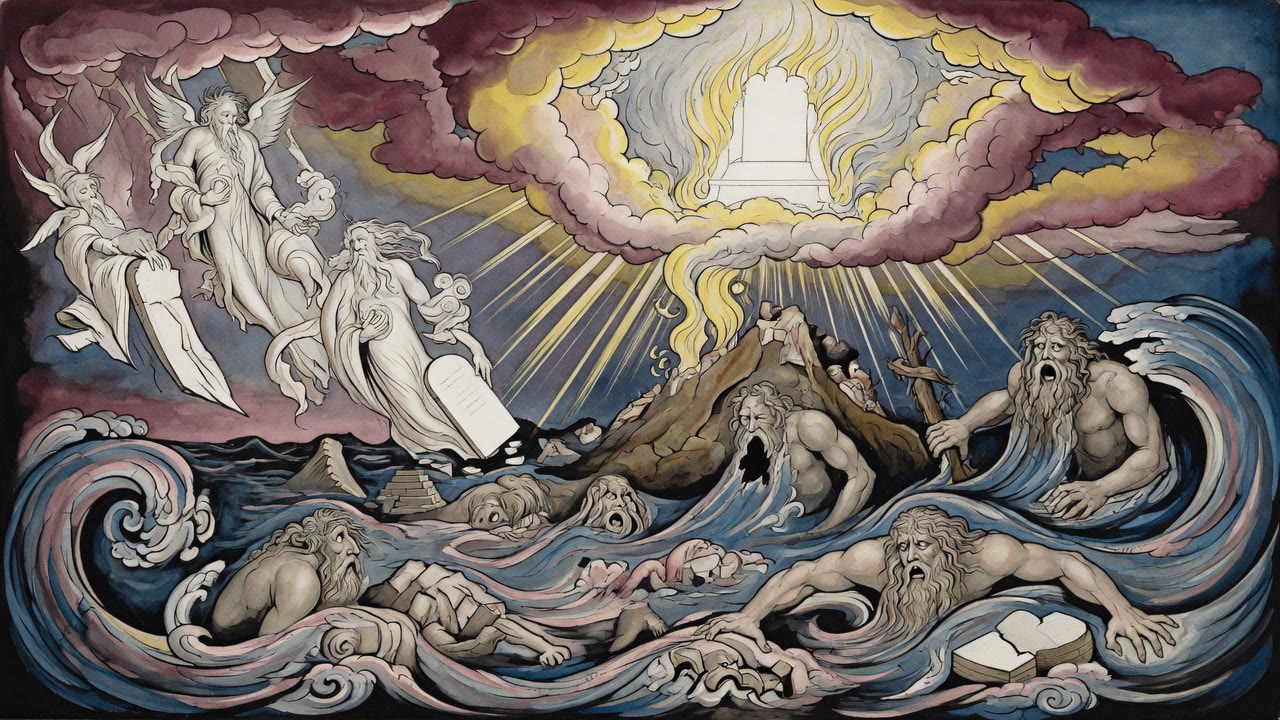
The Flood was already coming. The waters that would rise and cover the giants and the Watchers' brood and almost everything that breathed were already gathering in the verse a few names ahead, where Noah waited to be the one God found righteous. The whole catastrophe traced back to a single word in a list of fathers, the name of a man who did nothing wrong, in whose lifetime the wrong was set loose.

Jared lived his long years and fathered his son and was gathered to his people. Around him the boundary he was named for had opened, and through it had come teachers who became husbands, and husbands who became the fathers of monsters, and a world so full of blood that the sky finally answered with rain.


← All myths
From the tradition

Sources

6 sources

The texts this telling draws on, in full. Open a card to read inline, or expand it for a wider, quieter read.

Midrash Aggadah, Genesis 5:18Midrash Aggadah

A name in a genealogy usually means nothing. The Midrash Aggadah says Jared is the exception. When the Torah records "And Jared lived" within the long list of generations from Adam to Noah (Genesis 5:18), the rabbis hear meaning in the name itself. Jared comes from the Hebrew root yarad, meaning to descend or go down, and the midrash insists the name marks a descent that was anything but ordinary.

In Jared's lifetime, the rabbis teach, the angels came down from the heavens and walked among human beings. They did not descend to corrupt or to rule, but on a mission of instruction. They had come to teach humanity how to serve the Holy One, to show people standing on the ground how to direct their worship toward the God above. One generation in the long roll call of Genesis carries a memory the rest do not. The plain verse says only that Jared lived a great span of years and fathered a son, yet the sages heard in his name the very moment when the boundary between heaven and earth grew thin, and beings of the upper world stooped low enough to teach mortals how to pray and how to serve. The name itself became the record of that descent, a single word holding the memory of when heaven leaned down to teach the earth.

Full source
Jubilees 4:15, 5:1-3, 5:5-7Book of Jubilees

It involves Watchers, forbidden knowledge, and a whole lot of trouble.

This isn't just a story of two rogue angels, Shemhazai and Azazel. According to some accounts, like the one we find in the Book of Enoch, Shemhazai was actually the leader of a whole crew, a posse if you will, of two hundred angels known as the Watchers. These weren’t just any angels,. They were a high order, beings who never even needed to sleep! Imagine the kind of heavenly secrets they held.

The story goes that these Watchers descended to the summit of Mount Hermon. There, they made a solemn oath, binding themselves together in their mission, whatever that was about to become. But something went wrong. Terribly wrong. As the angels fell from their holy state, they were diminished, lessened in both stature and strength. Their very essence changed; their fiery, ethereal forms became flesh, making them susceptible to earthly temptations.

At first, it seems, they had good intentions. The Watchers initially aimed to instruct humanity in the ways of righteousness. But then, they saw the daughters of men. And, well, things took a turn. Lust took hold, and they chose wives from among these women. The result of these unions? Giants. Literal giants roamed the earth, born of angel and human.

But the transgressions didn't stop there. Each of these angels, not just Shemhazai and Azazel, began to reveal secrets of heaven. They taught humanity charms and enchantments, incantations, and the knowledge of how to cut roots for magical purposes. They divulged the secrets of astrology and how to read signs. As we find in the Book of Jubilees (5:1-13) and 1 Enoch (6-14), the world was changing, and not for the better.

They even taught men the art of working metal to make weapons, and, perhaps even more destructively, they taught women how to make themselves desirable to men. It was a complete and utter breakdown of the natural order. And these angels, they sinned with anyone they desired – men, women, beasts, it didn't matter. As a result, everything on earth became corrupted.

Think of it as a kind of ancient, celestial version of the story of Prometheus, who stole fire from the gods. This legend of the Watchers is, in many ways, the primary Promethean myth in Judaism. The angels weren't just divulging dark secrets of heaven; they were revealing secrets of the natural universe, things that God, for whatever reason, had never intended for humans to know!

The situation became so dire that God had to intervene. He ordered these Watchers to be rooted out and bound in chains in the depths of the earth. According to the story, the archangels Uriel and Raphael went to God and reported the sins of the fallen ones. Then, God gave his orders: Raphael was instructed to bind Azazel hand and foot and cast him into a canyon in the desert of Dudael, covering him with darkness until the Day of Judgment, when he would be cast into the fire. And Michael was told to bind Shemhazai and his associates, holding them fast for seventy generations in the valleys of the earth until the Day of Judgment, when they would be led to the fiery abyss and tormented forever.

Now, there are different versions of this tale. Some say that Shemhazai and Azazel alone assumed human form when they descended, with the other Watchers taking the form of he-goats as their mounts. But regardless, the end result is the same: they were all cast into an abyss, where they remain imprisoned until the end of time.

What about the women who went astray with these Watchers? 1 Enoch (19:2) offers a chilling detail: they were transformed into sirens. It's a rare reference in a Jewish text to the sirens of ancient storytelling, those alluring, dangerous creatures of the sea.

This whole episode, according to 1 Enoch (6:6), is said to have taken place in the days of Jared, the father of Enoch. So, this myth of the Watchers is set in the generation just before Enoch, making it an integral part of his own story.

This story, with its themes of forbidden knowledge, lust, and divine punishment, continues to resonate. It makes you wonder about the nature of free will, the dangers of unchecked curiosity, and the price we pay for seeking knowledge that might be beyond our capacity to handle. What do you think? Are there some things humanity is better off not knowing?

Full source
1 Enoch 7:2-5Apocrypha

(Genesis 6:4) mentions the Nefilim. That word, Nefilim, generally understood to mean “giants.” But who were they, really? And where did they come from? The Torah just kind of drops that in there, doesn't it? "The Nefilim were on the earth in those days. And also afterward, when the sons of God went to the daughters of humans and had children by them. These were the heroes of old, men of renown."

Well, Jewish tradition has a lot to say about it, filling in the gaps with some truly wild stories.

One particularly striking account tells us that the "Sons of God" – often interpreted as Watchers – took wives from among the daughters of men. And these unions… well, they didn’t produce ordinary children. These women gave birth to giants. Really big giants. Now, an "ell" is an old measurement, but whatever it was, it’s clear – these guys were HUGE.

Hungry. Very, very hungry.

The story goes that these giants quickly devoured all the resources of humanity.: imagine trying to feed beings that size. It wouldn’t take long to strip the world bare. And when the humans couldn't sustain them any longer? The giants turned on them, devouring people, too. It gets worse. They began sinning against every living creature – birds, beasts, reptiles, fish. They devoured each other, drank blood. You can imagine the scene… it wasn't pretty.

The earth itself cried out against this lawlessness. The air was thick with the stench of rotting carcasses.

One particularly gruesome detail involves Shemhazai, a Watcher, who supposedly fathered two sons, Hiwa and Hiya. According to the tale, these two alone consumed a thousand oxen, a thousand camels, and a thousand horses every single day. Can you even imagine the logistics of that?

It’s no wonder, then, that God decided to cleanse the earth with the Flood.

But where did these giants come from, really? Why were they so…awful?

Some say these giants, born of spirit and flesh, are the evil spirits that still roam the earth today, relentlessly pursuing us. Others offer a slightly different take. According to this version, the angels transformed themselves, taking the shape of men, and appeared to the women while they were with their husbands. The women, bewitched by these angelic forms, lusted after them. As a result, they gave birth to giants. It’s a fascinating idea – that even the thought of infidelity could have such monstrous consequences. The Testament of Reuben gives us this version.

And while most accounts attribute the birth of the Nefilim to these unions, the Zohar, that foundational text of Kabbalah, offers a different, darker origin. The Zohar tells us that Samael (the angel of death), often identified as the angel of death, copulated with Eve, "injecting her with slime," and from that union came Cain, whose very essence was different from other humans. The Nefilim, then, issued from the seed of Cain.

These myths – and they are myths, stories meant to teach us something profound – also provide a potential origin for the giants that the Israelites encountered in the Land of Israel, as described in (Numbers 13:31-33).

What are we to make of all this? Maybe it's about the dangers of unchecked power, or the consequences of straying from our moral compass. Maybe it's about the dark side of desire. Or maybe, just maybe, it's a reminder that even the smallest seed of corruption can grow into something truly monstrous. And that's a thought worth pondering, isn't it?

Full source
Book of Jubilees 7:30Book of Jubilees

Chapter 7 of Jubilees dives right into the chaos following the emergence of the Nâphîlîm, those figures often translated as "giants" or "fallen ones." Think of them as the offspring of a forbidden union, and their existence sets off a chain reaction of violence. The text pulls no punches.

"And they begat sons the Nâphîlîm, and they were all unlike, and they devoured one another." Can you imagine such a fractured, destructive family line? This isn't just sibling rivalry. This is existential conflict at its most brutal. They were "all unlike" – different from each other, different from humanity, different from what creation intended. This difference, this otherness, fueled their destructive tendencies.

Then comes the domino effect. "And the Giants slew the Nâphîl, and the Nâphîl slew the Eljô, and the Eljô mankind, and one man another." It's a horrifying cycle of violence, an escalating chain of death that spreads like wildfire. It’s a stark illustration of unchecked aggression and the disintegration of social order.

It doesn’t stop there. The corruption deepens.

"And every one sold himself to work iniquity and to shed much blood, and the earth was filled with iniquity." People willingly chose evil. It wasn't just a lapse in judgment; it was a conscious decision to embrace wrongdoing. The choice was made to "sell themselves" – a powerful phrase that suggests they gave up their very souls for wickedness. The earth itself became saturated with sin.

And in a particularly disturbing turn, the verse states: "And after this they sinned against the beasts and birds, and all that moveth and walketh on the earth: and much blood was shed on the earth." This isn't just about human-on-human violence anymore. It's a complete disregard for the natural world, a transgression against all living things. It points to a total breakdown of empathy and a loss of respect for God's creation.

Finally, we read, "and every imagination and desire of men imagined vanity and evil continually." This is perhaps the most damning indictment of all. It wasn't just their actions that were corrupt; it was their very thoughts, their innermost desires. Every waking moment was consumed by wickedness. Their minds were incubators of evil, constantly generating new ways to sin.

Reading this passage from the Book of Jubilees, one can't help but wonder: What does it mean to reach such a point of moral decay? What are the warning signs? And how do we prevent ourselves, as individuals and as a society, from sliding down that slippery slope? The flood, in this context, isn't just a divine punishment, but a cosmic reset button, a desperate attempt to cleanse a world drowning in its own depravity. A harsh, but ultimately necessary, measure to allow for a fresh start.

Full source
1 Enoch 8-101 Enoch

The story goes that the generation before the Great Flood, the one Noah survived, learned their wicked ways from none other than Azazel. He wasn't just teaching people to be naughty. Oh no. According to the legends, he taught men how to forge deadly weapons and women how to. well, how to "arouse the desires of men." The result? Total corruption.

So, what happened to Azazel? God commanded the angel Raphael to bind him hand and foot and cast him into the darkness. Raphael, as the story goes, carved a hole in the desert of Dudael, beyond the Mountains of Darkness, and threw Azazel there, chained upside down. Can you imagine?

Even in that dark pit, chained and humiliated, Azazel didn’t repent. The Emek ha-Melekh tells us that some traditions even have Azazel chained together with Aza (also known as Shemhazai) in this desert. He was consumed by revenge. He used the power of dreams to find an evil sorcerer and command him to come to him.

This is where the story gets really wild. To reach Azazel, the sorcerer had to journey to the Mountains of Darkness. There, he was met by a demon in the shape of a cat, but with the head of a fiery serpent and two tails! What do you do in a situation like that?

Apparently, you carry around the ashes of a white cock. The sorcerer threw these ashes at the cat-like demon, and it then led him to Azazel's prison. There, he lit incense, stepped on Azazel's chain three times, knelt, and worshipped the Watcher. Only then did Azazel begin to speak, revealing the darkest mysteries for fifty days. The result? A sorcerer with unparalleled mastery of evil.

This sorcerer, guided back out by the serpentine cat, then shared Azazel's location with other sorcerers, who sought him out and learned from him. And that, according to this myth, is how the black arts spread throughout the world.

But there's more to Azazel than just a dark teacher. The myth of Azazel also helps us understand some tricky passages in the Torah. Think about Yom Kippur, the Day of Atonement. In Leviticus, we read about sending a scapegoat to Azazel (Leviticus 16:8, 10, 16). The verse says, "But the goat, on which the lot fell for Azazel, shall be set alive before Yahweh, to make expiation with it and to send it off to the wilderness for Azazel." So, who is this Azazel?

Many identify Azazel with Satan himself. In fact, even today, some Israelis tell someone to "Go to Hell!" by saying "Lekh le-Azazel!" Nachmanides, in his commentary on (Leviticus 16:8), even suggests that the scapegoat is sent to "the prince who rules over places of destruction," a demon or Watcher also known as Samael (the angel of death).

So, is the goat sacrificed to God, or to this… other entity? The idea is that the goat is a bribe to Satan, "the Accuser," to keep him silent on Yom Kippur. It's an offering of the people's sins, in goat form.

Of course, offering a goat to Azazel could be seen as idolatry. Nachmanides gets around this by saying that God, not the Jewish people, gives the scapegoat to Azazel as a reward for ceasing his accusations on Yom Kippur. Hyam Maccoby even suggests the scapegoat is a remnant of paganism, a worship of the desert god.

Some sources, like Zohar 2:157b, interpret the references to "Azazel" in Leviticus as referring to a mountain called Azazel, not a Watcher. This mountain was said to be a great and mighty one, and below it are unimaginable depths. Whatever the "real" Azazel is, the Zohar tells us that the Other Side has unshackled power there.

So, what's the takeaway? This myth, like many others, helps us understand some tricky parts of the Bible. It gives a reason for the corruption of the pre-Flood generation, explains the origin of giants, and even gives us an explanation for the star Istahar (linked to Shemhazai’s upside-down hanging). 1 Enoch 8-10 fleshes out the story of Azazel's punishment in the desert Dudael. It is a tradition of stories that help us wrestle with some of the biggest questions about good, evil, and the choices we make.

Full source
Legends of the Jews 3:9Legends of the Jews

The descent into depravity that started with Enosh, the grandson of Adam, really kicked into high gear during the time of his grandson Jared. And who was to blame? Watchers, of course!

The story goes that these angels, gazing down from their heavenly abode, became captivated by the beauty of human women. "We will choose wives for ourselves only from among the daughters of men," they declared, "and beget children with them!" (Ginzberg, Legends of the Jews). Sounds straightforward enough. But there was one angel, Shemhazai, who had reservations. He feared that the others wouldn't follow through, and he would be left holding the bag, bearing the consequences of their collective sin. "I fear me, ye will not put this plan of yours into execution, and I alone shall have to suffer the consequences of a great sin," he said (Ginzberg, Legends of the Jews).

So, what did they do? They took an oath. A big one. According to Legends of the Jews, two hundred angels descended to the summit of Mount Hermon – a name that itself comes from the Hebrew word herem, meaning "anathema" or a binding oath – and swore to carry out their plan, or face dire consequences. Under the leadership of twenty captains, they did just that, defiling themselves with the daughters of men.

These Watchers weren't just hanging out. They were teaching these women forbidden knowledge! Charms, conjuring formulas, the secrets of roots and plants. Imagine the havoc they wreaked!

And what was the result of these unions? Giants. Massive, three-thousand-ell-tall giants who consumed everything in sight. When the humans' possessions were gone, the giants turned on the people themselves, devouring them. As Legends of the Jews tells us, humanity then began to trespass against the birds, beasts, reptiles, and fishes, eating their flesh and drinking their blood. The earth itself cried out against these impious evildoers!

But the corruption didn't stop there. Azazel, another Watcher, taught men how to make weapons – slaughtering knives, arms, shields, coats of mail. He revealed the secrets of metals and how to work them, and showed them how to adorn themselves with armlets, trinkets, rouge, and jewels. (Ginzberg, Legends of the Jews). Basically, he introduced them to the art of war and vanity. Shemhazai, our anxious leader, instructed them in exorcisms, Armaros taught them how to raise spells, Barakel, divination from the stars; Kawkabel, astrology; Ezekeel, augury from the clouds; Arakiel, the signs of the earth; Samsaweel, the signs of the sun; and Seriel, the signs of the moon. The Zohar has much more to say about the roles of these fallen ones, as well.

While all this chaos unfolded, there was one righteous man: Enoch. He lived in a secret place, hidden among the angel watchers and holy ones. And it was to Enoch that a divine call came.

"Enoch, thou scribe of justice," the voice said, "go unto the watchers of the heavens… Go and proclaim unto them that they shall find neither peace nor pardon!" (Ginzberg, Legends of the Jews). Talk about a tough assignment!

Enoch delivered the message to Azazel and the other Watchers, and they were terrified. They trembled and begged Enoch to intercede for them, to present a petition to God. They couldn't even look towards heaven anymore, so great was their shame.

Enoch agreed, and in a vision, he was carried up to God's throne. God's response? Not exactly forgiving. "Verily, it is you who ought to plead in behalf of men, not men in behalf of you!" God declared (Ginzberg, Legends of the Jews). God then laid out the consequences: these giants, born of flesh and spirit, would become evil spirits on earth, forever causing destruction and affliction. "You have no peace!" God proclaimed.

So, what does this all mean? It’s a wild story, no doubt. A cautionary tale about the dangers of forbidden knowledge, the corruption of power, and the consequences of straying from the divine path. It's a reminder that even those closest to the divine can fall, and that our actions have far-reaching consequences. And perhaps, it's also a glimpse into the ancient anxieties about the blurring of boundaries – between heaven and earth, spirit and flesh, human and divine. Where do you think the tension of this story lies?

Full source