Azazel Descended to Earth and Taught Humans Every Art of Destruction
Two hundred angels swore an oath on Mount Hermon and descended. Azazel taught weapons and cosmetics. Four archangels bound him under the desert.
Table of Contents
 Click for full size
The Oath on Hermon
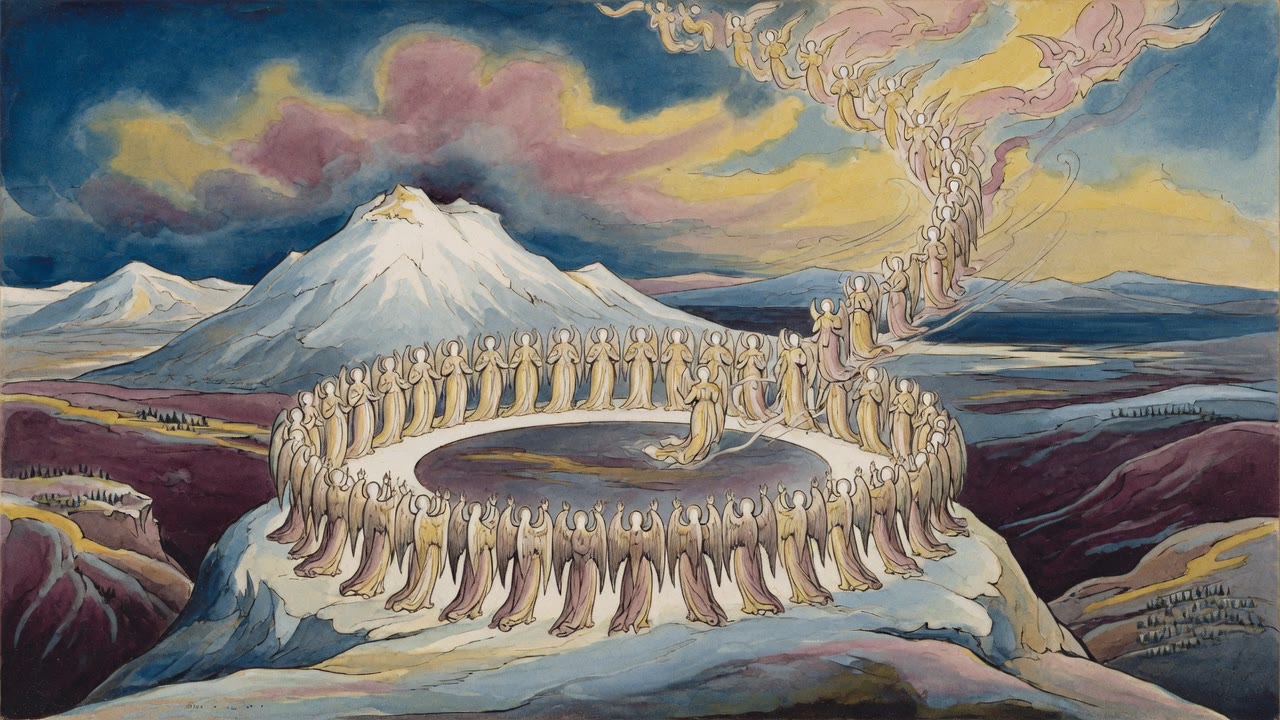
Shemhazai was afraid his companions would lose their nerve. They had gathered on the summit of Mount Hermon, two hundred sons of God, and they were about to do something that could not be undone. They were going to descend to the daughters of men and take wives. Every one of them knew this was forbidden. Shemhazai knew that if one of them backed out and reported the others, the consequences would fall on everyone who had gone through with it. So he proposed an oath. Every one of the two hundred swore together, binding themselves as a group: if they went, they all went. No one would escape the consequence by turning informer.
They swore. They descended. The mountain is named for that oath in the oldest stratum of the tradition: Hermon from cherem, the binding curse, the thing devoted to destruction.
What They Brought With Them
When the Watchers took on physical bodies, something happened to them. Their vast angelic nature, all fire and immensity, compressed itself into something smaller and heavier, shaped to fit the human world. They found they wanted things they had never wanted before. The daughters of men found them beautiful. The angels took wives, and their children were giants, the Nephilim, creatures of enormous appetite who consumed every animal and grain the earth produced, then turned on human beings, and finally on each other.
But the giants were a temporary catastrophe. Azazel was the permanent one.
Azazel taught men to make weapons. He instructed them in the forging of swords, knives, shields, and breastplates, the entire technology of killing each other efficiently. He taught women the art of cosmetics and jewelry, how to darken eyes and adorn flesh, how to use beauty as a weapon. The ancient sources are careful about this pairing: Azazel's two gifts, military weaponry and sexual allure, are the two forms of human destructiveness that would mark every subsequent civilization. Violence and seduction. The Watchers had not merely violated heaven's law by descending. Through Azazel they had distributed that violation throughout human culture.
The Cry That Reached Heaven
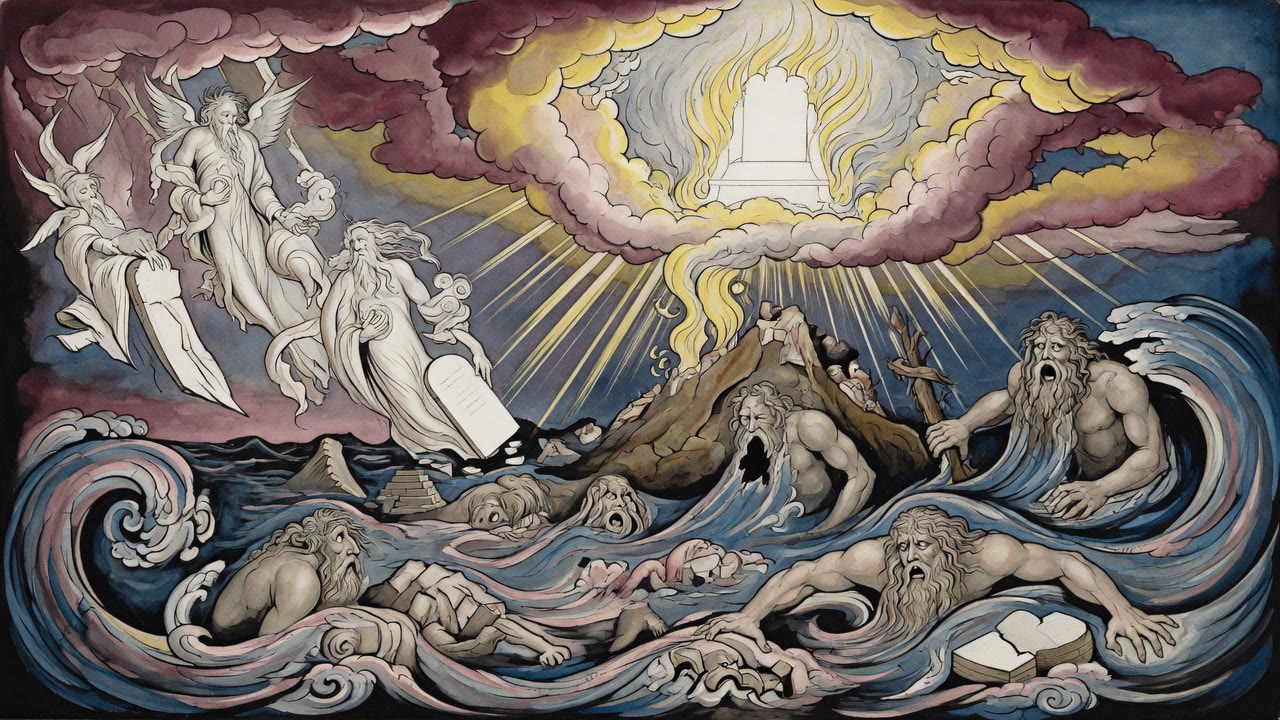
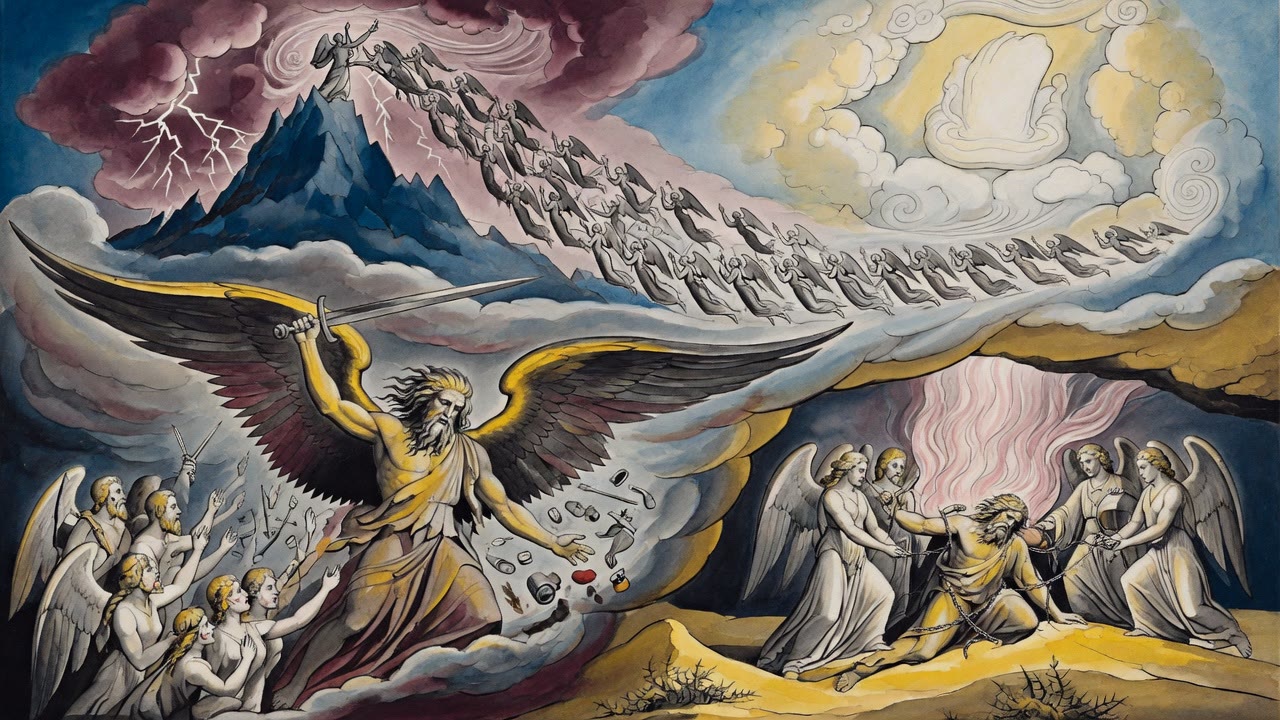
The earth cried out. The text of 1 Enoch preserves the account of human souls going to the angels Michael, Gabriel, Raphael, and Uriel, presenting their petitions before the divine throne. The giants were eating humanity. Azazel's weapons were filling the earth with blood. The daughters who had been taken were weeping in captivity. The cries rose from everywhere at once, and the four archangels carried them before God.
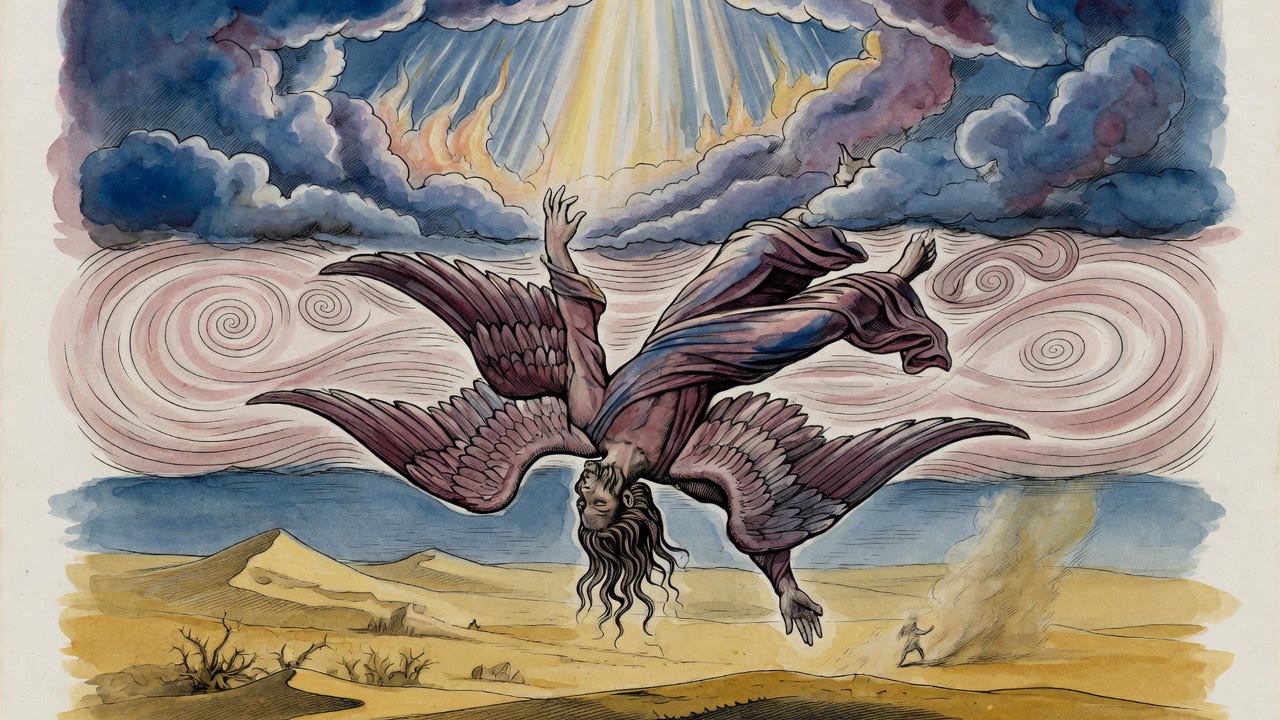
God's response was precise. He did not simply destroy the Watchers. Each archangel received a specific commission. Raphael was sent to bind Azazel hand and foot and cast him into the darkness of a desert place called Dudael, a rocky wasteland in the wilderness. There Raphael threw rough and jagged stones over him, covered him with darkness, left him in permanent confinement to wait for the final judgment. The Watchers' children, the giants, would be allowed to destroy each other in a war before the flood came to finish the work. Shemhazai would watch his sons kill each other and then face his own punishment. But Azazel, because his sin was the most lasting, received the harshest individual treatment. He was buried alive under the desert and left there.
The Scapegoat and the Memory
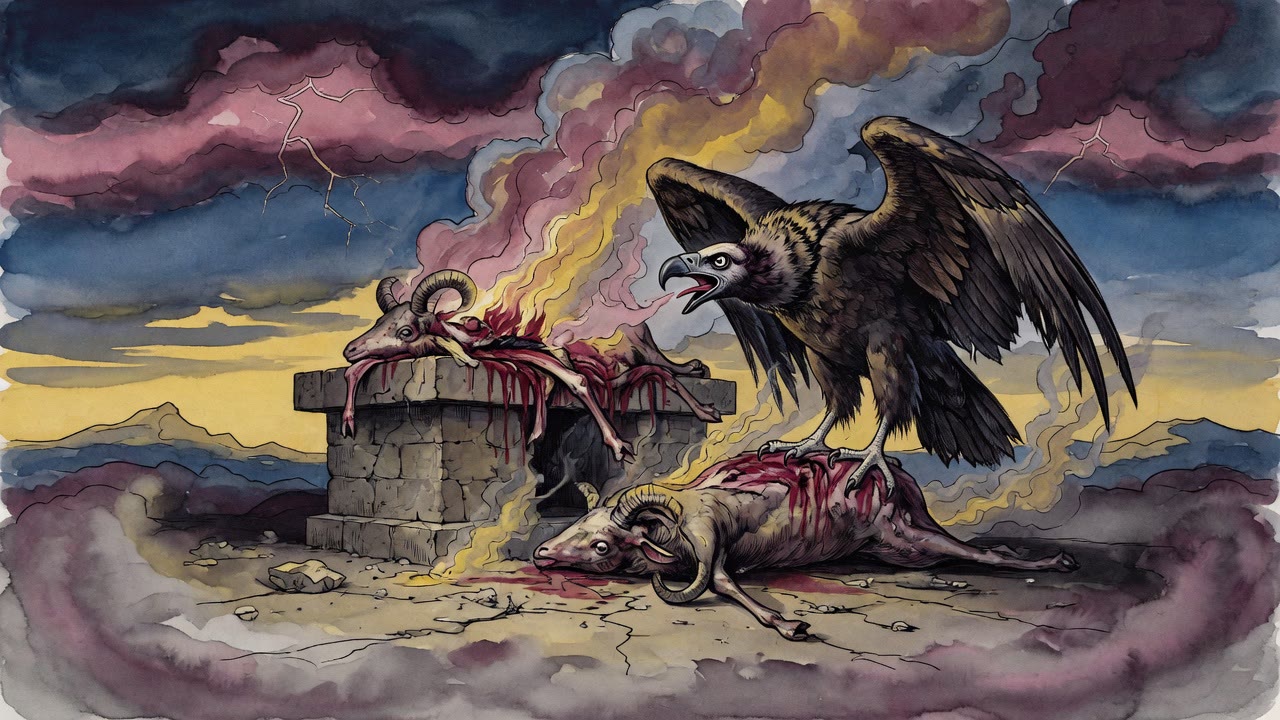
Every year on Yom Kippur, one goat was chosen by lot and taken to the wilderness. It was not sacrificed at the altar like the other goat. It was led to a cliff at a desolate place and thrown off. The name of that cliff, in the liturgy of Leviticus, is Azazel. The wilderness of atonement carries his name because his punishment is its archetype: the binding, the rough stones, the permanent exile in a desolate place. The annual ritual of sending away the nation's sins to Azazel was the people re-enacting the original binding, dispatching their accumulated violence and corruption back to the being who had first taught those arts to human beings.
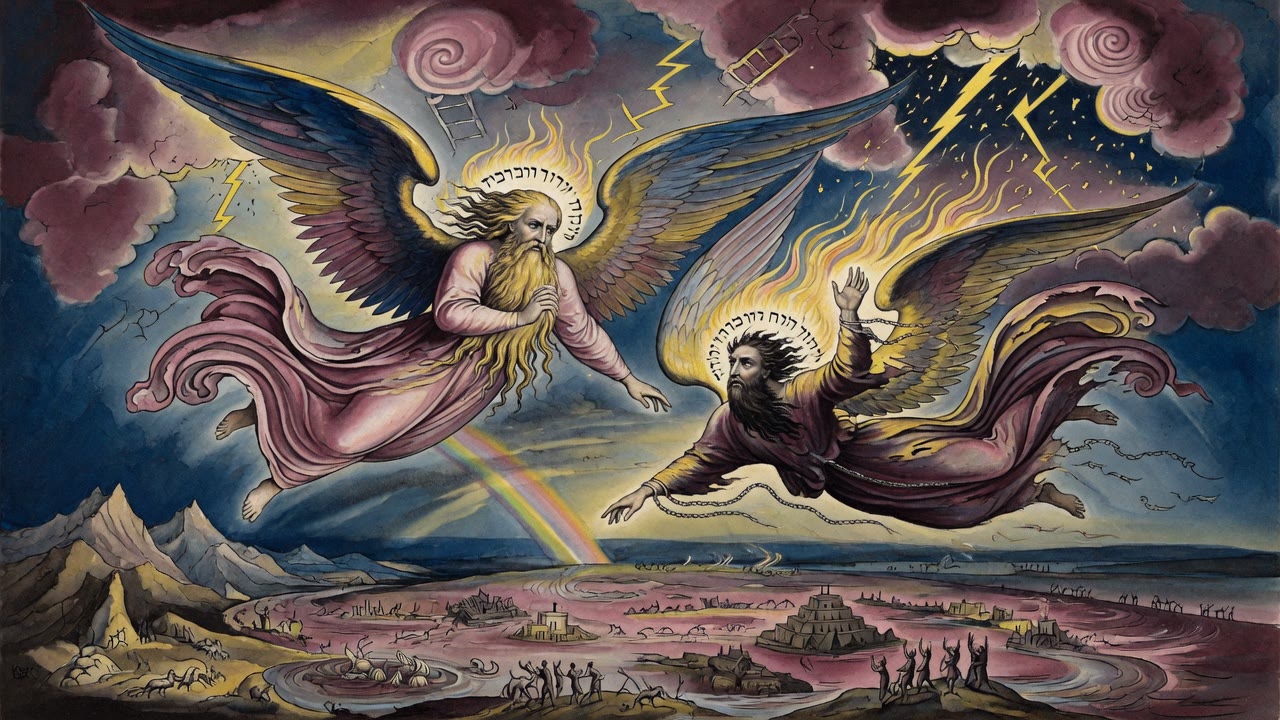
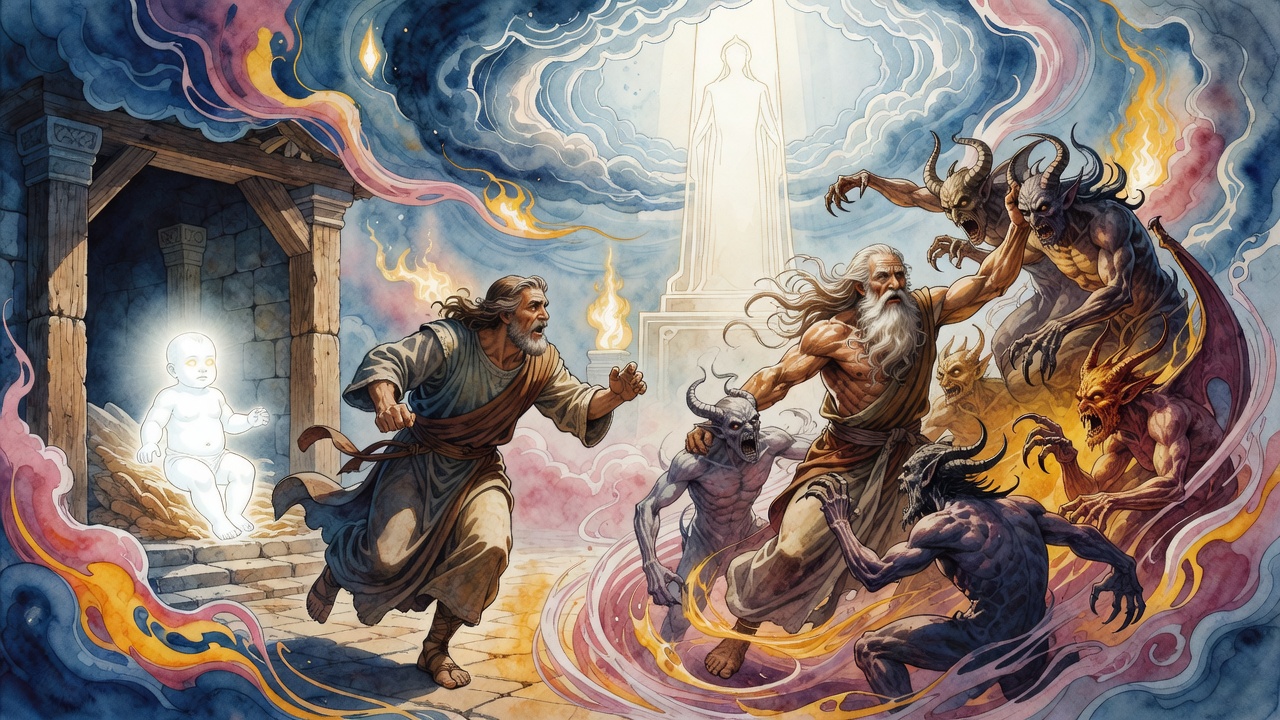
The Apocalypse of Abraham, a later text from approximately the 1st-2nd century CE, brings Azazel into the moment of Abraham's binding of Isaac. He appears as a tempter, dressed in unclean feathers, trying to divert the patriarch from his test. Abraham, guided by the angel Iaoel, silences him. The accuser who has been buried under the desert since before the flood surfaces again at the critical moment of Israel's founding story, and Abraham answers him with words of divine power. The binding does not hold forever, it seems. But it holds long enough.
← All myths