The Watchers Fell and the Giants Drowned in the Flood
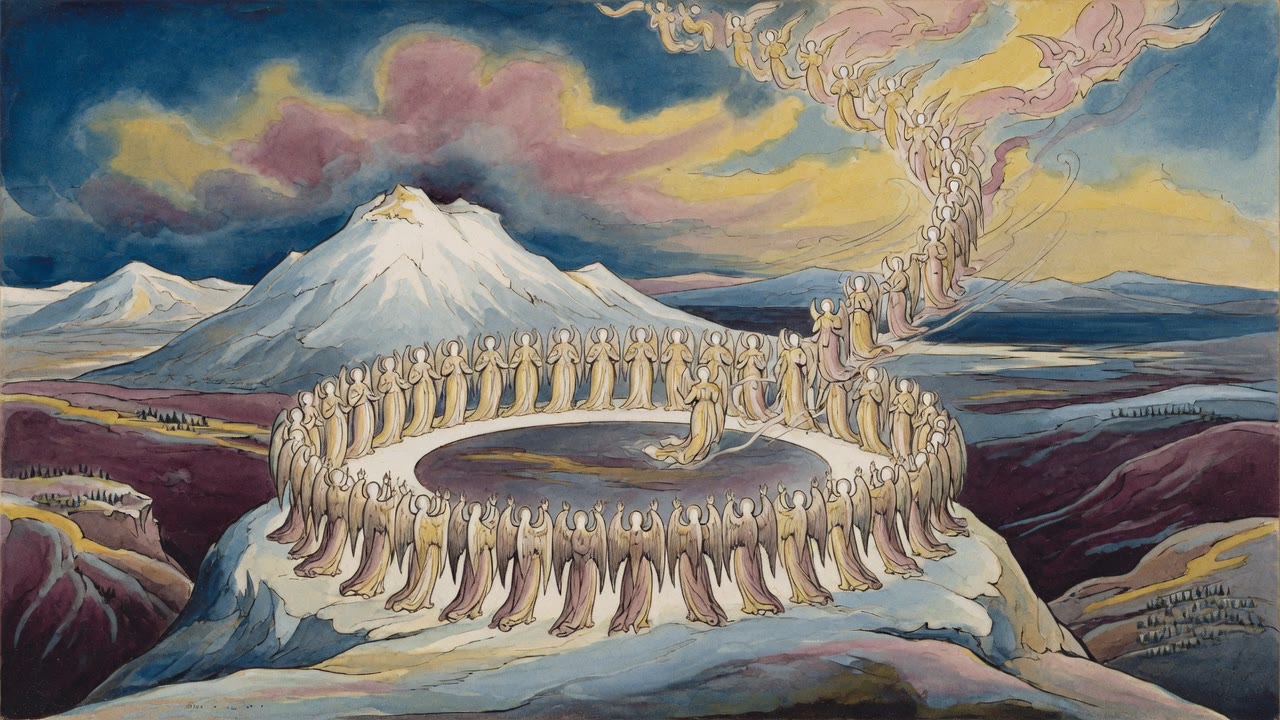
A girl named Istehar asked Shemhazai for the Name that lifts a body into heaven. She spoke it and never came back down to him.
Table of Contents
Two angels stood before God and asked to take the world away from men. The generation of Enosh had gone after idols. The generation that would drown had already begun to go astray. God was grieved that He had made man. Shemhazai and Azazel reminded Him of their old objection. "What is man, that Thou shouldst remember him?"
 Click for full size
"Then what shall become of the world?" God said.
"We will occupy ourselves with it."
Two Angels Asked to Take Over the World
God told them what they did not want to hear. If they lived on the earth, the evil inclination would sway them as it sways the sons of men, and they would be more stubborn than the people they judged. They asked for sanction anyway. "Let us descend among the creatures, and then Thou shalt see how we shall sanctify Thy name."
"Descend," God said, "and dwell ye among them." He let the inclination sway them as soon as their feet touched the ground.
They had been Watchers, set over the children of men. In the days when women were born across the earth, they looked and found the daughters of men beautiful, and they took wives from all they chose. The line between teacher and trespasser lasted about as long as that look.
Istehar Took the Name and Left
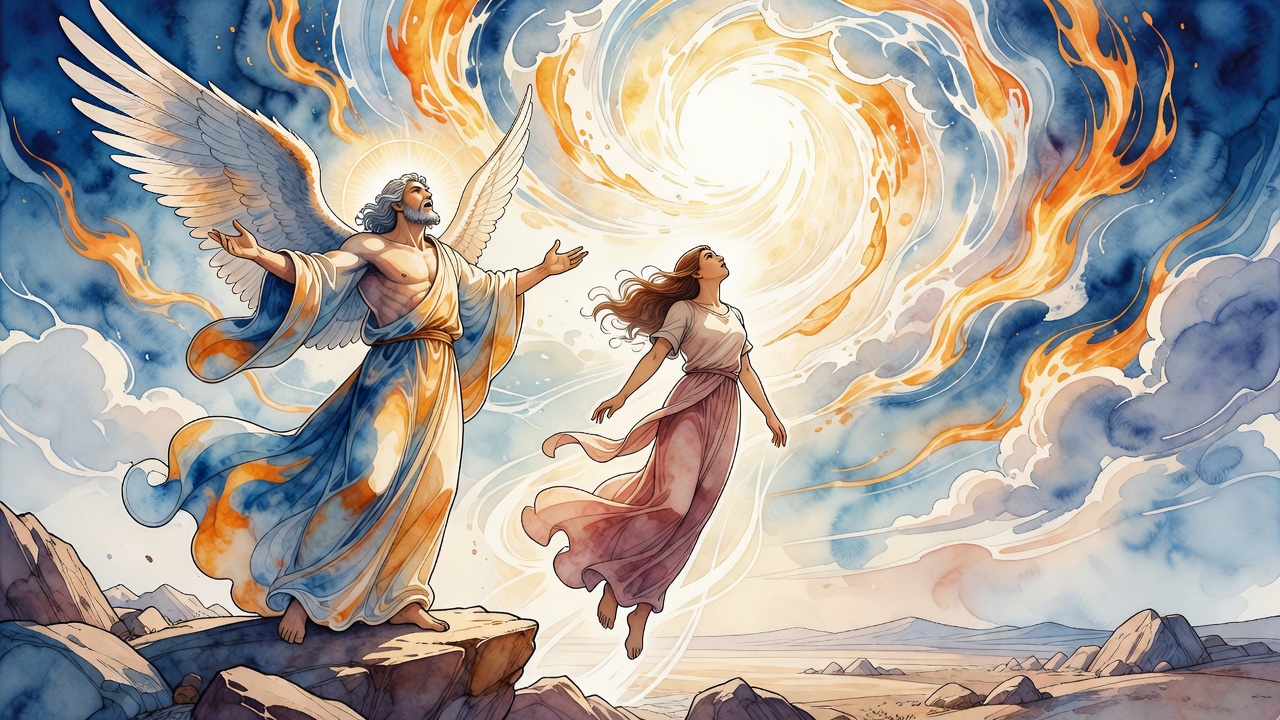
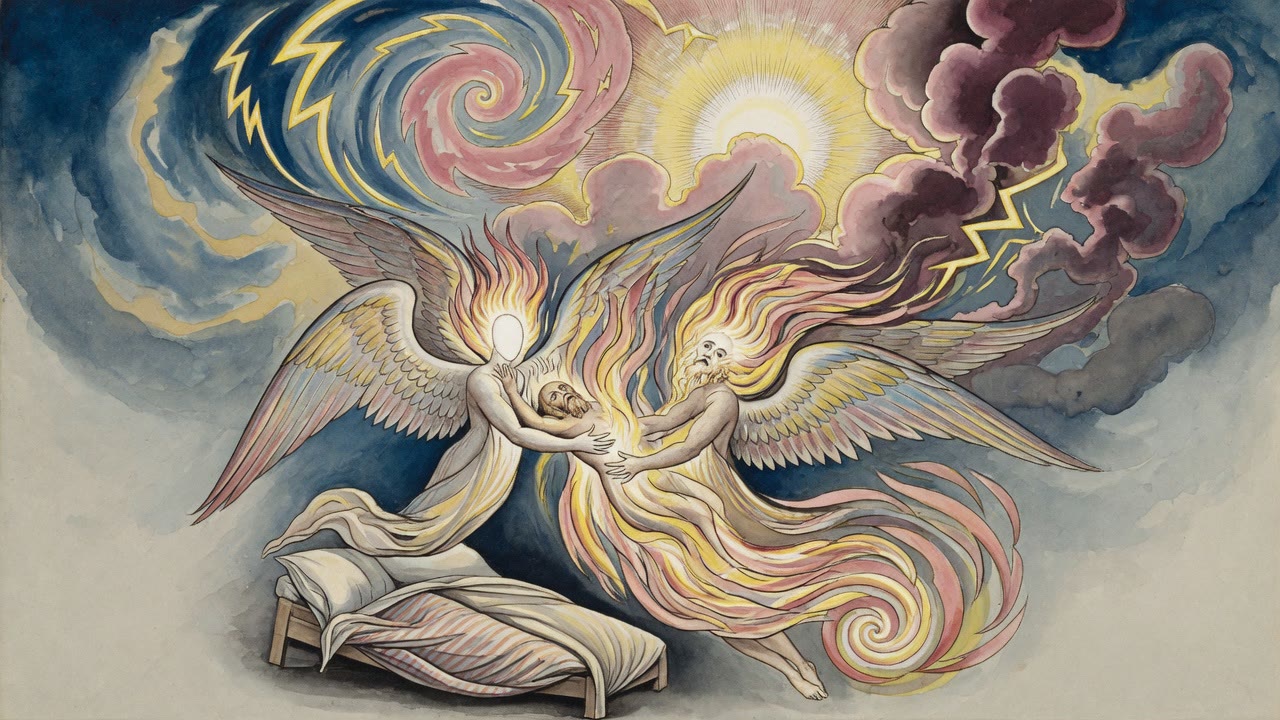
Shemhazai saw a girl named Istehar. "Listen to my request," he said. She would not, not until he taught her the Name by which he rose to heaven. He taught her. She spoke the Name, and her body left the ground. She did not come back down to him.
God said, "Since she has departed from sin, go and set her among the stars." She shines in the seven stars of the Pleiades, so that men would not forget the girl who used an angel's password to get away from him.
Shemhazai and Azazel were not stopped. They took wives. Shemhazai begat Heyya and Aheyya. Azazel took charge of dyes and ornaments, the arts by which women entice men. The children of those marriages were giants, too large for the world that received them. Violence filled the earth. All flesh corrupted its way, from man to beast to bird.
The Giants Ate Until the Earth Failed
Heyya and Aheyya ate a thousand camels a day, and a thousand horses, and a thousand oxen. The fields could not keep up. The giants ate the crop, then the animals, then each other. No boundary held. The blood they spilled cried up from the ground.
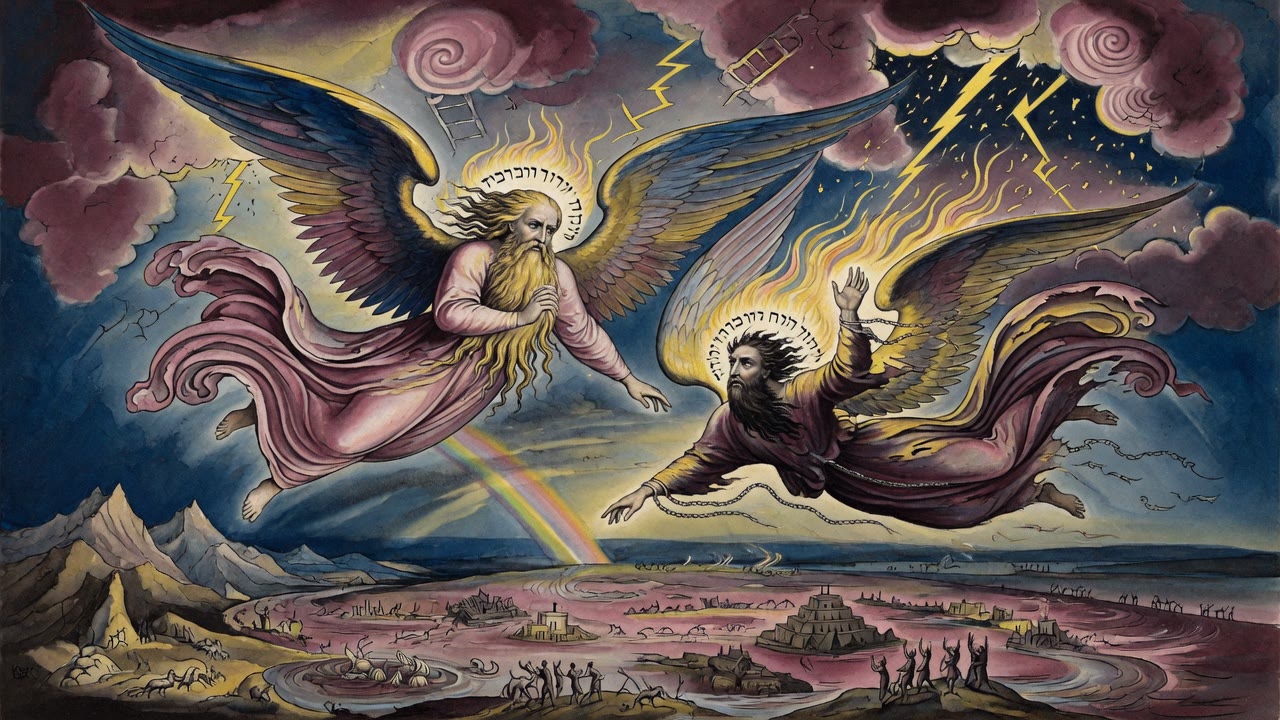
God sent Metatron to Shemhazai with a message. The world would be destroyed. A flood was coming. Shemhazai raised his voice and wept, not first for the Name he had given away, but for his sons. "How shall my children live, and what shall they eat, if the world is destroyed? Each one of them eats a thousand camels, a thousand horses, and a thousand oxen daily."
The hunger that had broken the earth was now the thing he could not save.
The Sons Dreamed of a Knife and an Axe
One night Heyya dreamed a great stone spread over the earth like a table, covered with writing. An angel came down with a knife and scraped the lines away until one line was left, with four words on it. Aheyya dreamed a garden. An angel came down with an axe and cut the trees until one tree remained, with three branches.
They woke confused and went to their father. He did not soften it. God was about to bring a flood. One man would be left, and three sons. The four words. The three branches. They cried and asked what would become of their names. Shemhazai told them not to trouble themselves. Whenever men lift a heavy stone, or a ship, or any load that makes the body fail, they will sigh and call Heyya and Aheyya. The names would last as a grunt under weight. The sons were quieted.
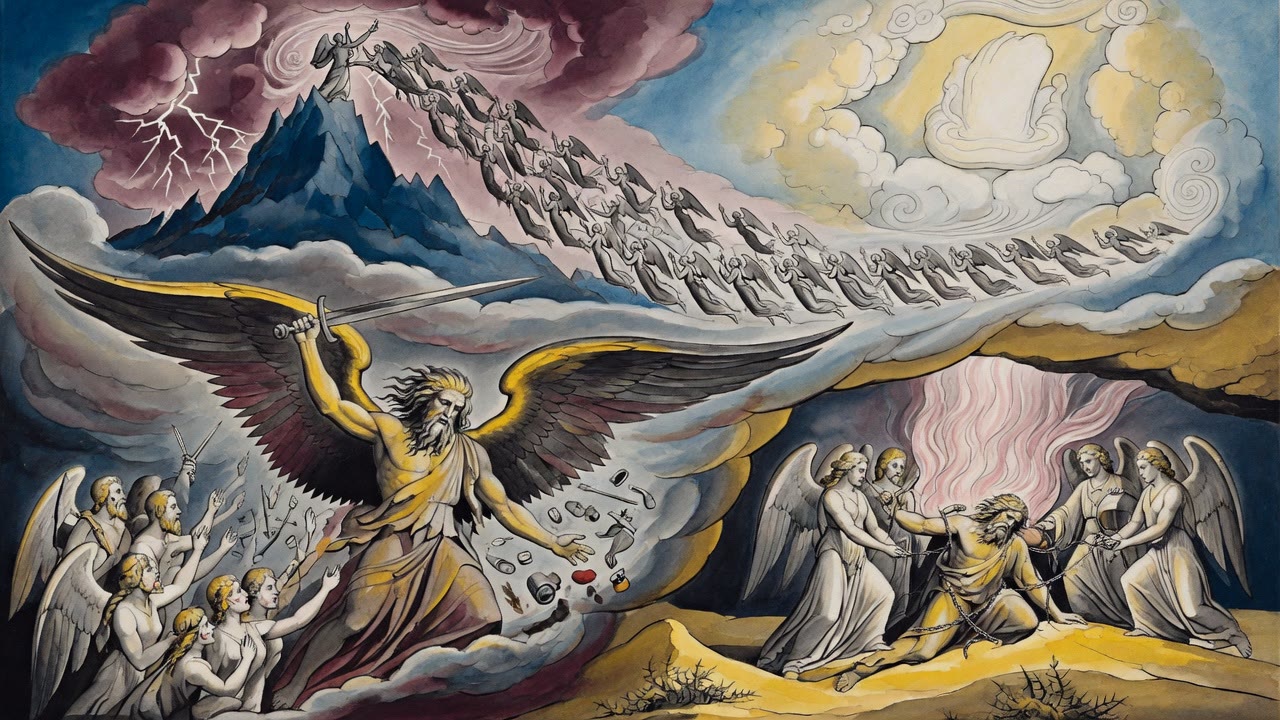
Four archangels took the rest of the work. Uriel went to Noah to tell him the earth would be destroyed and to teach him how to live. Gabriel drove the giant sons into deadly fights with one another. Michael bound the Watchers under the hills for seventy generations. Raphael was sent for Azazel.
Shemhazai Hung Between Heaven and Earth
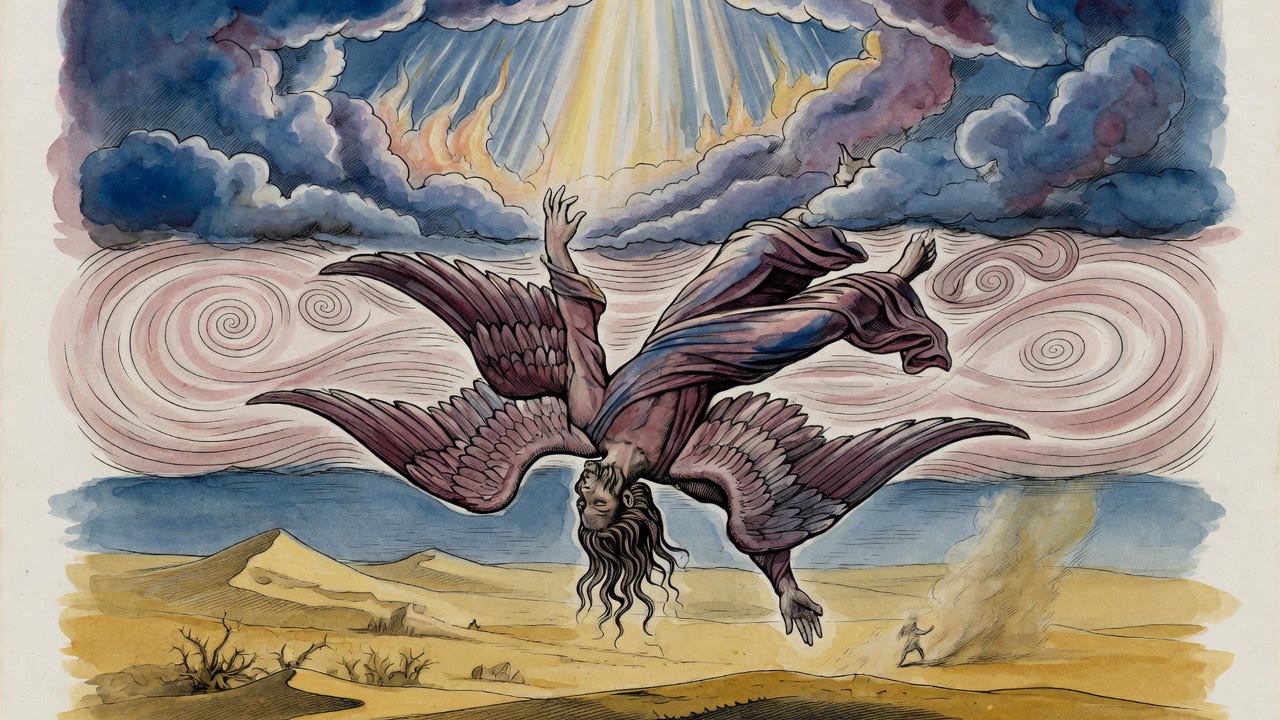
Shemhazai repented. He suspended himself between heaven and earth, head downward, because he dared not appear before God. He still hangs there, in the gap he chose when he asked to come down.
Azazel did not repent. Raphael put him in chains, cast him into a pit of sharp stones in the desert Dudael, and covered him with darkness, to stay until the day of judgment. He remains appointed over the dyes that pull a person toward sin. On the Day of Atonement Israel would later cast one lot for the Lord and one lot for Azazel, so that he might bear a burden he had taught the world to make.
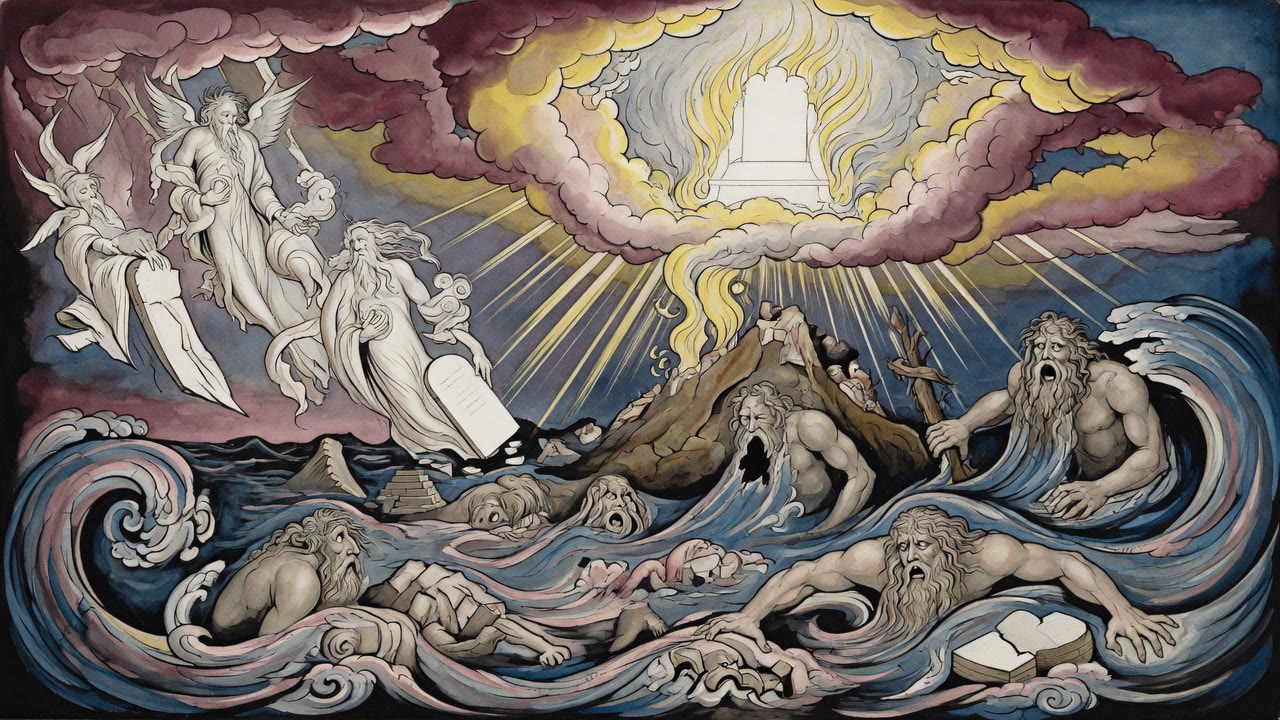
The water came. The giants drowned. Their hunger did not. Their spirits stayed bound to the earth without bodies, still looking for a mouth. Shemhazai hangs. Azazel sits in the dark. Noah's three branches are the only trees left from the dream.
← All myths