Shamchazai Repented Upside Down Between Heaven and Earth
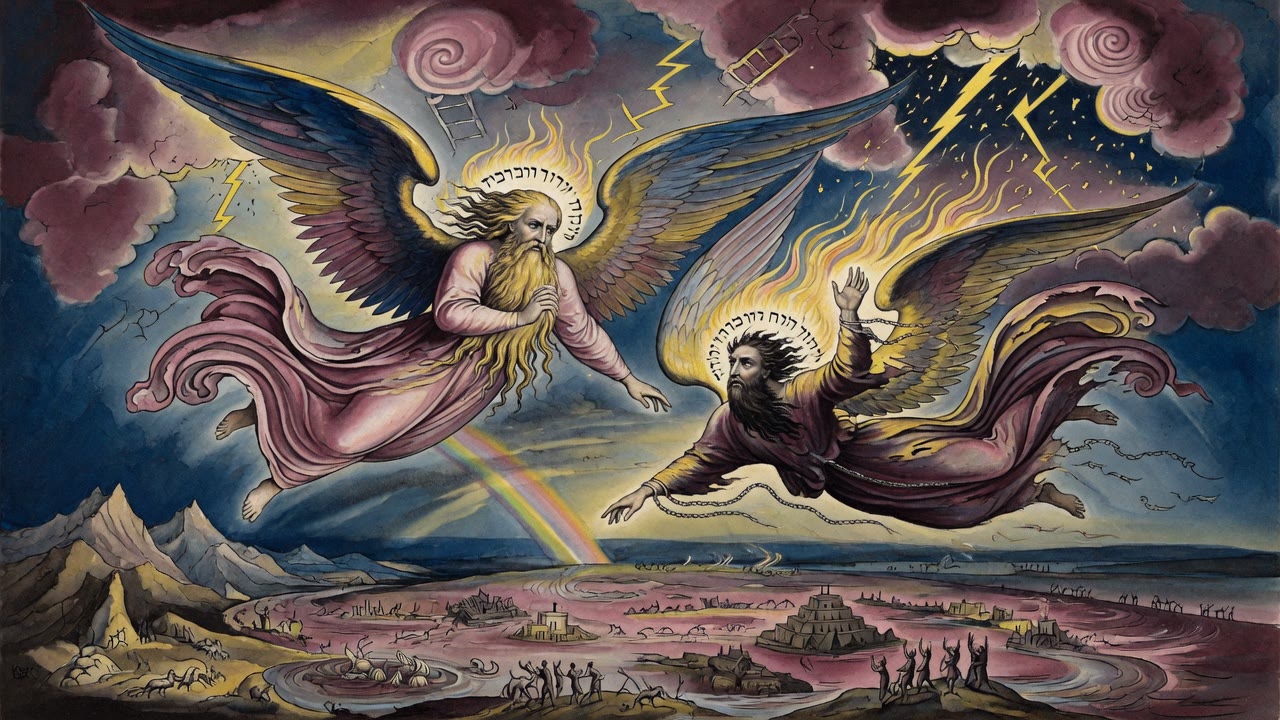
Shamchazai and Azael descended to prove angels could master the earth. One hangs in repentance between the worlds; the other became a name in the desert.
Table of Contents
 Click for full size
Two Angels Who Were Certain They Could Do Better
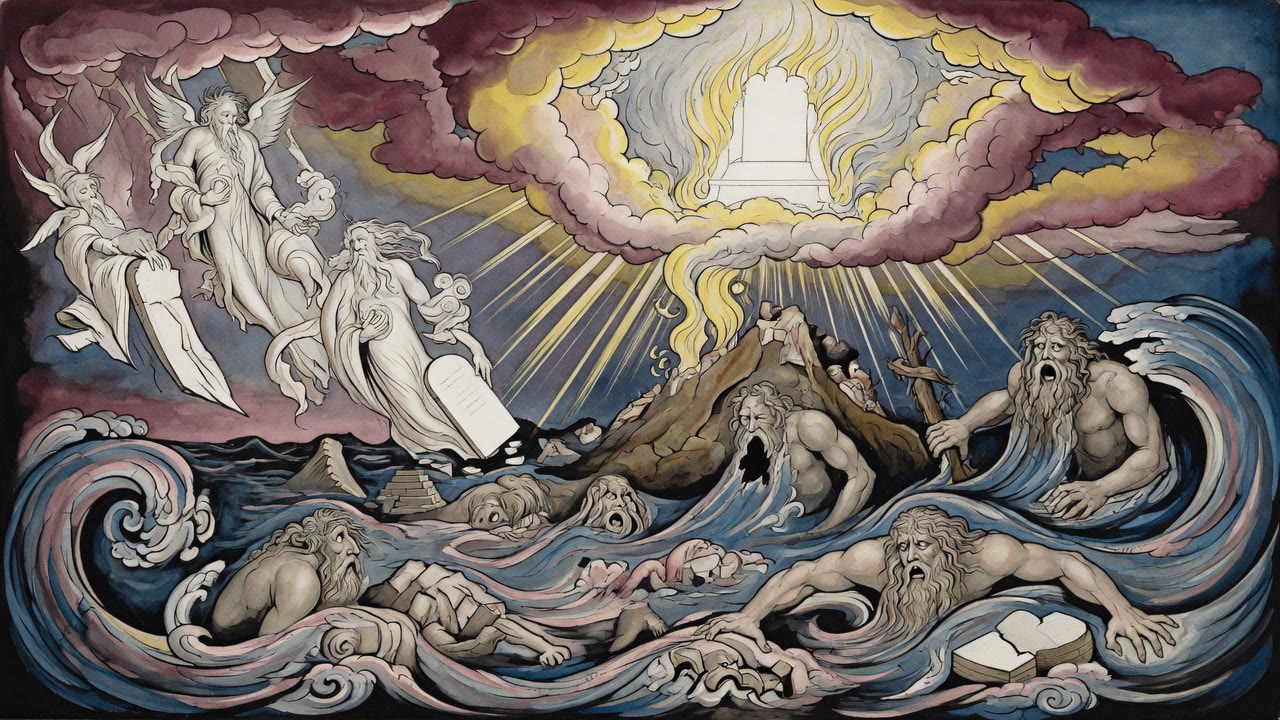
The generation before the Flood had filled the world with idolatry and violence. The angels Shamchazai and Azael stood before God and returned to the old verse from the Psalms: what is man, that You are mindful of him? They were not asking a philosophical question. They were pressing a case. Humanity had failed the trust given to it, and the angels wanted to say so out loud, and to say what they thought should follow from it.
God heard the complaint and answered with a warning. If you descend to earth and enter the body and the soil, the evil impulse will rule you too. Heaven is not virtue when nothing pulls at the flesh. Remove the pressure of desire and appetite and mortality, and even a stone could be righteous. The real test is what happens when you have a body that wants things and a world full of things to want.
The angels insisted anyway. We are stronger than that. Let us descend.
God said: go.
What the Earth Did to Them
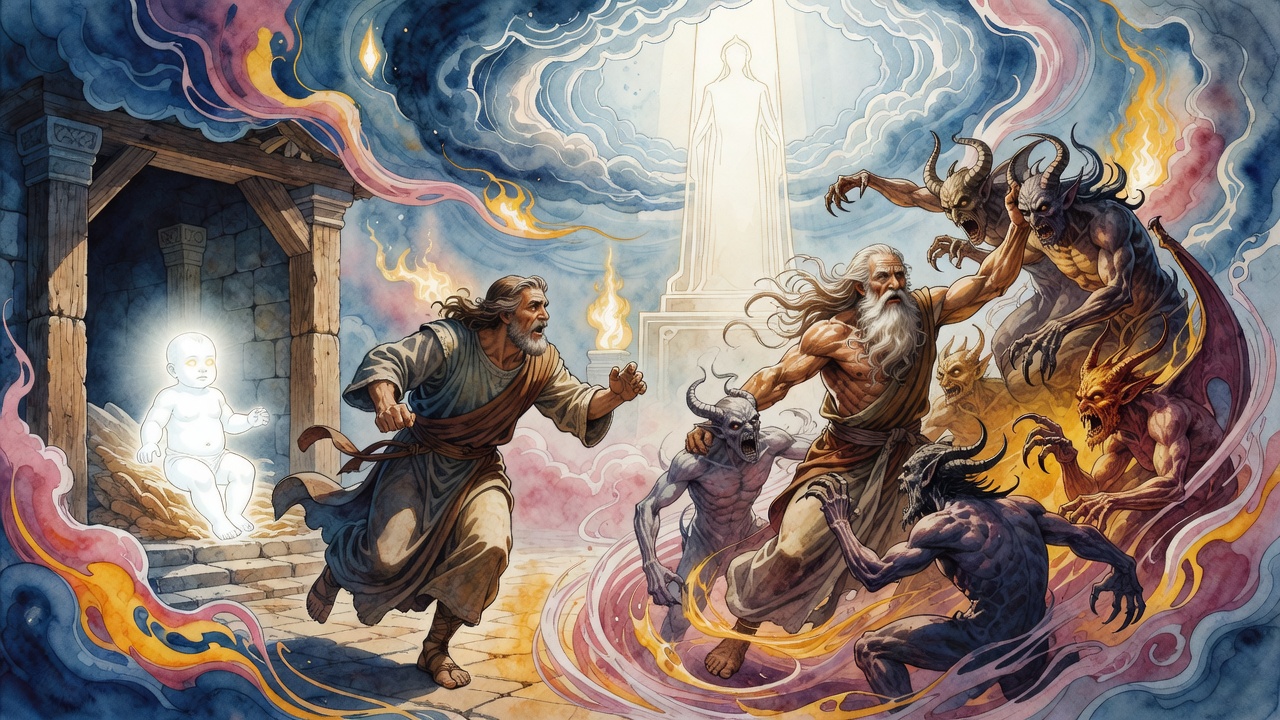
Shamchazai came down and a young woman caught his attention. Her name was Istehar. He wanted her, and she looked at him with a clarity that stopped him cold. She asked what would happen to her if she gave him what he wanted. He said she could ask for anything in return.
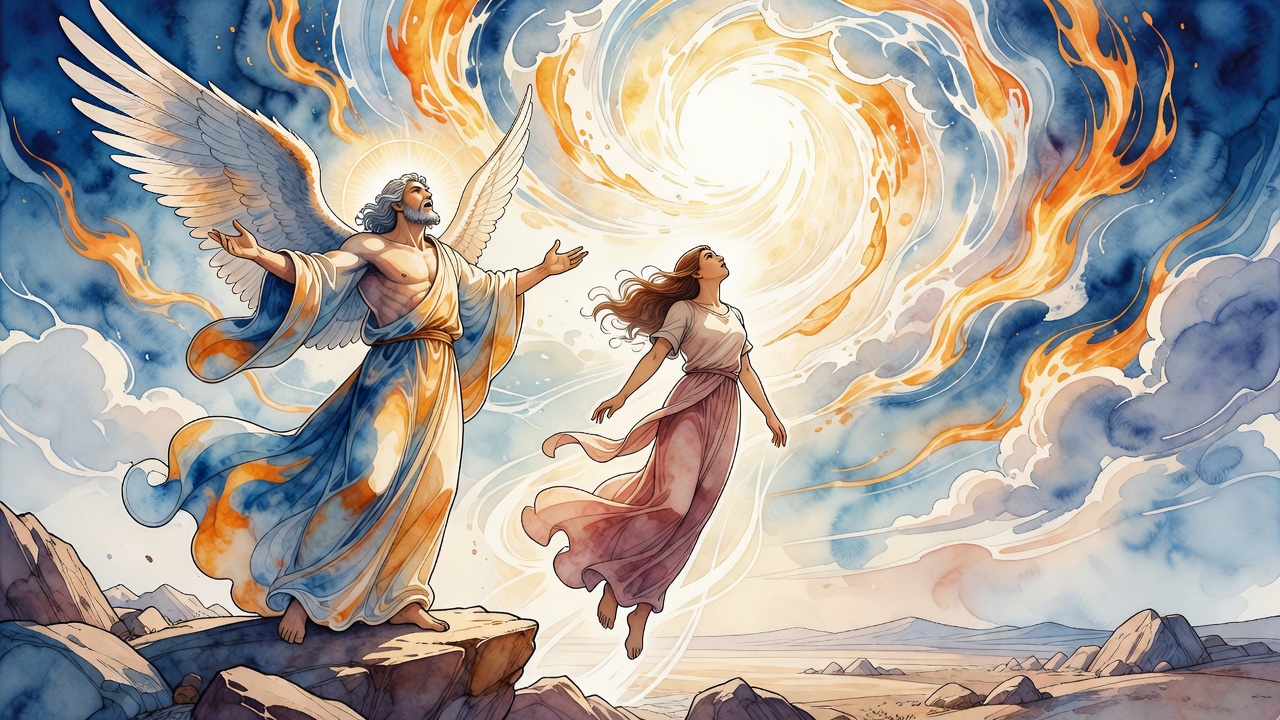
She asked for God's true name. He gave it. She used it to ascend into heaven rather than remain with him, and God placed her among the stars, where she shines still. Shamchazai was left standing on the earth with nothing, having given away the most powerful thing he possessed for nothing, exactly as human beings had always been doing. The warning had been exact. He descended and the evil impulse found him before he had been on the ground an hour.
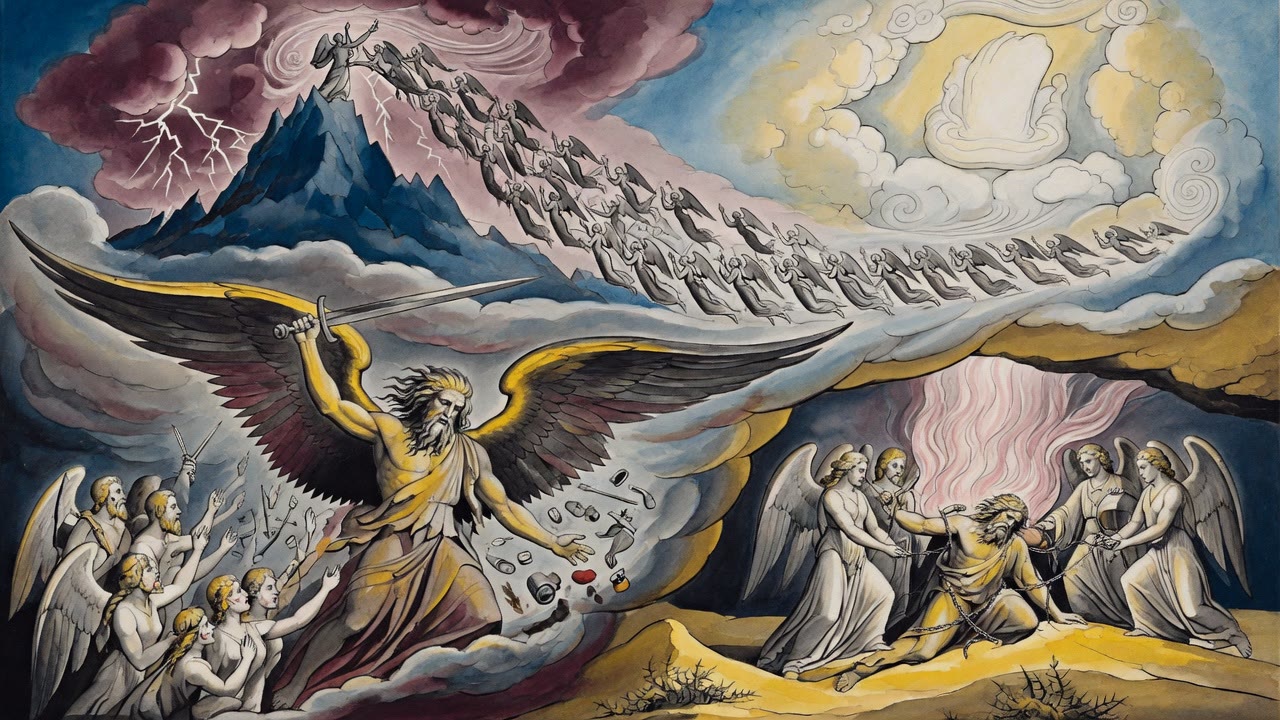
Azael went further. He taught the human women the arts of ornamentation and seduction. He taught what the earth held, the metals and the dyes, the ways to make a face into a different face. He gave human beings tools for desire that they had not had before, and they used every one of them. He did not turn back.
The Position Shamchazai Chose
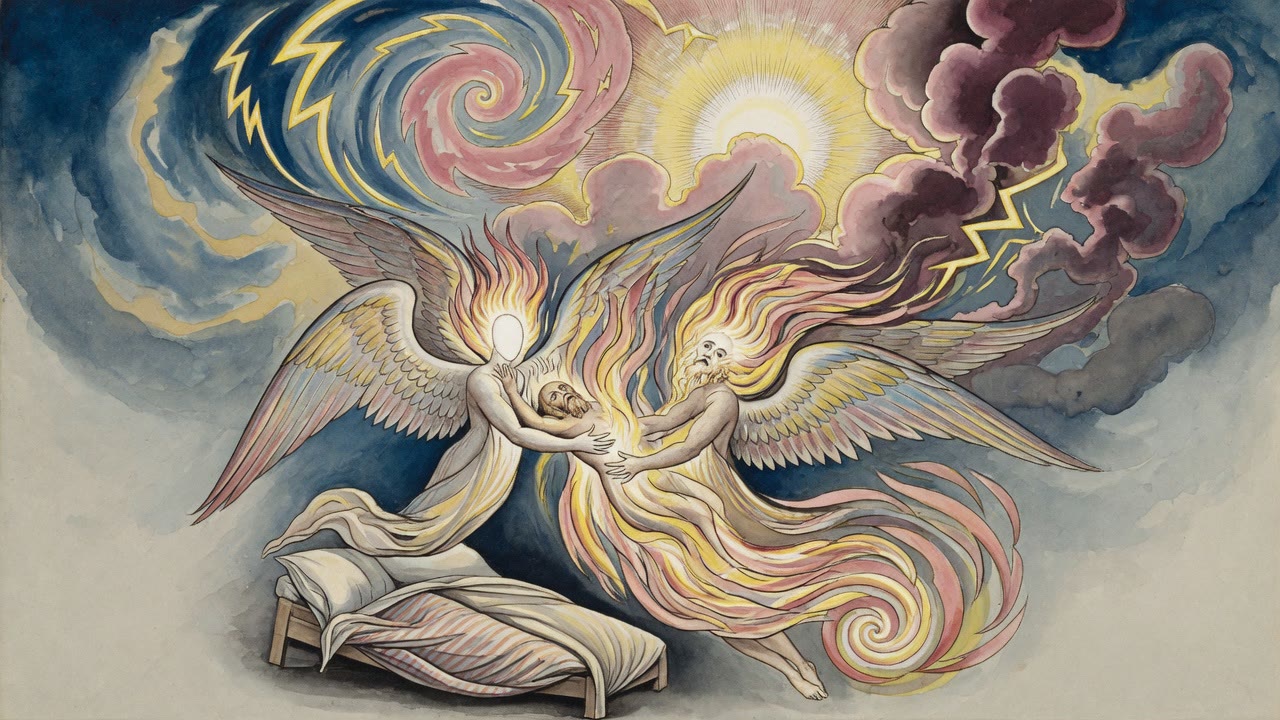
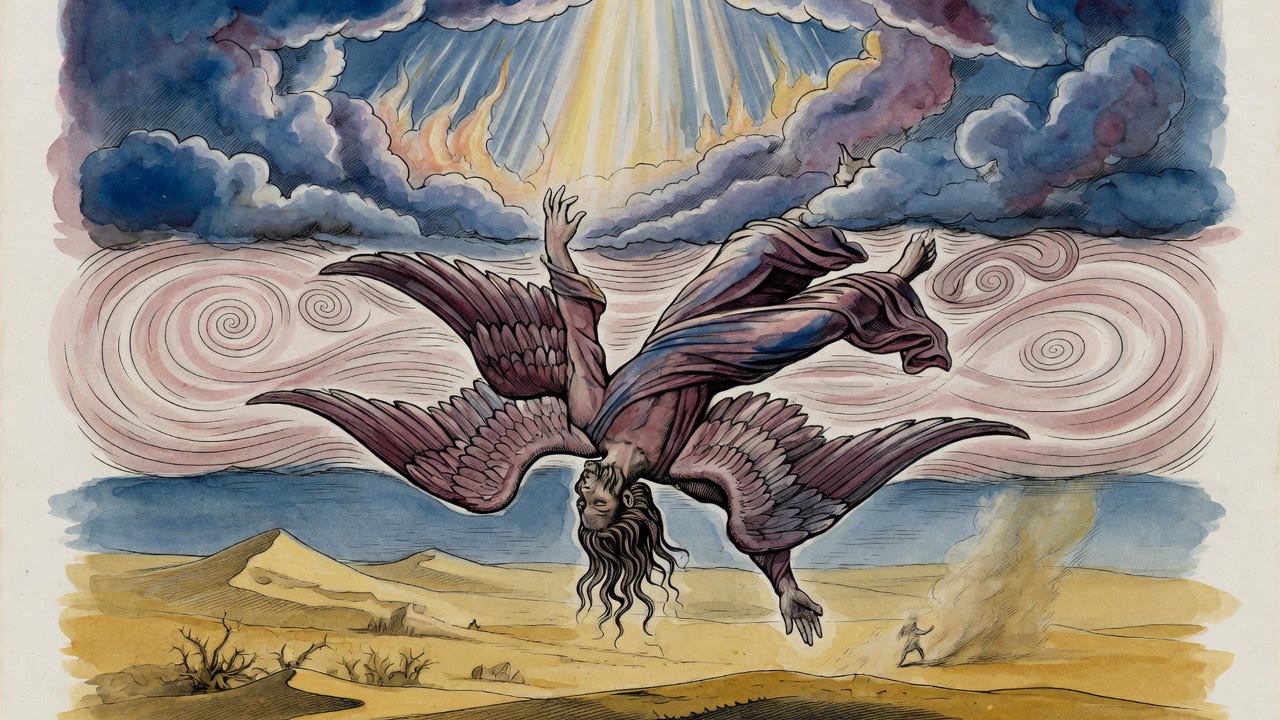
When Shamchazai saw what he had become, he repented. Not a small repentance, not an apology made quietly while standing on solid ground. He hung himself between heaven and earth with his head pointing downward and his feet pointing up, and he has been hanging there ever since. He is in neither world. He could not go back to heaven having fallen, and he would not rest on the earth that had swallowed him. So he chose the space between, the permanent posture of a creature caught between what it was and what it became.
The midrash does not say God rejected him. It does not say he was condemned to this position. He chose it. A being with enough power to insist on descending despite God's explicit warning had enough will to choose the manner of his own ongoing punishment. He hangs between the worlds, upside down, as his own verdict on what he did.
Azael in the Desert
Azael did not repent. His name became the name of the Yom Kippur goat, the goat sent out to the wilderness carrying Israel's sins on its head. This is where the question the students of Rav Yosef had asked reaches its answer. What is Azazel? It is the name of the one who did not turn back. The goat does not go to God. The goat goes to Azael, carrying back what came from him in the first place.
The scapegoat is sent into the desert because the desert is where Azael's inheritance lies. The things the goat carries, the accumulated weight of human desire and transgression and the arts of making the body want more than it should, belong to the one who taught them. Sending the goat out is not a sacrifice to Azael. It is a return of borrowed goods.
One angel hangs upside down in the air above the earth, caught between his failure and his refusal to stop being the one who failed. The other waits in the desert for his goods to come back. Every year, on the Day of Atonement, Israel acknowledges both of them: the possibility of repentance that does not arrive in a clean place, and the reality of what happens to the desire that does not repent at all.
← All myths