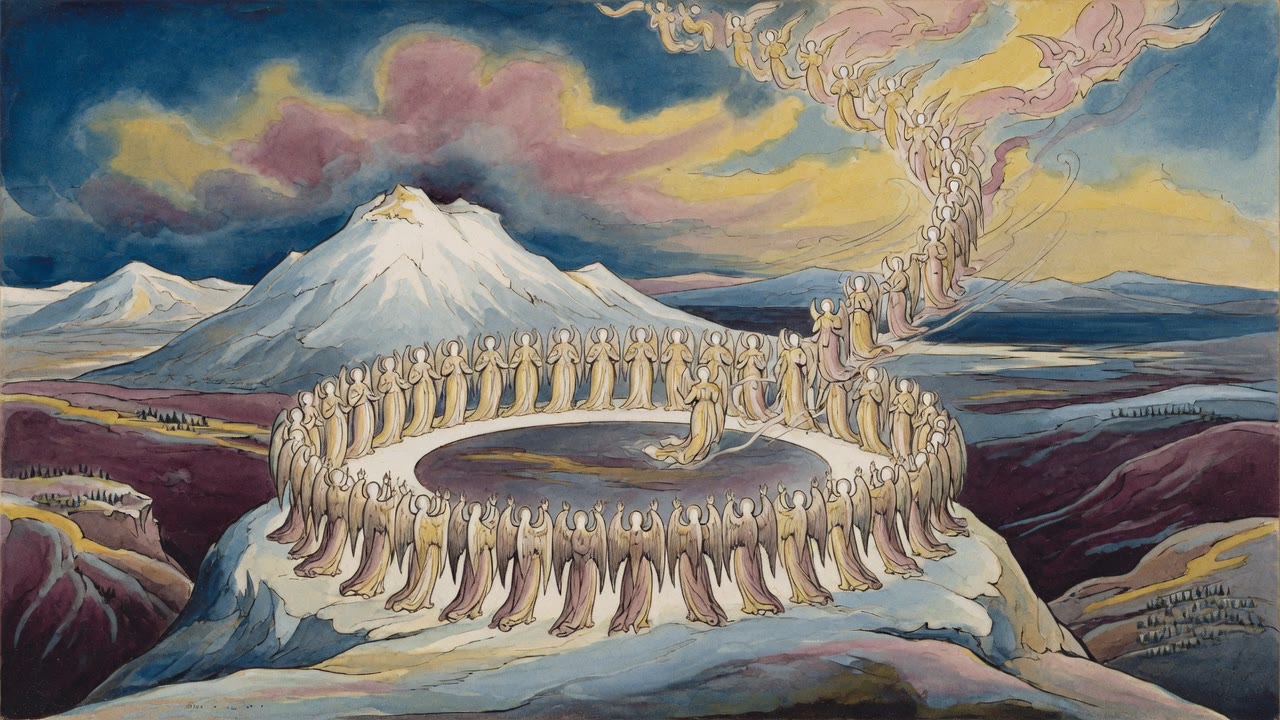
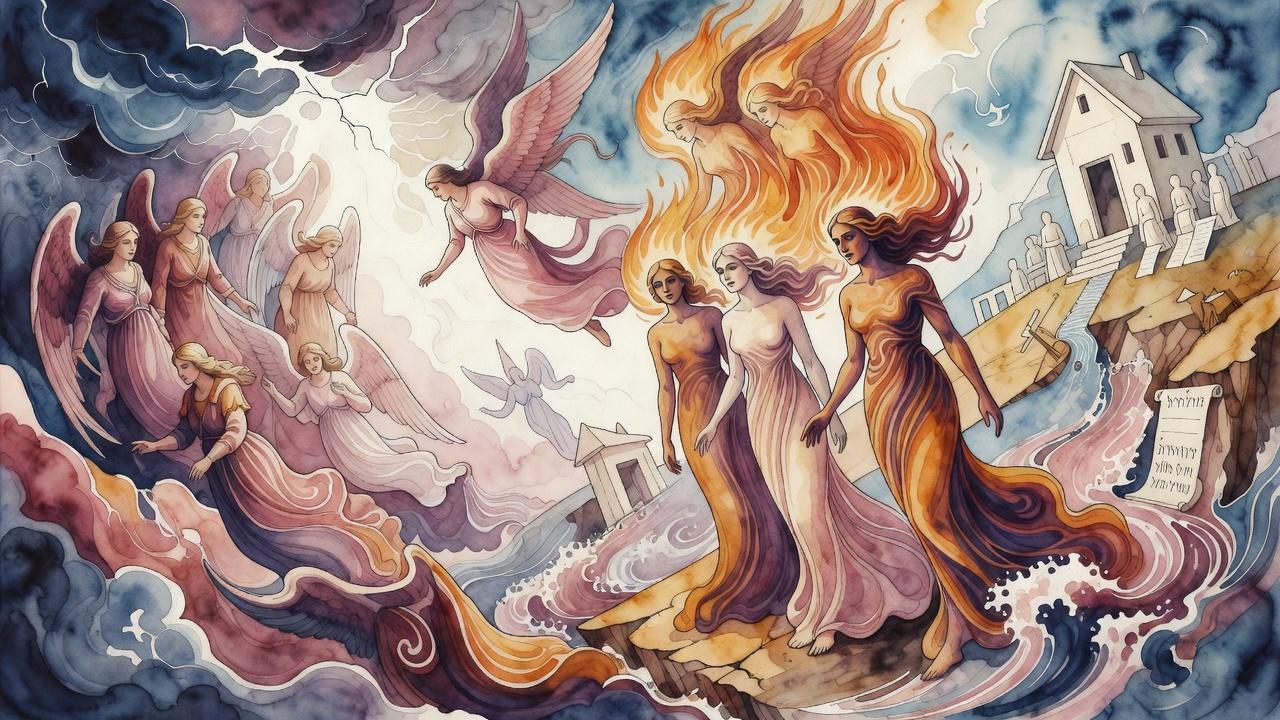
Shemhazai and Azazel Descended From Heaven Before the Flood
They swore they would sanctify the earth in bodies. God named the pull that would take them. Shemhazai wept for his sons' meals, not the rain.
Table of Contents
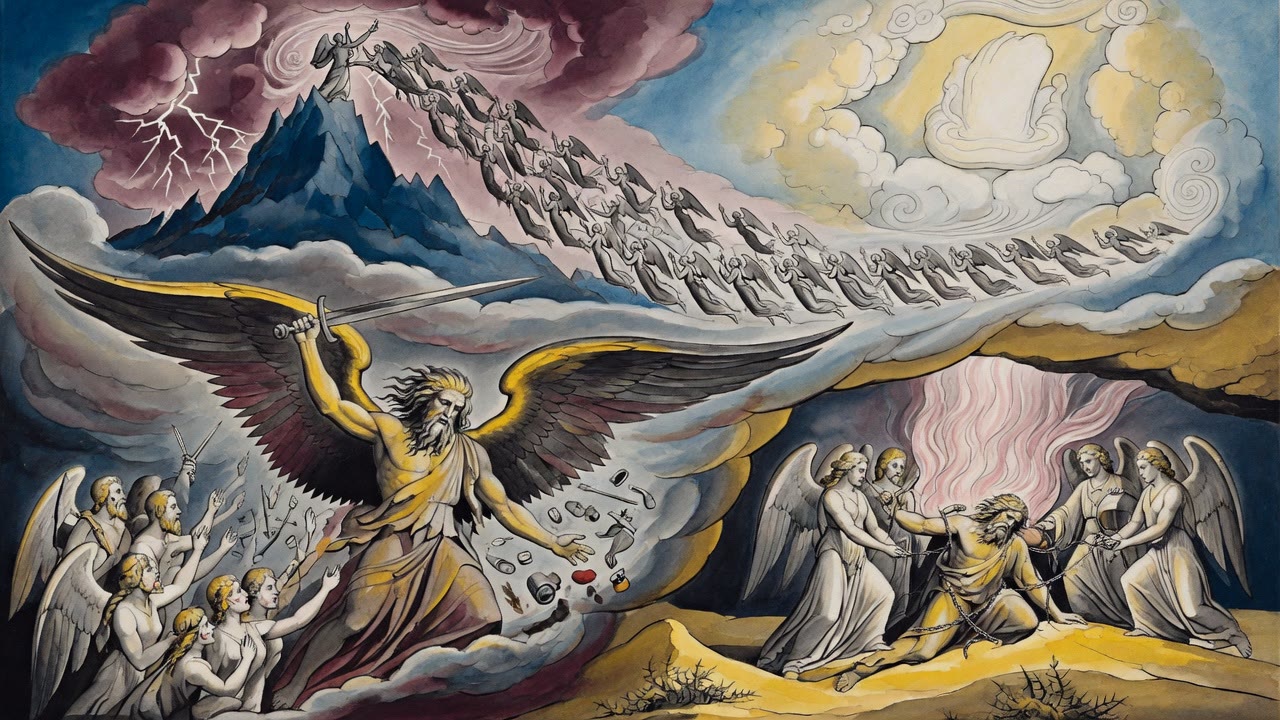
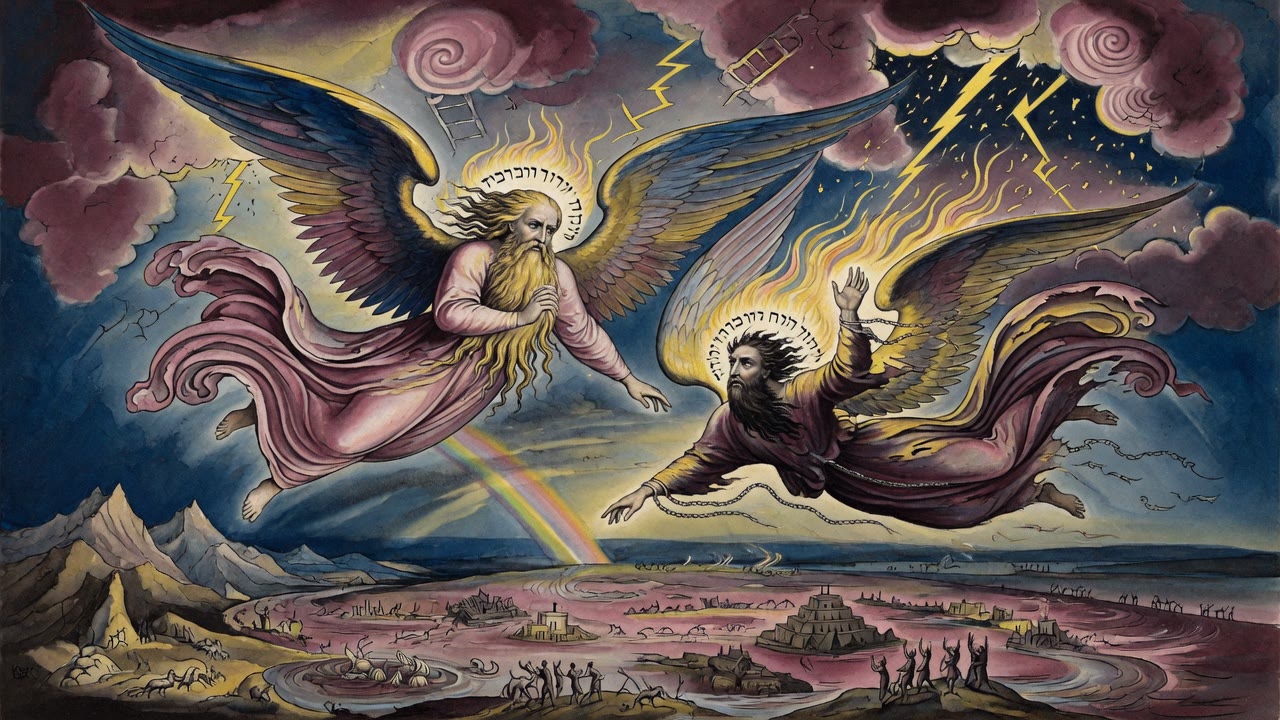
Two figures of fire leaned over the edge of heaven and looked down at a world gone rotten. Below them the generation before the Flood built altars to stone and metal and bowed to the work of their own hands. The smoke of false offerings rose past the feet of the watching host, and two of that host could not hold their tongues.
 Click for full size
Shemhazai spoke first, and Azazel beside him nodded along. "We told You so," they said upward, into the brightness. "We argued against this from the beginning. We asked then what we ask now: what is man, that Thou art mindful of him (Psalm 8:5). Look at them. They worship rocks. They have proven every word of our objection."
The Boast at Heaven's Edge
A question came back to them, quiet and enormous. "And the world without humanity, what becomes of it? Who fills it? Who keeps it?"
The angels did not hesitate. Confidence ran hot in them. "Send us down," they said. "We will take care of it. We will live among them and sanctify Your Name in the very places where these creatures of dust have failed. Give us the earth and we will show You what loyalty looks like worn in a body."
They expected agreement. They were made of light and had never once stumbled. What could the mud below teach them that they did not already master?
The answer was not what they wanted. "I know what waits for you down there," came the word. "If you descend, the yetzer hara (יצר הרע), the evil inclination, the pull toward your own desire that lives inside every thing I have made to choose, will rise in you too. It will overcome you. You will not best these humans. You will sink beneath them. You will become worse than the worst of them."
Shemhazai and Azazel heard this the way the certain always hear a warning, as noise to be endured before getting what they wanted. They had no such pull, they were sure. They were not flesh. They were faithful. So they were permitted to go, because some things cannot be told. They have to be lived.
Bodies That Could Hunger
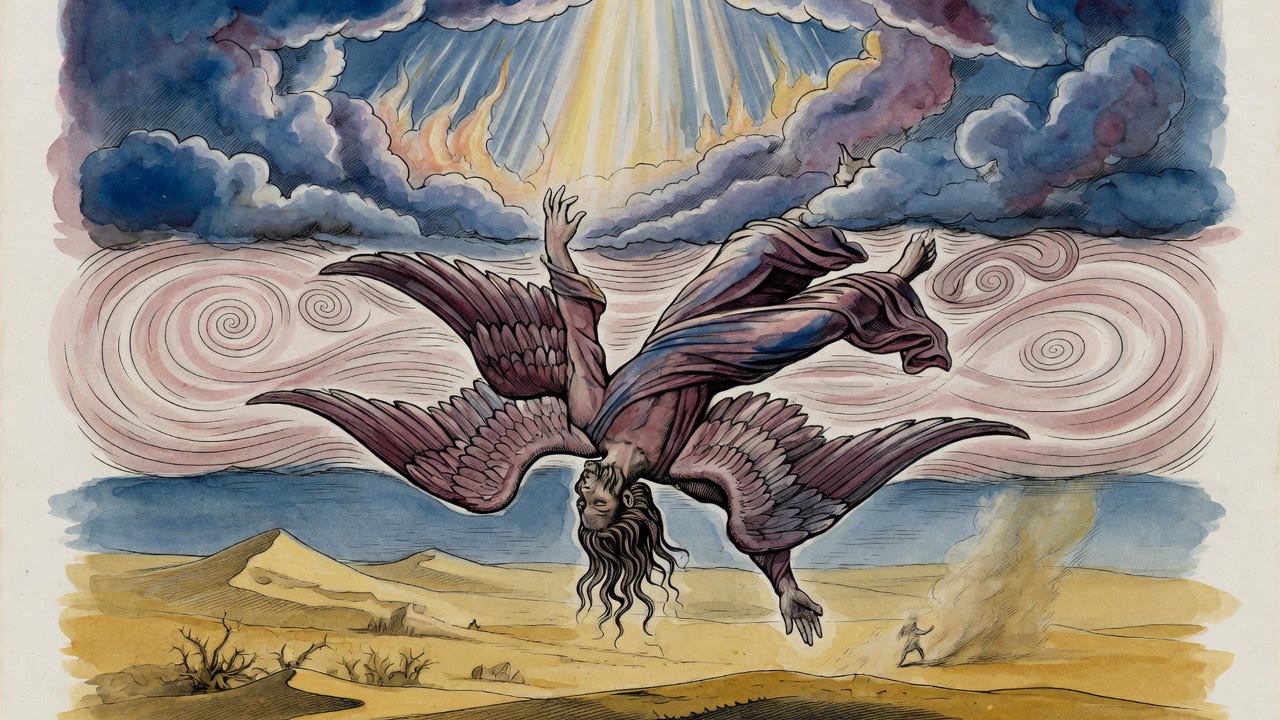
They fell toward the earth like two sparks shaken loose from a great fire. The ground rose up to meet them. They stood in the dust of the doomed world with bodies that could hunger.
It did not take long. The daughters of men walked the roads of that generation, and the two who had come down to correct the world found that they could not look away. Whatever vow had carried them through the descent thinned to nothing in the heat of wanting. They had sworn to sanctify. They began, instead, to take.
Shemhazai turned to the women, and from those unions sons were born to him, two sons, half of heaven and half of earth, growing in a world already marked for drowning. The light he had been made of now ran in mortal children who would not outlast the rain.
Paint, Gold, and Two Sons
Azazel took a stranger road, and in its way a deeper one. He did not only fall to temptation. He manufactured it. He bent his angelic skill to crafting the finery and the ornaments by which women allure men, the paint and the gold and the bright cunning things, and he handed this knowledge down into the world like a torch passed to dry grass.
He had come to teach the earth righteousness. He taught it the art of allurement instead. Bracelets left his hands. Pigments left his hands. Men learned to look, and then to take, the way he had learned to look and take.
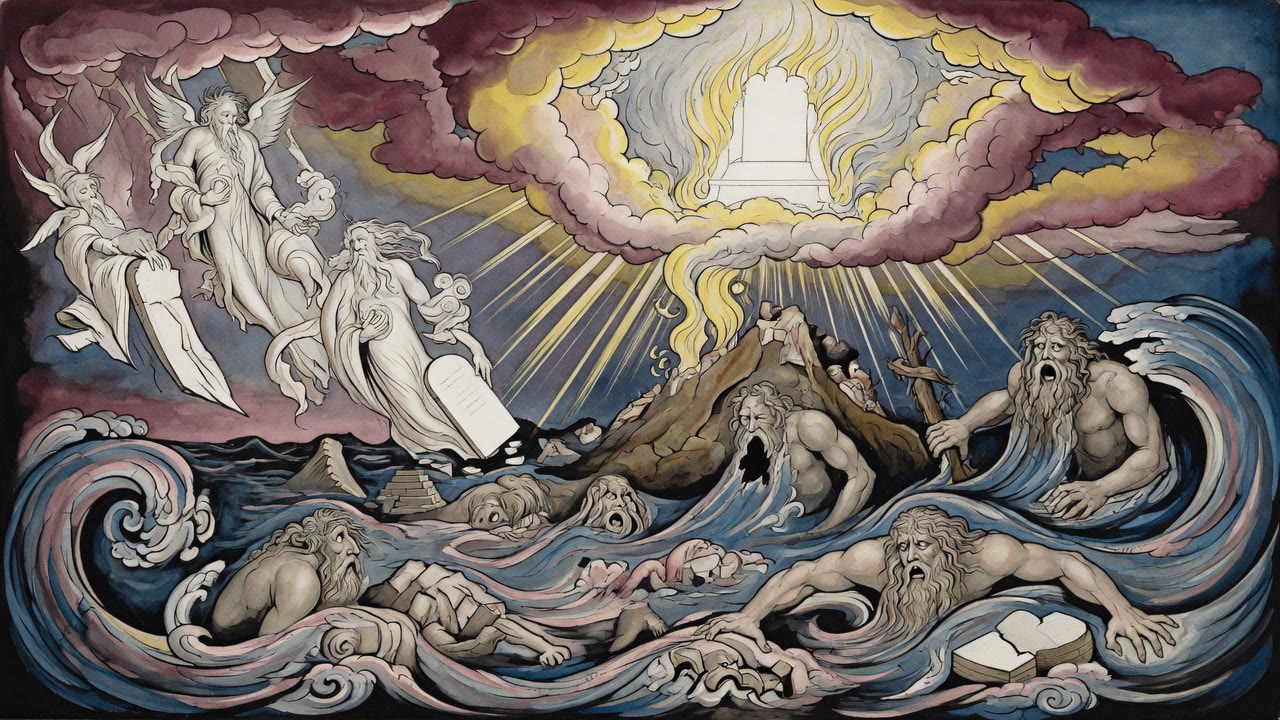
From above, the watching went on, and the watching had a limit. The earth that the angels had promised to repair was worse for their landing, not better. Every word of the warning had come true in their own hands. "Enough," the verdict came. The world had to end. The waters would rise and take all of it, the idolaters and the children of the Watchers and the finery and the men it had ruined, down into one great deluge.
Metatron Came With the Rain
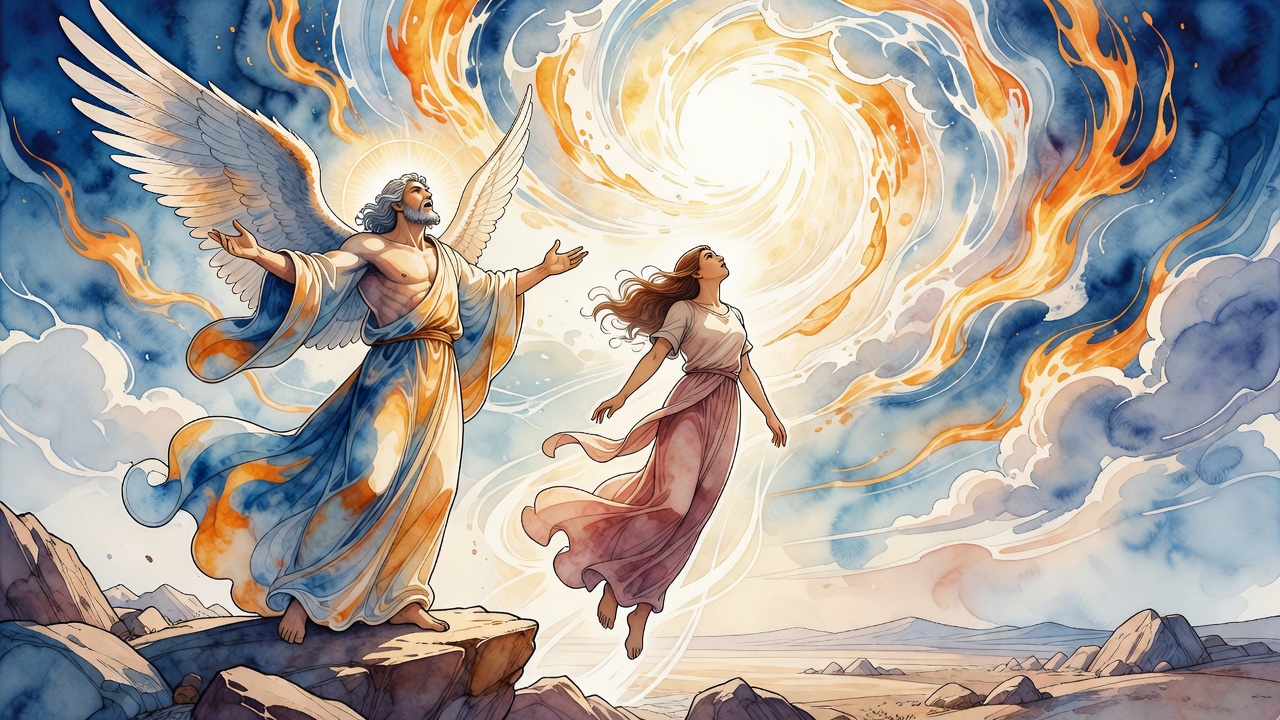
One mercy moved through the doom. A messenger came, Metatron, an angel of the highest rank, dispatched down through the gathering dark to find Shemhazai and tell him plainly what was coming. The waters. The end. All of it, soon.
So Shemhazai, who had leaned over heaven's edge and sworn he was better than the men below, stood on the condemned earth among the children he had fathered there and heard the word he had once been too certain to believe. The thing inside him that he swore he did not carry had carried him all the way here. The brightness had told him exactly this. He had not listened.
He did not plead for the world. He did not ask to go back up. He wept for his sons.
A Thousand Camels a Day
"If the world went under," he said, "what would they have to eat?" The question was not a figure of speech. His two sons needed a thousand camels a day, and a thousand horses, and a thousand steers. That was their ration. That was the hunger of bodies born from heaven and earth at once. The Flood would drown the pastures. The Flood would drown the herds. The Flood would drown the mouths that could not be filled even now.
He stood in the mud and counted livestock while the rain was still only a promise. The bright argument he had made against humanity had ended here: an angel grieving a feeding problem, not a drowning world. Azazel's paint still shone on faces that would go under. The two who had boasted they could do better had, between them, helped pull the trigger on the water.
The sons would not outlast the rain. Shemhazai had asked for a body so he could prove his loyalty. The body had given him hunger, and sons, and a grief no light in heaven had ever taught him how to carry.
← All myths