43 myths · Page 1 of 2
Each story names the sources it was written from.
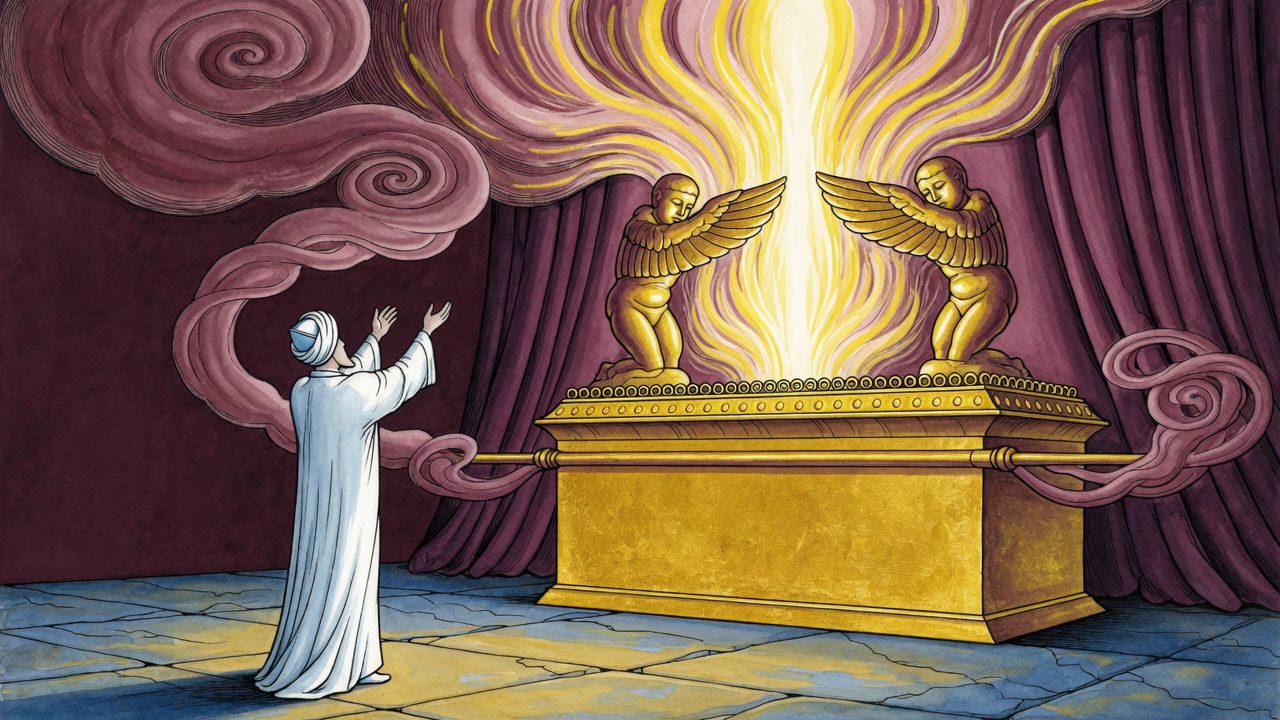
Once a year, one man entered the most sacred space in the world. No one followed him. The Talmud records every step, and why Aaron nearly refused to go in.
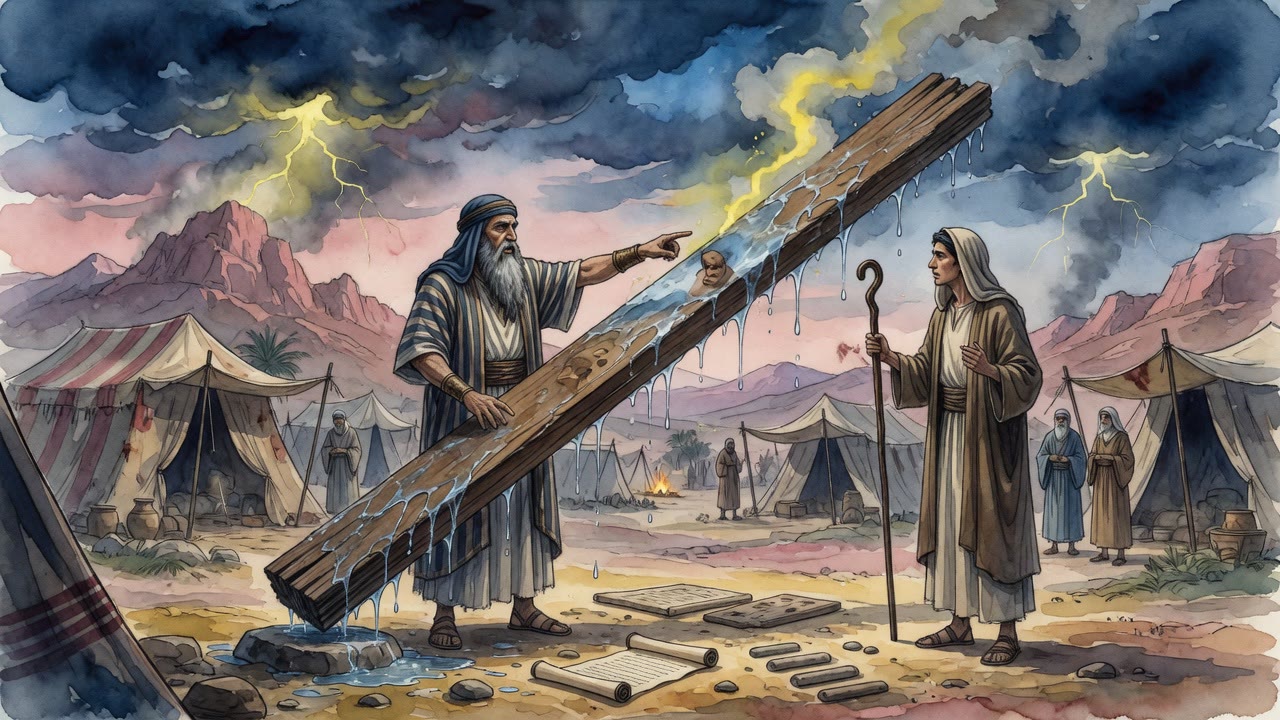
A Midianite priest reached the camp, watched Moses judge from dawn to dusk, then pointed at a waterlogged beam and said one man could not lift it.
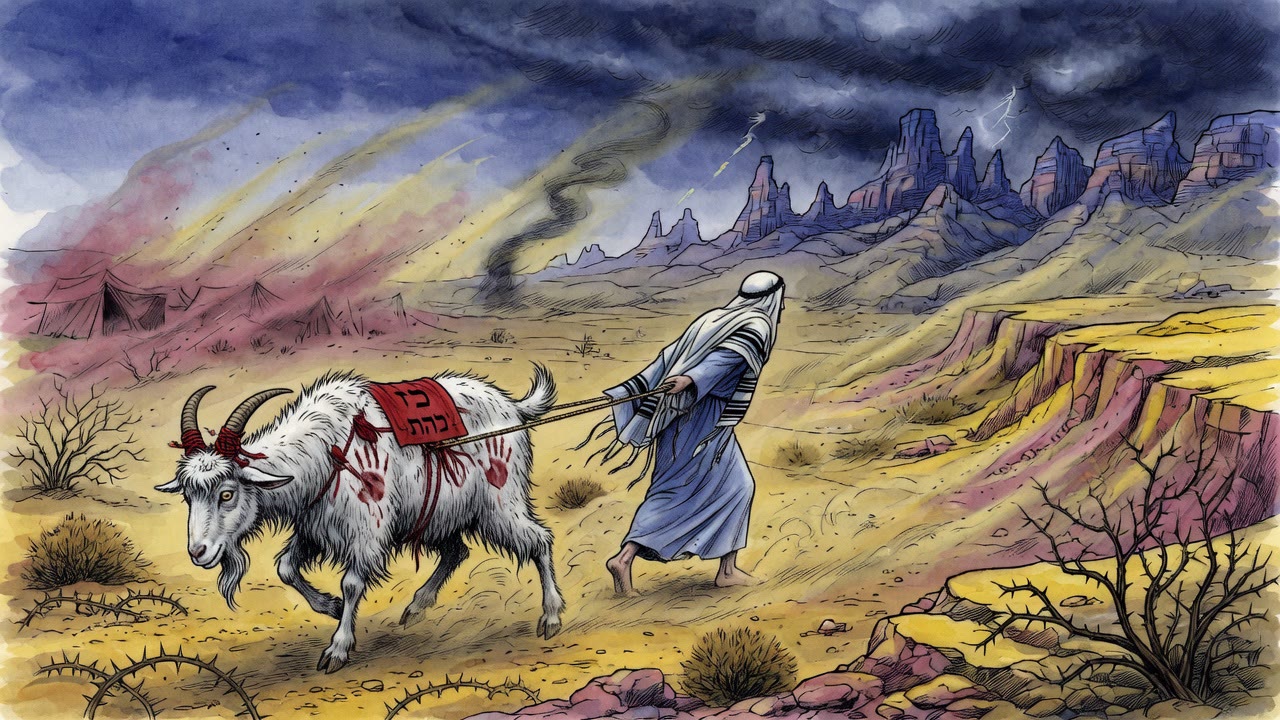
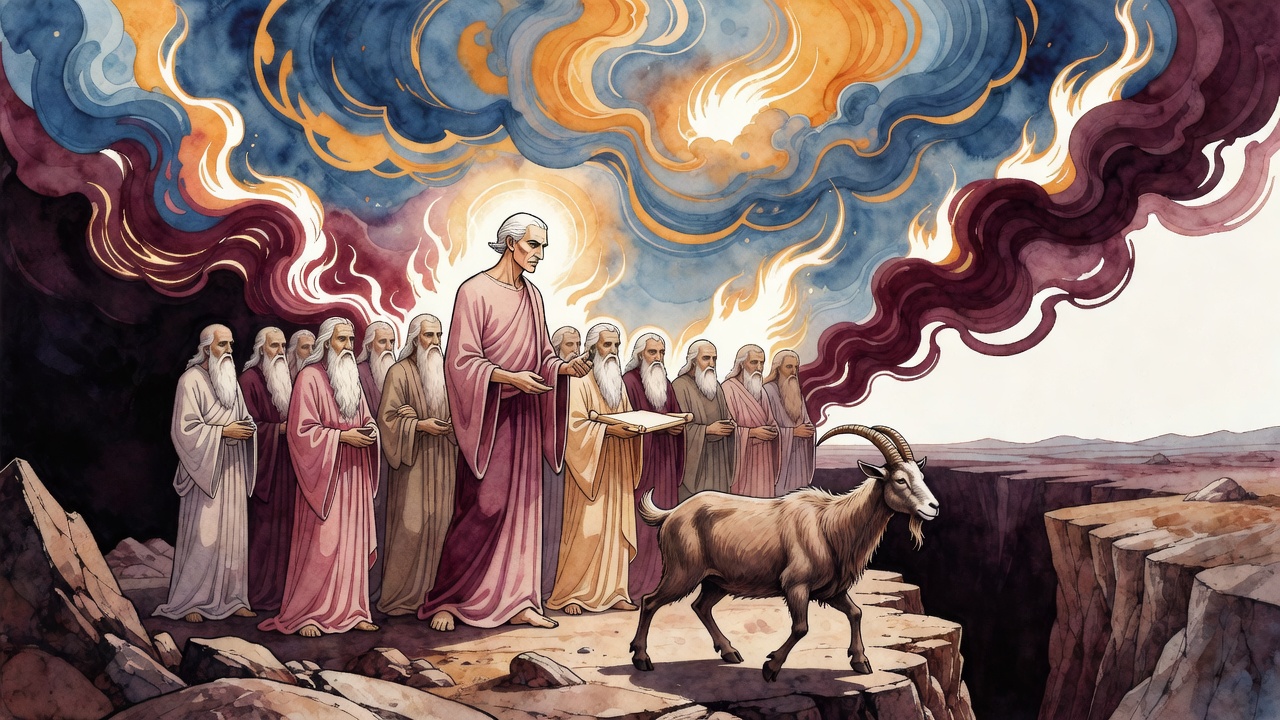
The High Priest drew lots over two identical goats. One went to God and one went to Azazel. The second goat went to the edge of the world and was destroyed.
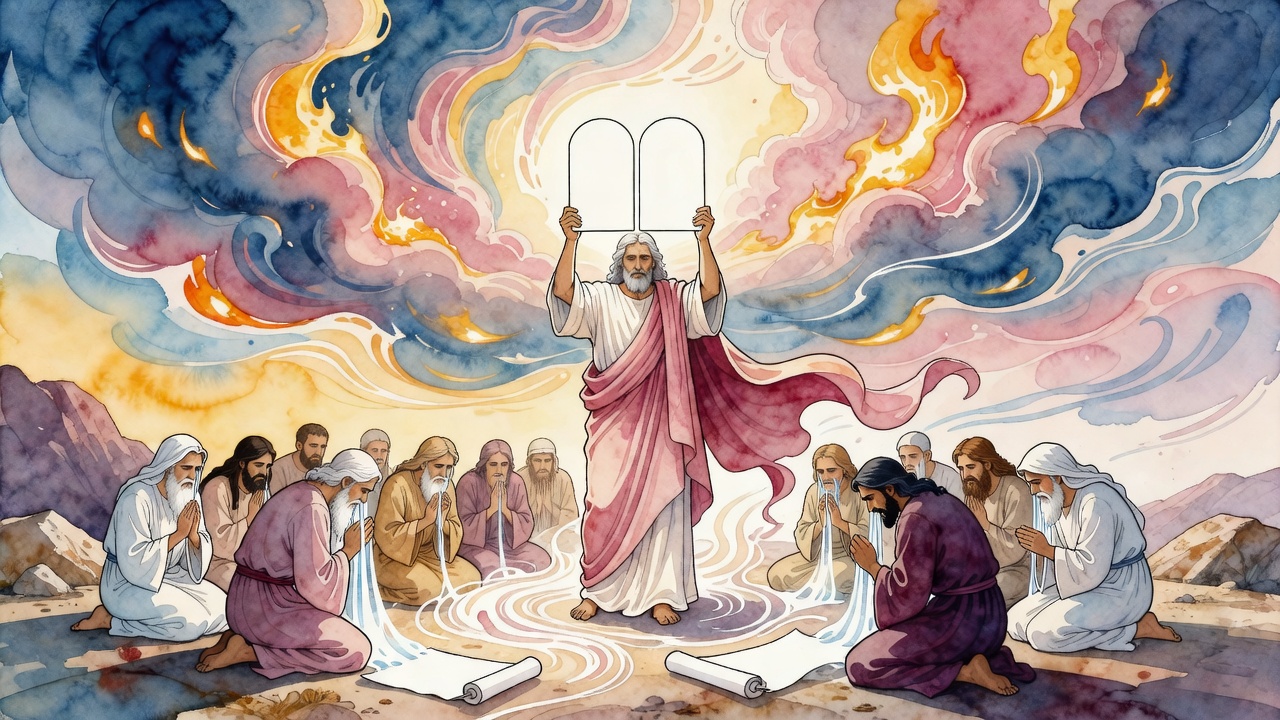
The gold was powder and nobody in the camp would eat. God answered the fasting by calling them His children, then swore their tears would turn to rejoicing.
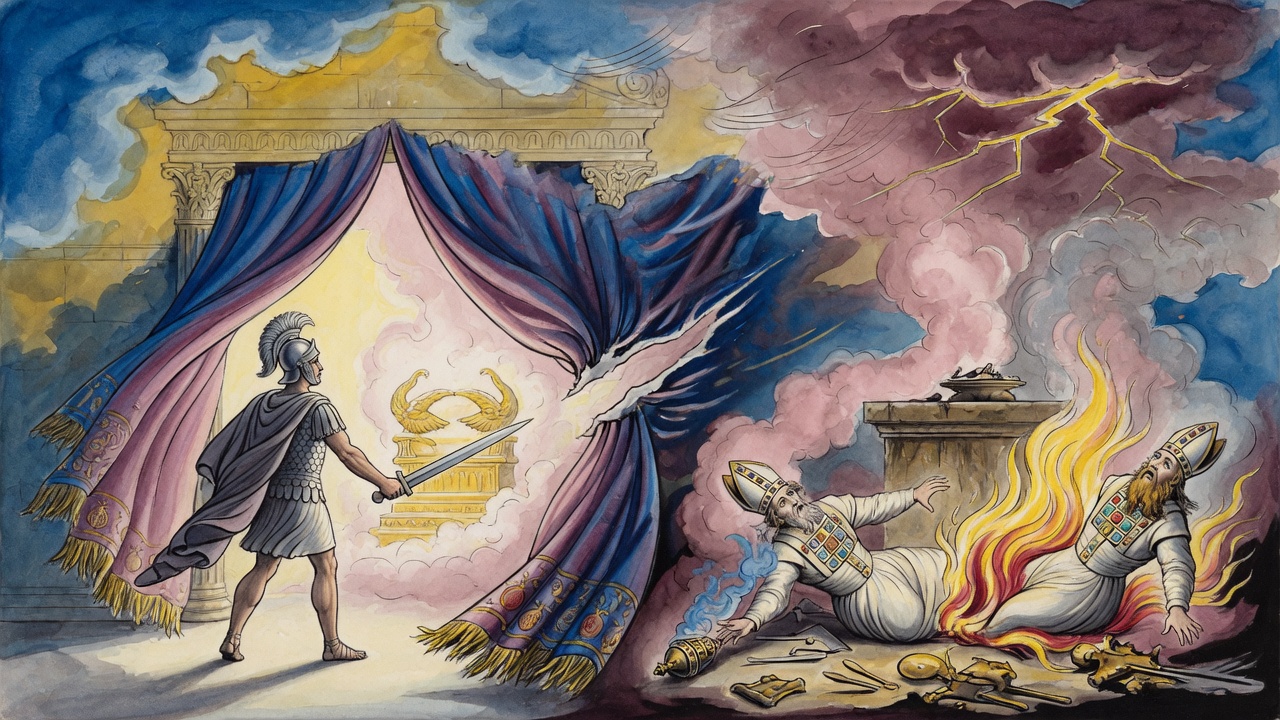
Titus walked out of the Holy of Holies with blood on his sword. Nadab and Abihu had gone in to serve, and the fire kept them.
Rabbi Ishmael heard his own name eighth on the list. He came back down and repeated every name, including the one that was his.
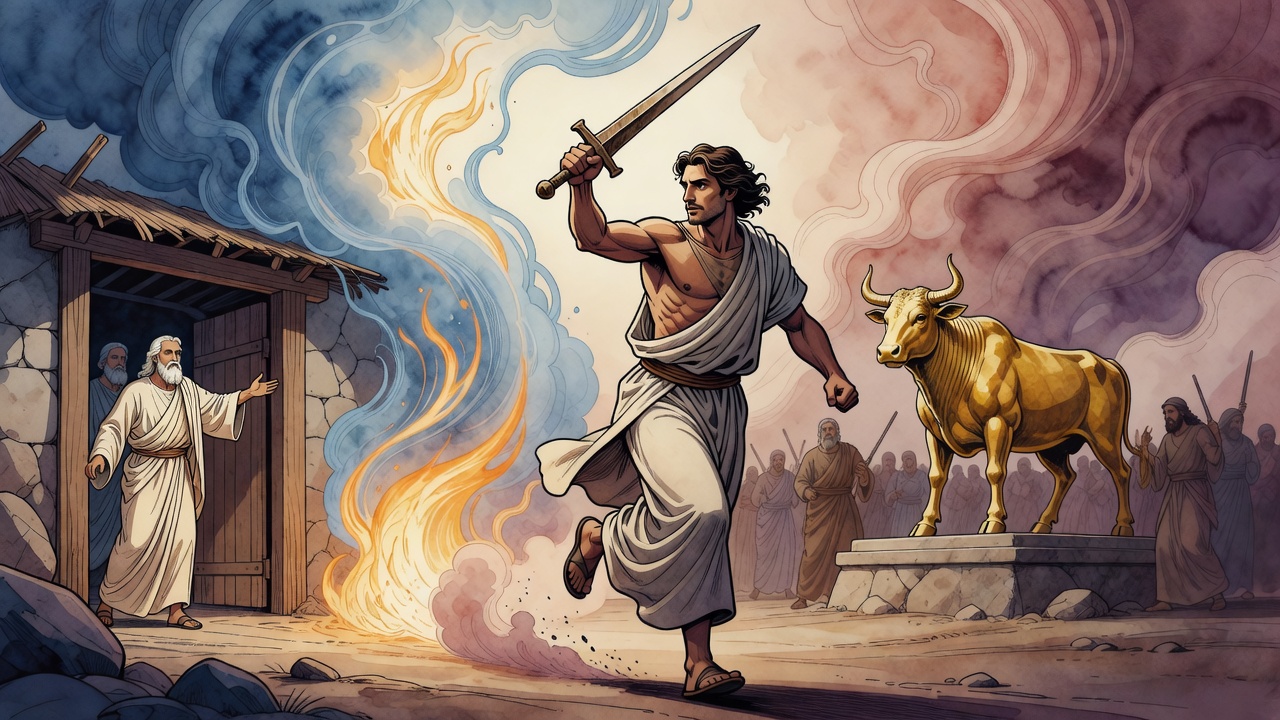
Gold dust still clung to beards when Moses reached the camp gate. Only one tribe crossed the open ground, and they had not given a ring to the calf.
On the tenth of Tishrei the pardon was still a private sentence. The nations had watched the calf. Moses wanted something they could point at.
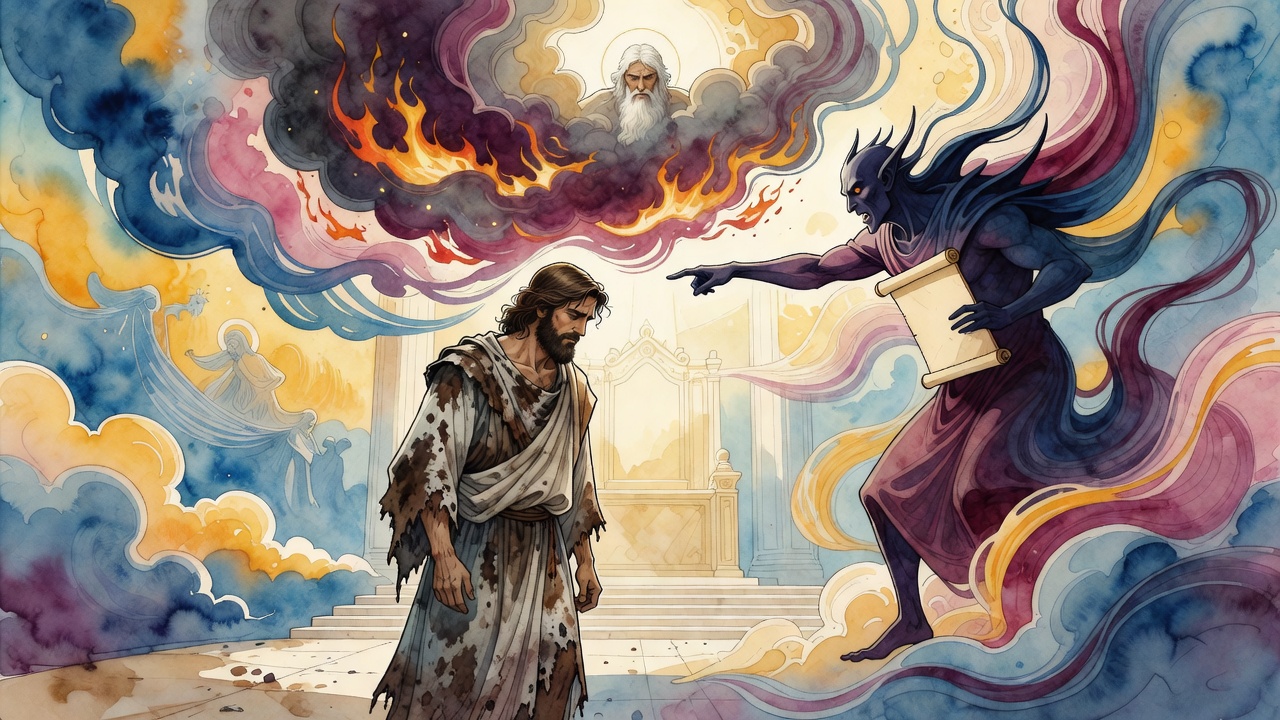
Two frauds sentenced to burn in Babylon gave the king a third name, the high priest's, hoping his merit would put the fire out for all three of them.
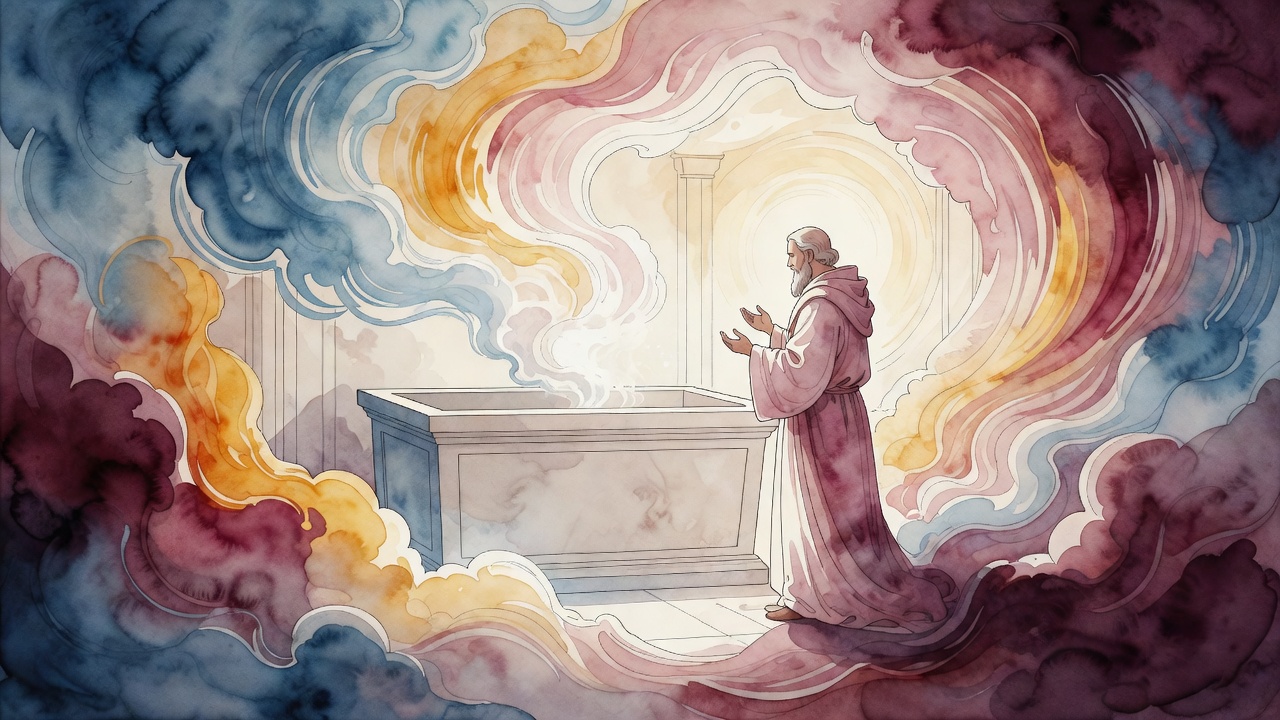
The High Priest had come only to burn incense. Akatriel Yah sat on the throne and asked him for a blessing, the way a father asks a son.
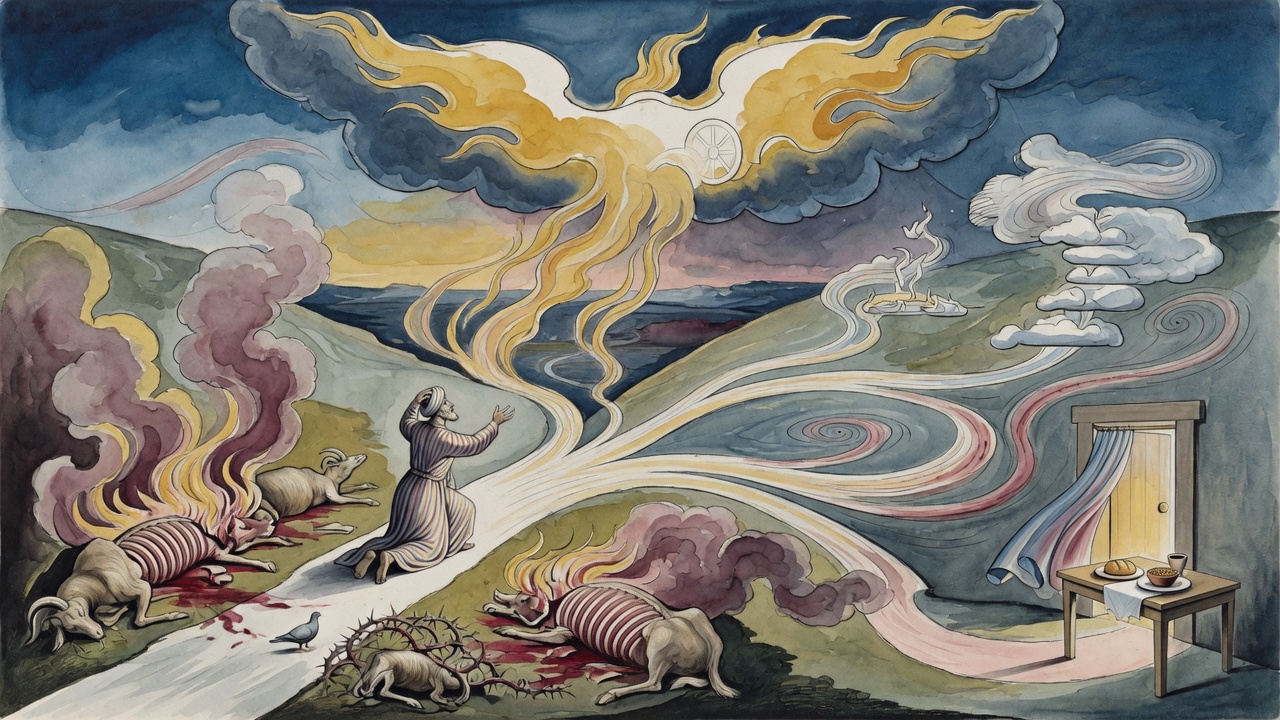
Abraham saw the covenant animals as a map of future sacrifice. Vayikra Rabbah opens a second gate, made of flour and confession, hidden from even Abraham.
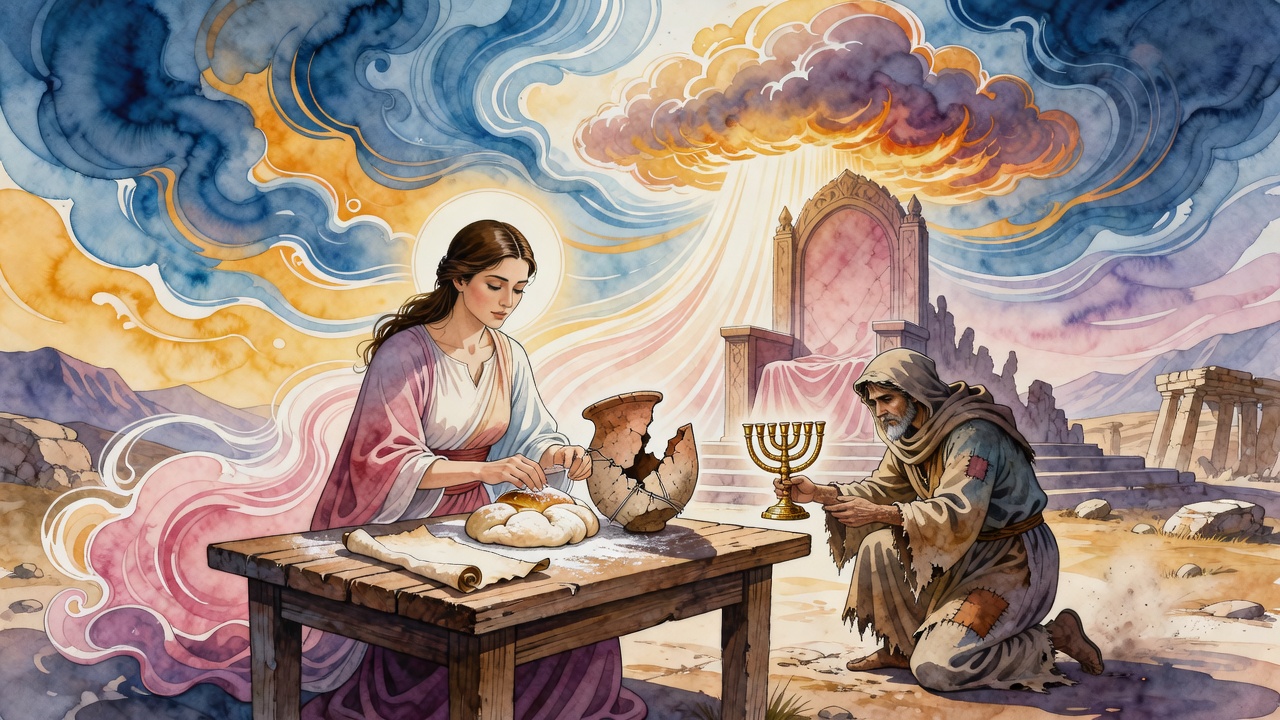
She pinched off a piece of dough before the loaf went into the oven. In another house a thief set a stolen cup back on the shelf.
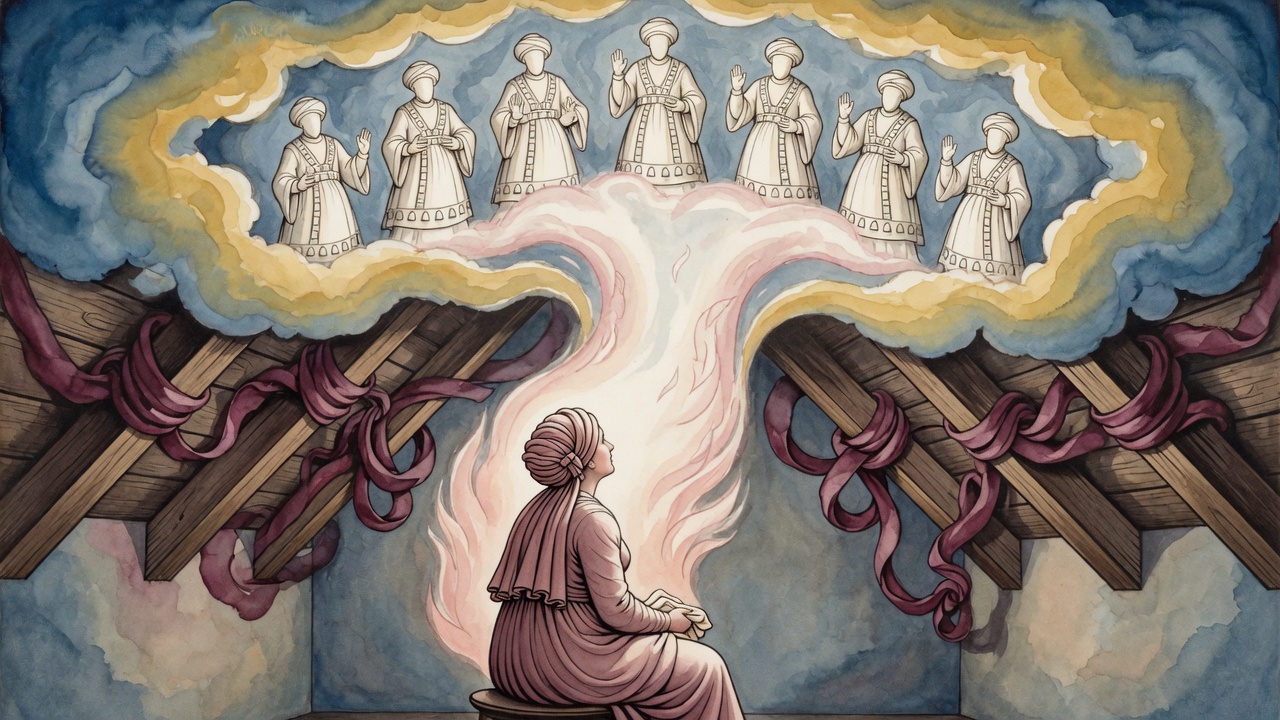
When the Presence rose out of Eden it did not go straight up. It went in hops, one floor at a time, and every hop was somebody's fault.
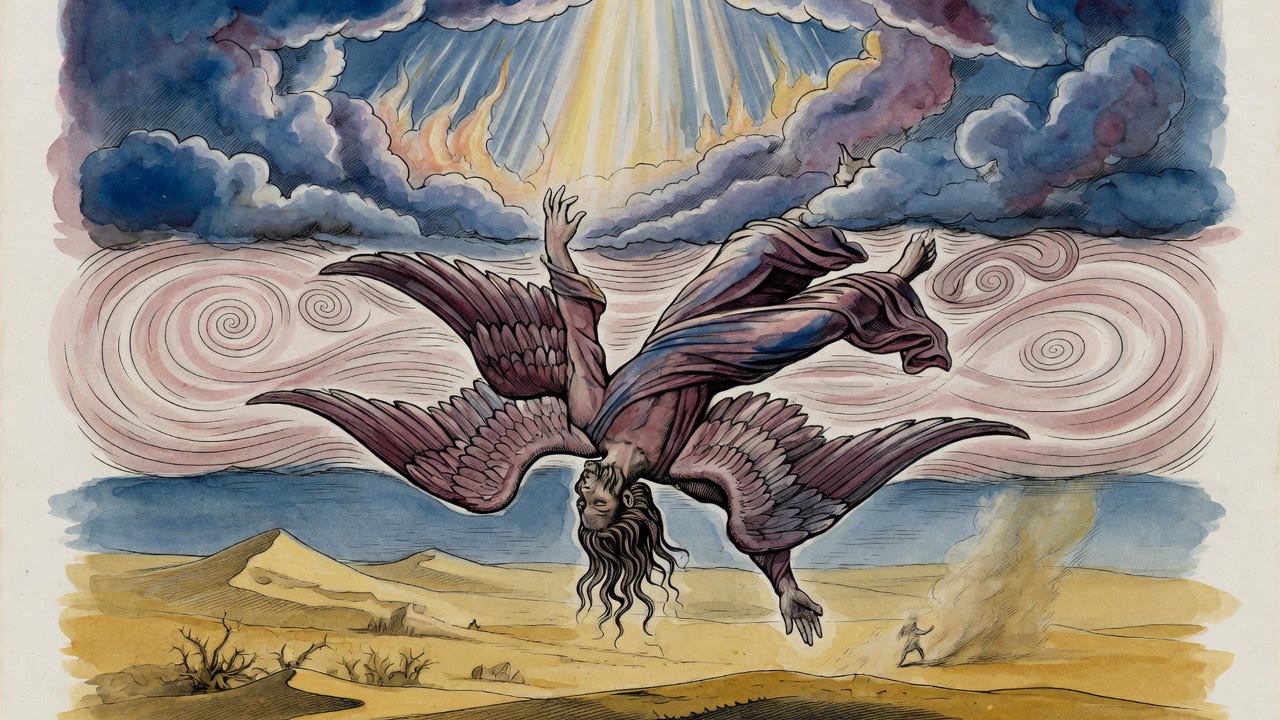
Shamchazai and Azael descended to prove angels could master the earth. One hangs in repentance between the worlds; the other became a name in the desert.
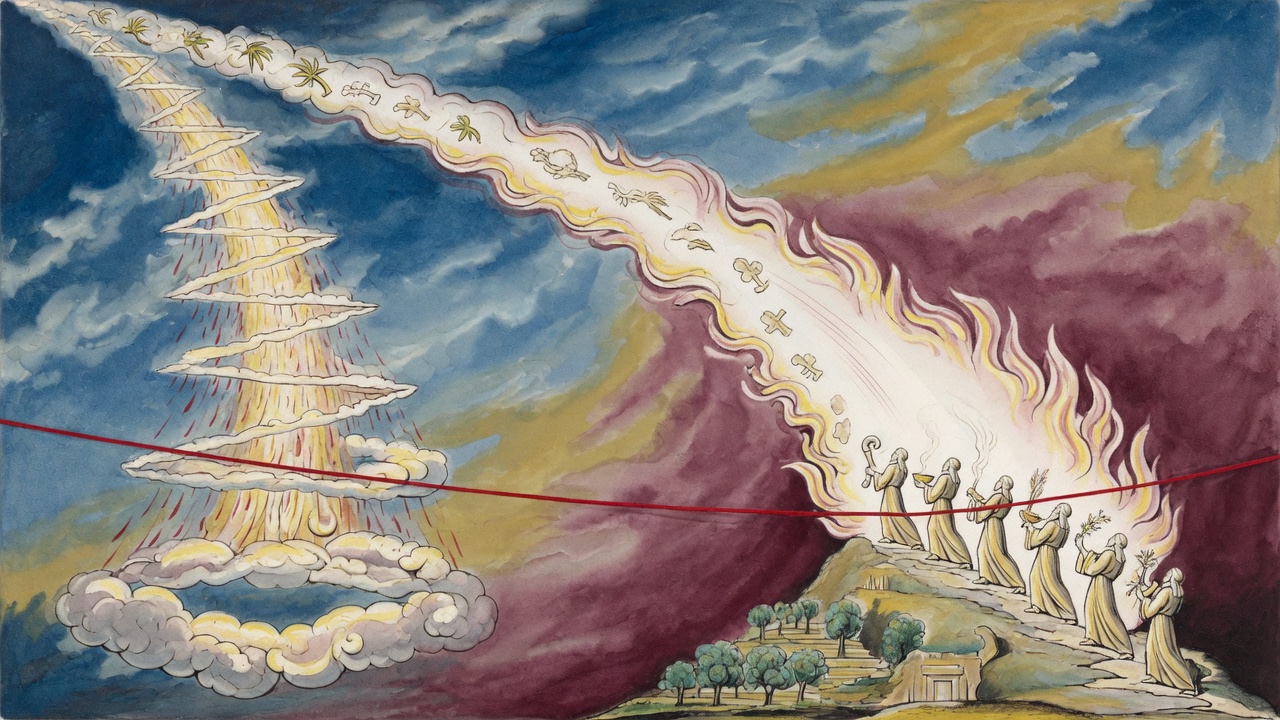
Seven of her sons wore the eight garments of the High Priest. Jerusalem watched them climb the Temple steps, and the sages came to her door to ask why.
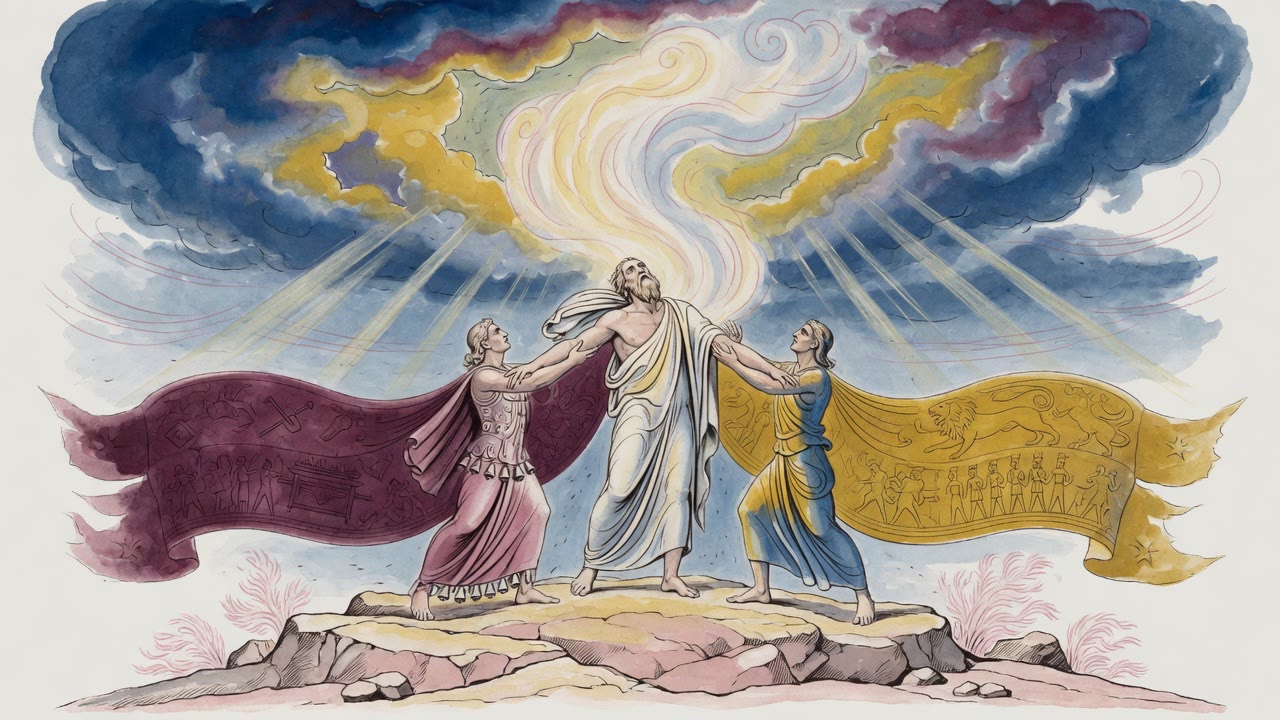
Priests knelt and tied gold around his ankle. He took nine steps into the inner room. Outside, a nation watched the slack line.
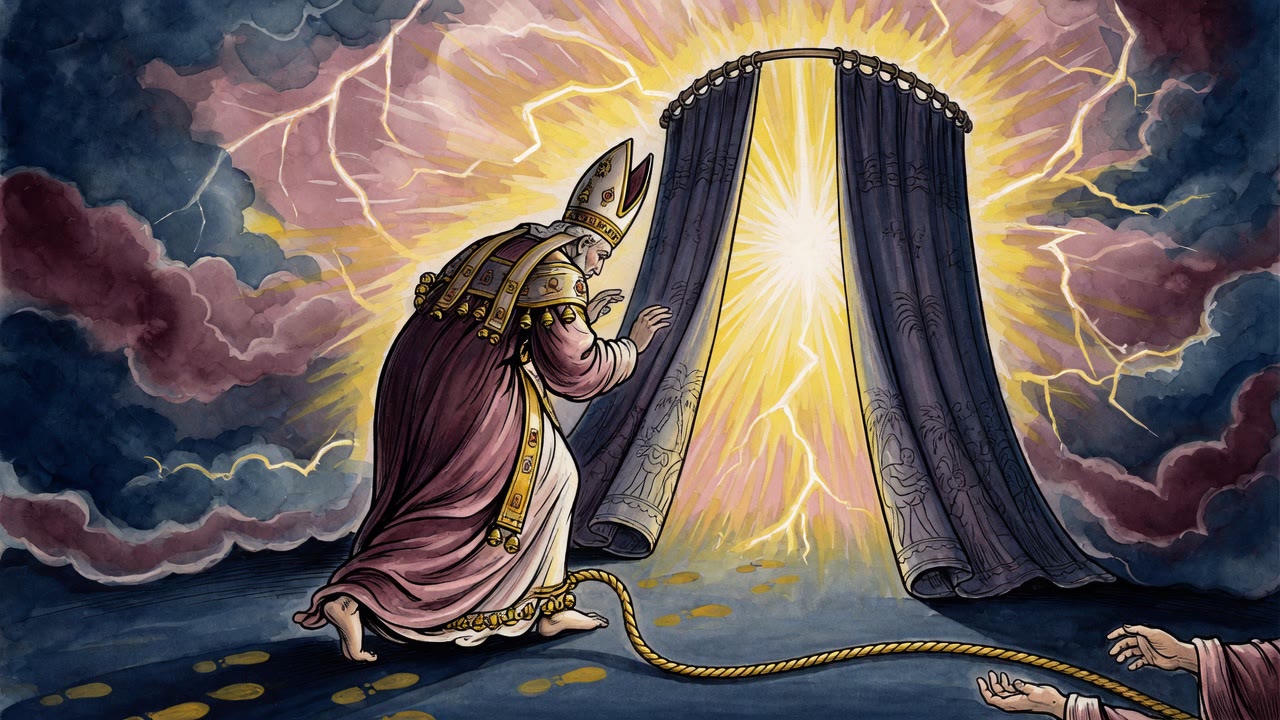
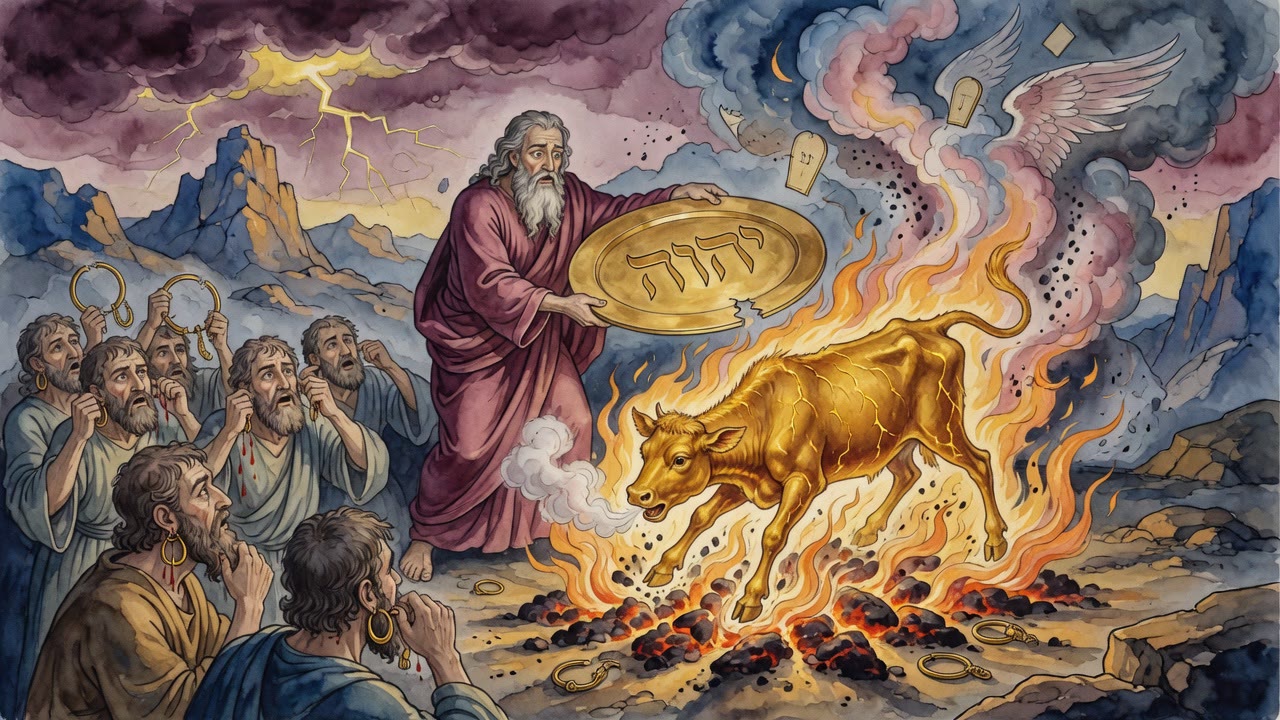
Men broke their own earrings. Aaron cast a plate bearing the Name. A living calf stepped from the flames, and Yom Kippur was born in the repair.
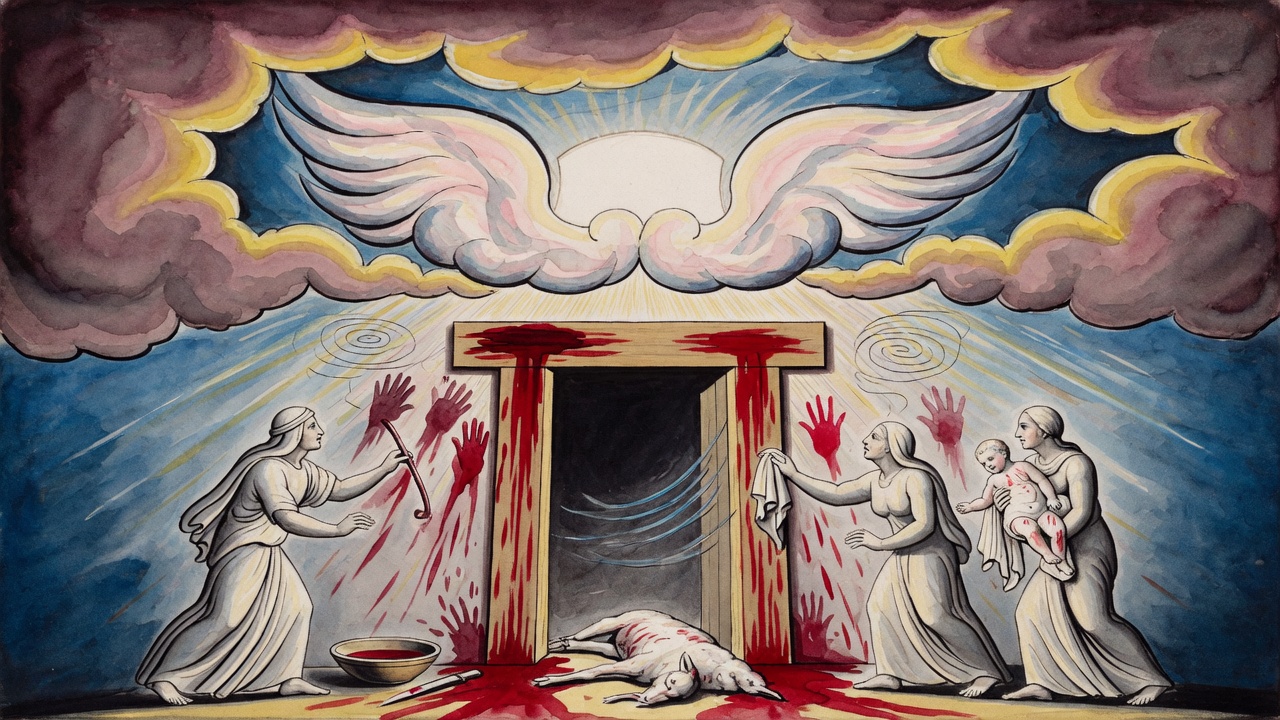
Hands shook over the lintel in Goshen. Lamb blood was not enough. They added the blood of the covenant, and God said live twice.
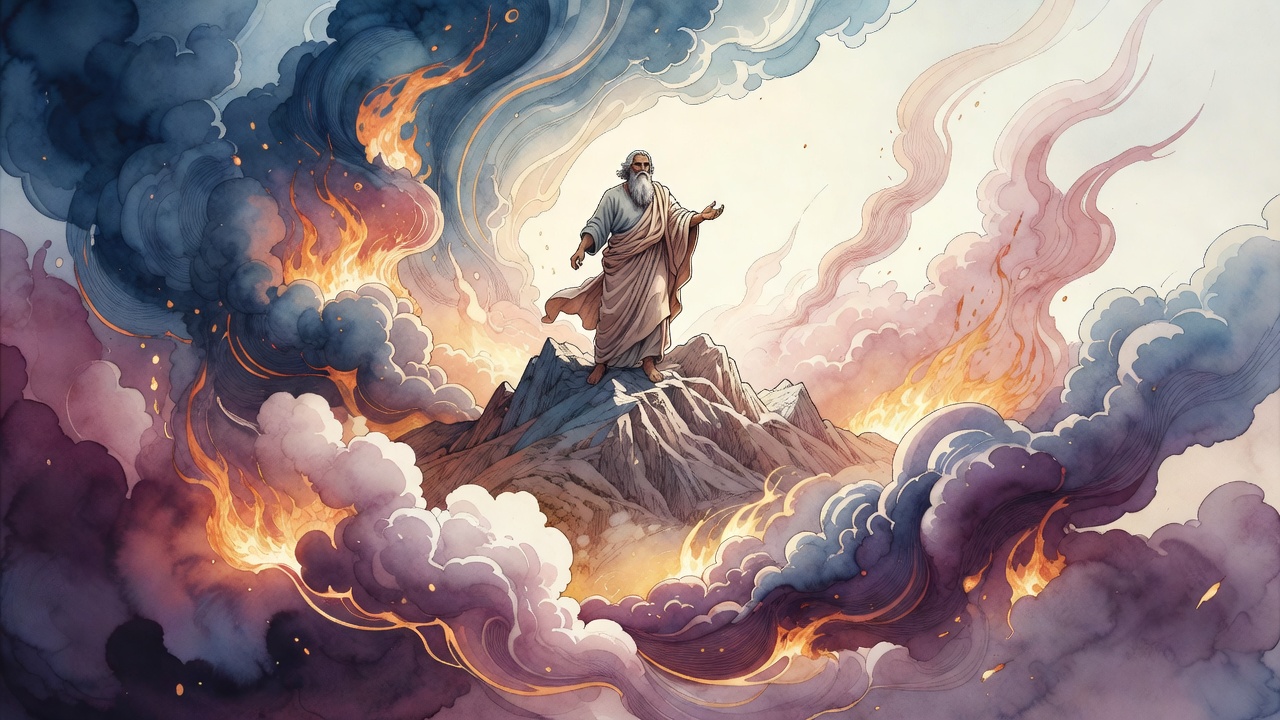
On the mountain forty days, Moses knew day by Written Law and night by Oral Law. After one hundred twenty days he brought pardon down on Yom Kippur.
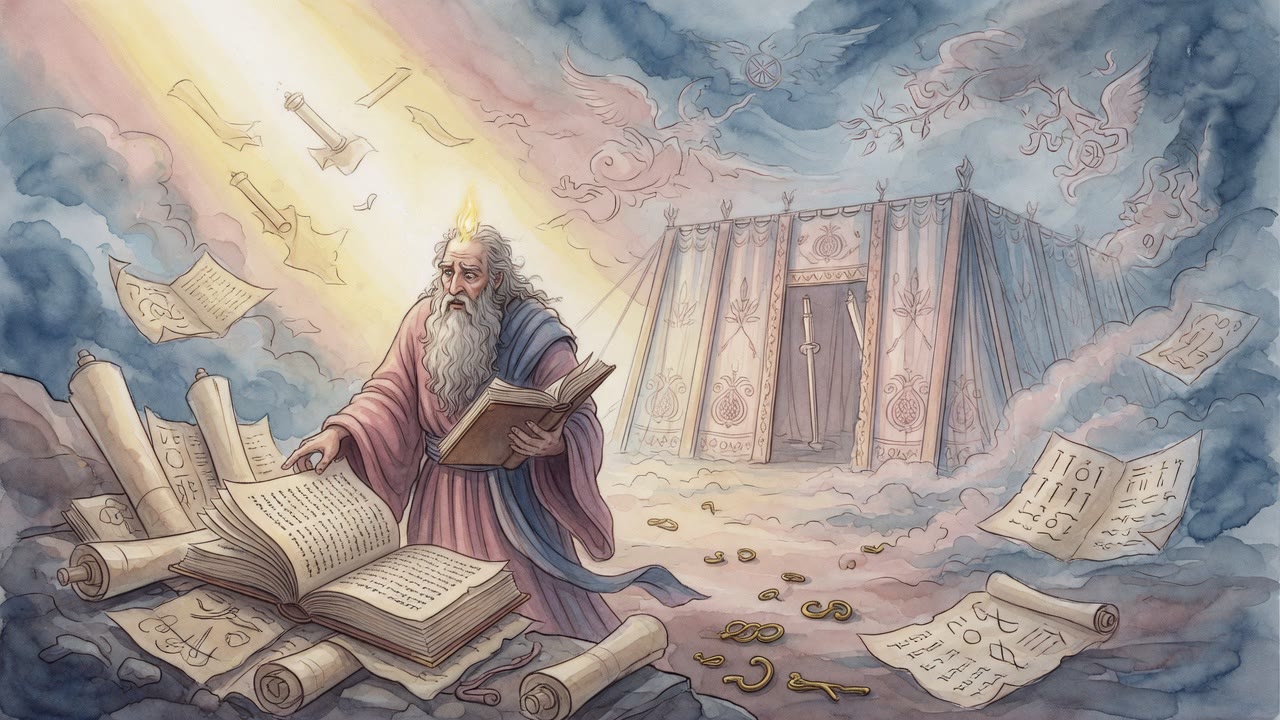
Cynics watched the nape of his neck and called him rich. One thousand seven hundred seventy-five shekels sat blank in the ledger.
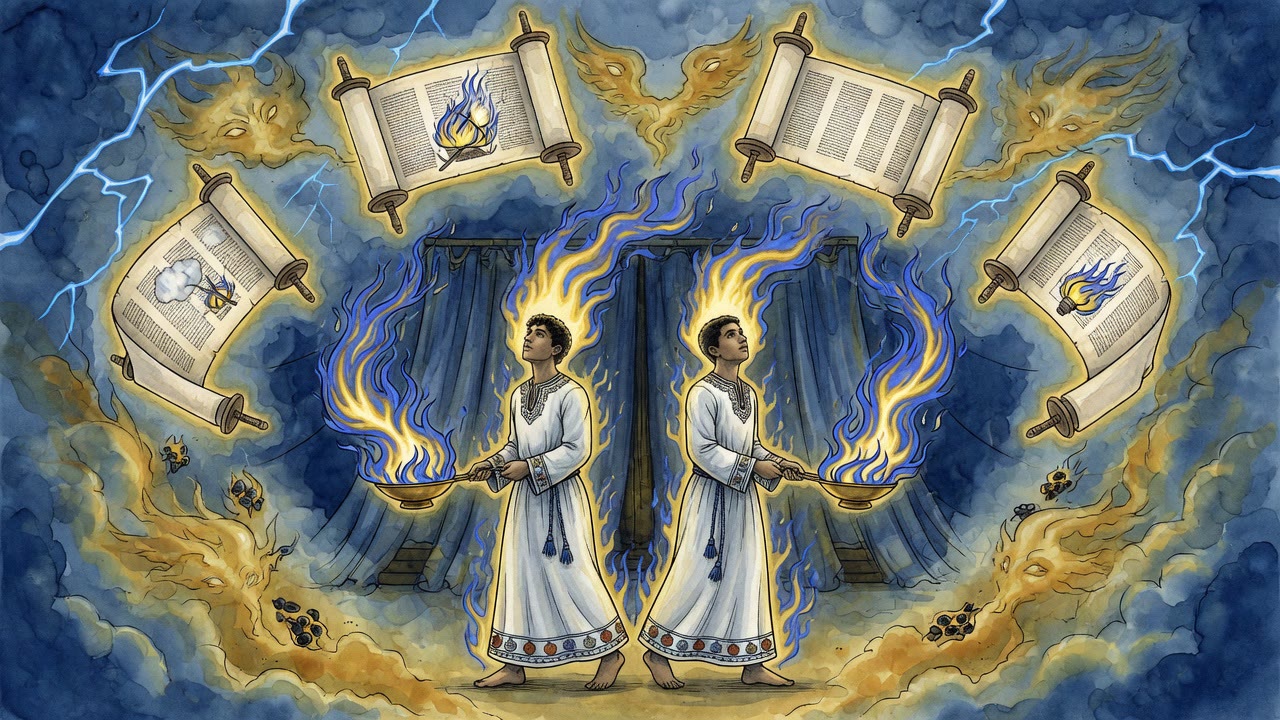
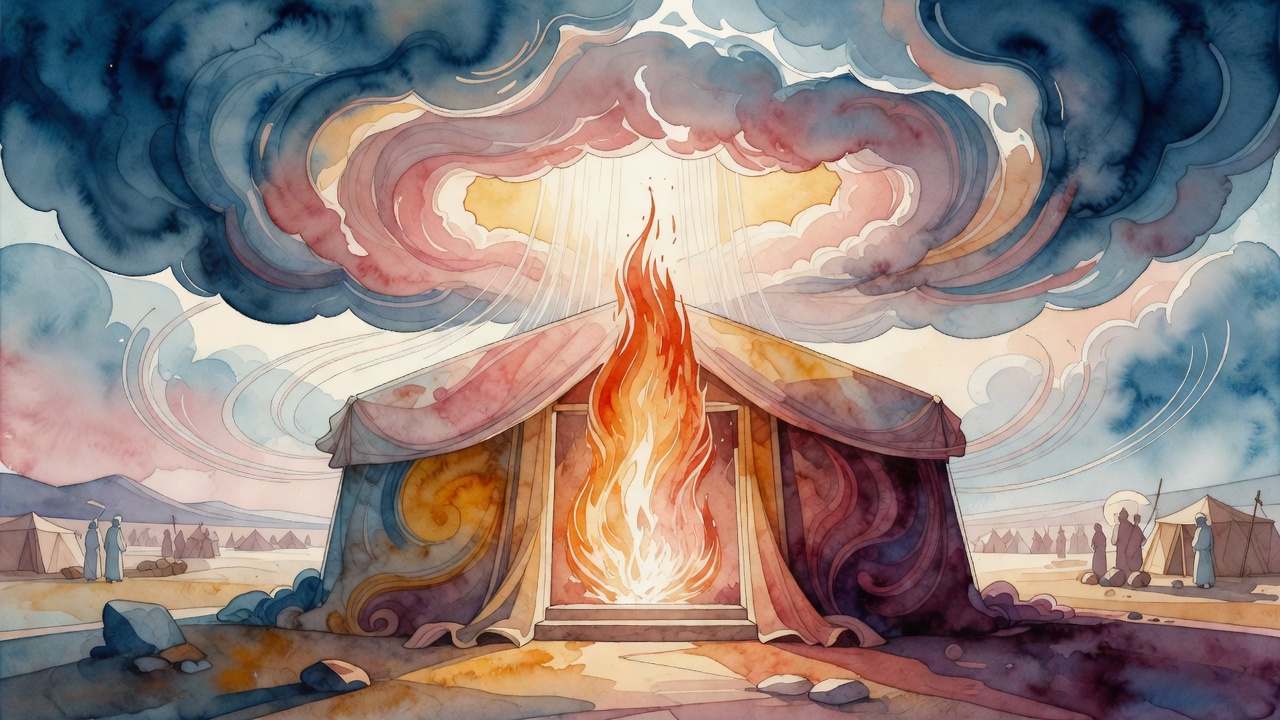
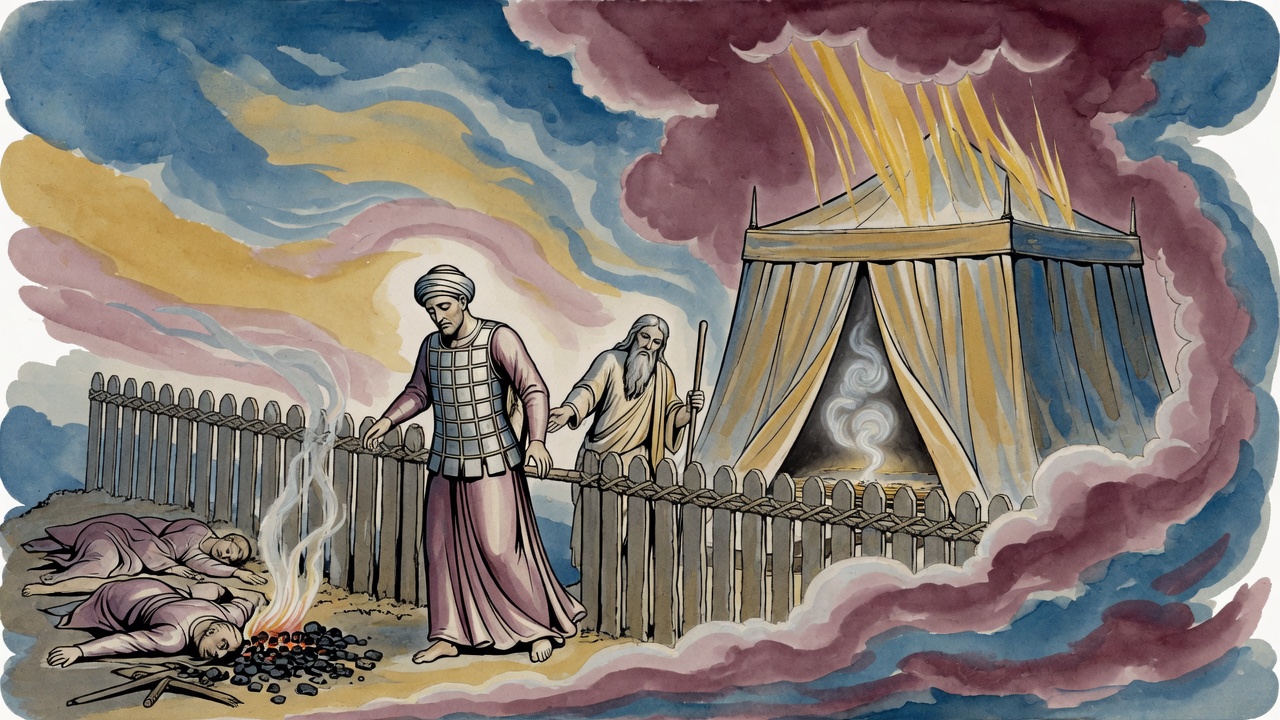
Each brother lifted his own pan. The coal came from a stove, not the altar. By noon Aaron's sons were dead on the court stones.
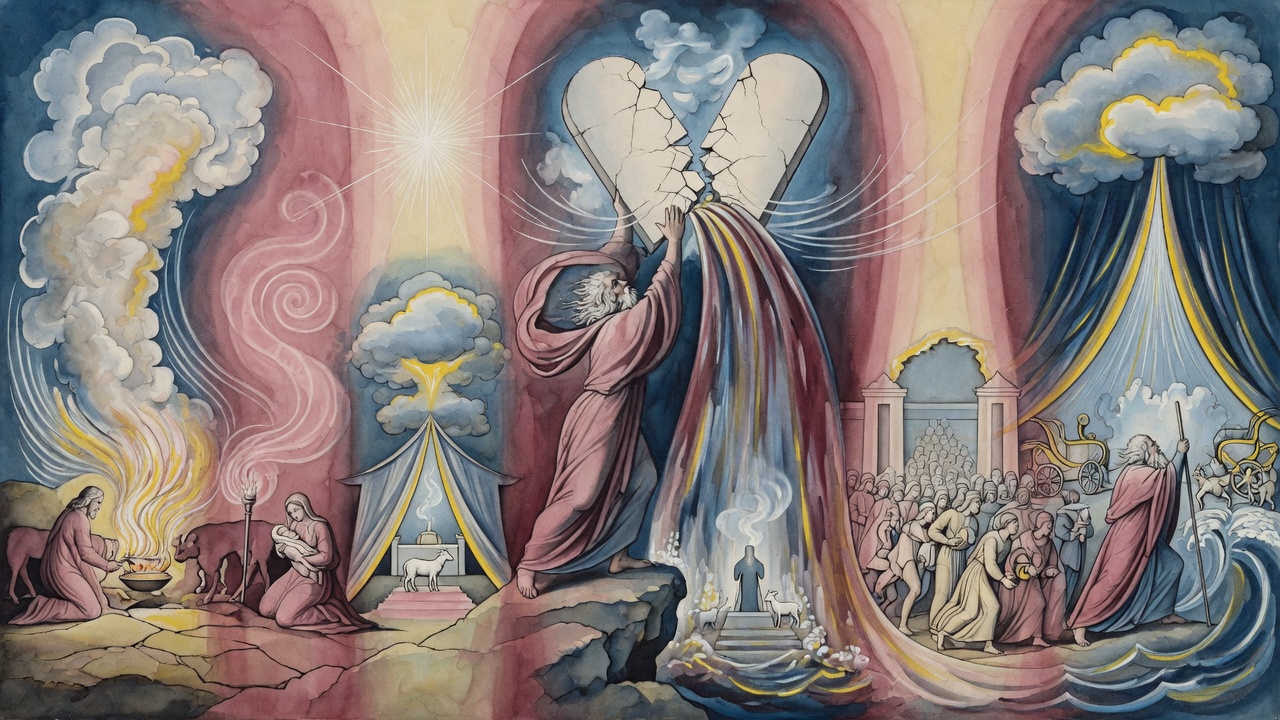
God cut the covenant with Abraham one spring night. On that same date angels told him Sarah would bear Isaac, and later Israel walked out of Egypt.
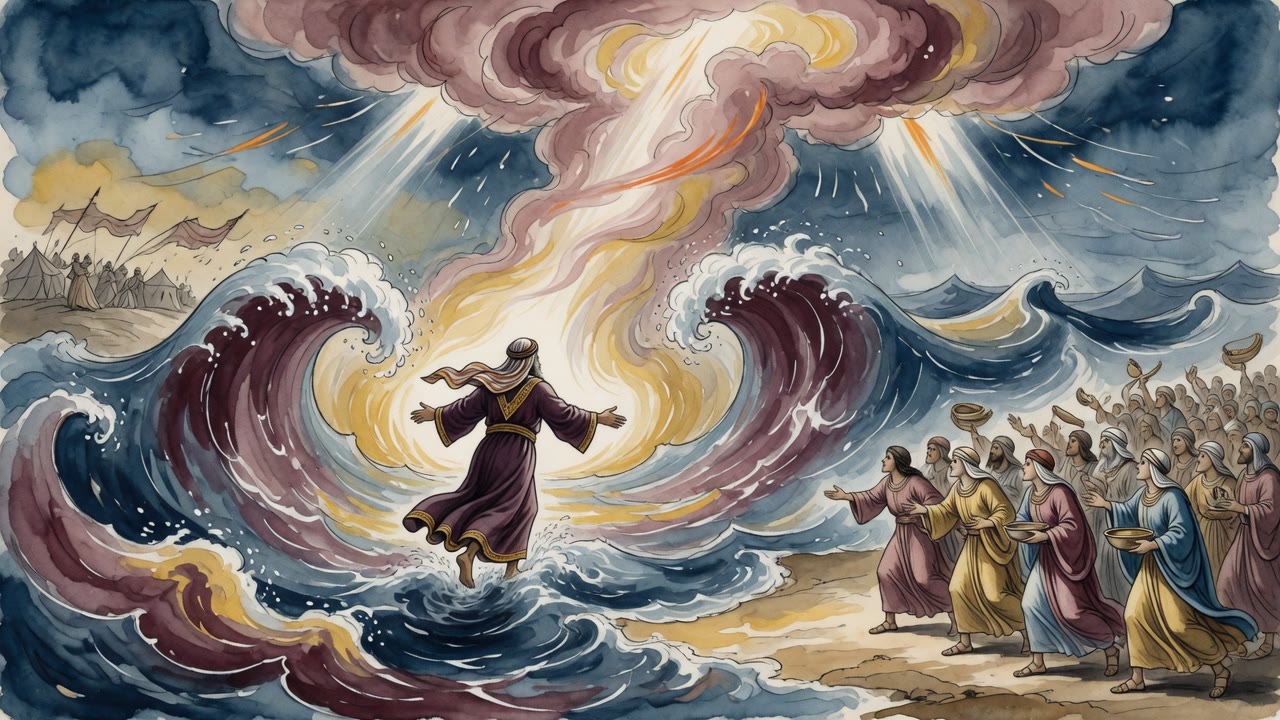
Heaven held Nabal through the Days of Awe after he insulted David. The gate stayed open ten days. He never walked through it.
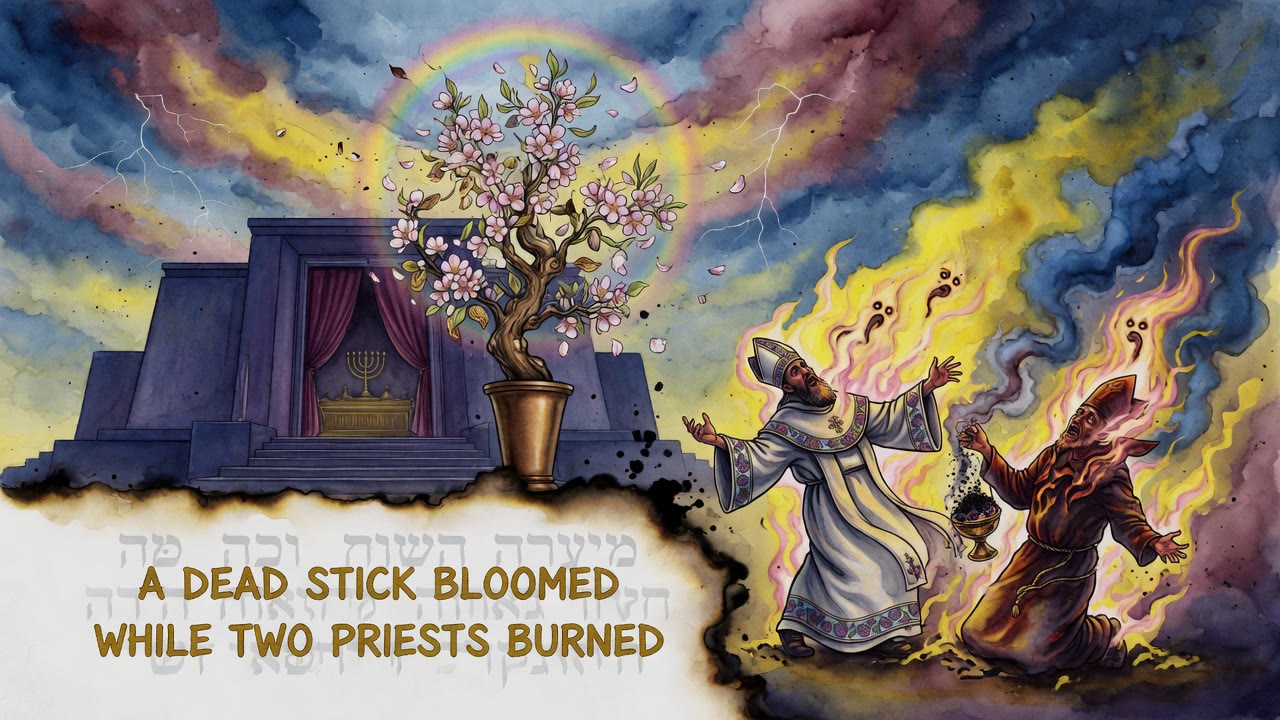
Aaron's dry rod came out of the sanctuary alive with blossoms. His sons entered to serve and were carried out as fire-killed corpses.
A mixed life hangs between pure merit and pure guilt. Yom Kippur opens like Noah's door. The Shekhinah, the Divine Presence, waits to see who boards.
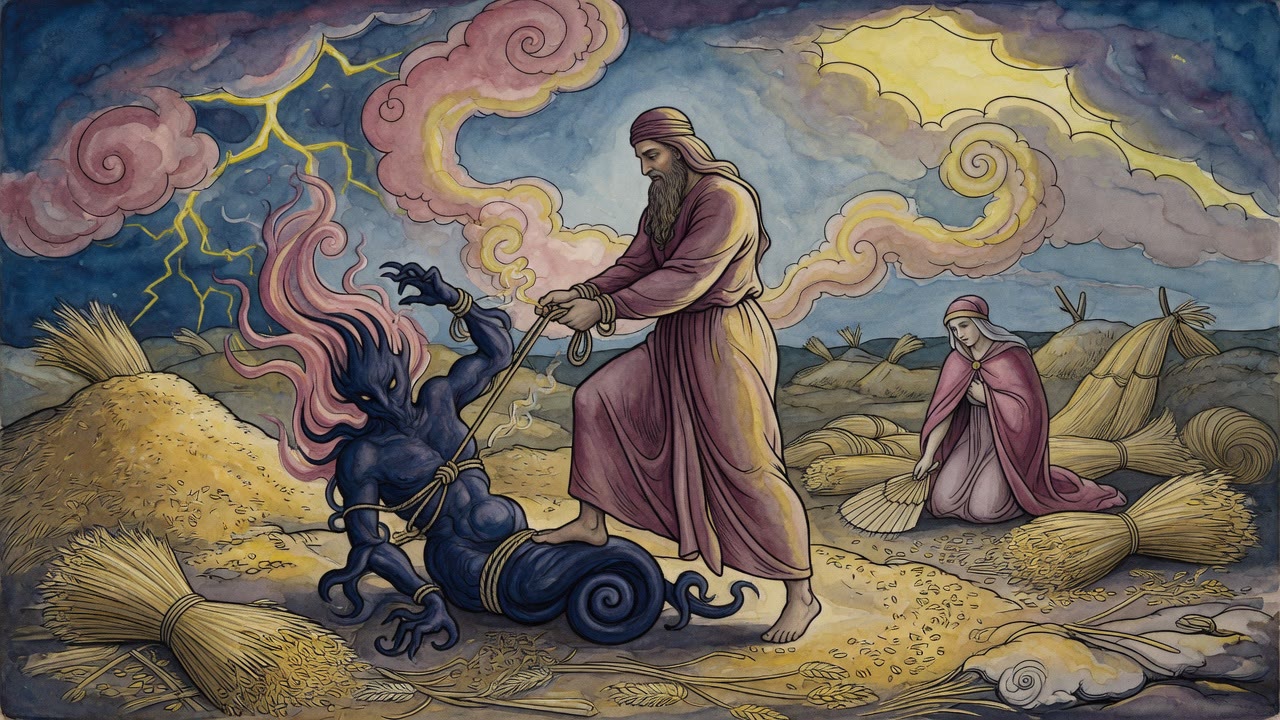
Ruth lay at Boaz's feet in the dark and asked for redemption. He blessed her, then swore by the living God that he would not touch her until morning light.
After Nadab and Abihu fell, the law fenced Aaron from the veil. Moses still walked him into the Tent to teach the incense, brothers without rivalry.
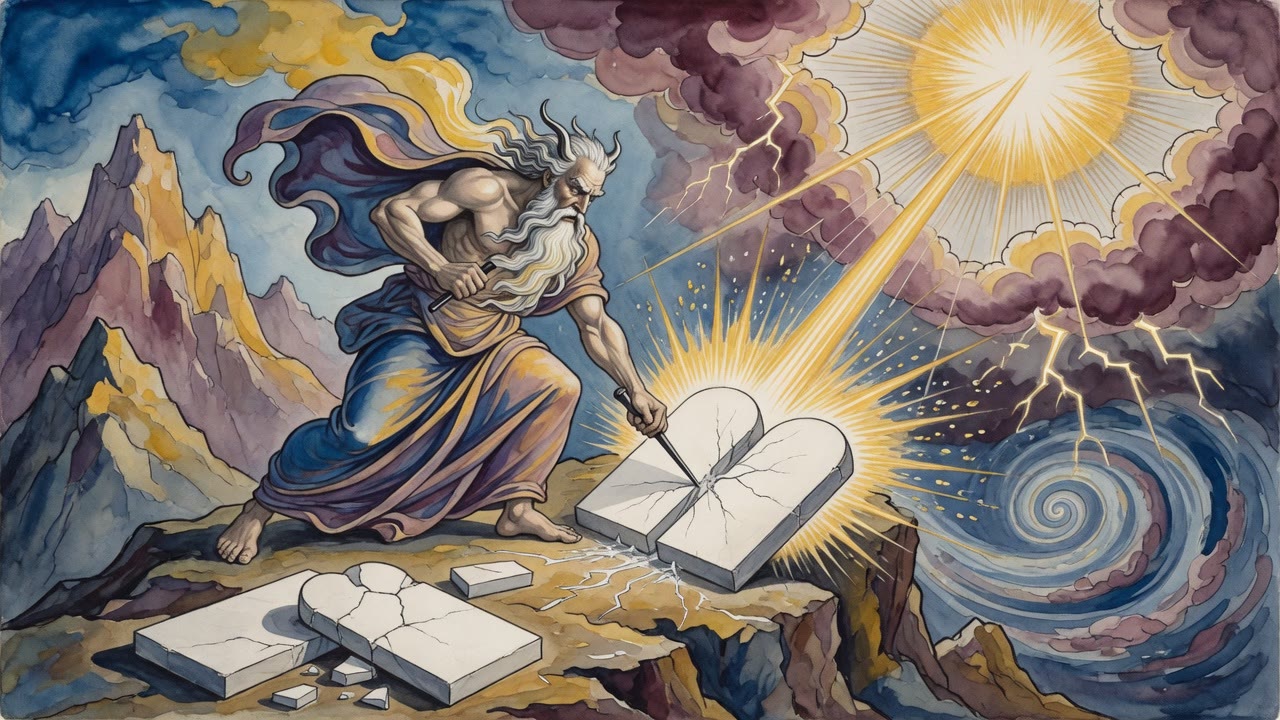
After the calf, Moses climbed Sinai with blank stone and watched God wrap Himself like a prayer leader, teaching the thirteen names that reopen mercy.
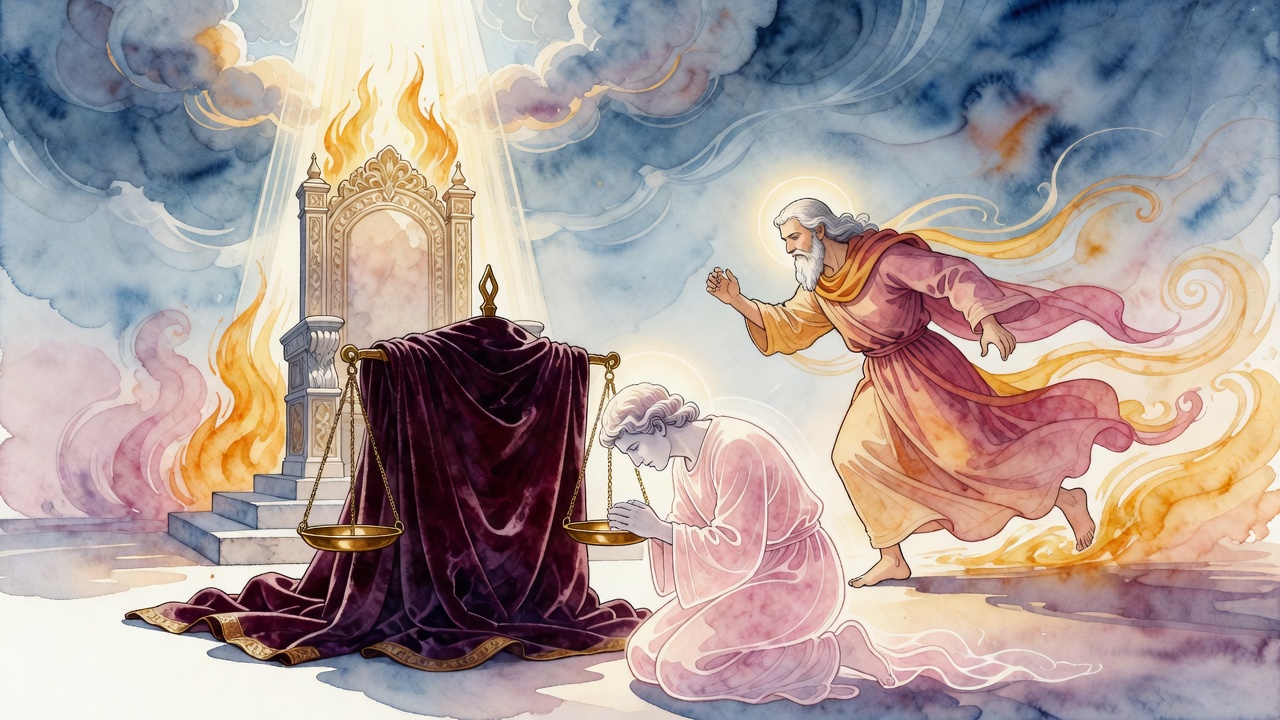
The two pans hung dead level. The Accuser went out to fetch more evidence, and while he was gone the sins he had already weighed came off the scale.
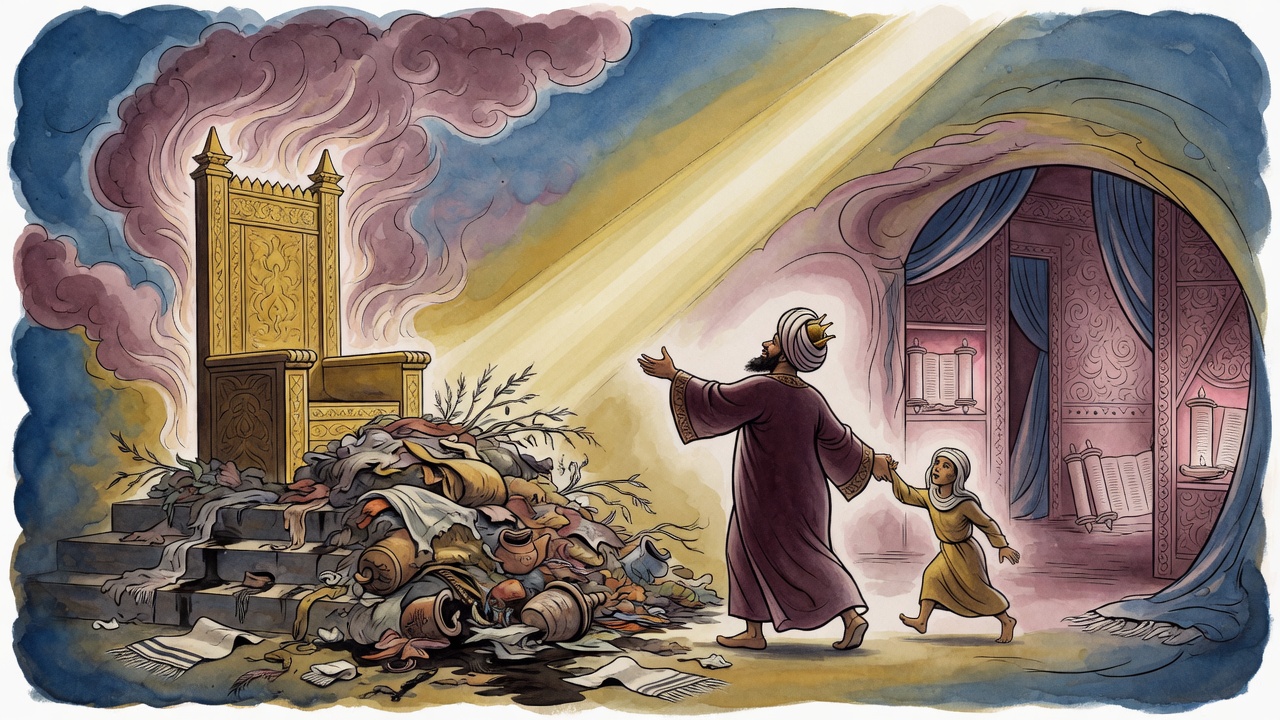
The household's refuse got hauled outside and stacked where the master would step. Servants braced for disgust and a sharp order. The smell reached him first.
