God Asked Ishmael for a Blessing in the Holy of Holies
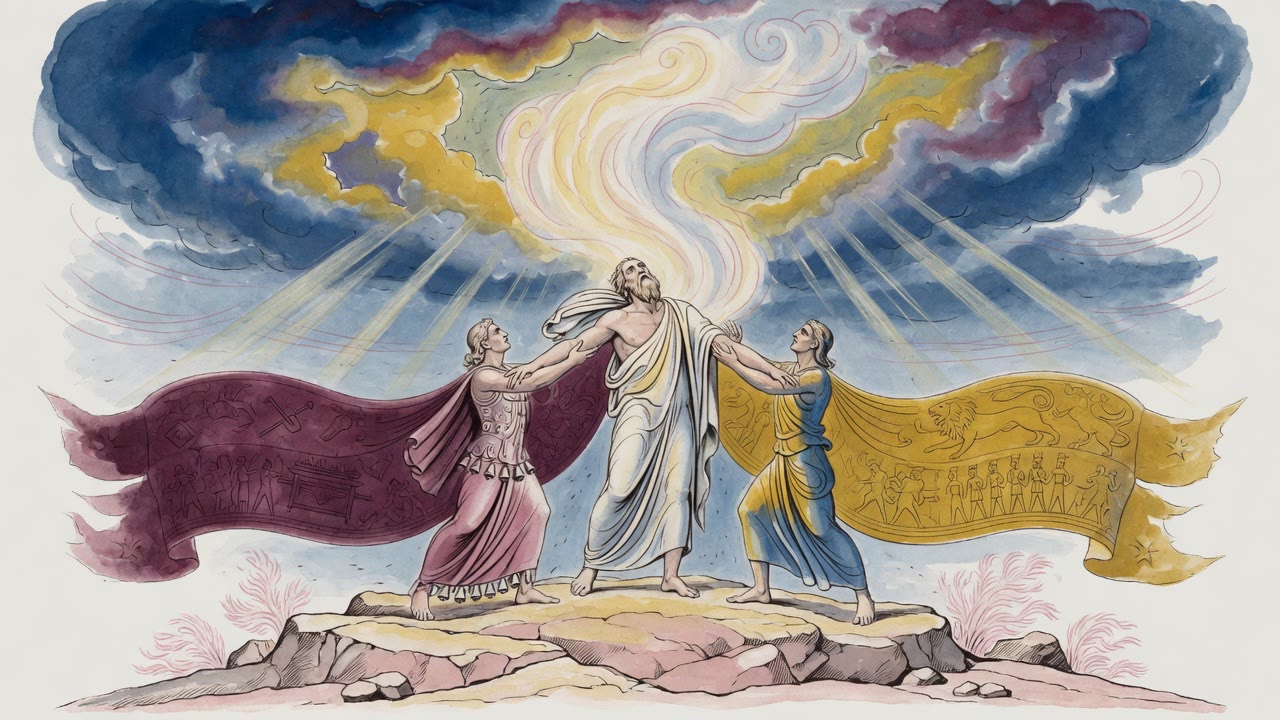
The High Priest had come only to burn incense. Akatriel Yah sat on the throne and asked him for a blessing, the way a father asks a son.
Table of Contents
God said, "Ishmael, my son. Bless Me."
 Click for full size
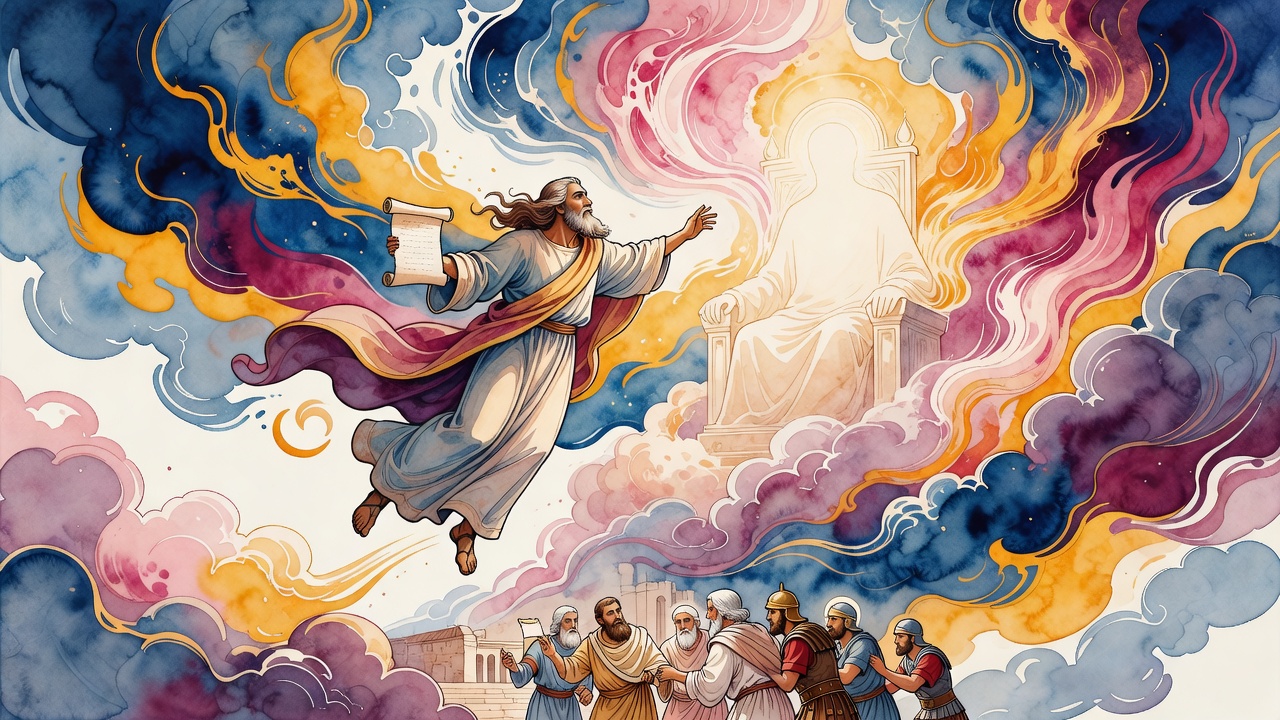
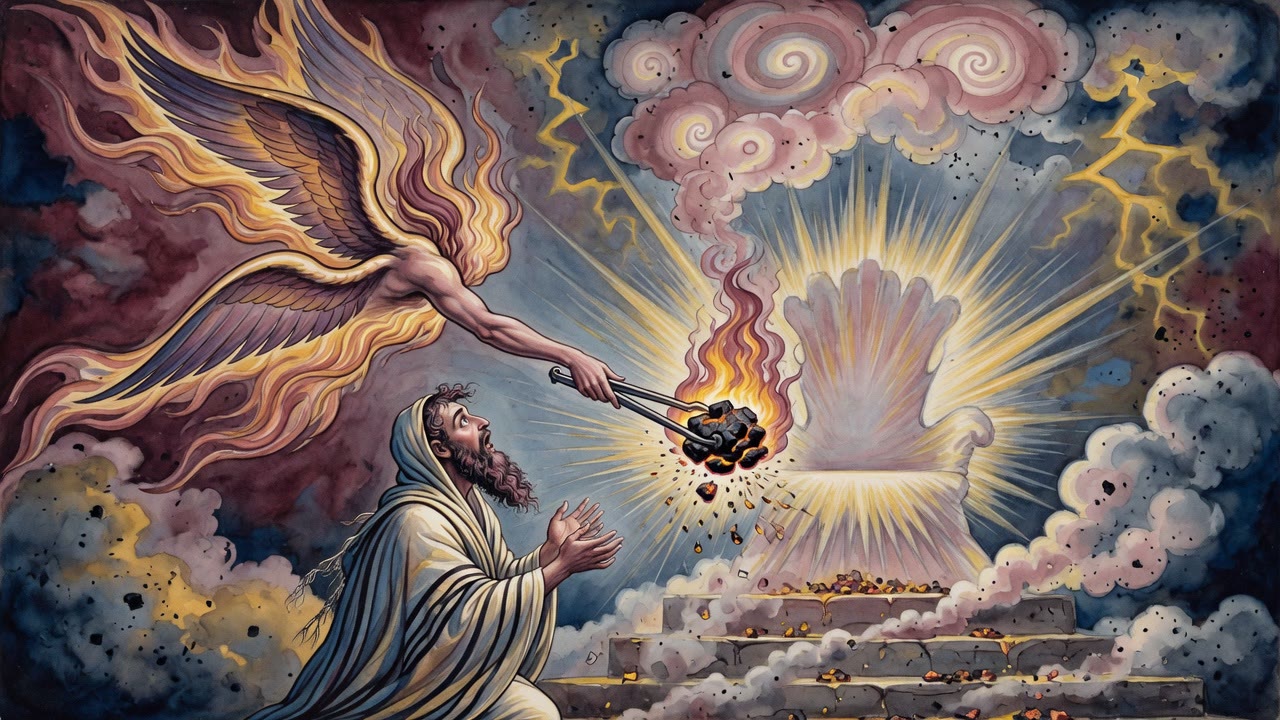
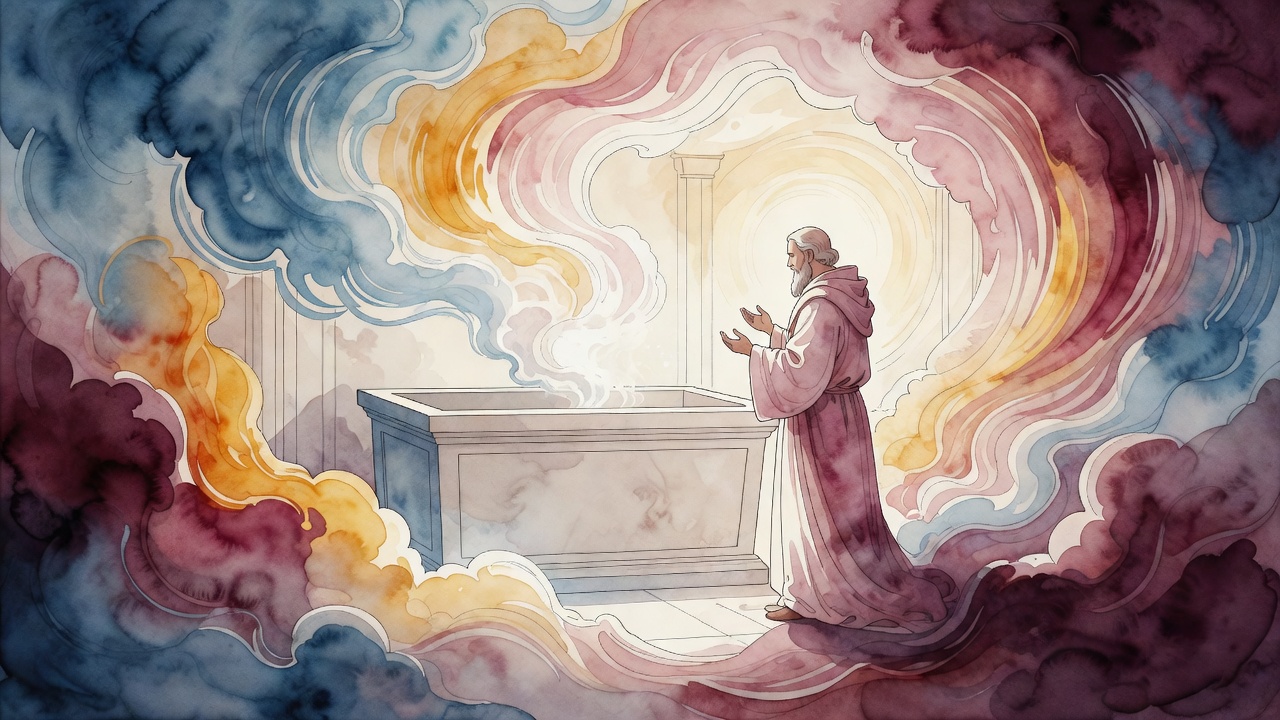
Rabbi Ishmael ben Elisha had gone into the Holy of Holies on Yom Kippur only to burn incense. He looked up. He saw Akatriel Yah (אכתריאל יה), the Lord of Hosts, seated on a high and exalted throne. The room that no other living body could enter had a Name in it that almost never appears anywhere else, and that Name asked a mortal for a blessing.
Ishmael was not struck speechless. He stood in the smoke and answered.
Mercy Over Anger
He said, "May it be Your will that Your mercy overcome Your anger, that Your mercy prevail over Your other attributes, that You deal with Your children according to the attribute of mercy, and that You go beyond the boundary of strict judgment for them."
Those were not small words to speak toward a throne. Anger was in the room. Judgment was in the room. Ishmael asked that mercy be the stronger hand. He asked that God step inside the line of law and then past it, for the children waiting outside the curtain.
The incense kept rising. Ishmael did not add a second speech. He had been asked to bless, and he had blessed toward the place where anger and mercy sit together.
God Nodded
God nodded. He lowered His head and received the blessing from the High Priest. A commoner's blessing is not a light thing, even when the commoner is the one man allowed through the curtain, even when the hearer is the Lord of Hosts.
The same prayer is the prayer God prays for Himself. "May it be My will that My mercy conquer My anger." Ishmael had not invented a new sentence. He had spoken, in a human mouth, the request already alive in heaven. God took it back from a son and agreed.
The nod was the whole answer. No thunder. No new law. A head moving yes in the innermost room.
Who Is Near
Outside that room Israel has a cry of its own. "Who is like the Lord our God in all our calling unto Him?" The astonishment is that the Maker of the world listens. The Holy Spirit answers in the same breath. "And who is a great nation that has God near to it?"
Israel is astonished that God can be called. God is astonished that Israel calls. The High Priest's blessing sits inside that nearness. A man who may enter once a year is still a man. God who sits on a high throne still asks him, my son, bless Me.
Nearness cuts both ways. The people marvel that the call is heard. Heaven marvels that the call is made.
Thursday News from Rome
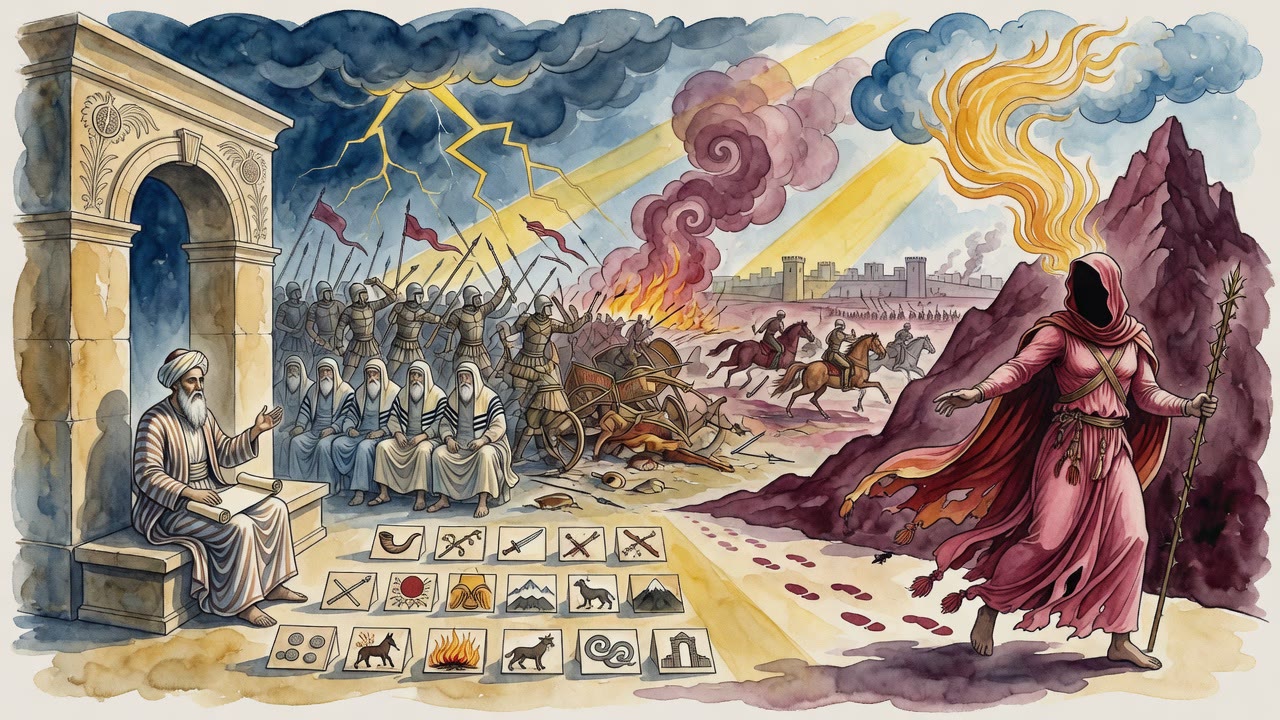
A Thursday came, an ordinary fifth day of the week, and abysmal tidings arrived from the great city of Rome. Four men from among the mighty of Israel had been seized. Rabbi Simon ben Gamaliel. Rabbi Ishmael ben Elisha. Rabbi Elazar ben Dama. Rabbi Judah ben Baba. The ransom named was eight thousand students from Jerusalem. Someone would have to decide which lives were worth buying back.
Rabbi Nehunya ben Hakkanah heard the decree and sent Ishmael down at once to the Merkavah, the chariot-throne. Ishmael questioned Surya, Prince of the Presence. Surya said the heavenly court of justice had written ten men and given them unto Samael the wicked, genius of Rome. "Go out and destroy from the mighty of Israel every good member, thigh and shoulder."
The sons of Jacob had stolen Joseph and sold him. The decree against a man-stealer had waited. Authority was given to Samael to destroy ten of the mighty in their stead. A vengeance against Samael was laid up for a later hour, when the Lord would punish the host of the high ones on high. That hour was not this Thursday.
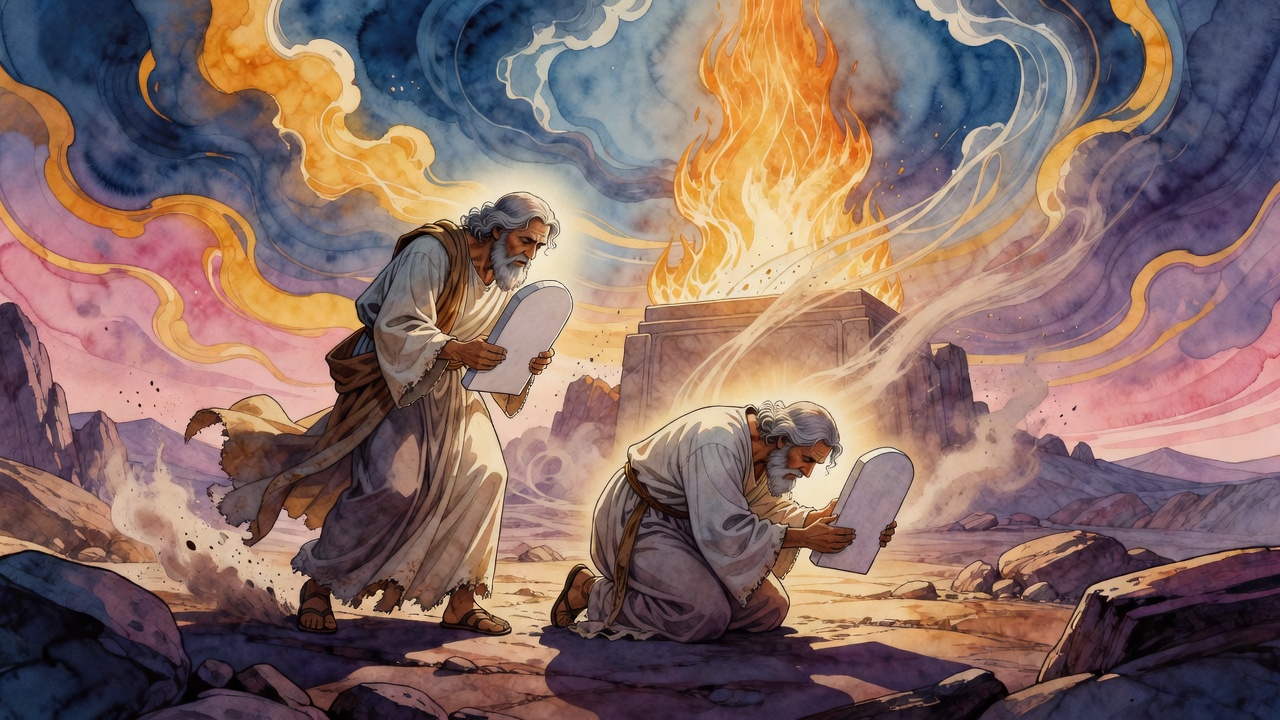
Ishmael heard his own name in the list. The man God had called my son, the man whose blessing God had accepted with a nod, was written down for Rome. He had gone in with incense. He came out with a prayer God had taken. The rope of empire was already being measured for the same mouth.
← All myths