God Wanted a House on Earth and Kept Getting Driven Out
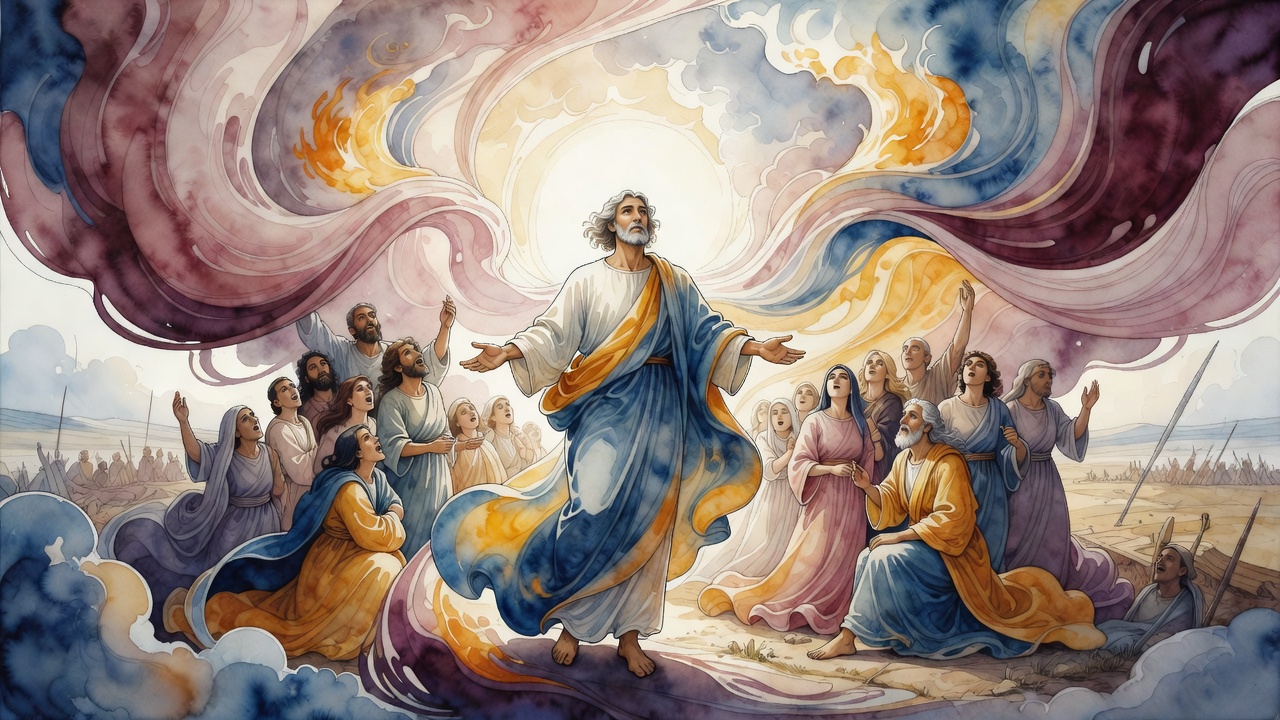
When the Presence rose out of Eden it did not go straight up. It went in hops, one floor at a time, and every hop was somebody's fault.
Table of Contents
 Click for full size
The One Command and the First Floor Up
When God made the world He wanted an address in it. A house up above was not enough. He wanted a house down here as well, on the dirt, among the ones He had just built out of it.
So He called Adam over and gave him the run of the garden and one instruction. Eat from every tree. Not that one. Adam ate from that one, and God said to him, I wanted this. I have a dwelling above and I wanted a dwelling below, and I gave you one thing to keep and you did not keep it.
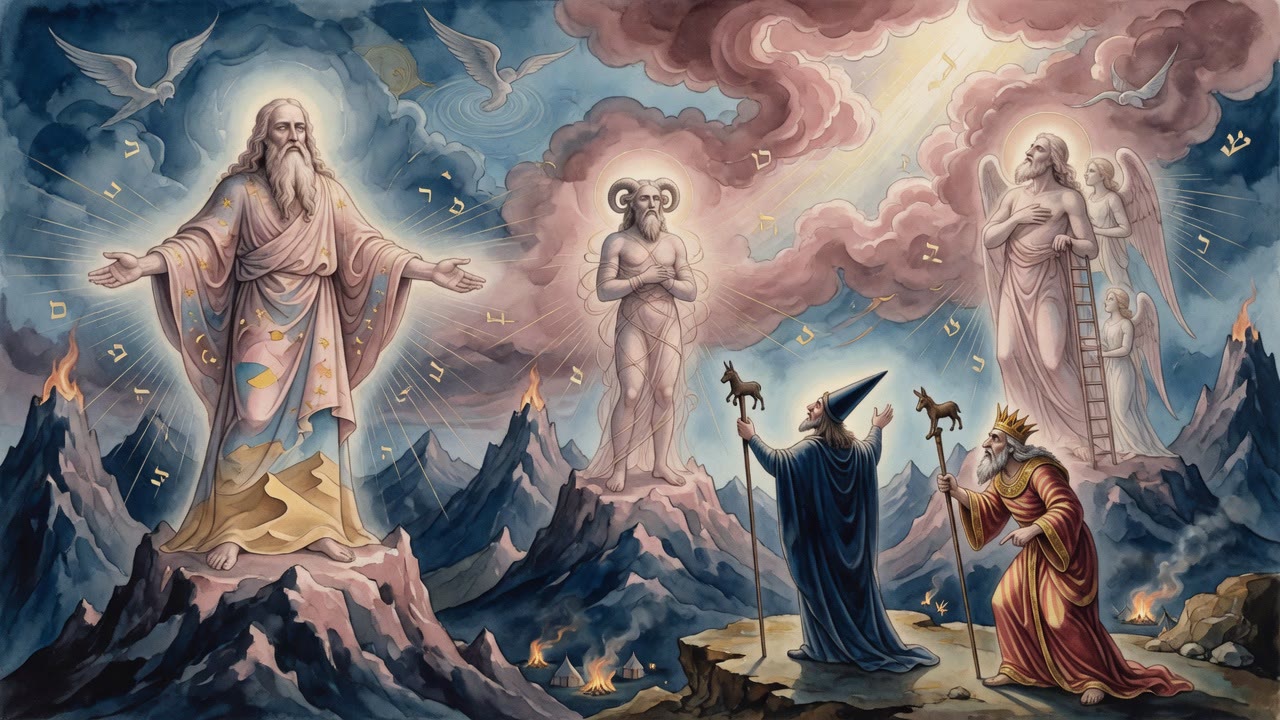
The Presence went up. Not walking. The verse says God was moving about in the garden, and the word is not walking, it is going up in hops, leaping and rising, leaping and rising, the way something leaves a room it will not stay in.
After that it kept leaving. Cain killed his brother in a field and the Presence went to the second heaven. The generation of Enosh started calling other things by God's name, and it went to the third. The generation of the flood said to God, to His face, turn away from us, and it went to the fourth. The tower builders said the upper world is His and the lower one is ours, and started stacking bricks to prove it, and it went to the fifth. The men of Sodom, sitting on land whose stones held sapphires and whose dust held gold, decided among themselves to make travelers stop coming, and it went to the sixth. Then Egypt, and it went to the seventh, and there was nothing above the seventh.
Seven Men Who Pulled It Back Down
God said: I made seven heavens, and the wicked are still standing there.
So He folded up all those generations, closed them like a cloth, and stood Abraham on his feet in front of Him. Abraham did what he did, and the Presence came down from the seventh to the sixth. Isaac lay on the wood and stretched his neck out over the altar, and it came from the sixth to the fifth. Jacob held on, and it came to the fourth. Levi, whose deeds were clean, brought it to the third. Kehat brought it to the second. Amram brought it to the first. Then Moses stood up, and it came all the way down and touched the ground, and the day it touched the ground was the day the Tabernacle went up.
The righteous, Rabbi Yitzhak said, are the ones who get the Presence to settle on the earth, and they inherit the earth and stay on it. The wicked never did that work. They will be left hanging in the air.
The Queen Who Would Not Come Back to the Old Room
Think of a king who lost his temper with the queen and put her out of the palace. Later he wanted her back and sent to make peace. She sent word to him: let the king build me something new, and then let him come.
Until then God had taken His offerings from above. Noah burned his sacrifice and the smell went up and God received it up there, at a distance, the way a king accepts a gift without opening the door. From the day the Tabernacle stood, He took them from below, standing in the room. I have come into my garden, He said, and not into a garden. Into my own. Into the wedding canopy. Back to the place where I was seen the first time.
The incense of spices was the myrrh. The limbs on the fire were the honeycomb. The libations were the wine and the milk. Eat, friends, He said, and the friends were Moses and Aaron and the princes of the tribes, who brought voluntary incense and voluntary sin offerings that no individual is ever allowed to bring, and got away with it, because the King had already put out His hand toward the dish.
A Litter for the King's Daughter
A king had one daughter, and she was beautiful, and he came in one day and shouted at his servants. My daughter is beautiful and pious and worth praising and you have not built her a litter? Build one. Her beauty is better seen from inside a litter than out in the road.
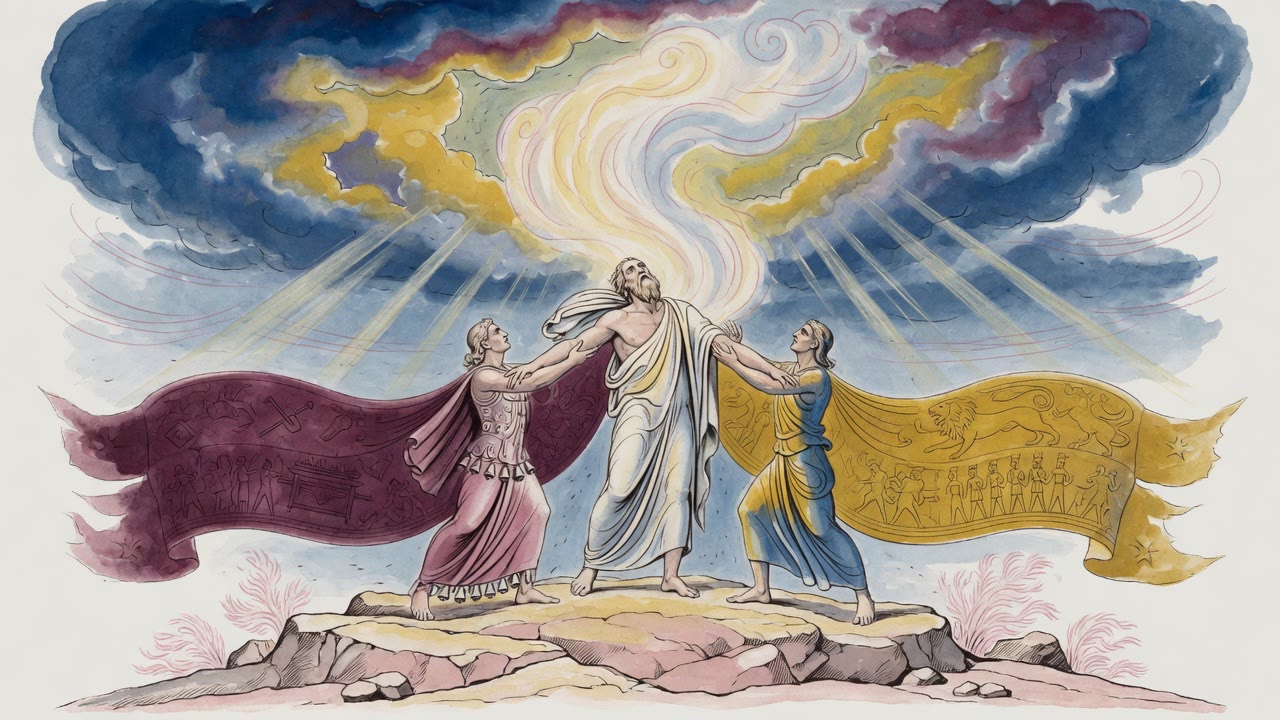
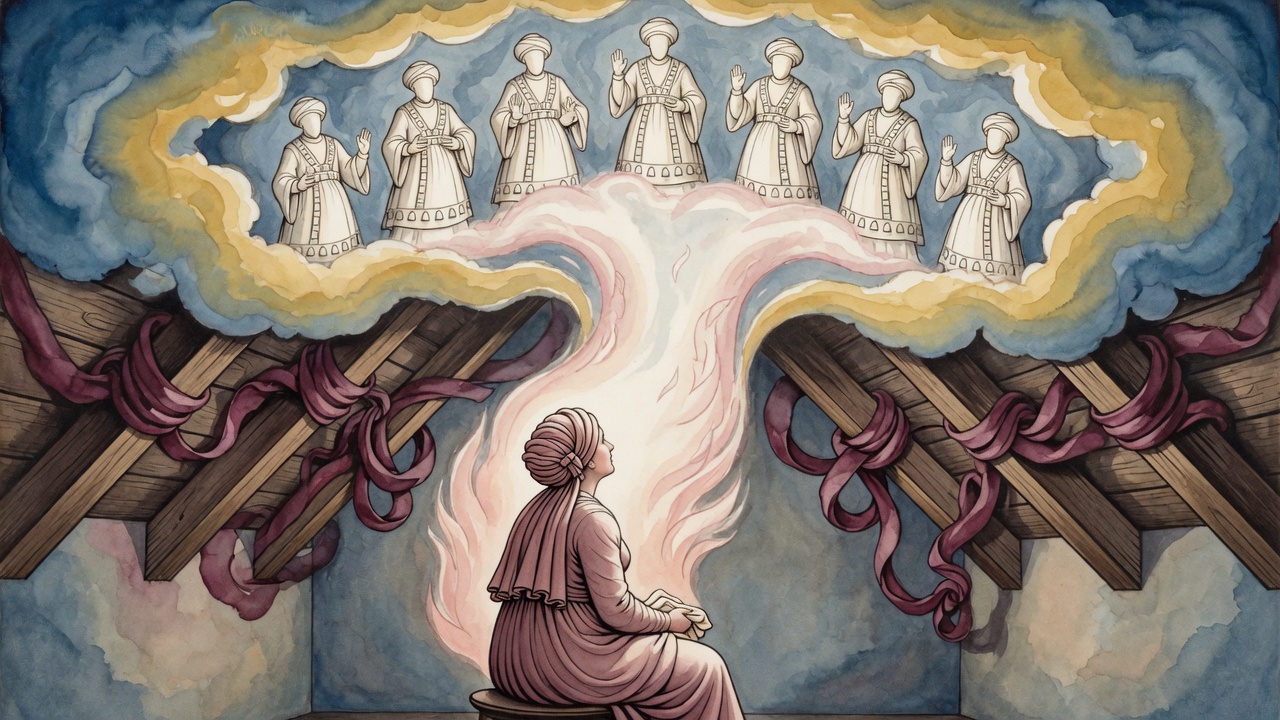
That is why the Torah got a box built for it out of acacia wood, plated in gold, with silver posts inside and a covering the color of purple. And what was behind the covering, in the dark, where nobody looked? Rabbi Abba bar Kahana said even that space was not empty of the Presence.
Someone once came to Rabbi Yehoshua ben Korhah trying to catch him out. Why did God speak to Moses from inside a thornbush? Why not a carob, why not a sycamore? Rabbi Yehoshua told him that if it had been a carob he would be standing here asking why a carob. Then he answered anyway. There is no place on this earth empty of the Presence. Not even a bush.
What Was Left After the House Came Down
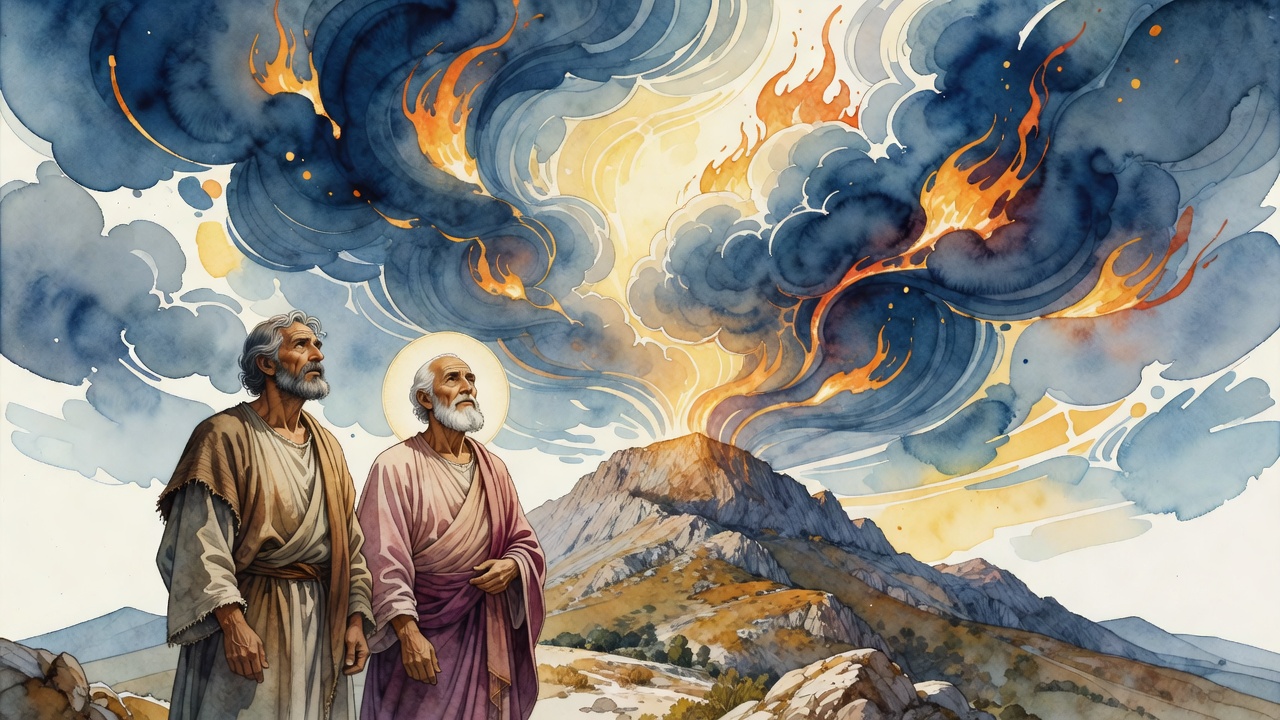
Centuries later Elijah climbed to the top of Carmel, sat down, and put his face between his knees, folding himself over the mark of the covenant that was cut into his own body. He had no argument left. We have no merit, he said. Look at the covenant.
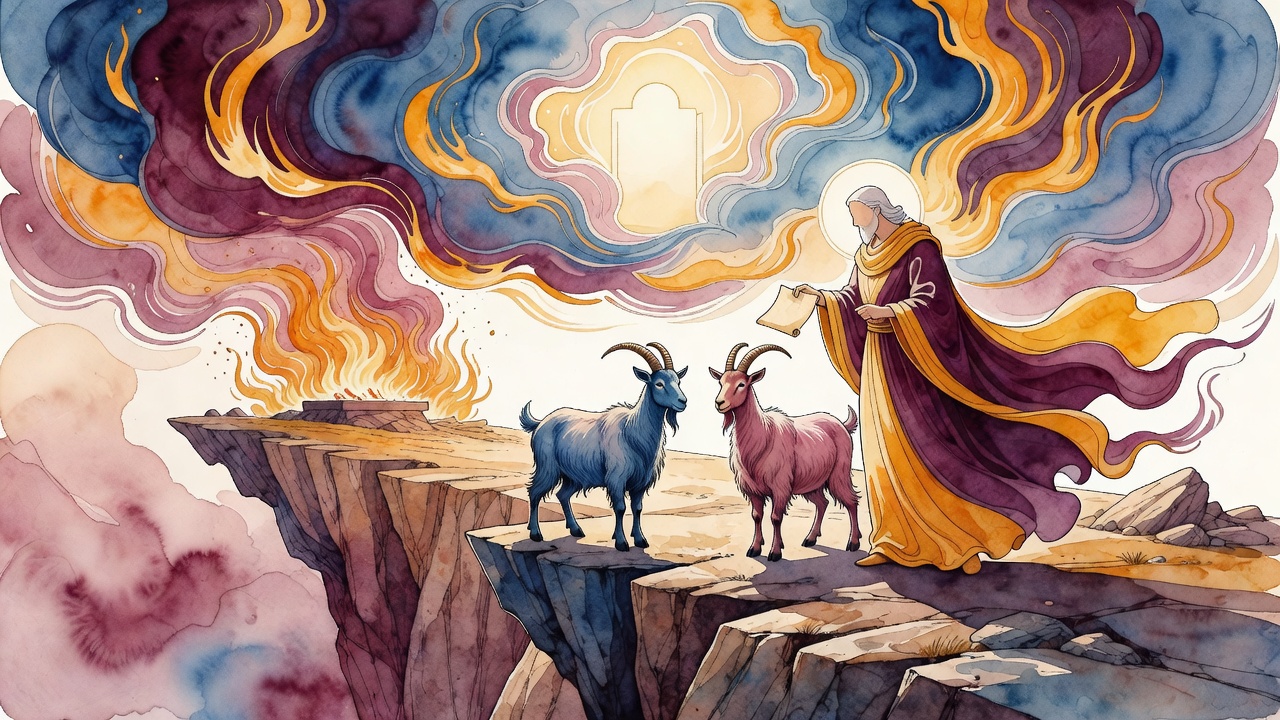
Then the Temple fell, and the crimson strip that used to be tied for the Day of Atonement was gone with it, and the goat sent out to the wilderness was gone, and Israel stood in front of God with nothing in its hands. We have no wool and no goat, they said. How are we supposed to be cleaned?
Your lips, He said. The muttering of your mouth is as dear to Me as that crimson thread.
Rabbi Levi noticed something about the ruin. Standing, the house produced Ahaz and Menashe and Amon. In pieces, it produced Daniel and his friends, Mordechai and his, Ezra and his. And the mound it left behind is the thing every mouth still turns toward. Those in the north face south. Those in the south face north. Those in Jerusalem's face the house that is not there, so that a scattered people, standing in every direction at once, are all praying at the same square of ground.
← All myths