Michael Pulled Joshua Out of the Furnace With His Hair Singed
Two frauds sentenced to burn in Babylon gave the king a third name, the high priest's, hoping his merit would put the fire out for all three of them.
Table of Contents
 Click for full size
The King Who Walked Out to the Camp
Jehoiachin was a good man and a pious one, and he would not let Jerusalem be broken open on his account.
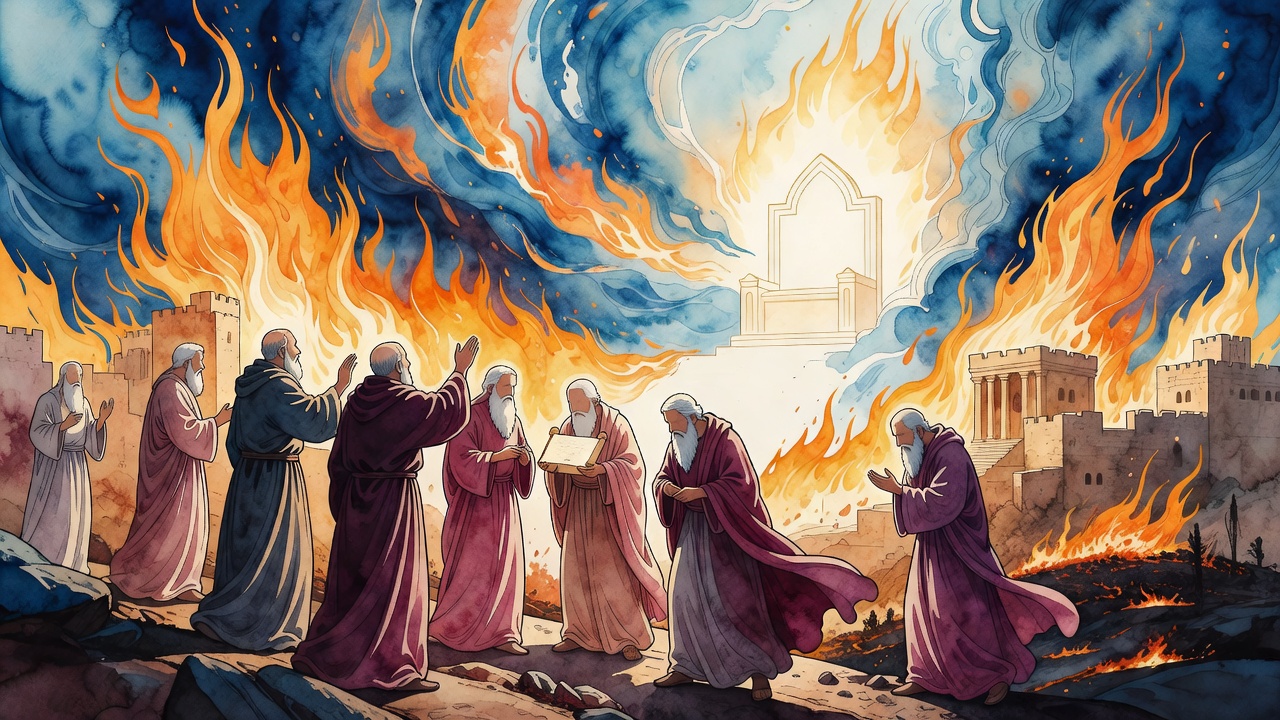
So he went out to the Babylonian commanders himself and handed himself over. They swore an oath first. Neither the city nor the people would be harmed. He believed them and gave himself up, and a short while later they took him anyway, and his mother with him, and ten thousand more, the nobility and the great scholars, out along the road to Babylon. It was the second time Nebuchadnezzar had emptied part of the city. The first time he had taken three hundred of the best, and Ezekiel had been among them.
Exile did not improve anybody. The people who came off that road did in Babylon what they had been doing at home.
Two Healers and the Wives of the Chaldeans
Two of them set up as healers. Ahab son of Kolaiah and Zedekiah son of Maaseiah went to the houses of the Chaldeans and treated their wives, and lied to them, and slept with them, and went on doing it long enough that the story reached the king.
The king did not hold an inquiry. He ordered the two of them burnt.
In whatever room they were kept in before the fire, the two of them worked out a plan, and it was the cleverest thing either of them ever did. There was a man in Babylon whose family had served at the altar in Jerusalem, a man nobody could accuse of anything: Joshua son of Jehozadak, the high priest. If God was going to spare anyone in that furnace, God would spare him. So all they had to do was be standing next to him.
The Third Name
They went in front of the king and told him there had been three.
"Our lord the king, this man was with us in every matter."
They said it plainly, the way men say a thing they have rehearsed. Joshua had done nothing. He had never been in those houses. He had touched none of those women. Two liars had picked his name out of the exile because his life was clean enough to put out a fire, and they wanted to stand in the shade of it.
The king ordered all three of them burnt.
What Came Down Into the Flames
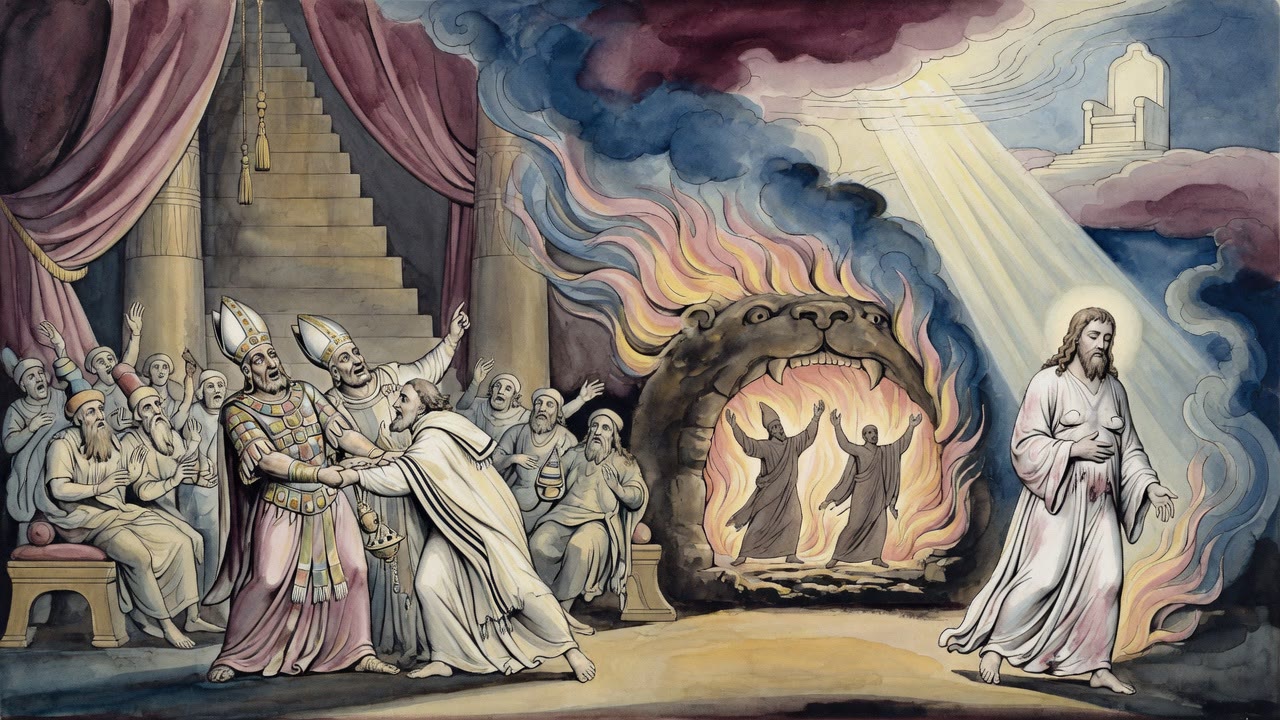
They lit it. Ahab and Zedekiah went in and the fire took them and did not stop.
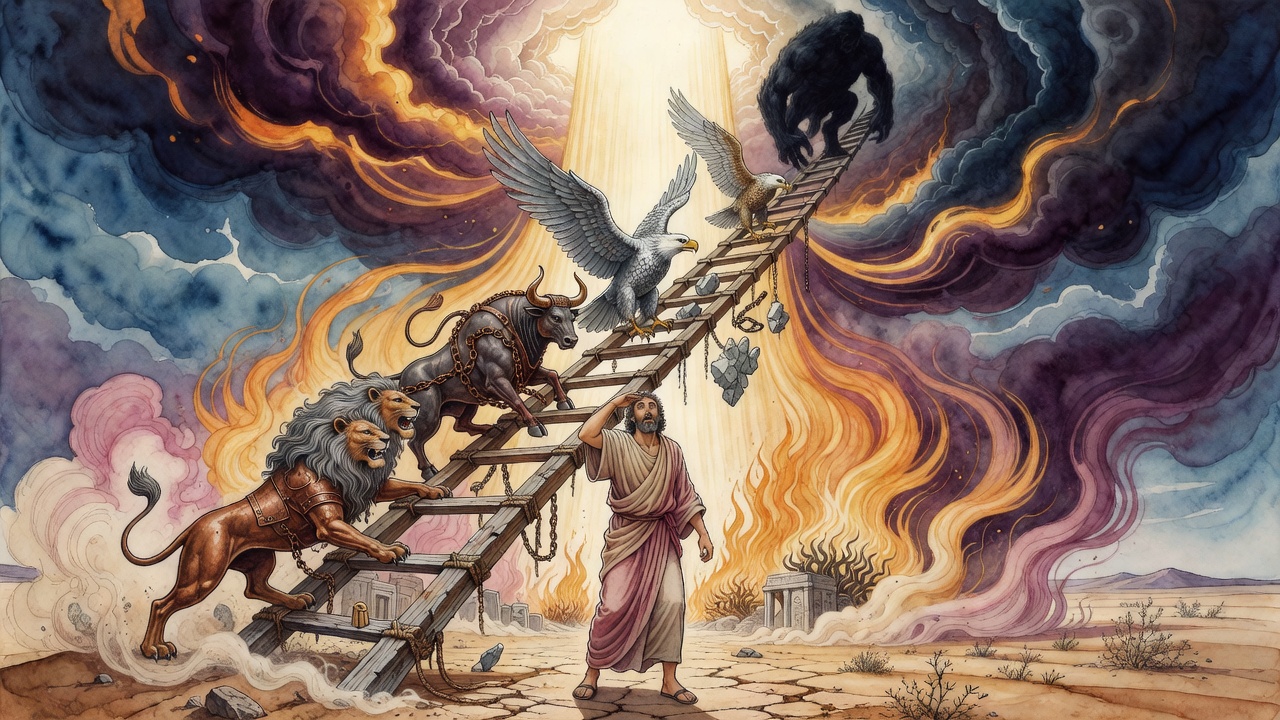
Then Michael came down through it. He took the high priest out of the middle of the flames and carried him up, past everything, and set him on his feet in front of the throne of glory.
Later people would argue about a single word. The report of that day says the king of Babylon roasted those men in the fire. It does not say he burned them. He roasted them, which is a word for what happens to a thing that is pulled out again, and it is the reason for the one detail that survived on the priest's body. Joshua came out of Babylon with the hair singed off him.
The Accuser at His Right Hand
He was still smoking when the court convened.
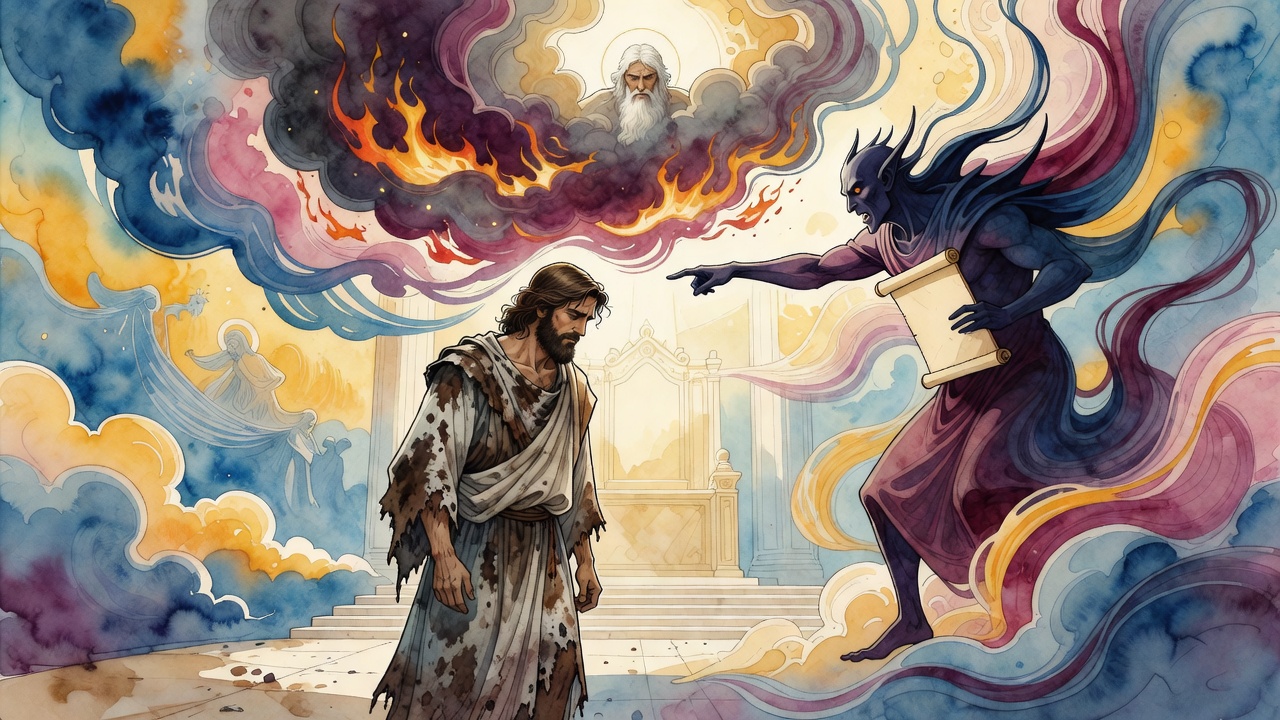
Joshua stood in front of the angel of God in the clothes he had been arrested in, and they were filthy, and Ha-Satan was standing at his right hand where the prosecutor stands, ready with the charge that this man had been named by two adulterers and dragged out of a fire lit for adulterers.
The angel did not argue the facts. He looked past the accuser at the state of the man.
"The Lord rebuke you, Satan. Is this not a brand plucked out of the fire?"
Then they stripped the burnt clothing off the high priest where he stood and put clean garments on him and set a clean turban on his head, and the case ended without a verdict, because the evidence was the scorch marks and the evidence was on the wrong side.
The sages who worked over that scene afterwards knew exactly how the accuser operates, because they had watched him work the room every year on the Day of Atonement. The high priest owns eight garments, one for each of the eight days a boy waits for circumcision, since the covenant was made with him, life and peace. Several of those garments are worked with gold. And on the one day of the year when he goes behind the curtain to plead for Israel, he leaves every scrap of gold outside and goes in dressed in plain white linen.
The reason given is a rule of the courtroom. A prosecutor does not get to turn around and act as the advocate. Walk in there with gold on your shoulders, and a voice at your right hand will say: yesterday these people melted their earrings into a calf, and today they want to stand in front of you wearing gold.
← All myths