Ha-Satan Refused to Bow Before Adam Because He Was Jealous
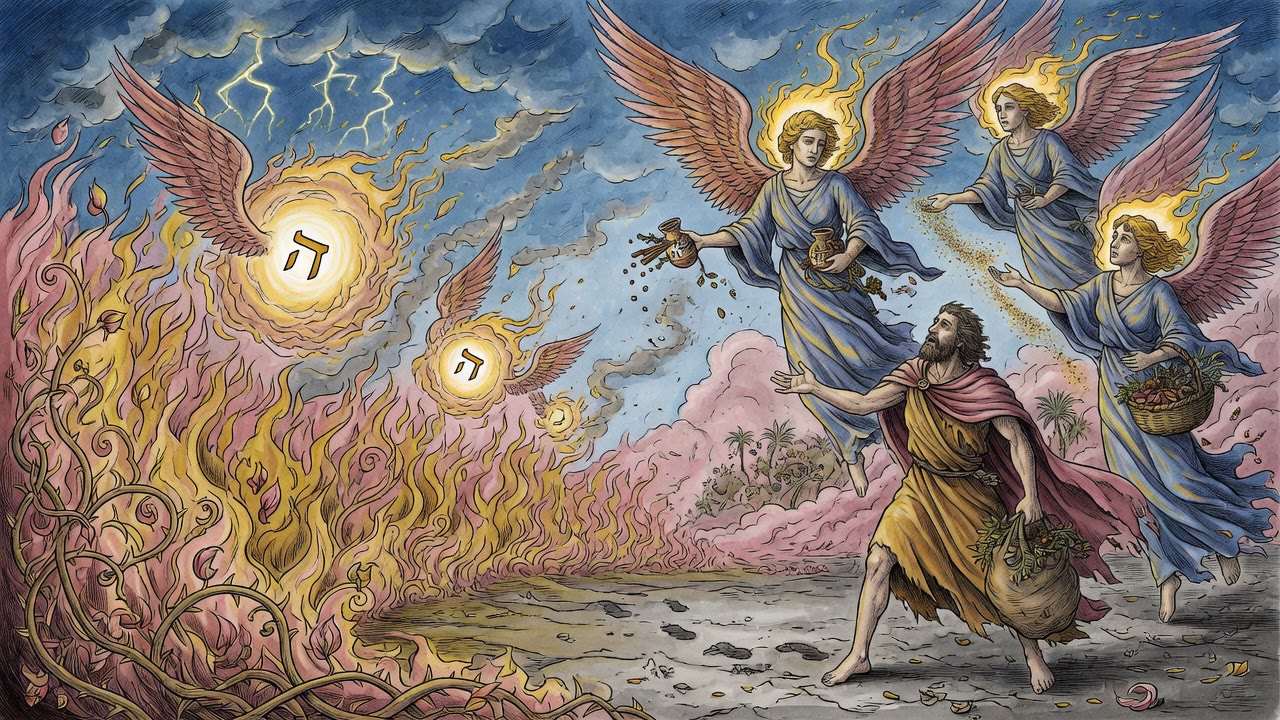
When God formed Adam and commanded the angels to honor him, Ha-Satan, the Accuser, refused. Formed from fire, he would not bow before dust.
Table of Contents
 Click for full size
The Sixth Day Command
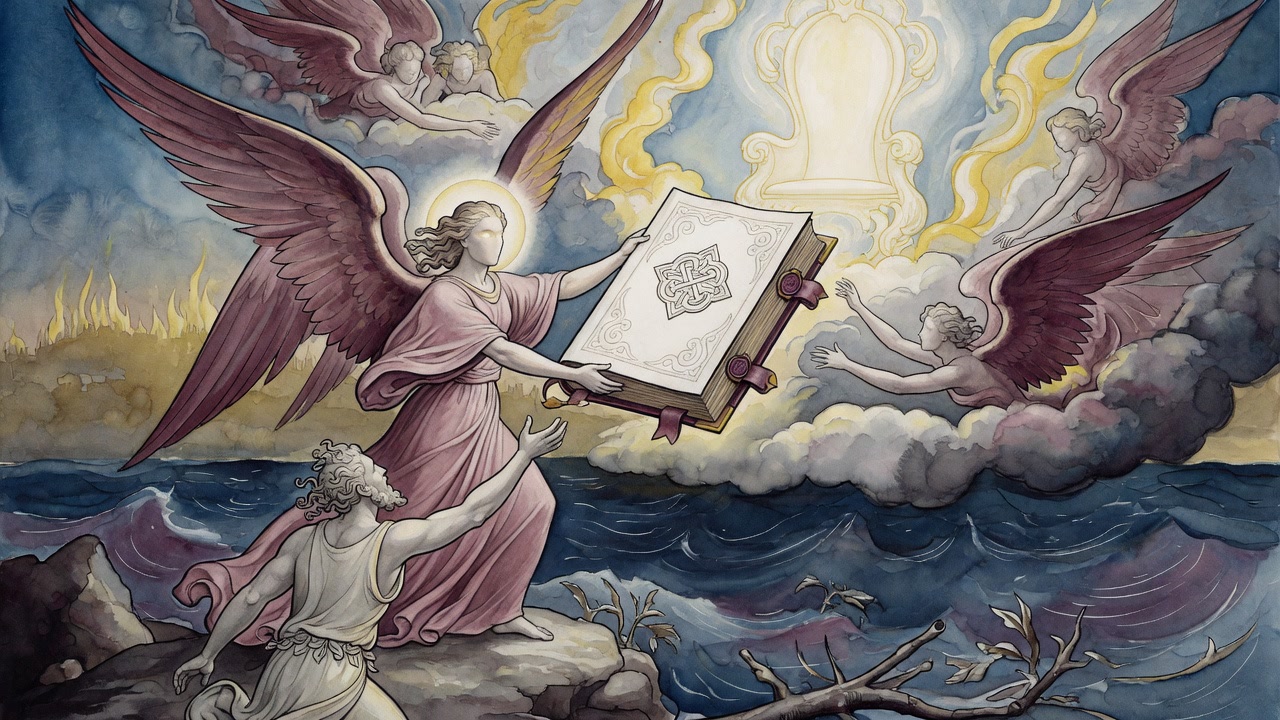
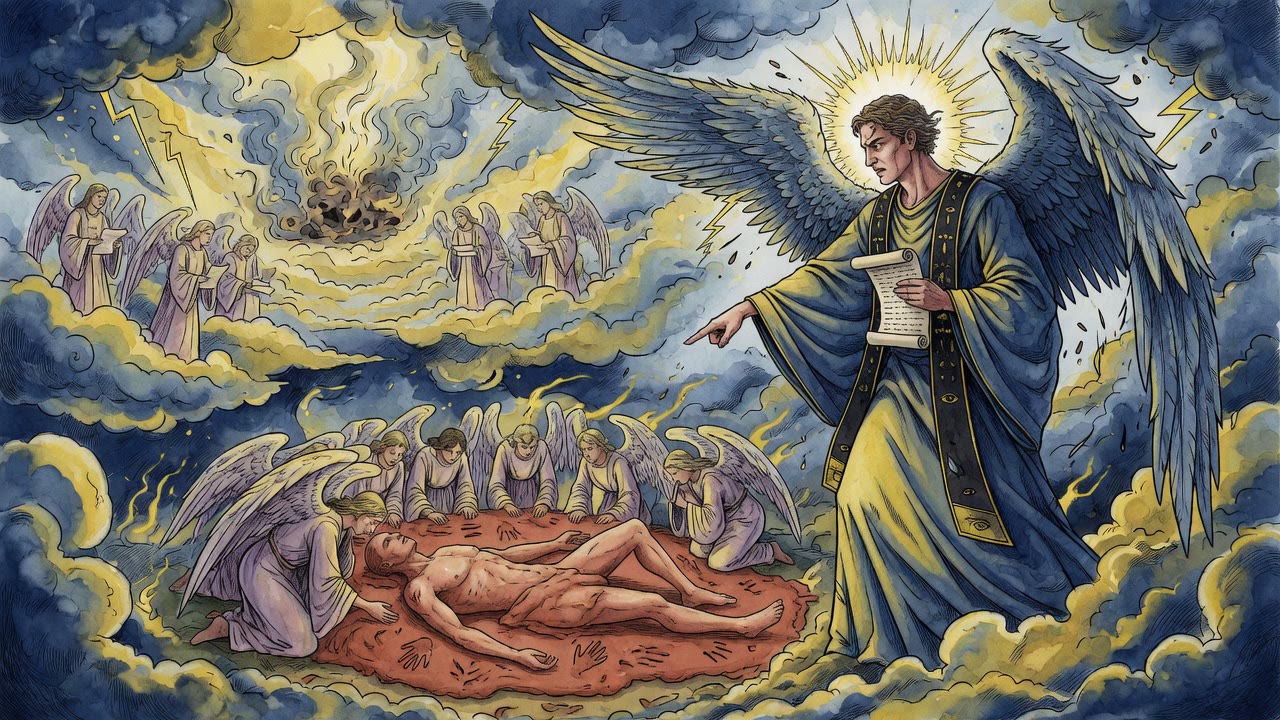
God formed Adam from the dust on the sixth day, breathed life into him, and placed him before the angels. Then came the command: honor this creature. Honor the being made in the divine image.
Michael bowed first. The other angels followed. One did not.
Satanael, the accuser, stood upright. He had been formed from fire, and fire was older than humanity, older than the dust from which Adam had been shaped. He was not going to bow before something made of dirt simply because God had breathed into it. He was not going to bend his knee to a creature formed after him, ranked below him, made from inferior material, no matter what the divine image meant or what the command required.
God cast him down to earth. Adam received the place in the divine order that Satanael had lost.
The Grudge That Grew Structures
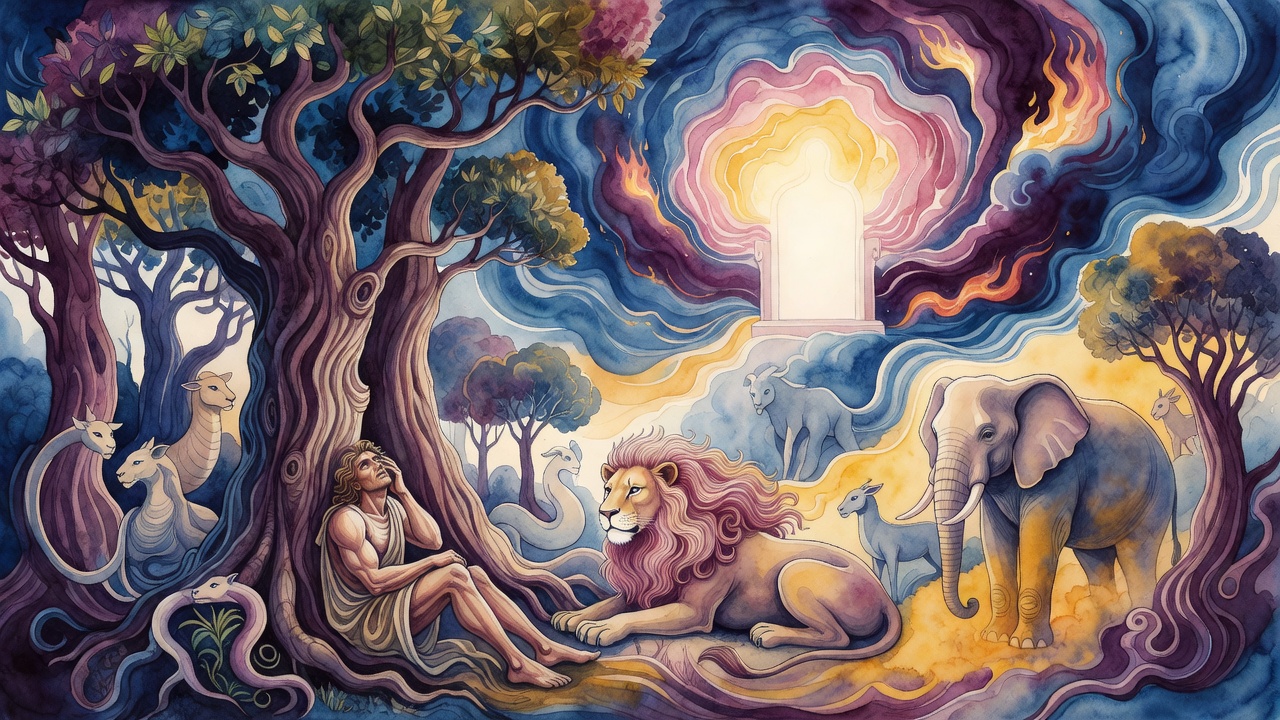
From the moment of that fall, Satanael looked at Eden and saw his own humiliation walking in human skin. Adam lived in the garden that should have remained Satanael's domain. Adam conversed freely with God. Adam named the animals and exercised the kind of sovereignty that Satanael had believed was reserved for the first and highest beings.
It was not evil that drove him. Eve told her children this explicitly, years later, when she gathered them all to explain what had actually happened. The adversary's original motion was wounded pride. He had occupied a high place and lost it to something he could not respect. The fall from dignity was the wound. What came after was the wound trying to replicate itself.
A creature in that condition does not plan, exactly. It looks for the avenue that will spread its condition to others. If Satanael could not recover his place, he could at least ensure that Adam did not keep his.
The Approach Through the Serpent
He went to Adam's territory first, not to Adam but to the serpent. The serpent was the most cunning creature in the garden, comfortable in the serpent's own skin, moving between the tree roots without drawing attention. Satanael approached it and made a proposal.
Eve had her territory in the west and south of Paradise. Adam had the east, where the male creatures lived. God had arranged the garden as a kind of responsibility structure, each domain tended by one of the two humans. Satanael chose the serpent because the serpent had access to Eve's domain without triggering her suspicion. It was an animal, not an adversary. She would not read an animal's approach as threat.
He put himself inside the serpent's intelligence and went to Eve. The conversation in the garden, Eve told her children, did not begin with a lie. It began with a question. "Did God really say?" Four words. A small wedge opened in certainty that could be pried wider.
What Eve Told Her Children
At the end of her life, Eve gathered everyone she could find, every child and grandchild, and told them the full story. Not because confession undid the damage but because concealment would compound it. They needed to know what had entered the garden and how it had gotten through. They needed to know that the adversary had not been some ancient monster but a jealous intelligence, rational, strategic, and specific in its grievances.
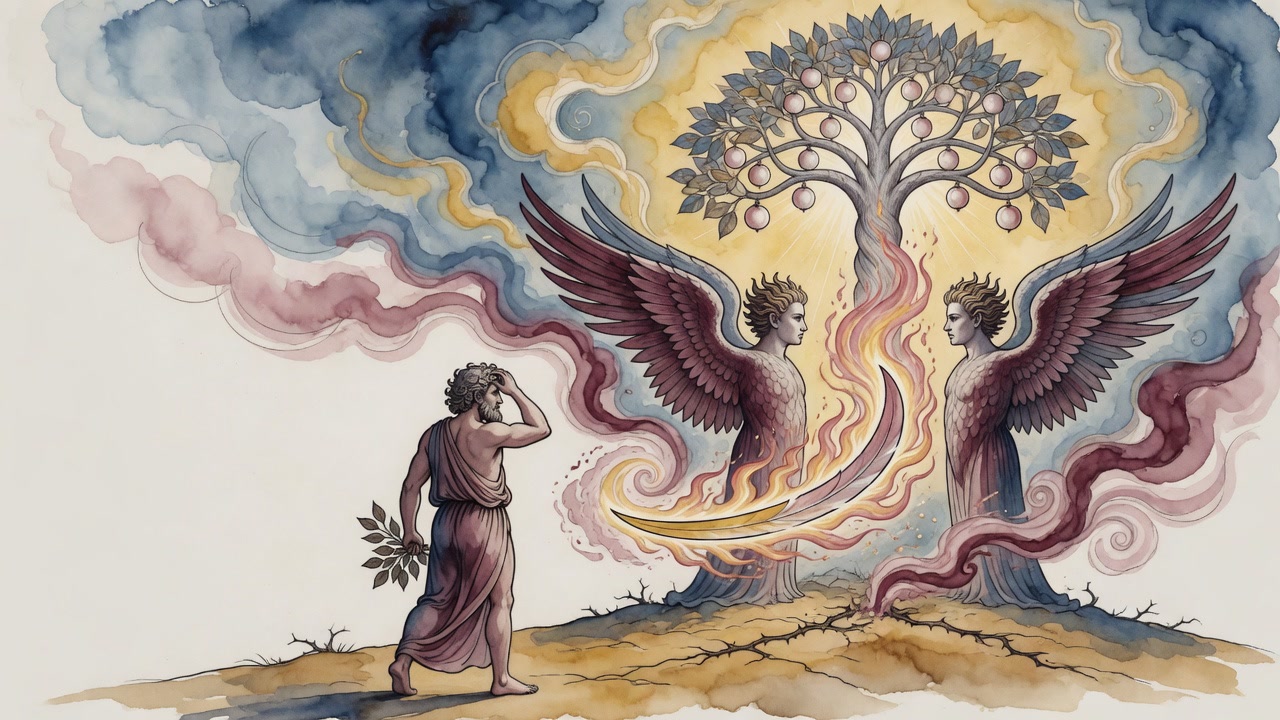
He had wanted Adam's place. He had not gotten it. So he had taken Adam's peace instead. And Adam's access to the Tree of Life. And Eve's innocence. And the whole arrangement of the garden, the whole original order in which humanity and God and the animals existed in something like harmony.
The adversary had not wanted to destroy the world. He had wanted to transfer his suffering. That, Eve said, was what made him dangerous. Pure malice can sometimes be resisted. Transferred suffering arrives as something familiar, something you might even mistake for your own thought.
What Was Left
After the expulsion, Satanael no longer appeared in the garden. There was no garden to appear in. He had accomplished what he set out to accomplish and lost what he had lost, and the two facts sat together without resolution.
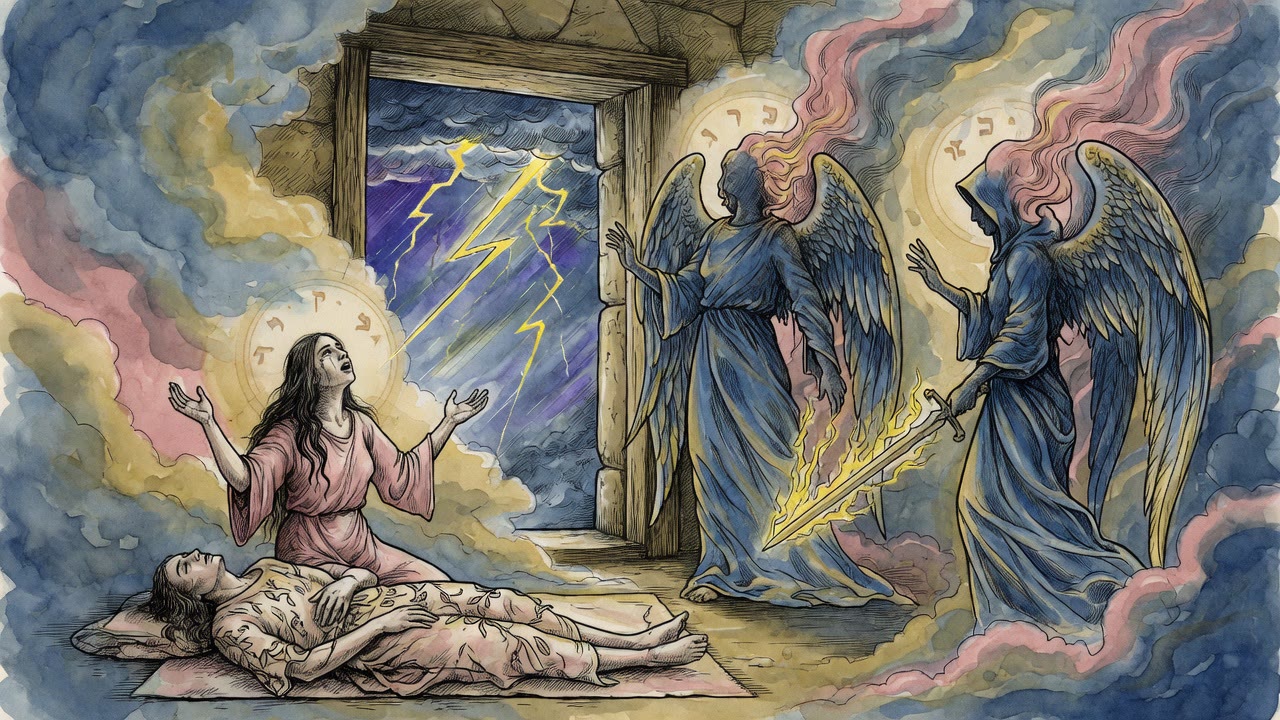
Adam and Eve lived out their centuries east of Eden. They farmed and bore children and aged in ways they had no framework to understand, since aging had not existed in Paradise. When Adam lay dying from the seventy-two afflictions, Eve still carried the memory of the original conversation, the question that had opened everything. She passed it to her children intact, along with everything else she had learned about the being who had asked it.
He had not been evil, she said. He had been jealous. And jealousy, she had discovered, was a far more efficient destroyer than evil, because evil announces itself and jealousy does not.
← All myths