6 min read

Adam Searched Cain's Face and Found Nothing of Himself

Adam searched Cain's face for his own likeness and found nothing. A hundred and thirty years passed before a son carried his image.

Curated by Arthur · Told by Maggid ·
Table of Contents
  1. The Field Where Abel Lay
  2. A Face Without His Likeness
  3. A Hundred and Thirty Years
  4. The Son in His Own Image
  5. The Torah and the Garments
  6. Two Lines Toward the Flood

The Field Where Abel Lay

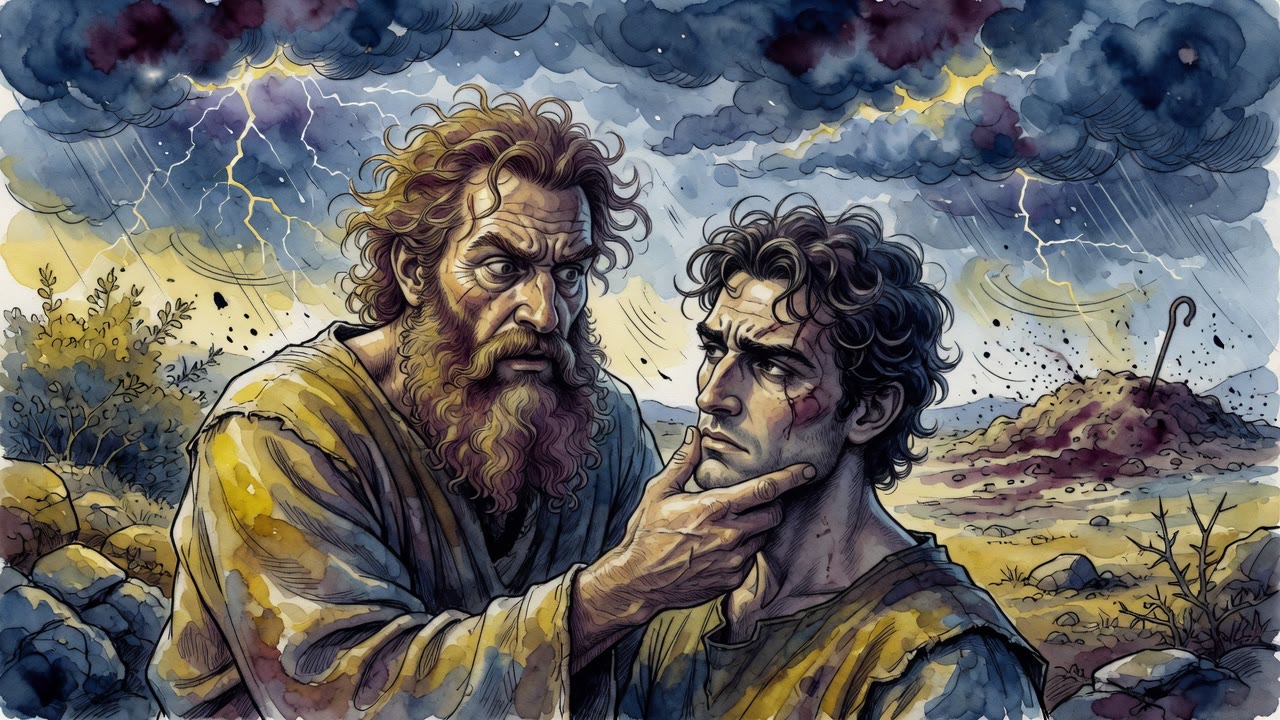
The cry came over the furrows before the news did. Adam ran toward it through the standing grain, and what he found was his second son face down in the dirt and his firstborn standing over the body with red hands (Genesis 4:8). Eve came behind him, and her scream went up and would not come down. But Adam did not look first at Abel. He looked at Cain.

He had searched Cain's face since the day of his birth and found nothing of himself in it. Eve had borne the boy with a shout of triumph, saying she had gotten a man (Genesis 4:1), and Adam had bent over the small wrapped body and waited for the recognition every father waits for, the jolt of seeing his own brow, his own mouth, repeated in miniature. The jolt never came. The face in the swaddling was a stranger's face. Now the stranger stood in a trampled field with his brother's blood drying on his fingers, and Adam stopped refusing to know what he had known all along.

A Face Without His Likeness

Adam understood what a likeness was. He had been made in the image of God (Genesis 1:27), the tzelem, the stamped form, the way a seal presses its shape into soft wax. Whatever Adam fathered should have carried that stamp forward, image out of image, the seal repeating itself down the generations. Cain carried nothing forward. Not the seed, not the likeness, not the image. The boy had come out of Eve, but he had not come out of Adam, and where he had come from was a door Adam kept shut and kept watching. He never said the thing aloud. The silence around the question was its own answer. Something other than Adam stood at the head of that line, and the line would go on proving it.

So the firstborn walked out of his father's sight into the land of wandering, marked on the brow, and Adam turned back to a tent that held one dead son, one banished one, and no heir at all.

A Hundred and Thirty Years

The years after the field were long, and Adam counted every one of them. He worked the cursed ground and watched it fight him. Word drifted back across the distances, Cain building a city, Cain's sons multiplying, a line of them running down to Lamech (Genesis 4:17), men of bronze and iron and boast. The stranger's face was spreading through the world, copy after copy, and none of those copies bore the stamp Adam had carried out of Eden. He was the image of God walking the earth with no one to leave it to.

A hundred and thirty years he lived with that absence. Then Eve conceived again.

The Son in His Own Image

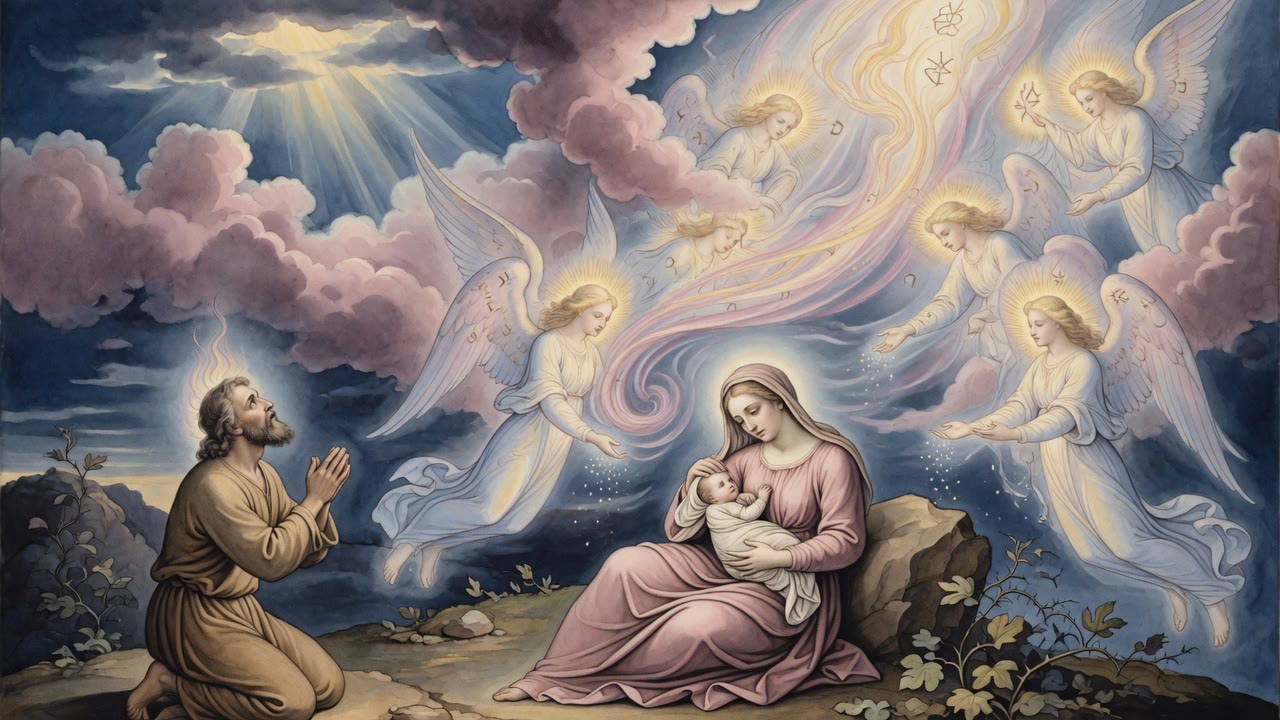
When the child was put into his arms, Adam looked down and the jolt finally came. His own brow. His own mouth. A face that answered his face the way wax answers the seal. He begot a son in his own likeness, after his image, and called his name Seth (Genesis 5:3). The demut, the likeness, had skipped no one. It had simply waited.

There was more in the small body than a familiar face. The child had been born circumcised, the flesh already sealed, as if purity had come stitched into him before the world could touch him. Adam held him a long time. After a murdered son and a banished one, here at last was the son who was his, seed and likeness and image, all three, with nothing strange standing behind him.

The Torah and the Garments

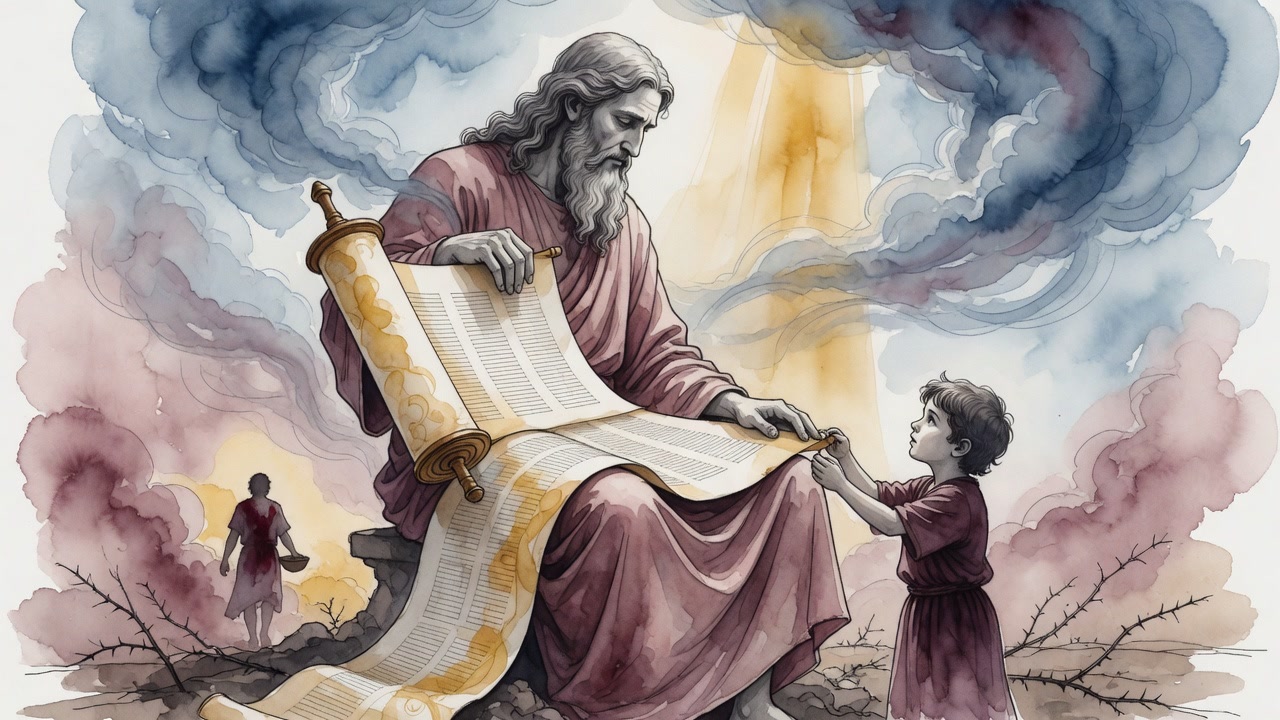
Adam had more to hand down than a face. He carried the Torah, the whole of it, the teaching he had known from the beginning, and he set it in Seth the way a man sets a flame from one lamp to another. Seth learned it and would pass it to Enoch in his turn, link after link, hand after hand, a chain that would not break.

And Adam had served as the first priest of the world. When he offered sacrifice he wore garments made for that service, and when he died those garments did not go into the ground with him. They went to Seth. From Seth they would pass to Methuselah, vestments traveling down one bloodline only, the line with the stamp on it. Cain's line received no Torah and no garments. It had its cities and its bronze and its boasting, and it had Lamech. That was its whole inheritance.

Two Lines Toward the Flood

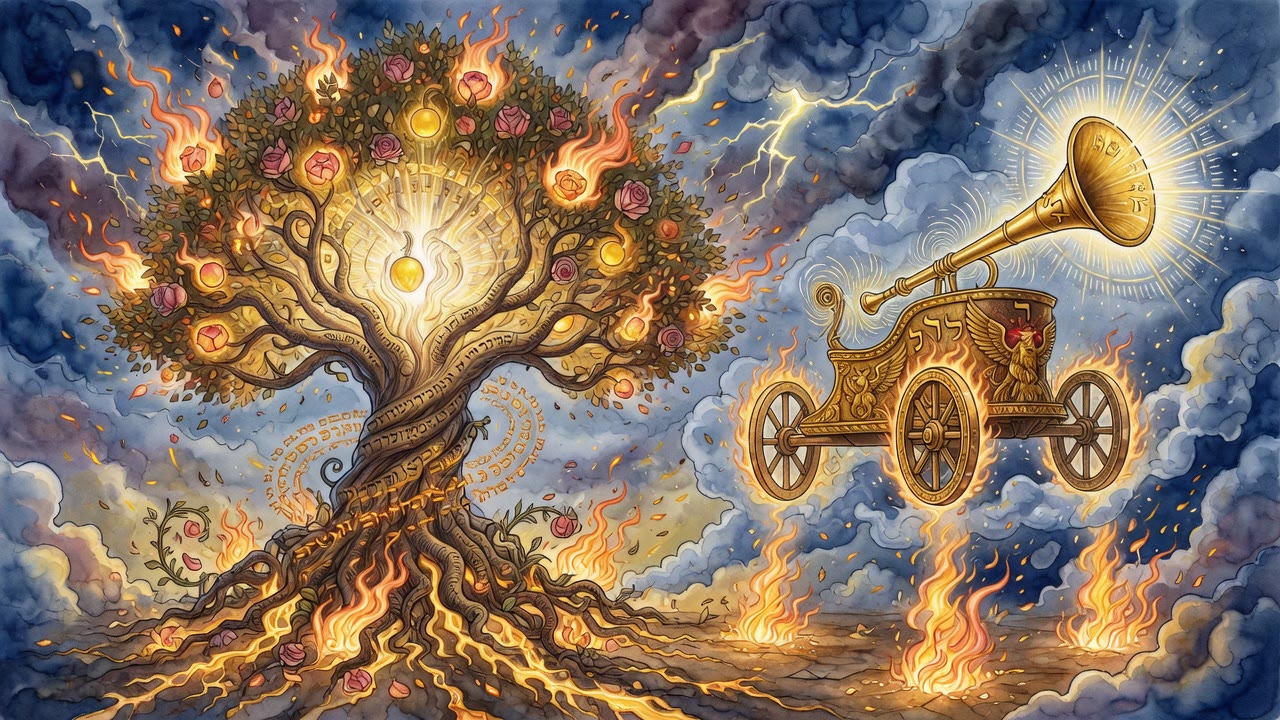
Two lines walked out of one tent. One ran from Adam through Seth, through Enoch, through Methuselah, down to Noah and on toward the patriarchs, carrying the teaching and the priestly garments and the seal of the likeness. The other ran from Cain through Lamech and ran out of road, because the waters were coming for it.

The verse that records Seth's birth says of him what it says of no one else, that Adam begot him in his own likeness, after his image (Genesis 5:3). One quiet line of pedigree, and inside it a verdict on the firstborn it leaves out. Adam did not beget in his own image until Seth was born. When the flood finally closed over Cain's cities and Cain's children, what rode above the water was an ark, and inside the ark was the face Adam had waited a hundred and thirty years to see, the stamp of the seal, the image of God still traveling.


← All myths
From the tradition

Sources

3 sources

The texts this telling draws on, in full. Open a card to read inline, or expand it for a wider, quieter read.

Pirkei DeRabbi Eliezer 22:1Pirkei DeRabbi Eliezer

Their story is tangled with the very beginnings of humanity, and it all starts, strangely enough, with Adam.

The familiar story is this: Adam and Eve, the Garden of Eden, the apple, the expulsion. But what happened after that? The book of Genesis tells us that Adam lived for 130 years and then begat a son "in his own likeness, after his image" – that son was Seth (Genesis 5:3). Okay, great, another son for Adam. But why does the Torah emphasize Seth being in Adam's image?

The Pirkei DeRabbi Eliezer, a fascinating early medieval text filled with stories and interpretations of the Torah, suggests a pretty wild reason. It implies that Cain, the infamous brother who slew Abel, wasn't entirely Adam’s.

Whoa, hold on. Where did Cain come from then?

Well, this is where our Watchers enter the picture. The Pirkei DeRabbi Eliezer hints at the possibility that before Seth, Adam's offspring weren't quite...pure. Cain lacked Adam's true likeness, hinting at a different, perhaps more sinister, origin. The text draws a stark contrast between Cain, whose lineage is, shall we say, questionable, and Seth, who is explicitly stated to be in Adam’s image.

What does this have to do with Watchers? The implication is that Adam's first interactions after leaving Eden might not have been solely with Eve. The text subtly suggests a connection to those celestial beings who, according to other traditions, had already rebelled and fallen from grace. The implication is that Adam and some of these Watchers had…interactions.

It's a delicate dance of interpretation, isn’t it? The text doesn’t explicitly say, "Watchers fathered Cain." But it opens the door to this possibility by emphasizing the unique nature of Seth's birth and questioning the true parentage of Cain.

This interpretation adds a whole new layer to the story of the early world. It paints a picture of a world where the boundaries between heaven and earth were blurred, where angels and humans could interact, and where the consequences of those interactions could be… complicated.

So, the next time you read about Adam and Eve, remember that their story isn't just about the loss of innocence in the Garden of Eden. It's also a story about the messy, complex, and sometimes unsettling origins of humanity itself, a story that might just involve a few Watchers along the way. It makes you wonder, doesn't it, about the hidden stories within the stories we think we know so well?

Full source
Pirkei DeRabbi Eliezer 22Pirkei DeRabbi Eliezer

It is written: "And Adam lived a hundred and thirty years, and he begot a son in his likeness, after his image" (Genesis 5:3). From here you learn that Cain was not of the seed, nor of the likeness, nor of the image of Adam, and his deeds were not like the deeds of Abel his brother, until Seth was born, who was of his seed and his likeness, and his deeds were like the deeds of Abel his brother, as it is said: "And he begot a son in his likeness, after his image" (Genesis 5:3).

Rabbi Ishmael says: From Seth there arose and were traced all the creatures and all the generations of the righteous, and from Cain there arose and were traced all the generations of the wicked, the transgressors, and the rebels, who rebelled against the Omnipresent and said: "We have no need of the drop of Your rains, nor to know Your ways," as it is said: "And they said to God: Depart from us" (Job 21:14).

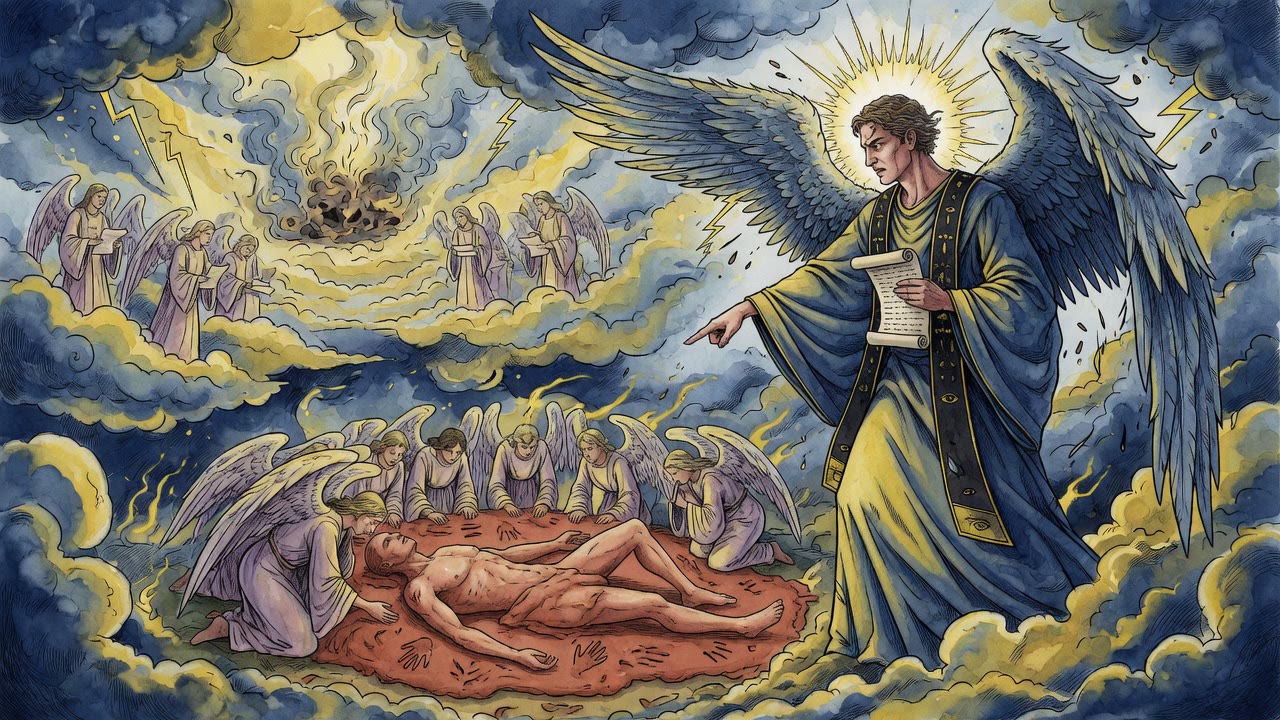
Rabbi Meir says: The generations of Cain went about with their nakedness uncovered, the men and the women like cattle, and they defiled themselves with every kind of harlotry, a man with his mother and his daughter and his brother's wife, uncovering themselves in the streets with the evil inclination and with the thoughts of their heart, as it is said: "And the LORD saw that the wickedness of man was great upon the earth" (Genesis 6:5). Rabbi says: The angels who had fallen from their place of holiness in heaven saw the daughters of Cain walking about with their nakedness uncovered and painting their eyes like harlots, and they went astray after them and took wives from among them, as it is said: "And the sons of God saw the daughters of man" (Genesis 6:2), and so forth.

Rabbi Yehoshua ben Korhah says: The angels are flaming fire, as it is said: "His ministers a flaming fire" (Psalms 104:4), and how does fire come in copulation with flesh and blood and not burn the body? Rather, at the hour when they fell from heaven, from their place of holiness, their strength and their stature were like the sons of man, and their garment was a clod of dust, as it is said: "My flesh is clothed with worms and a clod of dust" (Job 7:5).

Rabbi Tzadok says: From them were born the giants who walk about with lofty stature, and stretch out their hand in every robbery and violence and shedding of blood, as it is written: "And there we saw the Nephilim" (Numbers 13:33), and so forth, and it says: "The Nephilim were on the earth" (Genesis 6:4). Rabbi Yehoshua ben Korhah said: Israel are called sons of God, as it is said: "When the morning stars sang together and all the sons of God shouted for joy" (Job 38:7).

And these, while they were in their place of holiness in heaven, were called sons of God, as it is said: "And also after that, when the sons of God came in" (Genesis 6:4). Rabbi Levi says: They begot their children and were fruitful and multiplied like a great swarming creature, six at every birth. At that very hour they would stand upon their feet and speak in the holy tongue and dance before them, as it is said: "They send forth their little ones like a flock" (Job 21:11).

Noah said to them: "Turn back from your ways and from your evil deeds, lest the waters of the Flood come upon you and cut off all the seed of the sons of man." They said to him: "Behold, we restrain ourselves from being fruitful and multiplying, so as not to bring forth the seed of the sons of man." What did they do? When they came to their wives, they would destroy the source of their seed upon the ground, so as not to bring forth the seed of the sons of man, as it is said: "And God saw the earth, and behold, it was corrupt" (Genesis 6:12).

They said: "If the waters of the Flood come upon us, behold, we are of lofty stature and the waters will not reach as high as our necks; and if He brings up the waters of the deeps upon us, behold, the soles of our feet can stop up the deeps." What did they do? They spread out the soles of their feet and stopped up all the deeps. What did the Holy One, blessed be He, do?

He made the waters of the deeps boil, and they scalded their flesh and stripped their skin from off them, as it is said: "In the time they grow warm they are scorched; when it is hot they are extinguished from their place" (Job 6:17). Do not read "in its heat" but "in its hot water."

Full source
Targum Pseudo-Jonathan on Genesis 5:3Targum Pseudo-Jonathan on Genesis

Targum Pseudo-Jonathan on (Genesis 5:3) reopens old wounds. "Adam lived a hundred and thirty years, and begat Sheth, who had the likeness of his image and of his similitude: for before had Hava born Kain, who was not like to him."

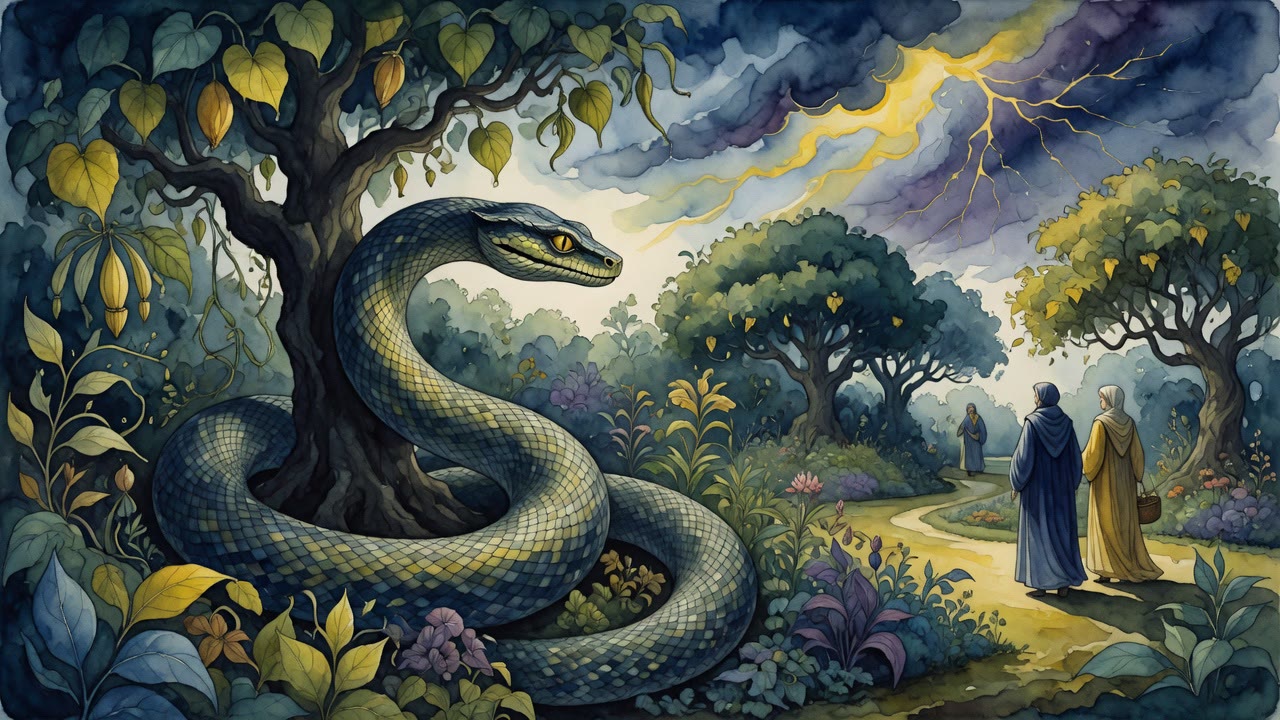
Cain did not look like his father. The Targumist is pointing at a tradition, picked up later in the Zohar and other mystical sources, that Cain was not entirely Adam's son in the spiritual sense. Some readings suggest he carried traces of Samael, the angel Eve saw behind the serpent. Cain was, in this reading, less than fully human in his likeness to Adam's image.

"And Habel was killed by his hand. And Kain was cast out; neither is his seed genealogized in the book of the genealogy of Adam. But afterwards there was born one like him, and he called his name Sheth."

The Targumist is making an editorial point about the Torah itself. The genealogy of Genesis 5 skips Cain entirely. The book of Adam's descendants begins with Seth, not Cain. Cain's line is recorded in chapter 4, but not in the covenantal genealogy. Seth is the true heir, the first son who bore Adam's full image. And through Seth runs the line that leads eventually to Noah, Abraham, and David.

Full source