6 min read

Adam Lost the Garden and the Host of Heaven Faced the Same Judge

Adam broke one commandment and lost the Garden. The host of heaven, who never tasted hunger, still answers to the same Judge.

Curated by Arthur · Told by Maggid ·
Table of Contents
  1. The Charge Read Against the Judges
  2. The Man Who Could Not Keep One Rule
  3. You Are Gods, the Judge Said
  4. What Isaiah Saw From Below
  5. One Bench Over Everything

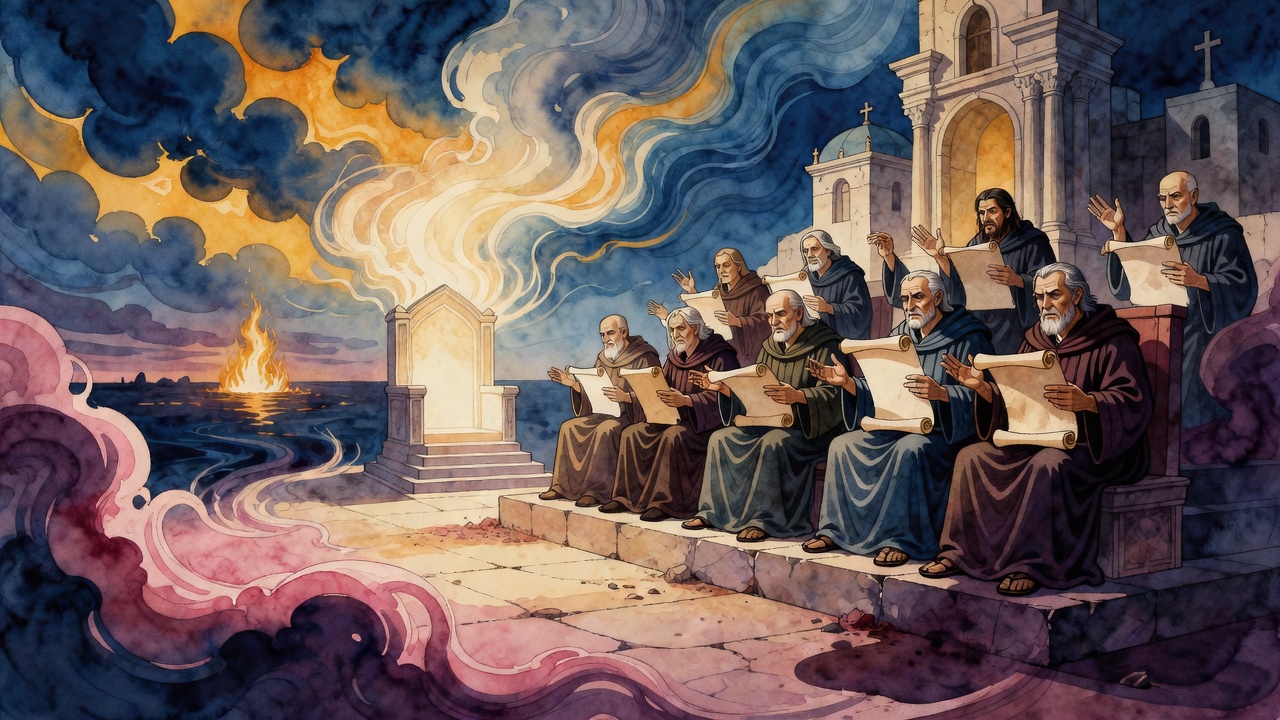
The court of heaven convened in silence. No herald, no horn, only a hush that moved through the upper halls like wind through standing grain. The princes of the nations filed in and took their places, rank on rank, each one a power set over a people, each one carrying a title almost too heavy for a mouth, elohim, mighty ones, beings spoken of as gods. They had stood in this assembly since the nations were first divided among them. They had never stood in it as the accused.
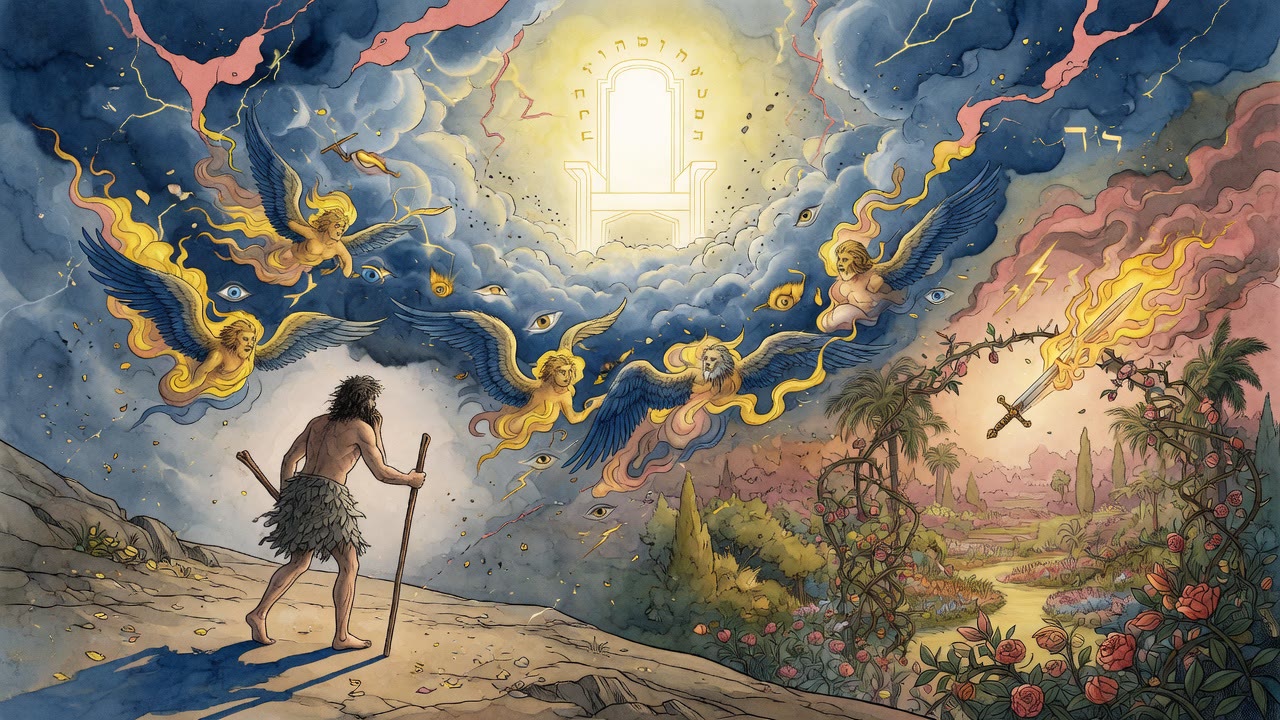
Then the Judge rose. "God stands in the divine assembly; among the divine beings He pronounces judgment" (Psalm 82:1). He stood the way a witness stands, and the princes understood before a single word was spoken that the session would not go the way their sessions usually went.

The Charge Read Against the Judges

The first words were not a verdict. They were an accusation, flung into the middle of the court. "How long will you judge unjustly and favor the wicked?" (Psalm 82:2). The question hung there, and no prince answered it, because the question was its own answer. They had been given courts of their own. They had bent them.

So the Judge told them plainly what He wanted, and His wanting was a command. I desire to do justice. Judge the poor and the orphan and vindicate them. The orphan who comes into court with no father standing behind him, the poor man whose case is heard last because his coat is thin, these were to be lifted up and set right.

But the command turned in the hand like a blade with two edges. Do not steal from the rich man simply because he is wealthy. A scale that tips toward the weak is still a tipped scale. The bench was not built for pity any more than for flattery. It was built for mishpat, judgment, the level line that bends for no one. The princes had failed it in one direction. A judge could fail it just as surely in the other.

The Man Who Could Not Keep One Rule

Then the Judge reached back to the oldest case on the docket, the first one ever heard.

I commanded the man one commandment, He said, and he did not observe it.

One. Not the long roll of obligations that would one day thunder down from Sinai. Not hundreds of laws governing every hour from waking to sleep. One prohibition, touching one tree, standing in one garden where every other branch hung heavy and permitted. Adam had only to walk past it. He could not walk past it.

And the sentence followed the crime the way a shadow follows a body. "So He drove out the man" (Genesis 3:24). The gate closed. The flame of the turning sword stood where the path home had been. Adam lost the Garden over a single bite of fruit, and even the man shaped by God's own hands could not appeal the ruling.

The princes listened to the old case and perhaps they felt safe inside it. Adam had a body. Adam had hunger. Adam could smell ripeness on the air and feel juice run down his wrist. What was any of that to them, who had never eaten, never wanted, never once been tempted by anything that grows?

You Are Gods, the Judge Said

The Judge turned back to the assembly, and what He said next must have sounded, for one breath, like an acquittal.

"I said: You are gods, and all of you are children of the Most High" (Psalm 82:6).

Gods. Children of the Most High. The titles were genuine. The court of heaven was not a den of impostors. These were the celestial princes in truth, the host on high, members of the divine assembly, and the Judge Himself named them so before the whole court. If rank could shield anyone, it would shield these.

The next line took the shield away. Nevertheless, you shall die like men, and fall like any prince (Psalm 82:7). The same court that vindicates the orphan would not exempt the angels. The title of god, spoken by God, came stapled to a death sentence.

What Isaiah Saw From Below

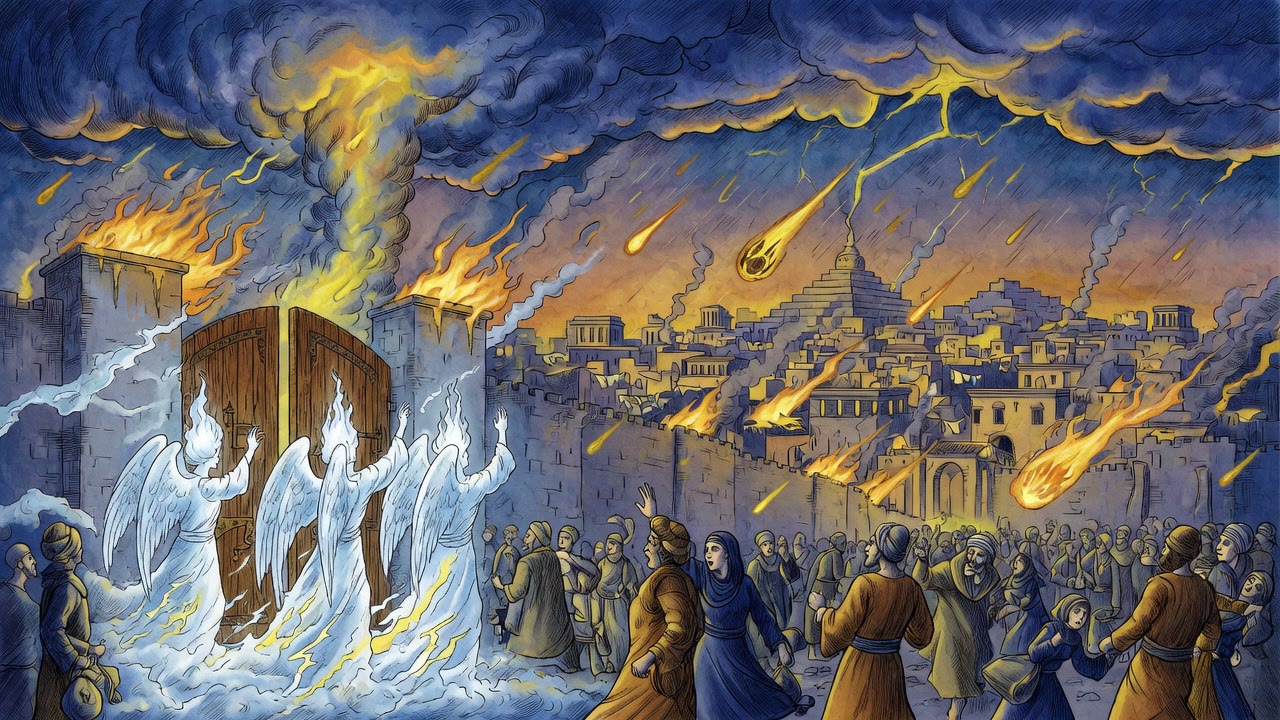
Far below that courtroom, generations after Eden, a prophet looked up and saw the docket still open. Isaiah saw the day of reckoning coming for the heights as surely as for the earth, and he said it without softening it. "The Lord will punish the host of heaven on high" (Isaiah 24:21).

The host of heaven. Not the kings of the ground only, though the same verse comes for them too, but the powers above the clouds, the princes over the nations, the beings with no bodies to bury. Punishment would climb that high. There was no altitude above the law, no throne in the upper court that could not be vacated.

One Bench Over Everything

So the two cases closed into a single ruling. Adam, with his one commandment and his one tree, was driven out through a guarded gate. The princes, with their titles and their thrones and their freedom from every appetite, heard their own mortality read aloud in open court. The man of dust and the host of heaven, defendants at the same bar, answerable to the same Judge.

The orphan in a human courtroom stands inside that ruling, and so does the bent judge who favors the wicked, and so does the prince seated above the clouds, certain the summons will never climb so high. The hush that opened the court of heaven has never fully lifted. The Judge is still standing.


← All myths
From the tradition

Sources

2 sources

The texts this telling draws on, in full. Open a card to read inline, or expand it for a wider, quieter read.

Midrash Tehillim 82:3Midrash Tehillim

Midrash Tehillim, a collection of rabbinic teachings on the Book of Psalms, wrestles with just that question in its commentary on Psalm 82. It's a short passage, but packs a serious punch.

The verse that sparks the whole discussion is (Psalm 82:6): "I said: 'You are gods, and all of you are children of the Most High.'" Who is being addressed here? Gods? Children of the Most High?

The midrash – the rabbinic interpretation – jumps right into a comparison, a stark contrast, really, between the divine realm and humanity. "I commanded man one commandment and he did not observe it, and I expelled him from the Garden of Eden, as it is stated, 'So He drove out the man' (Genesis 3:24)." One commandment. Just one. And we blew it. Adam and Eve, faced with the prohibition against eating from the Tree of Knowledge, couldn't resist. The consequence? Expulsion from paradise. The idyllic existence, gone.

So, what about these "gods"? Are they held to a different standard? The midrash doesn’t let them off the hook. "Indeed, you will die as men and fall like one of the princes, the heavenly princes, as it is stated, 'The Lord will punish the host of heaven on high' (Isaiah 24:21)."

Whoa. The heavenly host, the "princes," the beings who might seem immortal and untouchable… they too are subject to judgment. They too are mortal, in a sense. (Isaiah 24:21) speaks of divine judgment even on the celestial realm. It's a powerful image, a cosmic reckoning. Even those who seem elevated are not exempt from accountability.

And that brings us to the final plea, a call for divine intervention. "Arise, O God, judge the earth; for You shall inherit all the nations." It's a call for justice, for God to take control, to overcome the failings of both humanity and the heavenly beings.

The midrash concludes with a reaffirmation of God’s ultimate authority. "Overcome them and You shall be justified in Your judgment and judge them, as it is stated, 'And the Lord abides forever, He has established His throne for judgment' (Psalms 9:8)." God’s judgment is just, eternal, and inescapable. Even for the "gods."

What does it all mean? Perhaps it’s a reminder that no one is above the law, not even those who seem to occupy a higher plane. It's a call for accountability, a recognition that judgment applies to all. And maybe, just maybe, it's a glimmer of hope – a belief that even in the face of our failings, and the failings of those in power, true justice will ultimately prevail.

Full source
Midrash Tehillim 82:2Midrash Tehillim

The ancient rabbis certainly did. They wrestled with this very idea, and Psalm 82 became a springboard for some powerful teachings about fairness, wealth, and the very foundations of the world.

Psalm 82, verse 2, asks a stinging question: "How long will you judge unjustly and favor the wicked?" It's a direct challenge to those in positions of power, a cry for equity. But what does it really mean?

The Midrash Tehillim, a collection of rabbinic interpretations of the Book of Psalms, dives deep into this verse. It imagines God Himself speaking, saying, "I desire to do justice. Judge the poor and the orphan and vindicate them." This isn't just a nice suggestion; it's a divine imperative.

Here's where it gets interesting. The Midrash (rabbinic interpretive commentary) doesn't stop with helping the downtrodden. It adds a twist: "Don't steal from the rich just because he is wealthy." Whoa. Wait a minute. Isn't this about helping the poor?

The reasoning, according to the Midrash, is profound. God declares, "The earth and all that is in it belong to the Lord" (Psalms 24:1). The world is Mine, God says, "and I have said to make the rich prosper, yet you take away what is rightfully theirs." It’s a fascinating point. God allows wealth to exist, presumably for a reason. Messing with that balance, even with seemingly good intentions, is a problem.

It’s not a blanket endorsement of wealth inequality, of course. Instead, the Midrash seems to be cautioning against a simplistic, zero-sum view of justice. Robbing Peter to pay Paul doesn't actually solve the underlying issues. True justice isn't about tearing down one to build up another.

So why do we get it wrong so often? Why do we fall into these traps?

The Midrash Tehillim offers a stark answer: "They don't understand and don't know, they walk in darkness. They don't know how to judge righteously and that is why the world is falling apart." It's a harsh indictment, but it gets to the heart of the matter. When we lose sight of true justice, when we are blinded by our own biases and agendas, we destabilize everything.

The consequences are dire. "All the foundations of the earth are unstable" (Psalms 82:5). This isn't just about legal rulings or economic policies; it's about the very fabric of society. When justice is perverted, the world itself begins to crumble.

The Midrash here isn't just talking about individuals; it's talking about systems, about cultures, about entire ways of thinking. It is a reminder that true justice is not just about outcomes, but about process, about fairness, and about recognizing the inherent worth and dignity of every single person, rich or poor.

So, the next time you see injustice, ask yourself: Am I truly seeking to uplift, or am I simply shifting the scales in a way that ultimately undermines the foundations of fairness for all? It’s a question worth pondering, because as the Midrash Tehillim makes clear, the fate of the world may depend on it.

Full source