The Heavenly Court That Built Adam Voted to Cast Him Out
The same angels who heard God say let us make man are summoned back to the throne, and this time the council votes to drive Adam from the garden.
Table of Contents
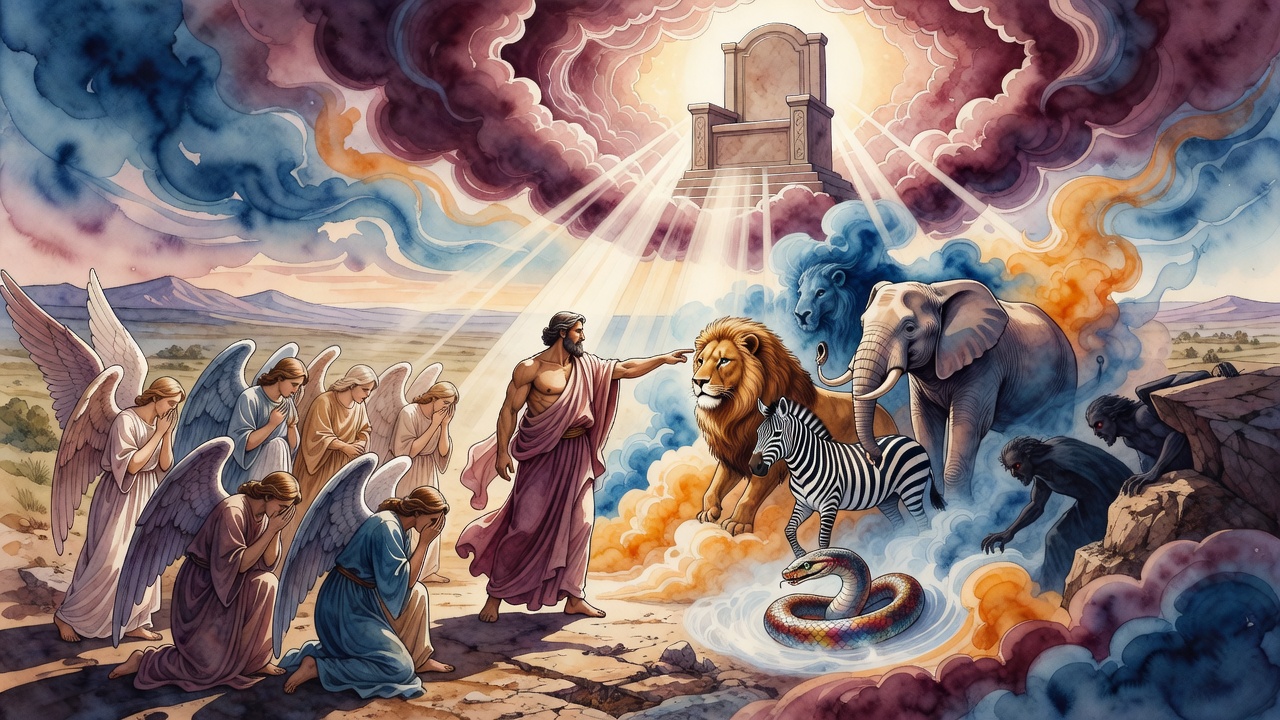
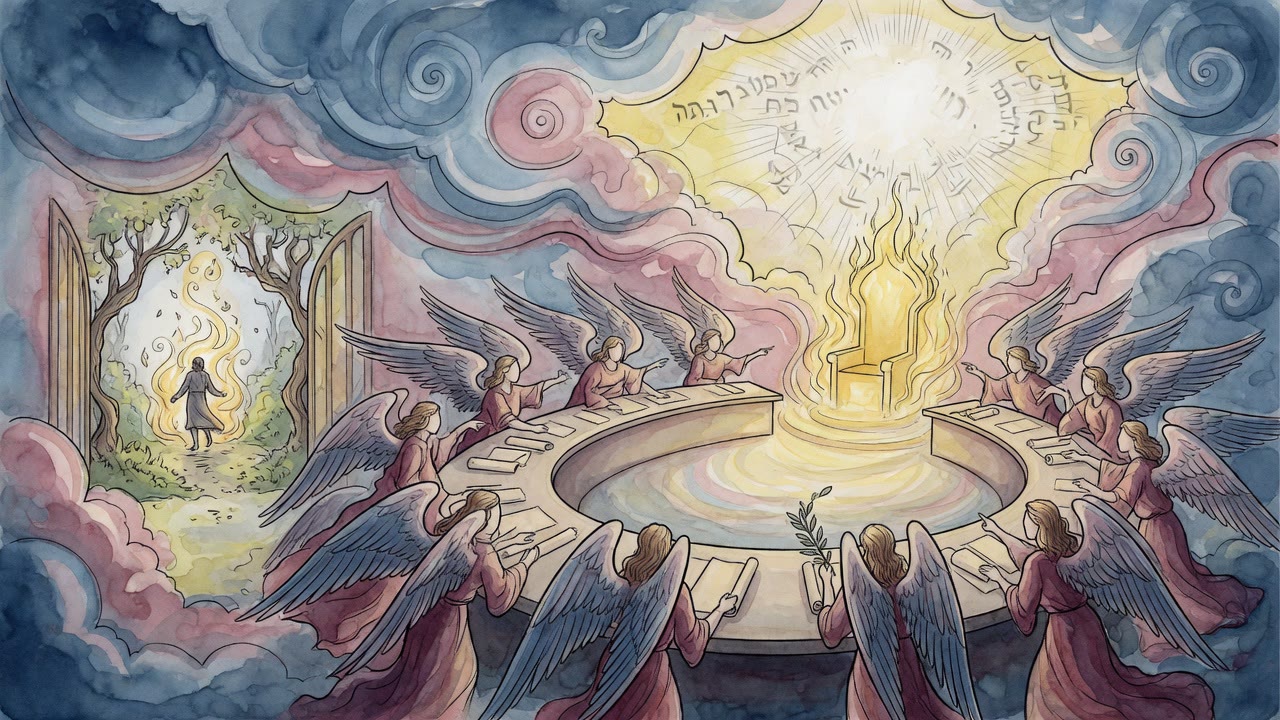
On the sixth day, the ministering angels stood in a ring around the throne and heard a voice they had never heard turned toward them before. "Let us make man in our image." They had been made on the second day, after the firmament split the waters and before the dry land rose, and in all that time no one had asked them to help with anything. Now the Lord God was inviting them into the one act that would change the shape of every day that followed.
 Click for full size
They watched the work happen. Dust gathered. Breath went in. The thing on the ground opened its eyes and was a man, and the man looked back at them, and something in the heavens shifted that would not shift back.
The Council That Heard the Word Us
The angels remembered that word. Us. It was the strangest word in the whole account, because the One who needed nothing had spoken as though He needed a room full of witnesses. He did not. The dust would have risen at a single syllable. But He gathered the council anyway, and let them stand close while Adam was assembled, so that every king and judge and teacher who would ever descend from this creature would learn the same thing in the same instant. You take counsel before you decide a heavy matter. Even One who answers to no one bends His own neck first, so the small ones to come will know how.
So the angels had a memory now. They had stood at the building of man. They had a stake in him.
What the Garden Held That Heaven Feared
Then the man was placed in a garden, and in the garden grew two trees that mattered more than the rest. He was told to leave one of them alone. He did not.
The angels felt the rupture before they understood it. Adam's hand had closed on fruit that was not his, and the eating put something into him that had not been in any creature before. He could tell good from evil now. He could weigh a thing and choose against it. That was the knowledge that made him terrible and made him alone, alone the way nothing in the garden was alone, alone the way only the throne above had ever been.
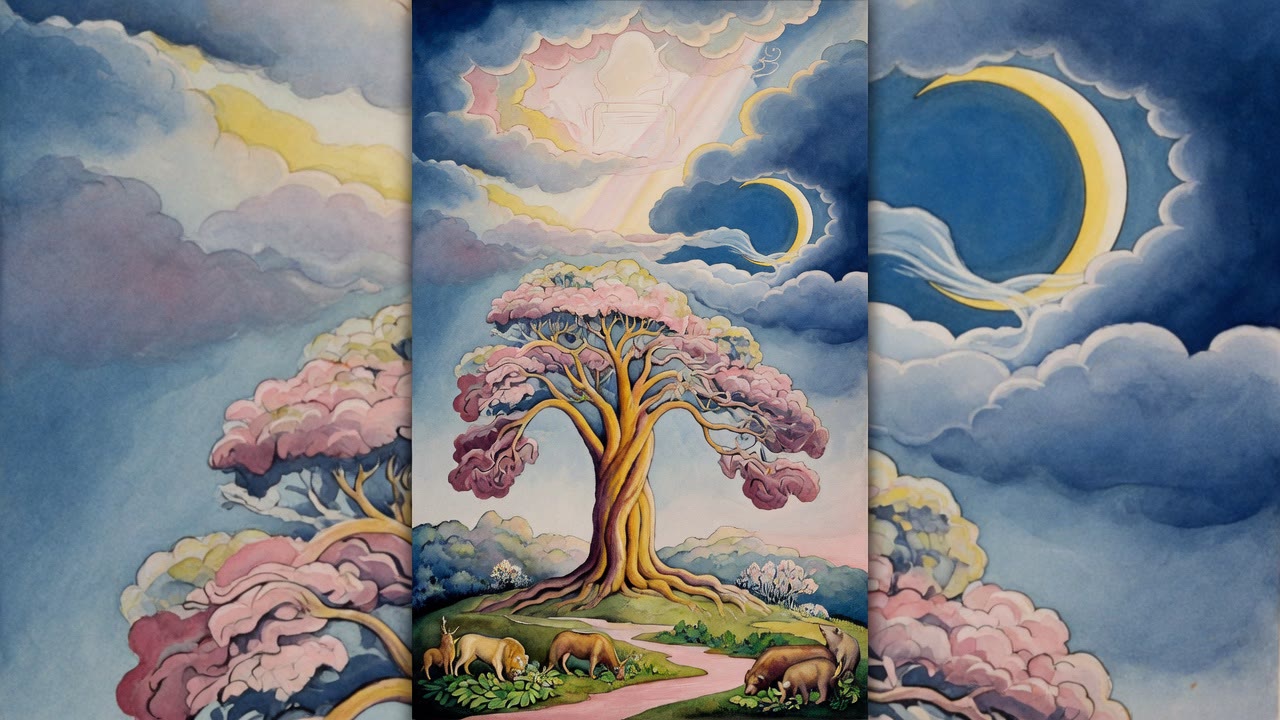
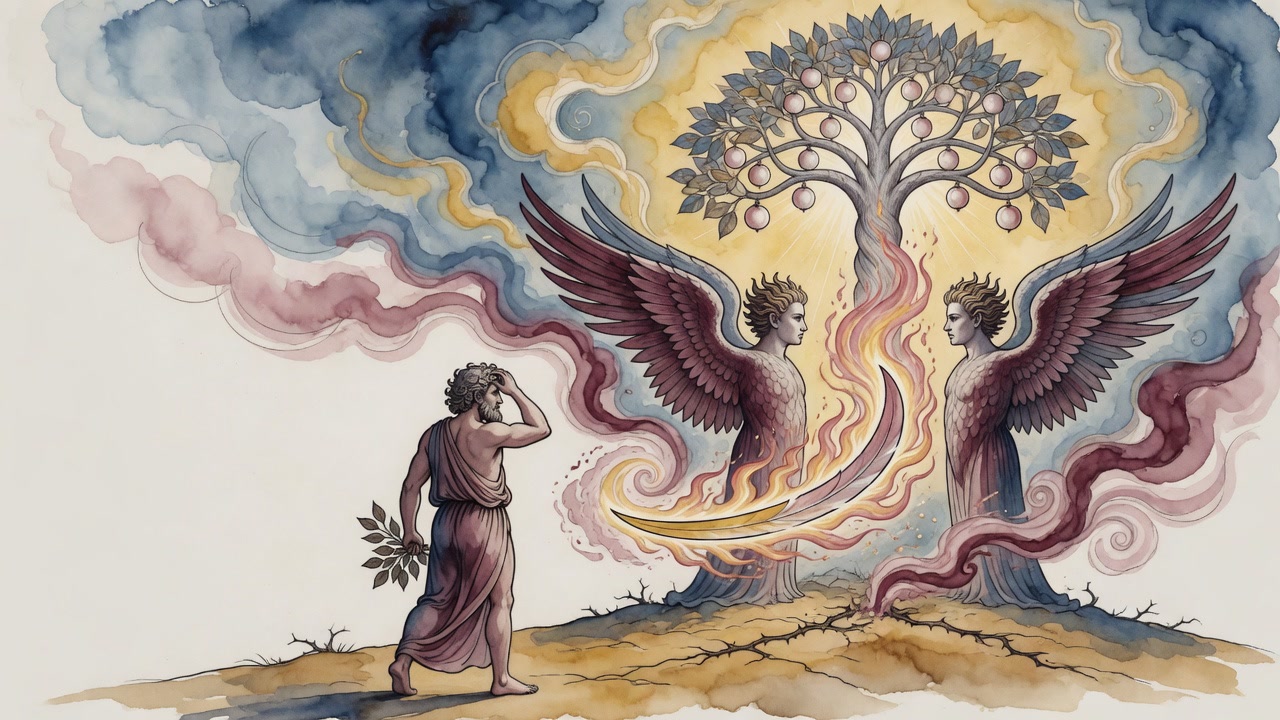
And there, a few paces from where he stood with the taste still in his mouth, grew the other tree. The Tree of Life. One reach. One more theft of fruit, and the man would live forever exactly as he was, fallen, severed, knowing good and refusing it, and there would be no end to him and therefore no way back.
The Lord Turned to the Angels a Second Time
The throne stirred. The same voice that had said "let us make man" now turned toward the same ring of watchers, and they understood that they were being convened again, for the opposite purpose, by the same mouth.
"Behold," the Lord God said to the angels who ministered before Him, "Adam is sole on the earth, as I am sole in the heavens above. And it will be that they will arise from him who will know to discern between good and evil."
The angels heard the comparison and went still. He was telling them what the man had become. A singularity on the earth, the only one of his kind, set apart by the knowledge in him the way the One above was set apart by the holiness in Him. Not a god. Never that. But no longer one creature among the herds either. Adam had stepped into a category that had stood empty since the firmament was split, and now it held him, and from him it would hold his whole line.
The court that had watched him built was being asked to rule on what he had become.
The Verdict That Closed the Gate as Mercy
The Lord laid the matter before them plainly. "Had he kept the commandments which I appointed to him, he would have lived and subsisted as the tree of life forever. But now, because he hath not kept that which I prescribed, it is decreed against him that we keep him from the garden of Eden, before he reach forth his hand and take of the tree of life."
There it was again. We. The same plural that had built him would now remove him. The angels who had stood at the assembly of his body were the council that voted to evict him from the only home he had known.
And the strange thing, the thing the council could not have guessed when the word "exile" first hung in the air, was that the sentence was kindness wearing the face of punishment. To leave him in the garden was to let him reach the Tree of Life and freeze in his fallen state for all time, immortal and ruined, with no door left open. To drive him out was to give him an ending. And an ending, for a creature who could now choose, meant a future. It meant a death he could walk toward and, somewhere past it, a way home.
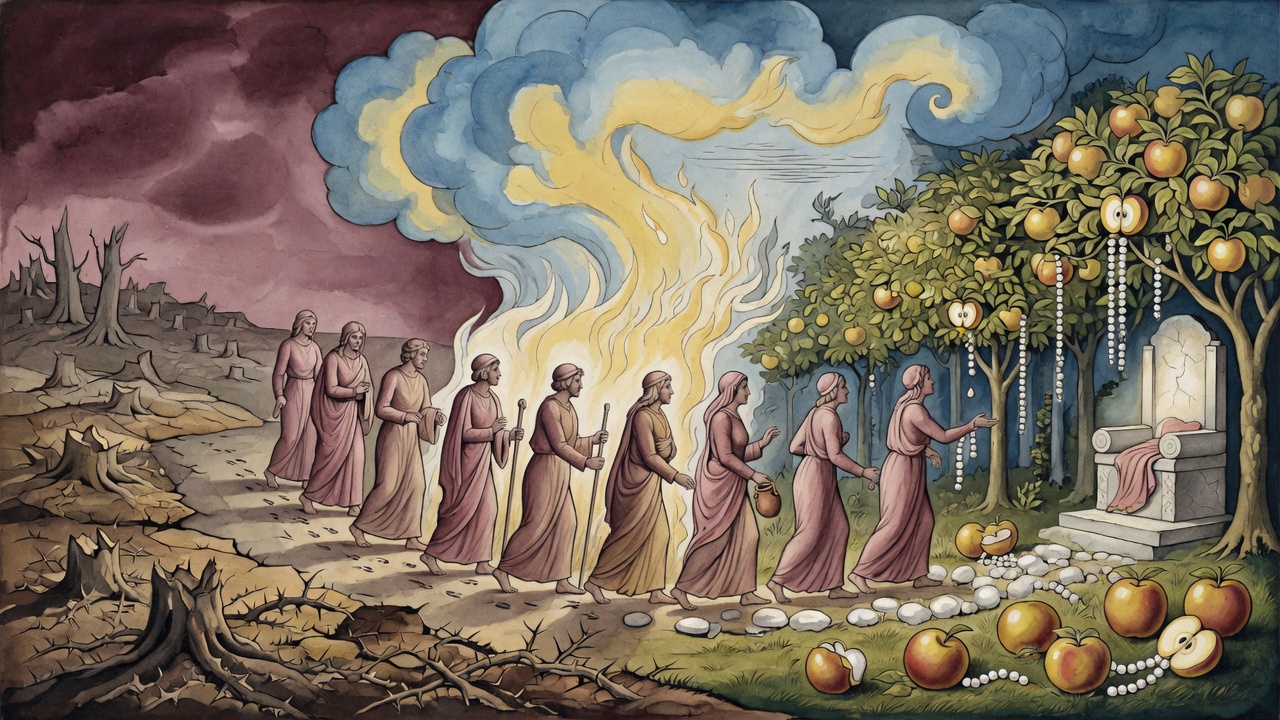
So the gate of Eden swung shut behind the first man, and the same angels who had leaned close to watch breath enter his clay now watched his back as he went out into the long world to die in it. The council had bookended him. It built him on the sixth day and it banished him before the seventh was old. Both times by the same throne. Both times the voice said us.
← All myths