Adam Had a Tail Before God Gave Him a Divorce
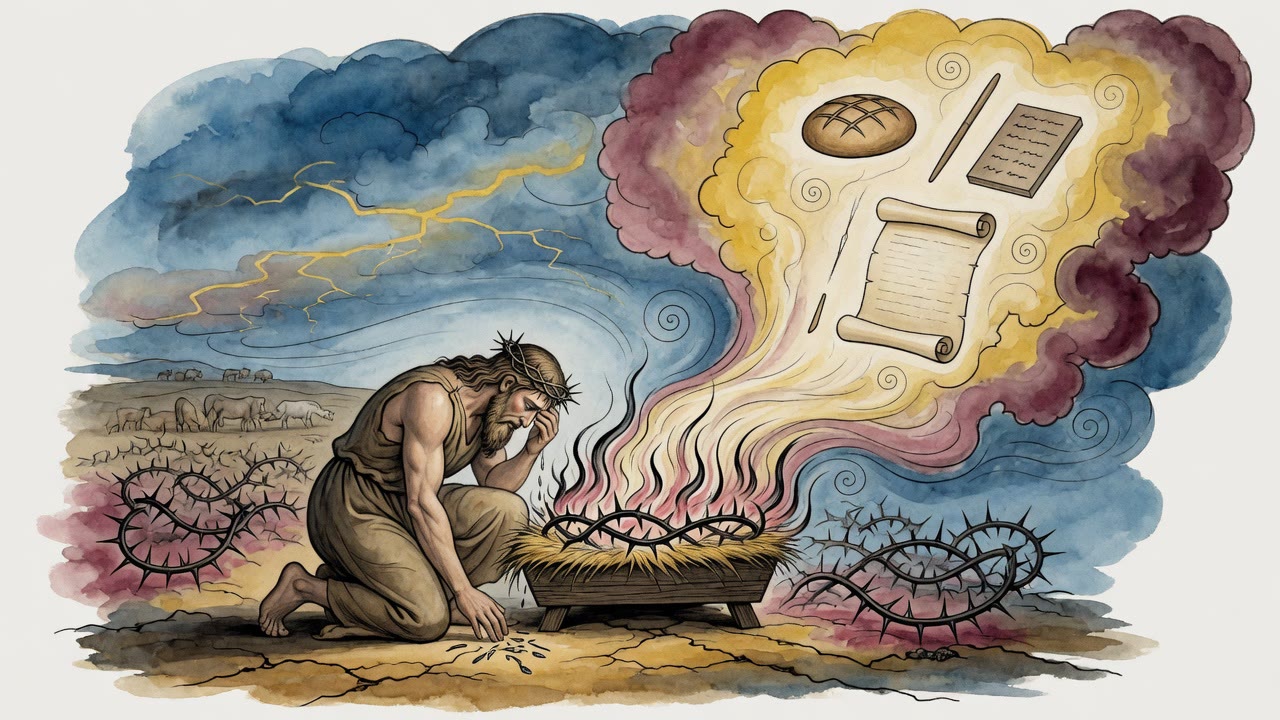
Adam stood among the beasts with a tail still on him. God cut it away for dignity. At the Garden gate a written bill of divorce came next.
Table of Contents
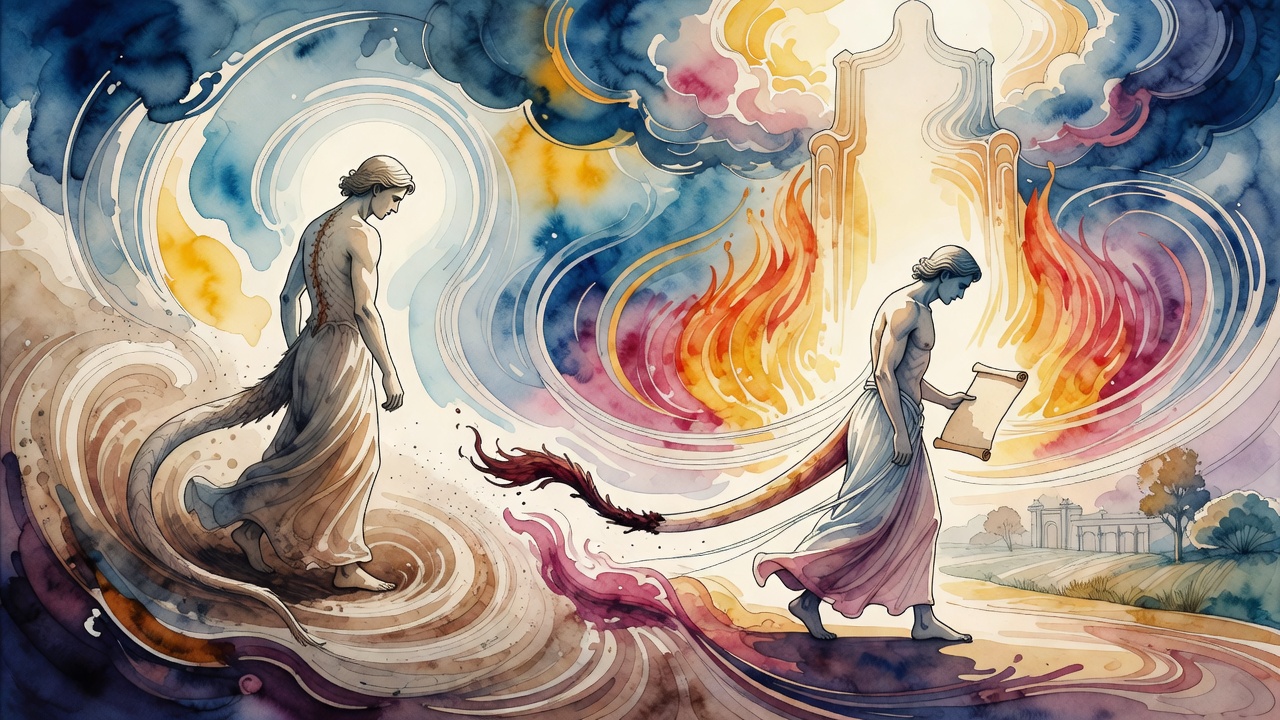
Adam stood up from the ground with dust on his lips and a tail behind him.
 Click for full size
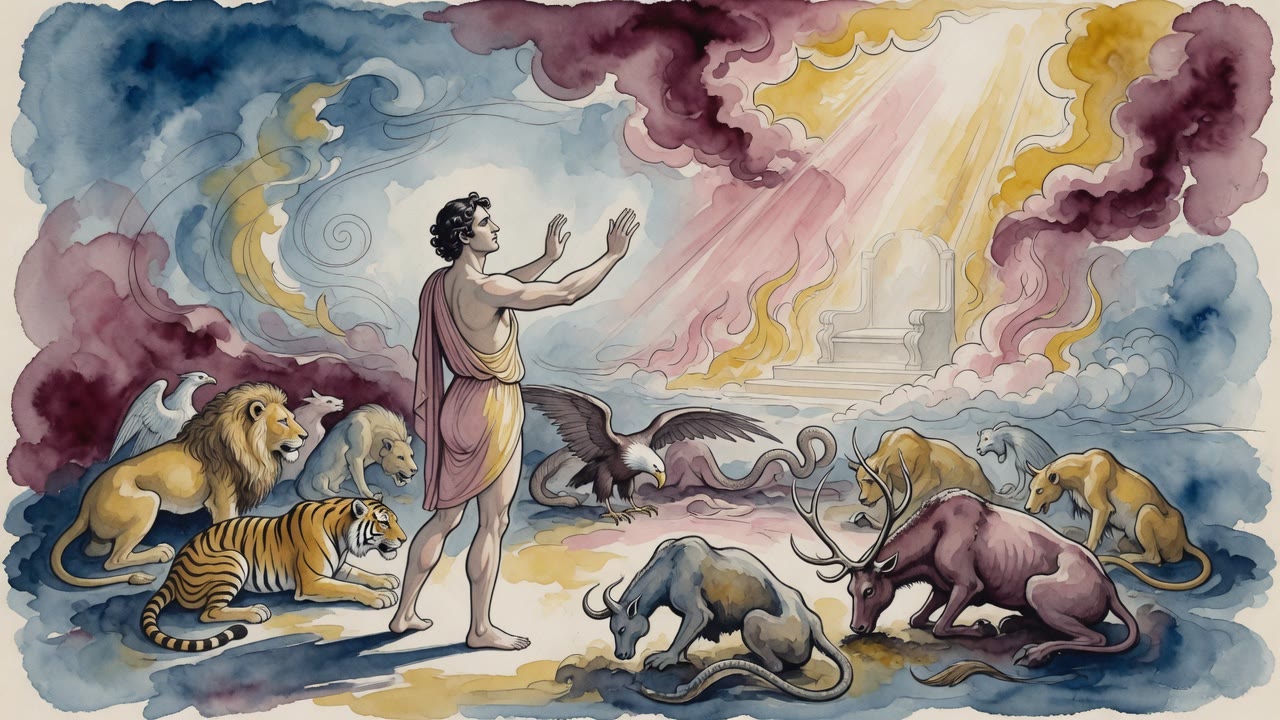
The beasts had bodies too. They breathed too. They moved through the grass with hunger, heat, fear, and desire. Adam stood among them, newly upright, and the soil he had been taken from had left its mark at the base of his spine.
He had a tail.
The Mark the Soil Left
The tail was not a joke put on him by an enemy. It belonged to the first form of the first man, a leftover of the earth from which he had been shaped. Adam was not lowered from heaven into a finished palace. He was made out of soil, and soil remembers animals.
He stood between worlds before he ever chose anything. His face could turn upward. His mouth could receive a command. His hands could reach for fruit or lift an offering. Behind him, at the base of the body, the beast remained visible. He could not pretend he had no kinship with the creatures grazing near him.
A body that eats, sleeps, mates, sweats, and dies is never far from the field. The tail said so out loud.
God Cut It Away
God did not leave the tail there.
The mark was removed for Adam's dignity. Not because the body was hated. Not because animal life was filth. The removal itself was an honor, a finishing touch made because the creature standing there had been given a place above the shape he first carried.
The earth stayed in him. Hunger stayed. Sleep stayed. The pulse and the skin and the need for another stayed. One visible sign was taken away, and with it Adam received a mercy he had not requested. Before he could earn dignity, it was granted to him. Before he could defend it, God defended it.
The first gift after breath was subtraction. Something animal was lifted from him so the human face could meet the world uncovered.
Bread Only After Work
Dignity did not make him free of need.
The living soul inside Adam came with a yoke. If he did not toil, he did not eat. He could stand upright, speak, name the animals, and be addressed by God, but his stomach still ruled the hours. Morning asked for work. Evening asked whether the work had been enough.
No chain had to be fastened around Adam's wrist. The need was inside him. He was delivered into his own hands, and his own hands had to dig, gather, lift, carry, and press food from the ground. A creature can be royal and still be hungry before noon.
The removed tail did not erase Adam's animal life. It made the contradiction sharper. He bore dignity without escaping dependence. He had a soul and a belly. He could hear God's voice and still be mastered by bread.
A Bill of Divorce at the Gate
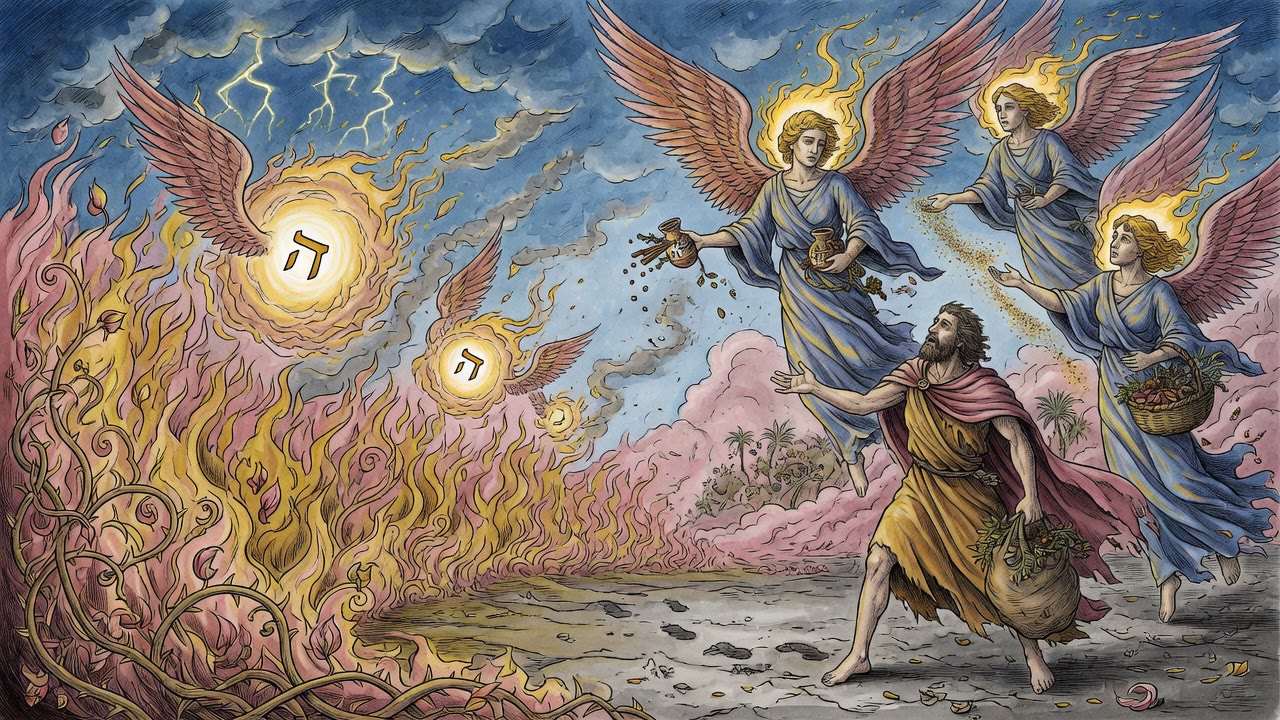
Then came the tree, the eating, the hiding, the voice moving through the Garden.
Leaves were sewn. Blame passed from mouth to mouth. The soil that had given Adam a body waited for him again, no longer as cradle but as sentence. The Garden, which had opened around him like a house prepared in advance, became a place with an exit.
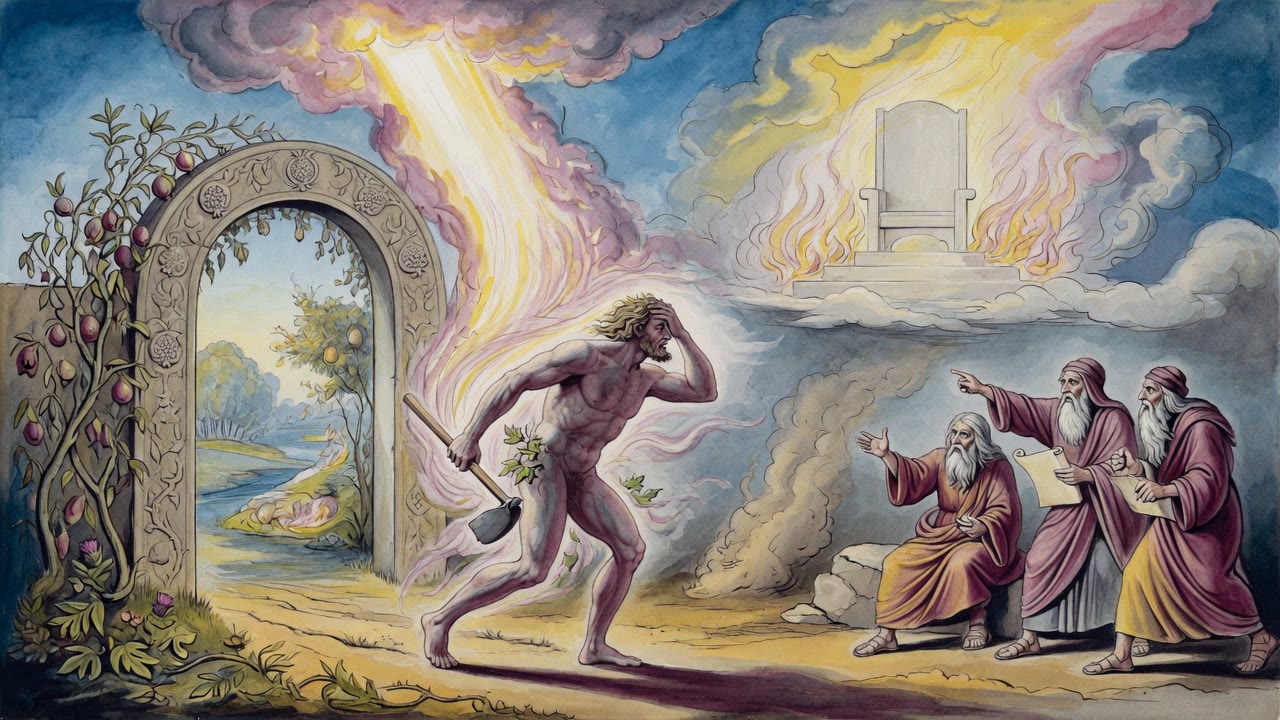
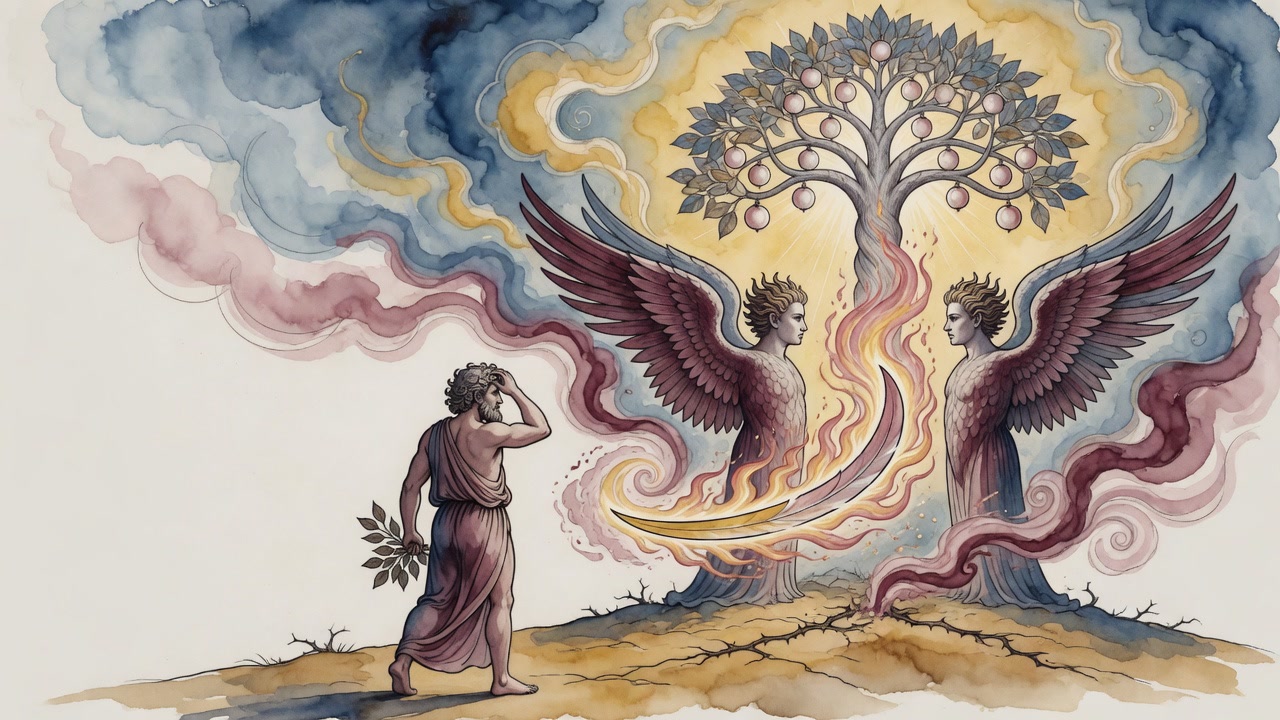
Expulsion alone would have been terrible enough. A guard at the gate. A path closing. The fruit behind him and thorns ahead. The leaving came colder and more exact. It came with a document.
A get (גט), a bill of divorce, passed into the scene. God did not only drive the man out. God handed him the writing of a severed bond, the way a husband hands a wife the paper that ends the household. Adam took it. The letters were as real as the tail had been. The Garden door was not only shut. It became legal.
God Went Up, Adam Stayed
After the get, the two parties went separate ways.
God withdrew from the earthly dwelling and ascended on high. Adam remained below, with the field, the sweat, the food that would not come unless he worked for it. The nearness of the Garden became memory. The voice that had walked there was no longer encountered in the same way.
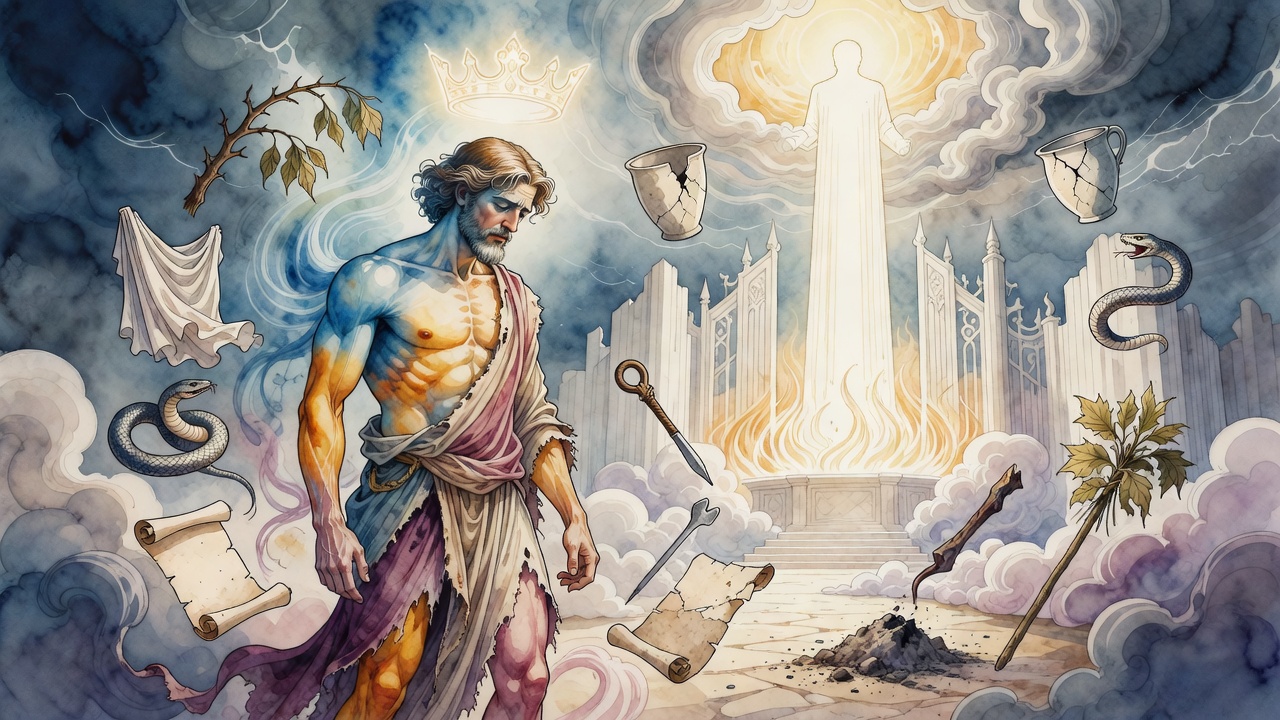
Adam had already lost a tail for dignity. Now he lost a home for the eating. The first loss raised him. The second sent him out. He walked into the field without the tail, with the bill of divorce behind him, carrying the dignity God had given and the hunger God had not removed.
The earth still knew him. It had made him. It would feed him with difficulty. It would receive him at the end.
← All myths