The Day Animals Lost the Language of Eden
The serpent talked Eve into the fruit in the one language every creature shared. Not long after, every mouth in creation was closed but one.
Table of Contents
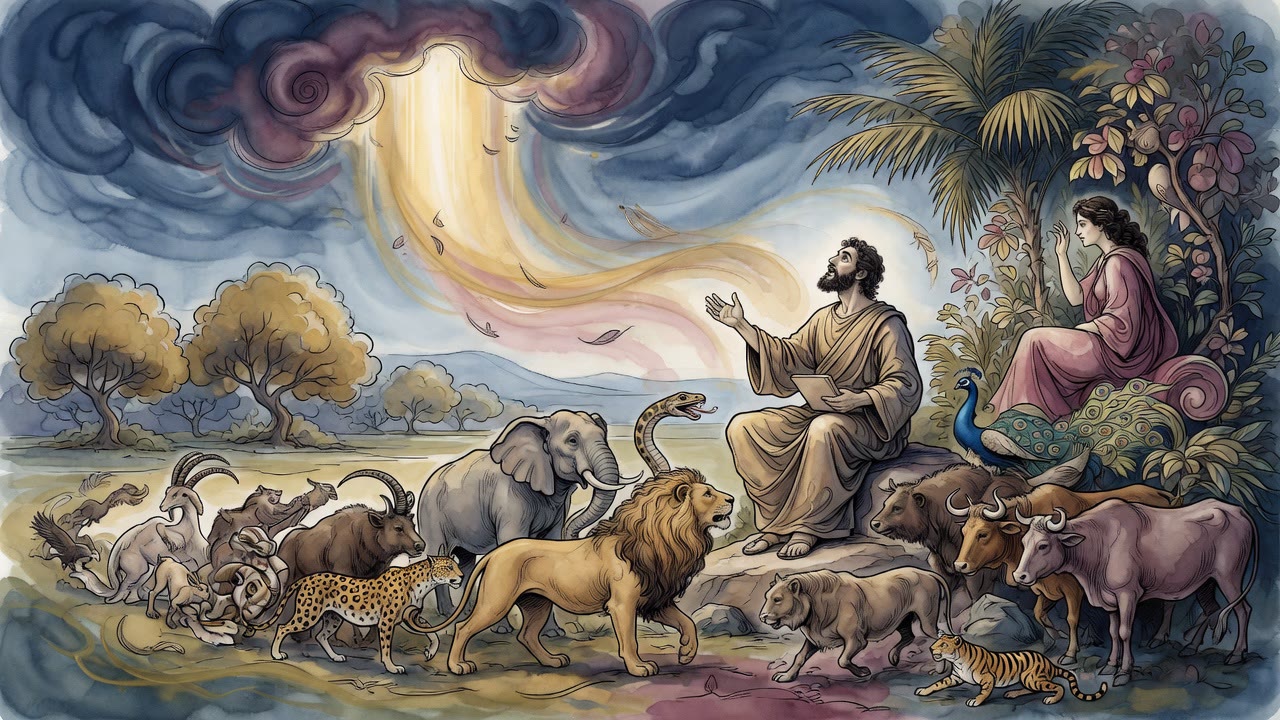
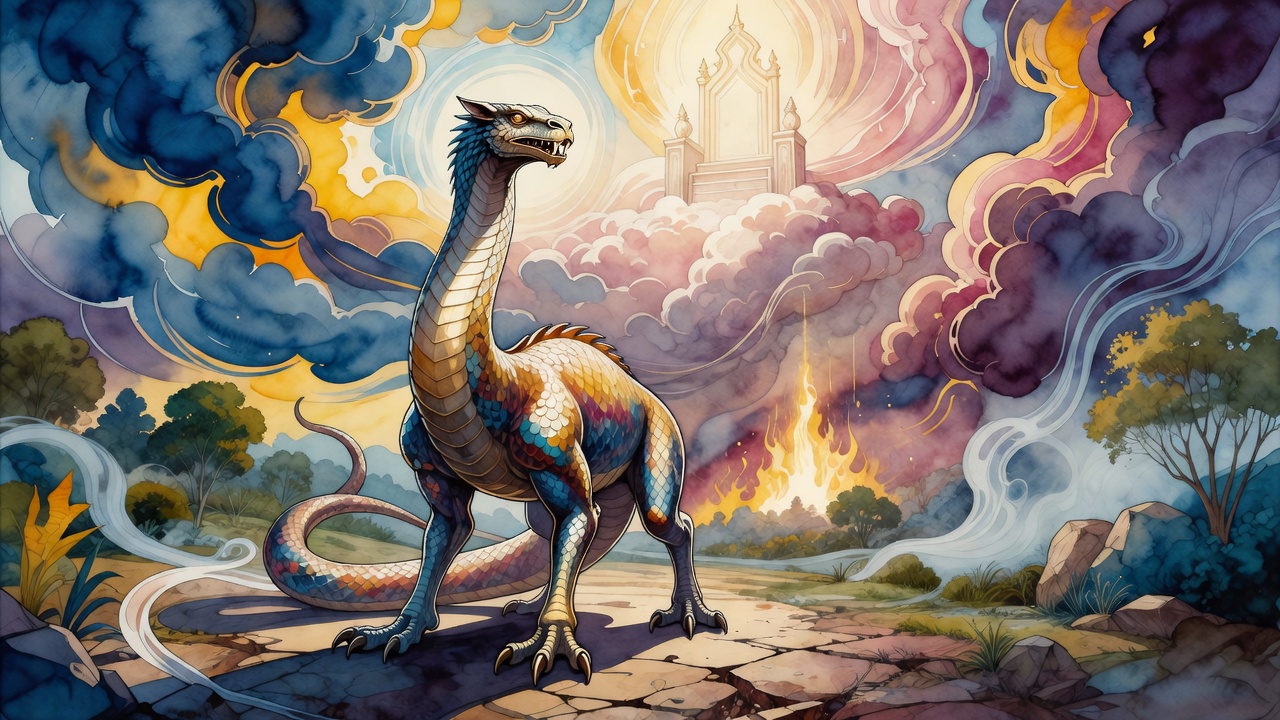
The serpent had hands and feet then, and it could talk, and so could the ox and the hawk and the worm in the fig. Every living thing in the garden spoke with one lip and one tongue, which meant a conversation between a woman and a snake was nothing to remark on. It happened all day, everywhere, between everyone.
 Click for full size
What the serpent wanted was Adam dead. It had looked at the arrangement in the garden and worked out that if the man were gone, the woman would not be. So it walked over to Eve on its own two feet and used the shared language to destroy the shared language.
Adam Had Named Every One of Them
The language had been demonstrated once already, on the day the animals were brought up in a line for naming.
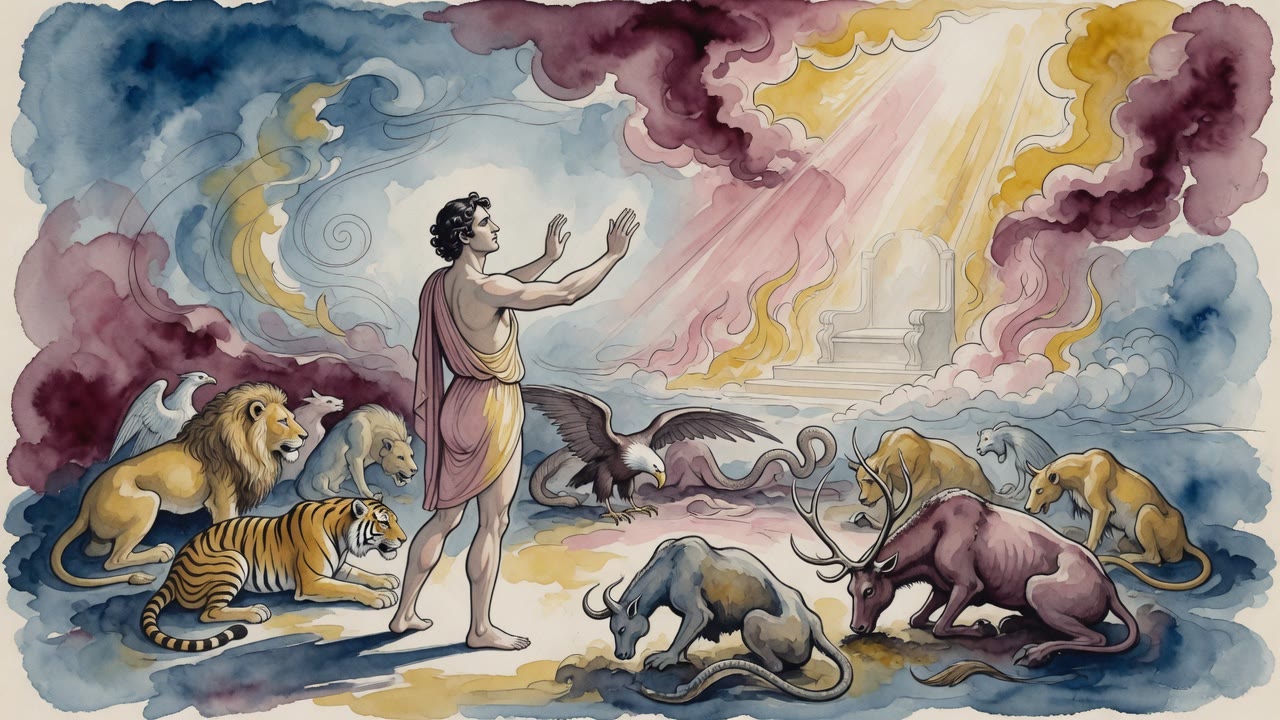
God brought them past the ministering angels first and asked the angels what each one was called. The angels had nothing. Not one name among them. Then the same procession went past the man, and he said, that is an ox, that is a donkey, and went down the whole line without a pause.
"And you. Why is your name Adam?"
"Because I was taken out of the adamah, the ground."
"And what is my name?"
"It is fitting that you be called Lord, because you are lord over everything you have made."
The Court That Refused to Hear the Serpent
After the fruit, the angels came through Eden announcing that God was on his way to those who dwelt in the garden, and Adam heard them talking among themselves. What, is he still walking around in there? He is not dead yet?
God answered them out loud. He was told he would die in the day he ate. You do not know which day I meant. Take one of my days, which is a thousand years, and give him nine hundred and thirty of it, and let him leave seventy behind for his children.
Adam and Eve went into the trees. They could not have done that a week earlier. He had stood from the ground to the heavens and now he was a hundred ells high and could fit behind a bush. When the questions came he put it on his wife, and she put it on the serpent, and both of them could have said the one word that would have ended the proceedings, and neither of them said it.
The serpent got a different hearing. Seventy-one angels were convened to sit on his case, and nobody asked him a thing. He was too good an arguer to be allowed to open his mouth. Given the chance he would have said: you gave them an order, I said the opposite, why did they take my word over yours? So the court skipped the defense and went to the sentence.
Ten Sentences and a Scream
God read them out to him directly. I made you king over the cattle and the beasts of the field and it was not enough for you, so you are cursed below all of them. I made you to stand upright and it was not enough, so you go on your belly. I made you to eat what the man eats and it was not enough, so you eat dust, and the sweetest thing you ever put in your mouth will turn to dust in it. You tried to kill Adam to take his wife, so there will be hatred between you and her forever.
Then the first of the ten: the serpent's mouth was shut and his speech taken out of him.
The angels carried out the rest themselves. They came down and hacked off his hands and his feet, and the noise he made doing it went out across the whole width of the world and was heard at both ends, the last thing he ever said that anybody understood.
Every Mouth in the Garden
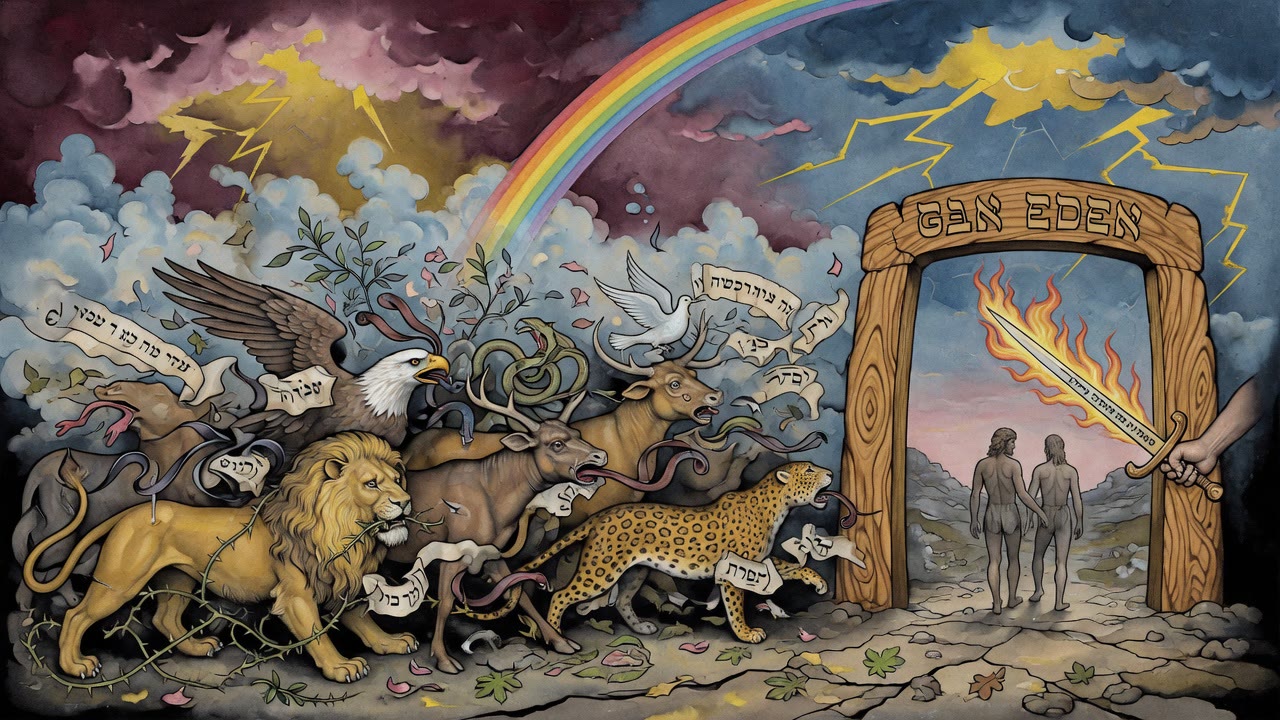
On the day the man and the woman were sent out, the mouths of all of them closed. Beasts, cattle, birds, everything that walks and everything that creeps. They had spoken to one another with one lip and one tongue since the beginning, and on that morning the lip and the tongue were taken, and the flesh of the garden was scattered outward, kind by kind, each one driven to the country that had been made for it.
They kept their voices. That is the part that lasted. The dog still says something at the door and the crow still says something over the field and the sheep says something to the lamb, and every one of those sounds is the leftover of a sentence in a language that had a grammar, spoken now to nobody who can hear it.
What Adam Carried Out
All of creation wept while this went on. The heavens wept, the sun and the stars wept, the angels wept. The moon laughed, alone, and God darkened her for it, which is why she has to be born and reborn every month while the sun goes on shining all day.
The angels sent to drive the couple out could not make themselves do it, and stalled, and went back to ask whether the sentence could be softened. It could not. Adam asked for the fruit of the tree of life and was refused, with a promise attached about the day the dead get up. Then he asked for one more thing: something sweet-smelling from the garden, so that outside he would still have something to burn as an offering.
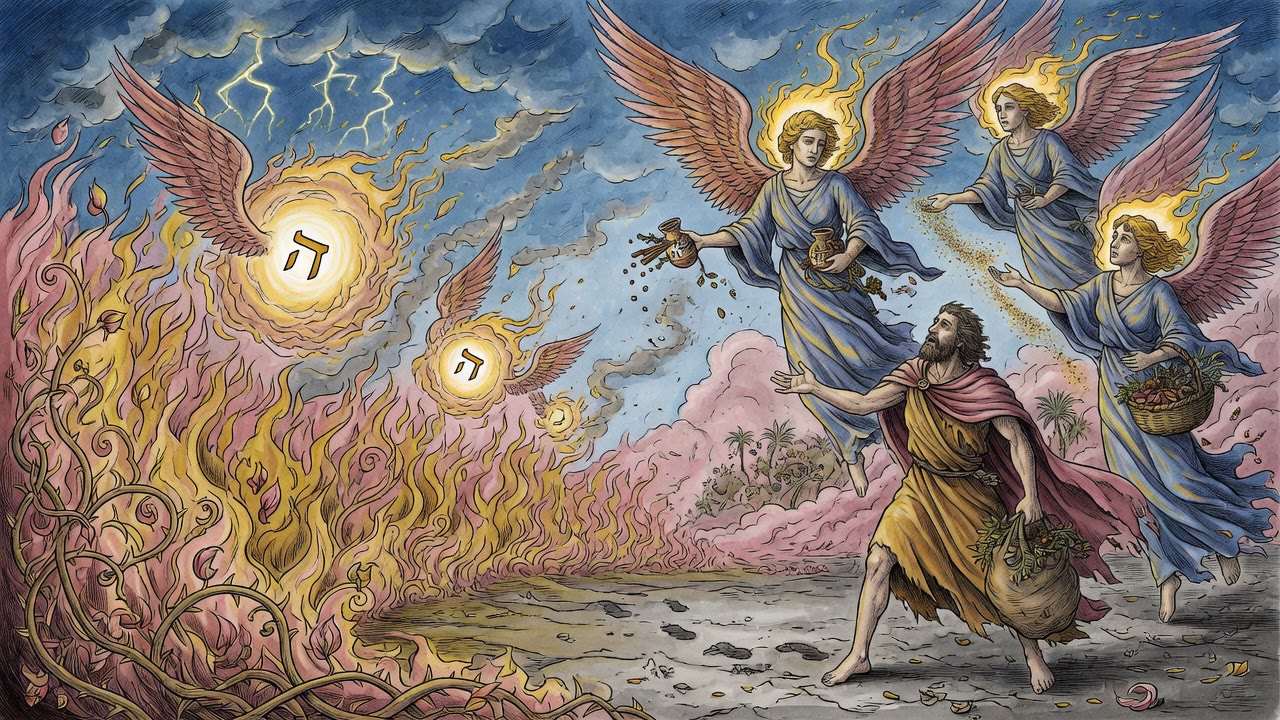
The angels took that request up themselves and God granted it. So he gathered saffron and nard and calamus and cinnamon and seed for planting, and he and his wife walked out through the gate with their arms full, past the animals, who were watching them go, and making noise about it, and saying things nobody would ever be able to repeat.
← All myths