The Ten Things Adam Lost and the Beast That Came for Seth
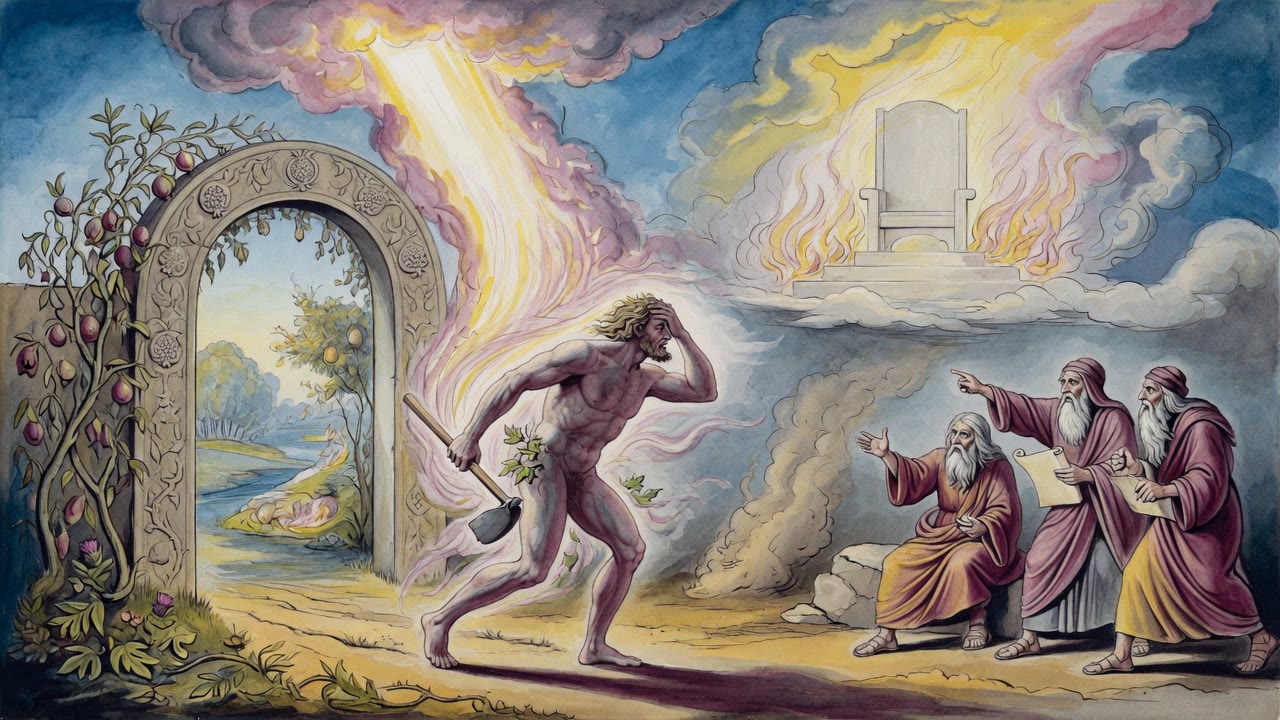
Eve asked to carry half of his dying. He sent her and Seth to the garden gate instead, to beg for oil from the tree.
Table of Contents
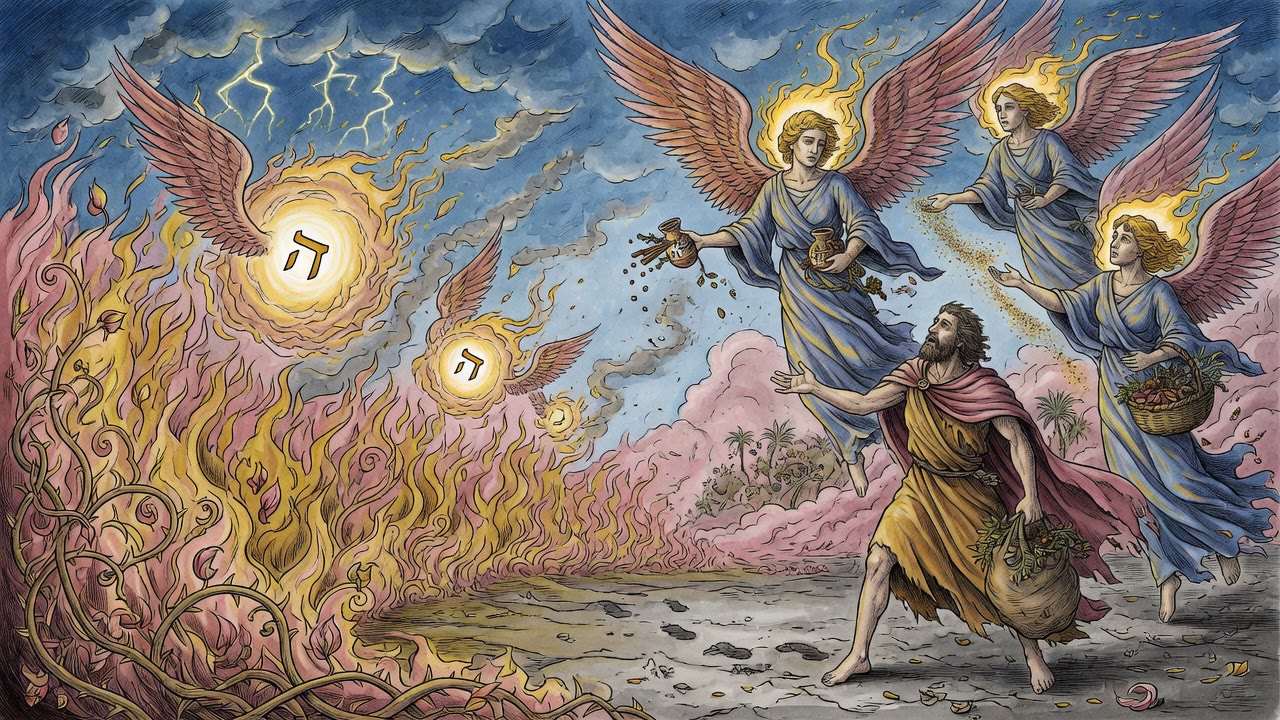
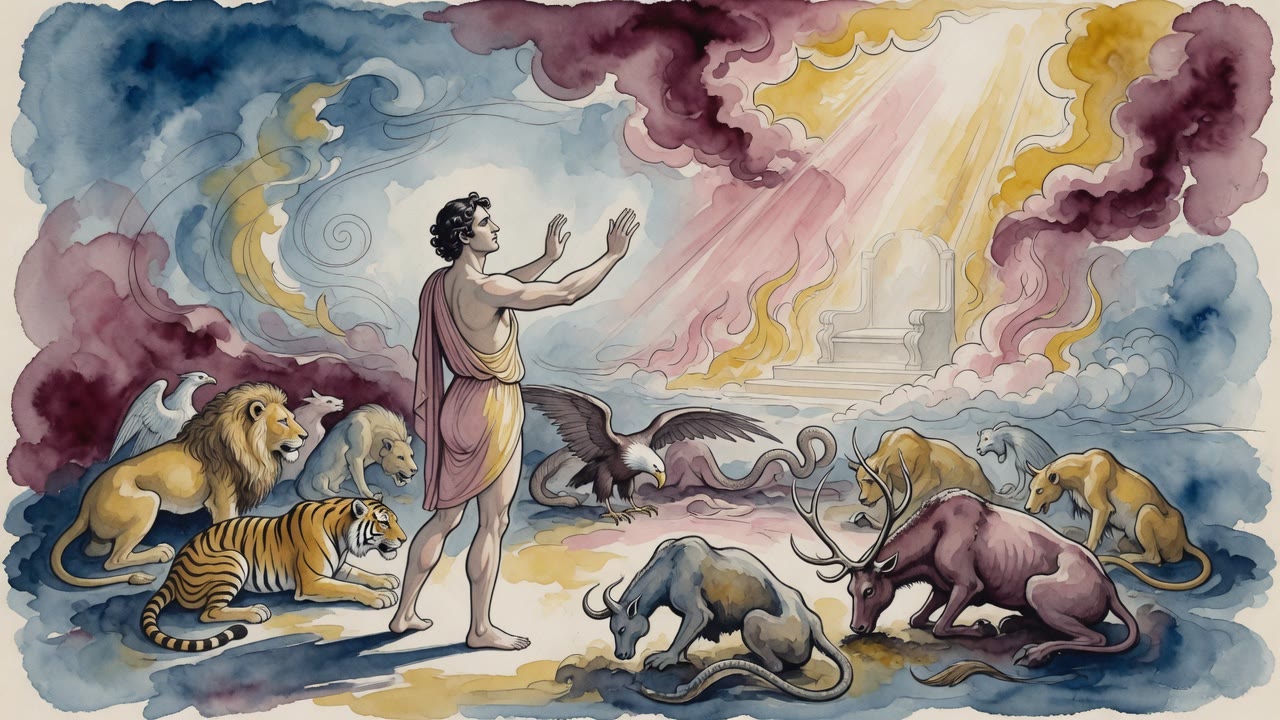
The animal came out of the brush and went straight for the boy.
 Click for full size
Eve saw her son go down under it and screamed. Not for help. There was no one on that road to help. She screamed at the animal.
"You wicked beast. Are you not afraid to fight with the image of God? How was your mouth opened? How were your teeth made strong? Have you forgotten that you were put under his hand?"
The beast lifted its head off Seth and answered her.
"Your greed and your wailing are nothing to us, Eve. They are your own affair. The rule of the beasts began with you. How was your mouth opened to eat of the tree God told you not to eat? Our nature was changed on your account. You could not bear it if I began to reprove you."
Seth got to his feet. "Close your mouth. Be silent. Stand away from the image of God until the day of judgment."
"I stand away from the image of God," the beast said, and it turned and went back to its lair.
What Adam Had Asked Them to Fetch
They were on that road because Adam was dying and had sent them.
He had lain in the hut with his sons around him and groaned out loud. "What shall I do? I am in great distress."
Eve had wept over him. "My lord Adam, get up and give me half of your trouble and I will carry it. This came on you because of me. It is on my account that you are worn down with toil."
He did not give her half. He gave her an errand. Go with Seth to the edge of paradise, put earth on your heads, weep, and ask God to send His angel in and bring back oil from the tree out of which the oil flows. He wanted to be anointed. He wanted the pain to stop.
So the two of them walked toward the gate of the garden their family had been thrown out of, to beg for a little of what grew inside it.
The Ten Losses Walked With Them
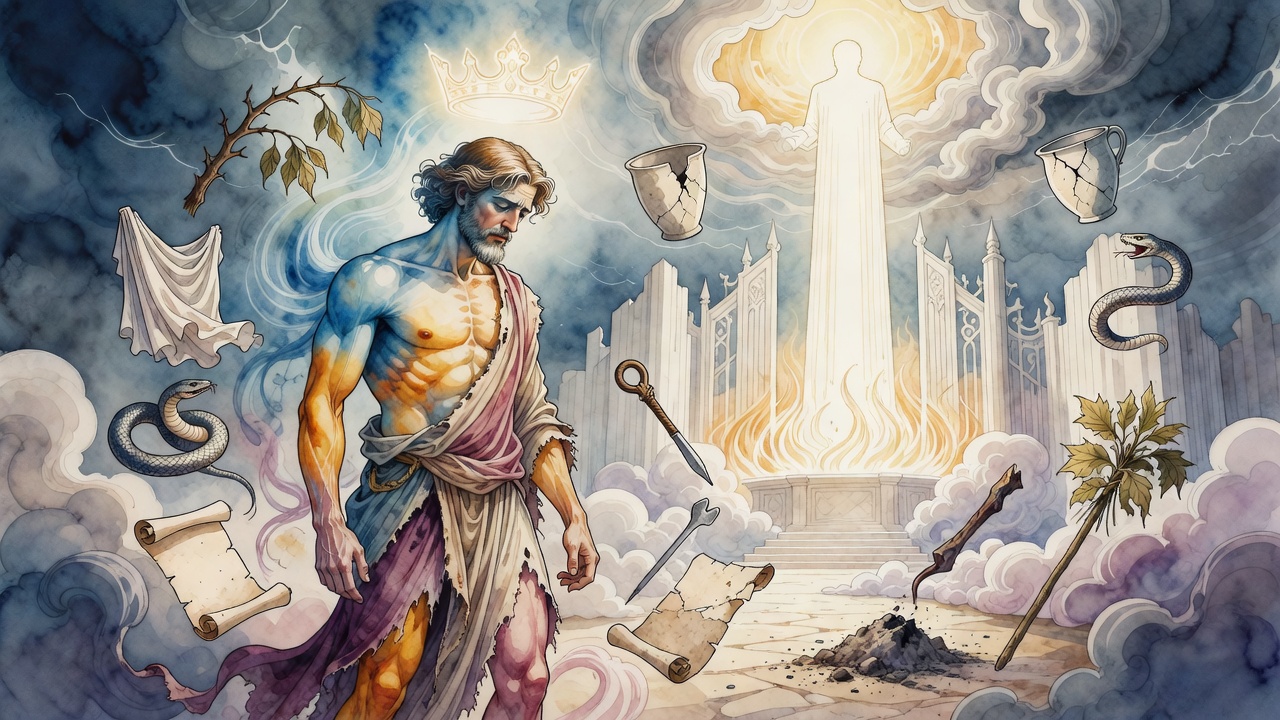
Adam had lost ten things by then, ten punishments, and he had been living inside all ten of them for a very long time.
The clothing of light was stripped off him by God's own hand. His bread would come to him in sorrow. The food that had been good would turn bad in his mouth. His children would wander from land to land and not settle. His body would run with sweat. He would carry the evil inclination inside him for the rest of his life. In death his body would be handed over to the worms. The animals would hold power over him and could kill him. His days would be few and full of trouble. And at the end of them he would stand and give an account of everything he had done on the earth.
The eighth count had just introduced itself on the road to paradise, with its teeth in his son's shoulder. Eve had shouted about an old hierarchy that no longer held. The beast had answered with her own mouth, the one that had opened over the fruit.
Michael Answered at the Gate
Seth and Eve reached the edge of the garden and wept there and asked for the oil of mercy. God sent the archangel Michael, and Michael would not give it.
"Do not wear yourself out with prayers about the tree that flows with oil. It is not yours now. It comes at the end of the times. Then all flesh will be raised up from Adam onward, everyone who belongs to the holy people, and the delights of paradise will be given to them, and God will be in the middle of them, and they will not sin in front of His face again, because the evil heart will be taken out of them and they will be given a heart that understands what is good."
Then he gave Seth the other thing he had come to say.
"Go back to your father. The term of his life is finished. He will live three days from today and then he will die. When his soul goes out of him, you will see how terrible that is."
Michael left. Seth had asked for oil and was carrying home a date.
Three Days
They came back to the hut where Adam was lying. He looked at his wife.
"Eve, what have you done to us? You have brought this great anger down on us, and the anger is death."
Then he told her to call the children, and the children's children, all of them, and to tell them exactly how the two of them had transgressed. Not the version that spared anyone. The manner of it.
Two of the ten were still ahead of him. The worms, and the accounting. He wanted the family in the room before he went to give it. The oil would wait until the end of the times. The pain would not.
← All myths