God Built Adam From Seven Parts of Creation
God did not scoop a single handful of clay. Each part of Adam's body came from a different corner of the universe, and each part gave him a different sense.
Table of Contents
On the sixth day, when the work was almost finished, God did not reach down and scoop a single handful of clay.
 Click for full size
He went to seven places.
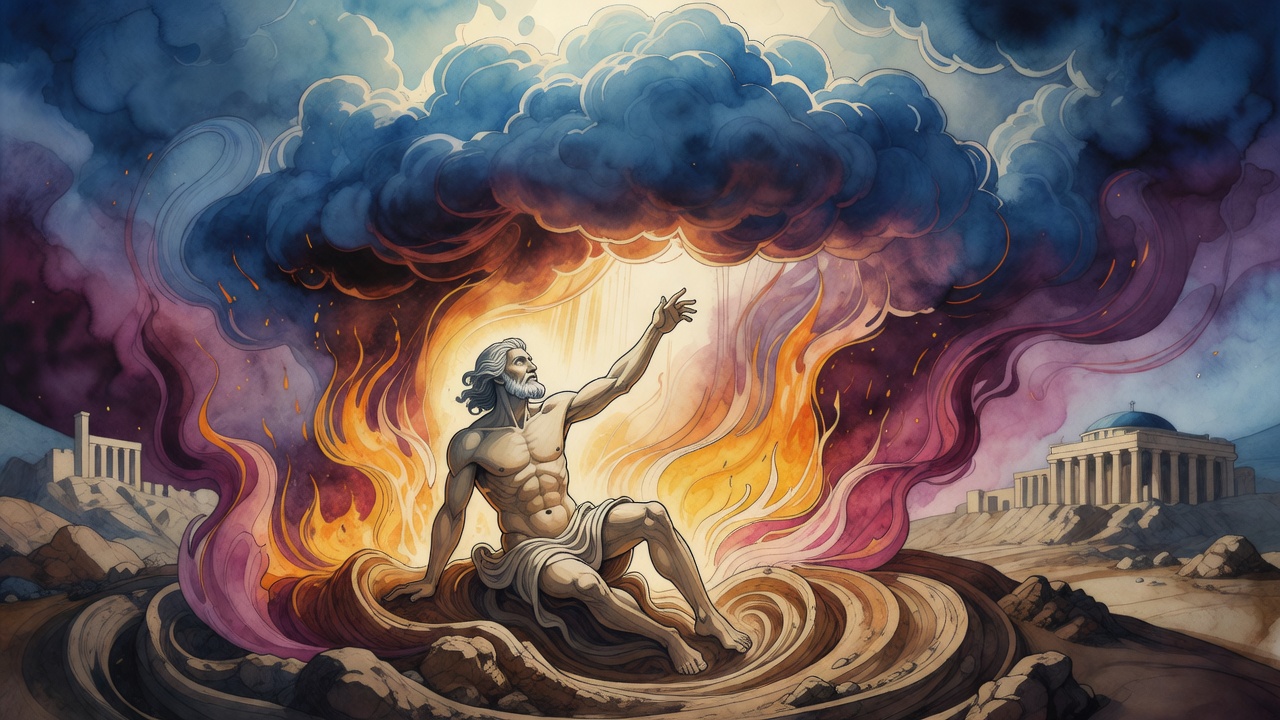
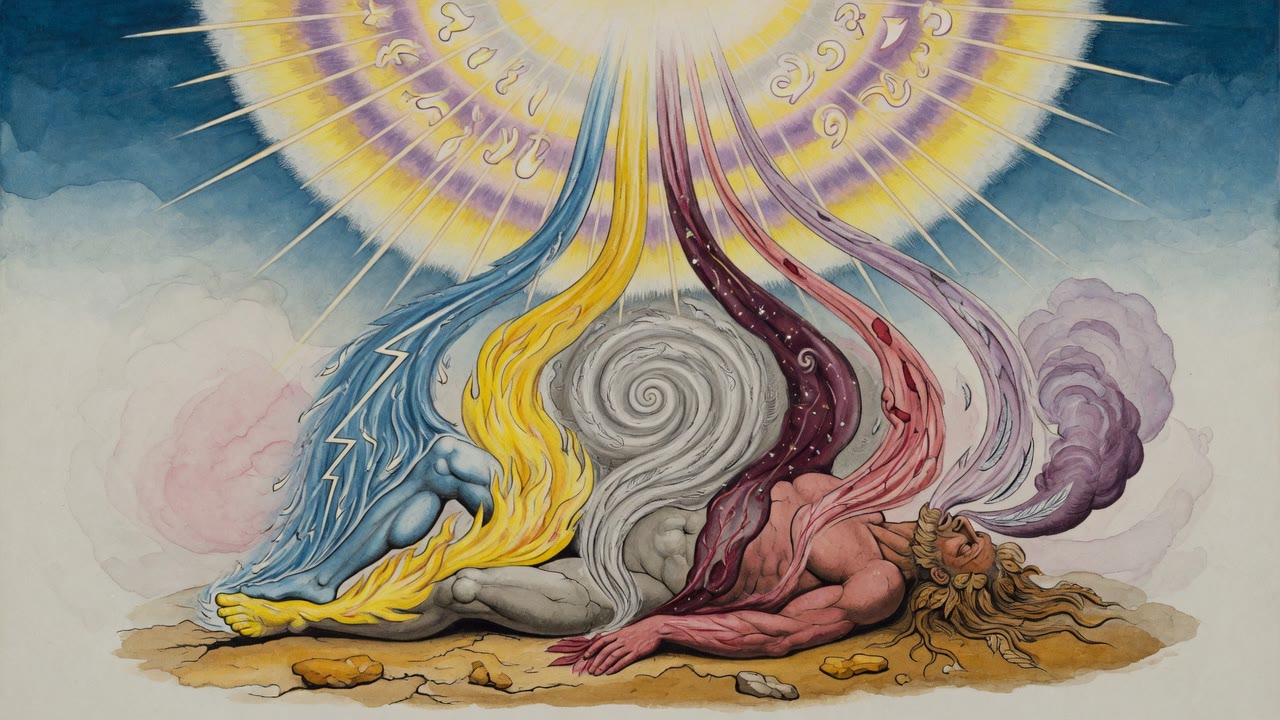
He took Adam's flesh from the earth, because flesh is what belongs to the ground and returns to it. But flesh alone cannot bleed, so he drew blood from the dew that sits on the ground in the moments just before dawn, when the sky is still dark and moisture collects on everything that holds still long enough. Bones needed something harder, so he took stone. Veins and hair came from the grass, which runs through everything living and yet has no weight of its own. For intelligence he reached toward the swiftness of angels and the indirection of cloud, because the mind that can only walk in a straight line is not a mind. And the soul he took from the wind and from his own breath, two things that cannot be seen or held, only felt when they move.
Seven Natures Given to Seven Parts
Seven materials. And then seven gifts to match them.
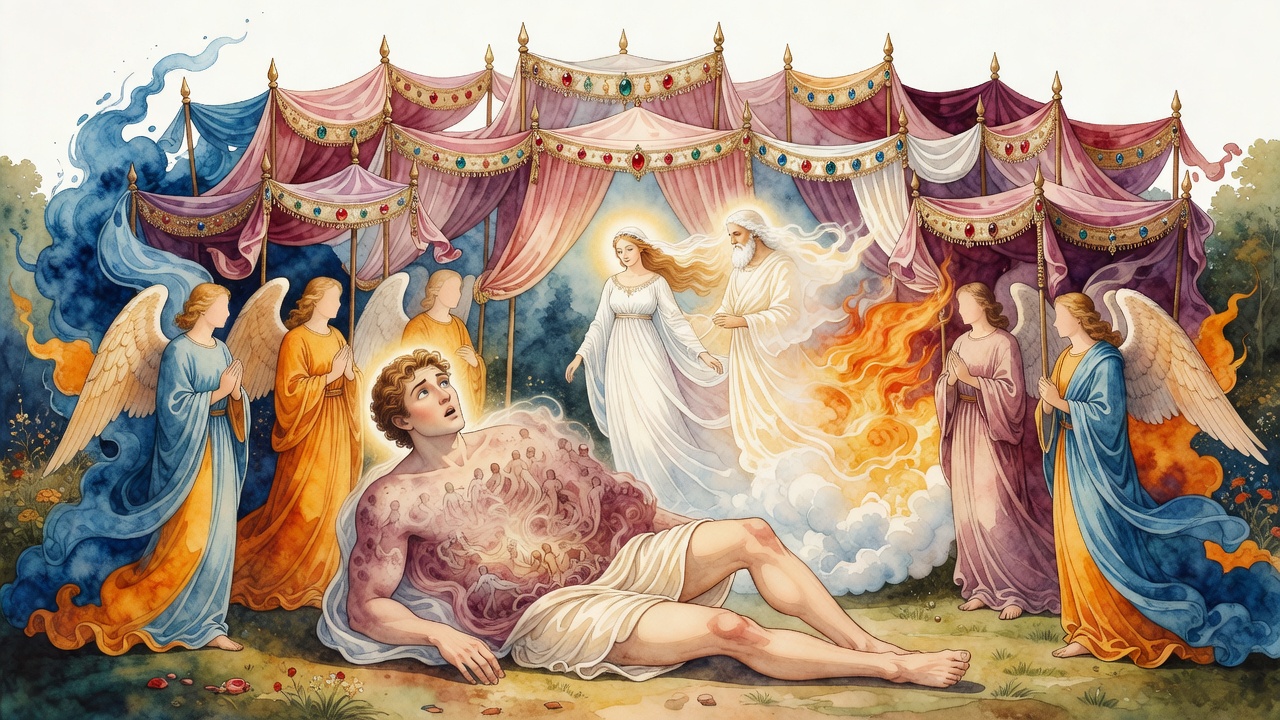
God gave hearing to the flesh, because flesh is the membrane through which sound enters. He gave sight to the eyes, which he had made from the sun, and which carry a piece of the fire that lights the world. Smell went to the spirit, taste to the veins, touch to the blood, the capacity for speech to the bones, and thought itself to the intelligence. Each sense was matched to the substance it came from, as if the body were not a single object but a map of creation with each landmark assigned its function.
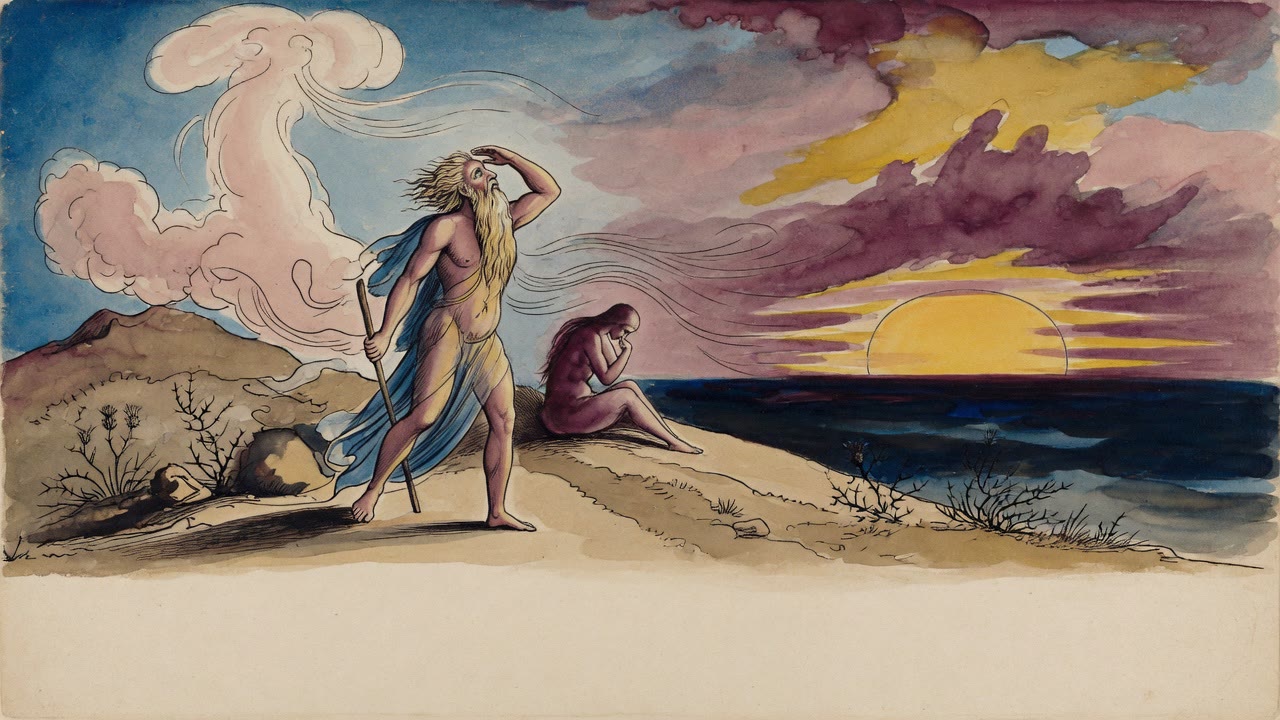
This is the account that Enoch received in the seventh heaven, during the long conversation God had with him after taking him up. Enoch sat in the presence and was allowed to ask about the things that Genesis does not explain. How were the six days structured. What happened in each one. What exactly the words let us make man meant when no council of equals was being consulted. God took him through the machinery.
The Missing Day in the Ordinary Story
The Torah's version is lean. The Lord God formed the man of dust from the ground and breathed into his nostrils the breath of life, and the man became a living being (Genesis 2:7). One verse. One material. One miracle. The Slavonic apocalypse that preserves Enoch's conversation with God in the seventh heaven refused to believe one verse could carry the whole weight of a human body.
Its argument is not theological but anatomical. Look at what a person is made of. Bone is not the same substance as blood. Blood is not the same substance as breath. The stuff that sees is not the same stuff that smells. If all of it came from the same handful of dust, why does each part behave so differently? The sevenfold account answers that question by giving each component its own cosmic origin point. Adam is not a piece of earth with divine breath blown into it. He is a composite of the whole visible world, assembled in the image of something the world cannot see.
Wisdom Hewed Seven Pillars
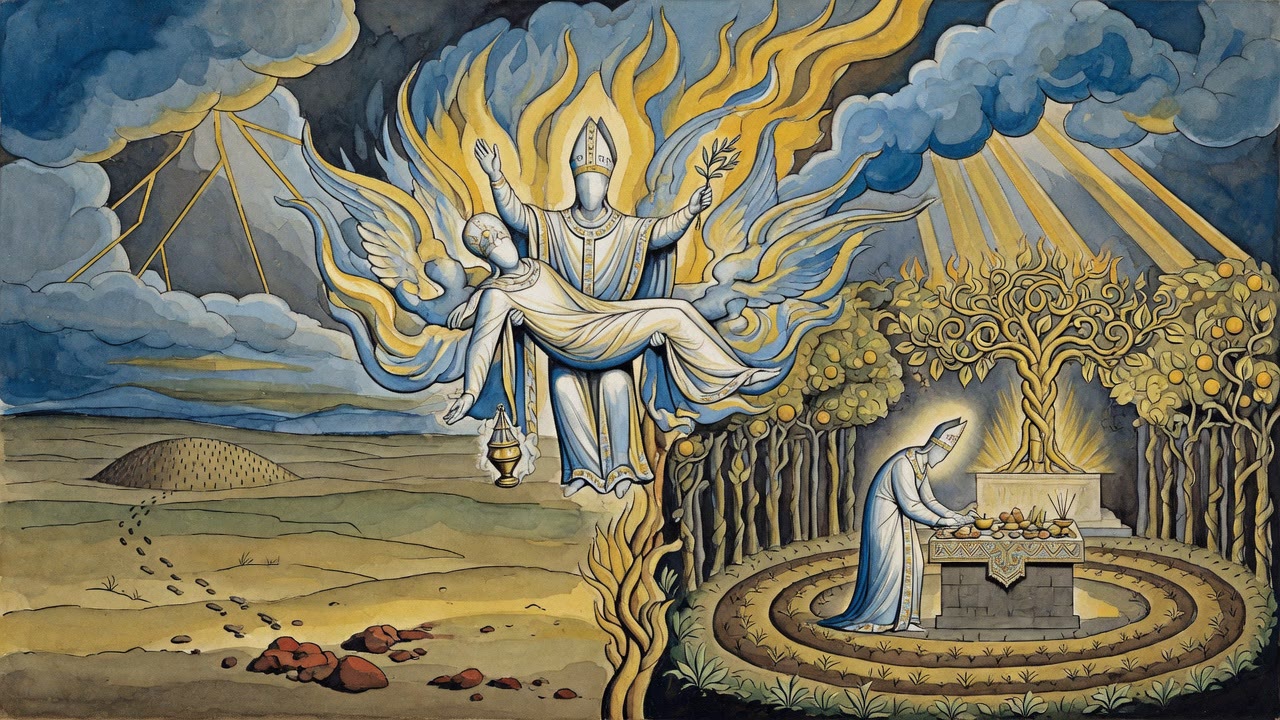
A much later tradition in Vayikra Rabbah, the Palestinian midrash on Leviticus that took its final form around the fifth century CE, offers a parallel structure from a different angle. Bar Kappara, a third-century sage, opens his teaching on Proverbs 9:1, Wisdom has built her house, she has hewn her seven pillars, and counts. The house is Torah. The seven pillars are the seven days of creation, the same seven days that produced the world whose pieces God used for Adam. The wisdom that organized the universe is the same wisdom woven into the structure of the body. Creation is not a sequence of accidents. It is an architecture, and the human being is its most complex room.
What the two traditions share is the insistence on completeness. Seven is the number of creation in Jewish thought because the Sabbath is the seventh, and nothing that falls short of the seventh is finished. An Adam made of one substance would be an incomplete Adam. The sevenfold body is not a curiosity. It is the evidence that God went all the way.
What Each Sense Costs
The account in 2 Enoch ends on a note that the tidy list does not prepare you for. God finishes describing the seven materials and then says something that sounds more like a warning than a benediction. He gave Adam seven natures. Hearing to the flesh. Sight to the eyes. Smell to the spirit. Taste to the veins. Touch to the blood. Speech to the bones. Thought to the intelligence.
And then God showed him the two ways. Good and bad. Light and darkness. And left him in the middle to choose.
The sevenfold body is not innocent. It is equipped. It has the organs of discernment built in. Each sense is a tool for navigating a world that has been split between what nourishes and what destroys. Adam received all seven not as decorations but as instruments. The question the text leaves open, and does not close, is whether a person with that much equipment has any excuse for getting it wrong.
← All myths