Translation of the source text.The Jerusalem Talmud, edition by Heinrich W. Guggenheimer. Berlin, De Gruyter, 1999-2015 · CC-BY
MISHNAH: One does not explain sexual aberrations to three {persons}, nor the Creation to two, nor the Chariot to one unless he was wise and understood by himself. Anybody trying to investigate four things it would have been better for him not to have come into the world: what is above and what is below, what is before and what is after. And anybody not caring for the glory of his Creator would have been better off not to come into the world.
HALAKHAH: “One does not explain sexual aberrations to three {persons},” etc. Rebbi Abba in the name of Rav Jehudah: This is Rebbi Aqiba’s, but following Rebbi Ismael? Since Rebbi Ismael states warnings to the actors. Since Rebbi Immi was sitting and stating a warning for active homosexual and a warning for the passive homosexual, this implies that practice follows Rebbi Ismael.
“Nor the Creation to two.” Rebbi Abba in the name of Rav Jehudah: This is Rebbi Aqiba’s, but following Rebbi Ismael one investigates what happened. Since Rebbi Jehudah bar Pazi was sitting and explaining that originally the world was water in water; this implies that practice follows Rebbi Ismael. Rebbi Jehudah bar Pazi was preaching: Originally the world was water in water. What is the reason? God’s wind was hovering over the water. Then He turned it into snow, He throws his ice like small breads. Then He turned it into land, for He will tell the snow, be land. And the land stands on water, to Him Who spreads the earth over the water. And the water stands on mountains, on mountains shall the water stand. And the mountains stand on wind, behold the Maker of mountains and Creator of wind. And the wind depends on storm, the wind storm executes His word. And the Holy One, praise to Him, turned storm into a kind of amulet and hung it on His arm, as it is said, and below eternal arms.
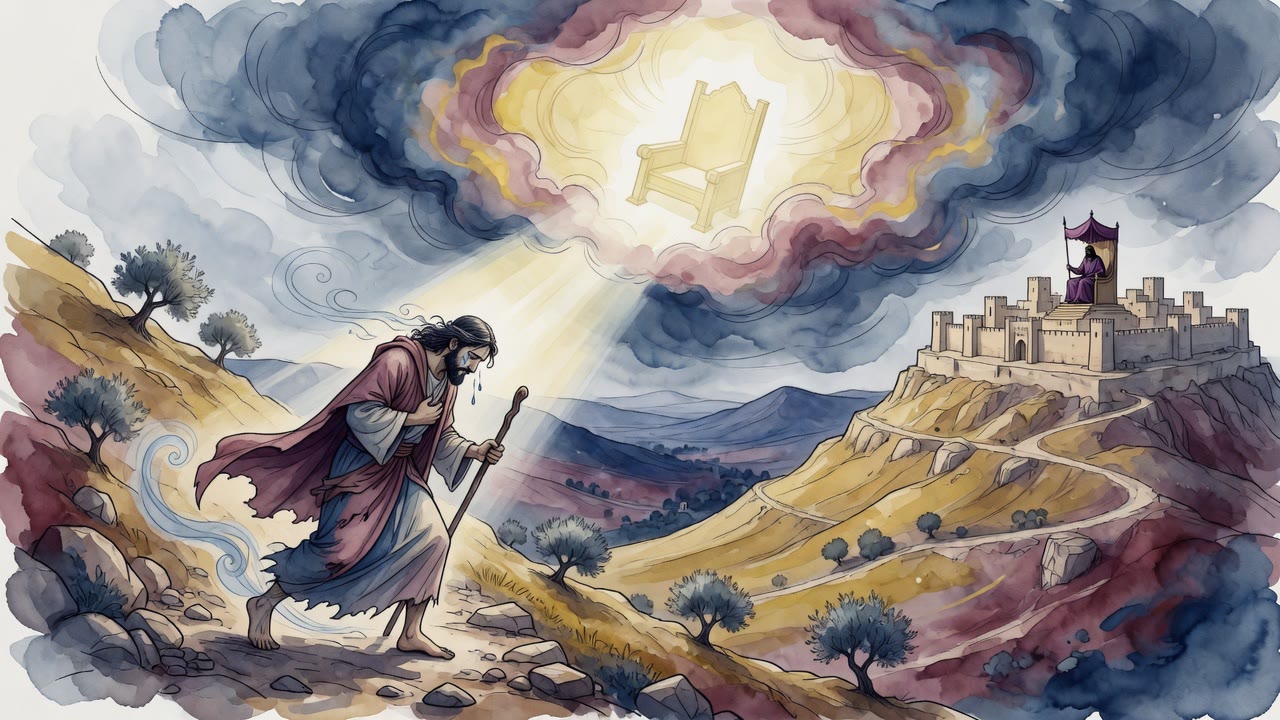
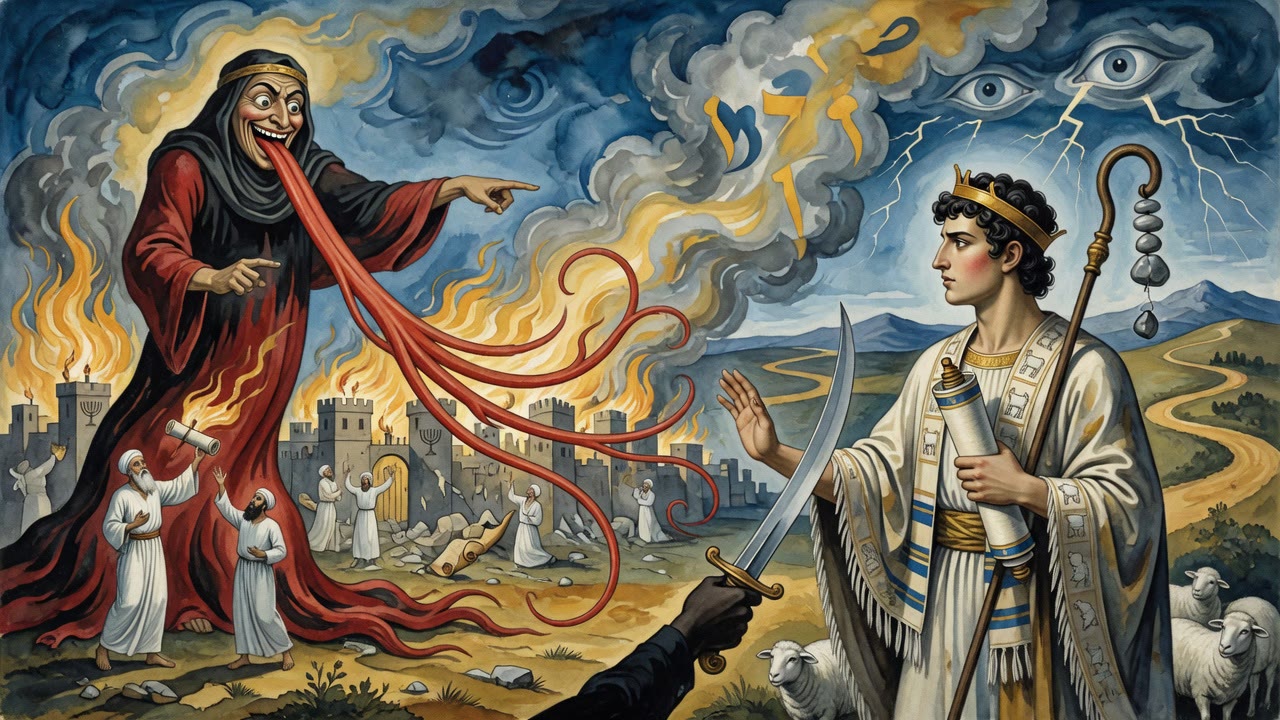
Behold the Maker of mountains and Creator of wind, etc. This is one of six verses which Rebbi was reading and crying. Implore the Eternal, all the meek of the Land, etc. Hate evil and love goodness, etc. He shall put dust in his mouth, etc. For all deeds, etc. Samuel said to Saul, why did you irritate me, etc. He said to him, you should not have angered your Creator by me. You made me your idol. Do you not know that just as the worshipper is punished, the worshipped is punished? Not only this but I was thinking that this was the Day of Judgment and I was afraid. And is that not an inference de minore ad majus, if Samuel, the teacher of the Prophets, about whom it is written, all of Israel knew, from Dan to Beer Sheva, etc., was afraid of the Day of Judgment, so we so much more? And this behold the Maker of mountains and Creator of wind, even matters which are not sinful are written for everybody on his writing tablet. And who tells to a person? The breath of his mouth. Rebbi Ḥaggai in the name of Rebbi Jabes. The Maker of mountains and Creator of wind. Rebbi Ḥaggai in the name of Rebbi Jabes, those Sepphoreans, “chaos” is darkness and murkiness.
Rebbi Jehudah bar Pazi in the name of Rebbi Yose ben Rebbi Jehudah: Hadrian asked Akylas the proselyte, is it true that you are saying that this world rest on the spirit? He told him, yes. He said to him, how can you show this to me? He told him, bring me noble camels. He brought him noble camels. He loaded them with their loads, let them stand up and lie down, lifted them and strangulated them. He told him, here they are, raise them. He said to him, after you strangulated them? He told him, I did not remove anything from them, is it not the spirit which left them?
“Nor the Chariot to one.” Is this still Rebbi Aqiba’s? It is the opinion of everybody, so that a person know how to take care of the glory of his Maker. Did not Rav say, nobody is permitted to pronounce anything (about skin disease) [against his teacher] unless either he saw or he served. How does one proceed? At the start his teacher indicates the topics of the verses and summarizes. Rebbi Ḥiyya in the name of Rebbi Joḥanan: Rebbi had a competent student who explained one Chapter in the Work of the Chariot to which Rebbi did not concur; he was stricken with scabies. This teaching may be compared to two roads, one of fire and the other of snow. If he takes one he dies in fire, if he takes the other he dies in snow. What should he do? Walk in the middle.
It happened that Rabban Joḥanan ben Zakkai was on the road, riding on a donkey, and Rebbi Eleazar ben Arakh was walking behind him. He said to him, my teacher, instruct me in a Chapter about the Work of the Chariot. He told him, did the Sagen not state, “nor the Chariot unless he was wise and understood by himself.” He said to him, my teacher, permit me to say it before you. He told him, say. When Rebbi Eleazar ben Arakh started about the Work of the Chariot, Rabban Joḥanan ben Zakkai descended from the donkey. He said, it is not appropriate that I should hear about the glory of my Creator riding on a donkey. They went and sat under a tree, when fire descended from Heaven and surrounded them, and the angels of Service were dancing before them like wedding guests happy with the bridegroom. An angel addressed from inside the fire and said, the Work of the Chariot is as you said, Eleazar ben Arakh. Then all trees (around them) [opened their mouths] and sang; then all trees of the forest will sing. When Rebbi Eleazar ben Arakh finished with the Work of the Chariot, Rabban Joḥanan ben Zakkai rose, kissed him on his head, and said: Praised be the Eternal, the God of Abraham, Isaac, and Jacob, who gave a wise son to our father Abraham who knows to speak of the Glory of our Father in Heaven. They are good speakers who do not act well, those who act well but are no good speakers. Eleazar ben Arakh speaks well and acts well. Hail to you, our father Abraham, that Eleazar ben Arakh came from your loins. When Rebbi Yosef Hakohen and Rebbi Simeon ben Nethanael heard, they also started with the Work of the Chariot. They said, it was one day after the summer solstice; the earth trembled and the Arc appeared in the cloud. An unembodied voice came and said to them, the place is free and the triclinium prepared for you. You and your students are invited to the third group. This parallels him who said, seven enjoyments are before Your presence, there are seven groups of just people in the Future World.
It also happened that Rebbi Joshua was on the road when Ben Zoma came towards him. He greeted him but he did not answer. He asked him, from where and whence, Ben Zoma? He told him, I was observing the Creation, and the distance between the upper waters and the lower waters is (one) [a full] opening of a hand-breadth. It says here “hovering”, and it says there, as an eagle watches his nest, over his chicks he hovers. Since in case of the hovering mentioned there it means barely touching, so the hovering mentioned here means barely touching. Rebbi Joshua said to his students, Ben Zoma is out. It was only a few days that Ben Zoma passed away.
Rebbi Jehudah bar Pazi in the name of Rebbi Yose ben Rebbi Jehudah: Three lectured their teachings in front of their teachers: Rebbi Joshua in front of Rabban Joḥana ben Zakkai, Rebbi Aqiba in front of Rebbi Joshua, Ḥananiah ben Ḥakhinai in front of Rebbi Aqiba. From there on their mind was not pure. Four entered the Garden, One peeked and was hurt; one peeked and died; one peeked and cut saplings, one entered in peace and left in peace. Ben Azzai peeked and was hurt; about him the verse says, if you found honey, eat your fill. Ben Zoma peeked and died, about him the verse says, dear in the Eternal’s eyes is the death of his pious. Aḥer peeked and cut saplings. Who is Aḥer? Elisha ben Abuya, who killed the children of Torah. They said, if he saw a student excelling in Torah he killed him. Not only this, but he went to the school house and saw children in front of their Bible teacher. He said, what are these sitting doing here? The profession of this one is builder, the profession of this one is carpenter, the profession of this one is hunter, the profession of this one is tailor. When they heard this, they left him and went away. About him the verse says, do not let your mouth make your flesh sin, etc.; for he destroyed the deeds of himself. Also in the time of religious persecution they made them carry loads. They intended that two together should carry one load, because of two persons who performed one work. He said, make them carry singly. They went and made them carry singly. They intended to unload in karmelit, in order not to carry from a private to a public domain. He said to them, let them carry flasks; they made them carry flasks. Rebbi Aqiba entered in peace and left in peace; about him the verse says, draw me, I shall run after you, etc.
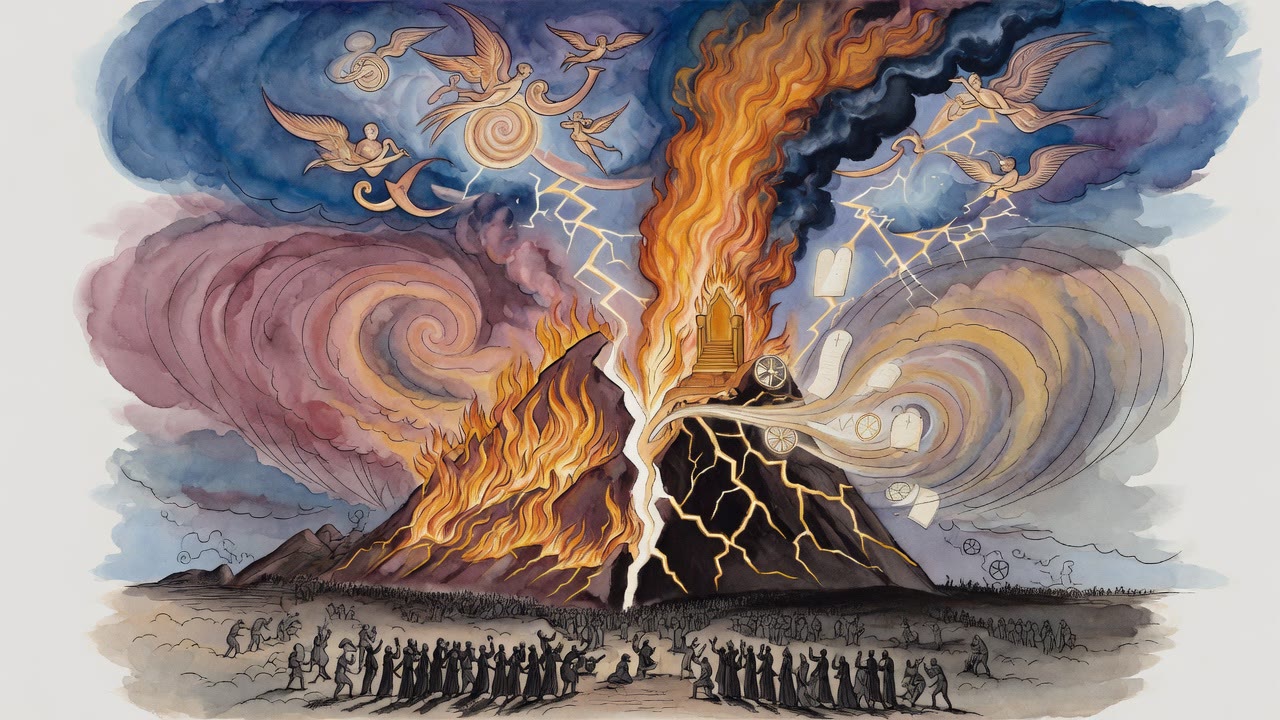
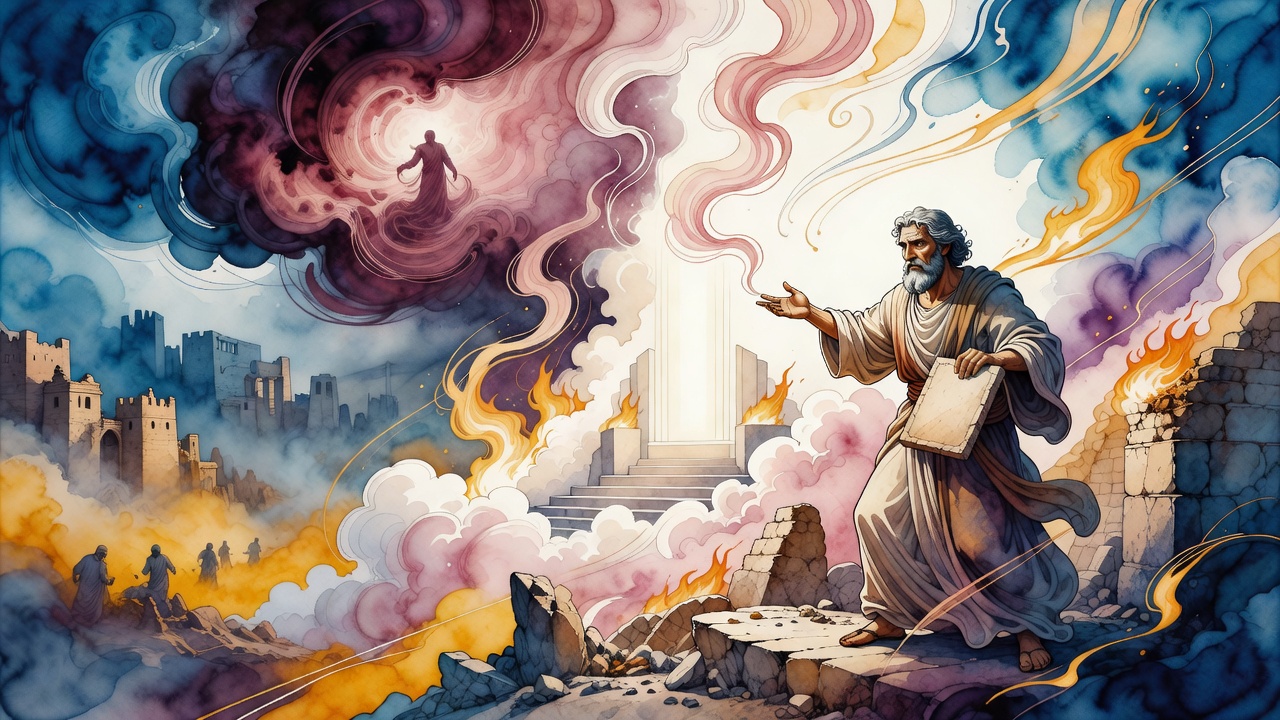
Rebbi Meïr was sitting and preaching in the House of Study of Tiberias when his teacher Elisha passed by riding on a horse on the Sabbath. They came and told him, your teacher is outside. He stopped his sermon and went out to him. He asked him, what did you preach today? He told him, and the Eternal blessed the end etc. He asked him, what did you explain about this? He answered him, and the Eternal added double all that Job had owned; that he doubled his money. He said, woe for those who are lost and not found, your teacher Aqiba did not preach this but, the Eternal blessed the end of Job from his beginning, by the merit of commandments and good works which were in his hand from his beginning. He asked him, and what did you preach further? He told him, the end of a matter is better than the beginning. He asked him, what did you explain about this? For example, a man who had children in his youth but they died, and in his old age they lived; that is the end of a matter is better than the beginning. For example, a man who traded in his youth and lost, and in his old age and gained; that is the end of a matter is better than the beginning. For example, a man who studied Torah in his youth and forgot, in his old age he remembered; that is the end of a matter is better than the beginning. He said, woe for those who are lost and not found, your teacher Aqiba did not preach this but, the end of a matter is good from the beginning, in case it is good from the start, and this applies to me. My father Abuya was one of the leading Jerusalemites. On the day he came to circumcise me he invited all the leading Jerusalemites and sat them in one room, and Rebbi Eliezer and Rebbi Joshua in another room. After they ate and drank they started to clap with their hands and dance. Rebbi Eliezer and Rebbi Joshua said, while they are occupied in theirs let us be occupied with ours. They sat occupied with words of the Torah, from the Torah to Prophets, from Prophets to Hagiographs. Fire descended from Heaven and surrounded them. Abuya told them, my teachers! Why do you come to burn down my house? They told him, Heaven forbid! But we were sitting reviewing the words of the Torah, from the Torah to Prophets, from Prophets to Hagiographs, and the words were joyful as at their giving on Sinai. And was the main giving on Sinai not in fire? And the Mountain burns in the fire up to the heart of Heaven. My father Abuya told them, my teachers! If that is the power of Torah, if this son of mine survives I dedicate him to Torah. Because his intent was not for Heaven, it did not succeed with this man. He asked him, and what did you preach further? He told him, it cannot be valued by gold or glass. He asked him, what did you explain about this? He told him, the words of the Torah are as difficult to acquire as golden vessels, and as easy to lose as glass vessels. And like golden and glass vessels when they are broken he can make them vessels as before, also the student of the Sages who forgot his learning can learn it anew. He said to him, this is enough, Meïr, up to here is the Sabbath domain. He asked him, how do you know? He told him, from the horse’s hooves which I continuously counted for 2’000 cubits. He said to him, all that wisdom is in you and you do not repent? He told him, I cannot. He asked him, why? He told him, once I was passing by the Holiest of Holies riding on a horse on the Day of Atonement which fell on a Sabbath and I heard an unembodied voice coming from the Holiest of Holies, saying, return, erring children, except for Elisha ben Abuya who knew My power and rebelled against Me. And all that came to him because he was sitting memorizing in the valley of Genezareth and saw a man climbing to the top of a date palm taking the mother with the chicks and descending safely. The next day he saw another man climbing to the top of a date palm, taking the chicks and sending away the mother. When climbing down he was bitten by a snake, and he died. He said, it is written, sending away you shall send the mother, but the chicks you may take for yourself, so it will be good for you and prolong your days. Where is the good for this one? Where is the prolongation of days of this one? He did not know that Rebbi Jacob had explained it preceding him, so it will be good for you in the future world which is all good, and prolong your days, in the future which is all long. But some are saying, because he saw the tongue of Rebbi Jehudah the baker in the mouth of a dog, oozing blood. He said, is this the Torah and this is its reward? This is the tongue which was delivering the words of the Torah correctly; this is the tongue which occupied itself with Torah all its days; [is this the Torah and this is its reward?] It appears that there is no reward and no resurrection of the dead. But some are saying, when his mother was pregnant with him she passed by pagan temples and smelled of this kind. And this smell was bubbling in her body like the poison of a viper. Later Elisha fell sick. They came and informed Rebbi Meïr, your teacher is sick. He went to visit him and found him sick. He asked him, are you not repenting? He asked, and if one repents, is one accepted? He told him, is it not written, man shall repent up to extinction, one receives up to the extinction of the breath. At that moment Elisha cried, passed away, and died. Rebbi Meïr was happy internally and said, it seems that my teacher passed away repentant. After they buried him, fire descended from Heaven and burned his grave. They came and informed Rebbi Meïr, your teacher’s grave is on fire. He went to visit it and found it burning. What did he do? He took his kaftan and spread it over it. He said, stay for the night, etc. Stay for this world which compares to the night, and it will be in the morning, this is the Future World which is all morning, if the Good One will redeem, this is the Holy One, praise to Him, who is Good, as it is written, the Eternal is good to all, and His mercies are on all His creatures. And if He does not want to redeem you I shall redeem you, living is the Eternal, and it was extinguished. They asked Rebbi Meïr, if they ask you in that World, whom do you want to visit, your father or your teacher? He told them, I shall visit my teacher first and afterwards my father. They said, will they listen to you? He told them, did we not state, “one saves the case of a scroll with the scroll, and the case of phylacteries with the phylacteries”? One saves Elisha Aher by the merit of his Torah. Later his daughters went to take charity from Rebbi. Rebbi decided and said, nobody shall show him grace nor be friendly to his orphans. They told him, Rebbi. Do not look at his deeds, do look at his Torah. At this moment Rebbi cried and decided for them that they be provided for. He said, if this one who toiled in Torah not for Heaven’s sake, see what he produced; one who toils in the Torah for itself not so much more?
Rebbi Eleazar in the name of Siracides: What is beyond you do not have to know, what is deeper than the abyss do not investigate. Ponder what is permitted to you; you have no concern with hidden things. Rav said, may lying lips be : may they become dumb, be rubbed out, silenced. May they become dumb, as you are saying, the Eternal said to him, Who formed a mouth etc. May they be rubbed out, as you are saying, here we were tying sheaves. May they be silenced, as it is understood. Which talk boasting about a just one, who talk about the Universal Just One in matters which He hid from His creatures. With haughtiness and contempt, that is he who is haughty to say, I am investigating the Creation. He feels like haughty but only is insulting.
Rebbi Yose ben Ḥanina said, one who aggrandizes himself by the disgrace of another person has no part in the Future World. He who aggrandizes himself by the glory of the Universal Living not so much more? What is written afterwards? How great is the good which You hid for those who fear You. He may not have part in the great good. Rebbi Levi said, it is written, the glory of God is hiding things, etc. The glory of God is hiding things, before the world was created; the glory of kings is investigating things, after the world was created. Rebbi Levi said, do you know what happened earlier, but you since human was put on the earth.
Rebbi Jonah [in the name of] Rebbi Abba: It is written, but ask the first days which were before you, I could think before the Creation. The verse says, from the day that God created Man on the Earth. I could think starting with the Sixth Day, the verse says, the first. After the verse added, it subtracted. Therefore we infer from the Sixth. Since the Sixth is particular that it is one of the Six Days of Creation, also you may not bring to me only ones similar to the Sixth. I could think, to know what is higher than heaven and lower than the abyss, the verse says, from end of heaven to end of heaven. But before the world was created you may investigate privately; after the world was created your voice may go from one end of the world to the other end. Bar Qappara stated, “and from the day.” It comes that Rebbi Jehudah bar Pazi parallels Bar Qappara, and what Rebbi Ḥiyya stated parallels Rebbi Abba.
Rebbi Jonah in the name of Rebbi Levi: The world was created with Bet. Since Bet is closed from all sides but open from one side, you have no right to investigate what is above, what is below, what is before, and what is after, except starting with the day the world was created and onwards. One asks the Bet, who created you? It points out to them its point and says, this One above. And what is His Name? It points out to them its back point and says, the Eternal is His Name, “Master” is His Name. Another explanation. Why by Bet? Because it is an expression of blessing, but not by Alef, which is an expression of accursed. The Holy One, praise to Him, said, I shall only build My world with Bet, so that the creatures should not say, how could the world remain standing if it was created in an expression of accursed. Therefore I shall create it with Bet, and expression of blessing, so it shall have a chance to endure.
Rebbi Abbahu in the name of Rebbi Johanan: With two letters two worlds were created, this world and the Future World. [One by He and one by Yud.] What is the reason? For in Yah, the Eternal is the Rock of Worlds. However, we did not know which one was created by He and which one by Yud. But from what is written, these are the outcomes of Heaven and Earth in their being created, He created them by He. This implies that this world was created by He, and the Future World was created by Yud. Since He is (missing) [open] below, it is a hint for all creatures that they will descend to the pit. Since He has a point on top, from the moment they descend they ascend. Since He is open from all sides, so He opens a door to all who repent. Since Yud is curved, so all creatures should be bent. All faces turned yellow. When David saw this, he started to acclaim by two letters, praise Yah, praise, the servants of the Eternal, praise the Name of the Eternal.
Rebbi Yudan the Patriarch asked Rebbi Samuel bar Naḥman: What means that which is written, Prepare a way for the rider on clouds, His name YH, and jubilate before Him. He told him, there is no place which does not have one appointed over its life. And who is appointed over the lives of all? The Holy One, praise to Him. His name YH, His name: Βια. Rebbi Eleazar told him, your teacher was not explaining in this way, but {a parable} of a king who built a palace on a place of sewers, a place of dung heaps, a place which stinks. One who comes and says, this palace is at a place of sewers, a place of dung heaps, a place which stinks, does he not detract? So he detracts who says, originally the world was water in water. {A parable} of a king’s orchard and an observation deck built on it, to look at it but not to touch.
The House of Shammai are saying, heaven was created first and afterwards earth. But the House of Hillel are saying, earth was created first and afterwards heaven. These are bringing proof for their assertion, and those are bringing proof for their assertion. What is the reason of the House of Shammai? In the Beginning God created heaven and earth. {A parable} of a king who made a chair. After he had made it he made its footstool: the Heavens are My throne and the Earth My footstool. What is the reason of the House of Hillel? On the day of the Eternal’s, God’s, making of earth and heaven {A parable} of a king who made a palace. After he built the foundations he built the upper structure: also My left hand founded the Earth and My right hand tended the Heavens. Rebbi Jehudah bar Pazi said, also the following supports the House of Hillel: in earlier times You founded the Earth, and the Heavens are the work of Your hands. Rebbi Ḥanina said, from the place from where the House of Shammai prove their assertion, from there the House of Hillel remove them. What is the reason of the House of Shammai? In the Beginning God created heaven and earth. From there the House of Hillel remove them: and the earth was, it already was. Rebbi Joḥanan in the name of the Sages: As for creation, the heaven preceded. As for perfecting, the earth preceded. As for creation, the heaven preceded, in the Beginning God created. As for perfecting, the earth preceded, on the day of the Eternal’s, God’s, making of earth and heaven. According to the House of Shammai, the heaven after the First waited three days, First, Second, Third, to have offspring. On the Fourth, there shall be lights. According to the House of Shammai, the sea after the Second waited three days, Second, Third, Fourth, to have offspring. On the Fifth, the waters shall teem. According to the House of Shammai, the earth after the Third waited three days, Third, Fourth, Fifth, to have offspring. On the Sixth, the earth shall produce. According to the House of Hillel, the earth after the First waited two days, First and Second, to have offspring. On the Third, the earth shall be covered with grass. According to the House of Hillel, the sea after the Third waited two days, Third and Fourth, to have offspring. On the Fifth, the waters shall teem. Rebbi Simeon ben Yohai said, I am wondering how the fathers of the world could disagree about the creation of the world. Heaven and earth were only created like a pan and its cover. What is the reason? Also My left hand founded the Earth and My right hand tended the Heavens. Rebbi Eleazar ben Rebbi Simeon said, following this, my father’s opinion, sometimes heaven precedes earth, sometimes earth precedes heaven, which teaches that they are equivalent one to another.

 Click for full size