David Entered the Fourth Heaven as an Army Fought His Enemies
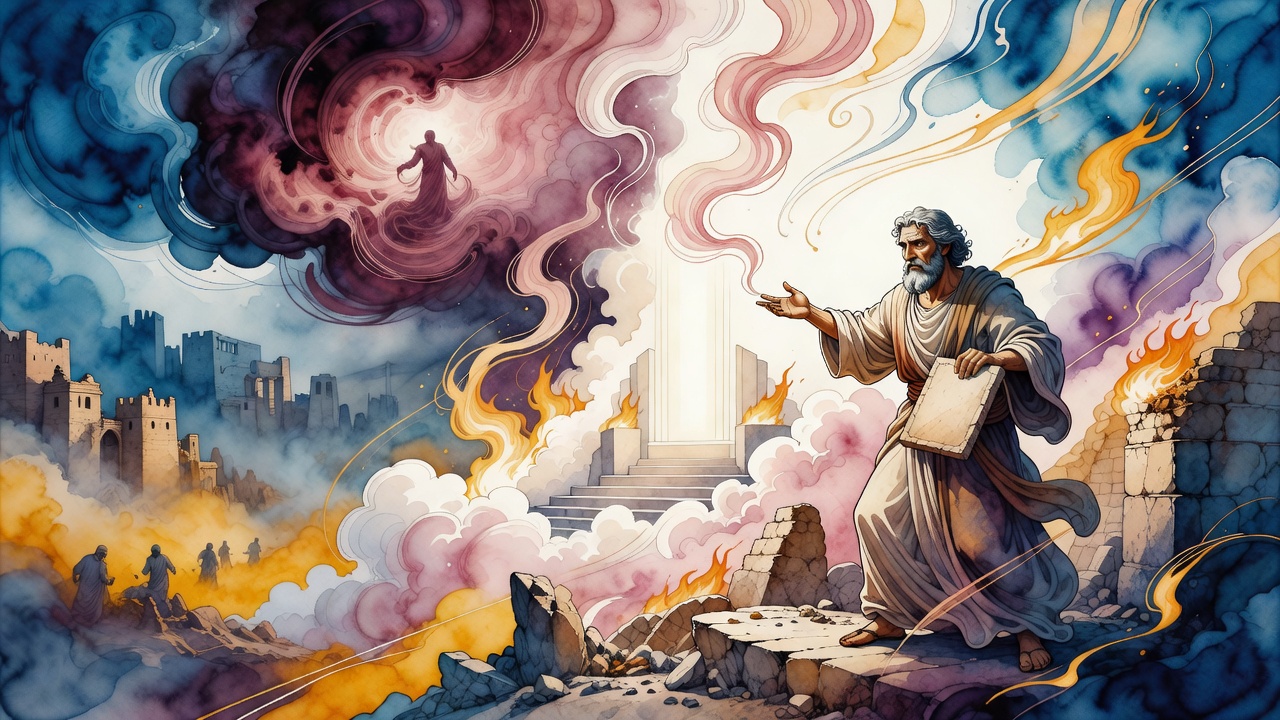
The angel clapped a hand over the mystic's eyes. Seven lightnings struck as one. David was coming, and the fourth heaven could not hold still.
Table of Contents
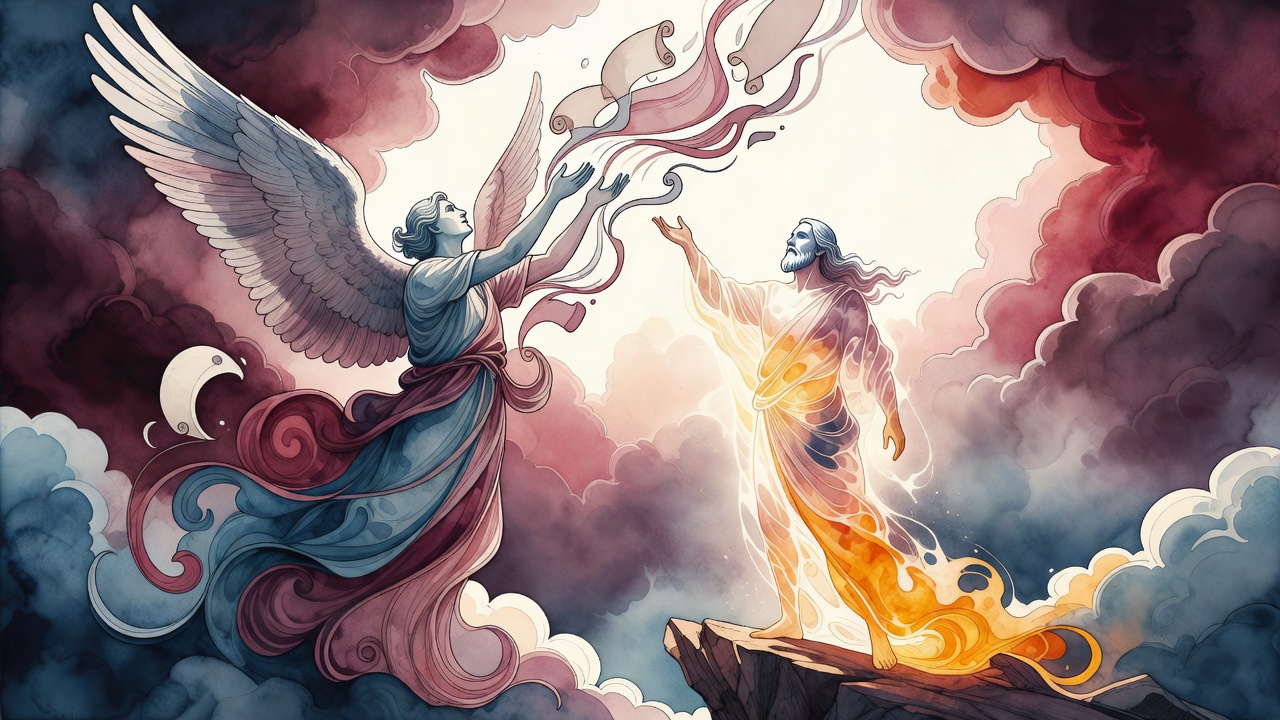
The angel pulled the mystic against his side and covered the man's eyes with his palm.
 Click for full size
"Close your eyes, son," he said, "lest you be shaken by those who go forth to meet David."
Seven lightnings struck as one. The air went white. The mystic felt the heat through his lids and did not look.
Close Your Eyes Before He Comes
They were already high, walking the palaces where snow is stored in rooms and hail waits in rooms beside it. The warning was not courtesy. It was the way a smith tells a boy to turn his face before the metal is poured.
David was not a monster at the threshold. He was the singer of Israel, the fugitive who hid in caves, the king who knew victory, sin, grief, and prayer. The fourth heaven did not receive him as mild. It became a storm of recognition.
The mystic's knees went loose. The angel's arm tightened. Footsteps were already coming, too many for one man, too bright for a court of flesh.
The Choir Sang David's Own Psalm
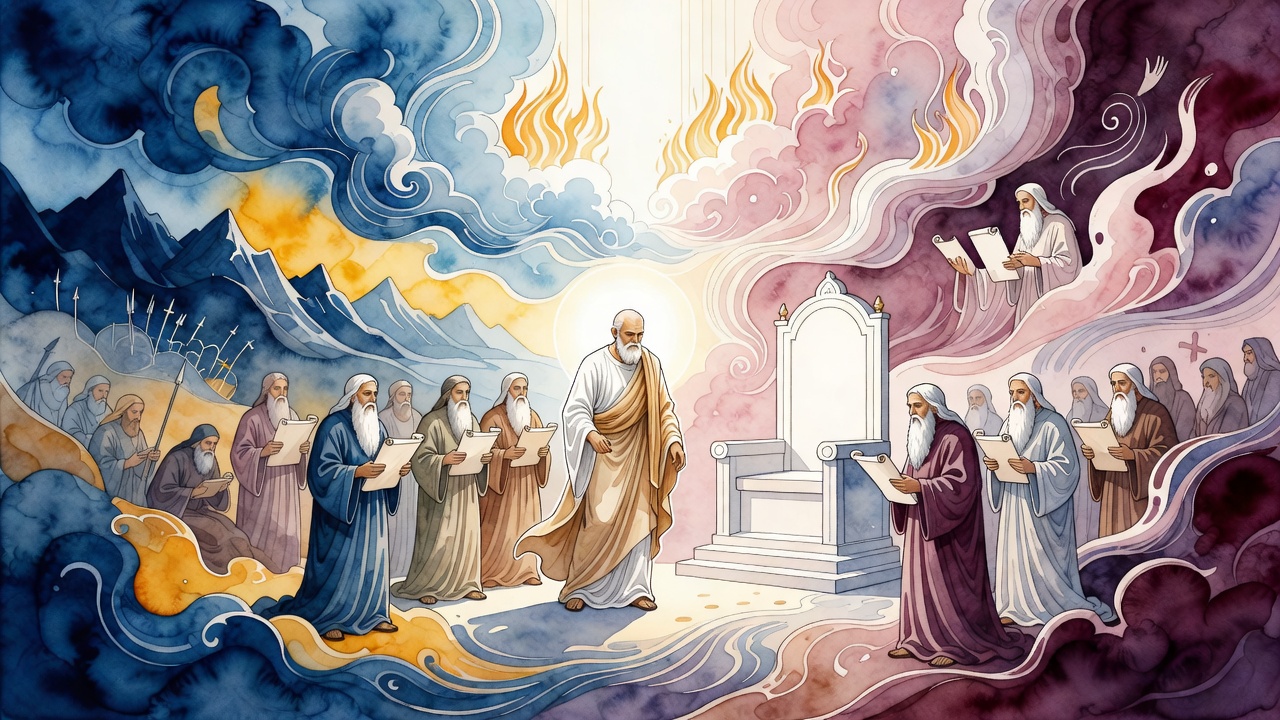
Ophanim turned on their wheels. Seraphim burned in place. The holy chayot, the living creatures, lifted their faces. Treasuries of snow opened. Treasuries of hail opened. Clouds of glory, planets, stars, ministering angels, and fiery spirits from the fourth heaven cried out together.
They did not invent a new song. They reached for David's own words. "The heavens are telling the glory of God, and the firmament declares his handiwork." (Psalm 19:2)
The angels did not welcome David by praising David. They welcomed him by singing the psalm through which David had taught creation how to praise God. The song he wrote for the world came back at him from the world's highest inhabitants, at full volume, in one voice.
Then a roar rose from Gozen, a threshold in the heights. "The Lord shall reign forever and ever!" (Exodus 15:18)
The Crown That Outshone Every King
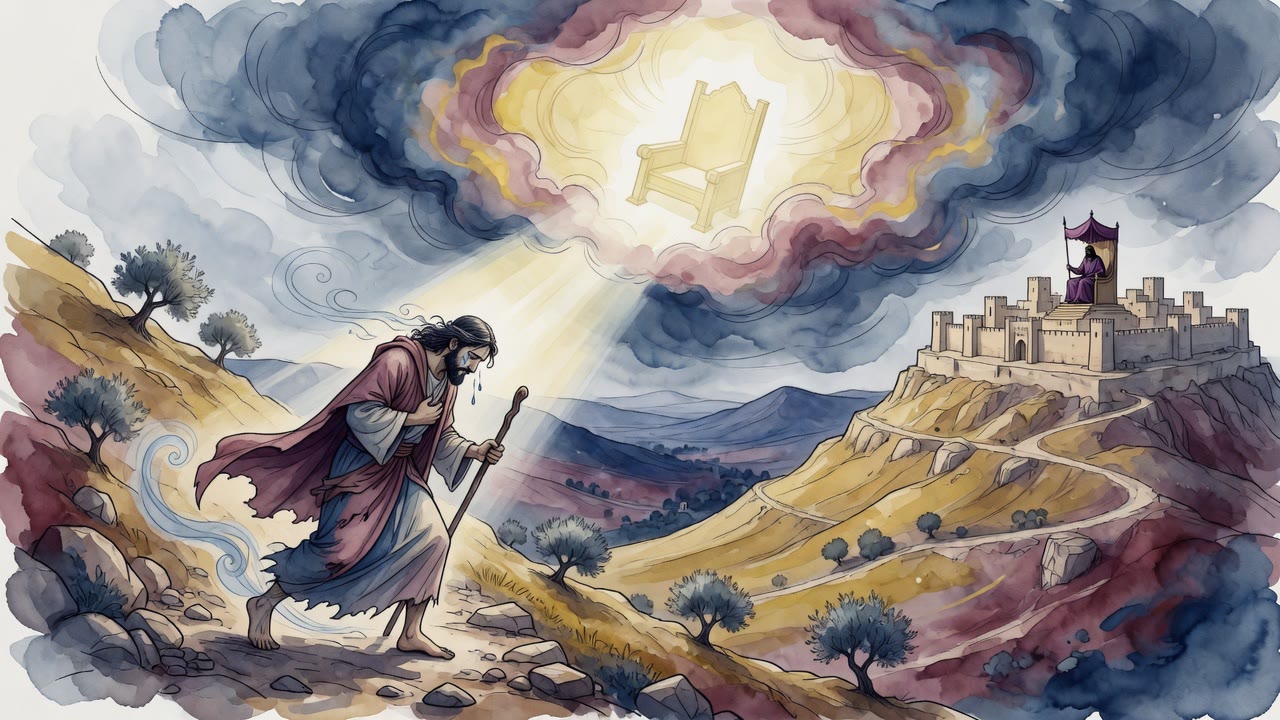
David came first among the kings of Israel and Judah. They entered in a line, each wearing a crown. David's crown was brighter than every other crown. His face shone beyond any face in that procession. The light of it ran from one end of the world to the other.
The brightness was not a prize for a clean record. Bathsheba's name still clung to him. The census still sat on the ledgers of the dead, seventy thousand. The wars still stood between him and the Temple he was not allowed to build. He arrived anyway, carrying the songs he had written in caves, in guilt, in terror, and in love.
The fourth heaven recognized the songs before it named the man. The mystic, eyes shut, heard metal and voices and a light that pressed against his lids like a hand.
Heaven Sent Warriors When He Called
On earth, long before that ascent, David had already learned that a psalm could move more than a mouth. When enemies closed on him, he wrote, and heaven answered the writing. "He sends from heaven and saves me." (Psalm 57:4)
An angel had once turned Saul aside and given David room to breathe. David took that rescue as a pattern, not an accident. When he asked that the angel of the Lord pursue those who pursued him, he was not decorating a verse. He was calling a warrior by name. When he asked that destruction come on an enemy unawares, something in the heights took the request and went.
The man who fought Goliath with a stone and a sling fought later enemies with music as well. The stone could reach a forehead. The music could reach a court David could not see.
The Enemies Turned Their Backs
The enemies did retreat. Some turned to shame, back into the disgrace they had worn before they hunted him. Some turned their backs, the way a man turns when an angel has stepped between him and his prey. Some would wait for garments prepared for them in a later world, payment stitched to the deeds they had done.
Nations would someday plead before their own gods and find those gods silent. They would call on the Lord too late, and the heavens that had once moved for David's psalms would not answer a cry that came only after every other refuge had failed.
David stood in the fourth heaven with that history already in his mouth. The choir was still singing his psalm. The mystic kept his eyes shut against the seven lightnings. A king was passing. An army was passing with him, not of spears only, of voices that had once been prayers and had become weapons.
The palm stayed over the mystic's eyes until David had gone by.
← All myths