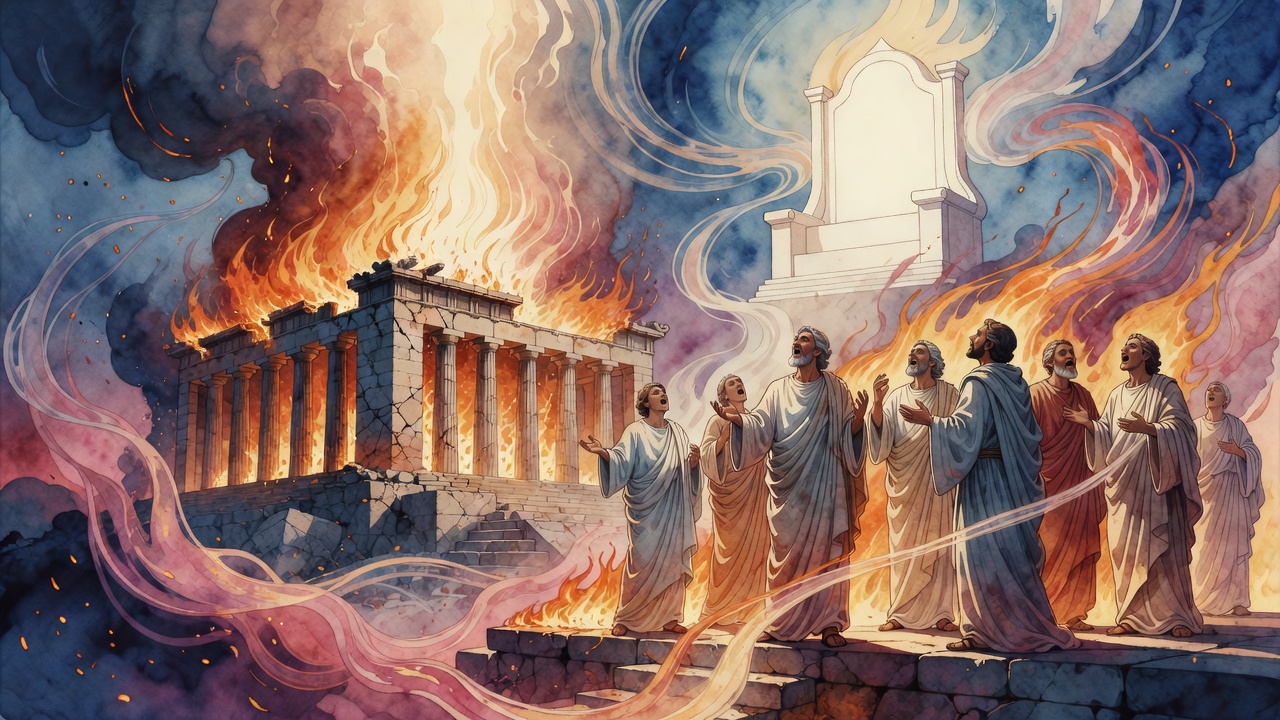
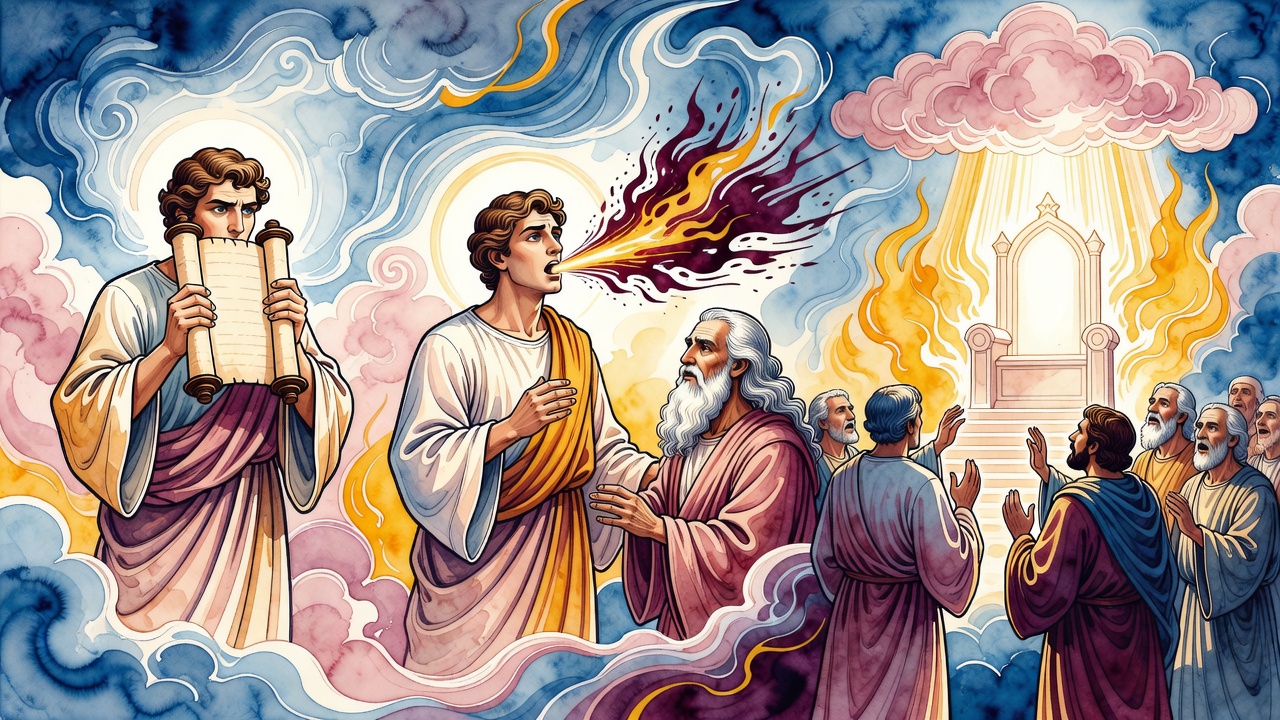
David Refused Anger on the Road to the Throne
Doeg uses his tongue to destroy a city of priests, but David, trained as a shepherd, guards Torah and refuses to act in anger.
Table of Contents
 Click for full size
Doeg Opened His Mouth at Nob
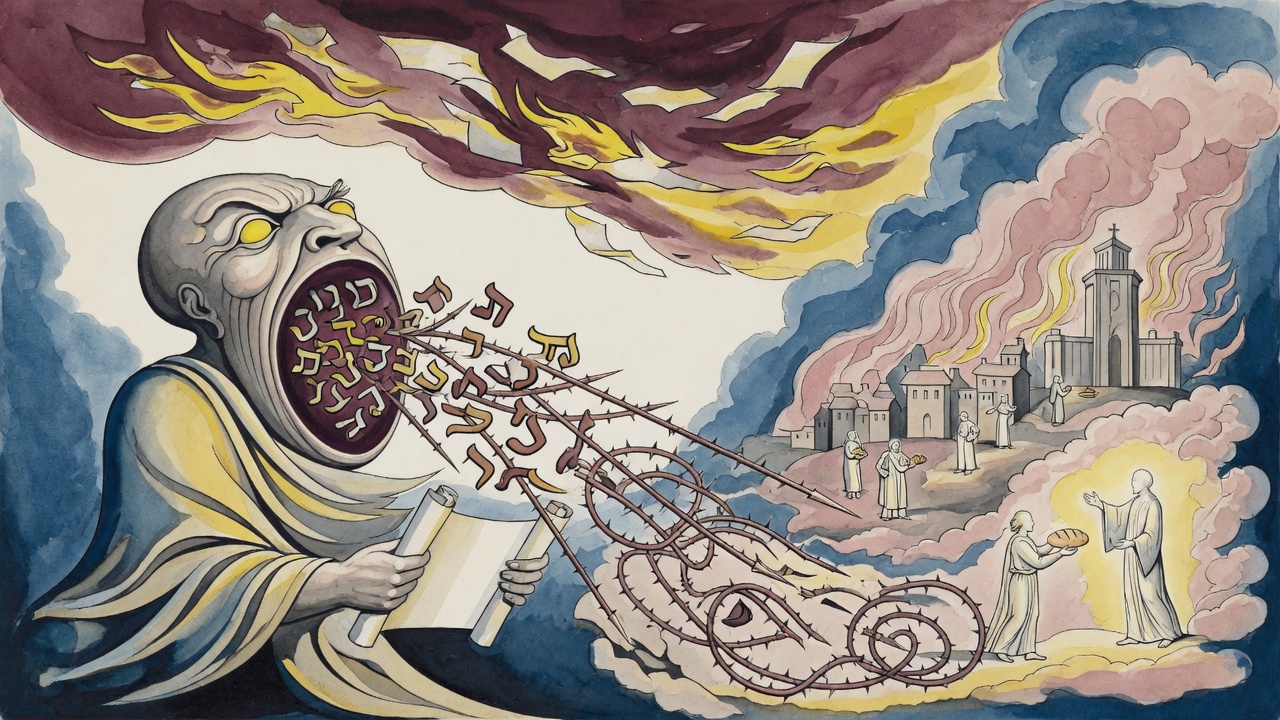
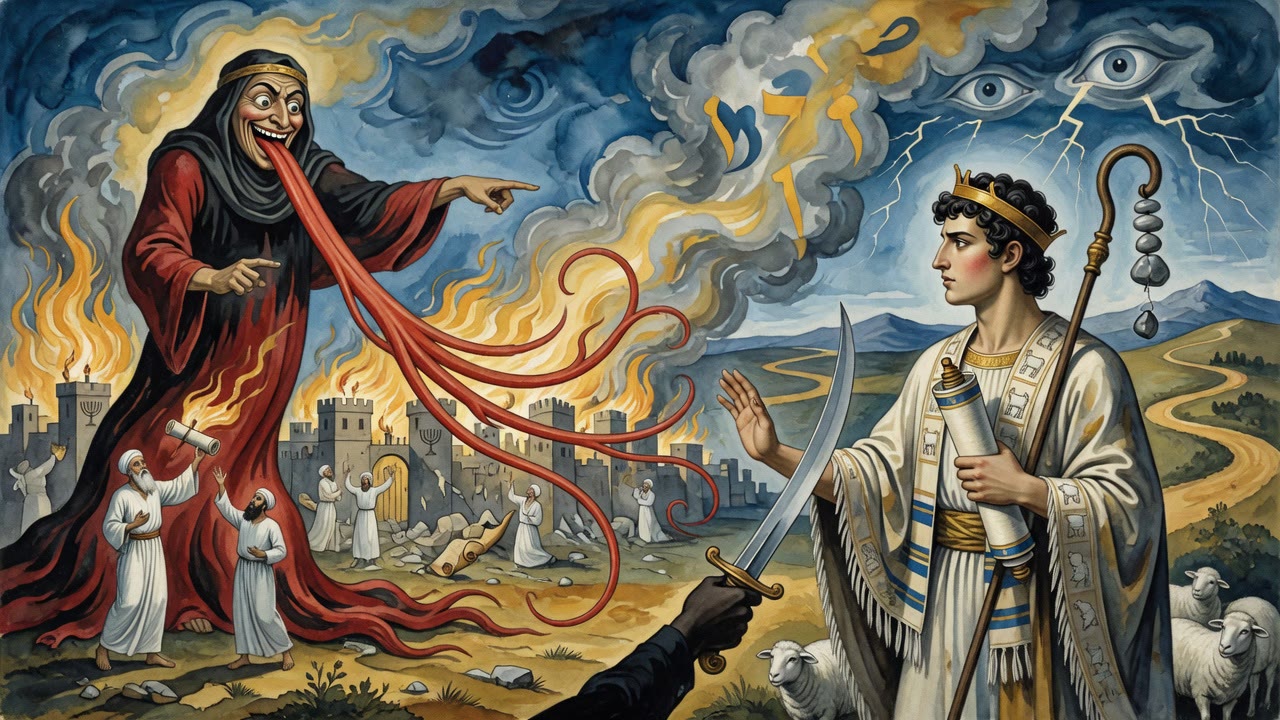
Doeg the Edomite had witnessed something he could use. David, fleeing Saul, had come to Nob hungry and unarmed. Ahimelech the priest gave him bread and the sword of Goliath, asking no hard questions, because David arrived looking like a man on royal business. That kindness cost every priest in the city their life.
Doeg went straight to Saul. He was precise about what he had seen, careful not to omit the kind of detail that makes a frightened king hear treason in generosity. The priests of Nob had fed David. They had armed him. Saul heard conspiracy and ordered blood.
The Tongue That Emptied a City
His own guards refused. They would not lift a hand against the priests of God. They stood with the king's command ringing in their ears and let their arms hang at their sides, choosing silence over the linen ephod's blood. Doeg had no such hesitation. He struck down eighty-five men who wore the linen ephod, moving through them the way he had moved through his own report, without pause and without doubt. Then he turned to the city itself, destroying it along with every living thing inside it. The houses that had stood when David passed through were emptied of breath. He used his tongue once, in Saul's court, and the killing followed from that single moment of well-chosen words.
The rabbis remembered what Doeg had proved: the most dangerous weapon a person carries is not in their hand. It rests behind the teeth, costs nothing to draw, and a man can wield it without ever raising his voice above the calm of an eyewitness giving testimony.
The Shepherd Who Fed the Weakest First
David's road to the throne ran through pastures before it ran through palaces. He had learned something there that no court could teach.
When David tended Jesse's flocks, he did not treat his animals as a single undifferentiated mass. He watched how they ate. The newborn lambs were too small and too slow to compete at the trough, pushed back from the grass by older bodies that did not mean them harm and crushed them anyway. David fed them first, parting the flock with his hands, drawing the tenderest grass to the smallest mouths. Then he brought the older animals. Then the young adults, who could manage the tougher stalks. Every creature was matched to what it could actually consume, and not one was left to go hungry because another was stronger.
God watched that. When Samuel came to anoint one of Jesse's sons, God said to him: the one who knows how to tend each creature according to its need, let him tend my people Israel. Kingship was not given because David was the tallest or the most impressive in a lineup. It was given because he had already shown, in an ordinary field with ordinary animals, how a leader feeds the weak without crushing them under the strong.
That lesson shaped everything that came after. David had seen Doeg destroy. He had seen Saul consume his own court with fear. He understood that strength unguarded by restraint becomes the thing it fights against.
Torah Guarded the Anger Down
The rabbis noticed something in the Psalms that David left behind: a man who had survived betrayal, exile, false accusation, and armed enemies still did not become a person ruled by rage.
Walking in Torah, they said, means not even acting in anger. The person who guards the commandments guards their own soul in the same motion. These are not separate disciplines. When someone holds Torah close, the anger that would otherwise erupt in the wrong moment finds nowhere to take root.
David had watched what anger with power could do. Saul had it and used it against the innocent. Doeg had it and used it against the defenseless. The wilderness years, the years of running, the years of having every reason to become a harder and more ruthless man, became instead the years in which David learned that restraint is its own kind of weapon and the only one that does not eventually destroy the person holding it.
He arrived at the throne not intact despite his suffering but deepened by it. The shepherd who fed lambs first had become a king who knew the difference between strength and damage.
← All myths