5 min read

At Thirteen the Holy Soul Put On His Body

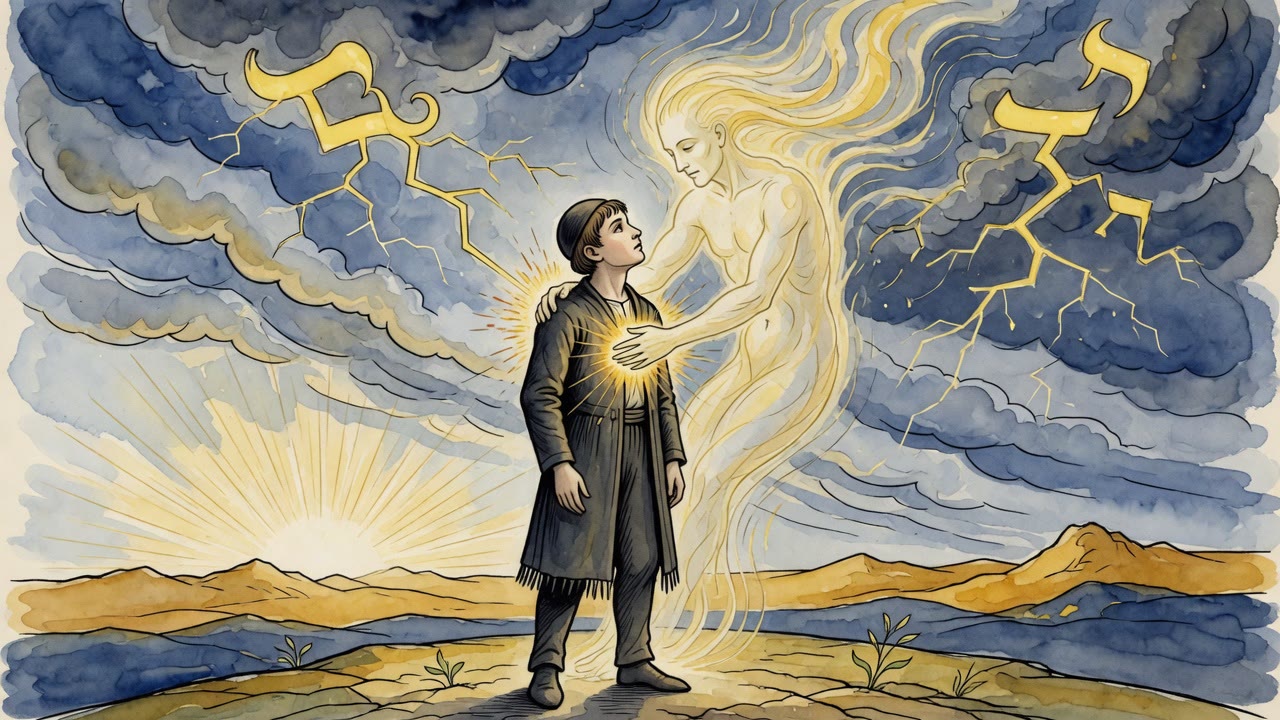
On the morning he turned thirteen, a boy felt a second weight settle into his chest. The desire to give had begun to dress itself in skin.

Curated by Arthur · Told by Maggid ·
Table of Contents
  1. The Morning the Mirror Changed
  2. From Taking to Giving
  3. What the Philosophers Got Wrong
  4. The Long Dressing
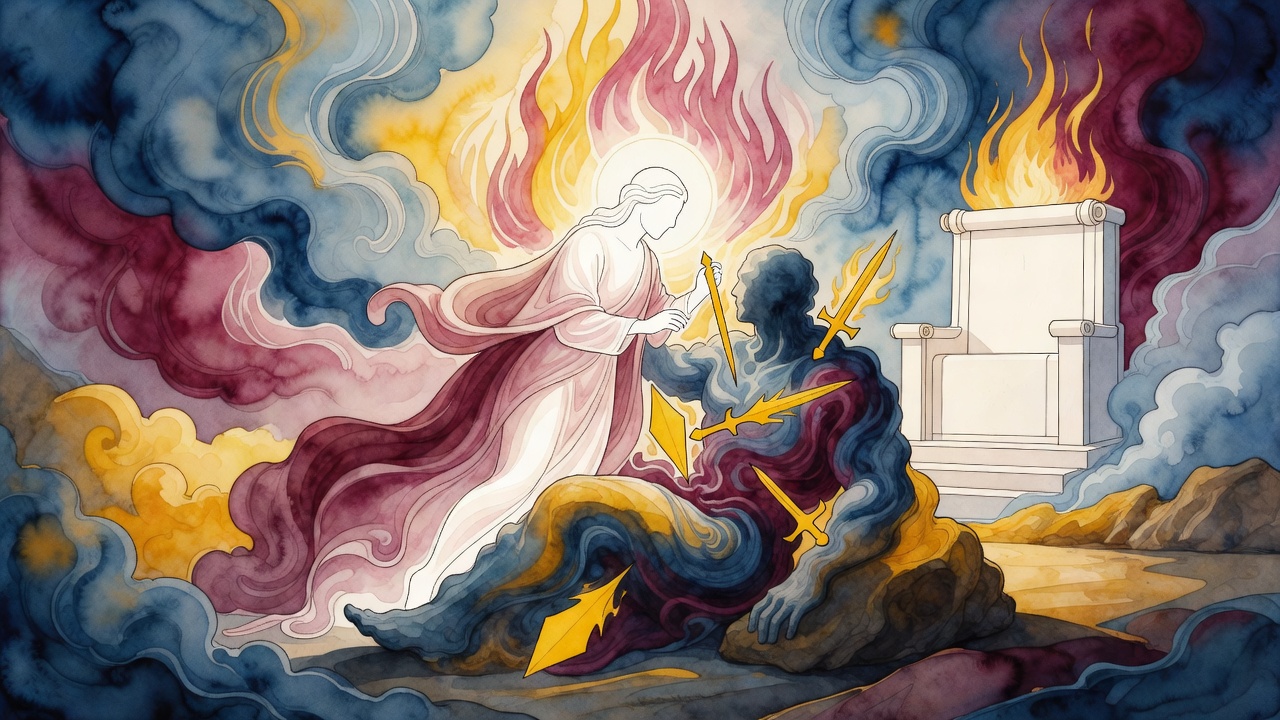
At Thirteen the Holy Soul Put On His Body Click for full size

The Morning the Mirror Changed

Yosef stood before the small glass in his father's house and expected to see only a taller child. He saw a stranger with his own freckles. Something had arrived that sleep could not explain. Not a voice. A weight behind the breastbone, warm, alert, as if a guest had taken a chair inside him and would not leave.

It was the day after his thirteenth birthday. The community would call him to the Torah that Shabbat. His mother had already laid out a clean shirt. His father had already practiced the blessings under his breath in the yard. Yosef touched his ribs and whispered, "Who is here?" The weight did not answer with words. It answered by making the ordinary room look slightly more real, the dust more particular, the light on the table more demanding.

He walked outside. The street noise had edges. A cart wheel squeaked and he felt responsible for hearing it fully. Thirteen is a number until it becomes a courtroom. He had entered the courtroom without leaving home.

From Taking to Giving

Until then his life had been mostly receive. Bread handed over. Lessons poured in. Protection arranged by others. The imprint of a selfish desire to receive is not a crime in a child. It is how a body learns it exists. After thirteen, the sources say, mitzvot (commandments) performed to give satisfaction to his Maker begin purifying that imprint. The desire to receive starts turning, slowly, into a desire to give.

Yosef's first real test came before the synagogue. A younger cousin dropped a basket of figs in the alley. The old Yosef would have laughed and walked on. The new weight leaned forward. He knelt. He gathered sticky fruit while flies complained. When the cousin said thanks, something in Yosef's chest lit as if a wick had caught. Not pride. Alignment. He wiped his hands on his trousers and felt taller from the knees up.

That light, the teachers later told him, was the holy soul being drawn from its root in the plan of creation, traveling the system of sanctified worlds, clothing itself in a body that had just become responsible. Age thirteen is not magic because of a number. It is a gate because intention can now stand trial. He began to notice when he performed a mitzvah for show and when he performed it to give satisfaction upward. The difference tasted like metal versus bread.

What the Philosophers Got Wrong

A visiting merchant's son, trained by Greek tutors, mocked him. "Your soul is only what you know. Learn more, live forever. Stay ignorant, dissolve." Yosef had no treatise ready. He had the weight. He had the figs. He said, "If my soul were only lessons, I would be empty when I forget a verse. I am not empty when I forget."

The soul's essence, in this map, is not intellectual stockpiling. It is the desire to give that flowed from the four sacred worlds. Knowledge is a reward, not the fuel. Eternity does not hang on how many books a boy can recite. It hangs on a form equal to the Life-Force that gives without running dry. The merchant's son shrugged and went to recite poetry for applause. Yosef went to help his mother carry water and felt the guest approve without flattery.

Still Yosef studied. Hard. Not to purchase forever. To give the new guest words and tools. On the Shabbat of his call-up he read with a shaking voice and felt the guest steady the page. The congregation said amen. His father cried without sound. Outside, after the kiddush wine, Yosef gave his portion of cake to a boy who had none and felt the wick catch again. His mother saw and said nothing. Some silences are crowns.

The Long Dressing

The clothing of the soul is not a single morning. Years later, as a man, Yosef still caught himself grabbing credit, hoarding a secret, taking the larger share of a quiet joy. Each time the weight pressed. Each repair drew more of the holy soul into the limbs. The desire to receive did not vanish. It learned to serve a different master. He married. He failed. He repaired. The guest became less a visitor and more the shape of his days.

He taught his own son, years on, with a blunt line. "Thirteen is when heaven starts taking a person seriously as a partner, not as cargo. The soul does not wait for you to become wise. It waits for you to start giving on purpose." The boy looked unconvinced until he, too, turned thirteen and woke with a stranger in the mirror and a sudden need to return a borrowed knife cleaned better than he found it.

On Yosef's last day he did not fear the loss of his library. He feared only whether the desire to give had become permanent enough to stand without the body. The guest that had entered at thirteen rose as if it had always known the way home. The body, with its blemishes and hunger, would wait for another teaching about resurrection. The soul's blood had been giving all along. His last clear word to his son was not a verse. It was, "Give first." Then the room held only ordinary air, and the air was enough.


← All myths
From the tradition

Sources

3 sources

The texts behind this telling. Some cards carry a translation of the source; others are our own retelling of it, and each card says which. Every card links out to the original.

Baal HaSulam's Introduction to Zohar 11:2Baal HaSulam's Introduction to Zohar

Retold in our words. Read the original at the link below.Sefaria-hosted English translation · CC-BY

In his introduction to the Zohar, he outlines a fascinating process of spiritual development that starts surprisingly young.

He says that from the age of thirteen – the age of Bar or Bat Mitzvah, the age of religious maturity – something remarkable begins to happen. Our performance of mitzvot (commandments, good deeds) – when done with the intention to bring joy or satisfaction to the Creator – starts to actively purify the self-centered desire to receive that's been embedded in us since birth. We’re born with a natural inclination to look out for number one. It's our survival instinct. But Baal HaSulam is suggesting that through conscious acts of giving, through performing mitzvot with the right intention, we can actually begin to transform that core desire.

How does that work? Well, the mitzvot gradually turn that selfish desire into a desire to give, to share, to connect. It's not an overnight switch,. It's a process, a slow and steady transformation.

Here's where it gets really interesting. This process of transformation, according to Baal HaSulam, gradually draws down (mamshikh) the holy soul from its roots in the grand design of creation. The soul, in this context, isn't just some ethereal concept. It’s a spark of the divine, a potential for goodness and connection that resides within each of us.

This soul, he says, then traverses the entire system of sanctified worlds – a concept that could take lifetimes to unpack, but for now, think of it as the spiritual dimensions above our own – before becoming enclothed in the body. It becomes integrated into our very being. And that is the time of repair, the tikkun (spiritual repair).

Tikkun, of course, is that powerful concept of repairing the world, making it whole. And Baal HaSulam is suggesting that our individual journey of spiritual growth is intimately connected to this cosmic process of repair.

So, what does this all mean for us, practically speaking? It means that every act of kindness, every conscious effort to give rather than receive, every time we choose compassion over self-interest, we're not just being "good people." We're actively participating in a profound process of spiritual transformation, drawing closer to our own souls and contributing to the healing of the world. It all starts with intention, with recognizing the power we have to reshape our desires and connect to something greater than ourselves. And that, my friends, is a truly empowering idea.

Full source
Baal HaSulam's Introduction to Zohar 21:1Baal HaSulam's Introduction to Zohar

Retold in our words. Read the original at the link below.Sefaria-hosted English translation · CC-BY

Baal HaSulam's Introduction to Zohar turns to The Desire to Give Is the Soul's Lifeblood.

You might have heard some philosophers argue that the soul is all about intellect, that it grows only through knowledge, and that its eternity depends solely on how much it learns. The more you know, the more "soul" you get, so to speak. And if you don't learn enough? Well, according to that line of thinking, nothing remains after death.

Baal HaSulam urges us to not give those ideas too much weight. He’s pretty clear: that's just not the Torah's view. And, frankly, our own intuition tells us otherwise. Anyone who’s ever learned anything knows that knowledge is something you acquire – it's external. It's not inherently you. It’s not the core of your being, the very essence of the one doing the learning. Knowledge is a tool, not the architect. The soul, according to this perspective, is something deeper, something more fundamental than just a collection of facts and figures.

So, what does it all mean? If the soul isn't just about what we know, but about our inherent desire to give, how does that change the way we live? How does it change the way we see ourselves, and our place in the world? Maybe focusing less on accumulating knowledge and more on cultivating that inner spark of giving is the key to unlocking the soul’s true potential, and its eternal nature. Just something to think about.

Full source
Baal HaSulam's Introduction to Zohar 25:1Baal HaSulam's Introduction to Zohar

Retold in our words. Read the original at the link below.Sefaria-hosted English translation · CC-BY

One of the most fascinating concepts is the eternality of the soul. Now, some philosophers thought that maybe it’s all about knowledge, that the more you learn, the more eternal your soul becomes. But Baal HaSulam, in his introduction to the Zohar, that foundational text of Jewish mysticism, offers a different perspective. He says that the eternality of the soul isn't about how much we know, but about its very nature. What is the essence of a soul? According to Baal HaSulam, it's the inherent desire to give. That's powerful. It's not about hoarding knowledge or accumulating achievements. It's about that fundamental drive to connect, to share, to contribute. Knowledge, he says, is a reward for the soul, not its core.

That brings us to another mind-bending question: the resurrection of the dead, or Techiyat HaMetim. We know the body is imperfect. I mean, it's temporary. Baal HaSulam even explains that the soul can’t fully purify itself until the body decomposes. So why bring it back?

It seems kind of counterintuitive.

The sages tell us that the dead will be resurrected with their blemishes. Yeah, you heard that right! But there's a reason for it. It’s so that people can recognize them. So no one can say, "Hey, that's not the same person."

But, there’s something deeper going on here. The resurrection isn’t just about physical recognition. It touches on the idea of wholeness. Even with imperfections, even with the marks of our earthly journey, we are still fundamentally ourselves. The body, despite its limitations, played a crucial role in the soul's journey. Maybe the resurrection is about bringing all those elements back together, the soul and the body, in a renewed state of being.

And maybe, just maybe, that's a crucial part of what carries on, eternally.

Full source