5 min read

The Husks Fed Upon Light They Did Not Own

Every time he grabbed pleasure without a blessing, something dark at the edge of the room grew thicker. The husks were eating light that had been meant for him.

Curated by Arthur · Told by Maggid ·
Table of Contents
  1. The Shadow at the Edge of the Meal
  2. How Holiness Can Feed What Opposes It
  3. The Inanimate Light That Would Not Move Alone
  4. Climbing Until the Husk Loses the Scent
The Husks Fed Upon Light They Did Not Own Click for full size

The Shadow at the Edge of the Meal

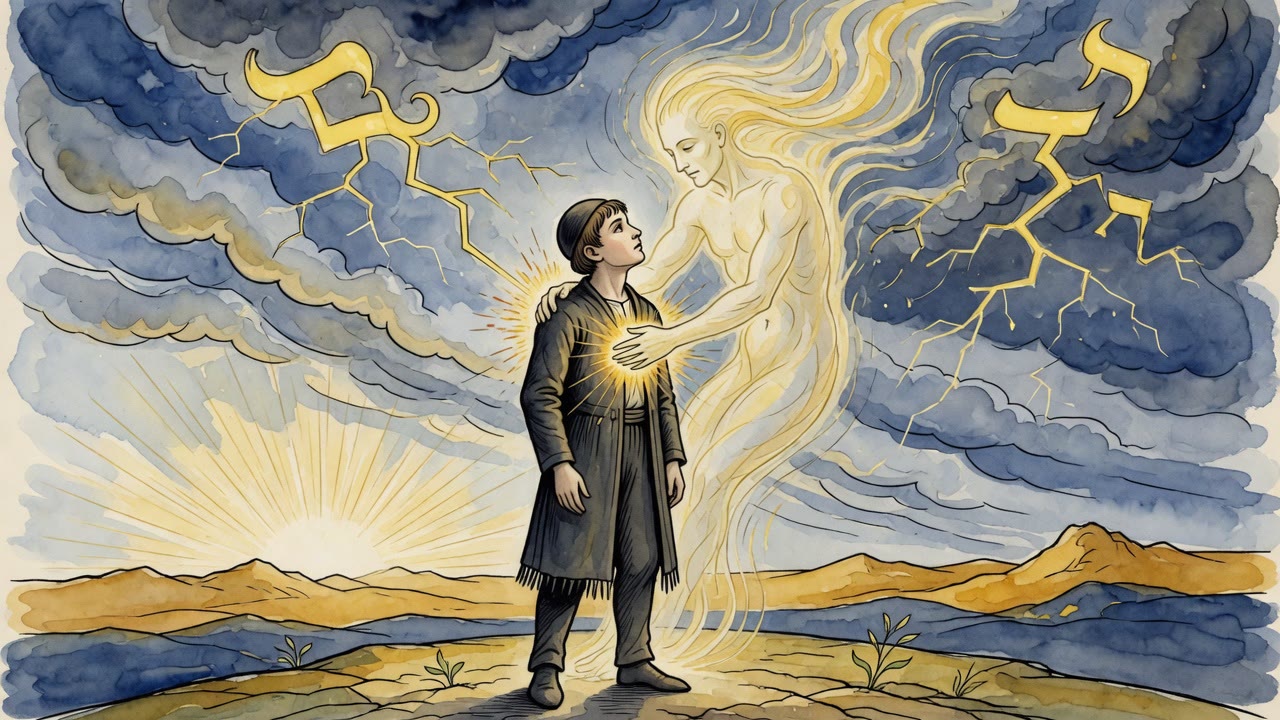
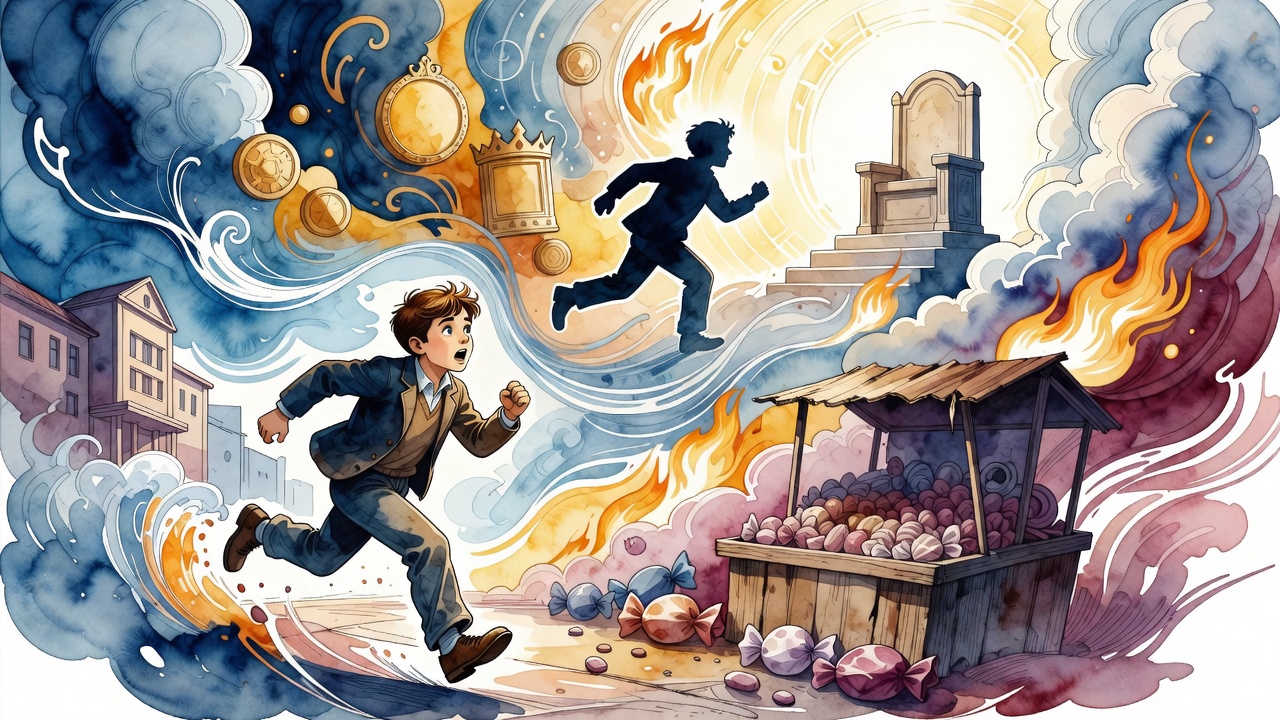
Dov reached for the last piece of meat before the blessing had settled in the air. The taste was fine. The room dimmed by a degree only he could feel. In the corner, where the lamp did not fully reach, a thickness gathered like smoke that had learned to sit in a chair.
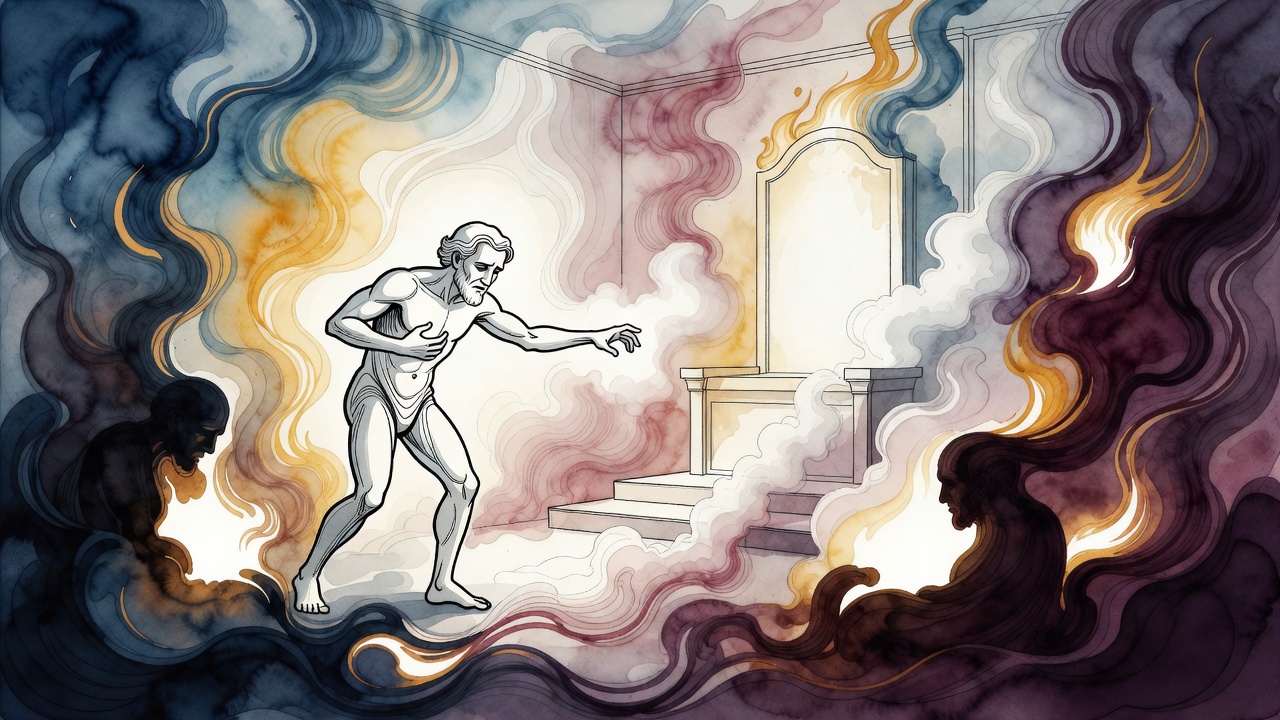
He blinked. The thickness smiled without a mouth. It was not a foreign demon with a borrowed name. It was a kelipah (קליפה), a husk, part of the system of impurity that lives off spilled light. Dov had been feeding it for years with grabs, rushes, and pleasures taken without a face turned toward heaven.

He wiped his hands and said the blessing late. The thickness thinned but did not leave. Late light is still light. It is also a poorer meal for a soul and a richer one for a husk that prefers waste. His wife asked why he stared at the corner. "Dust," he said. She did not believe him and cleaned the corner anyway. The thickness enjoyed the joke.

How Holiness Can Feed What Opposes It

The hard question is not whether evil exists. The hard question is how a chariot of impurity can emerge from the sanctity of God and still be maintained. If all force flows from the Holy One, what keeps the husks alive?

Dov learned the answer in his own belly. The desire to receive, unrefined, creates a change of form. Light enters a vessel bent only toward taking. Some of that light fails to become service and becomes residue. Residue is what the husks are built to drink. God does not need to plant a second god of darkness. Concealment and misaimed receiving are enough to grow a shadow-economy of sparks.

At night Dov dreamed of a chariot with no mercy in its wheels, rolling through rooms where people ate standing, counted money on the table during prayer, and spoke kindness as a tactic. The chariot grew larger on their leftovers. He woke sick and newly exact. He began to watch his hands before they moved toward pleasure, as if his hands belonged to a man on trial.

The Inanimate Light That Would Not Move Alone

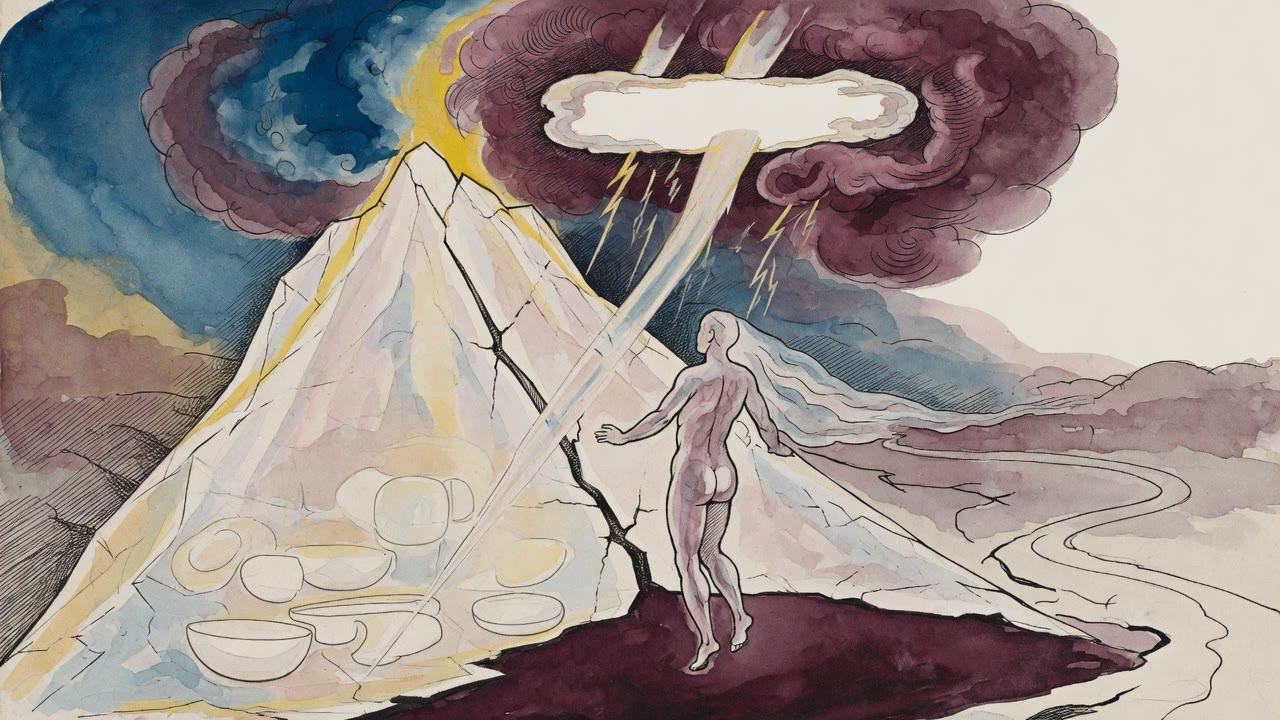
A teacher told him of the light of the soul called domem dekedusha, the holy inanimate in the world of Asiyah. It does not dance in separate sparks at first. It surrounds a person as a general brightness, purifying the densest layer of the desire to receive, the part that sits like stone and will not move unless a larger motion moves it.

Dov began with stone work. Fixed times. Fixed blessings. Fixed refusal of the late grab. For weeks nothing felt mystical. Then one morning the corner of the room stayed empty after breakfast. The thickness had gone looking for an easier house. Dov almost invited it back with a victory snack taken standing over the pot. He caught himself, sat, blessed, and ate like a person under a roof of intention.

He did not celebrate with cake. Celebration without aim can call a husk home. He gave the cake to a neighbor and felt the general light thicken around him in a clean way, like good air after rain. The neighbor asked what festival it was. "Tuesday," Dov said, and meant it as theology.

Climbing Until the Husk Loses the Scent

As he purified the plant layer of desire, the maps say a person can rise toward Yetzirah (the world of formation) and the level of Ruach, even tasting higher lights temporarily before the animal and human layers are finished. Dov tasted that height once in prayer, a clarity that made ordinary speech feel like wet cloth. He came down. The work continued. Temporary height without permanent repair is a loan, not a deed.

The husks still prowled the market. They always will in a world that runs on concealment. But they lost his private scent. When he failed, and he did fail, he repaired the same day. Waste light became rare. The chariot of impurity rolled past his door without slowing. Once he saw it pause at a house three doors down where a man mocked the blessing. Dov said nothing and felt the old hunger to intervene with pride. He intervened with bread instead, left on the stoop without a speech.

On his deathbed he saw the corner one last time. Empty. He smiled with cracked lips. "I still wanted," he told his son. "I learned to want toward giving. That is what starved them." The son did not fully understand. He would, the first time he reached for a pleasure and felt the room dim. Dov's last instruction was practical. "Bless first. Then the corner stays a corner."


← All myths

From the tradition

Sources

3 sources

The texts behind this telling. Some cards carry a translation of the source; others are our own retelling of it, and each card says which. Every card links out to the original.

Baal HaSulam's Introduction to Zohar 10:1Baal HaSulam's Introduction to Zohar

Retold in our words. Read the original at the link below.Sefaria-hosted English translation · CC-BY

He frames the question like this: How can the “system [lit. chariot] of impurity and the husks” – the kelipot (more on that in a bit) – emerge from the very sanctity of God? How can God, of all things, maintain and nourish them? The Zohar, a foundational text of Kabbalah, is all about revealing the hidden dimensions of reality, the secrets of the divine. It paints a picture of a universe overflowing with God’s presence. So, where does impurity, where does evil, fit into all of that?

The key here is understanding this concept of kelipot (קְלִיפּוֹת). The word literally means "husks" or "shells." Imagine a fruit. The fruit itself is delicious, nourishing. The husk, on the other hand, protects the fruit, but it's also a barrier. It’s… separate. In Kabbalistic thought, kelipot are the layers that conceal the divine light, preventing it from reaching us in its pure form. They are, in a way, the "shadows" cast by God's infinite light.

So, back to the original question. How can these "husks," these barriers to divine light, come from God? It seems paradoxical. That's precisely what Baal HaSulam sets out to explain in his commentary. He's trying to unravel this mystery, to show us how even the existence of evil, or at least the appearance of evil, serves a higher purpose within the grand cosmic scheme.

It's a tough question, and there are no easy answers. But by delving into the teachings of the Zohar and the wisdom of Baal HaSulam, we can begin to glimpse a deeper understanding of the intricate, often perplexing, nature of reality itself. We can start to understand how even the darkness plays a role in revealing the light.

Full source
Baal HaSulam's Introduction to Zohar 45:1Baal HaSulam's Introduction to Zohar

Retold in our words. Read the original at the link below.Sefaria-hosted English translation · CC-BY

Baal HaSulam reads domem dekedusha, the holy inanimate level, as the first pressure placed on the soul's desire to receive.

Domem dekedusha – literally, "the light of the holy inanimate." What does that even mean? Baal HaSulam explains that this light belongs to the world of Asiya. Now, in Kabbalah, Asiya is the world of action, the lowest of the four spiritual worlds.

So, what's the purpose of this "holy inanimate" light? Purification. Specifically, it aims to purify the most basic, unrefined part of ourselves – the "inanimate part of the desire to receive" that resides within our bodies. We all have a desire to receive, to take in, to be filled. But sometimes, that desire can be selfish, disconnected from a higher purpose. Domem dekedusha comes in to refine it, to elevate it, to connect it to the divine.

Think of it like this: a rock, seemingly inert, can be sculpted into a beautiful work of art. The light of domem dekedusha is the sculptor, working on the "rock" of our unrefined desires.

And how does this light work? Baal HaSulam tells us it enlightens spiritually, paralleling the inanimate aspect in the physical world. He points back to something he explained earlier, in chapter 35. There, he described how the inanimate realm doesn't move on its own. Instead, a general, overarching motion motivates all its individual parts as a unified whole.

This is key. The light of the soul from the Partzuf (divine persona) of Asiya, even with its 613 limbs (representing the 613 ways we can receive influence), doesn't show individual changes. Instead, it appears as a unified light surrounding everything, without differentiating the details. Imagine a gentle, pervasive glow, rather than a spotlight on individual actions.

It's a holistic approach. It's about the overall movement towards holiness, the general direction of our being. It's not about dissecting every single action, but about aligning ourselves with that greater, unified light. The light permeates everything, working on the deepest levels, even when we don't consciously perceive it.

So, next time you feel that subtle pull, that quiet prompting towards something more, remember the light of domem dekedusha. Remember the "holy inanimate," working silently, patiently, to purify and elevate your desire to receive, guiding you towards a more connected, more meaningful existence. It's a reminder that even in our most seemingly "inanimate" moments, we are still part of a greater, divine motion.

Full source
Baal HaSulam's Introduction to Zohar 52:1Baal HaSulam's Introduction to Zohar

Retold in our words. Read the original at the link below.Sefaria-hosted English translation · CC-BY

In his "Introduction to the Zohar," he lays out a fascinating map of spiritual ascent. And it’s a journey worth taking.

First, a little Kabbalistic housekeeping. Now, Baal HaSulam breaks down this desire into different "parts" – animal, human, and plant. Each represents a different level of selfishness, with "plant" being the subtlest.

So what happens when we manage to permanently purify that "plant" part of ourselves?

Baal HaSulam tells us that we can then ascend to the world of Yetzira. Now, Yetzira (Formation) is one of the four spiritual worlds in Kabbalah, each a step closer to the Divine. And when we reach Yetzira, we acquire the level of Ruach (spirit). The Ruach, in Kabbalistic terms, is like our spiritual soul, our spirit.

And it doesn't stop there. In Yetzira, we can also receive the lights of Neshama and Ḥaya from the Sefirot (the divine emanations) of Bina and Ḥokhma. Whew, that's a mouthful! Okay, let's break it down. Neshama (Soul) and Ḥaya (Life Force) are even higher levels of soul. And Bina (Understanding) and Ḥokhma (Wisdom) are two of the ten Sefirot, the emanations of God’s light. So, we’re talking about receiving profound spiritual insights and vitality.

According to Baal HaSulam, we can even access these higher lights – Neshama and Ḥayabefore we’ve completely purified the "animal" and "human" aspects of our desire to receive. It's like getting a sneak peek of what's to come. But here's the catch: it's only temporary. A taste, if you will, to inspire further purification.

The real transformation happens when we’ve truly and permanently purified that "plant" aspect. At that point, Baal HaSulam says, we achieve an "equation of form" with the entire world of Yetzira at its highest level. In other words, we become aligned with the spiritual forces of creation. We resonate with the very fabric of reality.

So, what does it all mean? It suggests that even small acts of selflessness, of purifying our intentions, can have profound spiritual consequences. It's a journey of constant refinement, of shedding the layers of ego and embracing a more expansive, loving consciousness. And who knows? Maybe that world of Yetzira is closer than we think.

Full source