2 min read

Extra Soul That Arrives Before Candle Light

Friday dusk thickens and a second soul settles without adding bones. Above, Zeir Anpin matures as Shabbat light completes what weekdays could not hold.

Curated by Arthur · Told by Maggid ·
Table of Contents
  1. What the Extra Soul Does Not Do
  2. Above, a Face Keeps Shabbat
  3. How Upper Becomes Inner Soul of Lower
  4. When Malchut Is Ready for Delight

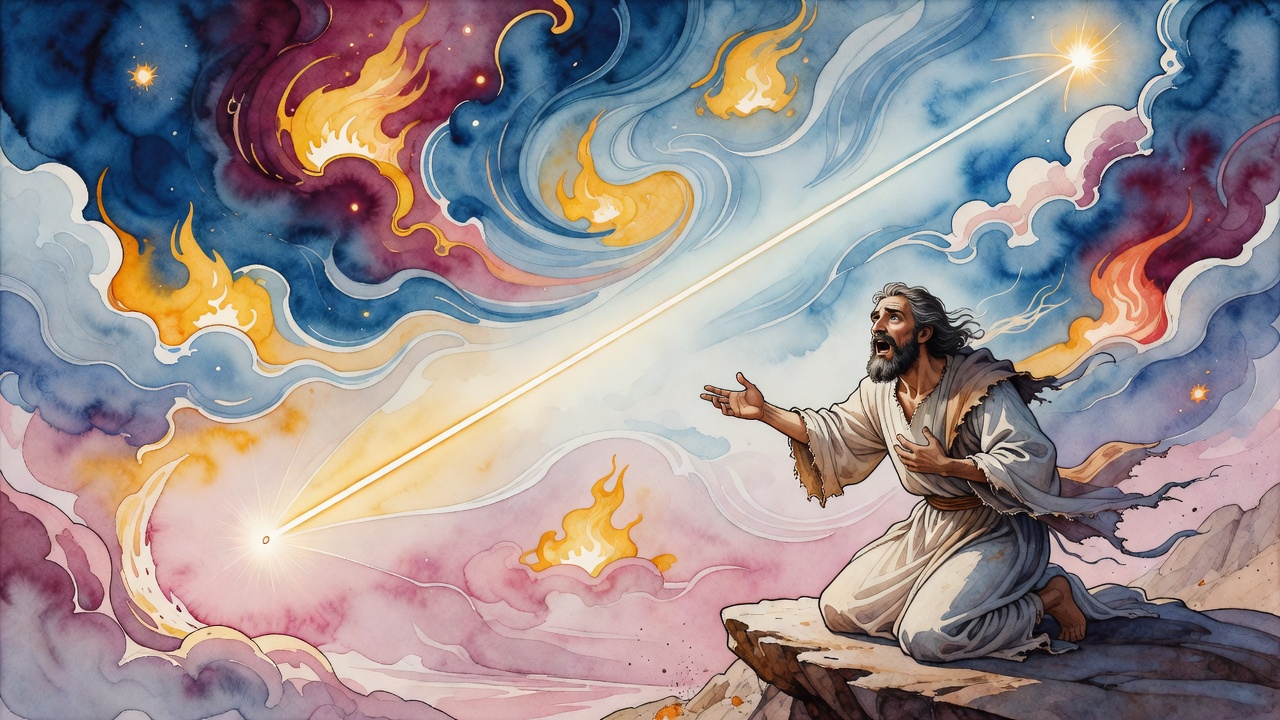
The woman struck the match and the first candle took. Outside, weekday errands still ran. Inside, something arrived with no weight and still changed the room.

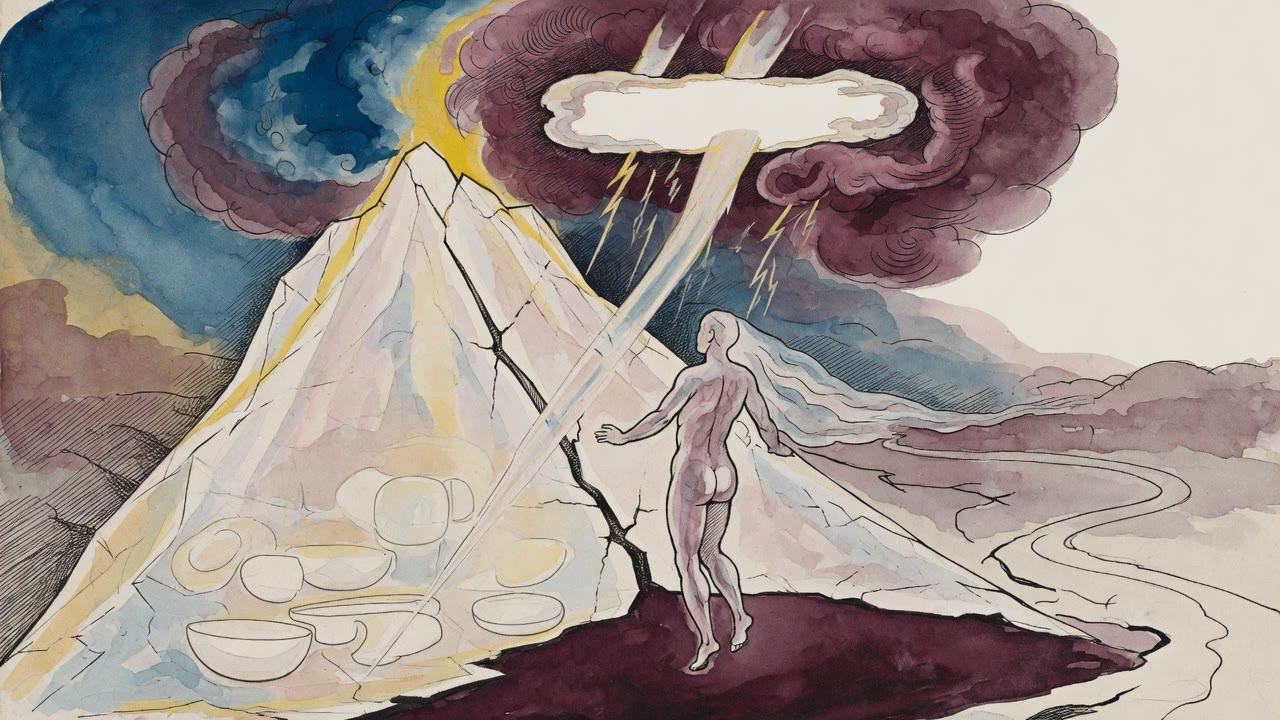
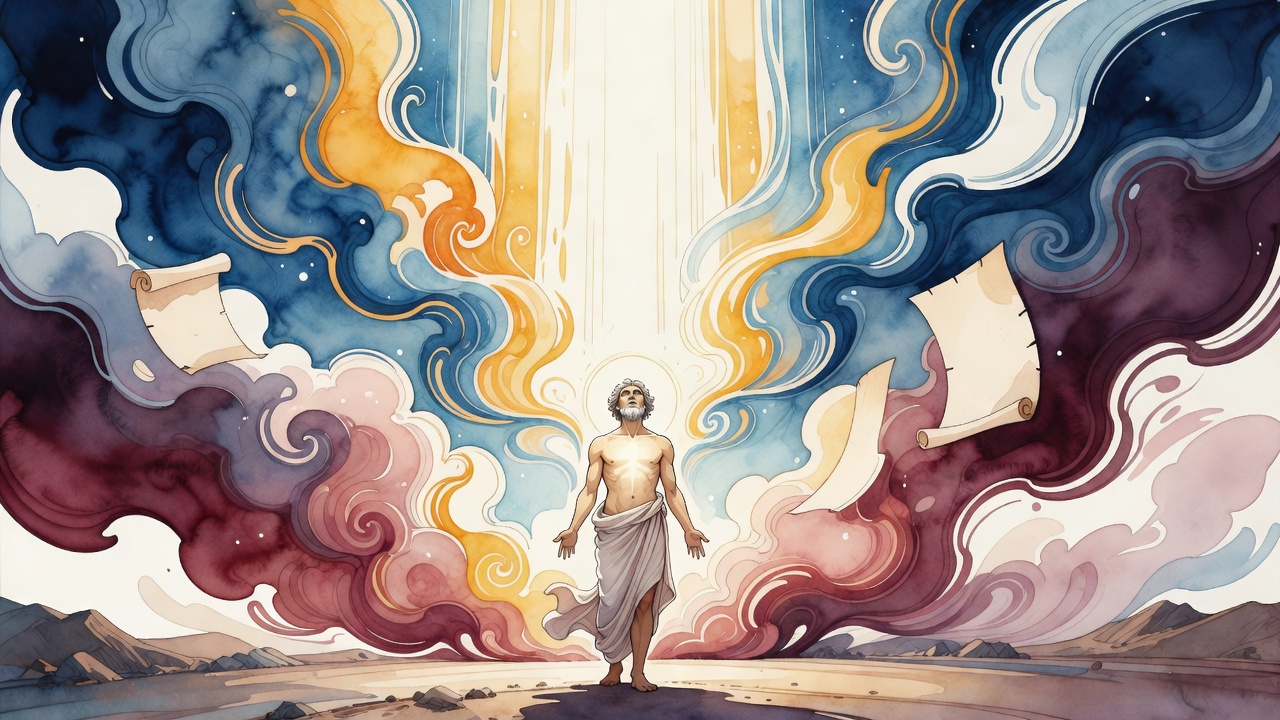
Extra Soul That Arrives Before Candle Light Click for full size

Neshamah (the higher soul) yeterah settled without adding height or hunger: raised status, not a new organ. She covered her eyes and felt surplus like heat that did not burn.

What the Extra Soul Does Not Do

It does not rewrite bodily functions. It elevates rank. The Emanator allows exterior to receive interior soul beyond weekday entitlement. That surplus is ascent.

Above, a Face Keeps Shabbat

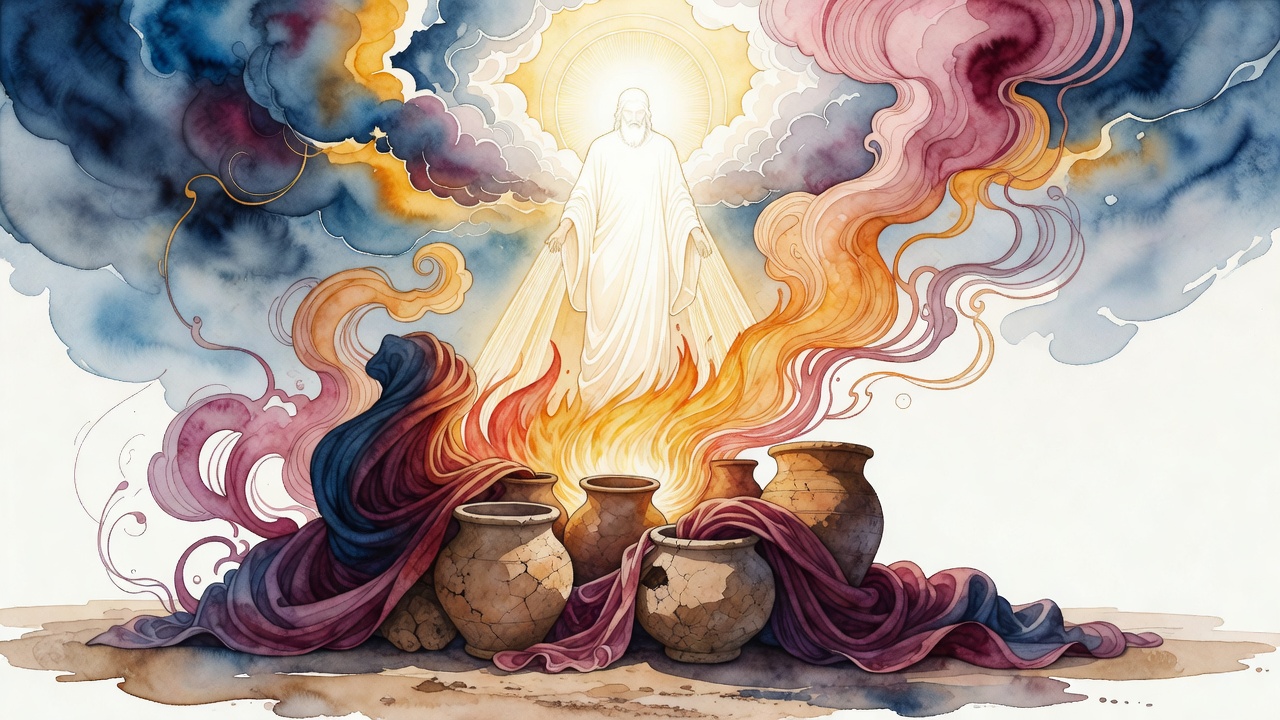
Zeir Anpin shifts on Shabbat night and day between maturities as light seats differently. Weekday vessels cannot hold the same influx. Her shoulders dropped; time thickened.

How Upper Becomes Inner Soul of Lower

Only Netzach, Hod, and Yesod of a higher Partzuf (a divine face-configuration) enter a lower as interior soul. Sabba and Tevunah give in graded forms so joy does not kill the receiver. The second candle caught.

When Malchut Is Ready for Delight

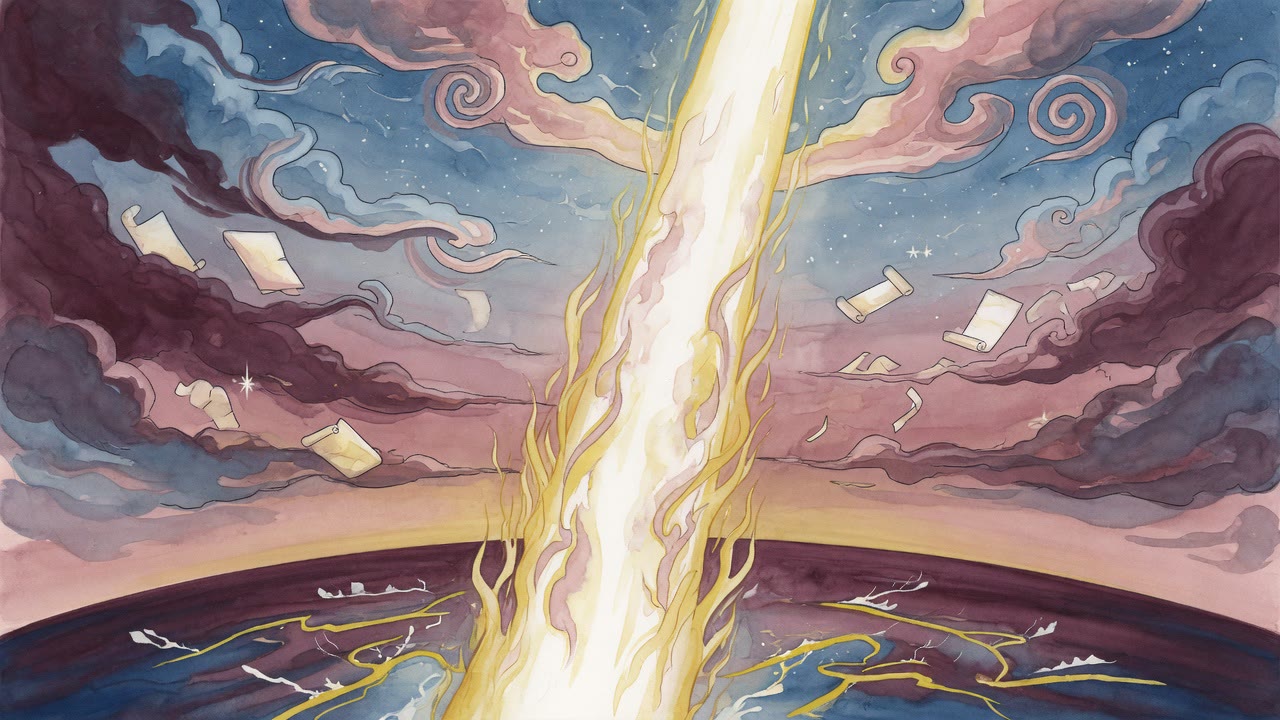
Yesod completes Malchut so delight can be aroused under governmental order. Shabbat stops work so reception can finish. The extra soul will leave at exit stars; the claim on the week remains: you were larger; act like it.


← All myths

From the tradition

Sources

5 sources

The texts behind this telling. Some cards carry a translation of the source; others are our own retelling of it, and each card says which. Every card links out to the original.

Kalach Pitchei Chokhmah 128:12Kalach Pitchei Chokhmah

Retold in our words. Read the original at the link below.138 Openings of Wisdom, trans. Rabbi Avraham Greenbaum, Azamra Institute (2005) · CC-BY

Jewish tradition teaches that Shabbat (the Sabbath) is a time of profound spiritual ascent, a moment when the very fabric of reality shifts. And according to the ancient text, Kalach Pitchei Chokhmah ("128 Openings of Wisdom"), these ascents aren’t just symbolic. They’re real.

So, what exactly are these ascents, and what do they mean for us? The text describes specific spiritual movements that occur on Shabbat night and day, particularly in relation to Zeir Anpin. Now, Zeir Anpin is a complex Kabbalistic term, often understood as representing the emotional attributes of God and, in a sense, the active force in the world.

On Shabbat night, Kalach Pitchei Chokhmah tells us, the encompassing levels of Lamed become internal within Zeir Anpin. Lamed, the Hebrew letter with a numerical value of 30, here symbolizes a specific spiritual dimension. This influx allows Zeir Anpin to reach a state between what's called the First and Second Maturity. It’s like a spiritual tune-up, preparing Zeir Anpin for even greater connection.

The real transformation happens on Shabbat day. That's when the Mem of the Tzelem enters into Zeir Anpin's interior. Okay, deep breath. Tzelem generally means "image" or "likeness," but in this context, it refers to a specific configuration of divine attributes. The Mem, the Hebrew letter "M," with a numerical value of 40, represents another crucial aspect of spiritual reality. With the Mem of the Tzelem integrated, Zeir Anpin gains access to the entirety of Malchut.

Malchut, often translated as "kingdom," represents the final Sefirah (a divine emanation), or divine attribute, and is associated with receptivity and the manifest world. The text specifies that this Malchut is, in fact, the "Second Israel Sabba-Tevunah" – the Tzaddi of the Tzelem. (Tzaddi, the Hebrew letter "TZ," with a numerical value of 90, represents righteousness and justice.) This is the Second Maturity. Got all that? It’s admittedly complex, but the key takeaway is that Shabbat day brings an even deeper integration and a higher level of spiritual attainment.

After this Second Maturity, the text describes further ascents that occur on Shabbat day. These aren't just internal shifts; they're "real ascents" where Zeir Anpin rises higher than its proper level. This suggests an experience of transcendence, a reaching beyond the ordinary limitations of our spiritual capacity.

So, what's the point of all this cosmic movement? Kalach Pitchei Chokhmah concludes with a powerful statement: "Each one of these times has its effects on the governmental order, because as you know, there is nothing that does not have a purpose." In other words, these spiritual ascents on Shabbat aren't just abstract concepts; they have real-world implications. They influence the way the world is governed, the flow of divine energy, and ultimately, our own lives. Every detail, every moment, is infused with purpose.: when we observe Shabbat, when we intentionally pause and connect with something greater than ourselves, are we not participating in these very ascents? Perhaps the peace, the joy, the sense of renewal we experience on Shabbat is a direct result of these profound shifts in the spiritual realms. The Kalach Pitchei Chokhmah invites us to see Shabbat not just as a day of rest, but as a day of profound spiritual transformation, a day when we, too, can ascend.

Full source
Kalach Pitchei Chokhmah 127:11Kalach Pitchei Chokhmah

Retold in our words. Read the original at the link below.138 Openings of Wisdom, trans. Rabbi Avraham Greenbaum, Azamra Institute (2005) · CC-BY

Kalach Pitchei Chokhmah turns to Shabbat and the Soul's Spiritual Stages.

Think of the Sefirot as different aspects of God's personality, like wisdom, understanding, kindness, and strength. There are ten in total, and they are often depicted as a tree-like structure, the Tree of Life. Now, a Partzuf is a complete configuration of these Sefirot, arranged in a specific way. Each Partzuf represents a different level of divine manifestation.

So, how do these Partzufim connect? That's where the Netzach (Eternity), Hod, and Yesod (Foundation) come in. These are three specific Sefirot, representing endurance, splendor, and foundation, respectively. And they play a crucial role.

The Kalach Pitchei Chokhmah explains that only the Netzach-Hod-Yesod of a higher Partzuf can enter into a lower Partzuf. It's the exception to the rule! Why? Because the lowest part of the upper level becomes the interior soul of the lower level. It's like the foundation upon which the lower level is built. Or, to put it another way, only Netzach-Hod-Yesod of the upper Partzuf can descend to the level of the lower Partzuf in order to serve as its inner soul.

Think of it like this: imagine a multi-story building. The foundation of the second story rests upon the ceiling of the first. That connection point – that’s essentially the role of Netzach-Hod-Yesod.

The text goes on to say that only the Netzach-Hod-Yesod of the overall entity can enter into Zeir Anpin. Zeir Anpin, which means "Small Face," is a crucial Partzuf representing the emotional attributes of God and is often associated with the son in Kabbalistic symbolism.

But what about the rest of the higher Partzuf? Why doesn't all of it enter Zeir Anpin? The text explains that Zeir Anpin is unable to receive it. The light would be too close to the vessel, exceeding what the vessel could contain.

This is a crucial concept in Kabbalah: the balance between light and vessel. The "light" represents divine energy, and the "vessel" represents our capacity to receive and contain that energy. If the light is too intense, the vessel can shatter.

It’s a delicate balance, and the Netzach-Hod-Yesod act as a sort of regulator, allowing just the right amount of divine energy to flow from one level to another. The rest remains outside, a reserve of potential, waiting for the appropriate time and vessel.

Perhaps it's a reminder that we can only absorb so much at a time. Spiritual growth is a process, a gradual unfolding. We can't force enlightenment. We need to be patient, allowing the divine light to enter us in a way that we can contain and integrate. Like a vessel carefully receiving precious liquid, we must be mindful of our capacity and allow the Netzach-Hod-Yesod within us to guide the flow.

Full source
Kalach Pitchei Chokhmah 58:16Kalach Pitchei Chokhmah

Retold in our words. Read the original at the link below.138 Openings of Wisdom, trans. Rabbi Avraham Greenbaum, Azamra Institute (2005) · CC-BY

Our guide is a passage from Kalach Pitchei Chokhmah, a text deeply concerned with how divine wisdom manifests in the world. It speaks of the Sefirot (the divine emanations), those ten emanations of God's light that serve as both a map of creation and a pathway for our spiritual ascent.

A cosmic dance. The "Six Directions" (Zeir Anpin), representing the active, masculine principles, are reaching out. but something's not quite connecting. Why? Because Malchut, the final Sefirah (a divine emanation), representing the receptive, feminine principle, and the very kingdom of manifestation, isn't ready. It exists, yes, but it's. incomplete. It's like a radio that's not properly tuned; the signal is there, but the reception is fuzzy. According to Kalach Pitchei Chokhmah, the Six Directions "did not turn to Malchut, because they did not receive delight." It lacked the structure to arouse that "favor and delight."

So, what's the missing ingredient?

Enter Yesod (Foundation). Yesod, meaning "foundation," is the Sefirah that acts as a conduit, channeling the energies from above and directing them towards Malchut. When Yesod arrives "in the mystery of MaH, she was then completed.."

MaH refers to a specific configuration or level within the Sefirot, and its "mystery" hints at the profound and somewhat hidden ways in which divine forces operate. Think of it as a secret handshake, a specific alignment that unlocks Malchut's potential. The text says that within the Sefirot of MaH, it's part of the "governmental order" (a fascinating phrase!) that Yesod should radiate into Malchut.

This "governmental order" is crucial. It’s not just about random sparks of inspiration; it's about a structured, purposeful flow of energy. Everything, all the structures and worlds, are ultimately in the "category of Malchut," meaning they are part of the manifested reality. But Malchut needs to be "rectified," perfected, through the influence of Yesod.

What does that mean, "rectified through Yesod?" It means the outer is united with the inner. The potential becomes actual. The seed blossoms. It's the difference between a blueprint and a building. Yesod ensures that the divine intention is properly grounded and takes root in the world.

And the result? "The building of Malchut is complete." This completion, says the text, "is what causes all the openings and flows of influence." Malchut, now properly structured and connected, becomes a true vessel, a receiver of divine light. It allows the blessings to flow freely, creating harmony and abundance.

Perhaps it’s this: true connection, true manifestation, requires both potential and structure. It's not enough to have the desire; we need the proper channels, the right alignment, to bring our dreams into reality. And sometimes, all it takes is a little Yesod – a solid foundation, a clear intention, a dedicated conduit – to unlock the flow and let the light shine through.

Full source
Kalach Pitchei Chokhmah 128:19Kalach Pitchei Chokhmah

Retold in our words. Read the original at the link below.138 Openings of Wisdom, trans. Rabbi Avraham Greenbaum, Azamra Institute (2005) · CC-BY

The Kalach Pitchei Chokhmah, a Kabbalistic text whose name literally translates to "One Hundred and Twenty Eight Openings of Wisdom," uses this idea to illustrate something profound about spiritual enhancement. It tells us that this extra soul, beautiful as it is, doesn't actually add anything to our physical bodies or their functions. We're already complete. Instead, it elevates our status, enhances our splendor, gives us a taste of something higher. It’s like adding a beautiful, shimmering layer to something already beautiful.

This brings us to the intriguing concept of the "Second Israel Sabba-Tevunah." Okay, a bit. In Kabbalah, Partzufim (a divine configuration) (the divine configurations) are divine configurations, aspects of God manifested in specific ways. Sabba (the "Elder") and Tevunah (Understanding) are archetypal masculine and feminine forces, representing wisdom and discernment. So, we have Israel Sabba-Tevunah, a specific configuration of these forces within the divine structure.

Why "Second Israel Sabba-Tevunah"? Why not give it a completely different name like the other Partzufim when they change function? The Kalach Pitchei Chokhmah explains that the function is essentially the same as the "First" Israel Sabba-Tevunah; it just operates on a lower level. Both are what Abba (Father) and Imma (Mother), the divine parents, give to Zeir Anpin (the "Small Face"), which represents the emotional attributes of God.

Think of it like this: Zeir Anpin, in its development, sometimes can only receive from the very end, from the lowest point. That's when it receives from the Second Israel Sabba-Tevunah. The latter is a part of Malchut (Kingship, the final Sefirah (a divine emanation)), that carries out the same function as the whole, albeit on a lower level. It's like a smaller vessel designed to deliver the same precious substance, but in a way that can be received at a specific stage.

Here's where it gets really interesting. When the Second Israel Sabba-Tevunah isn't needed, it simply becomes absorbed back into the First Israel Sabba-Tevunah. It's a temporary manifestation, a specific adaptation. In the "Second Maturity," it dissolves back into the higher form. The Kalach Pitchei Chokhmah emphasizes that this is unique. The other Partzufim don't just cease to exist by being absorbed into others; each has its own distinct and permanent function.

What does this all mean for us? Perhaps it's a reminder that we, too, have different levels of being. Sometimes we operate from a place of higher consciousness, a place of "splendor" as the text puts it, like with the neshama yeteira. Other times, we function on a more basic level. And that's okay. The important thing is that even when we're receiving from the "Second Israel Sabba-Tevunah," we're still connected to the same source, the same divine flow. And maybe, just maybe, those moments of elevated consciousness, those glimpses of something higher, are meant to be absorbed back into our everyday lives, enriching and transforming them in ways we can't even fully comprehend.

Full source
Kalach Pitchei Chokhmah 132:2Kalach Pitchei Chokhmah

Retold in our words. Read the original at the link below.138 Openings of Wisdom, trans. Rabbi Avraham Greenbaum, Azamra Institute (2005) · CC-BY

Jewish mystical tradition has a fascinating way of looking at this very idea, particularly through the lens of the Sefirot (the divine emanations) and the human soul.

The Emanator, blessed be His name, set things up in a really interesting way. Imagine it like this: the basic "stuff" of creation, the raw material, stays the same. But! The soul of that creation, its essence, can actually grow and expand. It's like getting an upgrade without changing your hardware.

This, my friends, is the concept of the Neshamah (the higher soul) Yetera (נשמה יתרה), the Additional Soul. It's that extra spark we receive, especially on Shabbat (the Sabbath) and holidays, that elevates us beyond our everyday selves.

This isn't just about us humans. The concept extends upwards, into the realm of the Sefirot (סְפִירוֹת‎), those ten divine emanations through which God reveals Himself. Think of them as the building blocks of the universe, each representing a different attribute of the divine.

The Kalach Pitchei Chokhmah, a Kabbalistic text, explains that something similar happens with the Sefirot. Their "exterior," which is linked to the physical realm and, interestingly, the root of the human body, can receive an "interior soul" beyond what it would normally be entitled to. This is called an "ascent" (Aliyah).

It's a dynamic process, though. When a Sefirah (a divine emanation) is still in the process of receiving what it should have, that’s considered "growth towards completion." But when it gets something more, something beyond its inherent nature? That’s when we talk about ascent.

Think of it like a plant. As it grows towards its full, natural size, we call it "growth." But if, through some special circumstance – extra sunlight, perfect soil – it blossoms with an unexpected abundance, we might say it has "ascended" to a new level of beauty and vitality.

These "additions" aren't random, though. They're tied to specific times – weekdays, Shabbat, holidays. The Kalach Pitchei Chokhmah suggests that this is where those additions come from. There's a rhythm, a divine choreography, to the way these extra measures of soul and spirit are bestowed.

So, what does all this mean for us? Perhaps it's a reminder that we, too, are part of this grand cosmic dance. We have the capacity for growth and ascent. The potential for more than we might think. Maybe it’s about recognizing those moments – those Shabbat dinners, those moments of connection, those acts of kindness – when we receive that Neshamah Yetera, that extra spark, and allow ourselves to ascend.

What kind of ascent will you choose today?

Full source