43 myths · Page 1 of 2
The ten sefirot of Kabbalistic cosmology, the divine attributes through which God created and sustains the universe.
43 myths on JewishMythology.com retell how Jewish tradition imagines sefirot, drawn from the Hebrew Bible, Midrash, Talmud, Kabbalah, and later Jewish literature. Each story below synthesizes primary sources into a single narrative; follow any myth to read it, and from there into the source passages behind it.
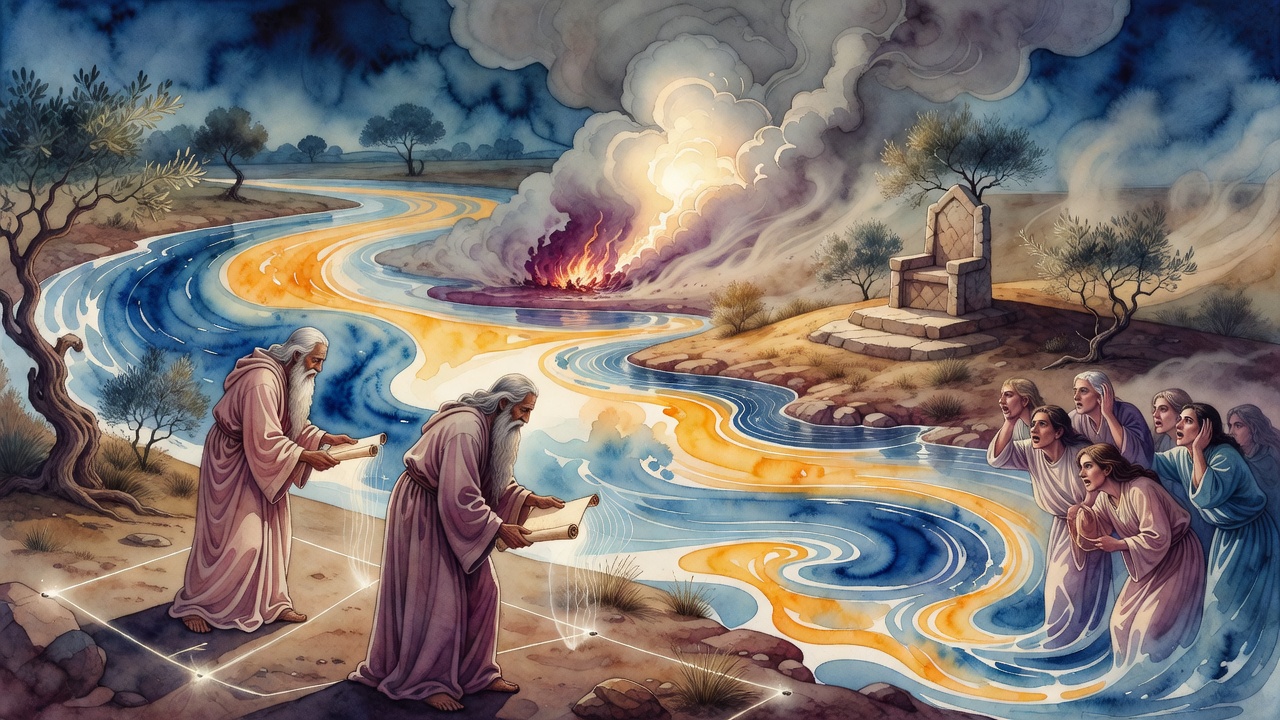
Two sages measured Eden with verses and field units, while the mystics heard a hidden river carrying wisdom into the garden.
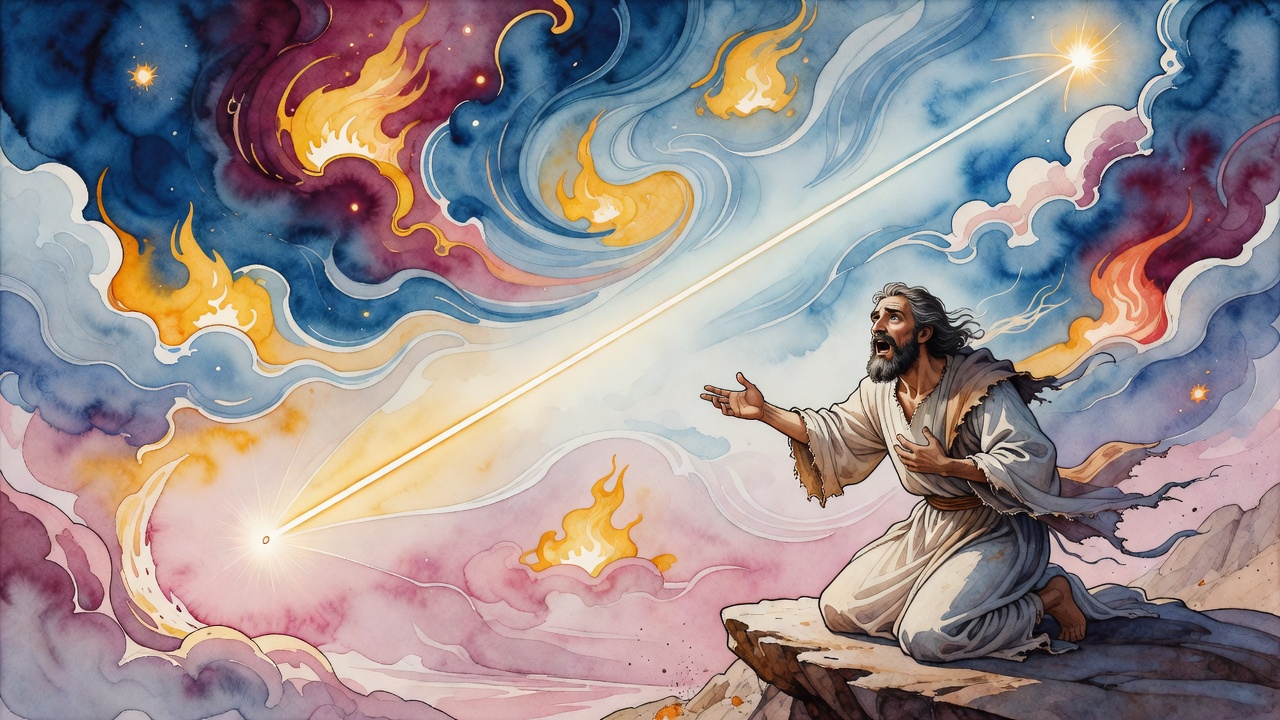
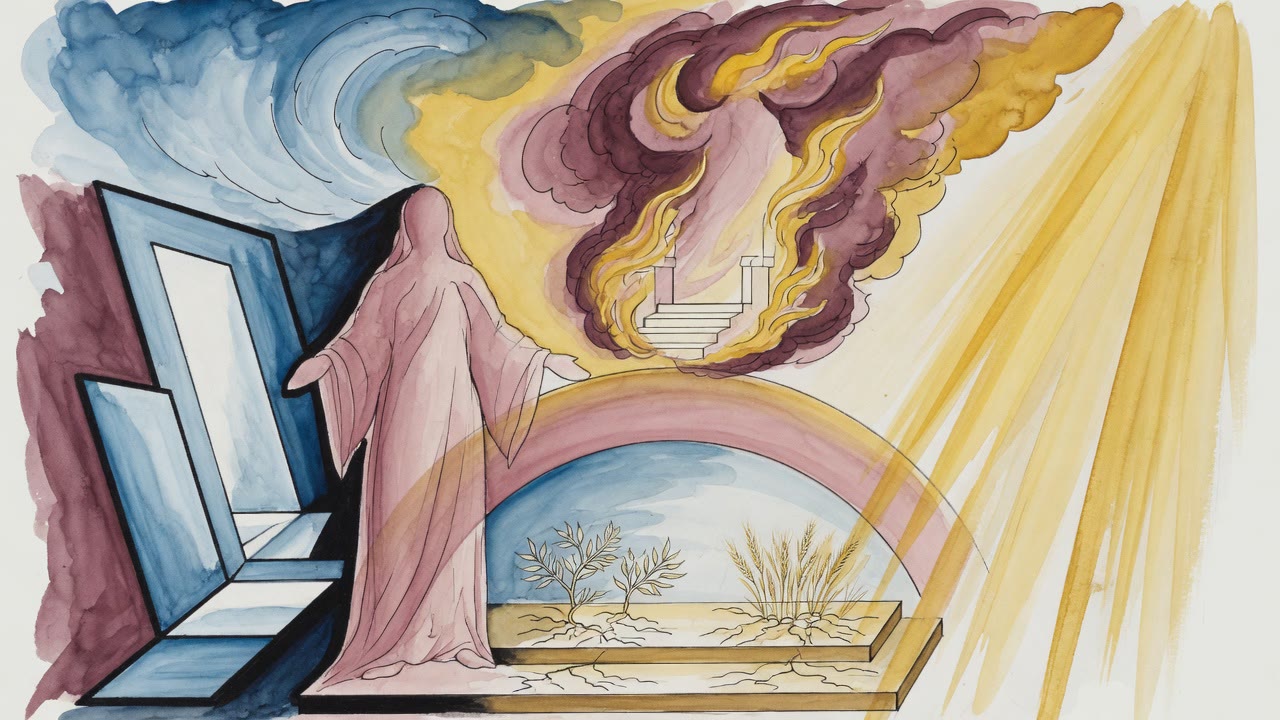
Noah saw a rainbow and called it a covenant. Solomon saw the same symbol and called it a doorway into the divine names. The mystics said both were right.
The Tikkunei Zohar makes a startling claim: Jonah the prophet and the dove Noah sent after the flood are the same soul appearing twice with the same mission.
Before breath entered Adam, ten divine measures arranged themselves into a living architecture, and a crownlet on a single letter held the world.
Adam stands under a divine image that hovers but does not fully enter him. The tzelem protects, guards, and descends by careful measure.
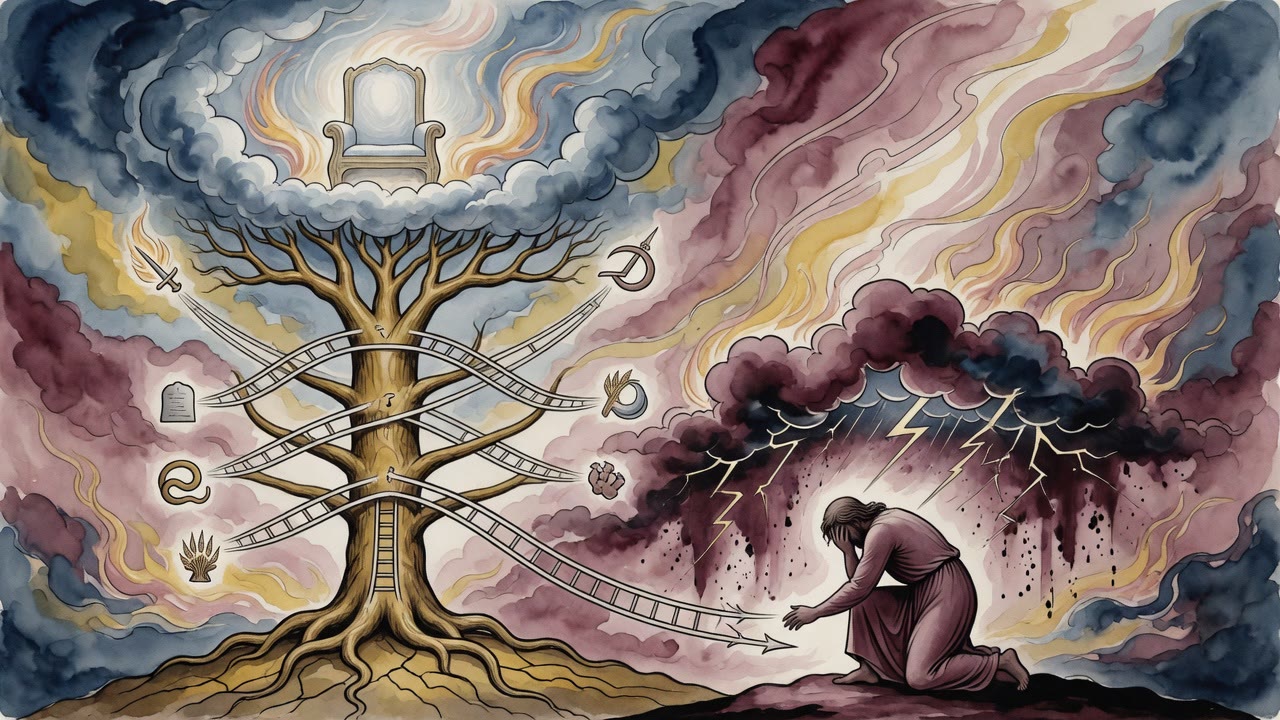
The Tree of Life holds twenty-two paths. Without them light cannot act, and without sweetened judgment, Adam cannot face what he has done.
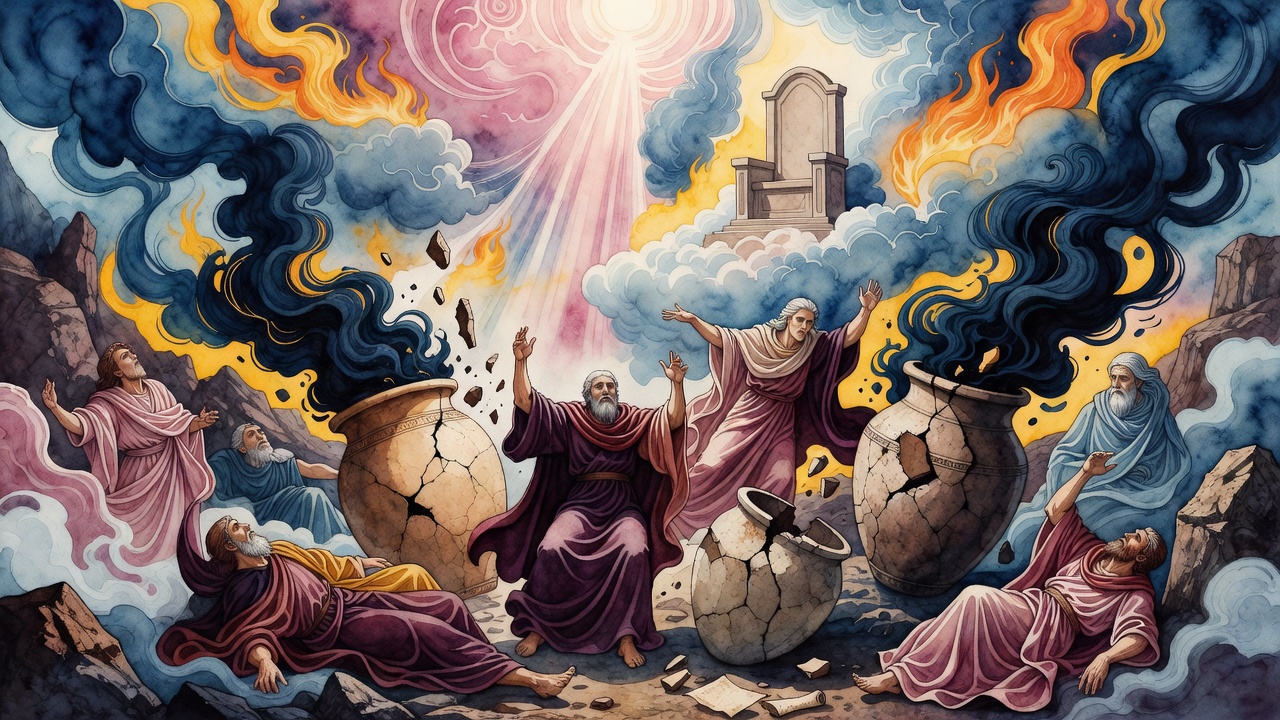
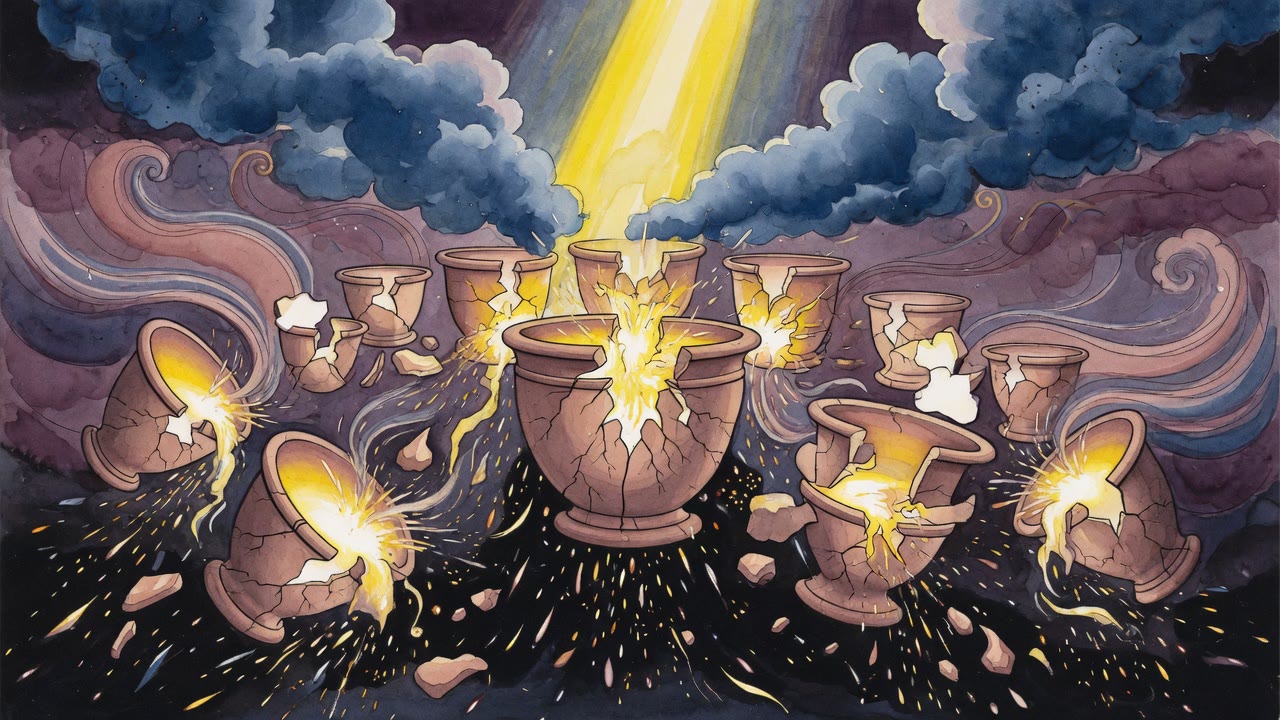
Before the world existed, God poured divine light into ten vessels. Seven shattered. The sparks are scattered through creation, and every good act gathers one.
At the beginning the sun and moon were equal in size and brightness. Then one was reduced. The Kabbalists preserved the full story of why and what it cost.
Every shofar blast on Rosh Hashanah is a weapon aimed at Lilith and a demonic coalition assembled in the heavenly court against Israel.
In the Ramchal's Kabbalah, Benjamin is not only a patriarch's youngest son. He is the cosmic spirit that makes creation fertile and capable of giving life.
In Kabbalistic teaching, Leah is not merely a matriarch who wept for a husband who loved another. She is the concealed face of God turned toward the world.
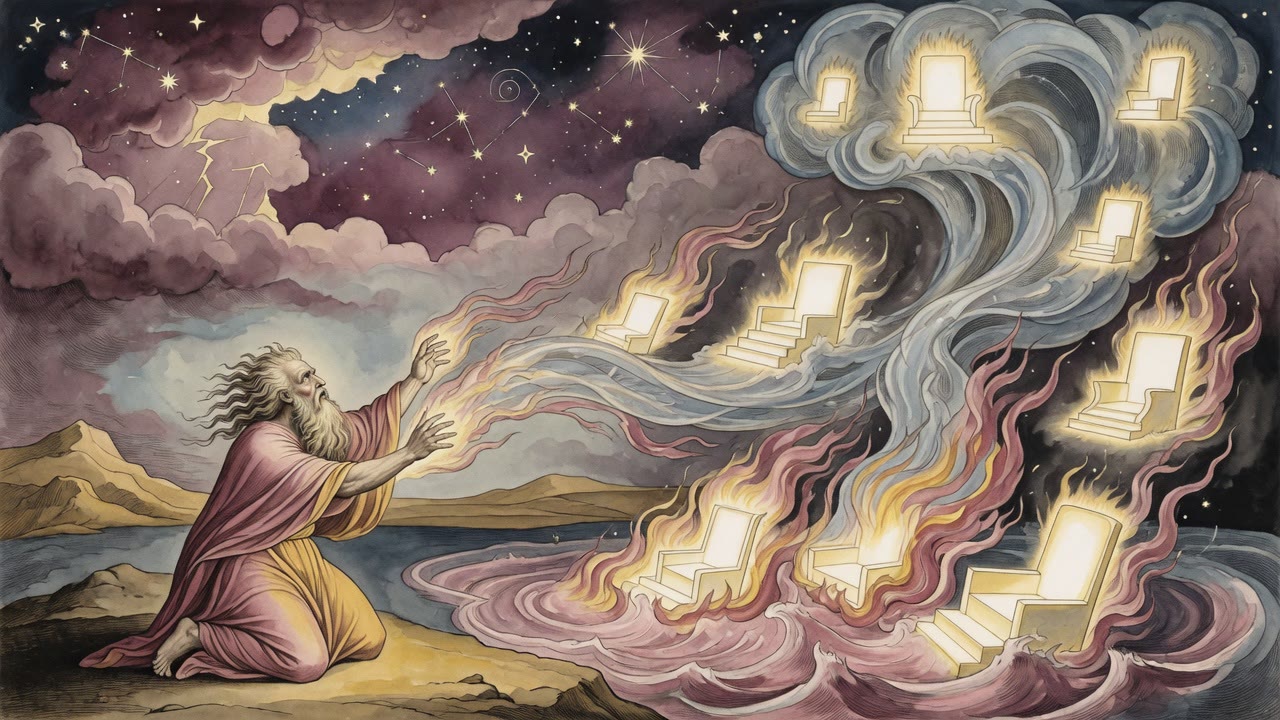
When Ezekiel saw a storm from the north, he was not watching weather. He was seeing four klipot, shells blocking divine light, called there by human failure.
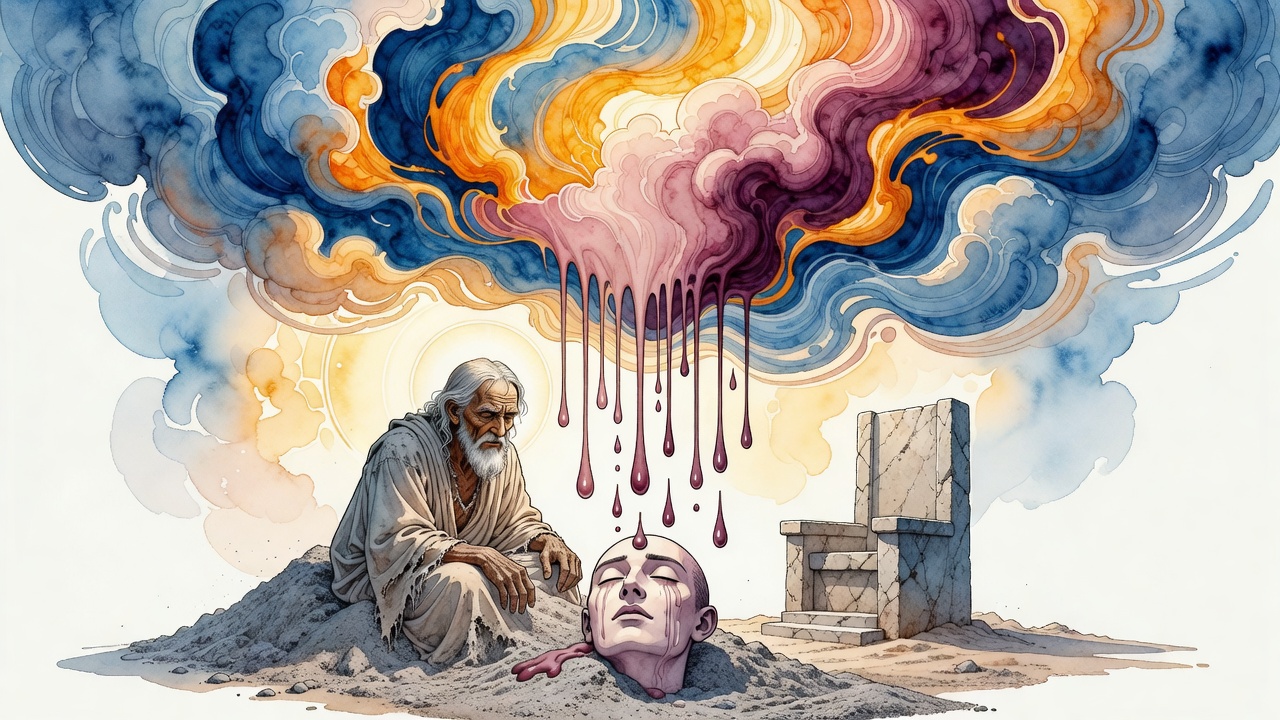
Miriam's leprosy appears the instant God leaves the tent. The Ramchal says this is not wrath striking down but mercy withdrawing its cover.
The infinite light withdraws and leaves an empty space, yet something stays behind in the vacancy, and from that residue every world is born.
Before Eden, before the first sin, before time itself, the Kabbalists place a primordial human whose structure everything else would only reflect.
God built a world before this one and its vessels could not hold the light. They shattered. The shards still fall through everything we touch.
Before Adam, eight kings arose and collapsed in the void. Their lights shattered because nothing in them could hold its own center.
When God contracted to make room for the world, something remained in the empty space. The Shekhinah draws on that trace and sends it upward like water.
Sefer Yetzirah opens with ten dimensions that are boundless and infinite, yet they have a center. The Vilna Gaon spent his life inside this paradox.
On his last day, Rabbi Shimon bar Yochai revealed how divine wisdom passes downward through the cosmic structure and why Daniel's enormous tree was its map.
The rabbis feared Leviathan. Its scales flash like fire and the ocean boils in its wake. The Tikkunei Zohar called it the righteous pillar.
Rebekah descended to the well, filled her pitcher, and came up. The Kabbalists watched and saw the Shekhinah doing what she always does.
The Tikkunei Zohar mapped the letters of God's name onto a candle flame. Esau inhabits the dark zone where judgment burns without mercy.
A student arrives thirsting for wisdom, then turns Hillel's golden rule into a blade and accuses his teacher of calling the emanations gods.
In The Wars of God, a student accused his kabbalist teacher of describing the divine emanations in language that sounded like separate gods.
On his final day, Rabbi Shimon bar Yochai gathers his students and opens the secrets he kept sealed until death itself stood in the doorway.
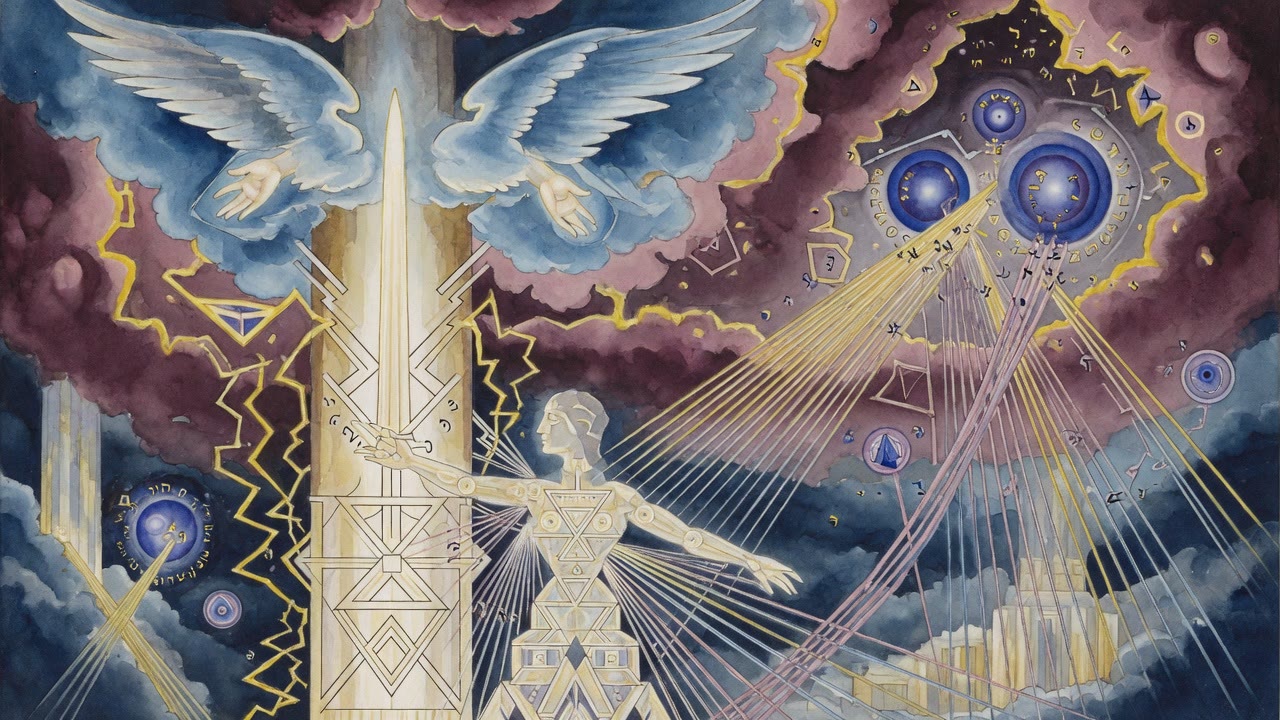
A cry rises and two hands open in heaven. The sefirot move like hands, measure creation with five fingers, and align into a column when the word Amen is spoken.
The Tikkunei Zohar maps heaven as a living tree whose branches carry the Shekhinah, divine names, prayers, and blessings between the worlds.
A mystic stands at the threshold of the King's house with clean prayer and a ready soul, but a serpent coils at the ankle and the door stays shut.
A mystic begs to see how something came from nothing. Tikkunei Zohar answers with a measuring line in primordial air and the tiny Yod that begins everything.