A Single Word and the World Stood Fully Lit
God did not wrestle the cosmos into shape. One utterance, and light stood. Twilight held the debate over when making began.
Table of Contents
 Click for full size
Not Toil, a Word
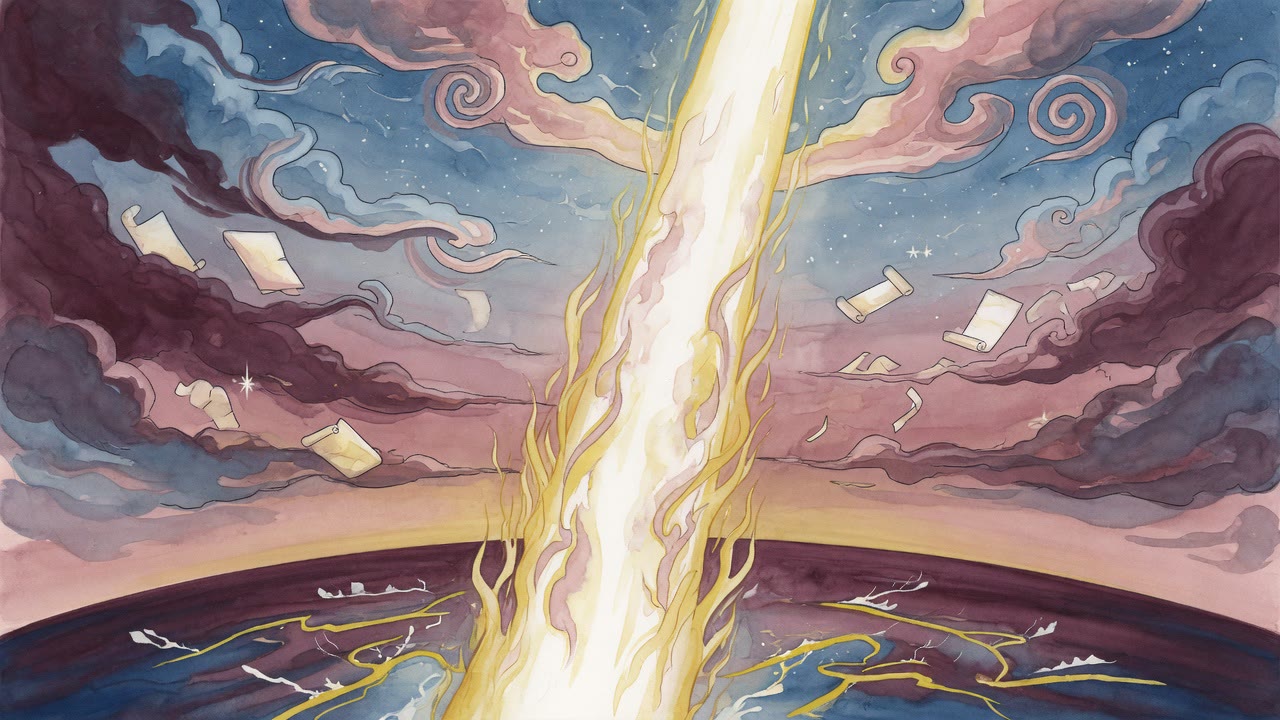
God did not heave the world into place like a laborer with a sore back. "By the word of the Lord the heavens were made" (Psalms 33:6). Rabbi Yehuda bar Simon, through Rabbi Berekhya, hears the verse as a refusal of struggle. A single utterance. A divine command. Existence.
The Hebrew does not say the light became slowly. It says vayhi or, and there was light, as if the thing arrived complete in the same breath that named it. A flash. Instantaneous. The warrior named in "The Lord is a man of war" (Exodus 15:3) is also the ish who finds joy in a word spoken at its time (Proverbs 15:23). "And God saw the light, that it was good" (Genesis 1:4). The joy and the goodness are the same moment seen from two sides.
No hammer rang. No rival god was thrown down. The first act was speech that did not need a second draft. What humans call work, the Holy One performed as pronouncement, and the pronouncement was already satisfaction.
Night Plans and Day Hands
The schools of Shammai and Hillel argued about the clock of making. Beit Shammai said God's thought, the cosmic blueprint, occurred at night, while the action of creation unfolded by day. Their proof sat in the phrase "on the day that the Lord God made earth and heaven." Beit Hillel said both thought and action took place during the day, a more streamlined making.
Rabbi Shimon ben Lakish threw a third stone into the debate. He was astonished that the fathers of the world argued so. He suggested God's thought ran day and night, a constant ideation, and that the actual creation happened with the dimming of the sun, just before sunset. The universe bursting into existence as twilight descends. A liminal hour for a liminal act: something from the edge of dark into the first order of light.
Imagine the seam where day loses its edge. That is where Resh Lakish places the workshop. Not noon's certainty. Not midnight's blank. The hour when edges blur and a new edge can be cut.
Three Creations Each Day
R. Levi, citing R. Chama bar Chanina, laid out a catalogue. On every day the Holy One created three creations. Six days times three is eighteen acts, until day six breaks its own pattern.
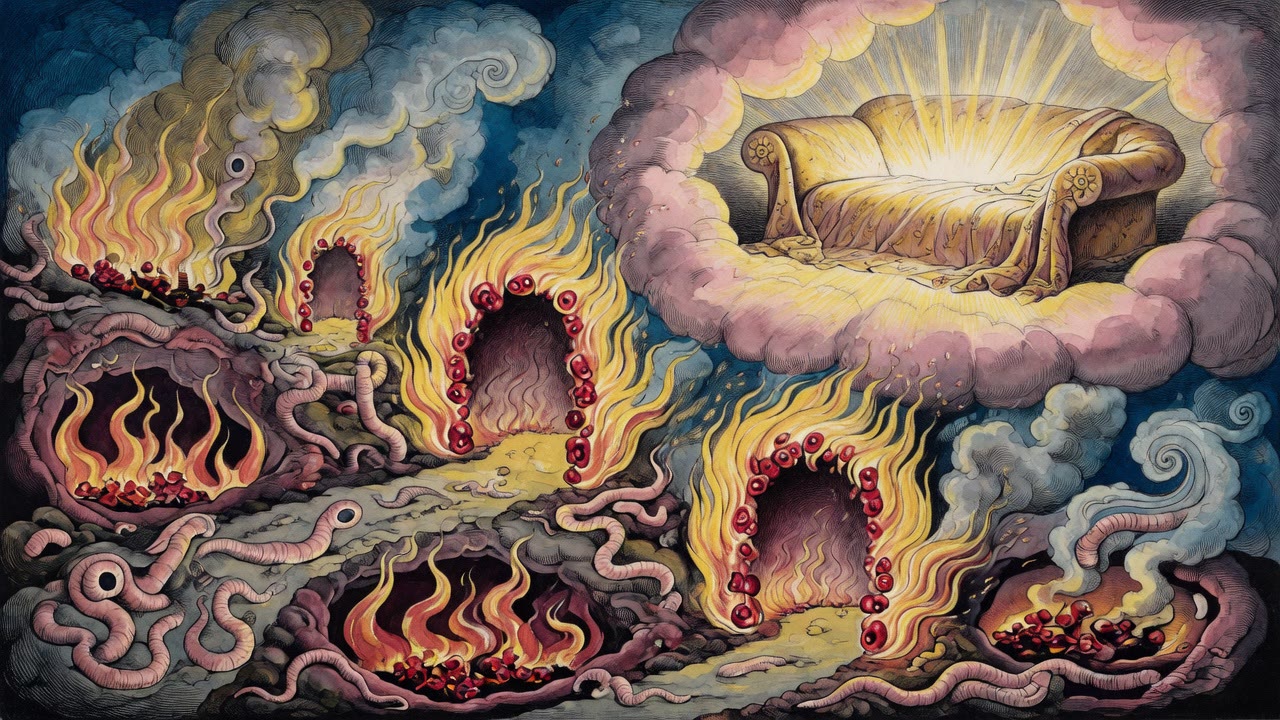
Day one: heaven, earth, and light. Day two: the firmament, Gehinnom, and the ministering angels. Day three: trees, herbs, and rivers. Day four: sun, moon, and stars. Day five: fish, Leviathan, and fowl. Day six should have held three, but it held more: living creatures, cattle, creeping things, beasts, and then Adam and Eve as the Sabbath approached.
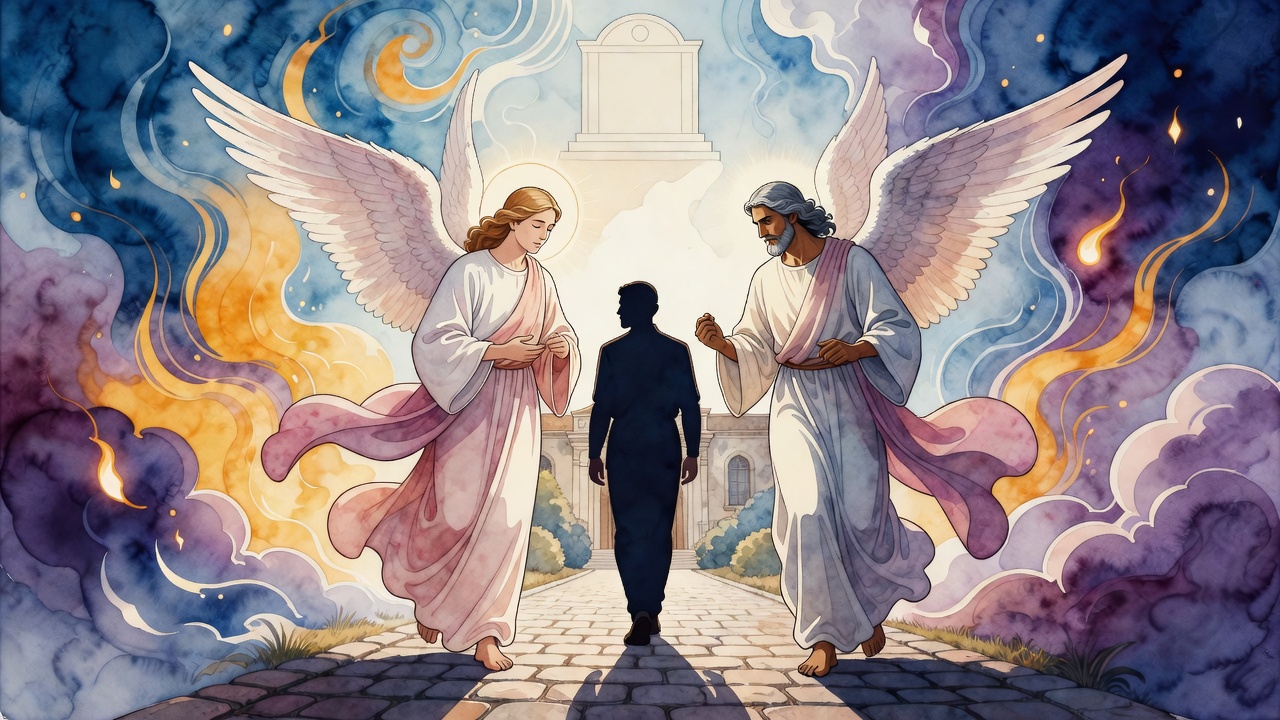
The angels arrive on day two, before human beings, already in a world that has a firmament and a Gehinnom (the realm of judgment after death). The schedule is not a children's chart. It is a pressure map. Judgment and praise exist before the first human breath. Leviathan swims into day five as a creature too large for ordinary nets, a reminder that the catalogue includes the unmanageable on purpose.
Twilight as a Workshop
Hillel's camp and Resh Lakish's image meet at the thresholds. Creation belongs to the overlaps of light and dark, the minutes when a day is neither finished nor begun. A word spoken in that seam does not need hammers. It needs timing. "How good is a word in its time."
If the world was born without divine fatigue, human work still knows fatigue. The midrash's comfort is not that labor is unreal. It is that the ground under labor was spoken into place by joy, not by cosmic panic. The first light was good before anyone earned it. Day six's surplus, the rush of creatures and the human pair, feels like a workshop finishing early for Sabbath, tools set down while the light still holds.
What Stood When the Word Landed
Stand in the first second after "Let there be light." No sun yet. No eyes yet. Only the thing itself, good, seen by the Speaker. Later the schools will argue clocks. Later Levi will count triplets. Later angels will already be on the second day's books. In that first second there is only utterance and result, so close they share a pulse.
The world you walk on is that pulse cooled into stone, water, and skin. It began as a sentence that did not need a second draft. Every later sunset is a faint rhyme of the hour Resh Lakish named, when making and dimming learned to share a border.
Gehinnom on day two is not a footnote. It means the schedule already included a place of consequence before Adam ever chose. The ministering angels had work before humans had breath. When the single word lit the dark, it lit a structure that could hold judgment and praise, not a blank playground. That is why the later debates about clocks matter. They are arguments about when responsibility entered the furniture of the world.
← All myths