Abraham Opened the Door That Sodom Tried to Shut
Sodom burned people for putting bread into a beggar's hand. Lot fed two strangers anyway, after dark, and then his wife refused them salt.
Table of Contents
 Click for full size
The Sun Taken Out of Its Sheath
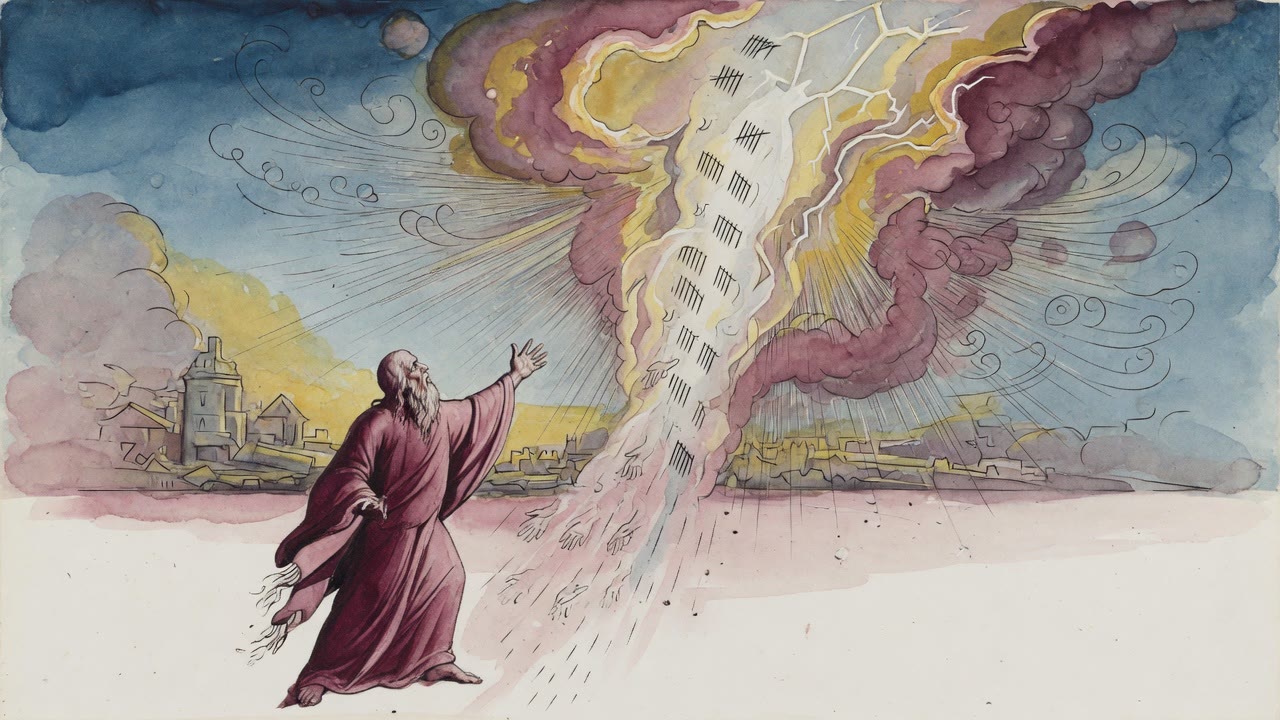
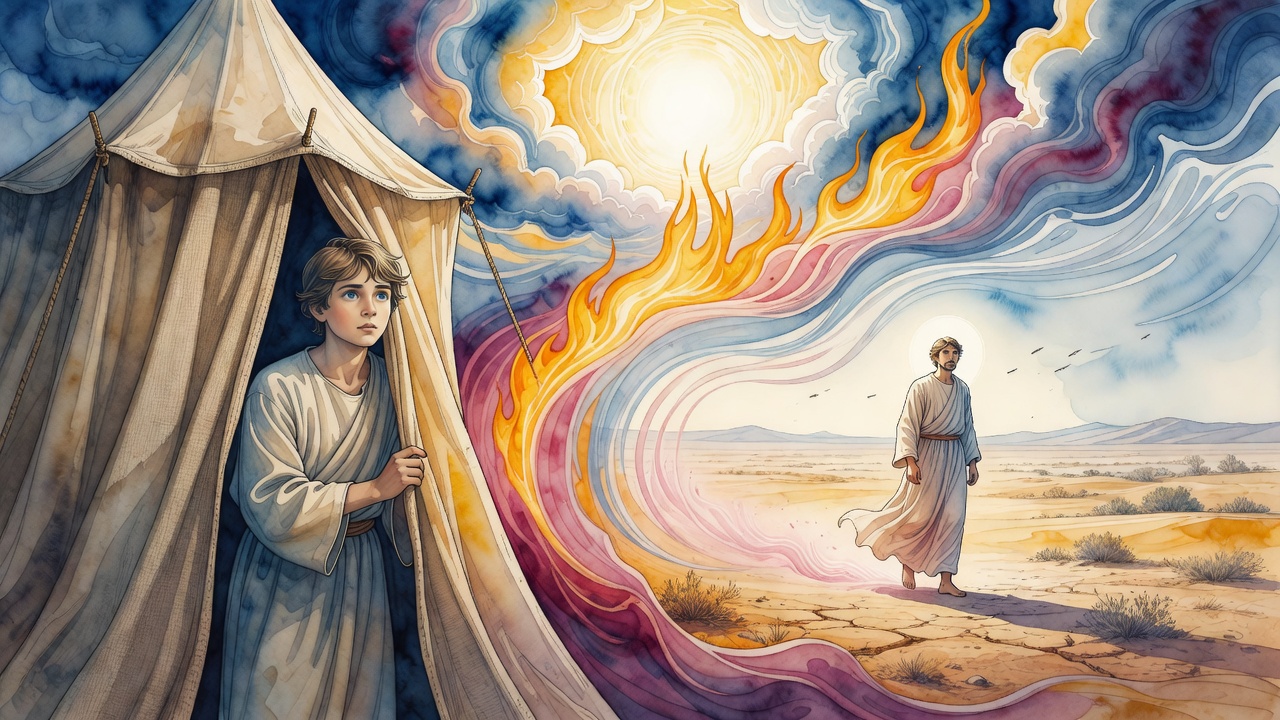
Abraham sat in the doorway of his tent on the third day after cutting himself for the covenant, and the heat that day was not ordinary heat. A hole had been opened out of Gehinnom (the realm of judgment after death) and the world was being warmed through it, the temperature of the day the wicked get. Heat is good for a wound. There was also the other reason. With a road that hot, nobody travels, and nobody arriving means nobody to feed.
He would not accept it. He called Eliezer and sent him out to the market to look for travelers. Eliezer came back and said there were none.
There is no trusting servants, Abraham said, and got up.
An old man three days out from the knife walked out into a road hot enough to scald, holding the dressing on with one hand, untying it and tying it again because he could not get it to sit. God watched him do that. It is not decent to stand here, he said, and came down.
He Sat and God Stood
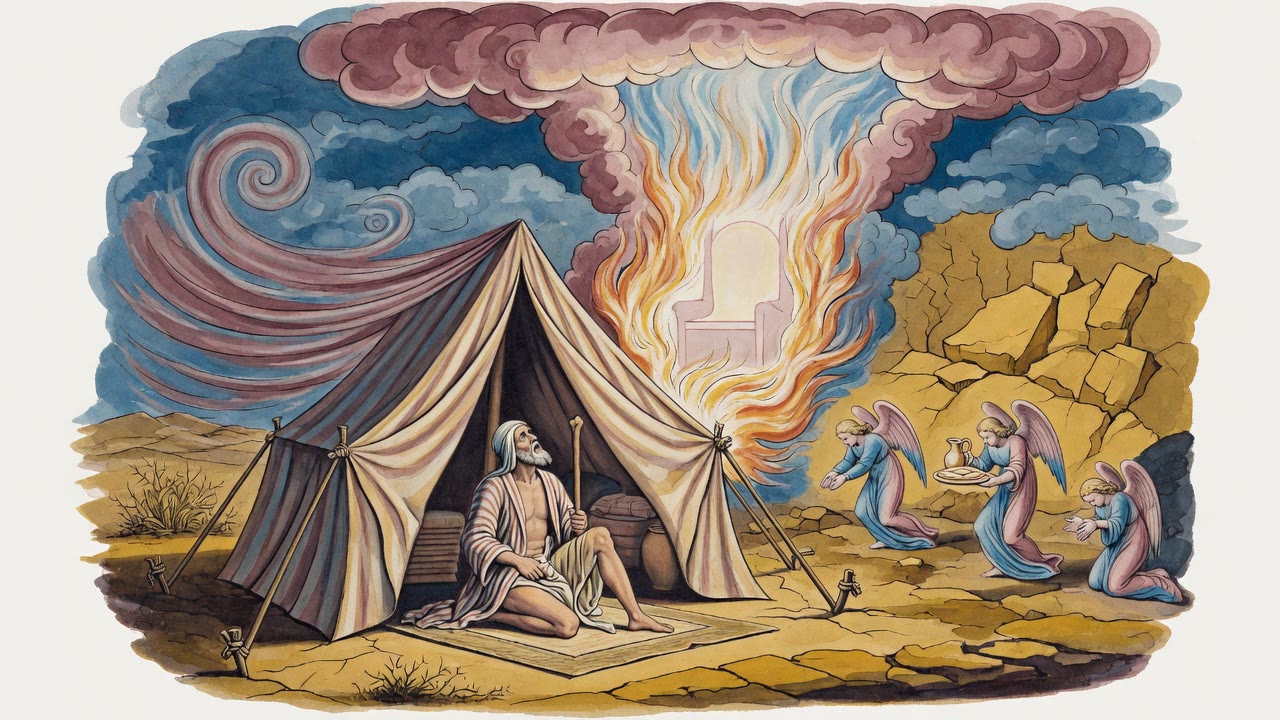
Come with me, God told the ministering angels. We are going to visit the sick.
They came down to a tent in the heat with the whole household inside and one man at the entrance who could not stand up straight. Look at what circumcision does, God said to them. Before this, he fell on his face and then I spoke with him. Now he sits, and I am standing.
Abraham tried to get to his feet.
Sit, God told him. You are a sign for your children. You sit and the Presence stands, and that is how it will be for them.
You opened a good door to travelers, he said. A good door to strangers who came looking for me.
Three Men on the Road
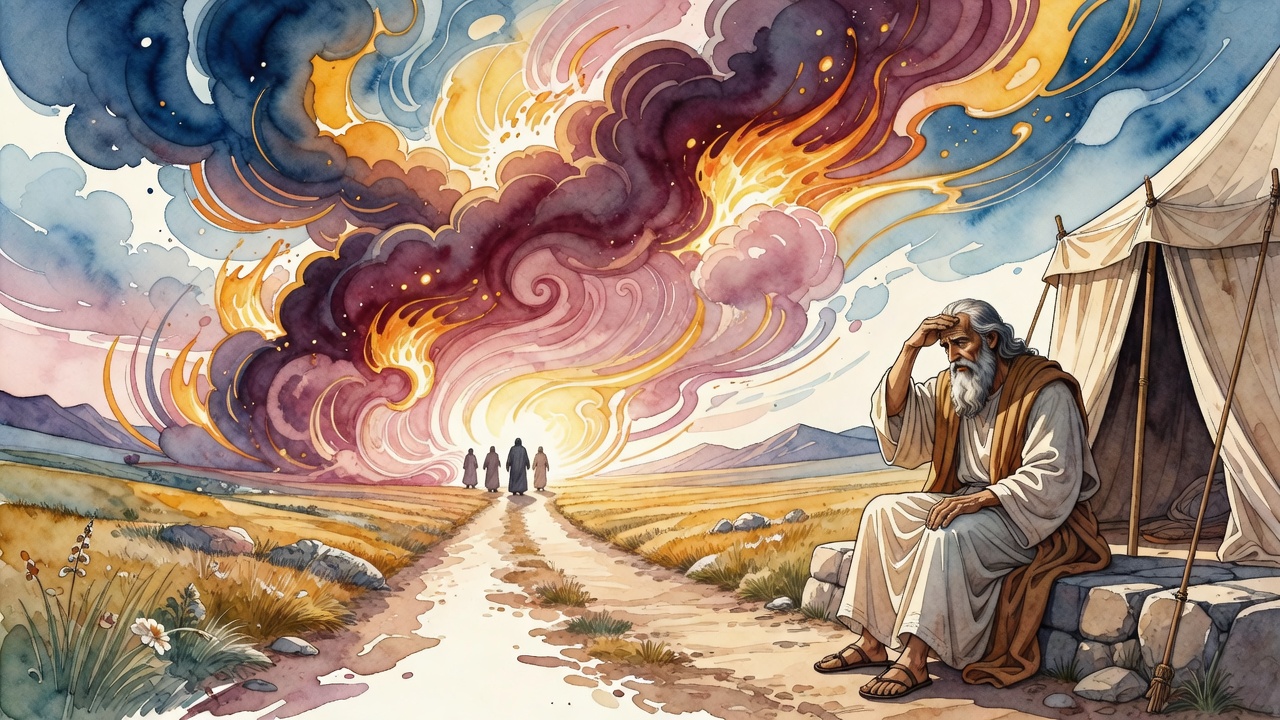
Then there were three men standing near the tent. One looked like a merchant in fine cloth. One looked like a sailor. One looked like an Arab of the desert.
Abraham watched them before he moved. If the Presence is waiting for these men, he thought, they are worth something. If they give way to each other on the road, they are worth something. He saw both, and then he ran.
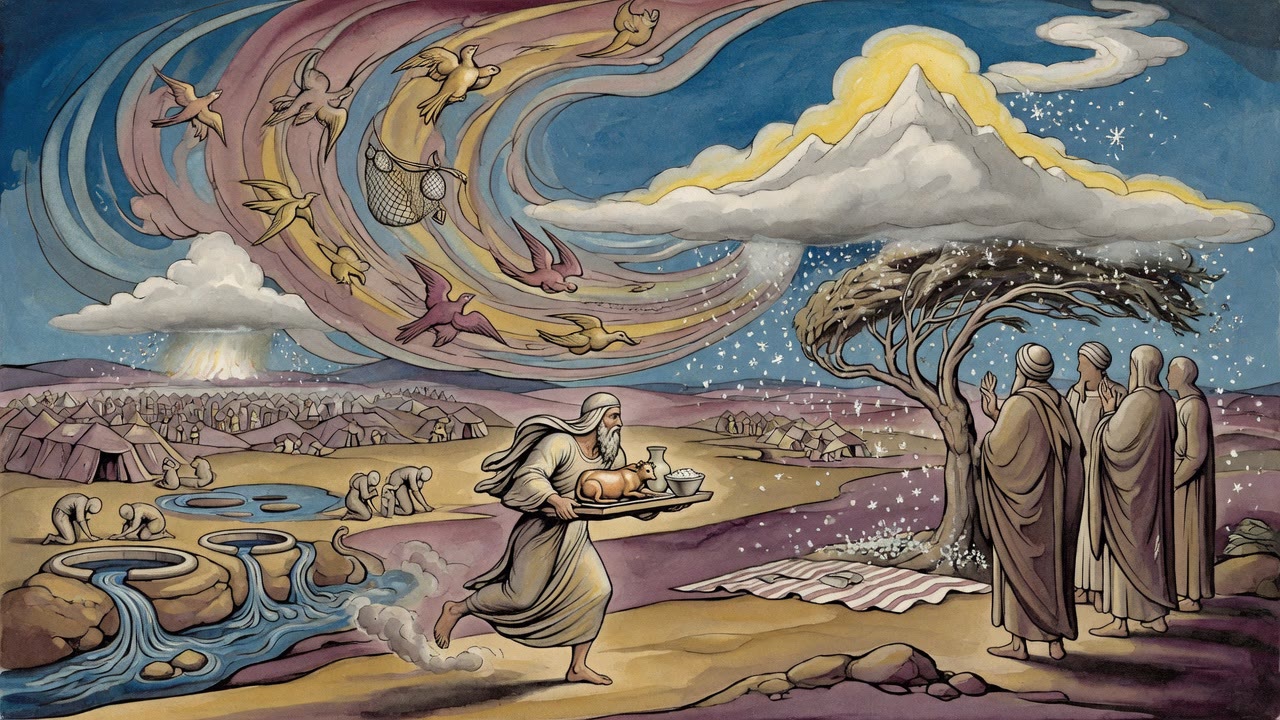
Let a little water be brought, he said, and wash your feet, and rest under the tree. Water before shelter, because he wanted the dust of the roads and its idols off them before they came under his roof. Do you take us for Arabs, they said, who bow down to the dust on their own feet? He did not answer that. Ishmael had already come out of him and he knew what could grow in a household.
Sarah was kneading. Nine measures of flour went through her hands that afternoon, three for cakes, three for pudding, three for the fancy things, and the cakes came out flat and unleavened because it was the eve of Passover, though nobody in the tent had any way of knowing that yet. He ran to the herd himself for the calf and handed it to the boy Ishmael to prepare, to get him used to doing things.
Every one of those small offers was paid back in the desert generations later. He said a little water, and his children got Miriam's well. He said a morsel of bread, and bread rained on them. He ran for the calf, and a wind came off the sea carrying quail. He stood over his guests while they ate, and a pillar of cloud went ahead of his children the whole way. The righteous promise a little and produce a feast. Ephron promised a field and counted out four hundred shekels in coins weighed to his own advantage.
The Angels Waited Until the Sun Went Down
They left Abraham's tent at noon and did not reach Sodom until evening, which is a long walk for beings who move like lightning.
Two of them were angels of mercy and they were stalling. Behind them Abraham was still arguing about fifty, and forty-five, and forty, and thirty, and twenty, and ten, and they walked slowly because he might yet find something in that city worth saving. He found nothing.
The sun went down on Sodom and its sentence was sealed. God judges the nations at night, in the hours when they are asleep and are not adding to the account.
The Judge in the Gate
Lot was sitting in the gate when they arrived, and he had been appointed that same day as chief among the judges of the city. There were five of them. The court of Sodom carried names that said exactly what it was: Liar, Chief Liar, Scoundrel, Slanderer, and the one who bent the law. When Lot ruled in a way they liked they told him to move up higher. When he ruled in a way they did not like they said this one came here to live and now he judges us.
He had learned his manners in the right house. Abraham kept an inn outside Haran, open at all hours, food and drink for anyone walking past, and everyone who ate there heard him say that the God of Abraham is one in the world. Lot tried the same thing in Sodom until the city passed its law. Anyone who puts a loaf into a poor man's hand burns for it.
So he did it after dark. That is why the two of them arrived at evening.
Go around, he told them, take the crooked way to my house so that nobody sees you coming to my door. They said they would sleep in the square. He pushed and pressed and would not stop until they turned and came in with him. He made them a meal. He baked them unleavened bread.
A Little Salt
Give these guests a little salt, he said to his wife.
Even this, she said. Even this filthy habit you want to teach here.
Before anyone lay down, the men of the city were around the house. Not a few of them. Not a mob with a ringleader and some bystanders. Every man of Sodom, young and old, from every quarter, and not one of them held back.
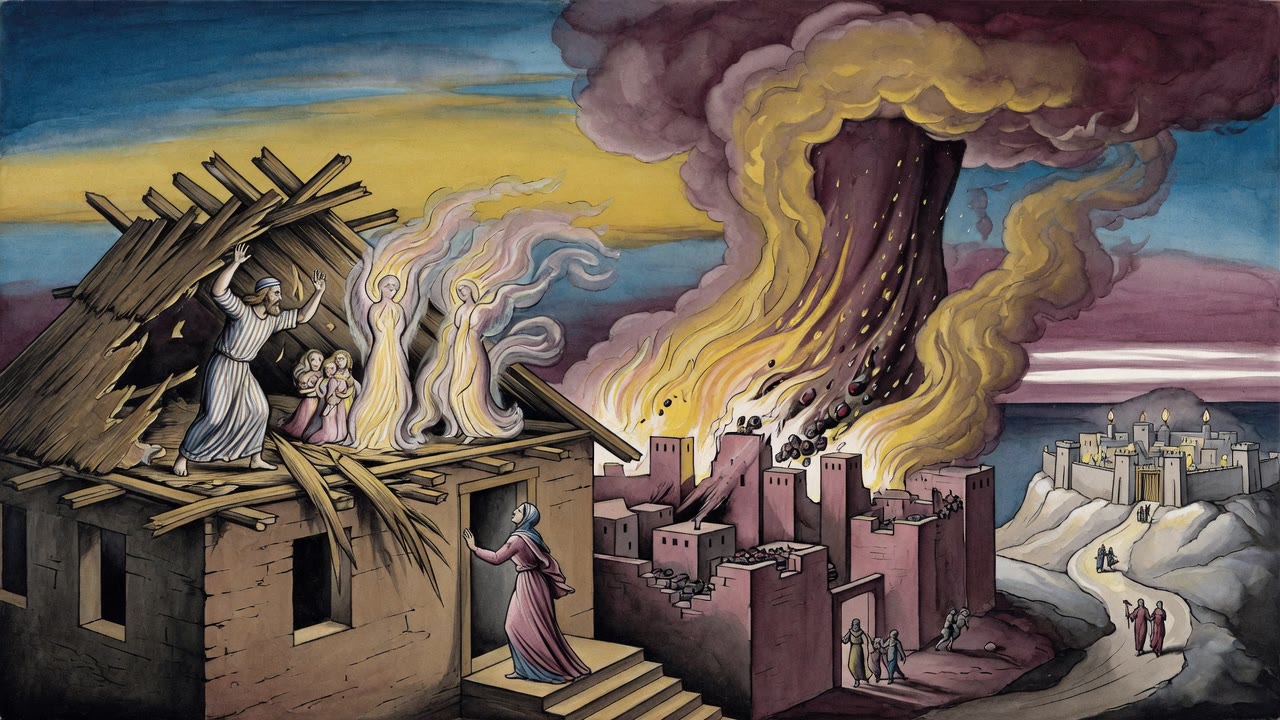
Lot stood in his doorway and argued for them all night. He kept saying they were not as bad as it looked, and the angels let him keep saying it. Then the voices outside told him to push his guests into the street so the town could use them, and the angels stopped letting him talk.
Have you still got anyone here, the angels asked him, and the question had a second edge on it. Have you still got a mouth. Until now you had permission to speak for them. You have none.
They took him out by the hand. His wife Edith walked behind him on the road with her married daughters still back there in the burning town, and she turned her head to see whether the girls were following. What she saw was the Presence. She stopped where she was and stood on the road as a pillar of salt.
← All myths