Translation of the source text.William Davidson Edition - Vocalized Aramaic + William Davidson Edition - English · CC-BY-NC
would seek pairs of Sages engaged in conversation on Shabbat and said to them: Please do not desecrate Shabbat by failing to delight in Shabbat. Rava said, and some say it was Rabbi Yehoshua ben Levi who said: Even an individual who prays on Shabbat evening must recite the passage: “And the heavens and the earth were finished [vaykhullu]” (Genesis 2:1–3), as Rav Hamnuna said: Anyone who prays on Shabbat evening and recites the passage of vaykhullu, the verse ascribed him credit as if he became a partner with the Holy One, Blessed be He, in the act of Creation.
As it is stated: “And the heavens and the earth were finished [vaykhullu].” Do not read it as: Were finished [vaykhullu]; rather, as: They finished [vaykhallu]. It is considered as though the Holy One, Blessed be He, and the individual who says this become partners and completed the work together. Rabbi Elazar said: From where is it derived that speech is like action?
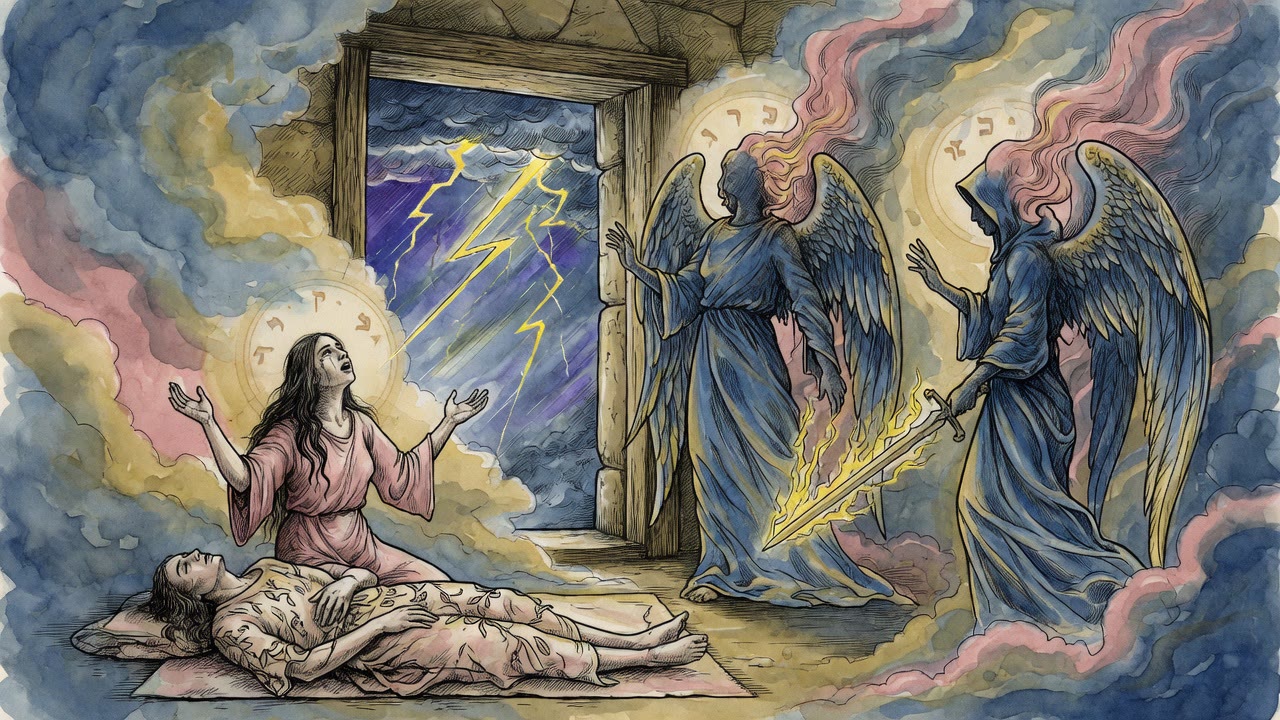
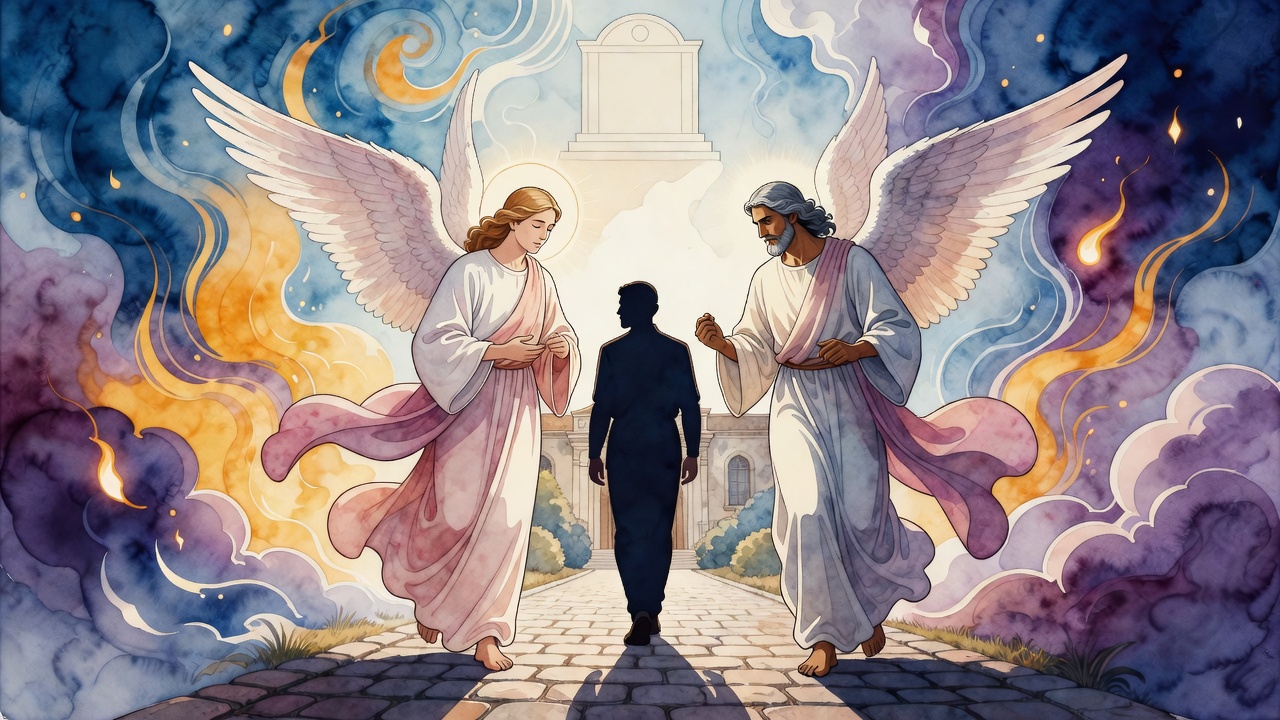
As it is stated: “By the word of God the heavens were made, and all of their hosts by the breath of His mouth” (Psalms 33:6). Rav Ḥisda said that Mar Ukva said: One who prays on Shabbat evening and recites vaykhullu, the two ministering angels who accompany the person at all times place their hands on his head and say to him: “And your iniquity has passed, and your sin has been atoned” (Isaiah 6:7).
It was taught in a baraita: Rabbi Yosei bar Yehuda says: Two ministering angels accompany a person on Shabbat evening from the synagogue to his home, one good angel and one evil angel. And when he reaches his home and finds a lamp burning and a table set and his bed made, the good angel says: May it be Your will that it shall be like this for another Shabbat. And the evil angel answers against his will: Amen.
And if the person’s home is not prepared for Shabbat in that manner, the evil angel says: May it be Your will that it shall be so for another Shabbat, and the good angel answers against his will: Amen. Rabbi Elazar said: A person should always set his table on Shabbat eve with all the preparations for an important feast, even if he only needs the table set for an olive-bulk of food. And Rabbi Ḥanina said: A person should always set his table at the conclusion of Shabbat, Saturday night, for a feast in deference to the Shabbat that passed, even if he only needs the table set for an olive-bulk of food.
And with regard to the meal at the conclusion of Shabbat, they said: Hot water after Shabbat is a remedy [melugma], warm bread at the conclusion of Shabbat is a remedy. The Gemara relates: They would prepare for Rabbi Abbahu at the conclusion of Shabbat a third-born calf, and he would eat one kidney from it. When his son Avimi grew up, he said to his father: Why do you waste so much? Let us leave a kidney over from Shabbat eve, and you will not need to slaughter an entire calf for that purpose.
Indeed, they left the calf and did not slaughter it, and a lion came and ate it. This teaches that one should not be miserly when it comes to honoring Shabbat. Apropos the reward for honoring Shabbat, the Gemara cites statements about the reward for answering amen. Rabbi Yehoshua ben Levi said that anyone who answers: Amen, may His great name be blessed, wholeheartedly, with all his might, they rip his sentence, as it is stated: “When punishments are annulled in Israel, when the people offer themselves, bless the Lord” (Judges 5:2).
What is the reason for when punishments are annulled? Because the Jewish people blessed God. When one recites: Amen, may His great name be blessed, and blesses God, his punishment is annulled. Rabbi Ḥiyya bar Abba said that Rabbi Yoḥanan said: Even if one has within him a trace of idolatry, when he answers amen he is forgiven.
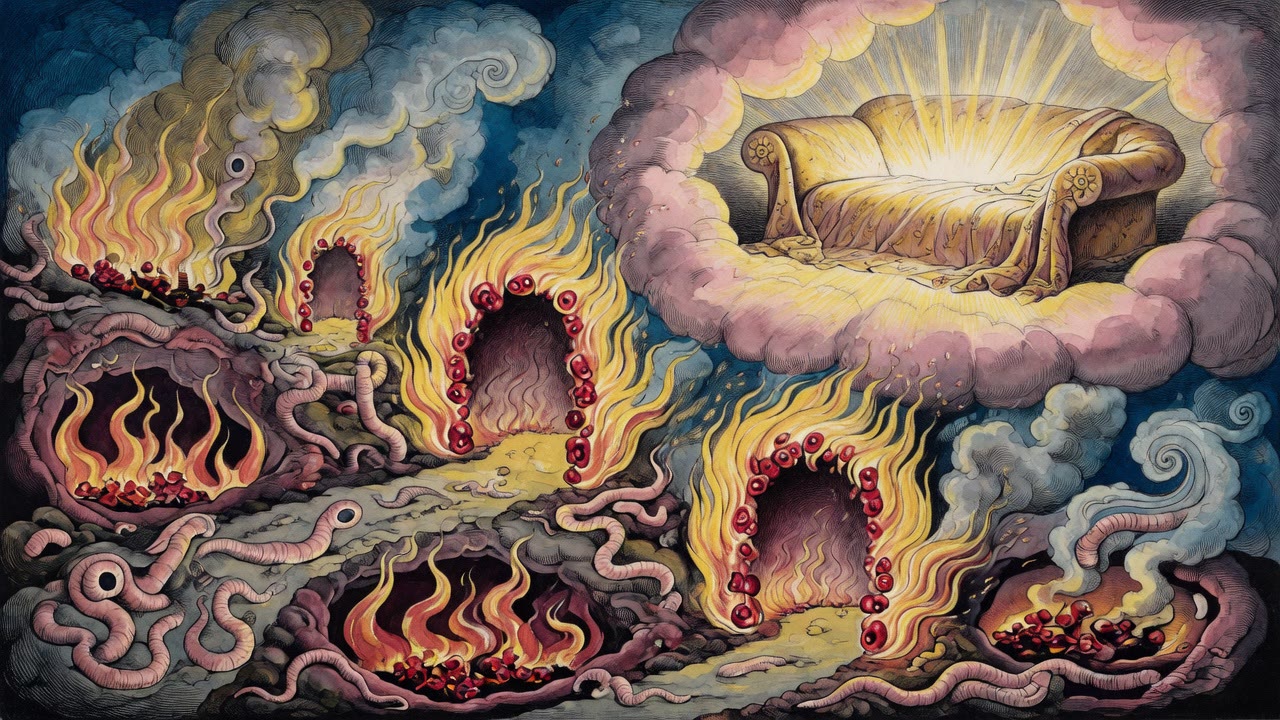
It is written here, in the verse above: “When punishments [pera’ot] are annulled.” And it is written there, with regard to the sin of the Golden Calf: “And Moses saw that the nation was wild [paru’a], for Aaron had let them loose for anyone who might rise against them” (Exodus 32:25). Even one with the wildness of idolatry is forgiven. Reish Lakish said: One who answers amen with all his strength, they open the gates of the Garden of Eden before him, as it is stated: “Open the gates, and a righteous nation shall come who keeps the faith” (Isaiah 26:2).
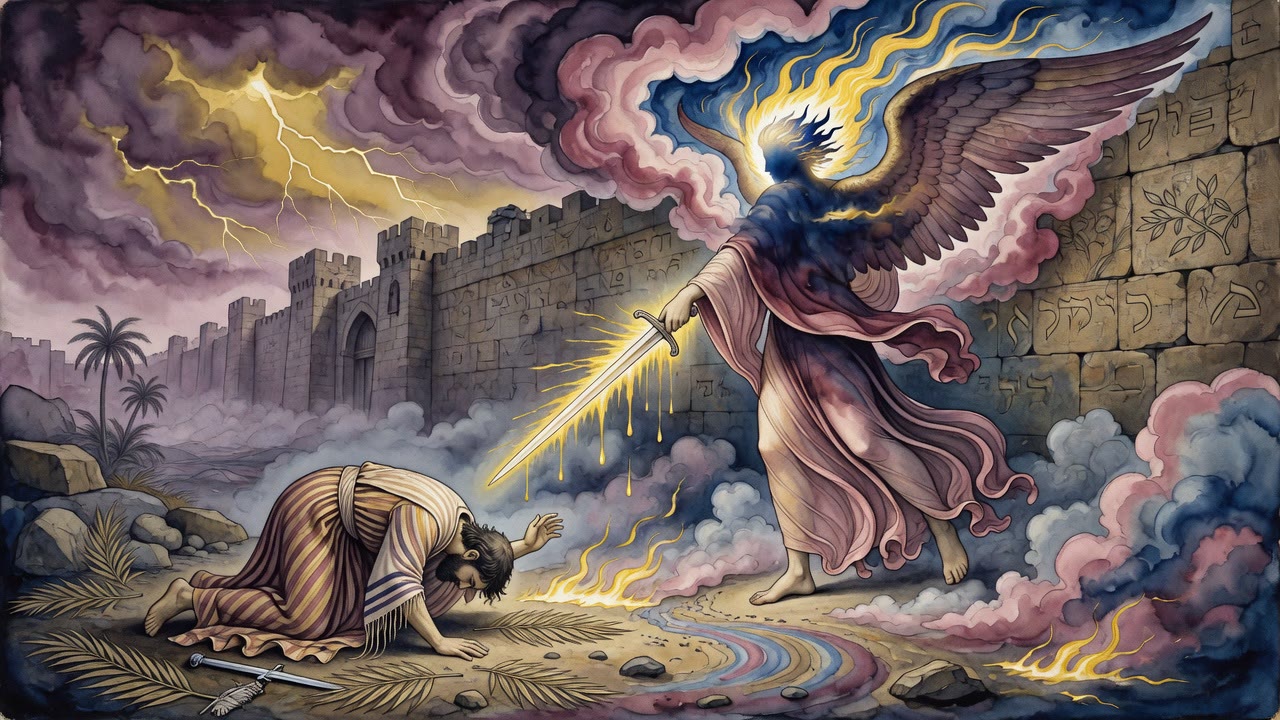
Do not read: Who keeps [shomer] the faith [emunim], but rather: Who say [she’omerim] amen. What is the allusion of the word amen? Rabbi Ḥanina said: It is an acronym of the words: God, faithful King [El Melekh ne’eman]. Rav Yehuda, son of Rav Shmuel, said in the name of Rav: Fire is only found in a place where there is desecration of Shabbat, as it is stated: “And if you do not heed Me to sanctify the day of Shabbat, and to refrain from carrying burdens and come to the gates of Jerusalem on the day of Shabbat, and I will light a fire in its gates and it will consume the palaces of Jerusalem and it will not be extinguished” (Jeremiah 17:27).
The Gemara asks: What is the meaning of: And it will not be extinguished? Rav Naḥman bar Yitzḥak said: Fire will break out at a time when people are not found to extinguish it. Abaye said: Jerusalem was destroyed only because people desecrated the Shabbat in it, as it is stated: “And from My Shabbatot they averted their eyes, and I was profaned among them” (Ezekiel 22:26). Several punishments were decreed to befall Jerusalem as punishment for this transgression.
The Gemara suggests additional reasons for the destruction of Jerusalem. Rabbi Abbahu said: Jerusalem was destroyed only because its citizens intentionally omitted recitation of Shema morning and evening, as it is stated: “Woe to those who rise early in the morning and pursue the drink and are aflame from wine until late in the evening” (Isaiah 5:11). And it is written in the continuation of that passage: “And their drinking parties have lyre and lute, drum and flute and wine, and they do not look upon the actions of God, and they do not see His hands’ creations” (Isaiah 5:12).
This means that in the morning and evening, when the Jews should have been reciting Shema, they were drinking wine and liquor. And it is written in that passage: “Therefore My nation is being exiled for its ignorance; its honor will die of hunger and its multitudes will be parched with thirst” (Isaiah 5:13). Rav Hamnuna said: Jerusalem was destroyed only because schoolchildren there were interrupted from studying Torah, as it is stated: “And I am filled with the wrath of God, I cannot contain it, pour it onto the infants in the street and onto the gathering of youths together, for men and women alike will be captured, the elderly along with those of advanced years” (Jeremiah 6:11).
Rav Hamnuna explains: What is the reason that the wrath is poured? It is because infants are outside in the streets and are not studying Torah. Ulla said: Jerusalem was destroyed only because people had no shame before each other, as it is stated: “They acted shamefully; they have performed abominations, yet they neither were ashamed nor did they know humiliation. Therefore, they will fall among the fallen, they will fail at the time that I punish them, said God” (Jeremiah 6:15).
Rabbi Yitzḥak said: Jerusalem was destroyed only because its small and the great citizens were equated. They did not properly value the prominent leaders of their generation, as it is stated: “And the common people were like the priest, the slave like his master, the maidservant like her mistress, the buyer like the seller, the lender like the borrower, the creditor like the one indebted to him” (Isaiah 24:2).
And it is written afterward: “The land shall be utterly desolate and completely plundered, for God has said this” (Isaiah 24:3). Rav Amram, son of Rabbi Shimon bar Abba, said that Rabbi Shimon bar Abba said that Rabbi Ḥanina said: Jerusalem was destroyed only because the people did not rebuke one another, as it is stated: “Her ministers were like stags that found no pasture, and they walked without strength before their pursuer” (Lamentations 1:6).
Just as this stag turns its head toward the other’s tail when it grazes, and each one feeds on its own, so too, the Jewish people in that generation lowered their faces to the ground and did not rebuke one another. Rabbi Yehuda said: Jerusalem was destroyed only because they disparaged the Torah scholars in it, as it is stated: “And they mocked the messengers of God and disdained His words and taunted His prophets, until the wrath of God arose against His people, until it could not be healed” (II Chronicles 36:16).
What is the meaning of: Until it could not be healed? Rav Yehuda said that Rav said: It means that anyone who disparages Torah scholars cannot be healed from his wound. Rav Yehuda said that Rav said: What is the meaning of that which is written: “Do not touch My anointed ones and do My prophets no harm” (I Chronicles 16:22)? “Do not touch My anointed ones,” these are the schoolchildren, who are as precious and important as kings and priests (Maharsha); “and do not harm My prophets,” these are Torah scholars.
Reish Lakish said in the name of Rabbi Yehuda Nesia: The world only exists because of the breath, i.e., reciting Torah, of schoolchildren. Rav Pappa said to Abaye: My Torah study and yours, what is its status? Why is the Torah study of adults worth less? He said to him: The breath of adults, which is tainted by sin, is not similar to the breath of children, which is not tainted by sin.
And Reish Lakish said in the name of Rabbi Yehuda Nesia: One may not interrupt schoolchildren from studying Torah, even in order to build the Temple. And Reish Lakish said to Rabbi Yehuda Nesia: I have received from my ancestors, and some say that he said to him: I have received from your ancestors as follows: Any city in which there are no schoolchildren studying Torah, they destroy it. Ravina said: They leave it desolate.
And Rava said: Jerusalem was destroyed only because there were no more trustworthy people there, as it is stated: “Roam about the streets of Jerusalem and see, and search its plazas, if you can find a person, who acts justly, who seeks integrity, that I should forgive it” (Jeremiah 5:1). The Gemara asks: Is that so? Didn’t Rav Ketina say: Even at the time of Jerusalem’s failure, trustworthy people did not cease there, as it is stated: “For a man will grab his brother of his father’s house and say: You have a garment.
Come be a chief over us and let this ruin be under your care” (Isaiah 3:6)? Things that people use to cover up like a garment, secrets, are in your hands and you know about them. Therefore, you should be a leader of the community. And that which is stated: “And let this ruin be under your care,” meaning:

 Click for full size