Pharaoh Chased God's Own Army Into the Sea
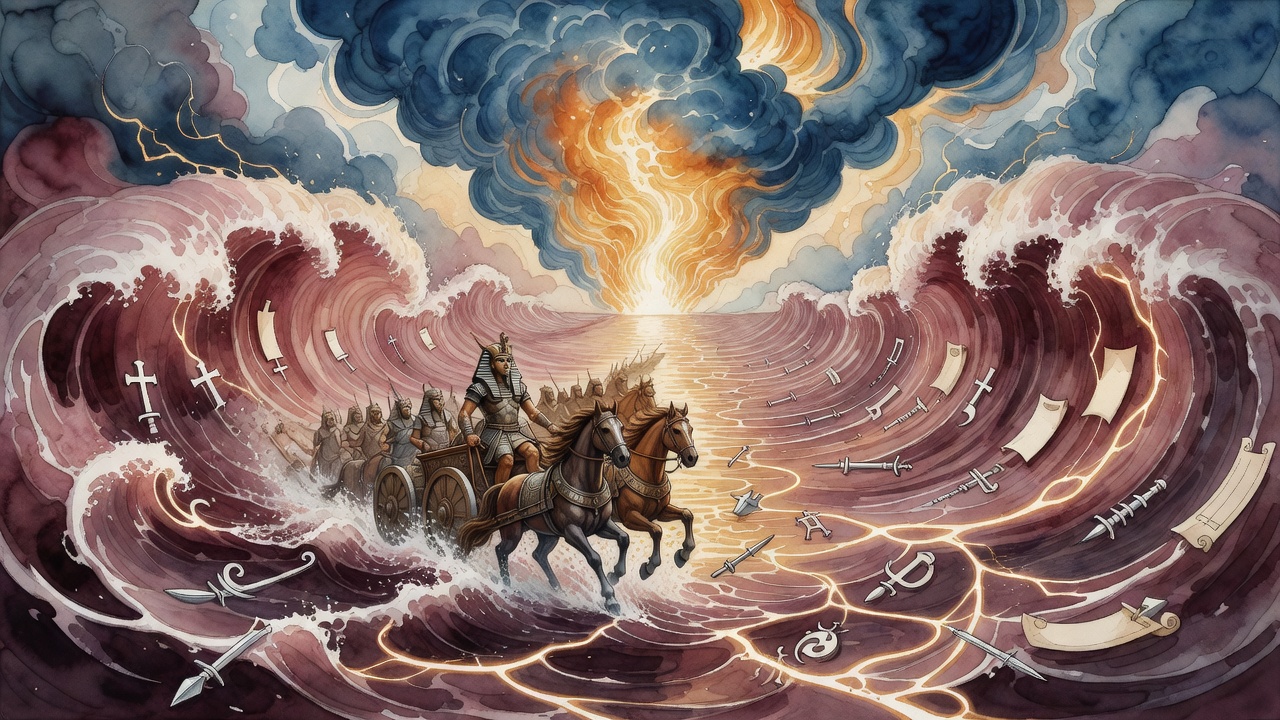
Pharaoh rides into the sea with horses and iron, and God answers every weapon in Pharaoh's own language before the waters close.
Table of Contents
 Click for full size
Pharaoh Brought His Best Vocabulary
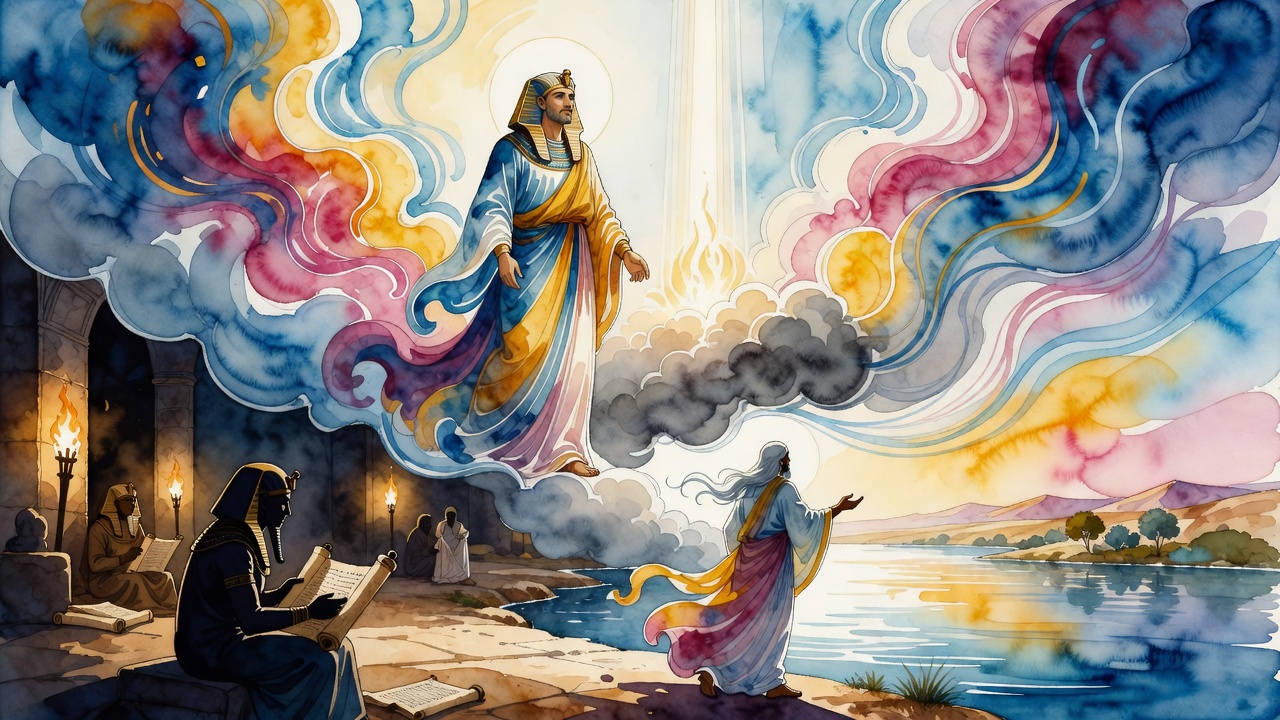
Pharaoh organized the chase the way a competent general organizes everything: matching force to force, speed to terrain, confidence to experience. He had the horses. He had the chariots. He had iron. He had arrows and the men who could place them. The Israelites were moving slowly across open ground, burdened with children and livestock, and Pharaoh was coming with the military instruments that had given Egypt its empire.
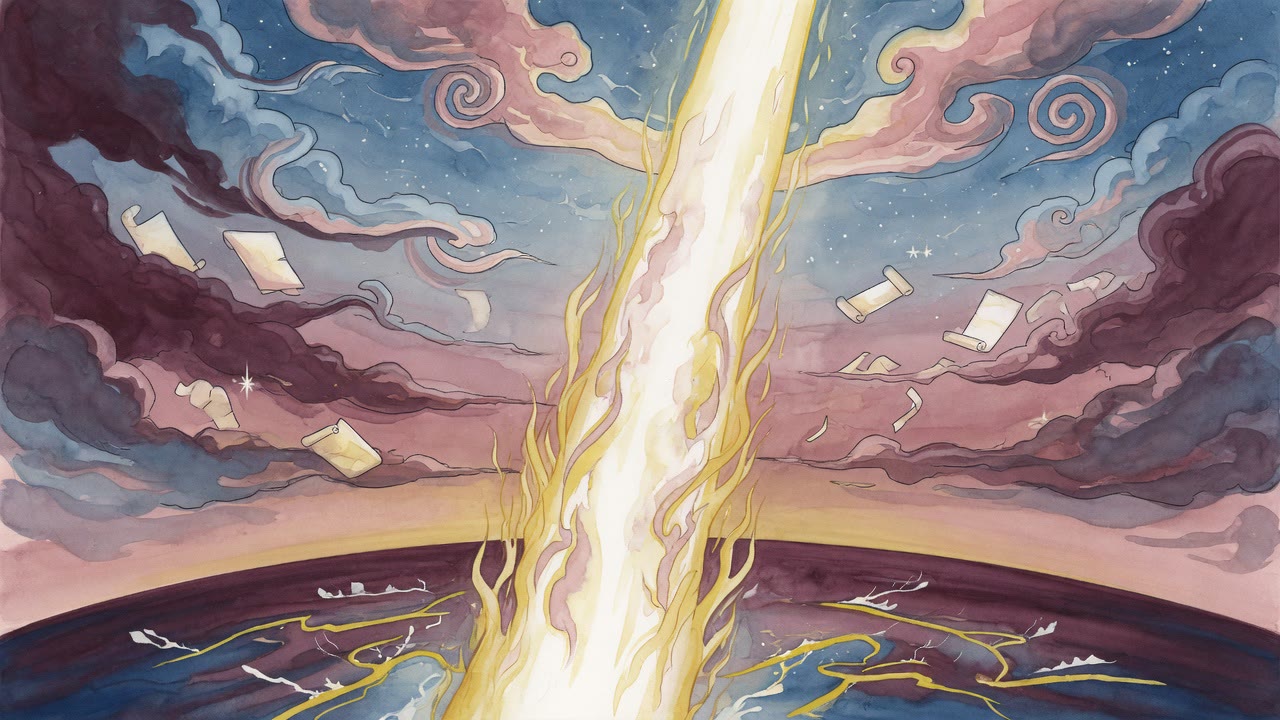
Midrash Tehillim 18:12 reads the scene through Psalm 18, where God answers enemies in their own vocabulary. If Pharaoh brought horses, God answered in the language of horses. If Pharaoh brought arrows, God scattered the army with fiery arrows from the sky. If Pharaoh brought iron, God answered with hailstones and coals, with sulfur and thunder, with cloud and fire and mud until the wheels of the chariots came off and the horses went in every direction at once.
The midrash makes a specific point about this. The battle at the sea was not a demonstration of power overwhelming power. It was a translation. Pharaoh spoke the language of military force, and God answered him in that language, phrase by phrase, until every phrase had been answered and there was nothing left to say.
No One Had Helped God Lay the Foundations
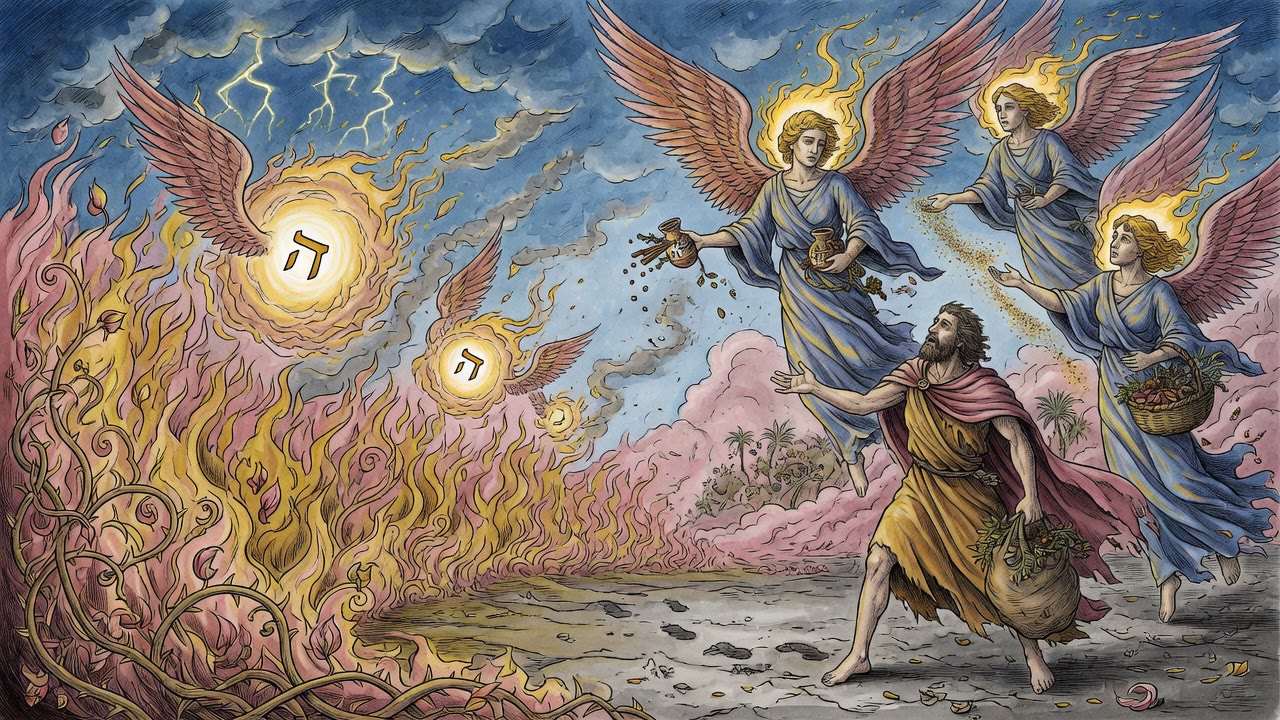
Midrash Tehillim 24:3 turns from the sea to a prior question. When were the angels created? Some say the second day, some say the fifth. But all agree: not on the first day. The reason is simple. No one should be able to say that Michael stretched the heaven to the south and Gabriel stretched it to the north and some angel helped God divide the light from the darkness.
The creation was done alone. Not because God needed the credit, but because the world's foundations cannot rest on shared labor between Creator and creature. If an angel had helped lay the first stone, Pharaoh would have had a legitimate theological argument. He could have said: the world was made by committee. I contest the committee's decision. I appeal to a different partner.
There is no such appeal. God asked Job: where were you when I laid the foundations of the earth? Who set its measurements? Who stretched out the plumb line? The questions answer themselves. No one was there. Pharaoh's horses chased a people into a sea that God had made alone, before any witness existed to record a competing claim.
The Sabbath Spoke for Adam
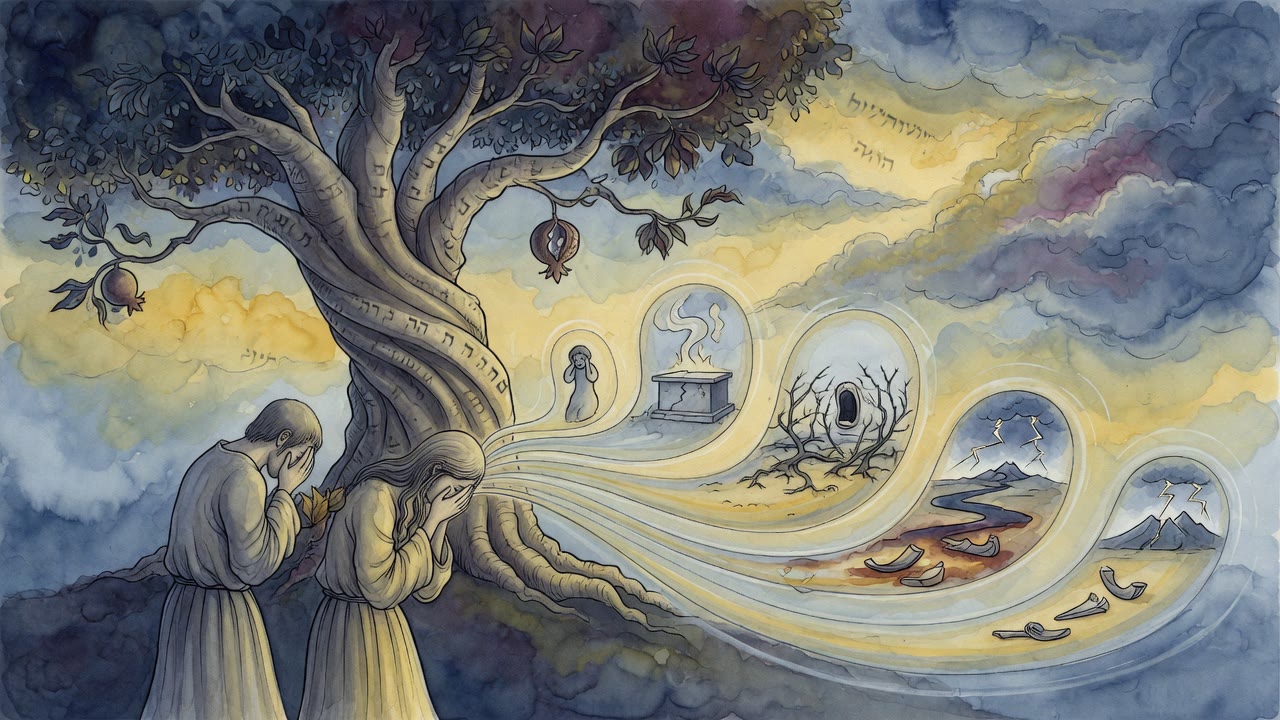
After Eden, after the transgression that cost Adam his place in the garden, the first Sabbath came. Adam did not know what to expect. He had never lived through a night before. The light went out and he thought, perhaps, that the darkness was punishment, the world withdrawing from him because he had broken the terms of his residence.
Instead, the Sabbath arrived and spoke on his behalf. The Sabbath day itself appeared before God and argued for the man who had been shaped from the dust of the earth. Midrash Tehillim 92:2 preserves the tradition that Adam composed Psalm 92, the psalm for the Sabbath day, in gratitude for this intercession.
The connection to Pharaoh runs through creation. The God who made the Sabbath a day of advocacy, who built cosmic time to work in favor of the creature who needed mercy, is not a local deity whose jurisdiction ends at a border. Pharaoh chased Israel into a sea made by the same One who made Adam and the Sabbath, who built advocacy into the structure of the week.
The Battlefield Was Never Neutral Ground
What Midrash Tehillim assembles from these three passages is a picture of Pharaoh's miscalculation. He did not simply misjudge the military contest. He misjudged the nature of the ground he was fighting on. He thought he was pursuing runaway laborers across terrain that belonged equally to anyone who could move across it fast enough.
The terrain was not neutral. The sea was made by the One whose horses were already in position. The sky was made by the One who could scatter lightning the way a man scatters seed. The Sabbath had been running its intercessions since the first week. Pharaoh rode into a universe that had been arranged, from the beginning, by the One he was trying to outrun.
← All myths