Uzza Stood in Heaven Before Egypt's Plagues
Before Egypt felt the first plague, Uzza stood in heaven's court while Pharaoh searched old records and Balaam chose the Nile.
Table of Contents
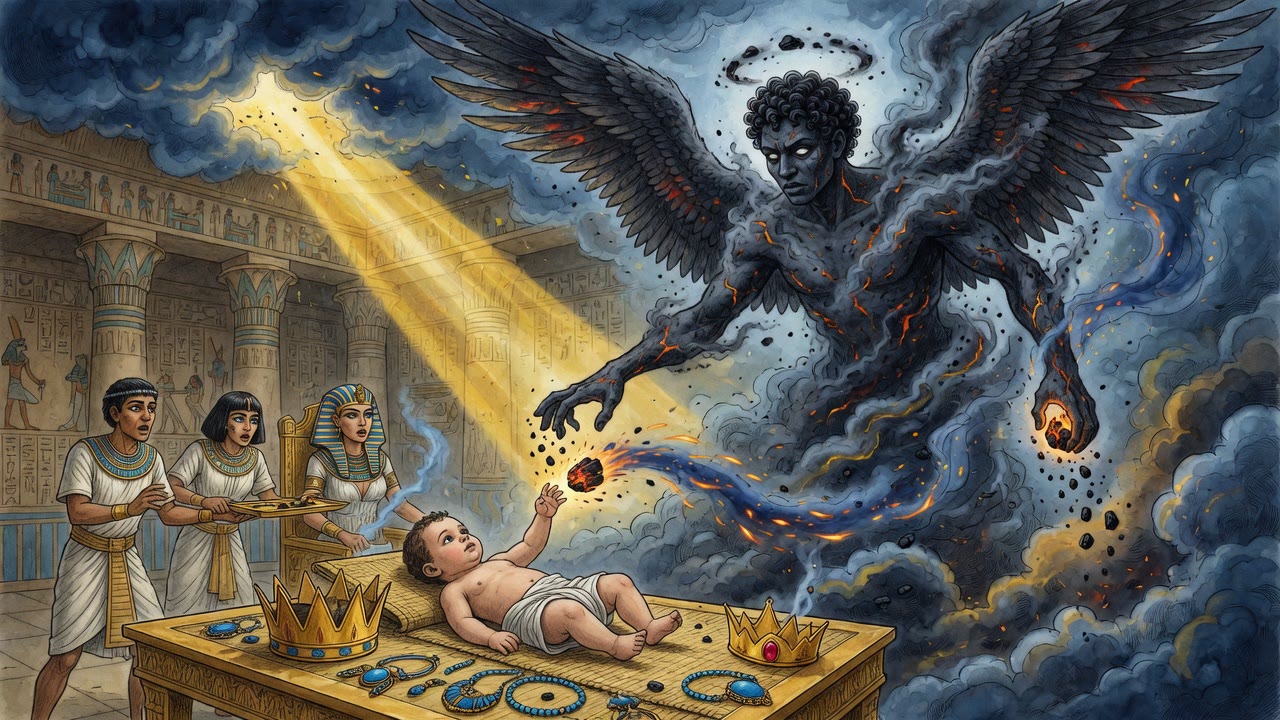
The summons reached Uzza before Egypt heard the first cry of a plague. He stood above the kingdom he guarded, while the Nile still glittered below and Pharaoh still believed the river belonged to him.
 Click for full size
The Court Opened Above Egypt
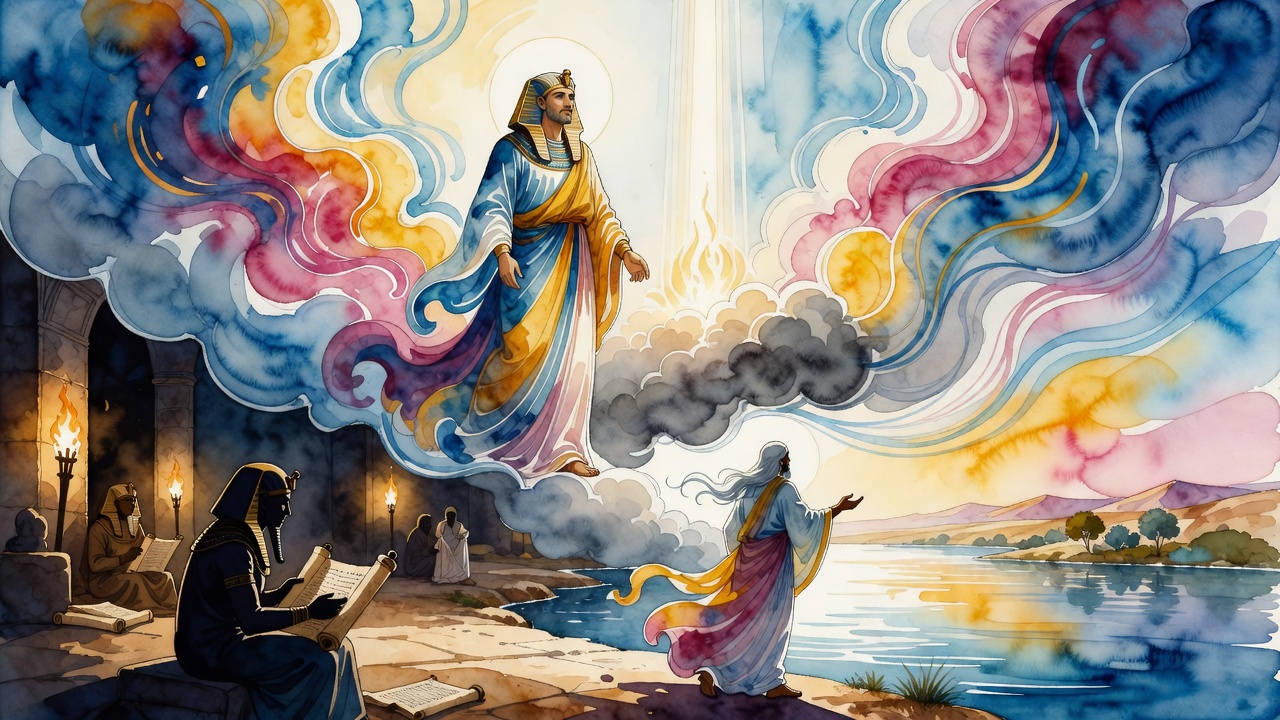
God gathered His heavenly family and placed Egypt's angel before them. The court did not begin with thunder. It began with memory. Judge truthfully, God said, between Me and Uzza, the angel of the Egyptians.
Then the old debt was brought out into the open. Egypt had once been a hungry nation counting the days until the grain ran out. Joseph entered its palaces with wisdom in his mouth and saved the land through the famine. Storehouses opened. Bodies lived. Children ate because a son of Jacob had been raised to power in a foreign court.
Debt can become gratitude. It can also rot. Egypt took the family of the man who had saved it and turned them into a labor force. The guests became bricks. The descendants of Joseph bent their backs under rigor. Every lash made the old account heavier.
The Debt Became a Chain
The cry rose from the work pits. It came from men who could no longer straighten their shoulders, from women counting children against decrees, from houses where Hebrew names were spoken under the breath. The cry reached heaven, and heaven did not treat it as noise.
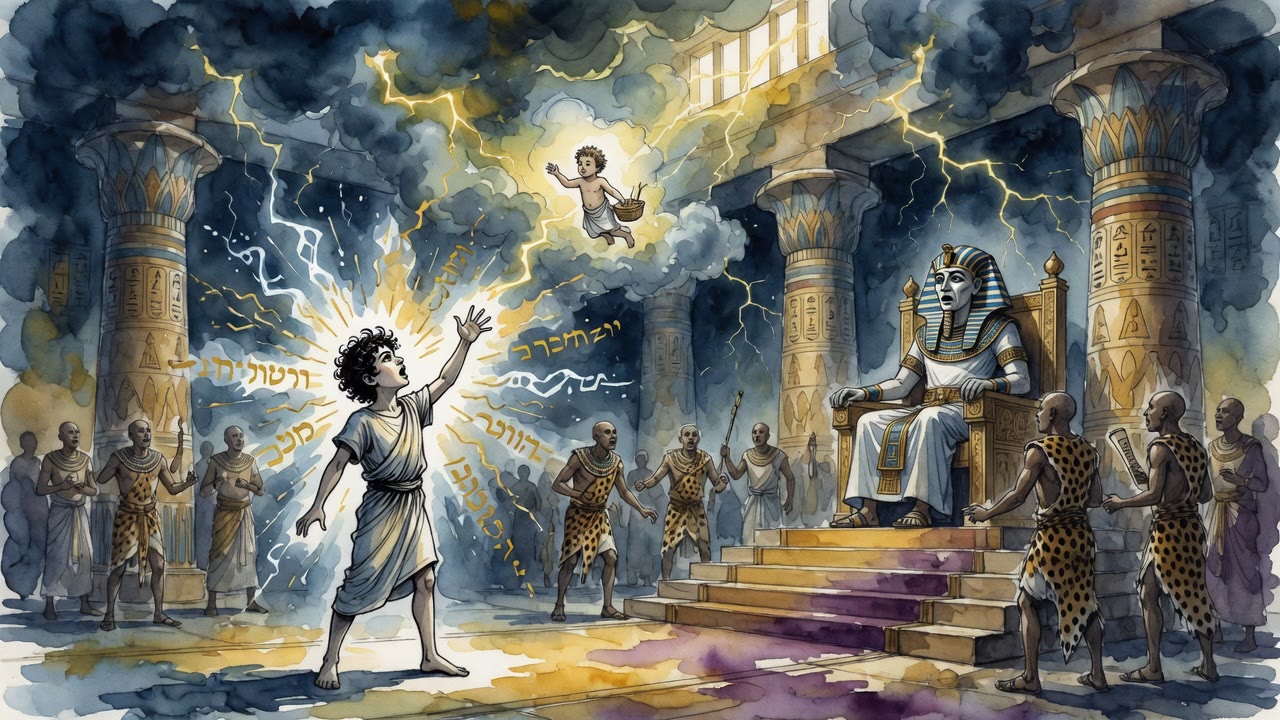
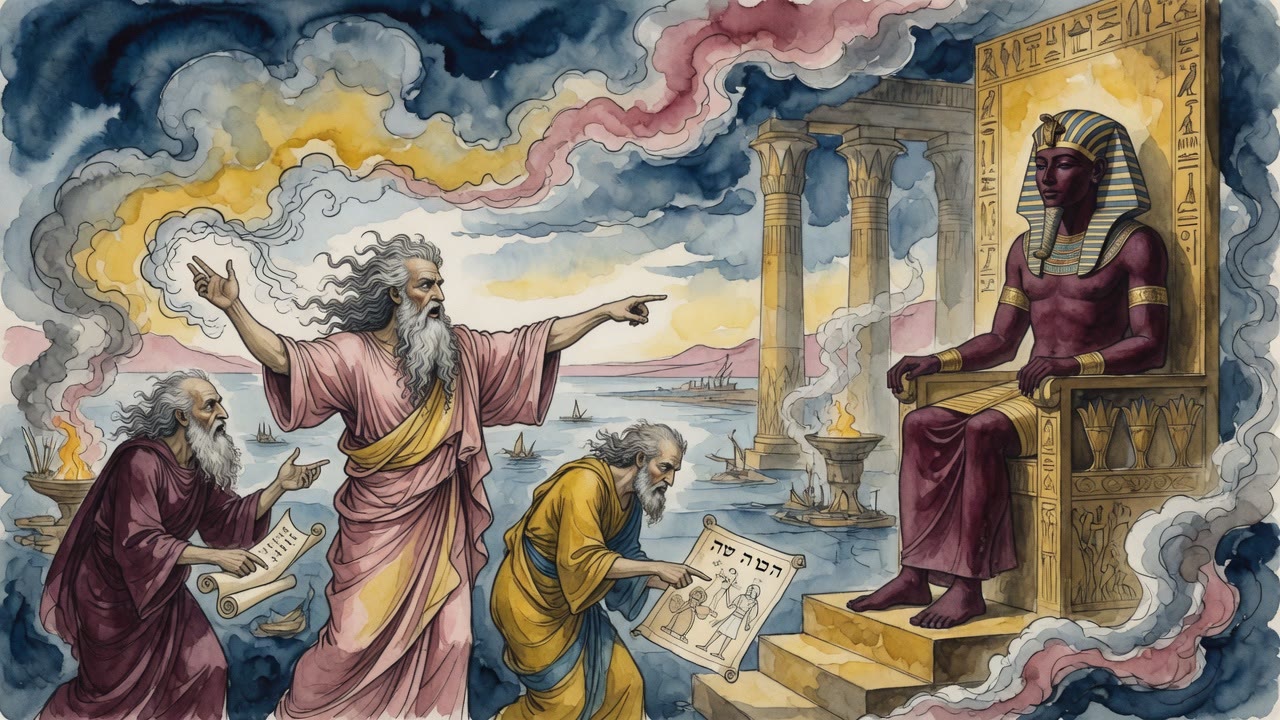
God sent Moses and Aaron with words Pharaoh could have obeyed. Let My people go. Pharaoh answered like a man offended by the existence of any command above his own. He turned to his servants and ordered them to search the records. Find this God, he demanded. Find His name among the old powers. Tell me whether He appears in the royal lists.
The servants searched. They came back with a name older than Pharaoh's pride, a name attached to ancient wisdom and kings before kings. Pharaoh heard them and hardened. A record could be filed away. A river could be claimed. A slave could be worked until his voice broke.
Pharaoh Claimed the Nile
Pharaoh looked at the river and saw a throne lying flat across the earth. He announced that he had made the Nile. It fed his fields, carried his boats, reflected his monuments, and received his secrets. A man who says such a thing has stopped arguing with heaven. He has made himself too large to hear.
Above him, Uzza had to stand with that claim on the record. The angel of Egypt was not accused for one cruelty alone. The charge held a whole history: famine answered with salvation, salvation answered with slavery, messengers answered with contempt, and a ruler who called the river his own.
The court did not need to invent a punishment. Egypt had already chosen its symbol. The water that Pharaoh praised as his possession would become the place where his power was exposed.
Balaam Chose the River
In the palace below, Balaam gave Pharaoh counsel with a cold eye. If a deliverer was coming from Israel, then the danger had to be met before the child could stand, before a staff could strike stone, before a mouth could speak in God's name. Balaam pointed toward the water.
Drown them.
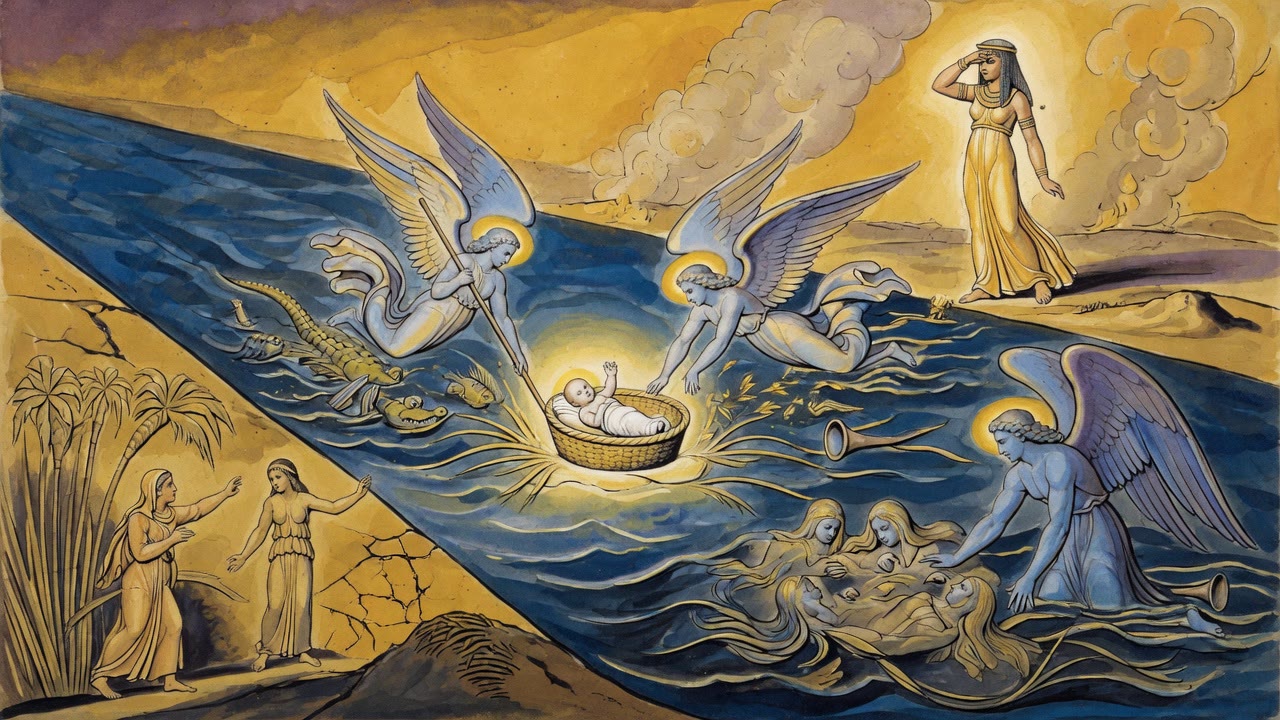
So the Nile became more than a river. It became a border between a mother's arms and Pharaoh's fear. The king who boasted that he had made the water now ordered Hebrew children into it, as if the current itself could be drafted into royal service.
Every decree has a sound. This one sounded like doors bolted at night, midwives whispering, women leaning over cradles with their breath held. It sounded like Egypt trying to kill a future it could not name.
Bitterness Entered the House of Levi
In the tribe of Levi, Amram married Jochebed, and the house did not wait for better weather to begin again. Jochebed was already old, 126 years old in the telling, old enough that Pharaoh's men would not have looked at her and imagined a threat. Life entered through the place tyranny forgot to watch.
A daughter was born first. They named her Miriam, from maror, bitterness, because the air itself had become bitter under Egypt's hand. Then Aaron was born in the season when Pharaoh's cruelty grew sharper and the blood of Israel's children stained the decree. Each birth was a refusal written in flesh.
Moses had not yet floated on the river. His basket had not yet touched the reeds. But the court above had already heard the case, and Pharaoh's own choices had prepared the evidence against him.
The Sentence Moved Downward
The plagues did not fall as a tantrum from heaven. They came after testimony. Uzza stood for Egypt, and Egypt stood inside him: the unpaid debt to Joseph, the slaves bent under labor, the murdered children, the river claimed by a king who thought creation was a royal possession.
Then judgment descended. Water would not stay obedient. The palace would not stay sealed. The gods of Egypt would not protect their worshippers from the God Pharaoh could not locate in his archives.
The river that Pharaoh claimed as his own had already been entered into evidence.
← All myths