Adam Wept at the First Sunset and Burned a Unicorn on the Altar
Eve sat facing him on the dark ground and wept because he was weeping. Neither of them knew that mornings existed until the hills went gray.
Table of Contents
 Click for full size
The Light Went Out
Adam had been alive for less than a week. He was made on the sixth day. The seventh was the Sabbath. In all of that time the world had never once gone dark. Then the Sabbath ended. The sun slid down the far edge of the sky. Color drained out of the grass. The hills he knew flattened into one black shape with no edges.
He had no word for night. Nobody had told him the sun goes somewhere it can come back from.
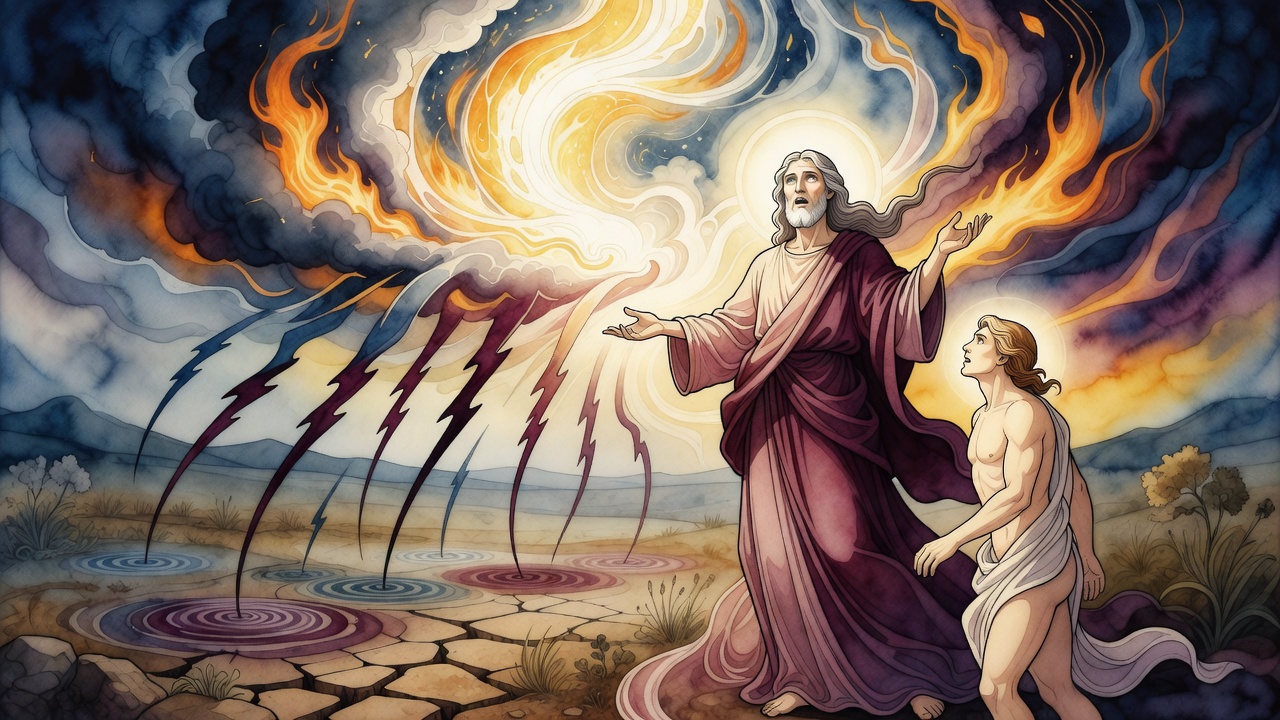
What he did have was the sentence. He had eaten what he was told not to eat, and God had stripped the light off his body the way a coat comes off a man, and then read out what the rest of his life would be. He had been carrying that list for one day. Now the world itself was going out.
Ten Things in the Dark
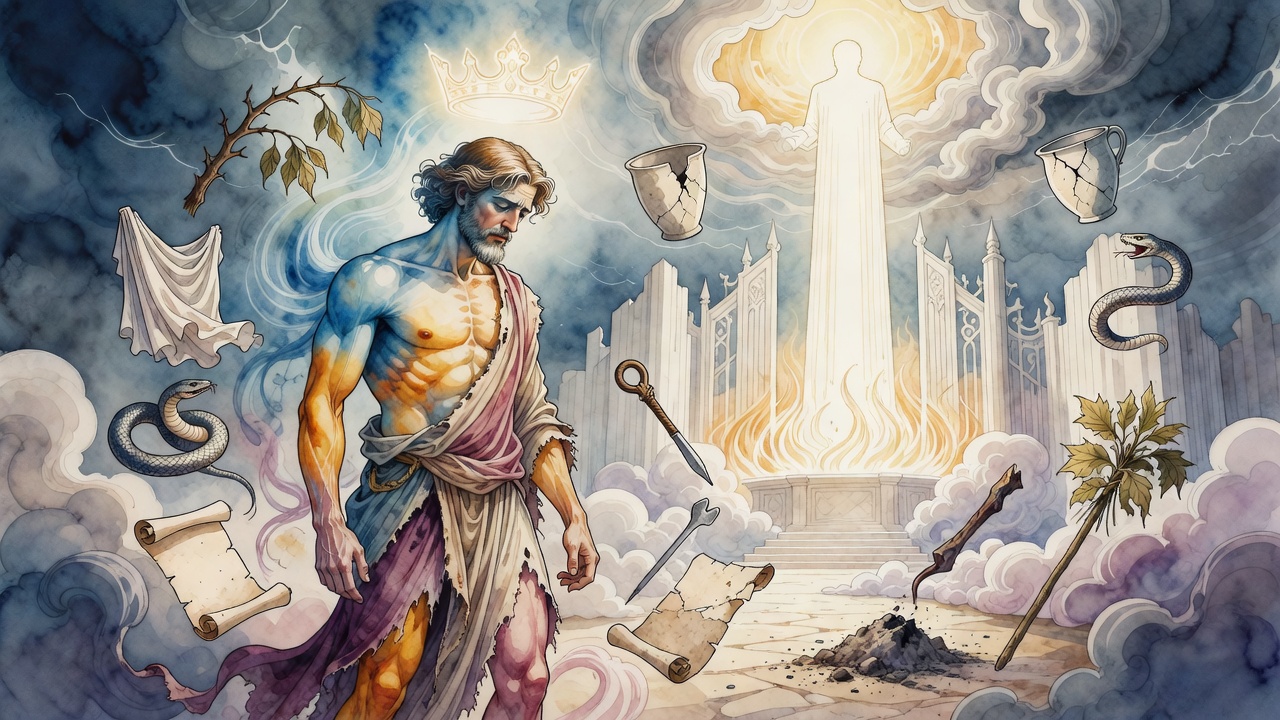
The list sat in him while the hills lost their edges. God had torn away the garment of light. Bread would be earned in sorrow. Food would turn foul inside him. Sweat would come from his body. An evil inclination, the yetzer hara (יצר הרע), was lodged where there had been none. His children would wander from land to land. Animals would have the power to kill him. His days would be few and full of trouble. At the end the worms would have him. After the worms, an accounting for every single thing he had ever done.
He had been carrying those ten blows for one day. The first sunset looked like the first installment coming due.
Woe Is Me
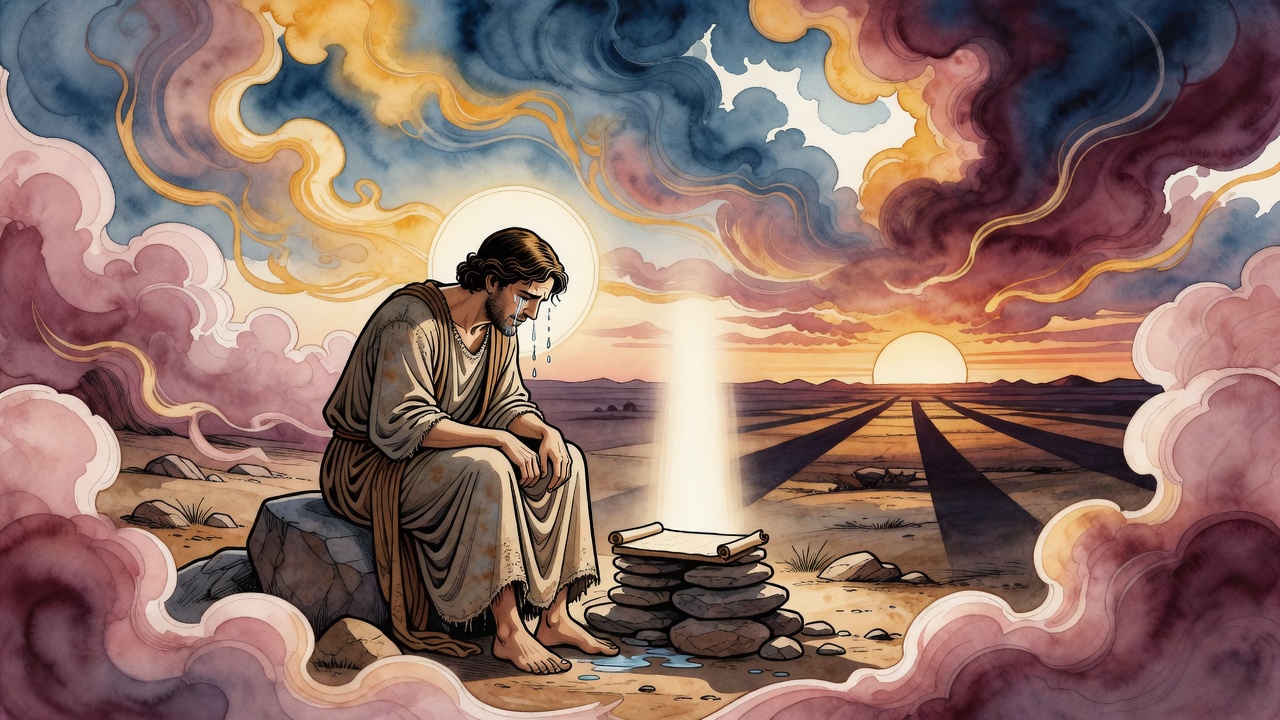
He sat down on the ground. "Woe is me," he said. "For my sake, because I sinned, the world is darkened, and it will again become void and without form. This is the death God pronounced against me."
He did not mean only his own death. He meant the grass and the rivers and the animals he had named, all of it sliding back into the emptiness it had been pulled out of, and himself the cause of it. One mouthful, and the whole thing unmade.
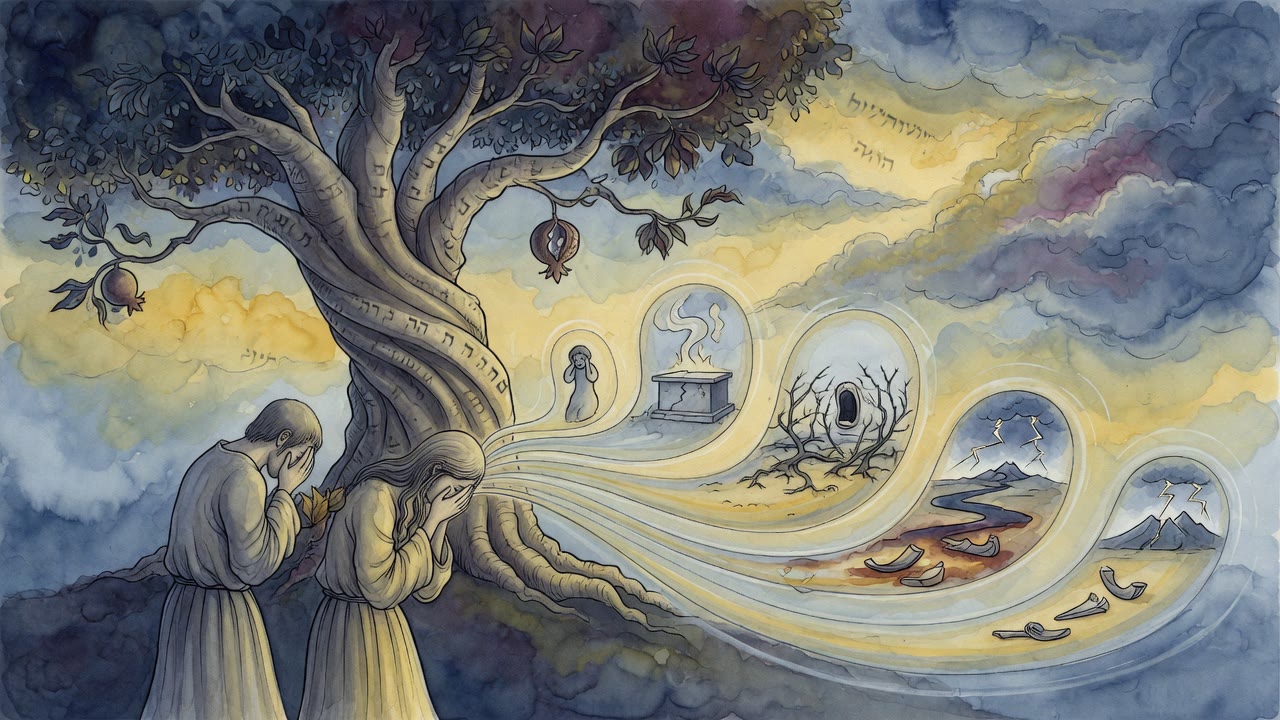
Eve sat down facing him. Neither of them slept. They wept at each other across the dark all night, and neither could see the world they were waiting to lose. Adam kept his eyes open for the moment the ground would go. He had no idea how long a night lasts. Nobody had ever been through one.
The Gray That Came Back
The black over the hills thinned. It went gray, and then the gray took on color, and the shapes he had lost came back one at a time in the order he had lost them. The sun came up the near edge of the sky. The same sun. It carried no verdict.
What he had spent the night mourning was the ordinary behavior of the world. Light and darkness had been divided from each other on the first day, before there was a man in the world to blame for anything, and they would go on taking turns long after he was under the ground. He was not large enough to break the sky. He had eaten, and he would die, and the world would do this every evening without him.
The relief hit him harder than the terror had.
Horn Before Hoofs
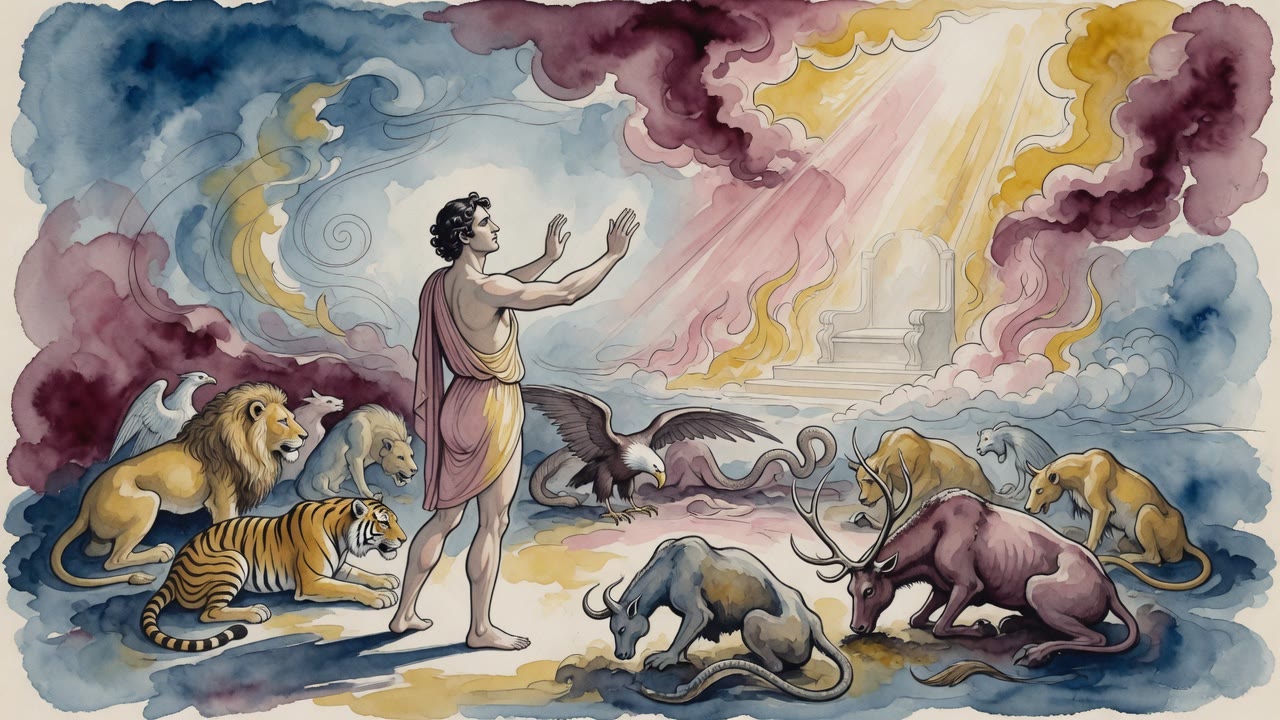
He brought an offering that morning, and he chose a strange animal for it. A unicorn, and this was the odd thing about the creature: its horn had been created before its hoofs. The weapon first, the feet afterward. It belonged to the days when things were still being assembled in an order nobody would ever use again.
Adam killed it on one particular piece of ground. There was no reason to prefer that stone to any other stone. No city stood there, no nation, no priest, no law about where a man may build. He set the first altar on the exact rock where the altar in Jerusalem would stand generations later, and he burned the unicorn there. The smoke went up off the future Temple mount while the man who lit it was still the only human being alive who had seen the sun rise twice.
Nothing had been forgiven. The sentence stood in full, every item of it, and all of it would be collected. He had thanked God for a morning, and that was the entire content of the offering.
He went back to Eve with the smell of the fire on him. That evening the sun went down again, and this time he watched it go without saying anything.
← All myths