2 min read

When the Divine Lowered Itself Into Clay

Light steps down into coarse vessels and puts on dark garments so lowly things can be borne. The Soul seeks knowledge strong enough to hold the descent.

Curated by Arthur · Told by Maggid ·
Table of Contents
  1. Garments That Dim on Purpose
  2. What Knowledge Can Hold
  3. Introduction Before the Hard Answer
  4. Clay That Learns to Carry

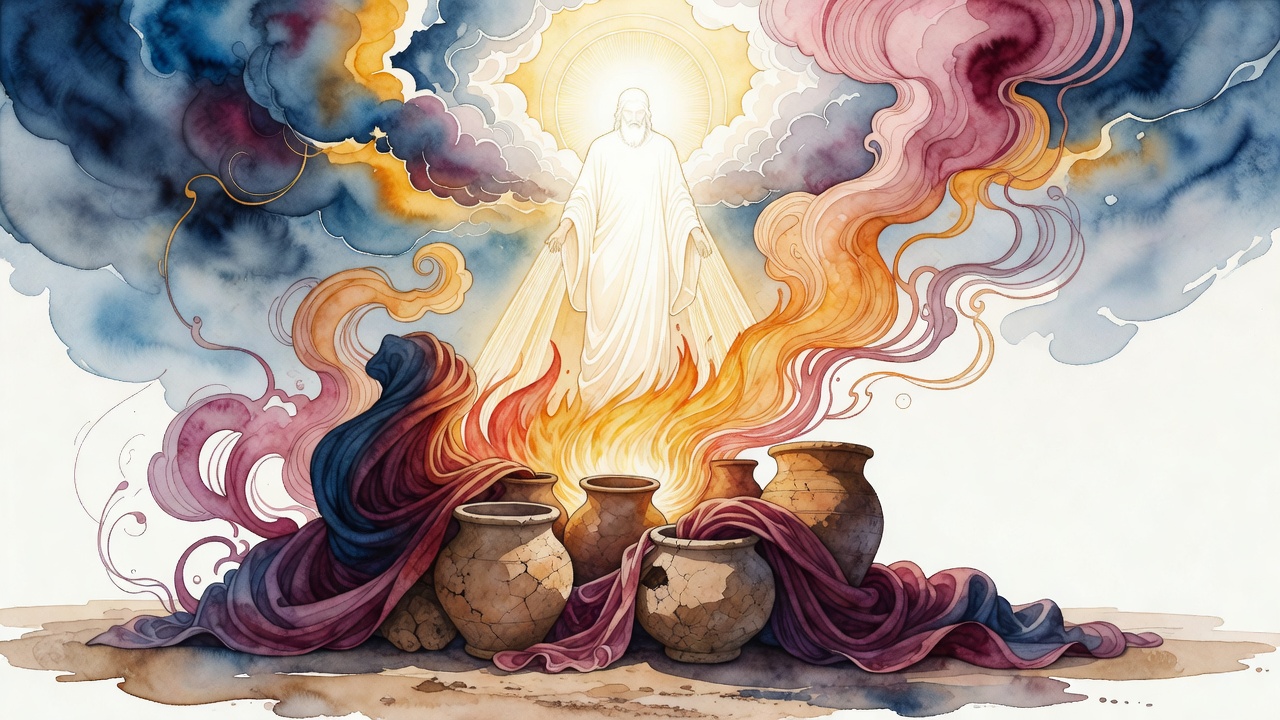
Light hit clay and almost refused. Not because clay was an enemy, but because clay was too small a cup. Heat dimmed to a temperature a body could live inside.
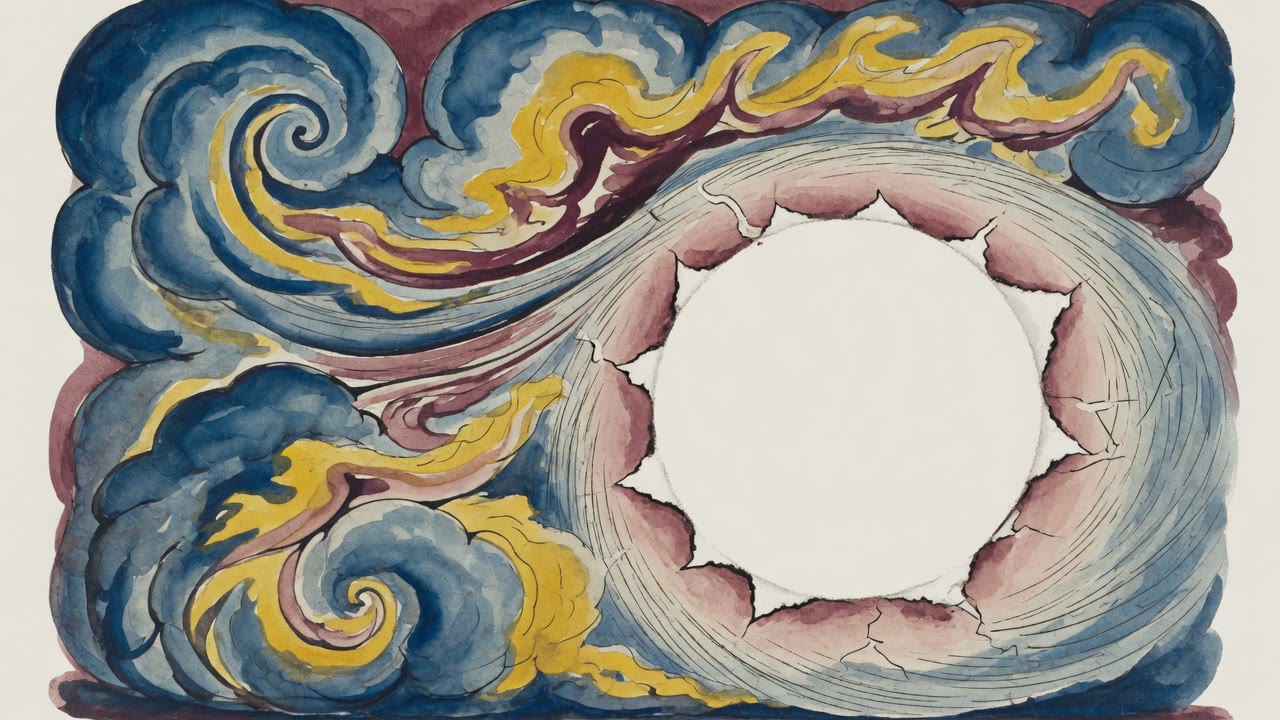
When the Divine Lowered Itself Into Clay Click for full size

The Soul watched the descent and covered its face. "Why would perfection dress in limitation?" The answer came as clothing, layer after layer of restraint, until light could touch bread without burning the field.

Garments That Dim on Purpose

God had willed a world of boundaries. Divine emanation lowered its level until it could carry physical things without shattering them. High light puts on garments of restraint the way a king puts on work clothes among tools and dust.

"Until the proper time," the Intellect said. "There will be a disrobing. Holiness will not always need this much concealment." The garments were costly. The garments were kindness.

What Knowledge Can Hold

Chochmah flashed. Binah worked the flash into implications. Between them waited Da'at, knowledge that joins insight to lived grasp. Without Da'at, wisdom and understanding sit in separate rooms.

With Da'at, the Soul knows the cost in its limbs when it chooses a smaller good for a real world. That joining is the bridge when theory must become trust.

Introduction Before the Hard Answer

Why negativity under a good God? The Intellect refused to rush. Free creatures need an arena where good can be chosen and earned. People are not an afterthought; they are the point the introduction serves.

Clay That Learns to Carry

Clay became load-bearing. Bread, speech, law, and labor sit inside that measure. The mix was chosen so perfection could show itself through repair. Until undressing, the Divine walks clothed, and the Soul learns Da'at without despising the ground.


← All myths
From the tradition

Sources

3 sources

The texts behind this telling. Some cards carry a translation of the source; others are our own retelling of it, and each card says which. Every card links out to the original.

Da'at Tevunot 116:3Da'at Tevunot

Retold in our words. Read the original at the link below.Sefaria Community Translation · CC-BY

It grapples with a fundamental question: why would the Divine, in all its perfection, choose to involve itself with a world that, let's face it, often feels pretty imperfect?

The answer, according to this text, lies in the very act of creation itself. G-d willed this world into existence, this world of limitations and physicality. But to do so, it was also decreed that the Divine emanation itself had to be lowered, to descend in level so it could actually bear these lowly things. Think of it like this: a powerful, high-voltage current needs a transformer to step down the voltage before it can power your phone.

The text is clear: this is a reduction, a diminution for the Divine emanation. It wasn’t created for this purpose. It's like asking a concert pianist to tune pianos all day. A valuable skill, sure, but not the highest expression of their talent.

So, when we see the Divine emanation providing for the physical world, we're witnessing something profound: a lowering, a dressing down, of the Divine. It needs to clothe itself in these "garments" – these limitations – even though they represent a reduction of its true essence. This is what it takes for the Divine to be the source of perfection and holiness even in this world.

But here’s the truly hopeful part. This "dressing down" isn't permanent. It arose in thought before Him, may He be blessed, that the Divine emanation would be clothed in these dark ways until the proper time. A time, the text implies, when it will be disrobed from all these garments and remain in its original clarity and essence.

The ultimate vision is a world where creation, in all its aspects, is wholly and completely holy unto HaShem (literally, "The Name", a common way to refer to G-d). A world where that initial "lowering" is no longer necessary because everything has been elevated and purified.

So, the next time you’re dealing with something mundane or frustrating, remember this idea from Da'at (Knowledge) Tevunot. Remember that even within the darkness, there's a spark of the Divine, temporarily veiled but ultimately destined to shine forth in its full glory. Perhaps our task, in this moment, is to find those sparks and nurture them, helping to bring about that time when all creation will be recognized as holy.

Full source
Da'at Tevunot 119:1Da'at Tevunot

Retold in our words. Read the original at the link below.Sefaria Community Translation · CC-BY

In Da'at Tevunot the Soul says: "Gather in summary that which you said at length up to here."

The Soul asks for compression, not a new gate. The summary itself is not in this line.

Full source
Da'at Tevunot 122:1Da'at Tevunot

Retold in our words. Read the original at the link below.Sefaria Community Translation · CC-BY

This teaching stands at the opening of section 122 of Da'at Tevunot, "The Knowing Heart," the philosophical work of Rabbi Moshe Chaim Luzzatto, known as the Ramchal, the eighteenth century kabbalist and ethicist. The book is cast as a dialogue between the Soul, who raises the deep questions, and the Intellect, who answers them in ordered stages. Here the text reaches the difficult subject of why evil and lack should exist at all within a world made by a wholly good God.

The Intellect announces that before it can address the existence of the human being in light of the presence of negativity already discussed, it must first lay down an introduction, a foundation on which the coming explanation can rest. This is the characteristic method of the Ramchal: he refuses to rush to conclusions and insists that the great questions of existence be approached only after the necessary premises are secured. The reader is told to expect a preliminary teaching rather than the answer itself.

The crucial point being prepared concerns how human beings fit into the divine plan once we acknowledge that negativity, the absence or concealment of good, has a real place in creation. For the Ramchal this is never a flaw in God's work but a deliberate condition, the arena in which free creatures can choose good and earn their share in the ultimate perfection. The introduction promised here is the groundwork for understanding that the human task is bound up with confronting lack and overcoming it, so that the goodness of God may finally be revealed in full.

Full source