Adam Was Made From a Light That Stayed Above Him
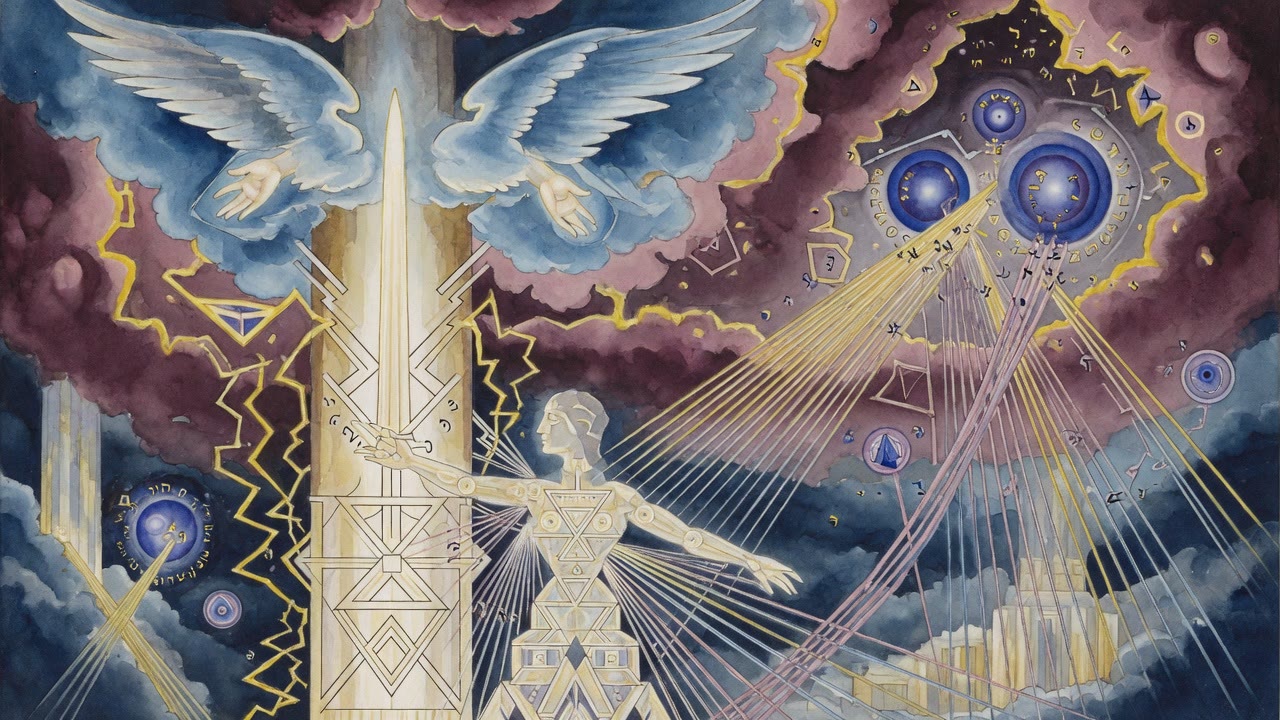
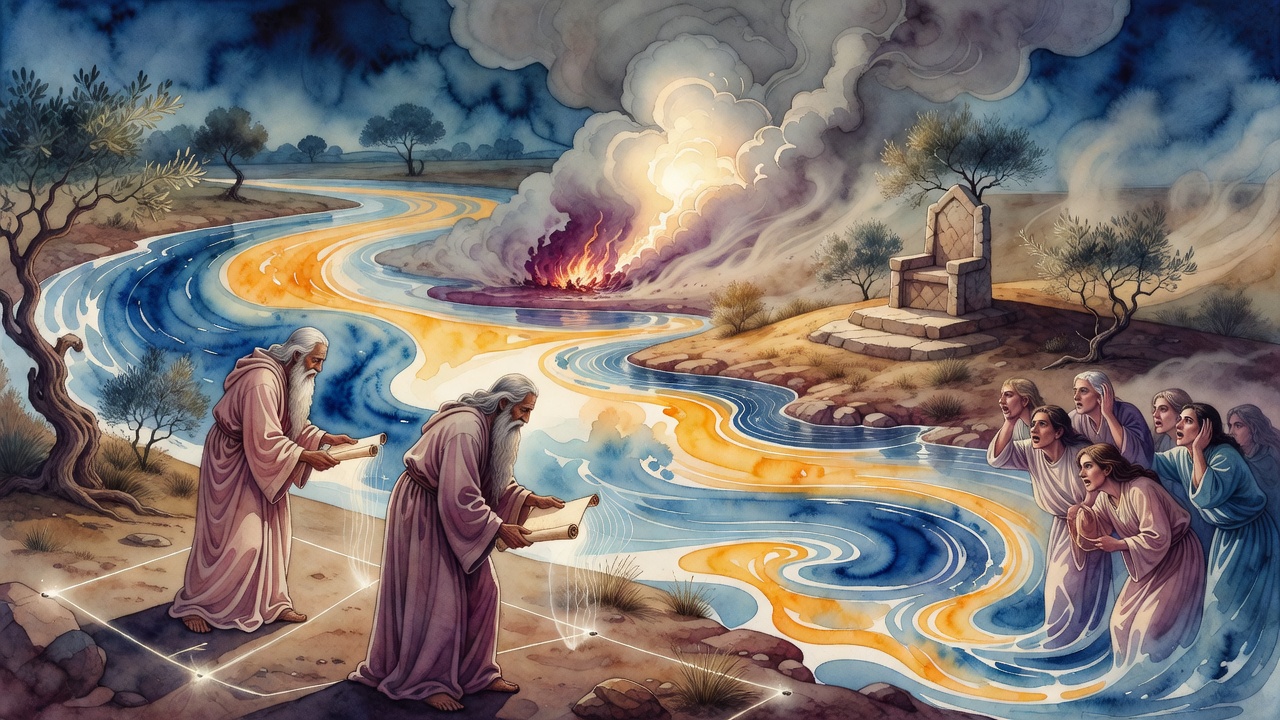
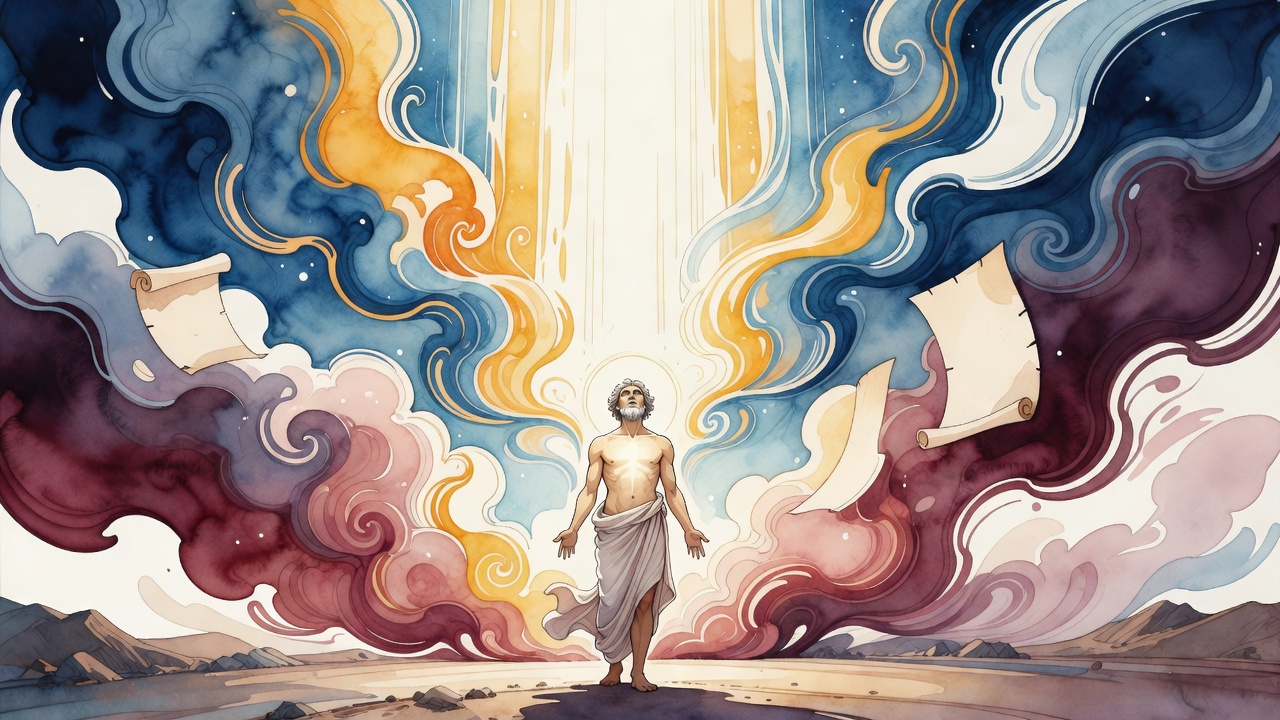
Adam stands under a divine image that hovers but does not fully enter him. The tzelem protects, guards, and descends by careful measure.
Table of Contents
 Click for full size
The Image Hovered Before It Descended
Genesis says God made the human being in His image, in His tzelem. The letter tzaddi, lamed, mem spell out the word. But the Ramchal's kabbalistic system reads the letters as levels. The lowest level, the mem, is what is closest to entering the human being. The middle, the lamed, stands above that. The highest, the tzaddi, remains farthest above.
Adam was not fully inside the image that defined him. The tzelem hovered above Zeir Anpin, close enough to protect, not yet integrated. He began with radiance over him, light arranged at three distances, each level of the image present and real but not collapsed into the body beneath it.
This was not incomplete creation. It was careful creation. If all the light had entered at once, the human form could not have held it. The tzelem descends by measure, protecting both the light it carries and the creature it is entering.
The Image Was Built to Descend in Stages
The Ramchal's kabbalistic teaching sees the tzelem not as a fixed state but as a process. The lowest part approaches the human being first. The higher parts remain above, surrounding and guarding. The full image is always present, but its presence is graded, each level at its proper distance.
This is the condition humanity was born into. Not abandoned to the lower world without protection. Not swallowed by divine light without form. The tzelem creates a middle condition. Near but not consumed. Guarded but not complete. Real but still approaching.
The light that stays above a person is not absent from them. It governs them from the outside before it enters them from the inside. A person living under the tzelem is already shaped by it, already constrained and protected, even before the full integration happens.
Adam's Sin Disrupted the Channels
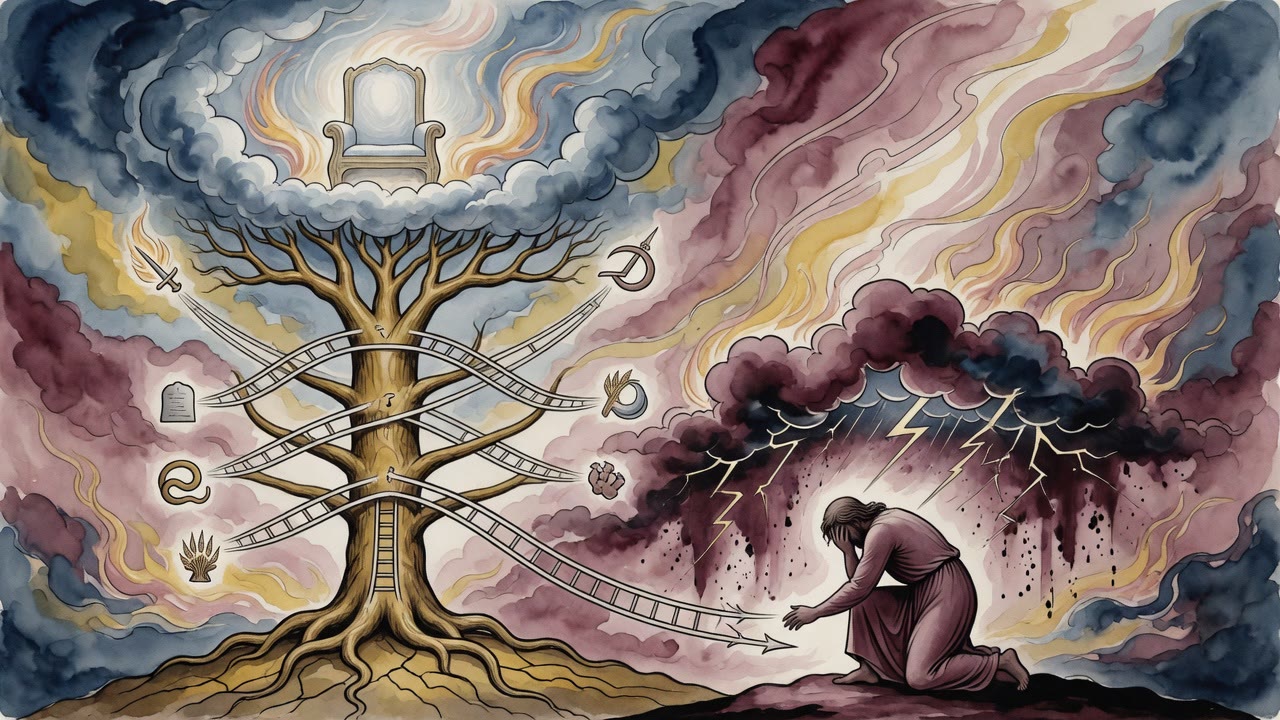
The sefirot (divine emanations) are the channels through which divine light reaches creation. Adam stood at their meeting point, where the channels converge and the light moves into the lower worlds. When he sinned, the disruption was not only personal. The channels through which the world received its governance were thrown out of alignment.
The image that had hovered above him was affected. What had been descending in careful stages was now approaching a vessel that had been damaged. The tzelem did not leave. But the distance between the image and the person it belonged to grew. The measured approach that had been protective became a kind of exile: the image present, the human being unable to receive it fully.
BaN Was the Branch That Created the Lower Realms
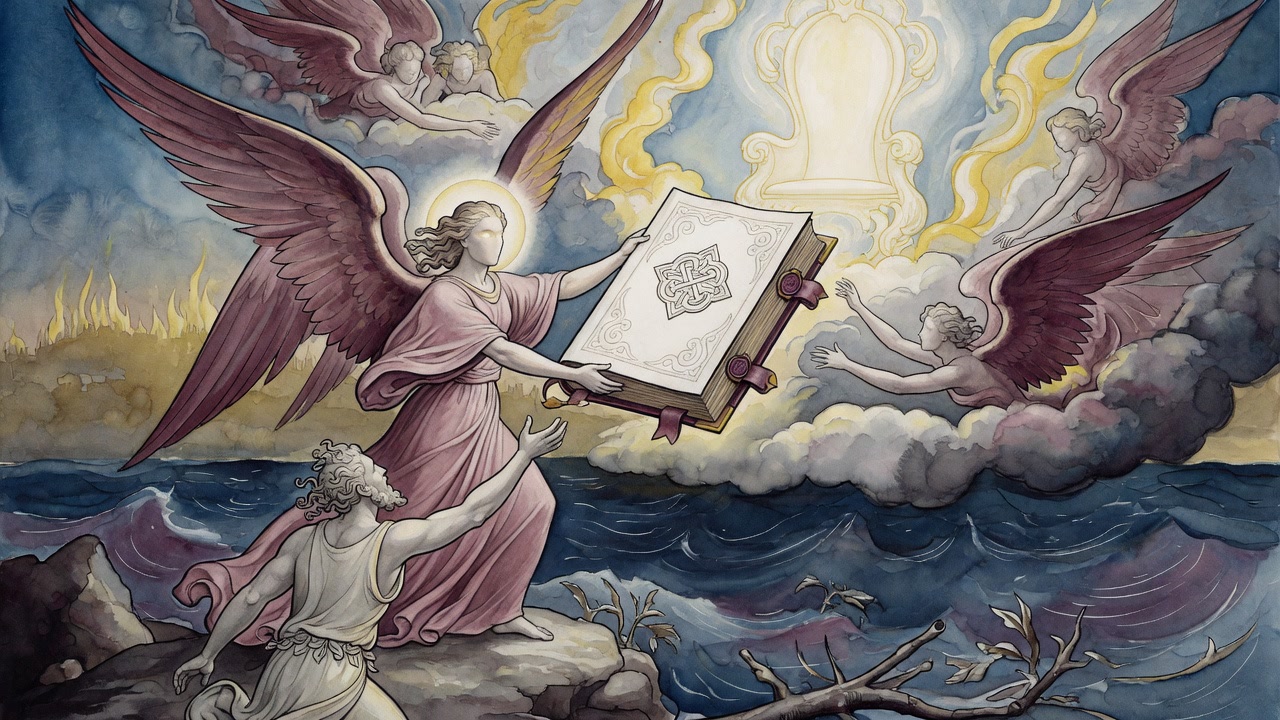
BaN is one of the great divine name-patterns in kabbalistic cosmology, the configuration associated with the vessel, the feminine, the world of making and repair. It is the branch closest to the lower worlds, the configuration through which the divine presence extends itself into matter.
Adam stands at the place where BaN extends furthest. He is the lowest branch's primary work, the being shaped by the configuration that reaches most fully into limitation. The tzelem that hovers above him and descends into him is the divine image traveling down through the name-pattern that makes embodied existence possible.
← All myths