The Tree of Life's Paths Softened God's Judgment So Adam Could Repent
The Tree of Life holds twenty-two paths. Without them light cannot act, and without sweetened judgment, Adam cannot face what he has done.
Table of Contents
 Click for full size
The Tree of Life Was a System of Paths
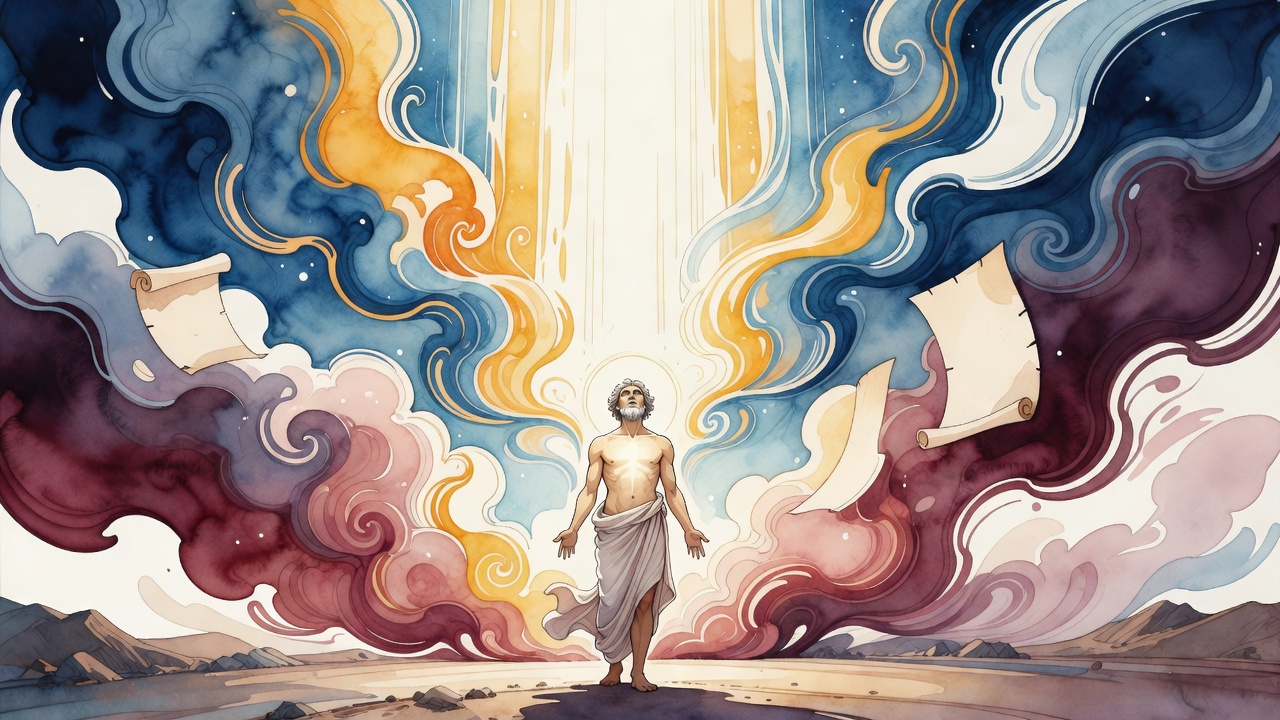
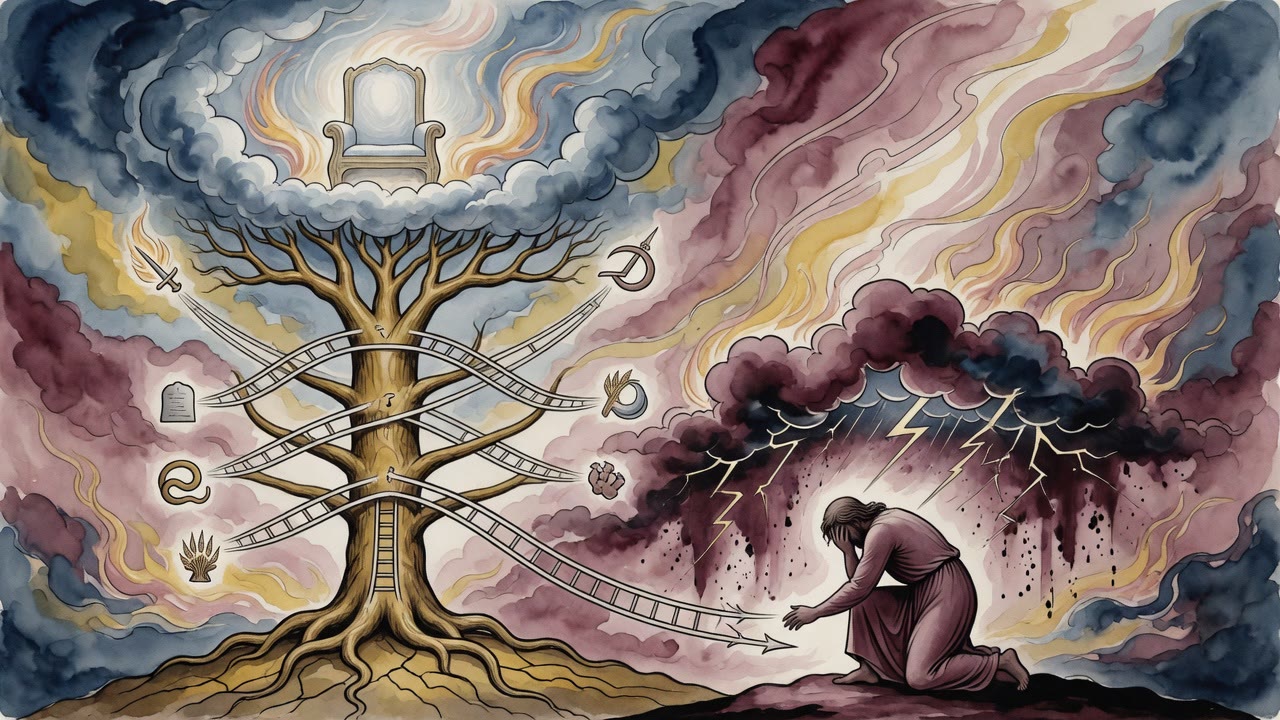
The twenty-two paths of the Tree of Life are not decoration on a diagram. They are the channels through which light can actually do its work. Without them, divine brightness exists but cannot move. With them, every act of light has a route, a limit, and a purpose. The twenty-two correspond to the Hebrew letters, and together they form every combination of kindness, judgment, and mercy that governs creation.
Kalach Pitchei Chokhmah reads the paths almost physically. Lines open. Points close. The paths do not create the light, but they tell it where to go. A world without the paths would be flooded and undirected. A world with only the paths and no light would be an empty map.
Yesod Stood in the Garden
Yesod, the sefirah (a divine emanation) of foundation, the channel of transmission between upper and lower, stands in paradise. Not as an abstraction but as the active principle that allows what heaven holds to be transmitted to what earth needs. The garden is not simply a pleasant place. It is the meeting point of the transmission, the location where the flow from above has its first full encounter with the world below.
Adam in the garden is therefore Adam at the point of maximum connection. He stands where Yesod stands. He is surrounded by the paths. The kindness and the judgment and the mercy of creation are all working around him in the proportions that sustain the world.
What he does in that position does not affect only himself. When the transmission is disrupted at the point of maximum connection, everything downstream feels it.
Judgment Could Not Simply Fall on Adam
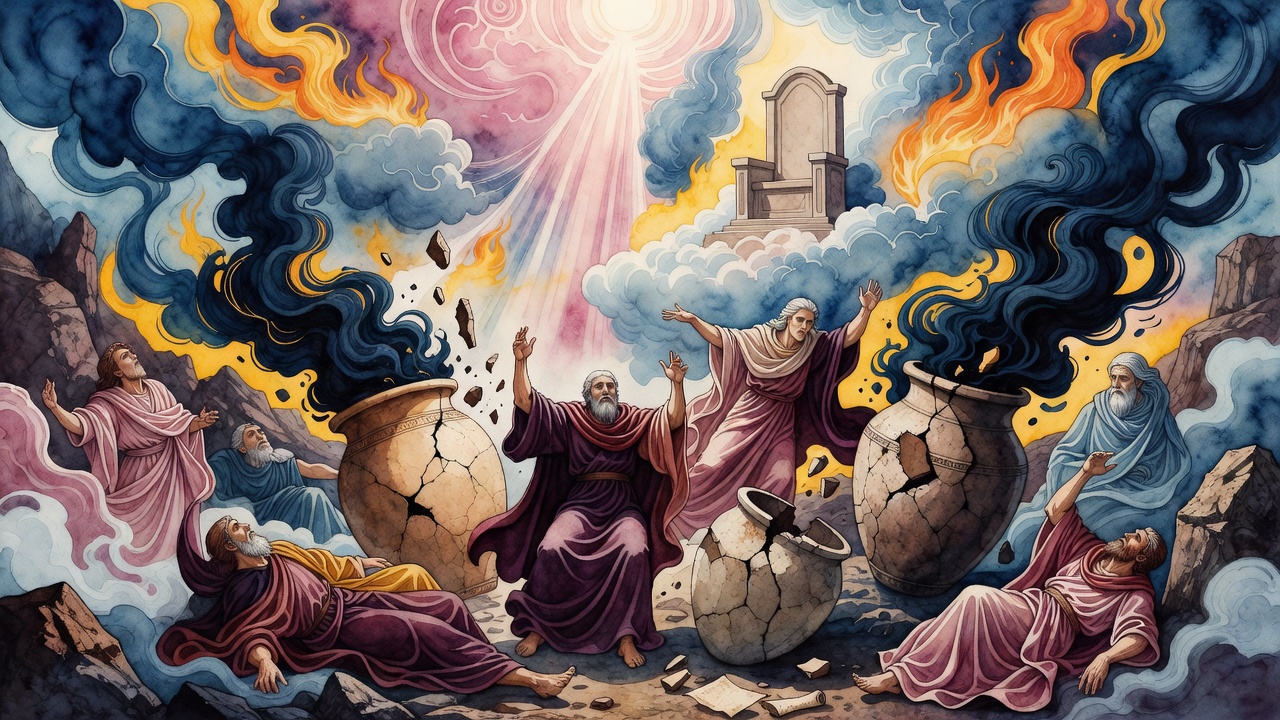
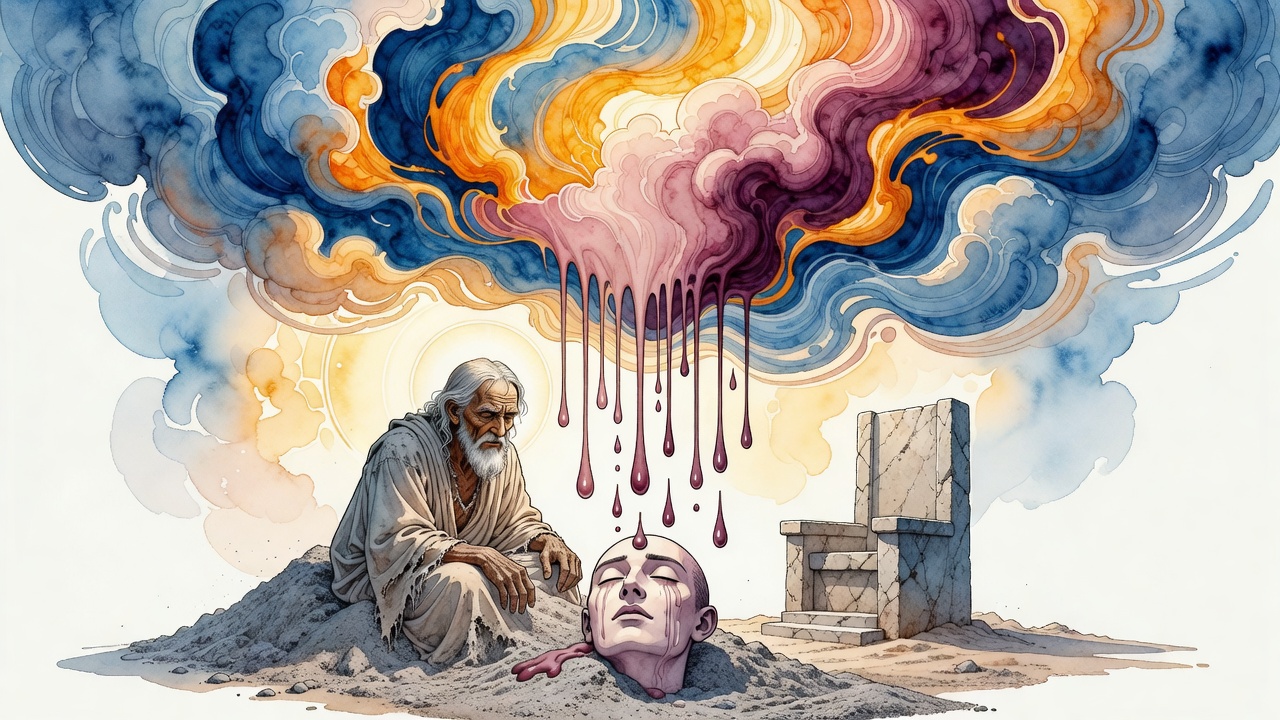
After Adam sinned, pure judgment would have destroyed him. Din, the force of strict justice, does not spare a creature that has violated the terms of its existence. But the world needed Adam to survive and to turn. Teshuvah, return, was already prepared before the world was created. It waited for the moment when the one who had turned away was ready to turn back.
For that return to happen, the judgment had to be sweetened. This is not leniency in the sense of ignoring the violation. It is the action of the higher mercy entering the judgment before the judgment acts, modifying it from within so that it can correct without annihilating. The paths do this work. They take the raw force of Din and move it through combinations of kindness and mercy until the judgment that descends is one that a creature can survive and learn from.
The Dance Between Kindness and Judgment
The paths do not privilege one force over the other. They are made from combinations of all three: Hesed, Din, and Rahamim. In any given configuration, one may be dominant, but the others are present. Judgment that has no kindness in it cannot correct; it can only consume. Kindness that has no judgment in it cannot protect; it can only indulge. Mercy holds them in the proportions that keep a damaged world moving toward repair.
Adam's situation after the sin required all three. Strict judgment for the violation. Kindness for the creature God had made. Mercy to hold both until the creature could orient toward return. The Tree of Life, with its twenty-two paths, was the structure that made those three forces available in the right combinations at the right moment.
← All myths