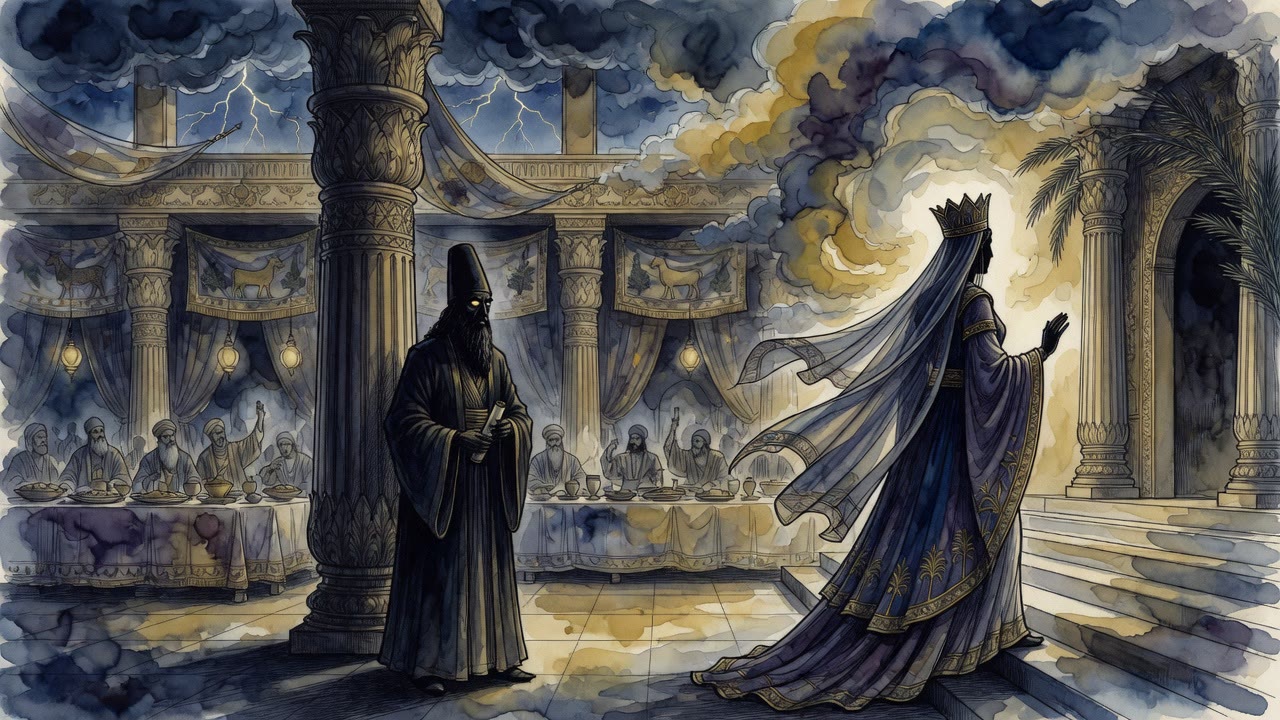
Esther Replaced Vashti's Portrait and Changed Nothing About Herself
Hegai could hang if the king found the new girl unprepared. Esther would not touch the creams or the royal food, so he buried her in jewels.
Table of Contents
 Click for full size
The Portrait He Would Not Take Down
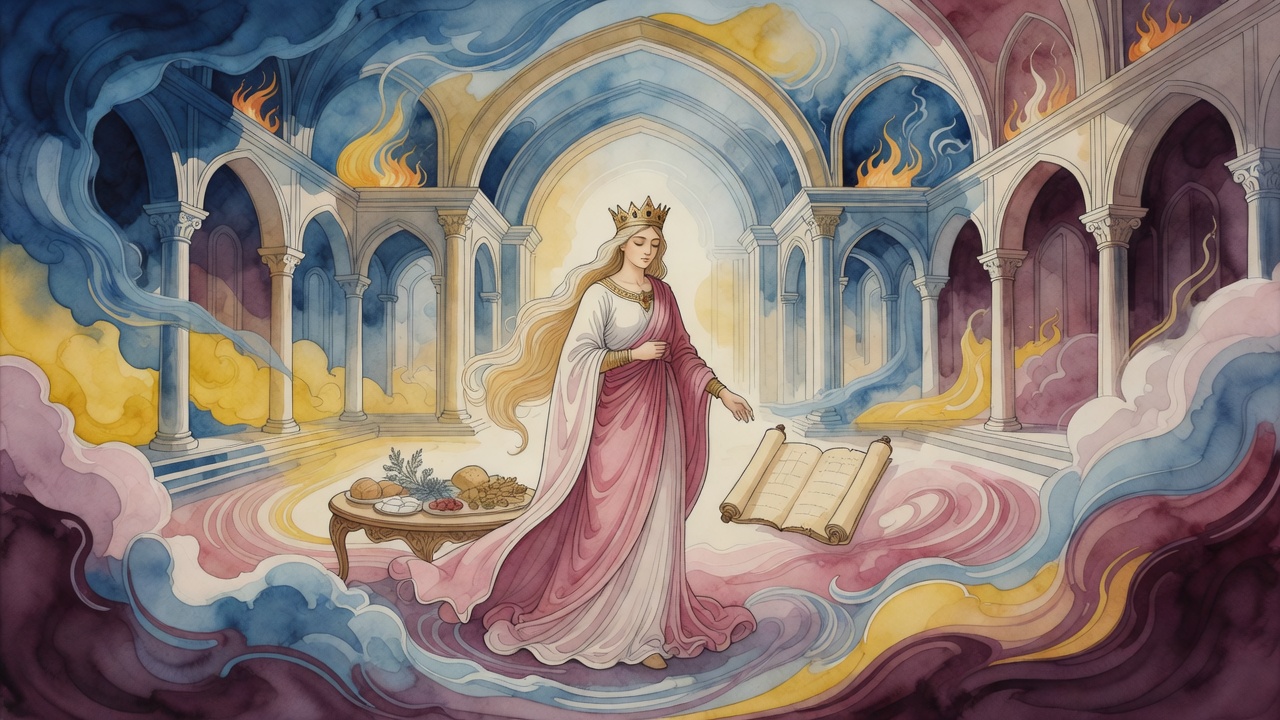
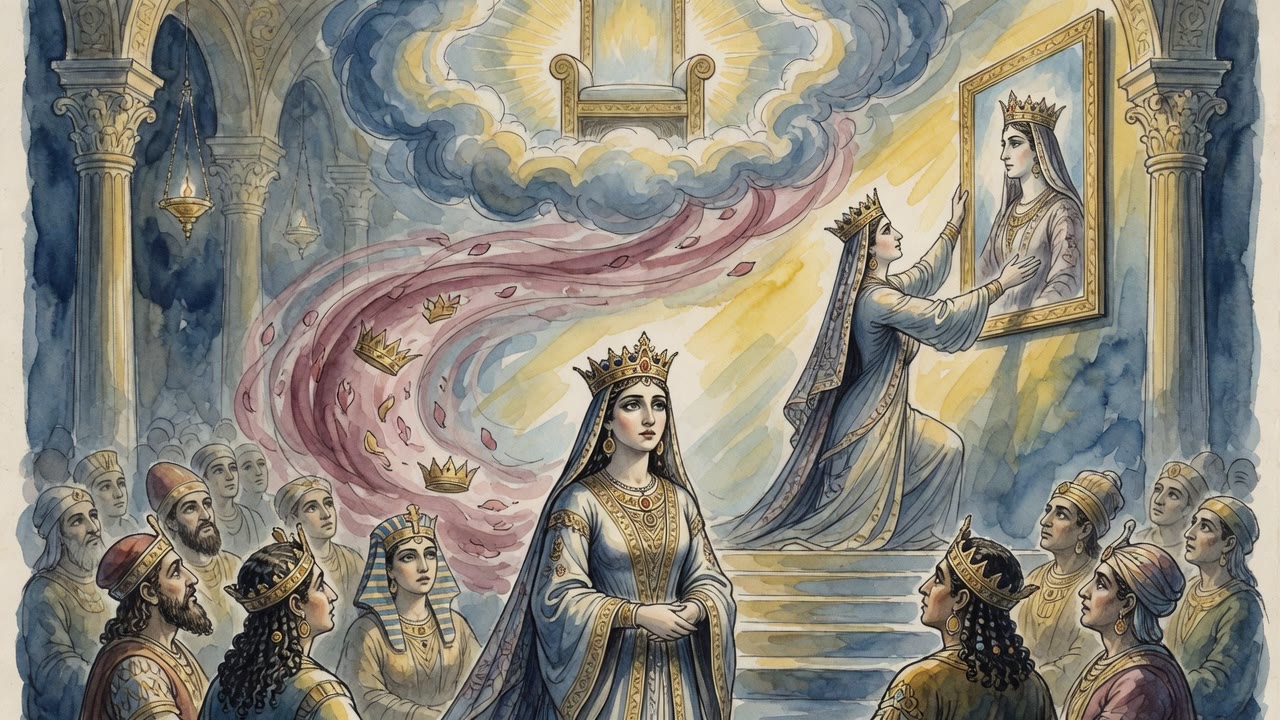
Ahasuerus kept a painting of Vashti on the wall of his own chamber, and he had killed her. Four years went by with it hanging there. Fathers spent money they did not have hauling their daughters up to Susa, the girls were washed and dressed and walked past him, and the king looked at each of them and then looked back at the wall.
None of them pleased him. Not one. The women went into the harem and stayed there, and the picture kept its nail.
The Girls Who Wanted Matching Servants
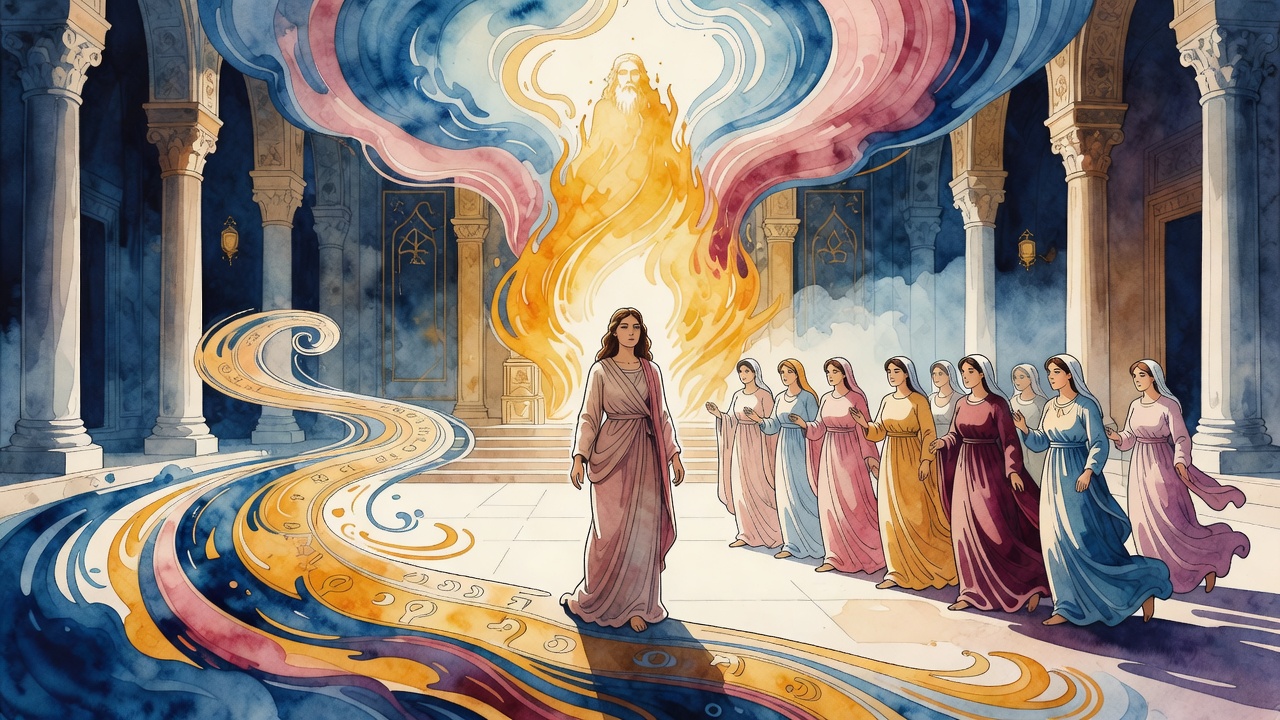
Every woman who came through those gates arrived with a list. Each of them was assigned seven girl pages, and the candidates argued over the pages the way a general argues over ground. They wanted attendants who matched them, the same skin, the same height, so that a woman walking into the king's rooms would arrive inside a frame built out of herself.
Esther asked for nothing.
Not a comb, not a scent, not a page swapped out for a taller one. She took what was handed to her and used none of it. She did not oil her skin or paint her face or do a single thing to hold her looks together, and Hegai, who ran the harem, watched her do nothing for weeks and felt the floor tilt under him.
What Hegai Stood to Lose
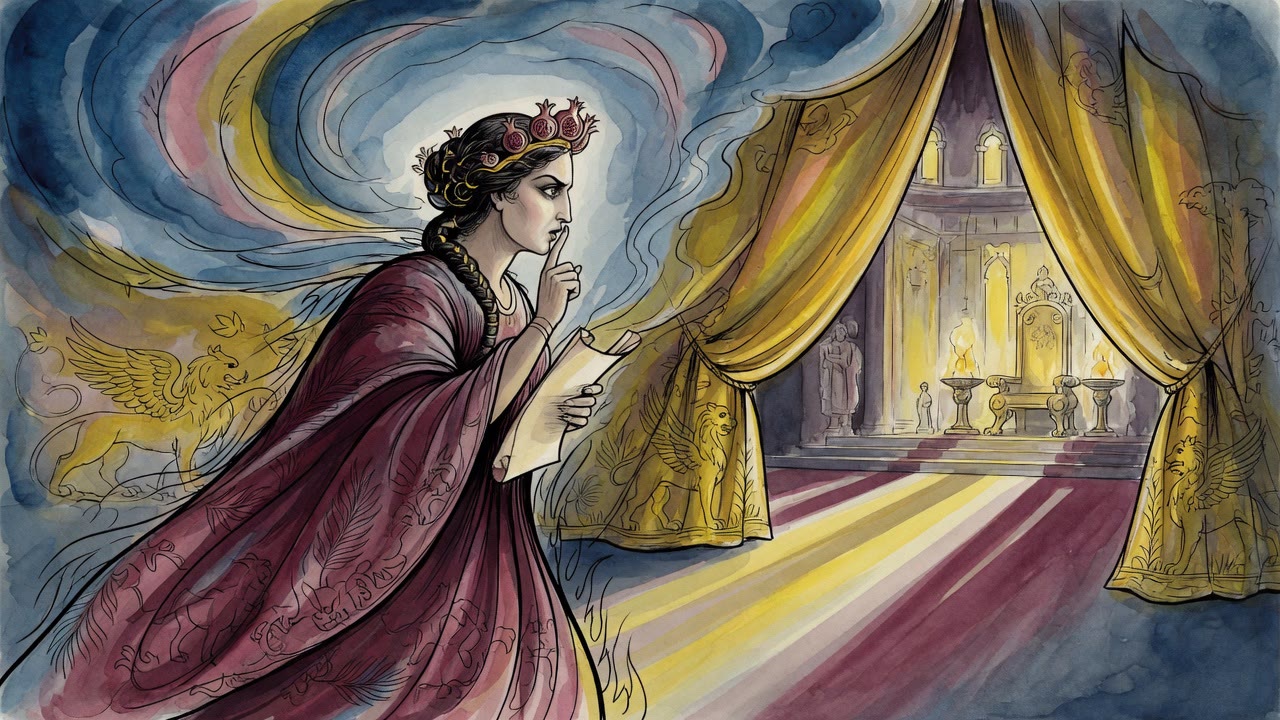
Hegai was not sentimental about beauty. He was in charge of it. If the king reached for a woman and found her unprepared, the king would not blame the woman.
He could see the gallows from where he stood.
So Hegai solved the problem the only way a frightened official can. He buried her in jewels. He brought out the good stones, the heavy gold, everything the treasury would release to him, and he loaded them onto a girl who had not asked for any of it, until she was the most conspicuous woman in the palace. Long before, in Egypt, Joseph had singled out one brother from the other eleven by piling gifts on him, and Benjamin had walked out of that room carrying more than he came in with. Esther walked through the harem the same way, weighted down, marked, and silent about it.
The Food She Would Not Eat
Hegai watched what she ate, and that went no better for him. He sent her dishes off the royal table, the best things in the empire, and she would not touch them. Nothing crossed her lips that a Jew could not eat. She lived on vegetables, the way Hananiah, Mishael, and Azariah had lived at Nebuchadnezzar's court when the king's meat came to them in Babylon.
The forbidden food did not go back to the kitchen. She handed it off to the servants who were not Jews, quietly, dish after dish, so that the platters came back empty and nobody counted.
Her seven pages were Jewish girls, as careful as she was. She had picked her own witnesses. Every one of them could have ended her with a sentence to the wrong person, and not one of them did.
The Line of Beauties and the Nail on the Wall
When her turn came, Ahasuerus set her between two lines of women, the Medians on one side and the Persians on the other, and looked. Grace had hung over Joseph like a lamp above a table. On Esther it lay heavy, all over her, the way weather lies on a field.
The strange part was what each man in that hall saw. A Mede looked at her and saw a Median face. A Persian looked and saw a Persian one. Every man who looked at her found his own country's idea of beauty looking back, the way a thousand people can stand in front of one painting and each of them walk away certain it was made for him. The word went around the room before the king said anything. This one is worthy to be queen.
Ahasuerus had been hunting for four years and did not know for what. He knew the moment he saw her.
That night the picture of Vashti came down off the wall and Esther's went up, and the woman in the new painting had asked for nothing, changed nothing, and told them nothing. She kept her looks into old age. She kept the rest of it too.
← All myths