5 min read

David Sang With Every Bone While Still in Exile

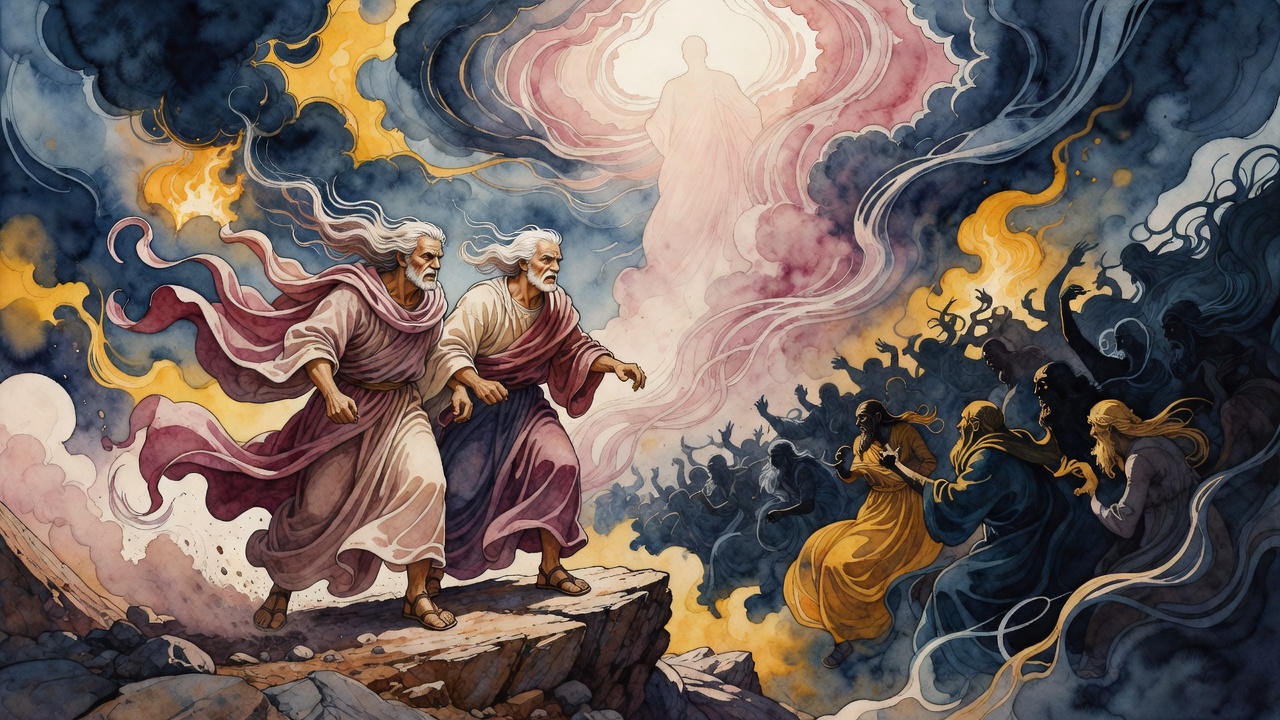
From the ends of the earth David turned his whole body into praise, while Israel waited for a light no borrowed lamp could keep lit.

Curated by Arthur · Told by Maggid ·
Table of Contents
  1. The Cup Before the Song
  2. Praise That Still Admits It Is Not Enough
  3. Borrowed Lamps That Keep Going Out
  4. The Old Chain Behind the Psalms
  5. What the Bones Still Know
David Sang With Every Bone While Still in Exile Click for full size

The Cup Before the Song

Before David opens his mouth, a cup is prepared on the table. The blessing cup must be rinsed. It must be crowned. It must be full. The one who blesses holds it in the right hand, lifts it a handbreadth above the table, and keeps his eyes on the wine as if the wine itself were listening. If an arm is bare, he covers it first. A mitzvah (a commandment) is not grabbed with casual hands.

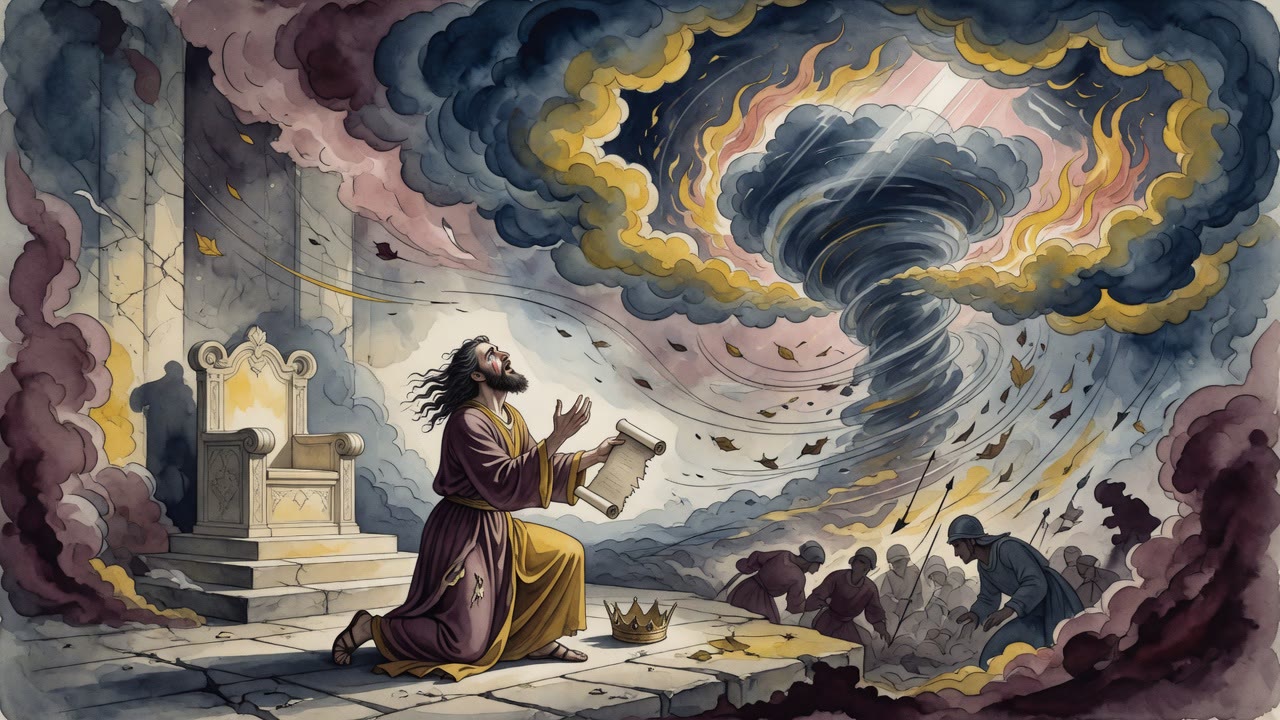
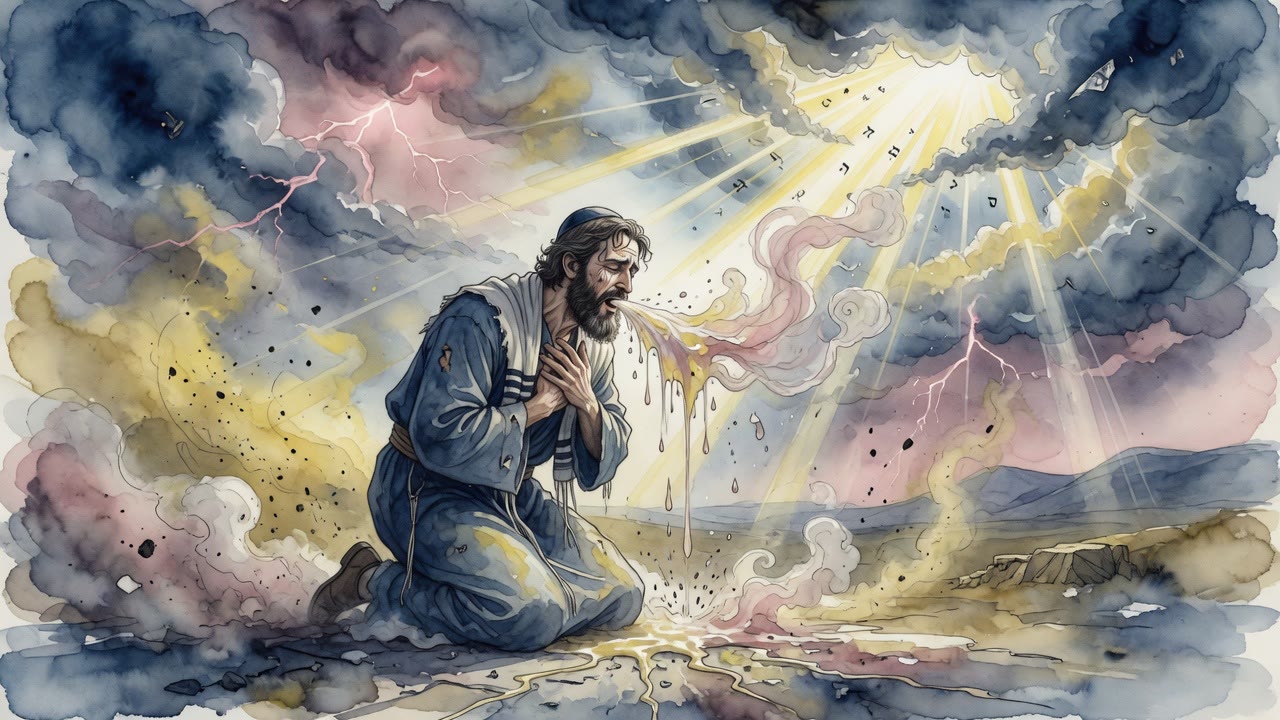
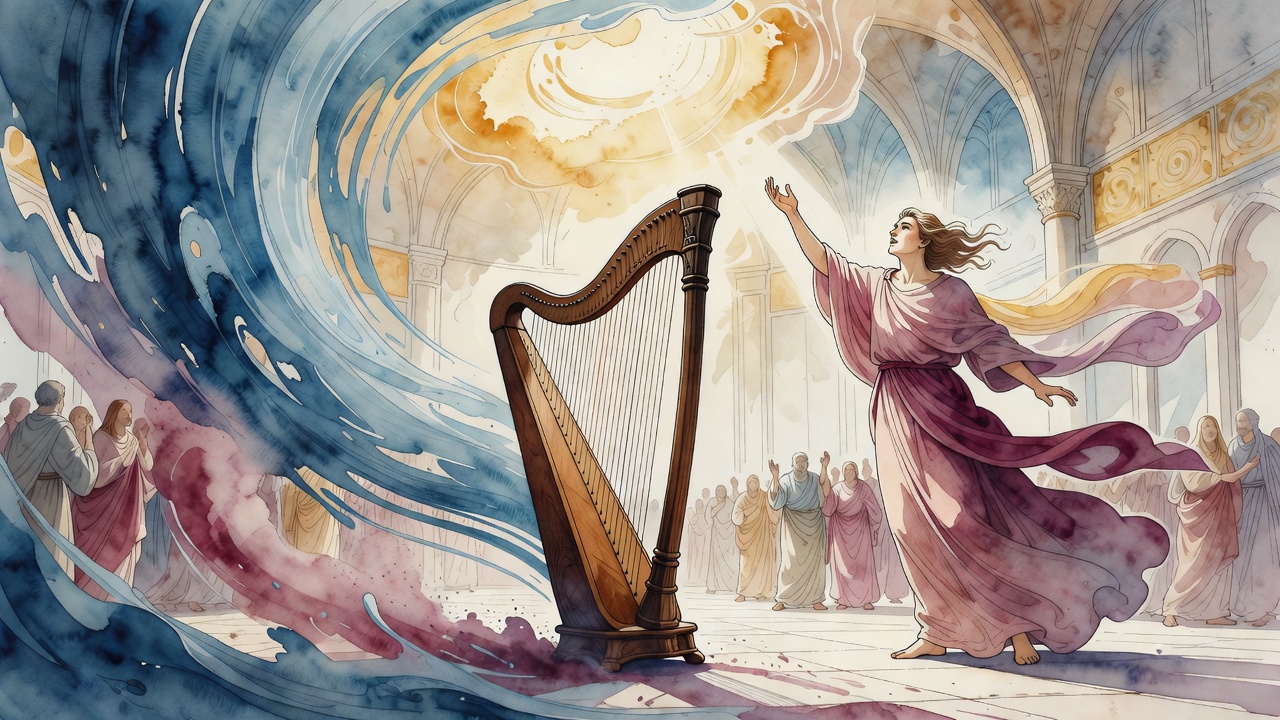
Only after that discipline does the camera turn to the king who never let the road silence him. Travelers could be excused from prayer when danger pressed. David refused the excuse. From the end of the earth, with his heart faint, he still called. The body became the instrument. Head, eyes, mouth, tongue, lips, throat, heart, inward parts, hands, feet. Every bone, he said, cried out: LORD, who is like You?

Praise That Still Admits It Is Not Enough

Even after that full-bodied song, David confessed he did not know how to praise enough. The same verse that carries his cry also speaks of the poor delivered from one stronger than he. The midrash hears Israel there, one sheep among seventy wolves, kept alive only because the Holy One stands beside it hour by hour. It also hears the evil inclination, the robber who can undo in a moment what the good inclination spent a day building.

Then David turns praise into argument. The word for the chief musician is read through victory. God owns victory, gives victory, and, most startling of all, sometimes wants to be defeated. When God defeated the generation of the Flood, a world was lost. When Moses prevailed in prayer, Israel lived. So David presses from exile: in Egypt, at the sea, against Amalek, in Samuel's day, in Solomon's Temple, the people cried and Heaven answered. Now the call rises again from the ends of the earth. Build the House. Let us dwell.

Borrowed Lamps That Keep Going Out

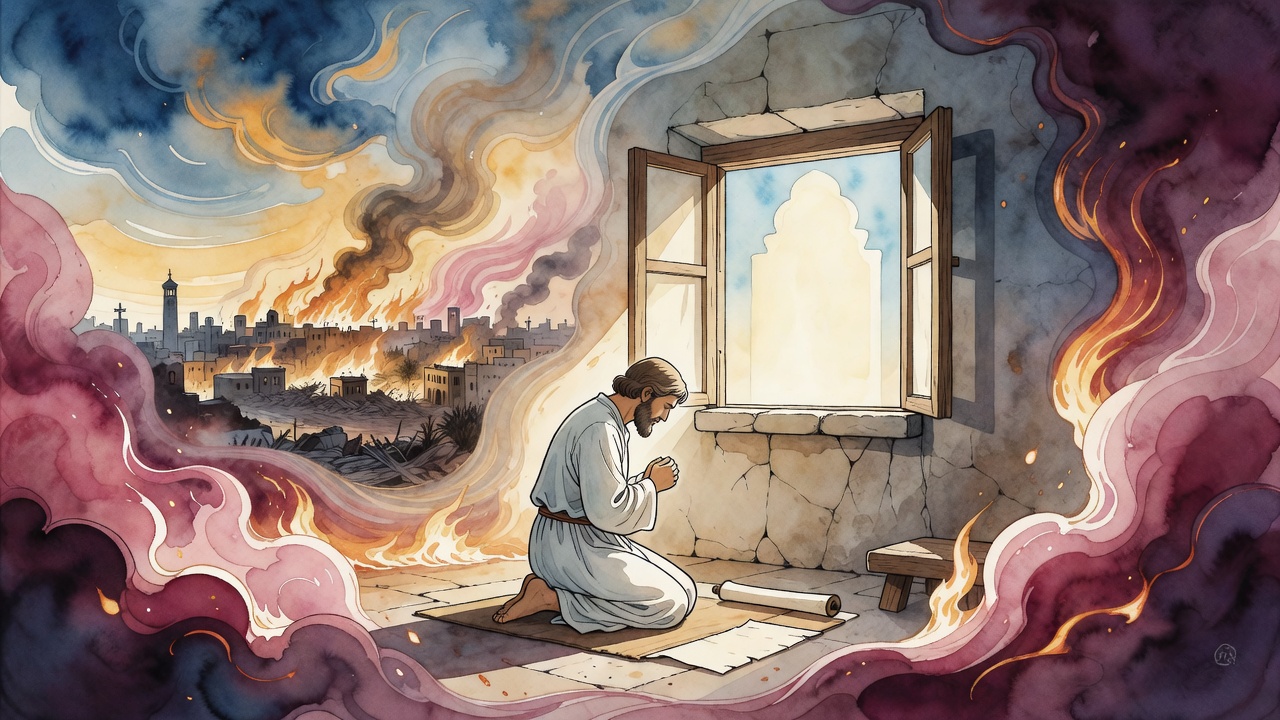
A traveler is caught on the road after sunset. A passerby lights a lamp. Wind kills it. Another stranger lights a second lamp. That one dies too. The traveler finally stops trusting borrowed flame. From now on I wait only for morning.

That, the sages said, is Israel speaking. We built a lampstand through Moses, and it went dark. We raised ten lamps in Solomon's Temple, and they went dark as well. The people are finished waiting on lights that flicker and fail. They wait for the light of the Holy One, for in that light they will see light. Resh Lakish added the banquet image: a son refuses every rich table of the nations and asks only for a portion from his father's hand. Since My light is your light and your light is My light, the Holy One says, let us go and make Zion shine.

The Old Chain Behind the Psalms

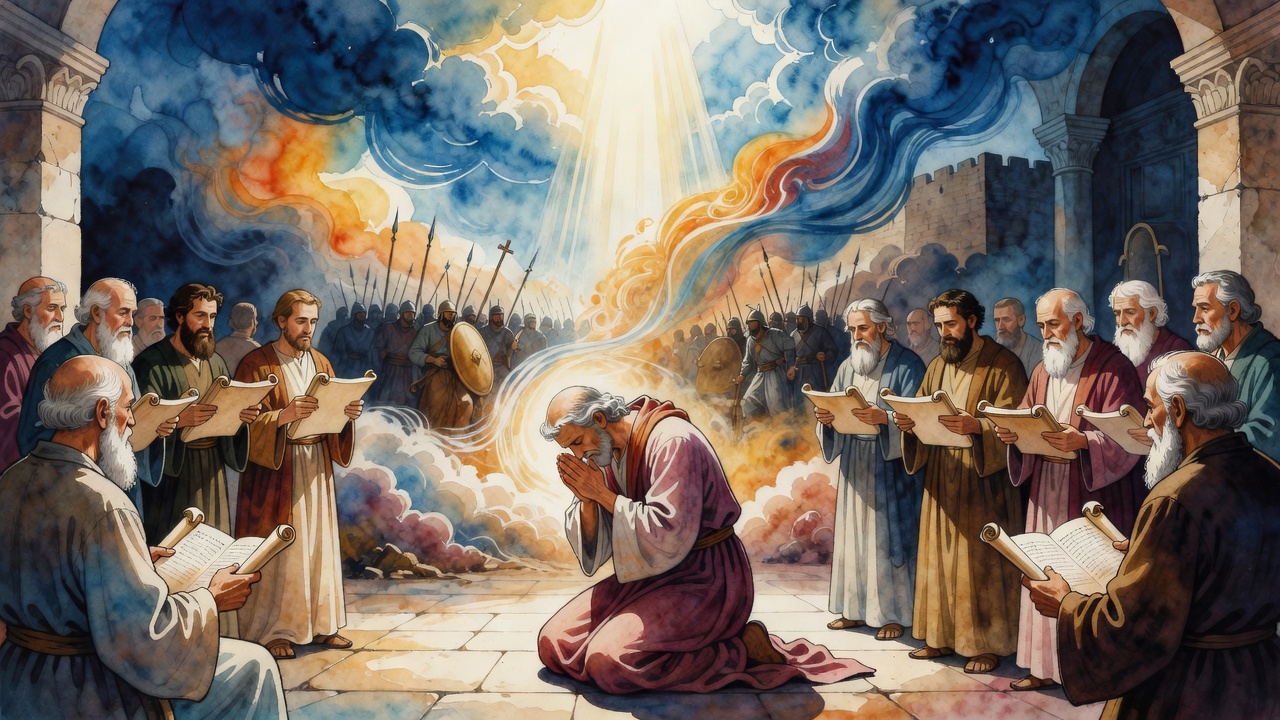
Long after David, households still reached for the book that bears his name when danger pressed the door. Shimush Tehillim does not present itself as a novelty. It looks backward to earlier generations, to the memory of song against harmful forces, and to the Rashba's responsum as a sober witness. Before any later page turns to particulars, the book builds a chain of voices. Old sages stand behind the use of Psalms. The opening insists that history be heard first.

In that chain, David's full-body praise is not museum music. It is a practiced weapon of the heart. A household that lifts a cup with care, that refuses casual holiness, that sings when the road is long, is doing the same work the traveler learned when the lamps failed: stop trusting what gutter, and lean toward the light that does not need a wick.

What the Bones Still Know

David's last request is not abstract. He wants a House again, a place where praise has walls and a roof. Until that rebuilding, every bone keeps its work. The hands that hold the cup, the eyes that stay on the wine, the throat that will not go quiet on the road, all of them are already a kind of Temple furniture carried through exile.

Israel waits for a light no empire can snuff. Until morning, the song itself is the watch-fire. The poor are still delivered only when the Holy One stands near. The robber inside still waits for a careless hour. So the body keeps singing, not because the singing is complete, but because incomplete praise is still truer than silence.

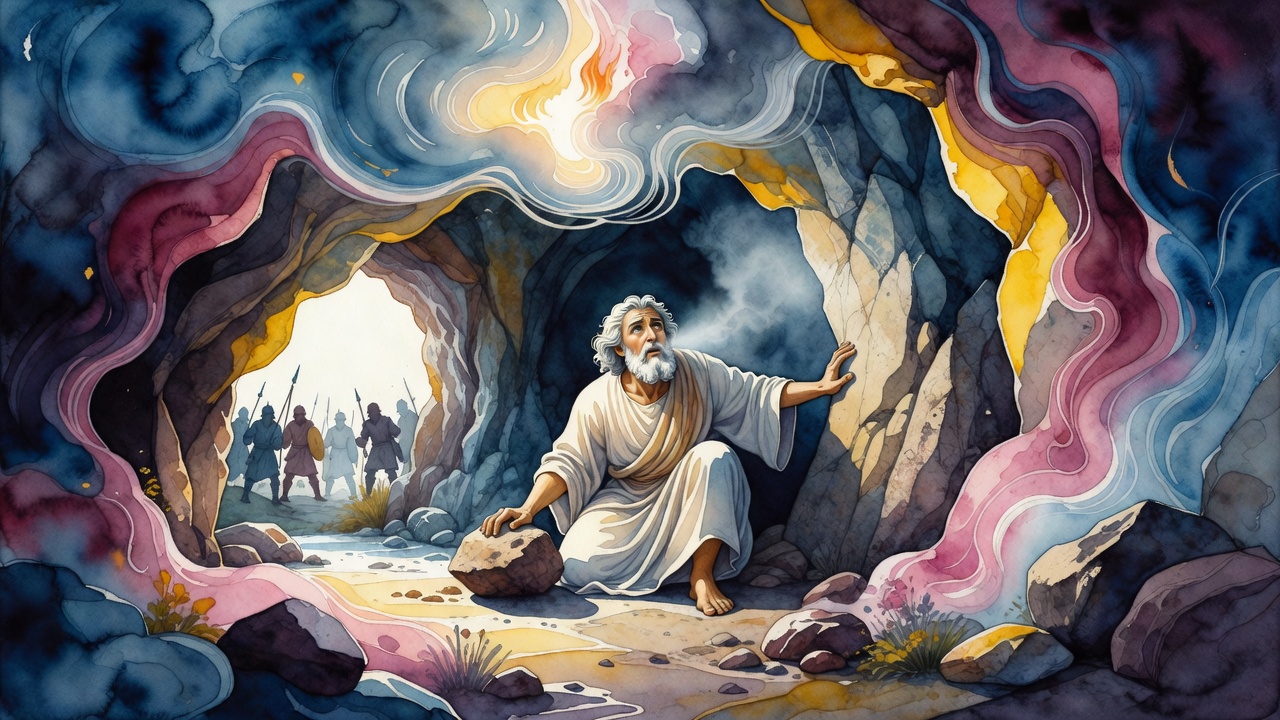
In the older chain of Psalm-use, a household under threat did not invent a new rite from panic. It reached for words already worn smooth by mouths that had known both throne and cave. David had practiced praise when the road was safe enough for a cup and when the road was not safe at all. The bones that cried out in the midrash are the same bones a later singer still carries into night prayer. Song becomes continuity when institutions go dark.


← All myths
From the tradition

Sources

3 sources

The texts behind this telling. Some cards carry a translation of the source; others are our own retelling of it, and each card says which. Every card links out to the original.

Pesikta Rabbati 9:1Pesikta Rabbati

Translation of the source text.Pesikta Rabbati, ed. Meir Friedmann (Ish-Shalom), Vienna 1880 · Public Domain

"To the chief musician, upon stringed instruments, of David: Hear, O God, my cry; from the end of the earth I call to You, when my heart is faint" (Psalms 61:1-3). Let our master teach us: Is an Israelite permitted to bless over the cup when it has not been rinsed? Rabbi Acha said in the name of Rabbi Yochanan: the commandment of the cup of blessing is that it be rinsed, crowned, and full. From where? "And of Naphtali he said, satisfied with favor, and full with the blessing of the LORD" (Deuteronomy 33:23). These three blessings need to be in the cup of blessing. They said in the name of Rabbi Yochanan: his eyes must be on the cup, it must be in his right hand, his hand must be a handbreadth above the table, and he must bless with awe and not with levity. Rabbi Abba said in the name of Rabbi Chiyya, and Rabbi Chiyya in the name of Rabbi Yochanan: if he stands and eats, he sits and blesses; if he sits and eats, he reclines and blesses; if he reclines, he wraps himself and blesses. What is "wraps himself"? If his arm was exposed, he covers it and blesses, so that he performs the commandment with awe. There was no one as careful in the commandments and as God-fearing as David, for he says, "I am a companion of all those who fear You" (Psalms 119:63). And know this: even though our masters taught that one who comes from the road is exempt from prayer, and likewise if he was in a place of danger on the road, David did not act so. Rather, wherever he went, he did not withhold himself from prayer. From where? From what is read in this matter: "To the chief musician, upon stringed instruments, of David: Hear, O God, my cry; from the end of the earth I call to You" (Psalms 61:1-3).

"To the chief musician, upon stringed instruments, of David: Hear, O God, my cry." Thus Rabbi Tanchuma ben Rabbi opened: "My lips shall rejoice when I sing to You, and my soul, which You have redeemed" (Psalms 71:23). You find that there was no limb with which David did not praise the Holy One, blessed be He. They all speak as one, and then he goes back and details the praise. He praised Him with his head: "You anoint my head with oil" (Psalms 23:5). He praised Him with his eyes: "My eyes are ever toward the LORD" (Psalms 25:15), and "Unto You I lift up my eyes" (Psalms 123:1). He praised Him with his mouth: "My mouth shall speak the praise of the LORD" (Psalms 145:21). He praised Him with his tongue: "And my tongue shall speak of Your righteousness" (Psalms 35:28). He praised Him with his lips: "My lips shall rejoice" (Psalms 71:23). He praised Him with his throat: "I am weary with my crying; my throat is parched" (Psalms 69:3). He praised Him with his heart: "My heart and my flesh cry out for the living God" (Psalms 84:2). He praised Him with his inward parts: "And all that is within me, bless His holy name" (Psalms 103:1). He praised Him with his hands: "He trains my hands for war" (Psalms 144:1). He praised Him with his feet: "My foot stands in an even place" (Psalms 26:12). The end of the matter: "All my bones shall say, LORD, who is like You?" (Psalms 35:10). David said: Even though I have praised Him with all these until now, I do not know how to praise, as it is written, "My mouth shall tell of Your righteousness and Your salvation all the day, for I do not know the numbers" (Psalms 71:15).

"All my bones shall say, LORD, who is like You? You deliver the poor from one stronger than he" (Psalms 35:10). These are Israel, who enter into the hands of the nations of the world, and the Holy One, blessed be He, saves them. "Poor" means Israel, as it is said, "And I will leave in the midst of you an afflicted and poor people, and they shall trust in the name of the LORD" (Zephaniah 3:12). David said: What can one sheep do among seventy wolves? What can Israel do among seventy strong nations? If You did not stand by them at every hour, what could they do? This is "You deliver the poor from one stronger than he." These are Israel.

Another interpretation of "You deliver the poor from one stronger than he, and the poor and needy from his robber" (Psalms 35:10): this is the evil inclination. Is there a robber greater than this? How much the good inclination labors before it finds what it seeks, and in one brief hour the evil inclination comes and destroys it from him. There is no greater robber than this. This is "You deliver the poor from one stronger than he, the poor and needy from his robber." This is the evil inclination.

The Holy One, blessed be He, said to him: David, ten people recited the Book and praised Me within it, but of them all the praise is assigned only to you. David said to Him: Since the praise is fitting, I will praise You, as it is said, "To the chief musician, upon stringed instruments." What is "upon stringed instruments"? It is victory for the One who places praise in the mouths of the righteous so that they may praise Him. Therefore it is written, "To the chief musician, upon stringed instruments." Rav said: We give thanks to You for the fact that we give thanks to You. Another interpretation: "To the chief musician" means victory to the One whose victory is His. Another interpretation: victory to the One who gives victory to His children. Another interpretation: victory to the One who seeks to be defeated, as it were.

Another interpretation: "To the chief musician" means victory to the One whose victory is His, as it is said, "Yours, O LORD, is the greatness, and the power, and the glory, and the victory, and the majesty" (1 Chronicles 29:11). And so it says, "The LORD is a man of war" (Exodus 15:3), and "Then the LORD shall go forth, and fight" (Zechariah 14:3), and "The LORD shall go forth like a mighty man" (Isaiah 42:13). "To the chief musician" means victory to the One who makes victory for His children. He fought the wars of the Amorite, as it is written, "And as they fled from before Israel, the LORD cast down great stones upon them" (Joshua 10:11).

"To the chief musician" means victory to the One who seeks to be defeated, as it is written, "For I will not contend forever, neither will I always be angry" (Isaiah 57:16). Do not read it that way, but: "for the sake of being defeated I contend." Why? The Holy One, blessed be He, said: When I win, I lose, and when I am defeated, I profit. I defeated the generation of the Flood. Did I not lose, for I destroyed My world, as it is said, "And He blotted out every living thing" (Genesis 7:23)? And likewise with the generation of the Dispersion and the Sodomites [the printed phrase here is unclear]. But in the days of Moses, when I was defeated, I gained, for I did not destroy Israel. This is "To the chief musician," to the One who seeks to be defeated.

Another interpretation of "To the chief musician, upon stringed instruments: Hear, O God, my cry; listen to my prayer" (Psalms 61:1-2). David said to Him: Master of the universe, until when will Your children be enslaved while You do not hear my prayer? And if this is new to You, did we not already call to You in Egypt and You answered us, as it is written, "And the children of Israel sighed by reason of the bondage, and they cried" (Exodus 2:23), and "I have surely heard their cry" (Exodus 3:7)? And at the sea, before they even stood to pray, You said to them, "Why do you cry to Me?" (Exodus 14:15). And likewise with Amalek, they called to the Omnipresent and He immediately answered them, as it is written, "And Israel vowed a vow, saying, If You will indeed deliver" (Numbers 21:2), and "the LORD listened to the voice of Israel" (Numbers 21:3). And likewise in the days of Samuel, when the Philistines came against us, we called to You and You answered us, as it is written, "And Samuel cried unto the LORD for Israel; and the LORD answered him" (1 Samuel 7:9). And likewise in the days of Solomon, when he prayed before You, You immediately answered him with fire, as it is written, "And it was so, that when Solomon had made an end of praying" (1 Kings 8:54).

David said to Him: Master of the universe, when Your children were in the Temple, they called to You and You answered them. Now that we are scattered in exile, will You answer us? As it is written, "From the end of the earth I call to You" (Psalms 61:2). Master of the universe, build Your House and make us dwell within it. "From the end of the earth I call to You." What is written after it? "I will dwell in Your tent forever" (Psalms 61:4).

Full source
Shimush Tehillim, introduction, earlier generations excerptShimush Tehillim

Translation of the source text.Open Siddur Project transcription by Aharon N. Varady of Shimush Tehillim from the Elias Klein Budapest 1938 HebrewBooks scan (CC-BY-SA 4.0) + JewishMythology.com faithful English Beta translation · CC-BY-SA

And in the earlier generations they used Shimush Tehillim, as is proven explicitly in the Gemara from the song against harmful forces, and so on. All the great ones of the world have already agreed to this. See what a great man testifies concerning it: the Rashba, of blessed memory, in Responsum 413.

Full source
Pesikta DeRav Kahana 21:3Pesikta de-Rav Kahana

Translation of the source text.Pesikta de Rav Kahana according to an Oxford manuscript, Dov Mandelbaum ed., N.Y. 1987 · CC-BY

"For with You is the fountain of life; in Your light do we see light" (Psalms 36:10). Rabbi Yochanan and Resh Lakish discussed this. Rabbi Yochanan said one teaching, and Resh Lakish said two.

Rabbi Yochanan said: This is like a man walking on the road at twilight. Someone came and lit a lamp for him, and it went out. Another came and lit a lamp for him, and it went out. He said: From here on I will wait only for the light of morning. So Israel said before the Holy One, blessed be He: Master of the worlds, we made You a lampstand in the days of Moses and it went out; ten lampstands in the days of Solomon and they went out. From here on we wait only for Your light, as it is said, "in Your light do we see light" (ibid.).

And Resh Lakish said two teachings. Resh Lakish said: This is like a king who had a son and invited guests for him. The king said to his son: My son, do you wish to dine with the guests? He said: No. He said to him: With whom do you wish to dine? He said: With you. So the Holy One, blessed be He, said to Israel: My children, do you wish to dine with the nations? They said before Him: Master of the worlds, "Do not incline my heart to any evil thing, to busy myself with deeds of wickedness" (Psalms 141:4). He said to them: Because they are wicked deeds, you do not wish to dine with them? They said before Him: Master of the worlds, "and let me not eat of their delicacies" (ibid.) -- we do not desire their pleasant and beautiful gifts. And in whose portions do we desire? In Your pleasant and beautiful portions.

And Resh Lakish said another. Resh Lakish said: This is like a king who had a daughter. One came and sought her hand, but he was not worthy of her; another came and sought her hand, but he was not worthy of her. When one came who was worthy of her and sought her hand, he said: Arise, shine, for your light has come. So the Holy One, blessed be He, said to Israel: My children, since My light is your light and your light is My light, I and you shall go and give light to Zion. "Arise, shine, for your light has come" (Isaiah 60:1).

Full source