6 min read

King David Confessed His Soul Was Leaking and Asked God to Teach Him

A king with armies and a throne knelt alone at night. David told God his soul was leaking, confessed he knew nothing, and begged Him to teach him.

Curated by Arthur · Told by Maggid ·
Table of Contents
  1. Lead Me, Said the King
  2. First the Guidance, Then the Wonder
  3. The Soul That Leaks
  4. I Have Sinned and You Have Answered
  5. The Songs of a King Who Asked

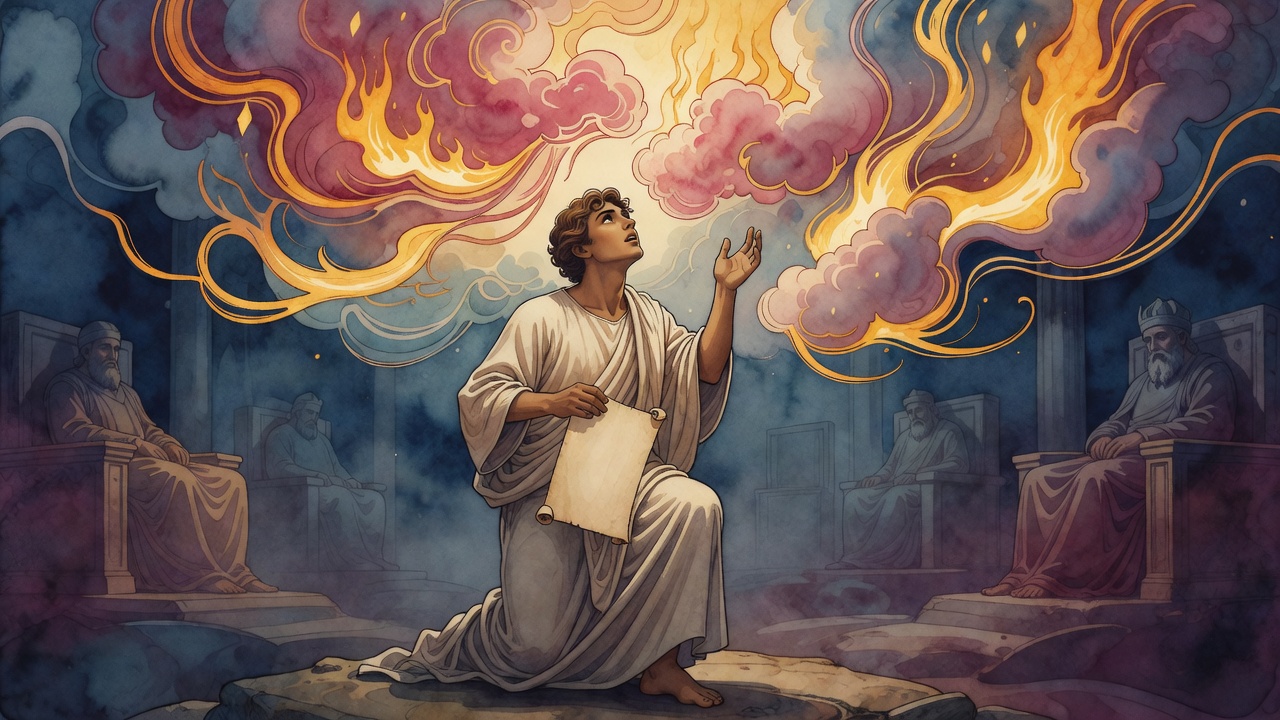
Night settled over Jerusalem. The petitioners had gone home, the generals had rolled up their maps, and the servants had carried off every lamp but one. In its small light the king of Israel knelt alone, and the words he spoke were words no courtier had ever heard from him.
David had everything a man could hold. A throne. Armies that answered his voice. Poets and prophets crowding his court. He had written songs that would outlast every empire that rose after his own. But power had taught him exactly where power ends, and so the man who spent his days commanding others lowered his head and asked to be commanded.

Lead Me, Said the King

"Direct me through Your commandments," he prayed. The Hebrew is hadrekheini, lead me, set my feet on the road. It is a strange word in a king's mouth. Roads were what David gave to other people. He told armies where to march, judges what to rule, singers what to sing. A king asks no one for directions, because a king is the destination.

But this was not a request for a map. It was a confession. "Do not tell me," David said to God, "that I should understand on my own. Consider for Yourself that if You do not give me understanding, I will not know anything."

Not little. Not less than the wise men of his court. Anything. The greatest king in Israel's history, stripped to the bone in the dark, was saying that wisdom is not won by battle and is not conferred by rank. It is given, or it is not possessed at all.

First the Guidance, Then the Wonder

The prayer did not stop at dependence. "Make me understand the way of Your precepts," it continued, "and I will speak of Your wonders" (Psalm 119:27). The order of that sentence is the whole argument. First the guidance, then the awe. First the bowed head, then the opened mouth.

David was not claiming that understanding lay beyond reach. He was claiming that the kind of understanding he wanted, the kind that turns into speech, into witness, into wonder, cannot be self-made. A man who believes he already knows everything has sealed himself against astonishment. Nothing surprises him, therefore nothing moves him, therefore he has nothing to sing. The king asked to be taught precisely so that he would have something worth singing, and so that the wonders he saw would not die inside him but be spoken aloud.

The Soul That Leaks

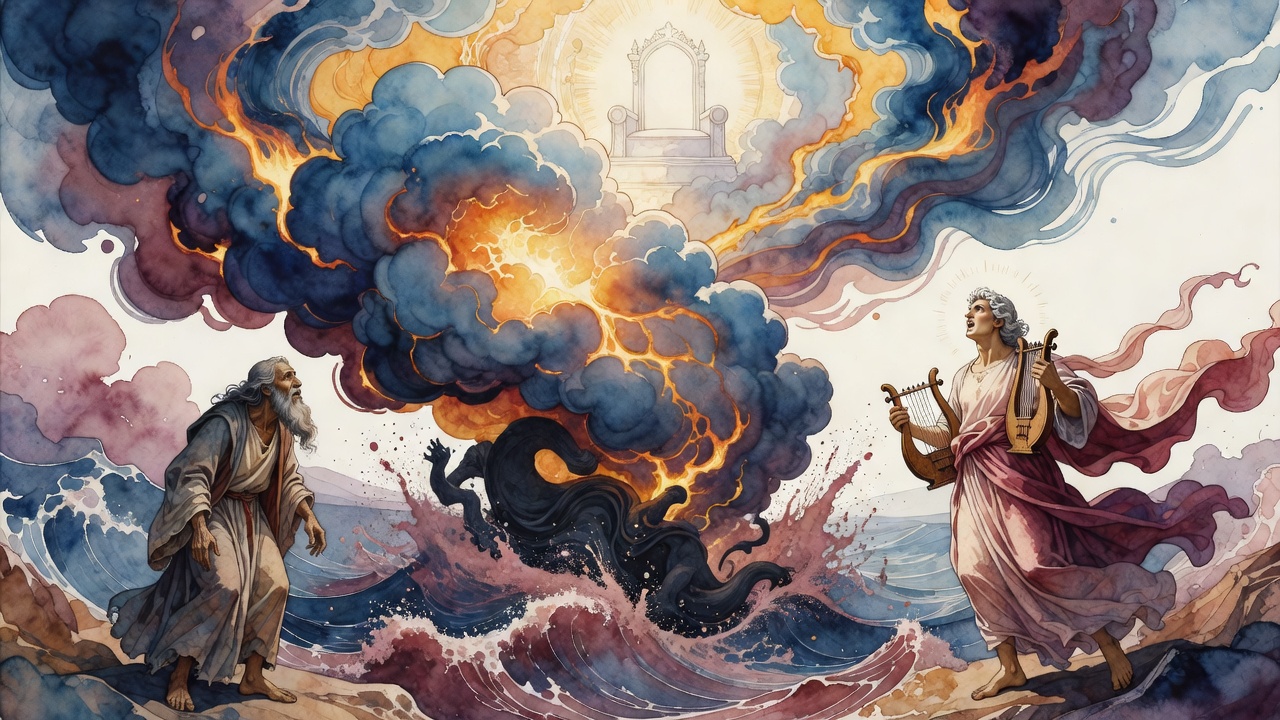
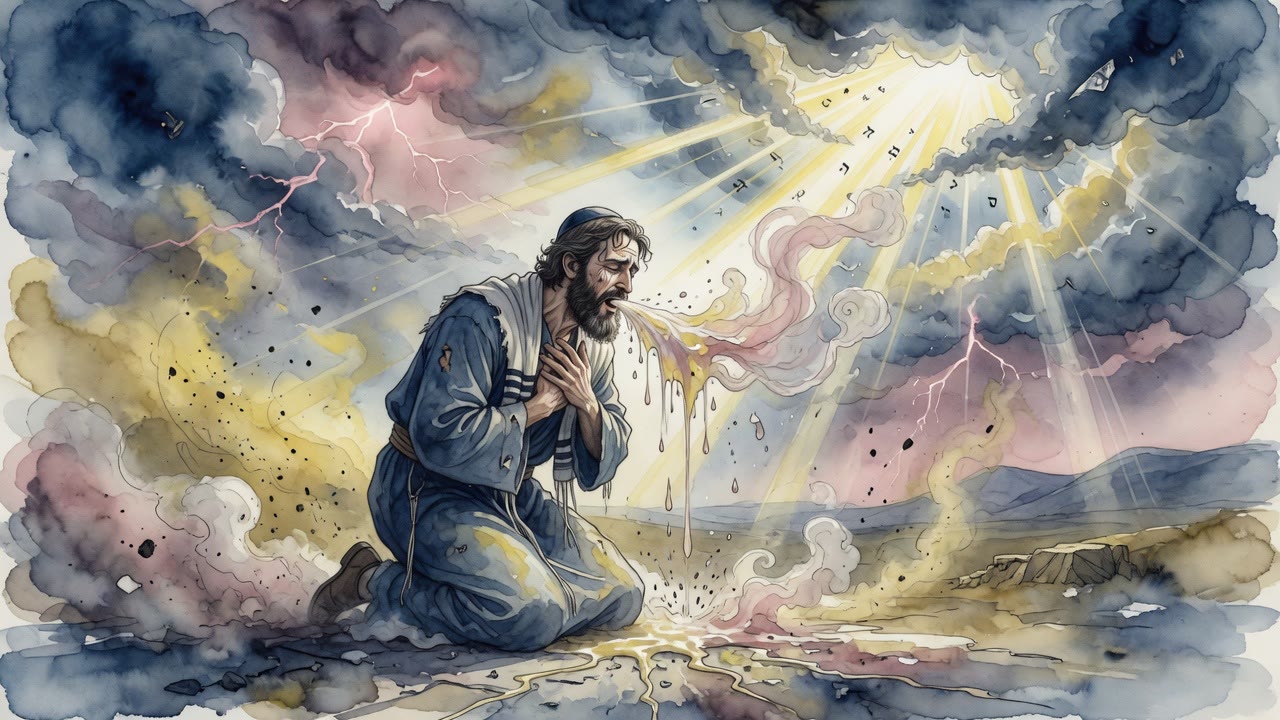
Then the prayer turned raw. "My soul drips away from sorrow," David said. "Sustain me according to Your word" (Psalm 119:28). Dalfa nafshi, my soul leaks. Not shattered in one blow, not torn in one night, but draining out of him drop by drop through the brokenness that had befallen him, the way water finds the smallest seam and works it wider.

Which brokenness, which wound, which year? The question has no single answer, and David knew it. There is no year without its brokenness. The pressure was constant and relentless, one breaking after another, each one opening a new seam in the soul. The king who could requisition grain, timber, soldiers, and gold from every corner of his kingdom could not requisition a patch for that. Only one thing could hold him together. "Strengthen me," he asked, "by Your word. Keep me standing, because on my own I am a vessel that cannot keep what is poured into it."

I Have Sinned and You Have Answered

The confession went deeper still. "I recount my ways and You answer me," David prayed. "Teach me Your statutes" (Psalm 119:26). Recounting his ways meant laying them all out, the ones a king would sooner bury under the foundations of his palace. "I confess my sins," he said, "and disclose all my transgressions. I have sinned against You, and You, for Your part, have disciplined me. May it be for the purpose of my sin that You have chastened me."

He was not asking for pardon without pain. He was asking for something stranger, that the blows which had already fallen on him be counted against his sin, that his suffering be sentenced to mean something. The alternative was worse than the lash itself, pain that paid no debt and taught no statute. So the king bound his wounds to his confession and called the binding mercy.

His single voice carried a multitude inside it. Long after David, in the courts of Babylon, another man would take up the same confession for a whole exiled people: "We have sinned and we have transgressed, we have been wicked and we have rebelled" (Daniel 9:5). The king's I became a people's we. The prayer he spoke alone by one lamp became the prayer of every generation that ever stood broken before God and asked to be taught rather than excused.

The Songs of a King Who Asked

The lamp guttered toward dawn. The king rose from the floor, and what he carried up with him was not an answer so much as a sequence, the one his own prayer had laid down. The man who admits he knows nothing is the one fit to be taught. The man who is taught is the one who can be astonished. The man who is astonished is the one who speaks of wonders, and his speech outlives him.

David's psalms outlasted the armies, the palace, and every empire that came after, but they were never the songs of a king who understood everything. They were the songs of a king who knelt in the dark with a leaking soul and asked God to be his teacher. The throne gave him the right to command every person in Israel. The bowed head gave him the only thing the throne could not.


← All myths
From the tradition

Sources

2 sources

The texts this telling draws on, in full. Open a card to read inline, or expand it for a wider, quieter read.

Midrash Tehillim 119:14Midrash Tehillim

" But what does that even mean, "Direct me?" David isn't just asking for a map, is he? According to this Midrash (rabbinic interpretive commentary), David is essentially saying, "God, don't expect me to figure this out on my own!" He's acknowledging his human limitations. "If You don't give me understanding," he admits, "I will know nothing." It's a powerful moment of vulnerability, a king admitting his dependence on something greater. And the reward for that humility? "Direct me through Your commandments, and I will speak of Your wonders." Understanding leads to awe, and awe inspires us to share the wonders we've witnessed.

Then comes the real gut-punch: "My soul leaks from the brokenness that befell me." Ouch. That’s raw. The rabbis in Midrash Tehillim don't shy away from that pain. They ask, what is this "brokenness?" Is it just one specific event? One massive failure? No. They paint a picture of constant, relentless pressure. "There is no year without its brokenness," they explain, "no new thing without its rumor, and no day without its trouble." Doesn’t that feel familiar? One crisis after another, whispers of anxieties swirling around us. It’s exhausting.

It’s like Ezekiel said (7:26): "One trouble comes after another, and one rumor after another." The Midrash connects David's feeling of leaking to this constant barrage. But The rabbis don't leave us wallowing in despair. They offer a glimmer of hope, connecting this leaking to a powerful image from Deuteronomy (29:12), where Moses speaks of God establishing the people as His own.

"My soul leaks from the brokenness that befell me," the Midrash repeats, "as you say." As you say? "Just as Moses said 'so that He may establish you today as His people.'" A handful today, a handful tomorrow, until it overcomes and emerges. It's a gradual process, this healing. This becoming. A little bit leaks out each day, yes, but also a little bit of strength, a little bit of resilience is gained.

The image isn’t of a soul completely emptied, but of a soul slowly being molded, being strengthened, even through the leaking. It's not about preventing the brokenness, but about what happens because of it. A handful today, a handful tomorrow… that’s the rhythm of life, isn't it? The drips and drops, the little losses, the slow, persistent work of becoming. And, ultimately, the emergence. So maybe, just maybe, that leaking isn't just a sign of weakness, but a sign of something being forged within us. Something strong. Something real.

Full source
Midrash Tehillim 119:12Midrash Tehillim

It’s something the ancient rabbis wrestled with too, finding a powerful echo of it in the words of King David in the Tehillim, the Book of Psalms.

Specifically, we find this reflected in Midrash Tehillim 119:26 – "I recount my ways and You answer me; teach me Your statutes." What’s going on here? It’s more than just a simple plea for guidance.

The Midrash (rabbinic interpretive commentary), that beautiful, imaginative way of exploring the deeper meanings of the Torah, unpacks this verse with raw honesty. It’s a confession, a reckoning. "I confess my sins and disclose all my transgressions," the passage continues, "saying: 'I have sinned against You, and You, for Your part, have disciplined me; may it be for the purpose of my sin that You have chastened me.'"

Wow.

It echoes the collective voice of the Jewish people through history, acknowledging our shortcomings. The Midrash then cites (Daniel 9:5) – “We have sinned and we have transgressed, we have been wicked and we have rebelled, we have turned away from Your commandments and from Your ordinances." It's a litany of mistakes, a painful recognition of straying from the path. And (Daniel 9:10) adds, "And we did not heed the voice of the Lord our God to follow His Torah which He set before us through His servants the prophets."

So, where does that leave us? In a tough spot, to be sure. As (Nehemiah 9:36) puts it, "Behold, we are today slaves, and as for the land that You gave to our forefathers to eat of its fruit and its goodness, behold, we are slaves upon it." Ouch. It's a stark admission of the consequences of our actions. A land of promise, now a land of servitude.

But even in this dark place, there's a flicker of hope, a stubborn refusal to give up. The Midrash emphasizes that “even though we are slaves, we are loyal to You.” As (Nehemiah 10:29) states, "But with all this we make a binding pledge and sign it, and we are righteous in everything that comes upon us." And (Nehemiah 9:33) seals it: "And You are righteous concerning all that has come upon us."

There's a profound understanding here: acknowledging our mistakes isn't about wallowing in guilt, but about clearing the ground for growth. It's about recognizing that even in our failures, there's an opportunity to learn, to become better.

And that brings us back to the initial verse. "I recount my ways and You answer me; teach me Your statutes." The confession, the admission of wrongdoing, isn't the end of the story. It's the beginning. It’s the prerequisite for receiving guidance, for being taught chukim – God’s decrees. The very act of acknowledging our flaws opens us up to receiving wisdom.

So, what does this mean for us today? Perhaps it's a reminder to be honest with ourselves about our own shortcomings. To resist the urge to blame others, to rationalize our mistakes. And instead, to embrace the vulnerability of confession, knowing that it’s the first step towards a deeper understanding, a more meaningful connection with something larger than ourselves. Even in our darkest moments, even in our deepest regrets, there is always the possibility of being taught, of being guided, of finding our way back to the path.

Full source