5 min read

Doeg's Tongue Kept the Temple From Rising

Israel appointed a king and fought Amalek, yet the Temple waited. Informers and Doeg's report at Nov drove the Presence away faster than any army.

Curated by Arthur · Told by Maggid ·
Table of Contents
  1. Three Commands and a Missing House
  2. David Asks God to Rise Away
  3. The Boomerang of the Deed
  4. What a Sanctuary Requires

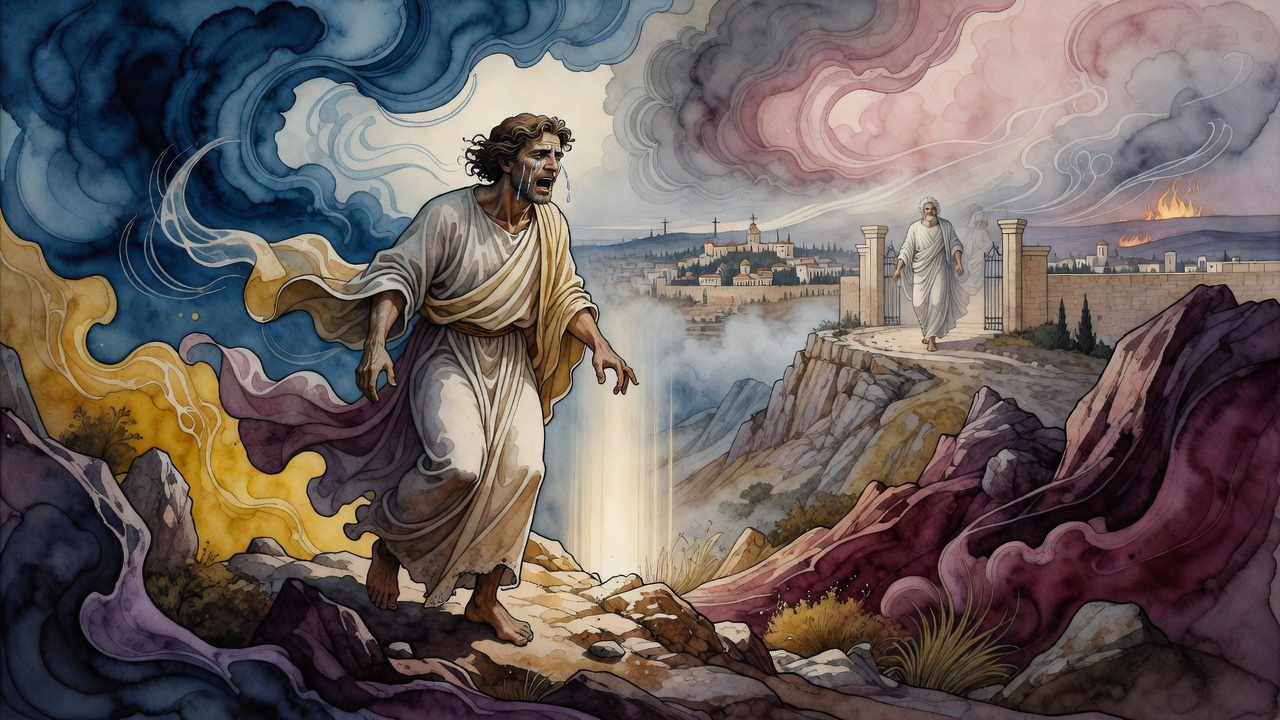
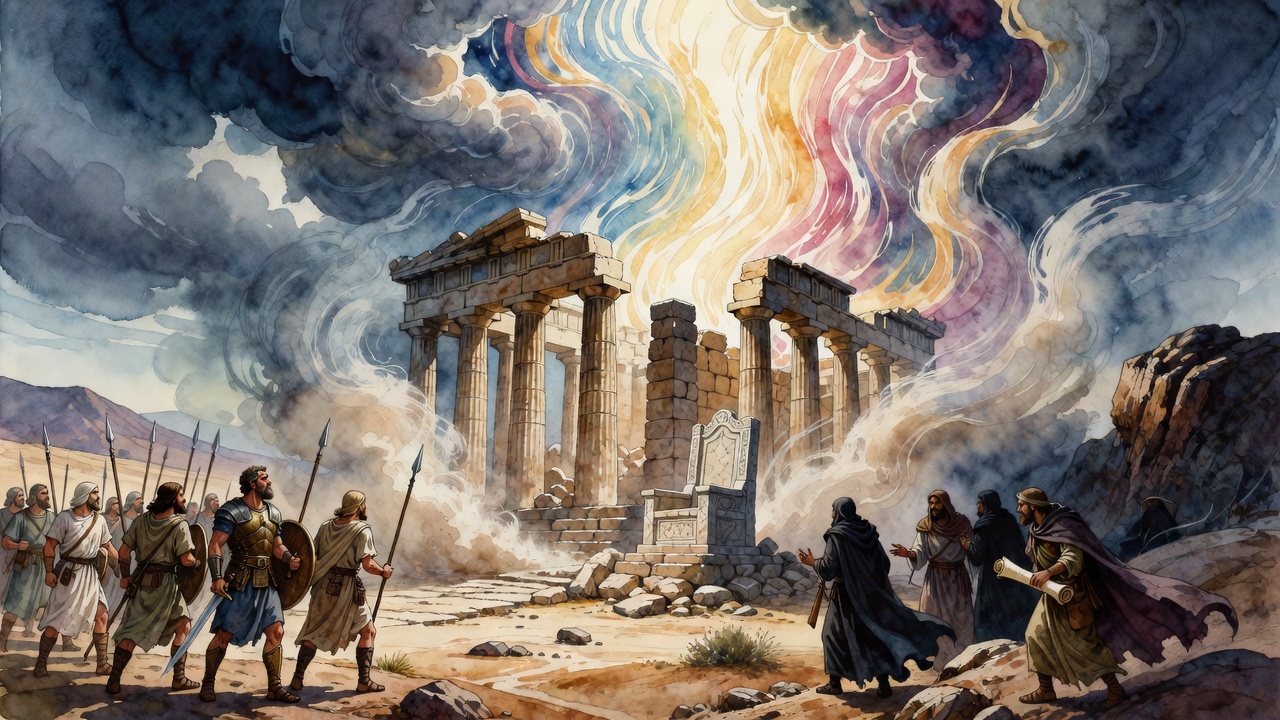
Doeg stood in Saul's court with a report shaped like a spear. He had seen David come to Nov, to Ahimelech the priest. He had watched the holy bread leave the shelf and the sword of Goliath leave its wrap. When he spoke, the words did not sound like murder. They sounded like loyalty.
Doeg's Tongue Kept the Temple From Rising Click for full size

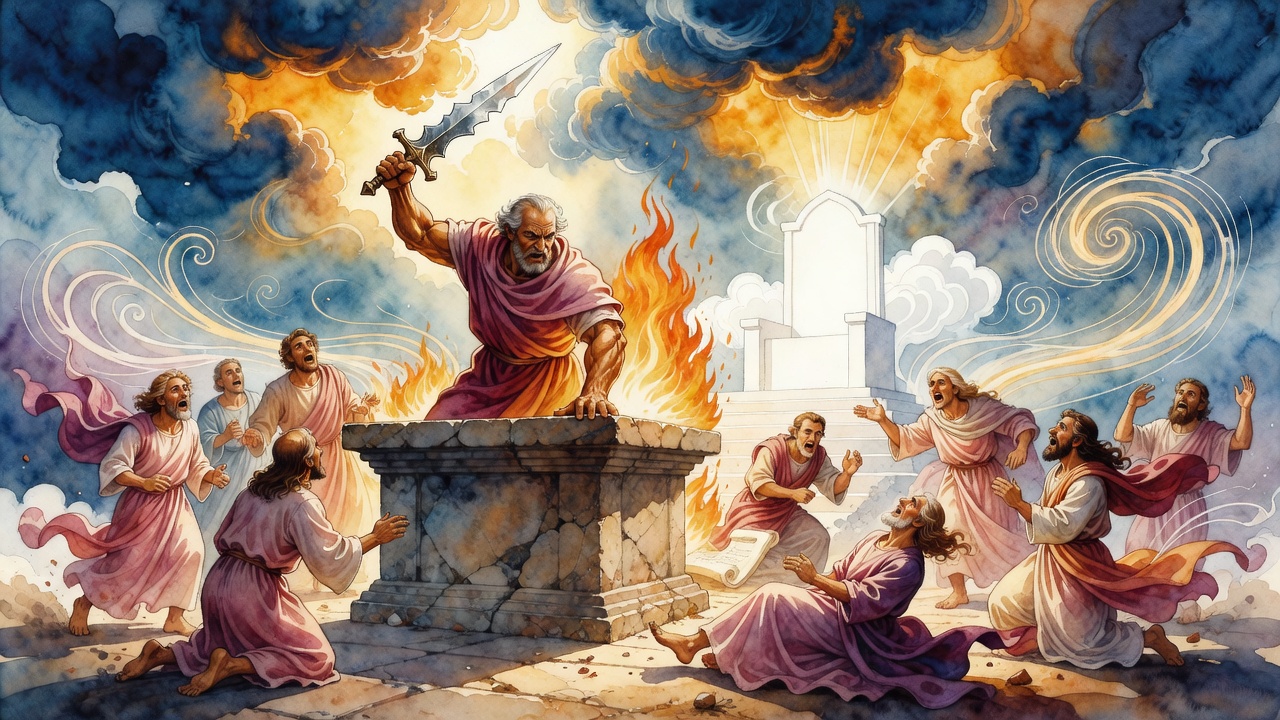
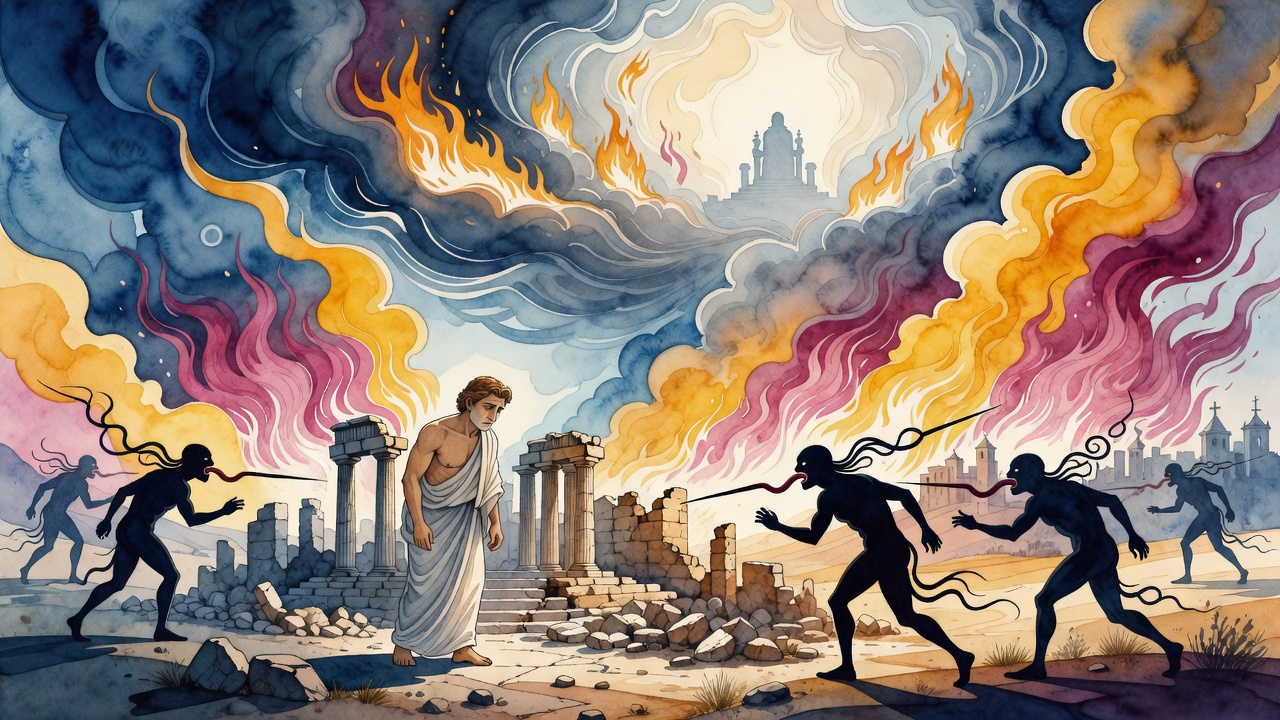
Saul heard betrayal. The priests of Nov heard the sentence a king gives when fear wears the crown. The city of priests fell in a single day, and the midrash never lets the massacre float free of the tongue that started it. Lashon hara, they say, kills three: the speaker, the listener, and the one spoken of. At Nov the count ran into the dozens, and still the third victim was the Divine Presence itself, driven upward from a land where speech had become a weapon.

Blood dried on the priestly garments while Doeg's name entered the permanent ledger of Israel as a warning with teeth. A report can empty a city faster than a siege engine, and the silence after such a report is not peace. It is the sound of a sanctuary that will not be allowed to rise while mouths still trade in brothers.

Three Commands and a Missing House

Rabbi Yehuda ben Rabbi Ilai taught that Israel entered the land with three commands: wipe out the memory of Amalek, appoint a king, and build the Temple. They managed the first two. Saul fought Amalek. A king sat on the throne. The House still did not rise.

The midrash names the obstacle without softening it. Informers. Mosrim. People who spread malicious reports so thickly that the Shechinah (the Divine Presence) would not dwell among them. You cannot raise a sanctuary on a foundation of whispered dossiers. Stone will stand. Presence will not.

Ahab's generation, idol-ridden as it was, won wars because it had no informers in its midst. Saul's generation, for all its ritual seriousness, lost because Doeg the Edomite and the Zifites kept feeding the king other men's secrets. Victory and defeat tracked the tongue more closely than the altar.

David Asks God to Rise Away

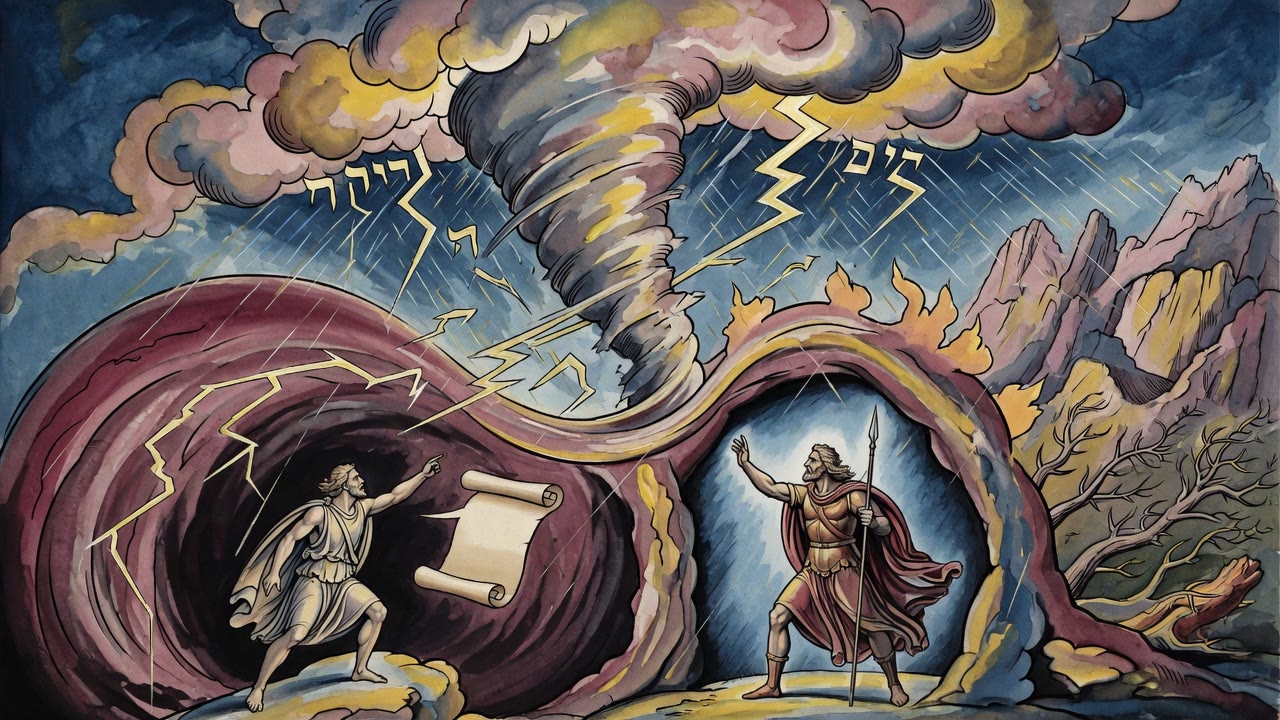
David, hunted and ringed by mouths like spears and arrows, cried out in the psalm that God should rise above the heavens. The midrash hears the cry as expulsion, not only praise. What is the Presence doing down here among tongues that cut? Lift Yourself to the firmament. Leave a world that has made speech into siege engines.

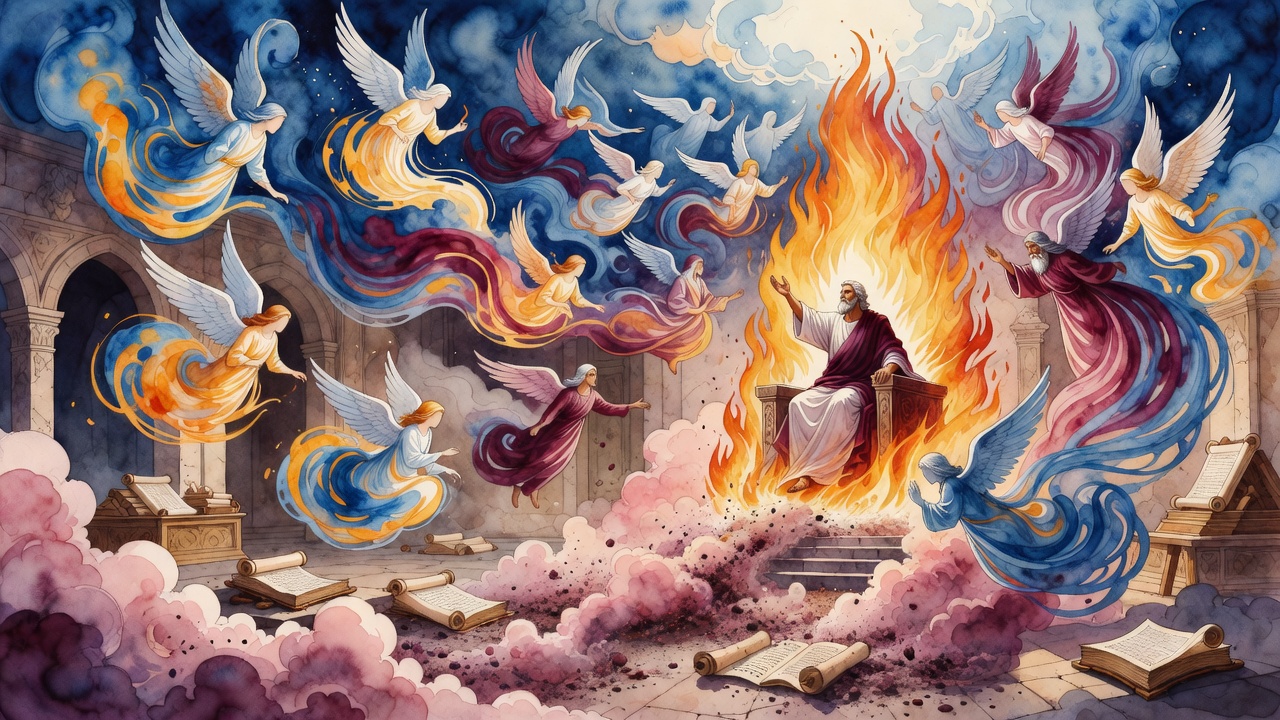
Rav Mona said anyone who engages in malicious speech drives the Divine Presence away. The image is physical. Holiness does not argue with gossip. It departs. A camp can be full of sacrifices and empty of God if the night air is thick with reports.

The serpent in Eden is dragged into the same teaching. Once it spoke; it slandered the Creator with a claim that the prohibition on the tree was divine jealousy. Its punishment was a body that crawls and a tongue that drags in the dust. The first lashon hara in the world was against Heaven. Every later tongue that ruins a priestly city walks in that track.

The Boomerang of the Deed

Rabbi Levi taught that blessed actions return blessing to the doer, and cursed actions return curse to their source. Weights and measures in Deuteronomy become a moral physics: keep a just weight and you will have something to take, give, buy, and sell. Keep a false weight and the abundance dries up at your own door.

Speech obeys the same law. Doeg's report did not stay in Saul's ear as a private convenience. It came back as a land without a Temple, a king without rest, and a name forever tied to the blood of Nov. The informer who thought he was purchasing favor purchased a curse that still sticks to his name in every retelling.

Amalek is memory's enemy; lashon hara is presence's enemy. Israel could strike Amalek and still fail to house God if the camp's inner war was fought with whispers. The third command waited on a quieter kind of courage: mouths that refuse to sell their brothers for a moment of the king's smile.

What a Sanctuary Requires

Imagine the beams cut, the gold gathered, the plans drawn, and still the air refusing to hold holiness. That is the midrash's picture of a generation that completed two commands and stalled on the third. The missing piece was not cedar from Lebanon. It was a people who would not make a weapon of a report.

Saul's tragedy is not only the incomplete war with Amalek. It is the complete success of Doeg's tongue. A king who listens to informers will always find traitors, because fear invents them. A people who reward such listening will always find the Shechinah packing for higher ground.

So the kingdom of Amalek and the massacre at Nov are one story about what blocks the House. You can defeat an outer enemy and still lose the inner right to host God. The Temple rises only where speech has learned to carry bread, not spears.


← All myths
From the tradition

Sources

2 sources

The texts behind this telling. Some cards carry a translation of the source; others are our own retelling of it, and each card says which. Every card links out to the original.

Devarim Rabbah 5:10Devarim Rabbah

Retold in our words. Read the original at the link below.The Sefaria Midrash Rabbah, 2022 · CC-BY

Rabbi Yehuda ben Rabbi Ilai points out that there were actually three commandments the Israelites received upon entering the land: to wipe out the memory of Amalek, to appoint a king, and to build the Temple. They managed the first two. So, what happened with the Temple?

In this teaching, the problem wasn't a lack of resources or will, but something far more insidious: informers. The presence of mosrim, those who spread malicious reports, prevented the Shechinah, the Divine Presence, from dwelling among them. Can a truly sacred space be built on a foundation of gossip and backbiting?

Rabbi Shmuel bar Naḥman provides a striking contrast. He notes that during the reign of Ahab, the people were idol worshippers, yet they were victorious in war. How? Because, as shocking as it sounds, they didn't have informers in their midst. Conversely, Saul’s generation was plagued by informers, like Doeg the Edomite and the Zifites, constantly whispering against David. The result? Defeat.

Rav Mona takes it a step further, stating that anyone who engages in lashon hara, malicious speech, drives the Divine Presence away. He illustrates this with a powerful image from David himself in Psalm 57. David laments being surrounded by those with tongues like "spears and arrows," and then cries out, "Rise above the heavens, God…" In other words, David is saying, “Get out of here! What is the Divine Presence doing down here? Remove the Divine Presence to the firmament."

Rabbi Shmuel bar Naḥman also calls lashon hara "the third speech," because of its devastating impact. It kills three people: the speaker, the listener, and the subject. He derives this from the story of Doeg, Saul, and the city of Nov – a tragic chain of events detailed in I Samuel 22, where Doeg's slander leads to the massacre of an entire priestly city.

But the Rabbis don't stop there. They even bring in the serpent from the Garden of Eden! They ask the serpent why it crawls on the ground with its tongue dragging. The serpent replies it is because it breached "the fence of the world" through malicious speech against the Creator. According to Rabbi Yehoshua of Sikhnin in the name of Rabbi Levi, the serpent, who could once speak, slandered God, claiming that God forbade Adam and Eve from eating from the Etz haDa’at (Tree of Knowledge) out of fear that they would create their own worlds. As punishment, God severed its legs and silenced its tongue.

The Rabbis continue to probe the serpent, asking what it gains from biting. The serpent's response is chilling: "Before you ask me, why don't you ask those who engage in lashon hara?" The implication is clear: both are destructive forces.

Finally, they ask why the serpent's venom spreads throughout the entire body from a single bite. Again, the serpent deflects, pointing to the devastating reach of malicious speech, which can strike down someone across vast distances.

The Devarim Rabbah concludes with a sobering thought: the Israelites were commanded to build the Temple upon entering the Land. But because they engaged in malicious speech, it wasn't built in their time.

This isn't just a historical footnote. It's a potent reminder of the destructive power of our words. It challenges us to consider: What kind of world are we building with our speech? Are we contributing to a sacred space, or are we, through gossip and slander, driving away the very presence we seek?

Full source
Vayikra Rabbah 15:7Vayikra Rabbah

Retold in our words. Read the original at the link below.The Sefaria Midrash Rabbah, 2022 · CC-BY

Rabbi Levi, in Vayikra Rabbah (Leviticus Rabbah) 15, cuts right to the heart of it. He teaches that blessed actions – acts of kindness, of justice, of integrity – bring blessing right back to the person who performed them. And, conversely, cursed actions? They bring a curse right back to the source. A cosmic boomerang, if you will.

Rabbi Levi draws on the powerful words of (Deuteronomy 25:15): “You shall have a whole and just weight, you shall have a whole and just measure.” He sees in this verse a promise. Do these things, act with integrity, and "you will have something to take, something to give, something to buy, and something to sell." Essentially, you'll be blessed with abundance. The Etz Yosef commentary points out that this blessing is derived from the repetitive use of the phrase “you shall have,” emphasizing the positive repercussions of ethical behavior.

What about the flip side? (Deuteronomy 25:13-14) warns, “You shall not have in your pouch different weights, large and small. You shall not have in your house different measures, large and small.” Here, Rabbi Levi sees a warning. Cheat, deceive, act unjustly, and "you will not have something to take, something to give, something to buy, and something to sell." The abundance dries up.

The text takes it a step further, putting words in the mouth of the Holy One, blessed be He. God essentially says: ‘I told you not to use dishonest measures, but you did. So, as you live, you won’t even have enough for a small measure.’ Ouch. The idea that our dishonesty, our greed, ultimately shrinks our own capacity to receive blessing.

The passage then connects this idea of honest measure to idolatry. “You shall not make with Me gods of silver or gods of gold, you shall not make for yourselves” (Exodus 20:20). The implication? If you chase false idols, if you prioritize material wealth over spiritual integrity, then, as God lives, you won't even have enough for idols of wood and stone. The hunger for more, for bigger, for better… it’s a bottomless pit.

What's the takeaway here? It's more than just a moral lesson about honesty in business (although, it's certainly that too!). It’s about the fundamental interconnectedness of our actions and our lives. It’s about the profound responsibility we have to act with integrity, not just because it’s the "right" thing to do, but because it’s the path to true and lasting blessing. It's a call to examine our own "weights and measures," both literally and figuratively. Are we living with integrity? Are we acting in ways that bring blessing, not just to ourselves, but to the world around us?

Full source