5 min read

Doeg's Ashes Filled the House of Study

Angels burned Doeg's soul and scattered his ashes through the study house, while David rose to a throne of fire and led heaven's choir.

Curated by Arthur · Told by Maggid ·
Table of Contents
  1. The Death That Would Not Atone
  2. The Son Who Finished a King
  3. The King Who Changed Stages
  4. A Throne of Fire Opposite the Throne
  5. Two Exits From Saul's Shadow

Doeg the Edomite did not die the way a soldier dies. Steel would have been mercy. The end assigned to him came with wings and fire and a kind of thoroughness reserved for men who turned learning into a blade.

Doeg's Ashes Filled the House of Study Click for full size

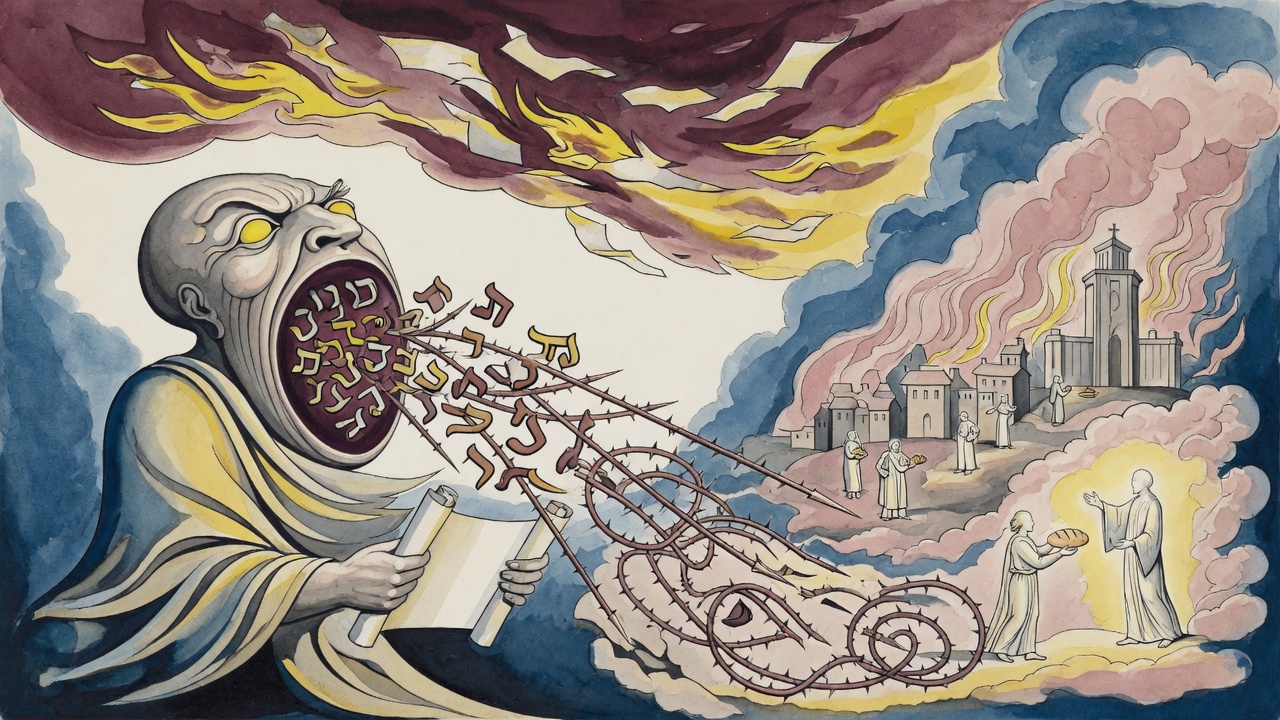
He had once stood at Nob and watched David take bread and a sword from priestly hands. He had carried that sight back to Saul like a gift. Priests fell. A city of service emptied into blood. Doeg's mouth had been full of Torah letters, and he spent them like arrows.

The Death That Would Not Atone

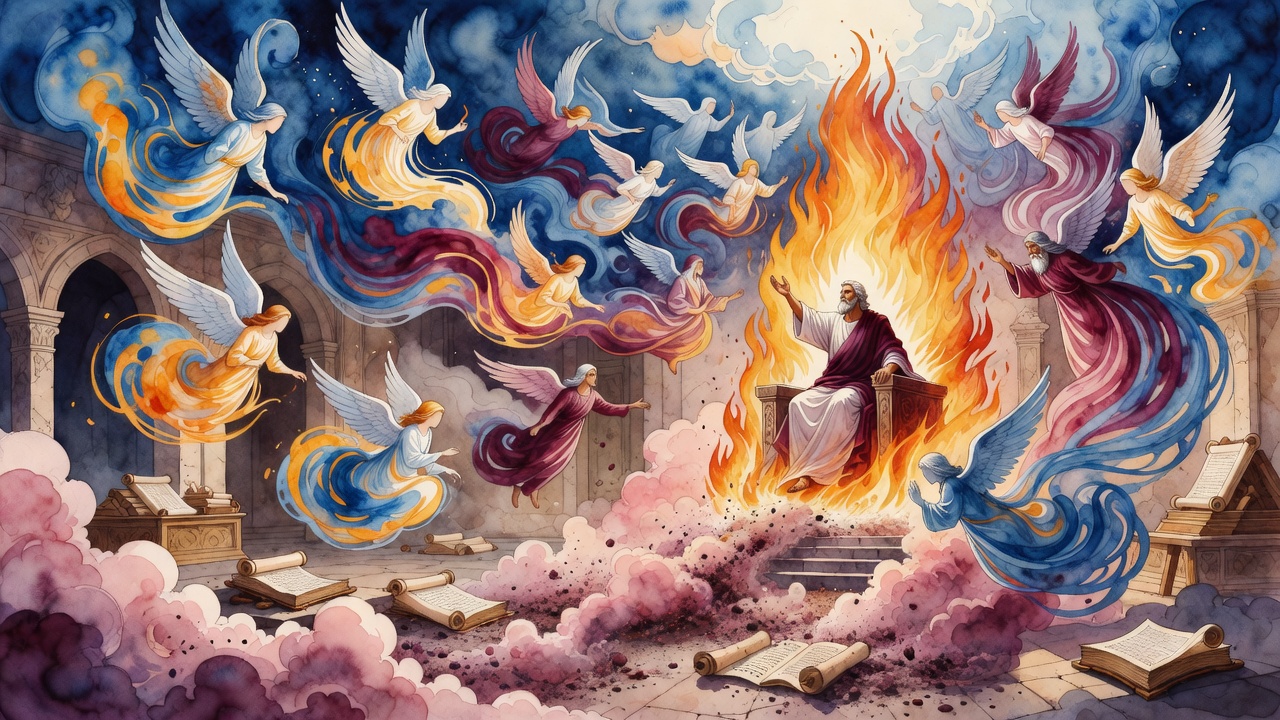
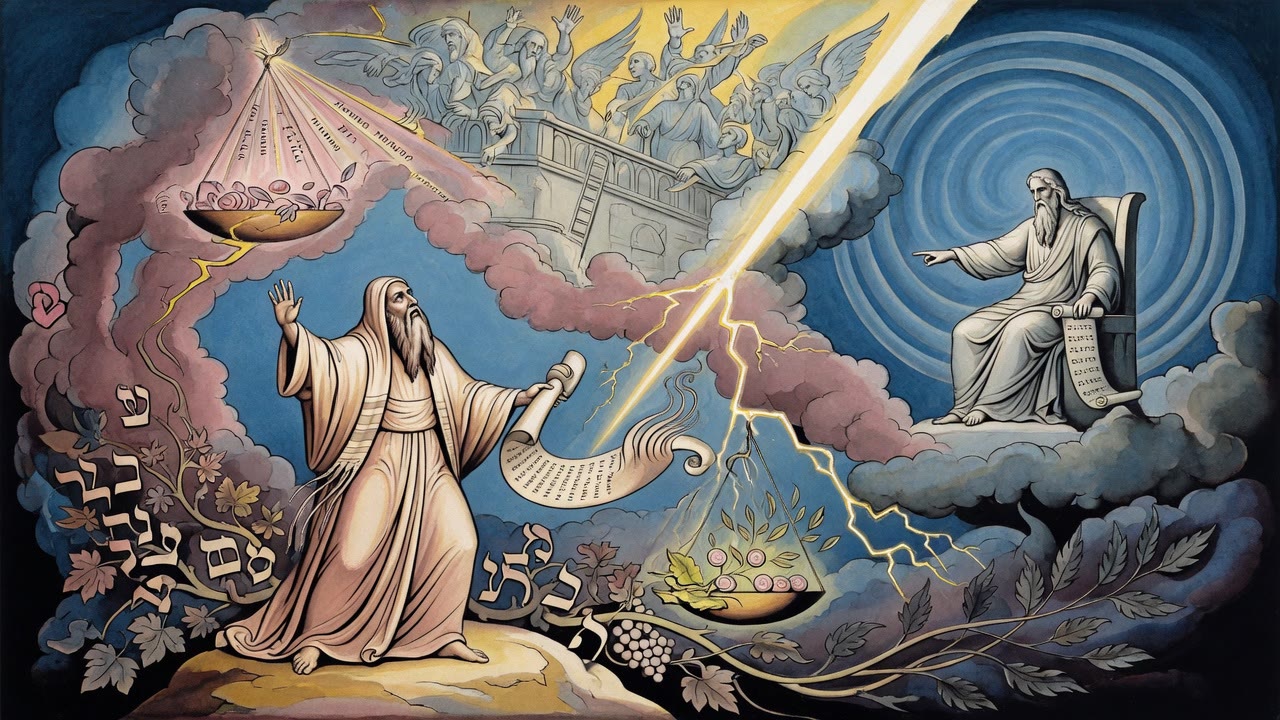
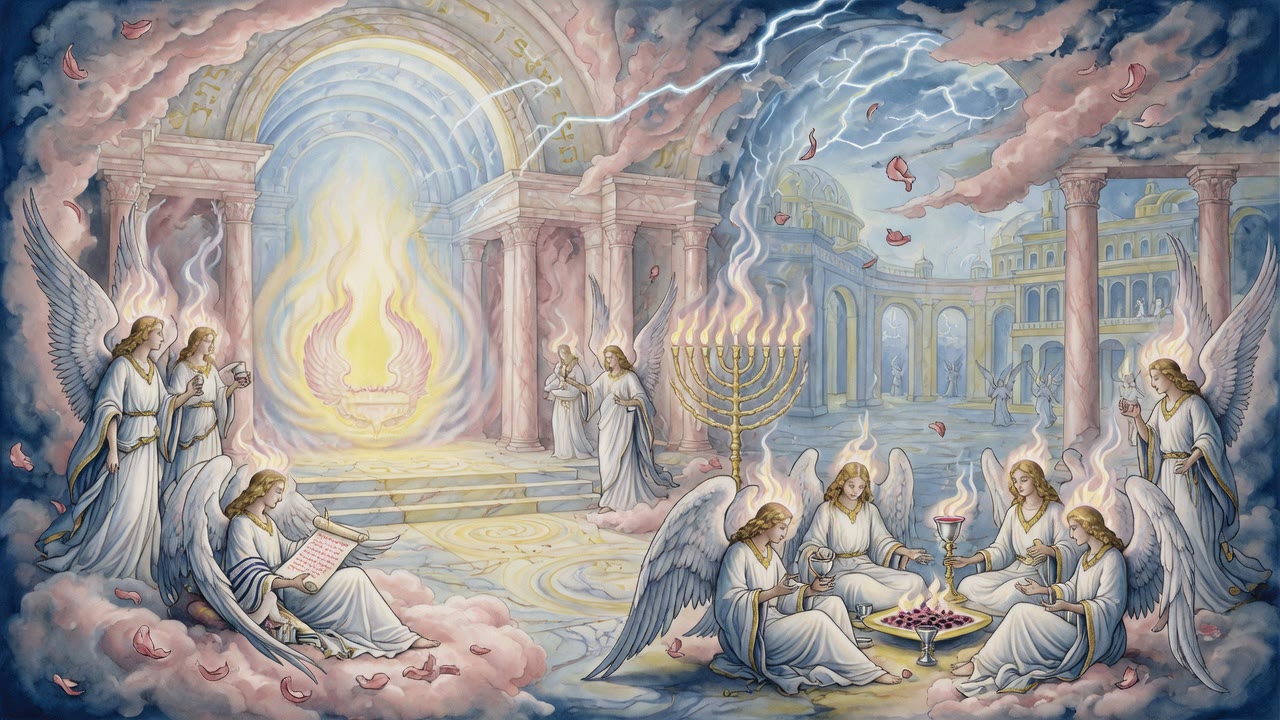
When his hour came, the body failed in dread. Even that was not enough. An angel seized what still answered to the name of Doeg and burned the soul itself, heat without smoke a living man could choke on, a fire meant for the part of him that had studied and then sold the study.

Another angel took what remained and scattered the ashes through the house of study and prayer. Not into a field. Not into a ditch outside the walls. Into the room where men bent over scrolls and argued law until dawn. Feet would walk through him. Voices would chant above him. The place that should have been his glory became his grave without a marker.

Scholarship without fear of heaven ends as dust on the floor of the very house it claimed to serve. Doeg had raised questions sharp enough to stun sages. The last answer was ash between the benches.

The Son Who Finished a King

His son had worn Saul's armor and stood close enough to the throne to smell the king's fear. When Saul fell wounded on the field and begged for the end, that armor-bearer finished what the arrows had begun. David later struck the man down for daring to complete a king's death, even at the king's own plea. The line of Doeg closed in violence the way it had lived in violence, father and son both touching Saul's catastrophe and both paying for the touch.

Around that same court other names held different weights. Jonathan fought and studied and kept a humility rare in men who command troops and courts. Mephibosheth, Saul's grandson, sat with books until David himself took the learner's place at his feet. Knowledge could still be clean in that house. Doeg had simply chosen the other use of the alphabet.

The King Who Changed Stages

David's death, when it came, was less an ending than a change of scene. The shepherd-king left the earthly stage and entered a court larger than any he had ruled below. In the heavenly realm he did not fade into a quiet rank of the pious. His crown outshone the others. Kings of his line gathered. Other Israelite monarchs took their places. The man Doeg had hunted walked into light that refused to treat him as prey.

Whenever David left Paradise to appear before God, the approach itself became an event. Suns and stars shifted as if to greet him. Angels and seraphim moved in ranks. The sweet singer of Israel still carried song as his primary weapon, and heaven made room for the melody.

A Throne of Fire Opposite the Throne

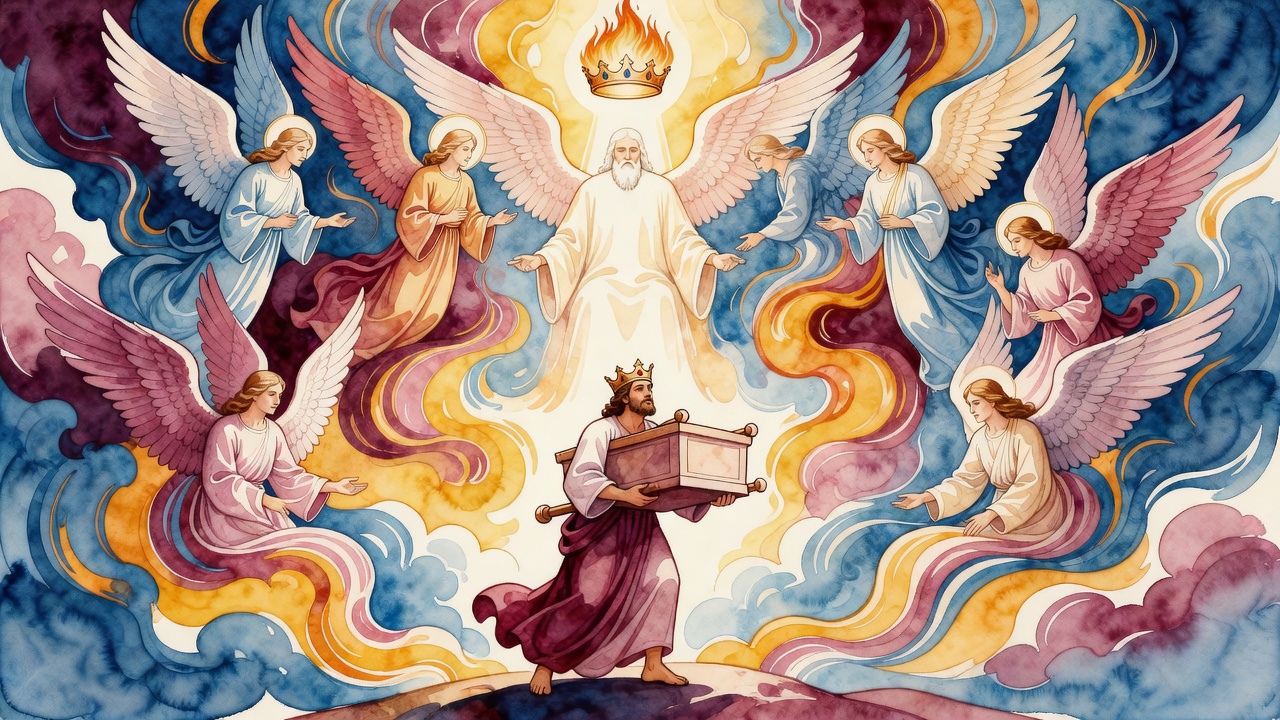
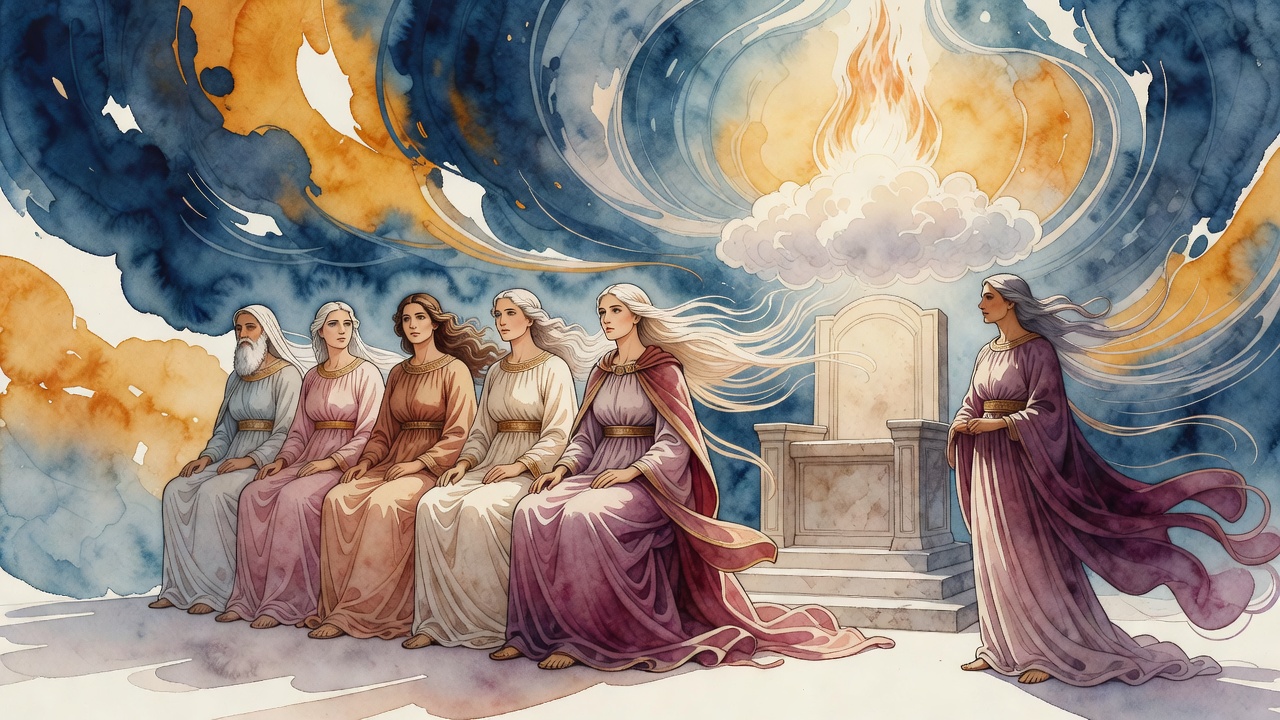
They set for him a throne of fire, vast beyond ordinary measure, opposite God's own throne. Seated there, surrounded by the House of David and the kings who had worn Israel's crown, he led the heavenly choir. He intoned the psalms he had composed in caves and courts and fields, the same lines of longing and praise that once steadied a hunted man while Saul's nets closed.

At the end of each psalm he proclaimed, "The Lord reigns forever and ever."

The archangel Metatron and his cohort answered, "Holy, holy, holy, is the Lord of hosts." Three times holy. The Hayyot, the living creatures of the chariot vision, joined. Heaven and earth folded into one sound. Then the kings of David's house sang together that the Lord would be king over all the earth, one Name on that day (Zechariah 14:9).

The man whose bread Doeg had reported now conducted the highest music creation could hold.

Two Exits From Saul's Shadow

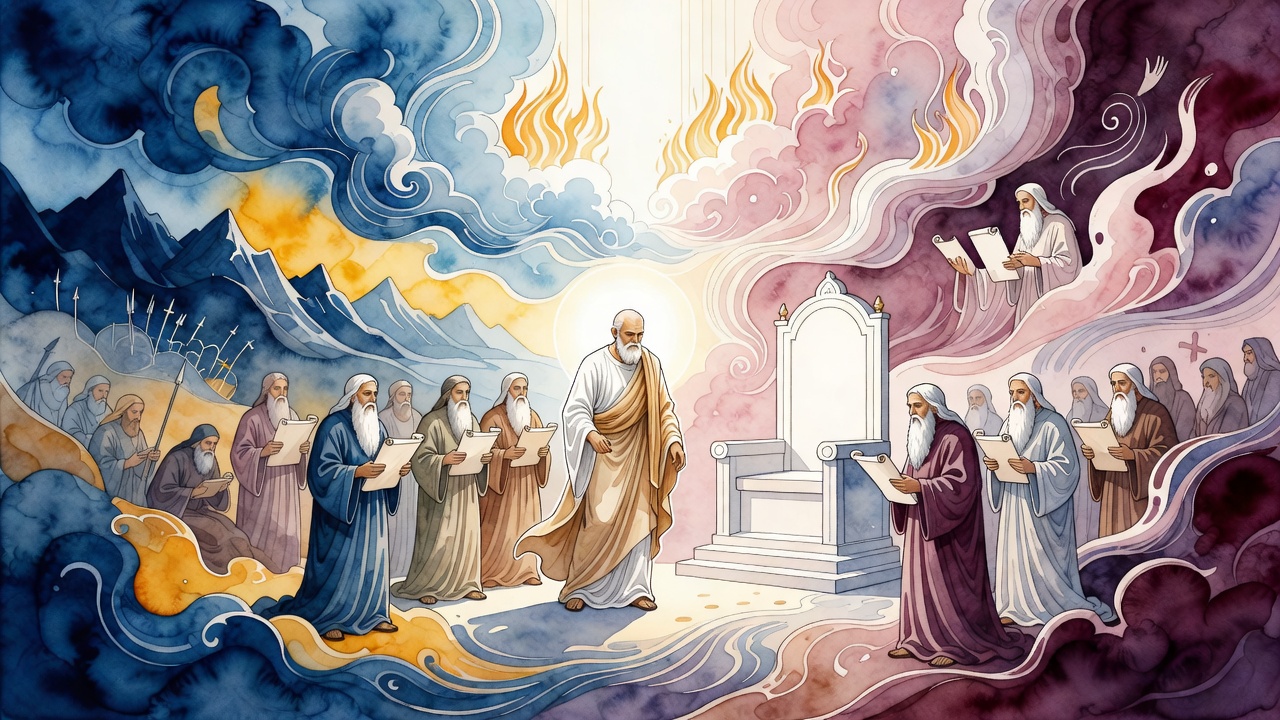
Doeg exited as ash under the feet of students. David exited as a conductor of fire and psalm. Both had stood inside Saul's disaster. One weaponized the house of study until the house of study became his urn. The other kept a harp in the dark and found, on the far side of death, a throne that still faced the only Throne that matters.

No angel scattered David's dust through a beit midrash. No choir rose for Doeg. The irreversible turns locked in place: a soul burned for the slaughter of priests, a crown blazing for a king who never stopped singing toward God. The benches where Doeg's ashes lay kept filling with new learners. Above them, far past any roof, a psalm ended and Metatron answered holy.

Saul's court was gone. Its two most opposite products remained as judgment and song.


← All myths

From the tradition

Sources

2 sources

The texts behind this telling. Some cards carry a translation of the source; others are our own retelling of it, and each card says which. Every card links out to the original.

Legends of the Jews 3:42Legends of the Jews

Retold in our words. Read the original at the link below.The Legends of the Jews by Louis Ginzberg (1909) · Public Domain

Not exactly a feel-good name, is it? According to Ginzberg's retelling in Legends of the Jews, his death was pretty gruesome. It wasn't just death, it was a dreadful death. But even that wasn't enough to atone for his sins. I mean, can you imagine? An angel burning your soul? Another scattering your ashes throughout the house of study and prayer? Yikes. And get this: his son was Saul’s armor-bearer, the one David killed for daring to finish off the king – even though Saul himself was begging for it!

It wasn't all doom and gloom. Among Saul's circle was Jonathan, a figure of both military prowess and deep scholarship. He wasn’t just a warrior; he held the high position of Av Beit Din (a rabbinic court), head of the religious court. Pretty impressive. And get this – despite all that power and knowledge, he was considered one of the most modest men of his time.

Then there was Abinadab, another of Saul's sons. He was considered worthy of his father, so much so that he was sometimes called Ishvi. It's fascinating how these figures, often overshadowed by the main narrative, had their own distinct reputations.

What about Mephibosheth, Saul's grandson? He was quite the scholar himself! So much so that David – the king himself – sat at his feet and revered him as his teacher! Can you imagine David, the warrior king, sitting at the feet of his former rival's grandson, learning from him? It really highlights how knowledge and wisdom were valued, sometimes even above political rivalries.

However, things weren’t perfect for Mephibosheth. Remember Ziba, Mephibosheth’s slave? David, in a move that seems a bit off, granted half of Mephibosheth's possessions to Ziba. But the story doesn't end there. According to Legends of the Jews, this act didn't go unavenged.

When David ordered the division of Mephibosheth's estate, a voice from heaven prophesied, "Jeroboam and Rehoboam shall divide the kingdom between themselves." Talk about consequences! This division, of course, refers to the splitting of the united kingdom of Israel into the northern kingdom of Israel and the southern kingdom of Judah after the reign of Solomon. So, a seemingly small act of injustice had huge repercussions down the line.

How often do seemingly minor decisions ripple outwards, shaping the course of history in ways we can't even imagine? And what can we learn from these "minor" characters, whose lives, though less prominently featured, still held wisdom, complexity, and consequences?

Full source
Legends of the Jews 4:81Legends of the Jews

Retold in our words. Read the original at the link below.The Legends of the Jews by Louis Ginzberg (1909) · Public Domain

David's death, in Legends of the Jews, is less an ending than a change of scene. The king leaves the earthly stage and enters a court grander than anything he ruled below.

In the heavenly realm, David doesn't just fade into the background. Oh no. He remains a major player. Ginzberg tells us that his crown outshines all others. A king among kings, even in the celestial court.

Get this: whenever David leaves Paradise to appear before God, it's a whole event. Suns, stars, angels, seraphim – all rushing to greet him. It's like the ultimate red-carpet treatment, times infinity!

Then there's the throne. Not just any throne,. A throne of fire, of gigantic dimensions, set up directly opposite God's own throne. Seated there, surrounded by the kings of his line – the House of David – and other Israelite monarchs, David leads the heavenly choir.

He intones beautiful psalms, the very ones he composed during his earthly reign, filled with longing, praise, and everything in between. And at the end of each psalm, he proclaims, "The Lord reigns forever and ever."

Then, something truly amazing happens. The archangel Metatron – a figure of immense importance in Jewish mystical tradition, often considered the highest of the angels – and his cohort respond with "Holy, holy, holy, is the Lord of hosts!" Three times holy. A powerful affirmation of God's absolute sovereignty.

This, in turn, cues the Hayyot – the holy living creatures described in Ezekiel’s vision – and all of heaven and earth to join in the praise. It’s a cosmic harmony of adoration.

Finally, the kings of the House of David sing together, "And the Lord shall be king over all the earth; in that day shall the Lord be one, and His name one." A powerful declaration of the ultimate unity and universal recognition of God.

So, what does this all mean? Is it literal? Metaphorical? Perhaps it's both. Maybe it's a way of understanding that the impact of a truly great life, a life dedicated to God, echoes far beyond the earthly realm. That the songs we sing, the prayers we offer, the good we do – they resonate in ways we can barely comprehend, contributing to an eternal chorus of praise. And that, perhaps, is the most glorious legacy of all.

Full source