Translation of the source text.Wikisource 2019 · Public Domain
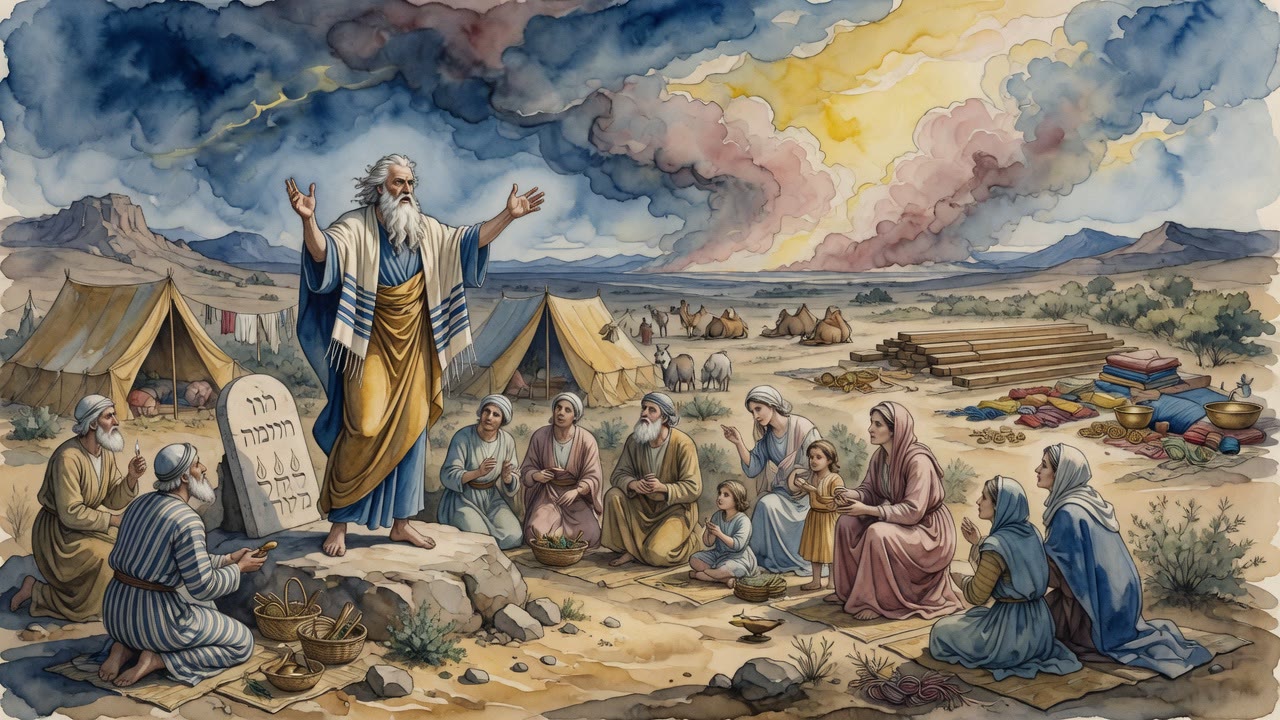
And the angel of the presence spake to Moses according to the word of the Lord, saying:
Write the complete history of the creation, how in six days the Lord God finished all His works and all that He created, and kept Sabbath on the seventh day and hallowed it for all ages, and appointed it as a sign for all His works.
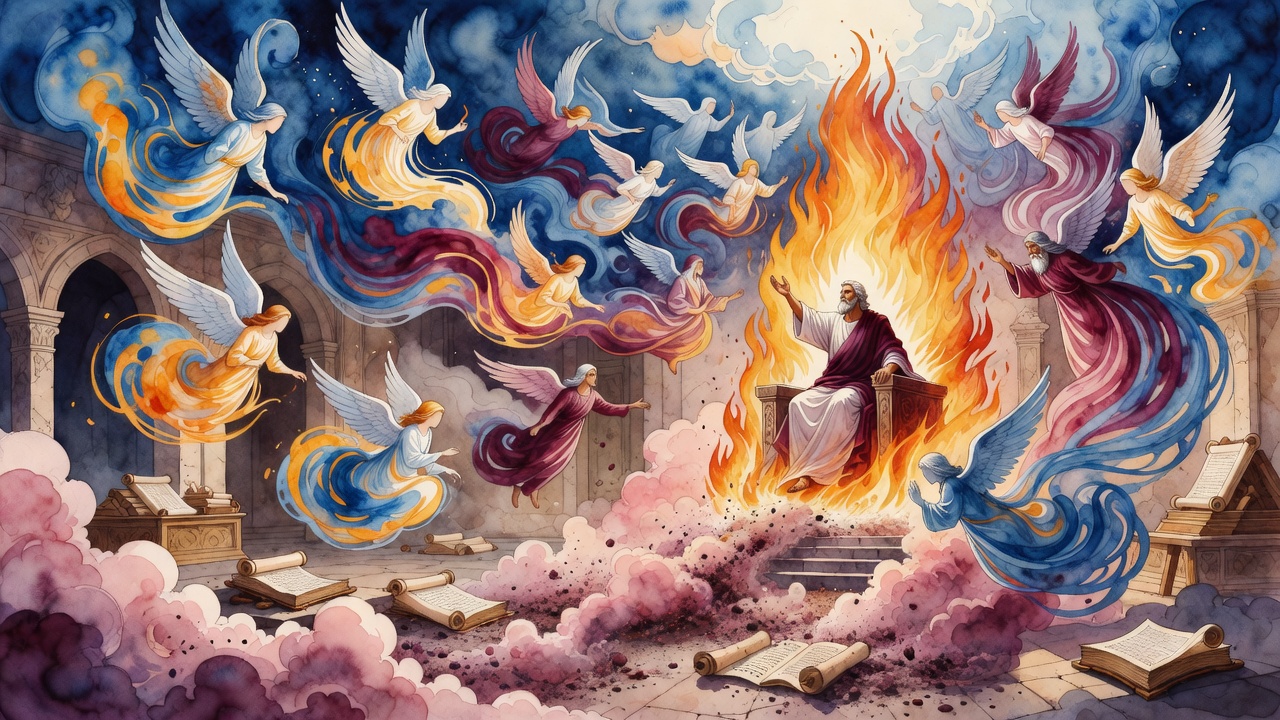
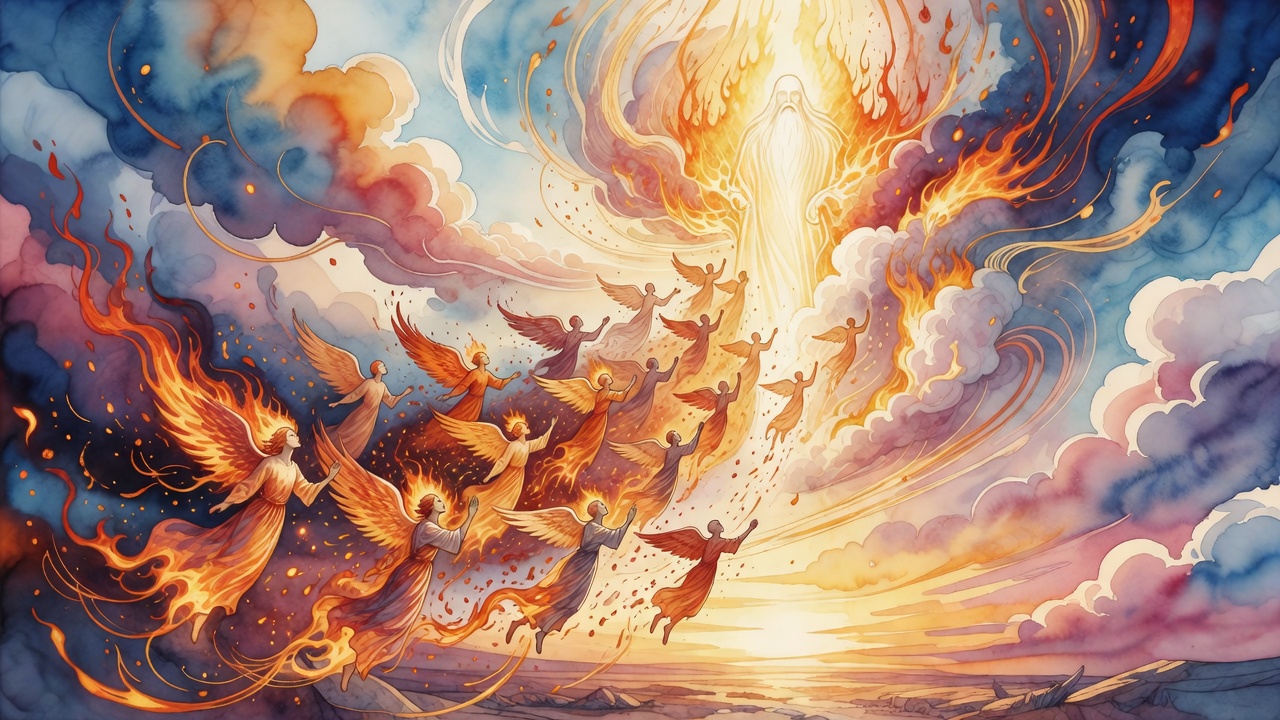
For on the first day He created the heavens which are above and the earth and the waters and all the spirits which serve before Him
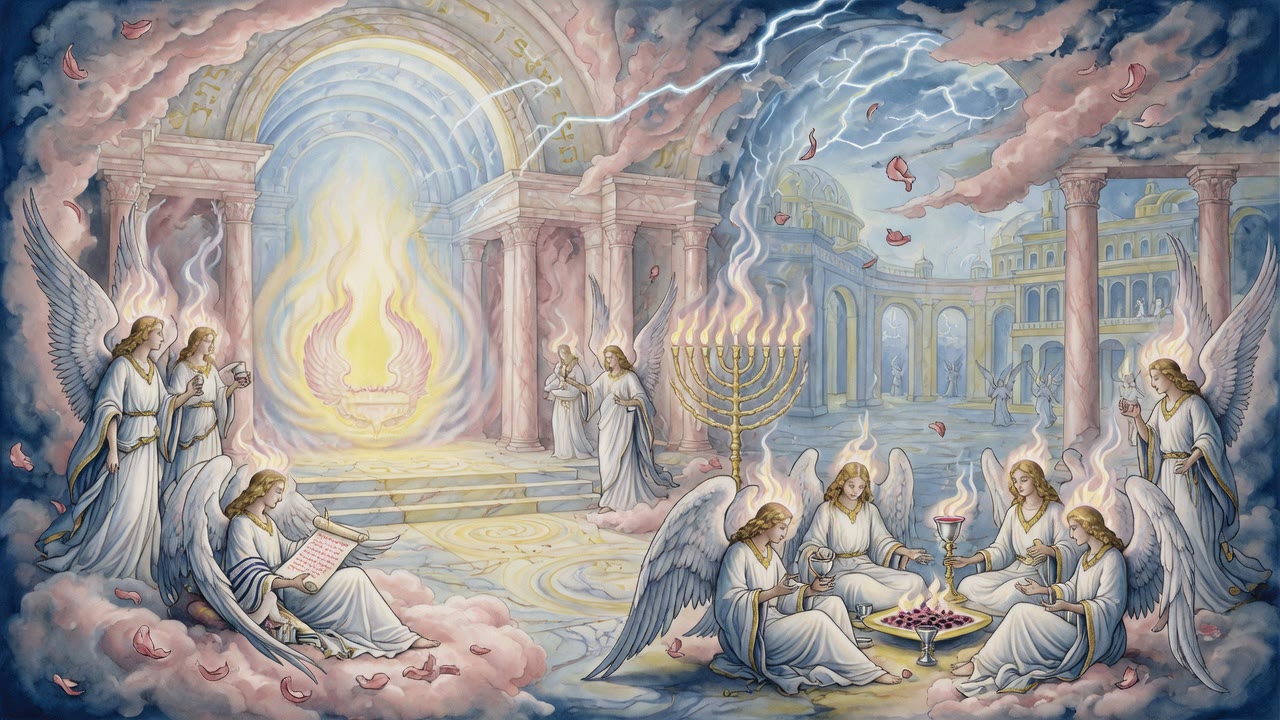
--the angels of the presence, and the angels of sanctification, and the angels [of the spirit of fire and the angels] of the spirit of the winds, and the angels of the spirit of the clouds,
and of darkness, and of snow and of hail and of hoar frost, and the angels of the voices and of the thunder and of the lightning, and the angels of the spirits of cold and of heat, and of winter and of spring and of autumn and of summer,
and of all the spirits of His creatures which are in the heavens and on the earth, (He created) the abysses and the darkness, eventide (and night), and the light, dawn and day, which He hath prepared in the knowledge of His heart.
And thereupon we saw His works, and praised Him, and lauded before Him on account of all His works; for seven great works did He create on the first day.
And on the second day He created the firmament in the midst of the waters, and the waters were divided on that day--half of them went up above and half of them went down below the firmament (that was) in the midst over the face of the whole earth.
And this was the only work (God) created on the second day.
And on the third day He commanded the waters to pass from off the face of the whole earth into one place, and the dry land to appear.
And the waters did so as He commanded them, and they retired from off the face of the earth into one place outside of this firmament, and the dry land appeared.
And on that day He created for them all the seas according to their separate gathering-places, and all the rivers, and the gatherings of the waters in the mountains and on all the earth,
and all the lakes, and all the dew of the earth, and the seed which is sown, and all sprouting things, and fruit-bearing trees, and trees of the wood, and the garden of Eden, in Eden, and all (plants after their kind).
These four great works God created on the third day.
And on the fourth day He created the sun and the moon and the stars, and set them in the firmament of the heaven, to give light upon all the earth,
and to rule over the day and the night, and divide the light from the darkness.
And God appointed the sun to be a great sign on the earth for days and for sabbaths and for months and for feasts and for years and for sabbaths of years and for jubilees and for all seasons of the years.
And it divideth the light from the darkness [and] for prosperity, that all things may prosper which shoot and grow on the earth.
These three kinds He made on the fourth day.
And on the fifth day He created great sea monsters in the depths of the waters, for these were the first things of flesh that were created by His hands, the fish and everything that moves in the waters, and everything that flies, the birds and all their kind.
And the sun rose above them to prosper (them), and above everything that was on the earth, everything that shoots out of the earth, and all fruit-bearing trees, and all flesh.
These three kinds He created on the fifth day.
And on the sixth day He created all the animals of the earth, and all cattle, and everything that moves on the earth.
And after all this He created man, a man and a woman created He them,
and gave him dominion over all that is upon the earth, and in the seas, and over everything that flies, and over beasts and over cattle, and over everything that moves on the earth, and over the whole earth, and over all this He gave him dominion.
And these four kinds He created on the sixth day.
And there were altogether two and twenty kinds.
And He finished all His work on the sixth day--all that is in the heavens and on the earth, and in the seas and in the abysses, and in the light and in the darkness, and in everything.
And He gave us a great sign, the Sabbath day, that we should work six days, but keep Sabbath on the seventh day from all work.
And all the angels of the presence, and all the angels of sanctification,
these two great classes--He hath hidden us to keep the Sabbath with Him in heaven and on earth.
And He said unto us: "Behold, I will separate unto Myself a people from among all the peoples, and these will keep the Sabbath day,
and I will sanctify them unto Myself as My people, and will bless them; as I have sanctified the Sabbath day and do sanctify (it) unto Myself, even so shall I bless them, and they will be My people and I shall be their God.
And I have chosen the seed of Jacob from amongst all that I have seen, and have written him down as My firstborn son, and have sanctified him unto Myself for ever and ever;
and I will teach them the Sabbath day, that they may keep Sabbath thereon from all work."...
And thus He created therein a sign in accordance with which they should keep Sabbath with us on the seventh day, to eat and to drink, and to bless Him who hath created all things
as He hath blessed and sanctified unto Himself a peculiar people above all peoples, and that they should keep Sabbath together with us.
And He caused His commands to ascend as a sweet savour acceptable before Him all the days. There (were) two and twenty heads of mankind from Adam to Jacob,
and two and twenty kinds of work were made until the seventh day;
this is blessed and holy; and the former also is blessed and holy;
and this one serves with that one for sanctification and blessing.
And to this (Jacob and his seed) it was granted that they should always be the blessed and holy ones of the first testimony and law, even as He had sanctified and blessed the Sabbath day on the seventh day.
He created heaven and earth and everything that He created in six days, and God made the seventh day holy, for all His works;
therefore He commanded on its behalf that, whoever doth any work thereon shall die, and that he who defileth it shall surely die.
Wherefore do thou command the children of Israel to observe this day that they may keep it holy and not do thereon any work, and not to defile it,
as it is holier than all other days.
And whoever profaneth it shall surely die, and whoever doeth thereon any work shall surely die eternally,
that the children of Israel may observe this day throughout their generations, and not be rooted out of the land;
for it is a holy day and a blessed day.
And every one who observeth it and keepeth Sabbath thereon from all his work, will be holy and blessed throughout all days like unto us.
Declare and say to the children of Israel the law of this day both that they should keep Sabbath thereon, and that they should not forsake it in the error of their hearts;
(and) that it is not lawful to do any work thereon which is unseemly, to do thereon their own pleasure, and that they should not prepare thereon anything to be eaten or drunk.
and (that it is not lawful) to draw water, or bring in or take out thereon through their gates any burden, which they had not prepared for themselves on the sixth day in their dwellings.
And they shall not bring in nor take out from house to house on that day; for that day is more holy and blessed than any jubilee day of the jubilees:
on this we kept Sabbath in the heavens before it was made known to any flesh to keep Sabbath thereon on the earth.
And the Creator of all things blessed it, but He did not sanctify all peoples and nations to keep Sabbath thereon, but Israel alone:
them alone He permitted to eat and drink and to keep Sabbath thereon on the earth.
And the Creator of all things blessed this day which He had created for a blessing and a sanctification and a glory above all days.
This law and testimony was given to the children of Israel as a law for ever unto their generations.

 Click for full size