The Sabbath Asked God Why She Was the Only Day Without a Partner
The first day of the week had the second. The third had the fourth. The fifth had the eve. The seventh counted them off and found itself standing alone.
Table of Contents
 Click for full size
God Made Three Things a Day and Then Ran Out
On the first day God made the heavens, the earth, and light. On the second, the firmament, Gehinnom, and the angels. On the third, trees, grasses, and the Garden. On the fourth, the sun, the moon, and the constellations that turn behind them. On the fifth, birds, fish, and Leviathan. On the sixth, Adam, Eve, and every creeping thing, and Rabbi Pinchas counted six that day rather than three, because the cattle and the wild beasts and the fatlings came up out of the ground alongside the man and the woman.
Then the sixth evening came, and God went through what was left to make, and made all of it early.
Scripture does not say that God created and made. It says that God created to do. Rabbi Bannai read the crack in that sentence and found the answer inside it: everything the Holy One had been going to bring out on the seventh day, He brought out on the sixth instead, ahead of schedule, so that when the seventh arrived there would be nothing in its hands.
The Days Went Off in Pairs
Rabbi Berekhiah and Rabbi Dostai counted the week out on their fingers, the way you count anything you suspect is uneven.
One of the week and two. Three and four. Five and the eve of the Sabbath. Six days and they paired off cleanly, each with a partner beside it, and then the counting stopped.
The seventh had nobody.
She was not weak. She was the only day in the calendar that nothing can push out of place. A festival can be shifted. Even the Day of Atonement can be shifted. The Sabbath is never shifted, not for anything, and Rabbi Samuel bar Nahman said that was the whole reason God blessed her. She had been set apart, sanctified, blessed, made immovable, and left standing at the end of the line by herself while the other six went off two by two.
She Brought It to the Throne
Rabbi Shimon bar Yochai taught what happened next, and it is the shortest scene in the creation of the world.
The Sabbath came before the Holy One and spoke. "Master of the Universe. Every one of them has a mate. I have no mate."
God did not tell her she was above such things. He did not tell her that holiness is its own company. He answered her the way you answer someone who has asked a fair question and deserves a name back.
"The Community of Israel is your mate."
Which was a strange thing to promise, because the Community of Israel did not exist. There was no Abraham yet. No Jacob, no twelve sons, no Egypt to come out of. God had just betrothed the seventh day to a people who would not be born for twenty generations, and she took the promise and waited.
He Told the Angels Before He Told Anyone Else
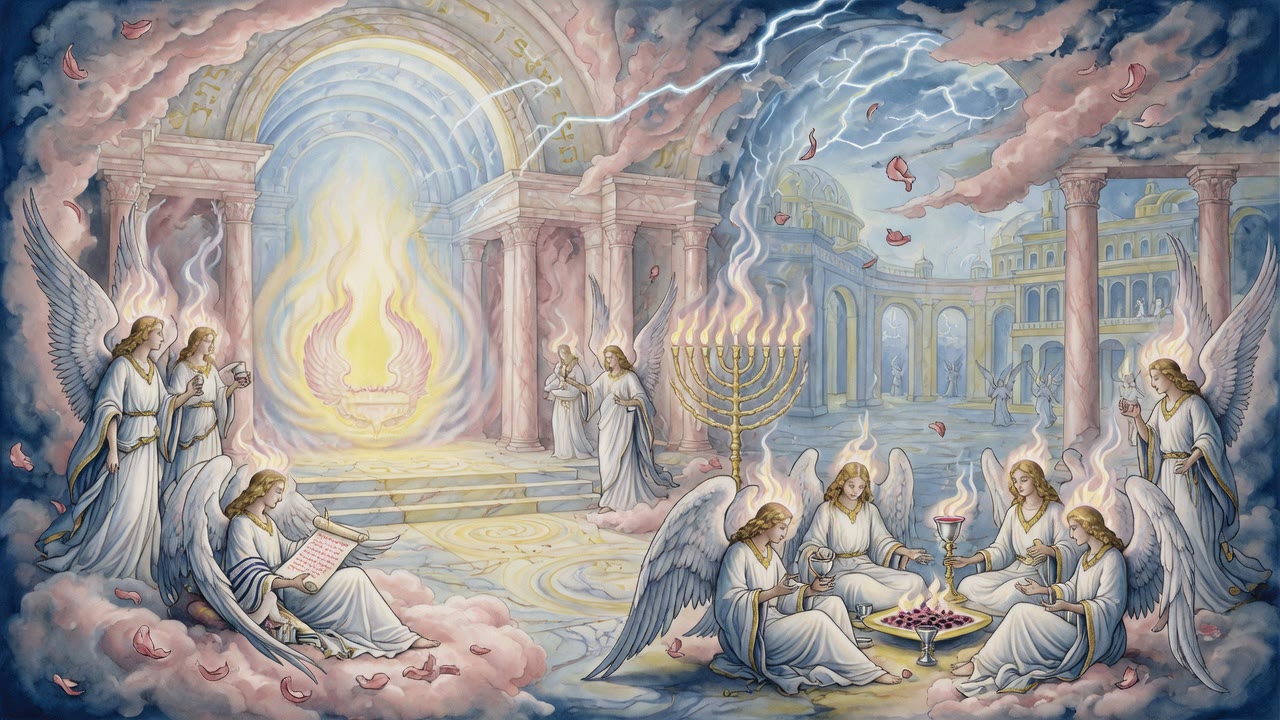
The angels of the presence and the angels of sanctification had been standing there since the first day, made in the same breath as the heavens and the waters, along with the angels of fire and the angels of the winds and the angels of the clouds.
God gathered the two highest ranks of them and told them the arrangement. We will keep this day together, He said, above and below. And know this: I am going to separate one people out of all the nations for Myself, and they will keep it as well, and they will be My people and I will be their God.
So the angels stopped work every seventh day for the sake of a nation that had not been assembled yet, on behalf of a bride who was still waiting to be introduced.
He Said It Out Loud at the Mountain
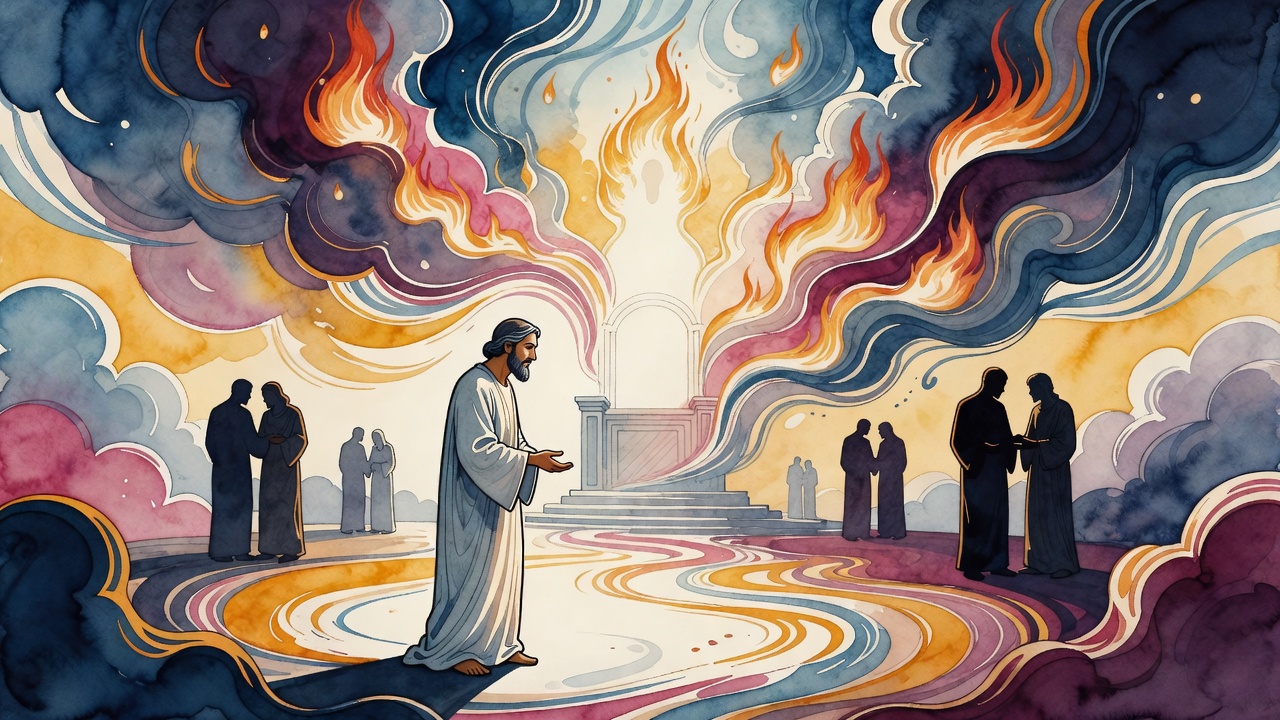
Twenty generations later they stood at the foot of Sinai with the mountain smoking over them, and God opened with the thing He had promised in private at the beginning of the world.
"Remember what I said to the Sabbath. The Community of Israel is your mate."
Then the commandment came out of the fire in front of the whole camp. Remember the Sabbath day, to keep it holy.
The people at the mountain heard an order. The day at the end of the week heard her own name called in a crowd, in public, after twenty generations of standing at the end of the line by herself, and every Friday evening since, somebody has lit a light and kept the appointment.
← All myths