Abigail Argued David Out of Murder and Won a Place in Paradise
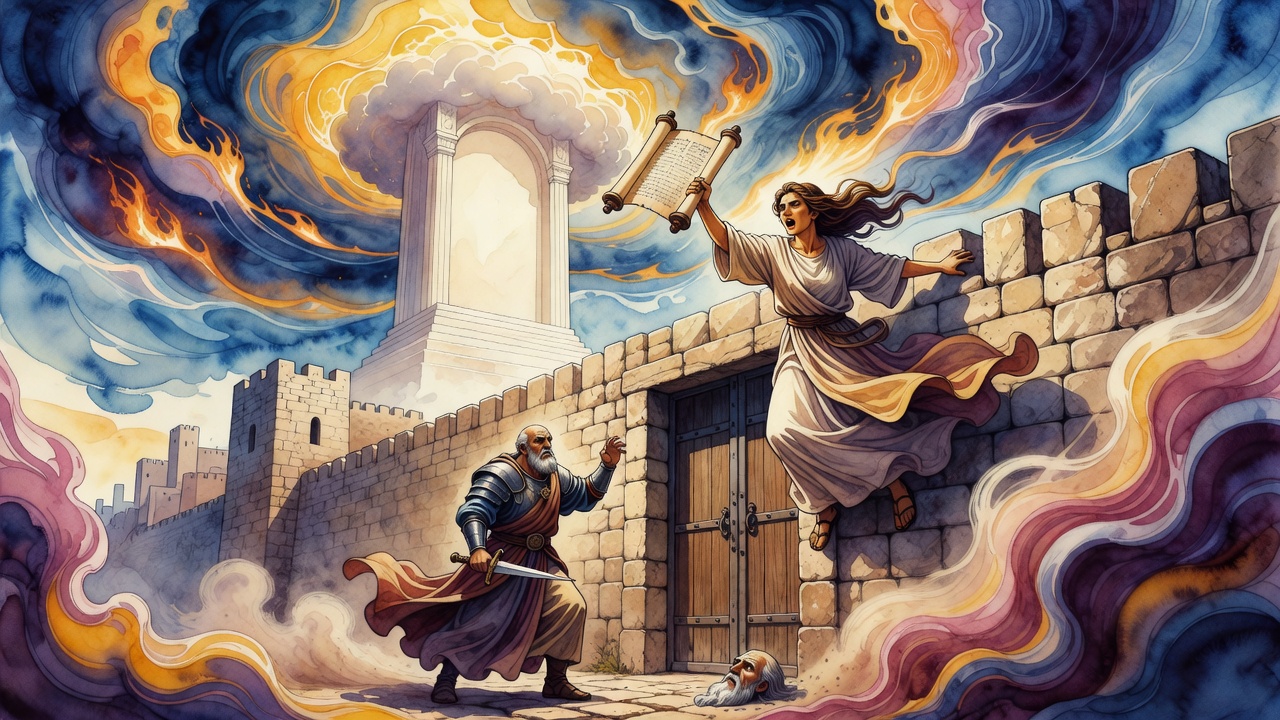
David rode out with four hundred armed men to wipe out one household. A woman met the column in the dark holding a lamp and a legal question.
Table of Contents
 Click for full size
Four Hundred Men on the Road
David buckled on his sword and told four hundred men to do the same. Nabal had answered a request for provisions with an insult, and the answer to that insult was going to be every male in Nabal's house dead before morning. Two hundred stayed behind with the baggage. The rest rode.
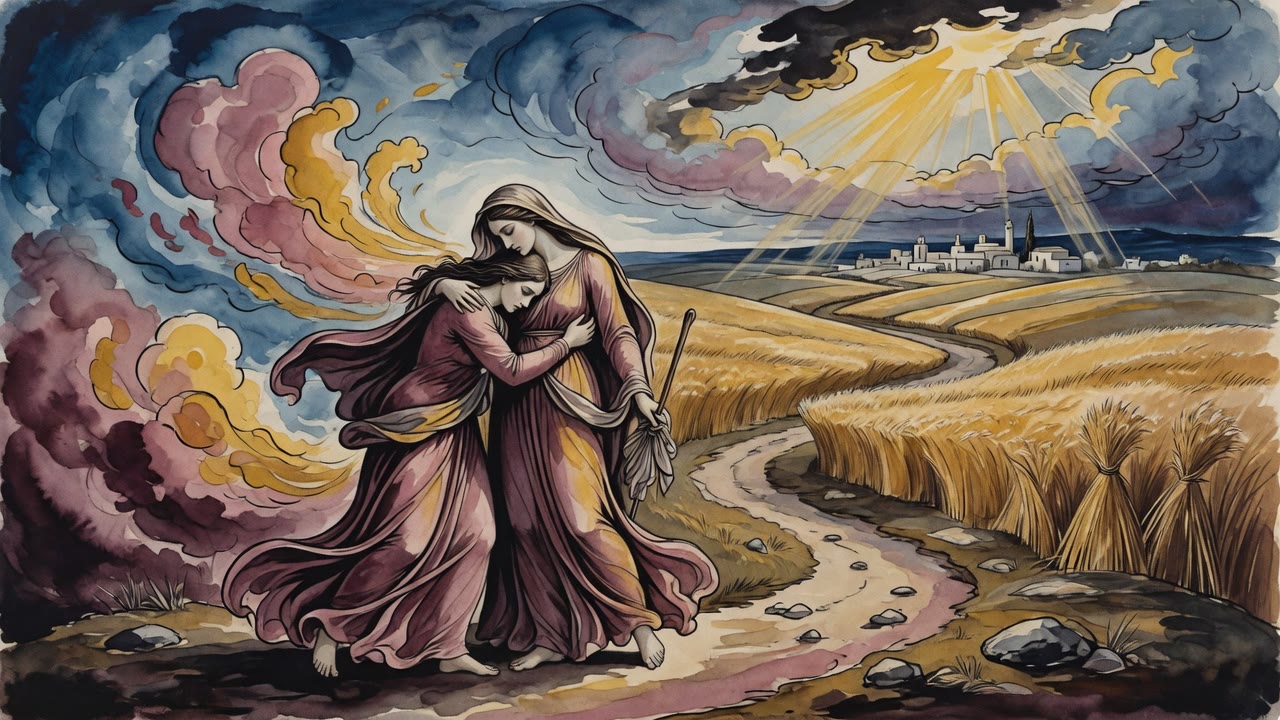
A servant reached the house ahead of them and found Abigail. He told her what her husband had said and what was already on the road because of it. She did not wake Nabal. She loaded bread, skins of wine, dressed sheep, roasted grain, and cakes of pressed figs onto donkeys, sent the servants ahead with them, and followed into the dark.
She came down under the cover of a hill and met the column face on.
Better One Than Two
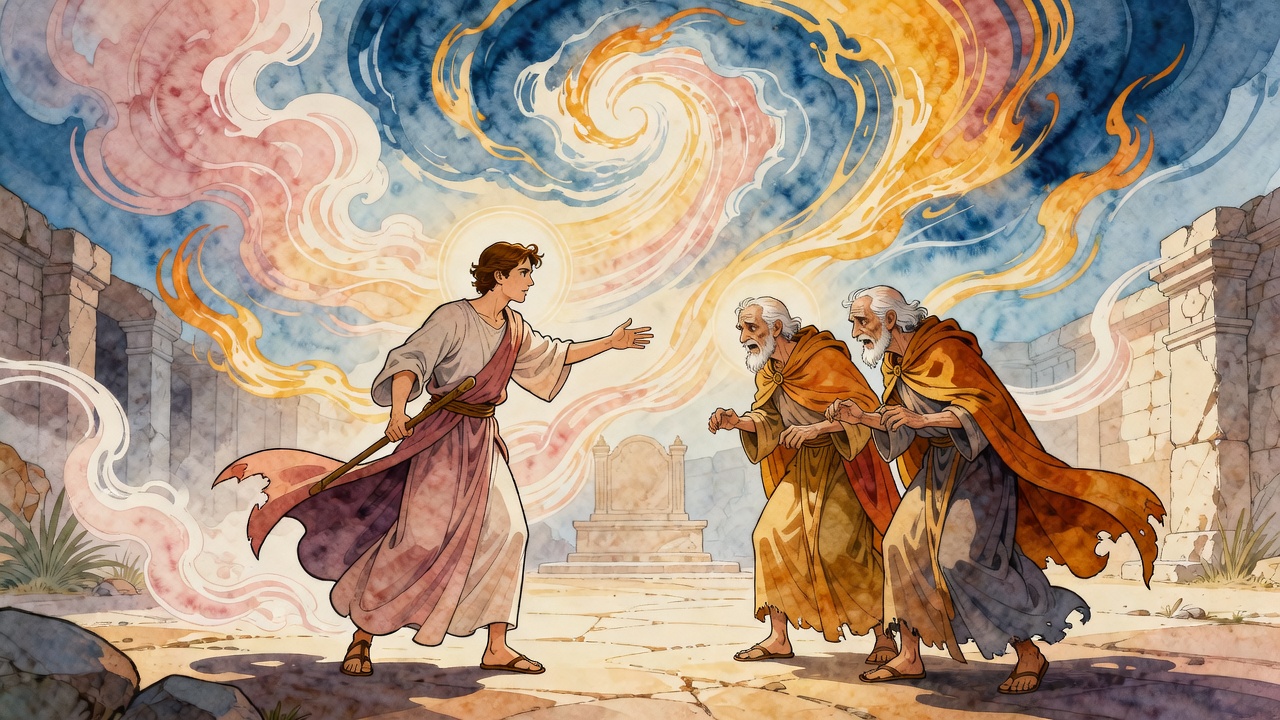
She got off the donkey and put her face in the dirt of the road. The provisions were unloading behind her. That was not what the man in front of her wanted.
He told her what he wanted. She told him no, and gave a reason instead of a refusal. A man with one wife has one way to be ruined through a woman. A man with two has two. "Better one than two," she said.
He did not take the point. So she reached for something he could not argue with, brought out the cloth that proved she was ritually unclean, and held it into the lamplight where his eyes had to go.
He looked away from it. A stain like that is examined by daylight, he said. Not by a lamp on a road at night.
The Question She Had Been Carrying
"Good," she said. "Then answer the other one. Does a court judge a man's life at night?"
The column stood in the dark and waited while their commander worked out that he had walked into it. He had his answer ready anyway. Nabal was a rebel against the crown. A rebel is condemned the moment the words leave his mouth, and no court has to sit for it.
"And are you a king?"
"Samuel anointed me."
"Anointed," she said. "But Saul's coin still rings in every market in this country, and yours has not gone out yet."
Nothing in the sentence was rude. Everything in it was true. The man on the horse was a fugitive with four hundred hungry men and a private grudge, and she had just told him, in front of all of them, that he did not yet have the authority to kill a fool.
Blessed Be Your Discernment
David heard it. That was the whole miracle of the night, that he heard it. "Blessed be your discernment," he said, "and blessed are you." She had kept him from two bloods in one hour, the blood he almost touched and the murder he almost committed. She had argued him out of both in the time it takes to unload a donkey.
He took the donkeys. He turned the column around.
She rode home and found Nabal at a feast fit for a king, drunk past the reach of any news. She said nothing until the wine had gone out of him. In the morning she told him what had come up the road in the night and what had turned it back, and his heart went dead inside his chest like a stone dropped down a well. Ten days later he was dead in fact.
David sent word to Carmel to take her as his wife. She rose, and bowed with her face to the ground, and said she was a servant fit to wash the feet of his servants. Then she went.
The Blemish She Carried to the Fifth Division
One line in her speech on the road had gone a step too far. In among the law and the warning she had said, "remember your handmaid," and a married woman had put herself in a young commander's memory on purpose. Rabbi Yitzchak weighed that phrase and would not let it pass. She had set her eyes on him while another man was still her husband, and a small mark stayed on her name for it.
There was one more thing she said that night without knowing how far it would carry. "This shall not be a stumbling block to you." She meant the killing. The words reached past it to a rooftop years off, and a woman David would see from that rooftop, and a husband sent to the front of the fighting to die.
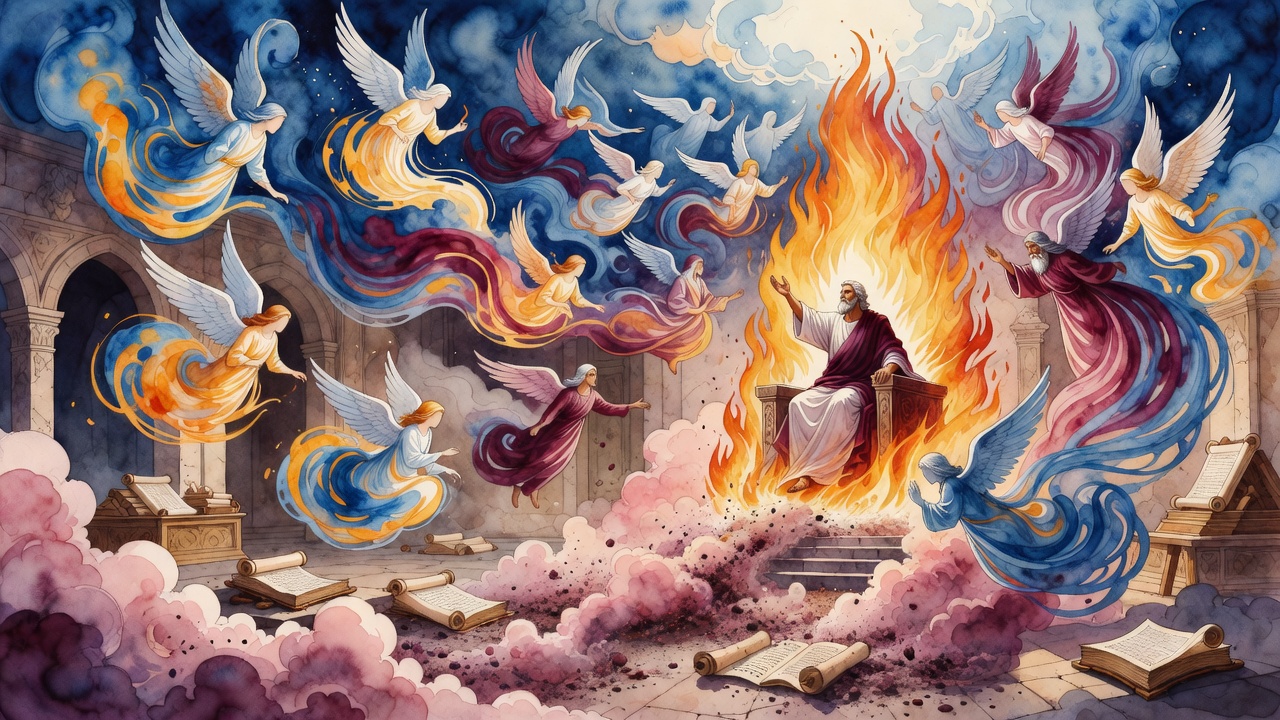
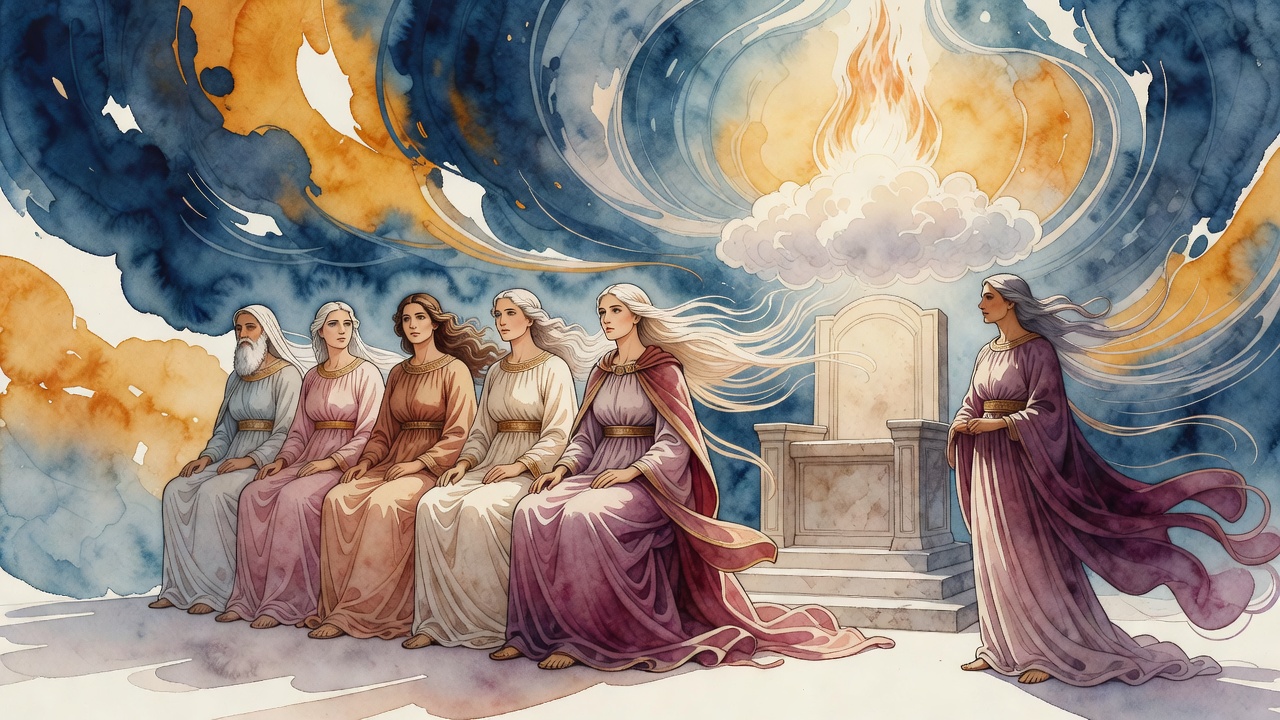
Paradise is laid out in seven divisions. Abigail won the fifth place in it, and her border runs along the ground held by Sarah, Rebekah, Rachel, and Leah. She reached it as the woman who stopped a king with a lamp, a stain, and a question about the hour, and who then said four words she should have swallowed.
← All myths