Akiva Refused a Heaven Without Right and Left
Papias said God does whatever He wishes, and none can turn Him. Akiva cut him off. Heaven still has a right and a left.
Table of Contents
"Enough, Papias."
 Click for full size
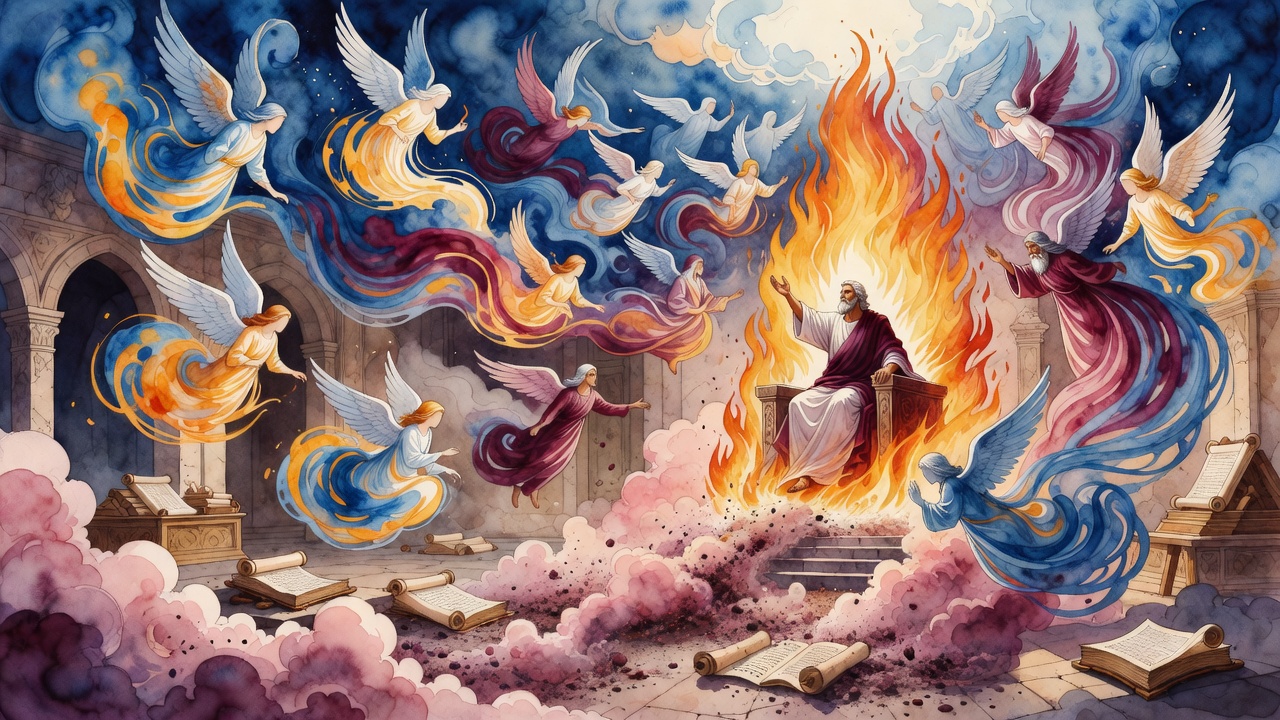
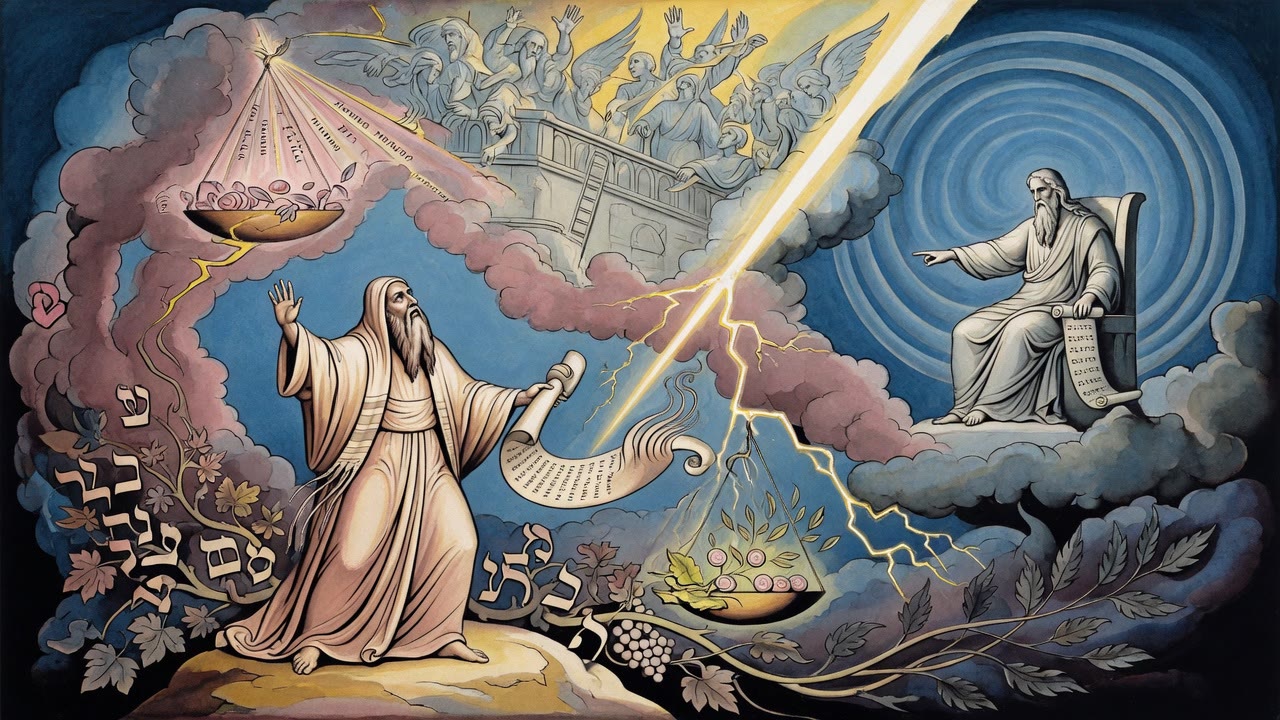
Rabbi Akiva's hand came down on the table. The scroll of Job still lay open under Rabbi Papias's palm. Dust jumped. A few students flinched and then leaned in.
Papias had read boldly. "He is at one, and who can turn Him back? What His soul desires, even that He does" (Job 23:13). He said it again in his own words. The Holy One stands alone in His world. None can protest. Whatever He wishes, He simply does.
Akiva cut him short. "One does not expound this way."
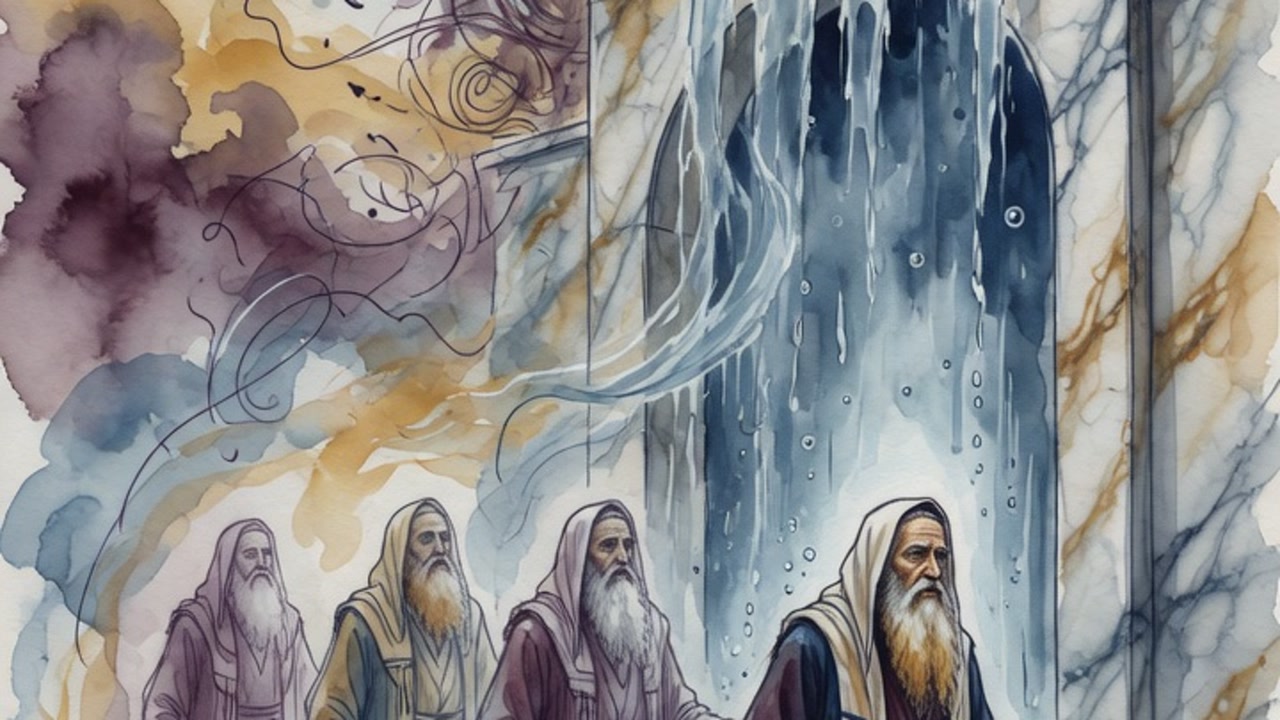
The room was not a hall of luxury. It was the old question that follows every sudden death and every long suffering. Does heaven decide alone, or does heaven decide as a court?
Right and Left of the Throne
Akiva did not leave the verse. He turned it. As the questioner asks below, so they ask above. From where? From Daniel: "By the decree of the watchers is the sentence, and by the word of the holy ones is the question." As they debate law below, so they debate above. Everything is by judgment.
Then he put the court in the room. The Holy One sits and says, "How shall this one's verdict go out?" They answer, "Thus it shall go out," and He agrees with them.
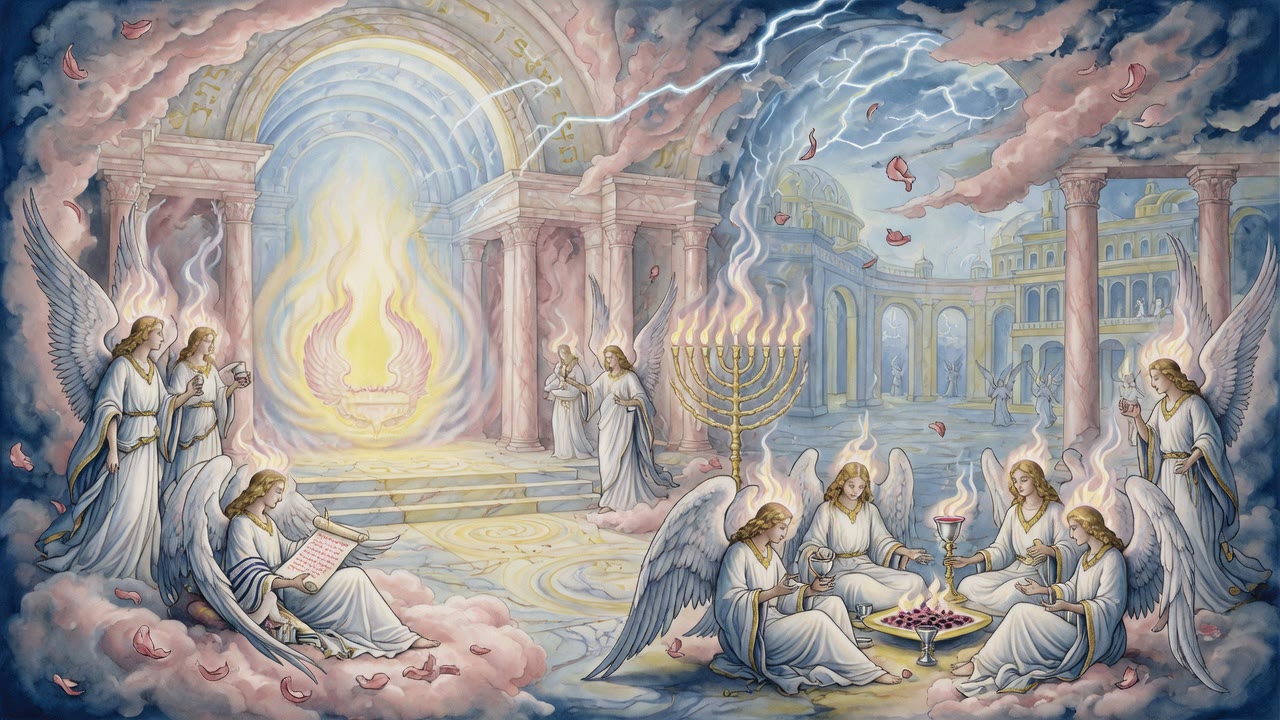
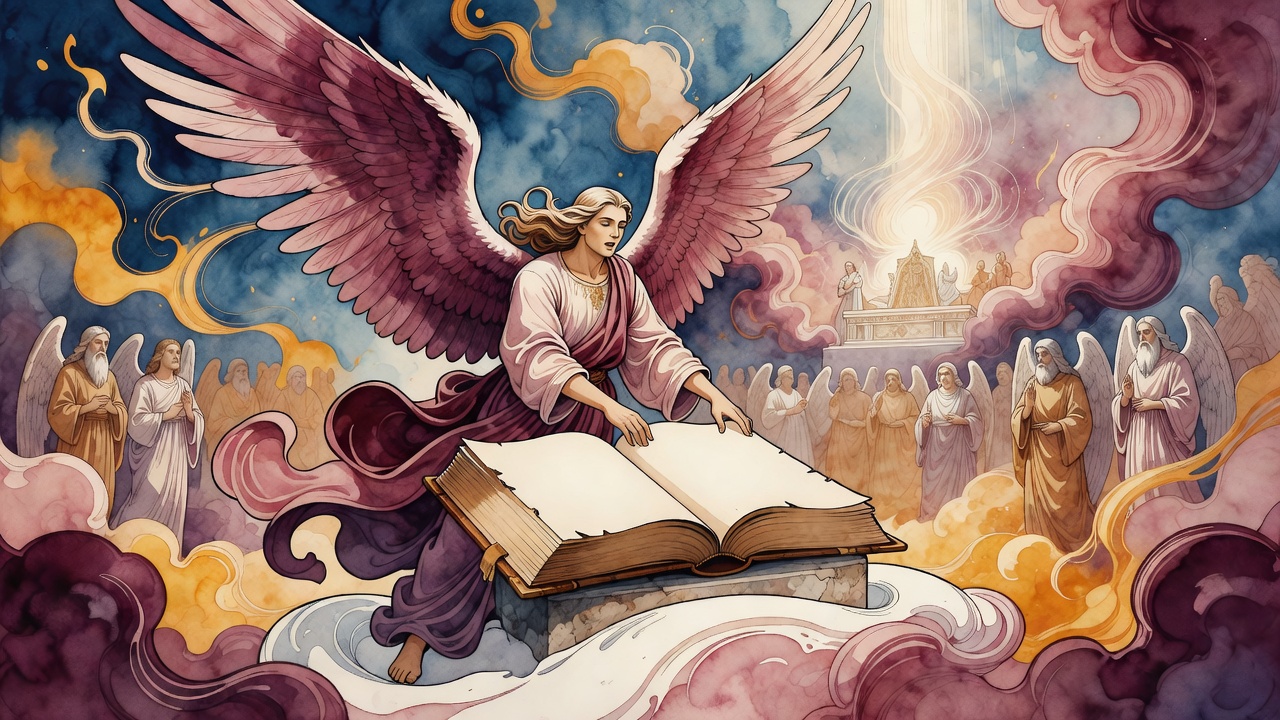
Micaiah saw it: the Lord seated on His throne, and all the host of heaven standing by Him on His right and on His left (I Kings 22:19).
Is there a left above? Right and left name the two pans of the scale. Some tip toward merit. Some tip toward guilt. The One who is unique still runs a court. Oneness is not loneliness of decree. A solitary will can look like whim. A throne with two sides looks like justice that can be feared and also petitioned.
Cruel Angels at the Edge
Above, the court was already in session.
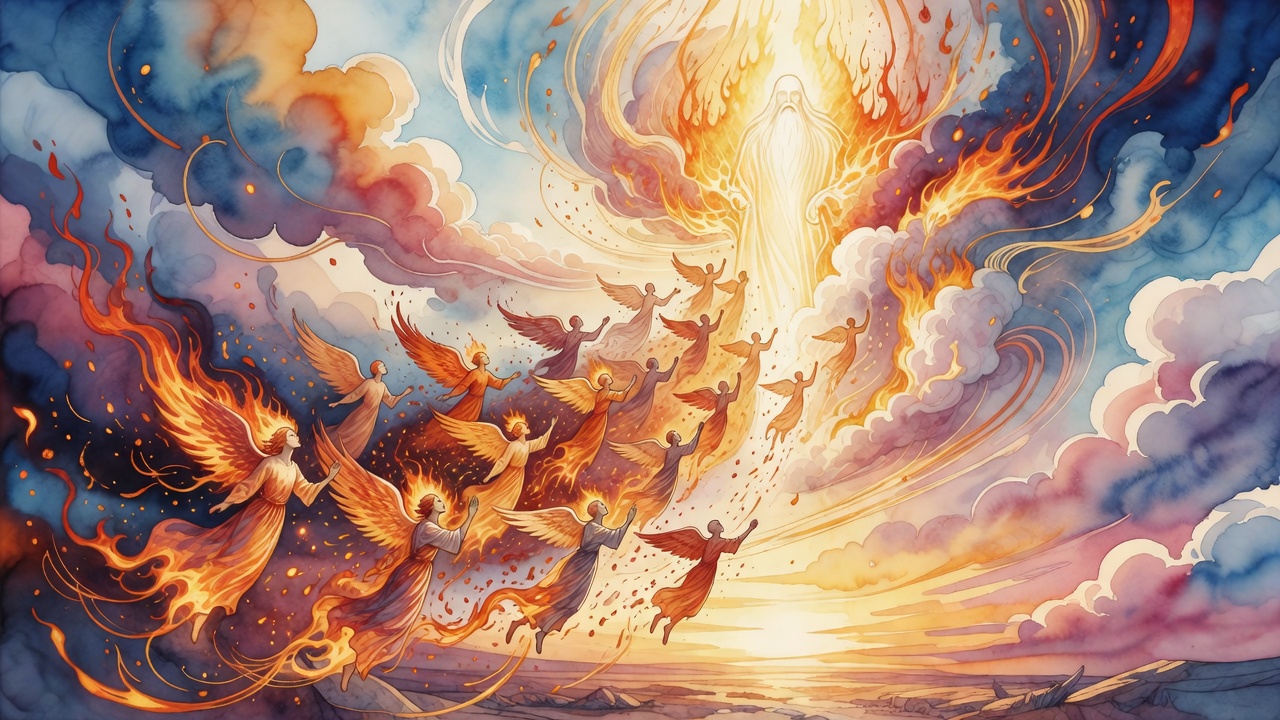
Certain cruel angels grew impatient when a soul would not hearken to the first messengers. They proposed a permanent solution. "Let his spirit go forth, let him return to his earth" (Psalm 146:4). They quoted the long arm of consequence to the third and fourth generation. They cited Job: "Lo, all these things doth God work, twice, yea thrice, with a man" (Job 33:29).
They were not freelancers. They were the left side of the scale speaking in a harsh register, ready to close a case heaven had not yet closed. Twice, thrice: chance after chance, then the proposal to end the chances.
The Holy One did not empty the room. He let them speak. Then He called a name.
A Threefold Cord
"Eliezer!"
The man stood. His hands were empty. The cruel angels waited for the spirit to be told to go forth. One of them had already begun the verse about returning to earth. He stopped with the words still in his mouth.
"Thou hast made thyself like a threefold cord, and a threefold cord is not quickly broken." He rewrote the verse of perfection: not only "perfect with the Lord," but "perfect before the Lord," under the eye of the court, in the open, where integrity can be seen.
The cruel angels were answered not by denying judgment, but by naming a human strength that still held. The case did not slam shut. The cord held.
Akiva's heaven is not softer than Papias imagined. It is stricter about procedure. The cruel angels still speak. The threefold cord still holds. The difference is that the sentence must pass through debate, not only desire.
Who Can Turn Him
"Who can turn Him back?" does not mean no one speaks. It means that after the court has spoken and He has consented, the verdict stands. The uniqueness of God is not that He lacks advisors of fire, but that He alone knows the minds of His creatures and alone seals the record written in truth.
Papias wanted a solitary will. Akiva answered with a throne room full of sides. Job's suffering, the cruel angels' haste, Eliezer's unbroken cord, and Micaiah's right and left all sit in that room. The man who suffers is not told that no one argued for him. He is told that argument happened, and that the One who is unique still chose to run a court rather than an empty sky.
Back in the study house, Papias's hand was still on Job. Akiva's hand was still on the table. The students had not moved.
"Enough, Papias. Heaven has a right hand and a left. The soul still has a hearing."
← All myths