Parshat Bereshit5 min read

Four Rabbis Walked Into Paradise and Only One Walked Out

Four sages entered Pardes. One died, one broke, one became Aher, and only Rabbi Akiva crossed the marble threshold and returned whole.

Curated by Arthur · Told by Maggid ·
Table of Contents
  1. The Palace Made of Fire
  2. Ben Azzai Looked, and Stayed
  3. Ben Zoma Came Back Broken
  4. Elisha Saw a Second Throne
  5. Akiva Walked Out

Four of the greatest sages who ever lived climbed up into Paradise, and the steadiest of them turned at the gate and said: when you reach the place that looks like water, keep your mouth shut.

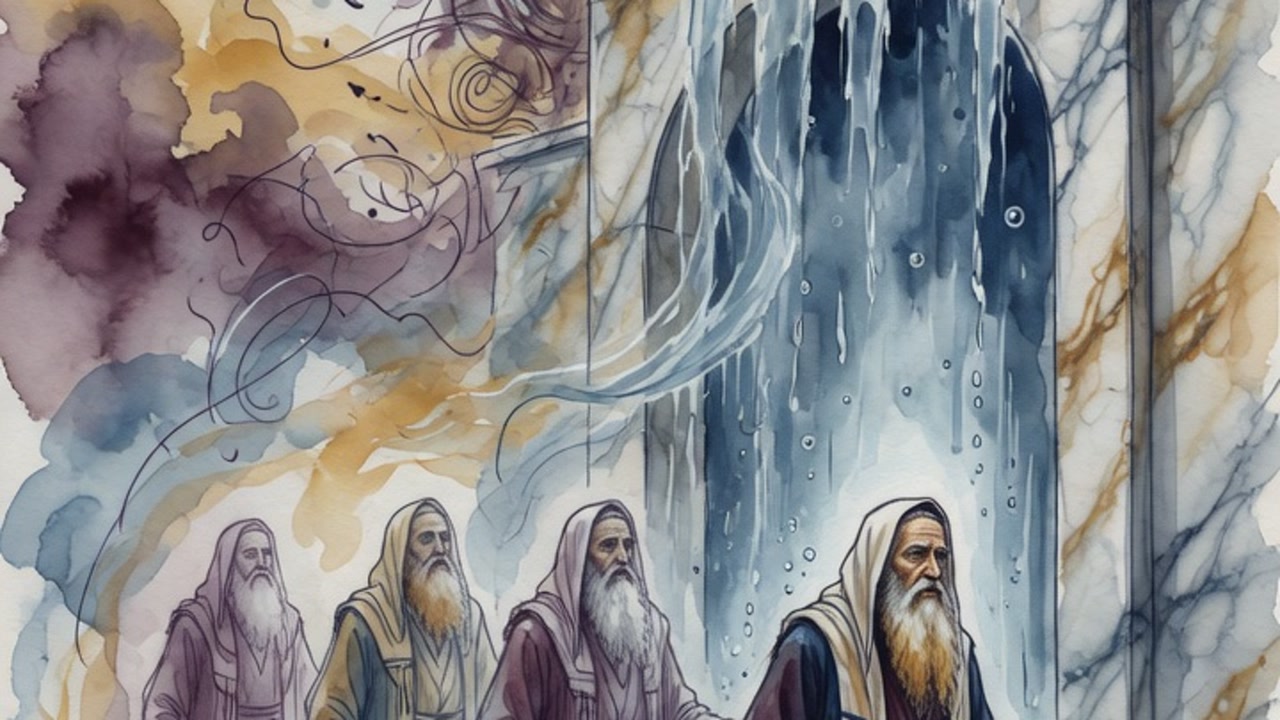
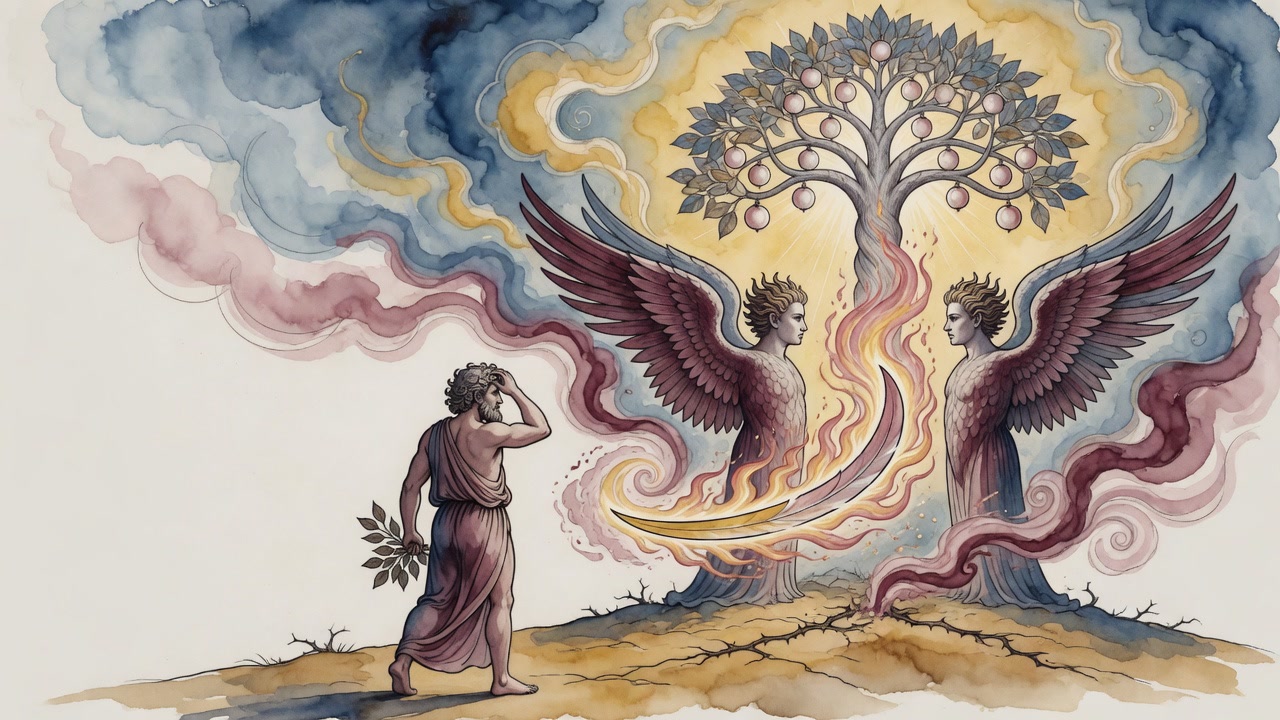
Rabbi Akiva knew the danger was not a beast. It was the floor. Deep in the ascent there are halls paved in marble so pure it looks like standing water, and a man who panics and shouts "Water, I am drowning" has condemned himself, because heaven does not forgive a lie about what is plainly in front of your own eyes. He warned them. Then the four went in.

The Palace Made of Fire

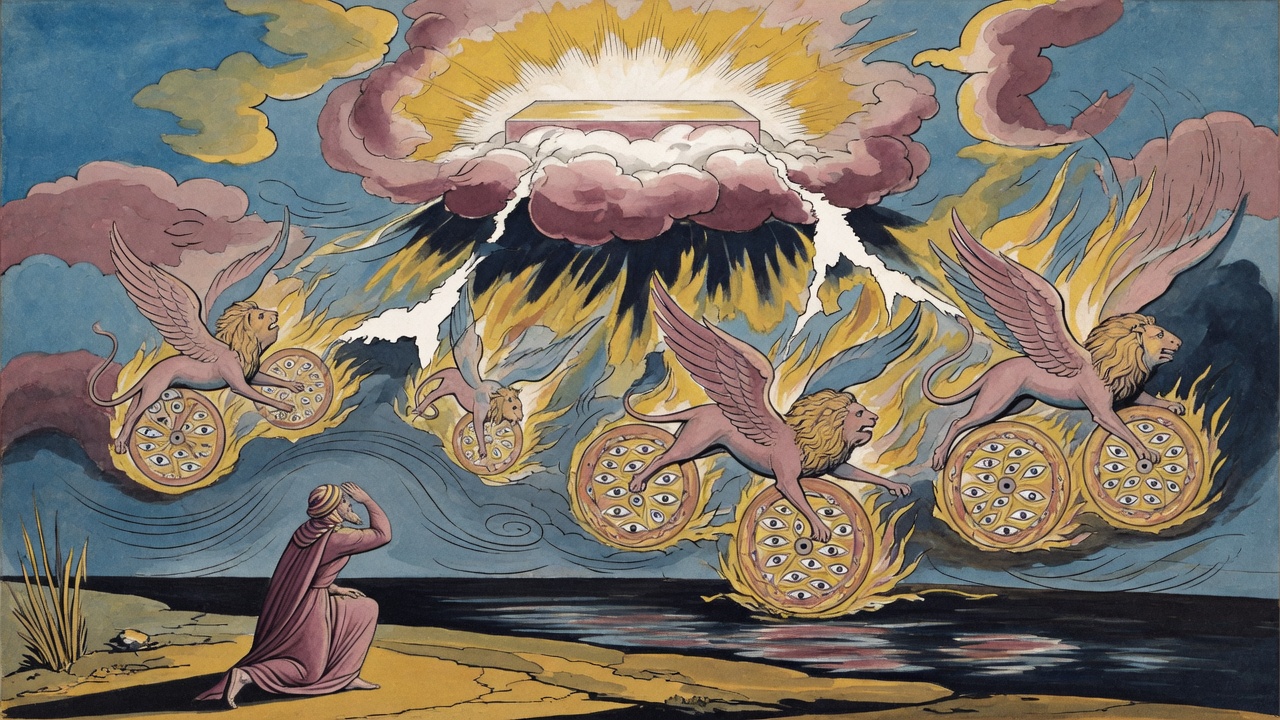
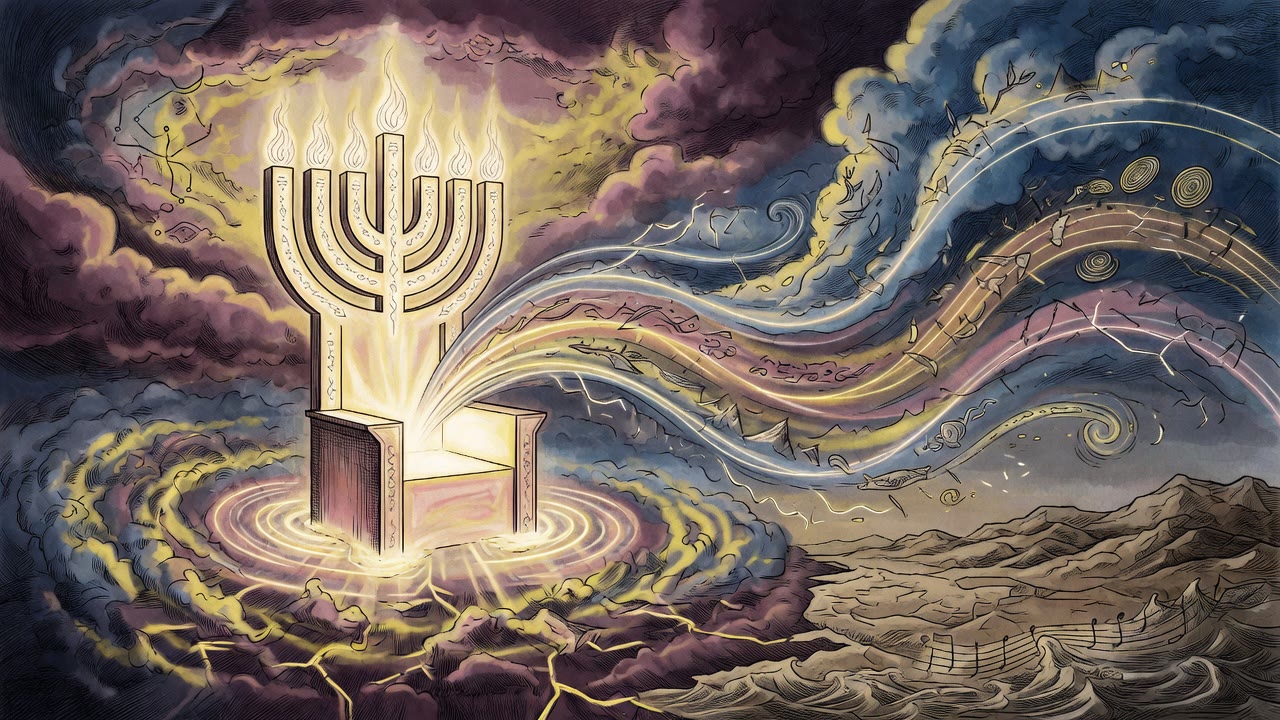
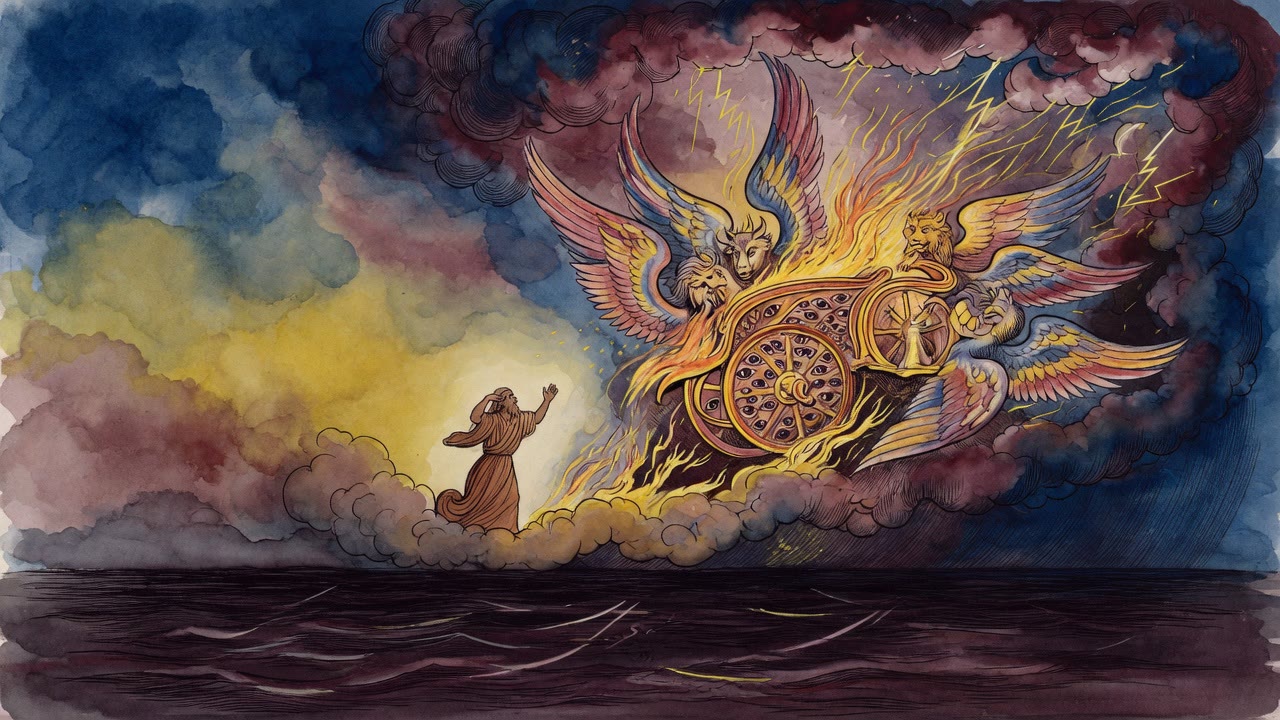
What waits up there is older than any of them. Long before, the prophet Ezekiel had looked up and seen wheels inside wheels, creatures with four faces, fire rolling over inside fire, and above it a throne the color of sapphire. That is the engine the four were climbing toward, and the road to it is not empty. It is a chain of palaces, each with a gate, each gate with guards who throw themselves at anyone who arrives without the right name in his mouth. The wheels are awake. Their rims are crowded with eyes that do not blink. The four were not walking into a garden. They were climbing through a building made of fire, and the marble was only the first door.

Ben Azzai Looked, and Stayed

Ben Azzai went first. He was the prodigy who could not stop studying long enough to marry, the one Torah had eaten alive. He reached the top, and he looked, and he died. That is all. He saw the thing a living body is not built to survive, and his body did the only thing left to it. They said over him the verse about the death of the faithful being precious in God's sight, which is a generous thing to say about a man who went up and did not come down. Paradise did not throw him out. It kept him.

Ben Zoma Came Back Broken

Ben Zoma looked and lived, which was worse. He came back, but something in him had been pulled out of joint. The brilliant mind that had answered any question now answered in fragments, dazzling pieces that no longer fit together, a man talking through a cracked window. He was not dead and he was not whole. Part of him was still up there at the marble, still trying to decide whether to call it water, and the rest of him walked around below carrying the gap for the rest of his life.

Elisha Saw a Second Throne

Elisha ben Abuyah did not die and did not break. He looked, he understood something, and the understanding destroyed him. High in the chariot-heaven he saw the angel Metatron seated, writing. Seated. Every other being in that court stands. Only God sits. And Elisha looked at the seated angel and thought: perhaps there are two powers up here, not one. He let the thought set like cement. He came down and tore his own learning to pieces, and the sages would no longer say his name. They called him only Aher, the Other. His student Rabbi Meir went on learning Torah from him anyway, walking beside his horse on the Sabbath only as far as the law allowed, loving the teacher and refusing to follow him over the edge.

Akiva Walked Out

Akiva came to the marble that looked like water and said nothing. He climbed through the gates with the right names ready. He stood in front of the sapphire throne and did not see a second god beside it. He took the whole burning vision in through his eyes and kept his mouth shut, and the gates opened behind him and let him walk back down into the world. Four men went up. One it killed, one it broke, one it turned into a stranger with no name. The fourth came home, because he had known from the bottom of the stairs that not every shining floor is water, not every seated figure is a god, and some of what you see at the top of the world must never be said out loud at the bottom of it.


← All myths

From the tradition

Sources

6 sources

The texts this telling draws on, in full. Open a card to read inline, or expand it for a wider, quieter read.

Chagigah 14bTalmud Bavli, Chagigah

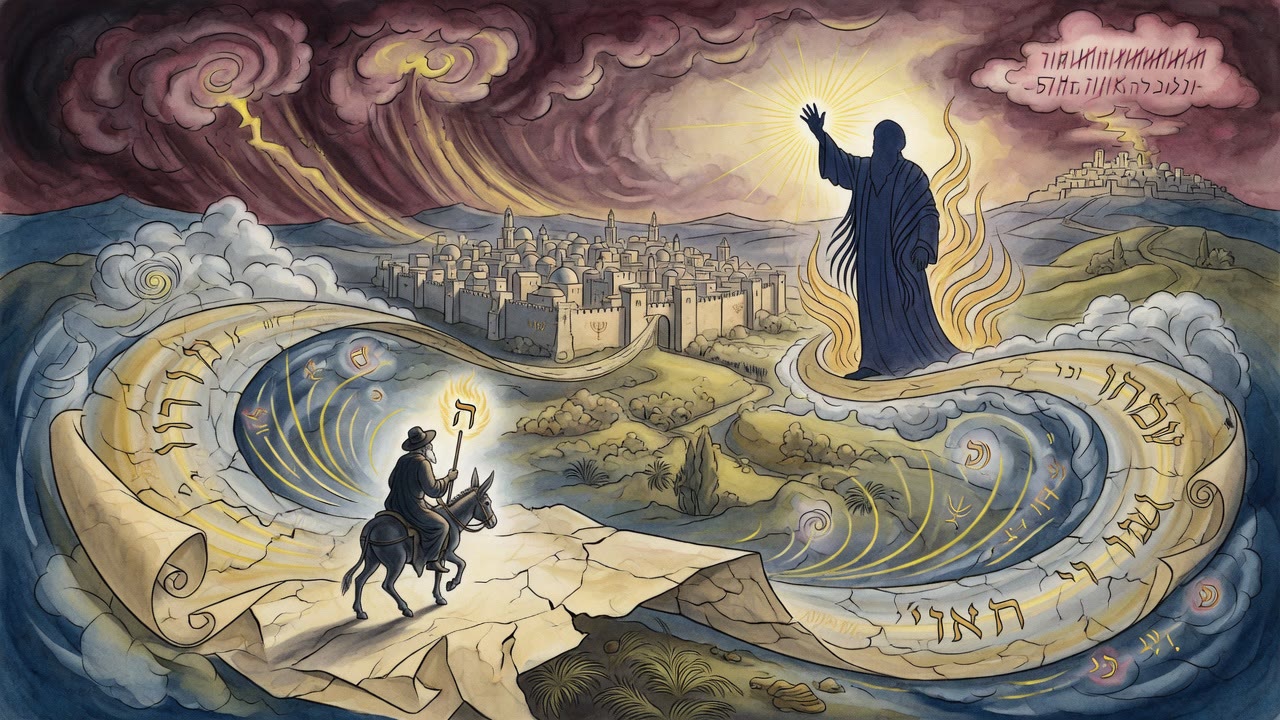
This case is referring to words of Torah, while that case is referring to commerce. With regard to words of Torah, they were trustworthy; with regard to commerce, they were not. § The Gemara returns to the topic of the Design of the Divine Chariot. The Sages taught: An incident occurred involving Rabban Yoḥanan ben Zakkai, who was riding on a donkey and was traveling along the way, and his student, Rabbi Elazar ben Arakh, was riding a donkey behind him.

Rabbi Elazar said to him: My teacher, teach me one chapter in the Design of the Divine Chariot. He said to him: Have I not taught you: And one may not expound the Design of the Divine Chariot to an individual, unless he is a Sage who understands on his own accord? Rabbi Elazar said to him: My teacher, allow me to say before you one thing that you taught me. In other words, he humbly requested to recite before him his own understanding of this issue.

He said to him: Speak. Immediately, Rabban Yoḥanan ben Zakkai alighted from the donkey, and wrapped his head in his cloak in a manner of reverence, and sat on a stone under an olive tree. Rabbi Elazar said to him: My teacher, for what reason did you alight from the donkey? He said: Is it possible that while you are expounding the Design of the Divine Chariot, and the Divine Presence is with us, and the ministering angels are accompanying us, that I should ride on a donkey?

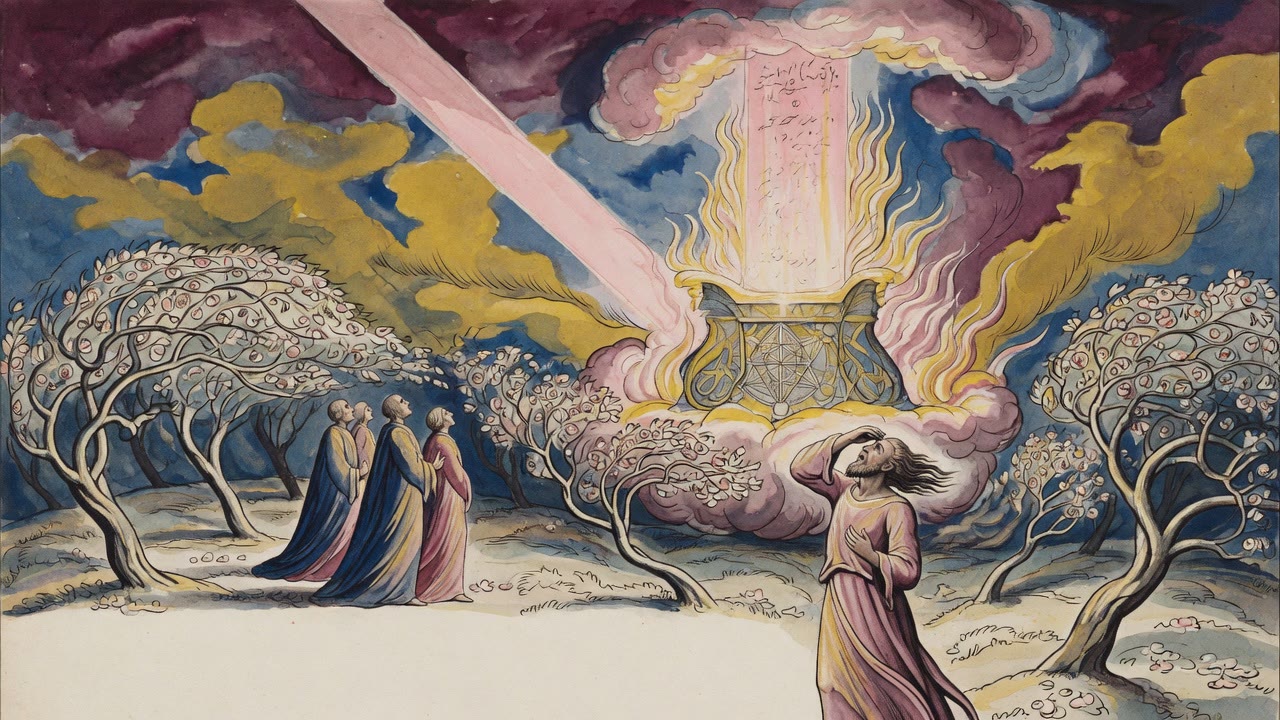
Immediately, Rabbi Elazar ben Arakh began to discuss the Design of the Divine Chariot and expounded, and fire descended from heaven and encircled all the trees in the field, and all the trees began reciting song. What song did they recite? “Praise the Lord from the earth, sea monsters and all depths…fruit trees and all cedars…praise the Lord” (Psalms 148:7–14). An angel responded from the fire, saying: This is the very Design of the Divine Chariot, just as you expounded.

Rabban Yoḥanan ben Zakkai stood and kissed Rabbi Elazar ben Arakh on his head, and said: Blessed be God, Lord of Israel, who gave our father Abraham a son like you, who knows how to understand, investigate, and expound the Design of the Divine Chariot. There are some who expound the Torah’s verses well but do not fulfill its imperatives well, and there are some who fulfill its imperatives well but do not expound its verses well, whereas you expound its verses well and fulfill its imperatives well.

Happy are you, our father Abraham, that Elazar ben Arakh came from your loins. The Gemara relates: And when these matters, this story involving his colleague Rabbi Elazar ben Arakh, were recounted before Rabbi Yehoshua, he was walking along the way with Rabbi Yosei the Priest. They said: We too shall expound the Design of the Divine Chariot. Rabbi Yehoshua began expounding.

And that was the day of the summer solstice, when there are no clouds in the sky. Yet the heavens became filled with clouds, and there was the appearance of a kind of rainbow in a cloud. And ministering angels gathered and came to listen, like people gathering and coming to see the rejoicing of a bridegroom and bride. Rabbi Yosei the Priest went and recited these matters before Rabban Yoḥanan ben Zakkai, who said to him: Happy are all of you, and happy are the mothers who gave birth to you; happy are my eyes that saw this, students such as these.

As for you and I, I saw in my dream that we were seated at Mount Sinai, and a Divine Voice came to us from heaven: Ascend here, ascend here, for large halls [teraklin] and pleasant couches are made up for you. You, your students, and the students of your students are invited to the third group, those who will merit to welcome the Divine Presence. The Gemara poses a question: Is that so? But isn’t it taught in a baraita: Rabbi Yosei, son of Rabbi Yehuda, says: There are three lectures.

In other words, there are three Sages with regard to whom it states that they delivered lectures on the mystical tradition: Rabbi Yehoshua lectured on these matters before Rabban Yoḥanan ben Zakkai; Rabbi Akiva lectured before Rabbi Yehoshua; and Ḥananya ben Ḥakhinai lectured before Rabbi Akiva. However, Rabbi Elazar ben Arakh was not included in the list, despite the testimony that he lectured before Rabban Yoḥanan.

The Gemara explains: Those who lectured and were also lectured to were included; but those who lectured and were not lectured to were not included. The Gemara asks: But wasn’t there Ḥananya ben Ḥakhinai, who was not lectured to, and yet he is included? The Gemara answers: Ḥananya ben Ḥakhinai actually lectured before one who lectured in front of his own rabbi, so he was also included in this list. § The Sages taught: Four entered the orchard [pardes], i.e., dealt with the loftiest secrets of Torah, and they are as follows: Ben Azzai; and ben Zoma; Aḥer, the other, a name for Elisha ben Avuya; and Rabbi Akiva.

Rabbi Akiva, the senior among them, said to them: When, upon your arrival in the upper worlds, you reach pure marble stones, do not say: Water, water, although they appear to be water, because it is stated: “He who speaks falsehood shall not be established before My eyes” (Psalms 101:7). The Gemara proceeds to relate what happened to each of them: Ben Azzai glimpsed at the Divine Presence and died.

And with regard to him the verse states: “Precious in the eyes of the Lord is the death of His pious ones” (Psalms 116:15). Ben Zoma glimpsed at the Divine Presence and was harmed, i.e., he lost his mind. And with regard to him the verse states: “Have you found honey? Eat as much as is sufficient for you, lest you become full from it and vomit it” (Proverbs 25:16).

Aḥer chopped down the shoots of saplings. In other words, he became a heretic. Rabbi Akiva came out safely. The Gemara recounts the greatness of ben Zoma, who was an expert interpreter of the Torah and could find obscure proofs: They asked ben Zoma: What is the halakha with regard to castrating a dog?

The prohibition against castration appears alongside the sacrificial blemishes, which may imply that it is permitted to castrate an animal that cannot be sacrificed as an offering. He said to them: The verse states “That which has its testicles bruised, or crushed, or torn, or cut, you shall not offer to God, nor shall you do so in your land” (Leviticus 22:24), from which we learn: With regard to any animal that is in your land, you shall not do such a thing.

They also asked ben Zoma: A woman considered to be a virgin who became pregnant, what is the halakha? A High Priest may marry only a virgin; is he permitted to marry her? The answer depends on the following: Are we concerned for the opinion of Shmuel? Shmuel says:

Full source
4Q405 20-22Songs of the Sabbath Sacrifice (4Q400-407)

The climax of the Songs of the Sabbath Sacrifice arrives in the twelfth and thirteenth songs, when the text finally reaches the inner sanctum of the heavenly Temple. And encounters the divine chariot-throne (Merkavah, מרכבה). The language here is among the most intense in all ancient Jewish literature.

The chariot is alive. Its very structure speaks and sings. "The wheels of the wonderful chariot praise," the text says. "The cherubim bless the image of the throne-chariot above the vault of the cherubim." The throne itself radiates a fire that is simultaneously terrifying and beautiful, "like the appearance of fire", echoing (Ezekiel 1:27) but expanding the vision into a full sensory experience. Light, sound, and movement merge into a single overwhelming encounter with the divine presence.

The description includes details not found in Ezekiel. The "vestibule" of the divine throne has walls of living light. The floor beneath the throne shines "like the appearance of fire." Angelic beings move in and out of the fire without being consumed, recalling the burning bush that was not consumed in (Exodus 3:2). The entire inner sanctum is a world made of fire and light, where solid matter does not exist and everything is in constant luminous motion.

These passages are the earliest evidence we have for the Merkavah mystical tradition, the practice of meditating on the divine chariot that would later produce the Hekhalot (the heavenly palaces) literature and deeply influence Kabbalah. The Dead Sea community was not just reading about the throne of God. By chanting these songs on Sabbath mornings, they believed they were ascending to it. The songs were not descriptions. They were vehicles, liturgical chariots carrying the worshipper from the desert floor to the throne room of heaven.

Full source
Heikhalot Rabbati 1:1Heikhalot Rabbati

This text, part of the Heikhalot (the heavenly palaces) literature, is all about heavenly ascents, journeys through celestial palaces, and encounters with angels. It's heady stuff, a wild ride into the heart of Jewish mysticism.

Rabbi Ishmael, a key figure in these mystical explorations, asks a deceptively simple thing: "What are those songs which he recites who would behold the vision of the Merkaba, who would descend in peace and would ascend in peace?" a bit.

First, the Merkaba (sometimes spelled Merkavah (the Divine Chariot)). This isn't just any old chariot. The Merkaba, as Ezekiel saw it, is the divine chariot, God's throne-chariot described in vivid detail in the Book of Ezekiel (Ezekiel 1). Think wheels within wheels, flashing lights, and otherworldly beings. To behold the Merkaba is to have a direct, unmediated experience of the Divine Presence. It's the ultimate mystical goal for some.

So, how do you get there? How do you safely navigate such a powerful experience? That’s where the songs come in.

Rabbi Ishmael isn’t just asking about any old tunes. He’s asking about specific, powerful incantations, songs so potent they can open the gates of heaven. The one who recites them hopes to "descend in peace and ascend in peace." This isn't just about going up; it's about coming back down. Safely. Sane. Whole.

Why the concern for safety?

Well, the mystical journey is fraught with peril. The Heikhalot texts warn of demonic gatekeepers, celestial obstacles, and the sheer overwhelming power of the divine realm. You don't just waltz into God's throne room unprepared. You need the right "passwords," the right knowledge, the right spiritual armor. These songs, these specific recitations, are part of that protection.

Think of it like this: you're trying to access a super-secure computer system. You need the right username, the right password, maybe even a retinal scan. The songs are like the ultimate authentication key for the celestial realms.

The question Rabbi Ishmael poses highlights a core tension within Jewish mysticism: the desire for direct experience of the divine versus the need for caution and preparation. It’s not enough to just want to see God; you have to be ready, both spiritually and practically. And according to the Heikhalot Rabbati, that readiness begins with knowing the right songs.

So, what are those songs? That's what the rest of the Heikhalot Rabbati aims to reveal. It's a journey into the heart of Jewish mystical practice, a quest for the ultimate vision, and a reminder that even the most transcendent experiences require careful preparation.

And perhaps, a beautiful song.

Full source
Devarim Rabbah 6:4Devarim Rabbah

It explores this very idea, using a powerful chain of examples.

The sage Ben Azzai puts it plainly: "One mitzvah leads to another mitzvah, and one sin leads to another sin. So, how does this work?

The passage starts with a challenging scenario: war. “When you go out to war… and you see in the captivity [a beautiful woman]…” (Deuteronomy 21:10–11). The Torah acknowledges human nature, the potential for attraction even in the midst of conflict. But it also sets boundaries.

God, as the text interprets, says: "Although I permitted her to you, I said to you: 'She shall shave her head, and she shall grow her nails,' (Deuteronomy 21:12), so that she should not find favor in your eyes and you send her away.” In other words, there are steps you must take to ensure you're acting with restraint and respect.

Now, what happens if you ignore these precautions? What if you give in to impulse?

“If you did not do so, what is written thereafter? 'If a man will have a defiant and rebellious son'” (Deuteronomy 21:18). And it doesn't stop there. "And as a result of that, 'if there will be in a man a sin with a death sentence'" (Deuteronomy 21:22). A tragic escalation. One unchecked desire, one ignored warning, leading to increasingly dire consequences. The passage emphasizes: this shows that one sin leads to another sin.

Heavy stuff. But the flip side is also true! The text then beautifully illustrates how one good deed can spark a chain reaction of further goodness.

“If a bird's nest will happen before you” (Deuteronomy 22:6). This refers to the mitzvah of sending away the mother bird before taking her eggs or young, demonstrating compassion even in taking what we need. A seemingly small act. But what does it lead to?

As a result [of following this mitzvah], “when you build a new house [you shall make a parapet for your roof]” (Deuteronomy 22:8). Suddenly, we're talking about building safety, preventing accidental falls, protecting human life.

And as a [further] result [of following the mitzvah, you will have a vineyard, and] “you shall not sow your vineyard with diverse kinds” (Deuteronomy 22:9). This refers to the prohibition of kila'im, mixing certain seeds or plants, promoting order and respect for the natural world.

And as a [further] result [of following the mitzvah, you will have a field, and] “you shall not plow with an ox and a donkey together” (Deuteronomy 22:10). Again, the Torah teaches compassion, prohibiting the yoking of animals with unequal strength.

And as a [further] result [of following the mitzvah, you will have clothing, and] “You shall make for you twisted threads [on the four corners of your garment]” (Deuteronomy 22:12). This refers to the tzitzit, the fringes on a garment that serve as a constant reminder of God's commandments, a visual cue to live a mindful and ethical life.

Wow. From rescuing a bird to remembering God in our daily lives! This shows that one mitzvah leads to another mitzvah.

So, what’s the takeaway? Ben Azzai’s teaching, as presented in Devarim Rabbah, isn't just a nice idea. It's a call to conscious action. It suggests that our choices, big and small, have far-reaching effects. Are we creating ripples of goodness or unintended consequences? The power, it seems, is in our hands.

Full source
Chagigah 14bHebraic Literature (1901)

Four tannaim ascended into the Pardes, the orchard of mystical contemplation, and Rabbi Akiva warned his companions before they entered. "When you come to the pavement of pure marble, do not cry out, 'Water! Water!', for it is written (Psalm 101:7), He that uttereth falsehood shall not dwell in My sight."

The four were Ben Azzai, Ben Zoma, Elisha ben Abuyah (called Acher, "the Other"), and Akiva. Ben Azzai gazed and died. Of him Scripture says (Psalm 116:15), Precious in the sight of the Lord is the death of His righteous ones. Ben Zoma gazed and lost his reason. Of him Scripture says (Proverbs 25:16), Hast thou found honey? Eat only so much as is sufficient for thee, lest thou be filled therewith and vomit it.

Acher "cut the plants", he lost his faith and became a heretic. Only Akiva, the shepherd who learned Torah at forty, entered in peace and departed in peace. The Talmud (Chagigah 14b) uses this episode to warn that mystical ascent is not a game. The orchard does not welcome every visitor; it tests the soul that enters, and only the soul rooted in Torah and humility returns intact.

Full source
Exempla of the Rabbis, No. 87Exempla of the Rabbis (Gaster, 1924)

The mysteries of creation, the Maaseh Bereshit, were considered so dangerous that the sages restricted who could study them. The Talmud (Hagigah 14b) famously records the story of four sages who entered the Pardes, the "orchard" of mystical knowledge. Only one, Rabbi Akiba, emerged unscathed.

Before that famous incident, earlier sages had already demonstrated the power and peril of expounding creation's secrets. The Talmud records that when certain scholars began to teach publicly about the workings of the divine chariot, the Merkavah (the Divine Chariot) described in Ezekiel, fire descended from heaven. Not as punishment, but as confirmation: the teaching was so powerful that the spiritual world responded visibly.

The rule was established: the mysteries of creation may not be taught to more than one student at a time, and even then, only to a student who is wise and understands on his own. You cannot mass-produce mystical knowledge. Each student must be guided individually, because the same teaching that illuminates one mind can shatter another.

Rabbi Yohanan ben Zakkai once rode a donkey while his student Rabbi Elazar ben Arakh walked alongside and asked to hear some of the chariot mysteries. Rabbi Yohanan agreed. Rabbi Elazar began to expound, and immediately fire surrounded them and angels gathered to listen, as at Mount Sinai.

"If even the angels desire to hear these teachings," the sages concluded, "how carefully must we guard them from those who are not ready?"

Full source