The Mystic Who Needed Passwords to Reach Heaven
Rabbi Ishmael asked which songs would get a man past seven gates and back alive. At the sixth palace the water was a lie.
Table of Contents
 Click for full size
Which Songs Bring a Man Back Alive
Rabbi Ishmael asked a practical question. What songs must a person recite who wants to behold the Merkavah (מרכבה), the divine chariot, and return alive?
Not how to become worthy. What songs. In what order. With what exact sound. Heaven in these palaces is a building. It has gates. The gates have guards. The guards have rules. A wrong note is not a mistake. It is a death.
They call the ascent a descent. The mystic goes down into the chariot, deeper into what is real, not up and away from the world. Ishmael wanted the sequence that would let him go in and come back with his mind intact.
He asked it the way a man asks for a password at a door he cannot force. The songs were the passwords. Without them the palaces would not open, and if they opened wrong, they would not let him leave.
The Seals at the Gates
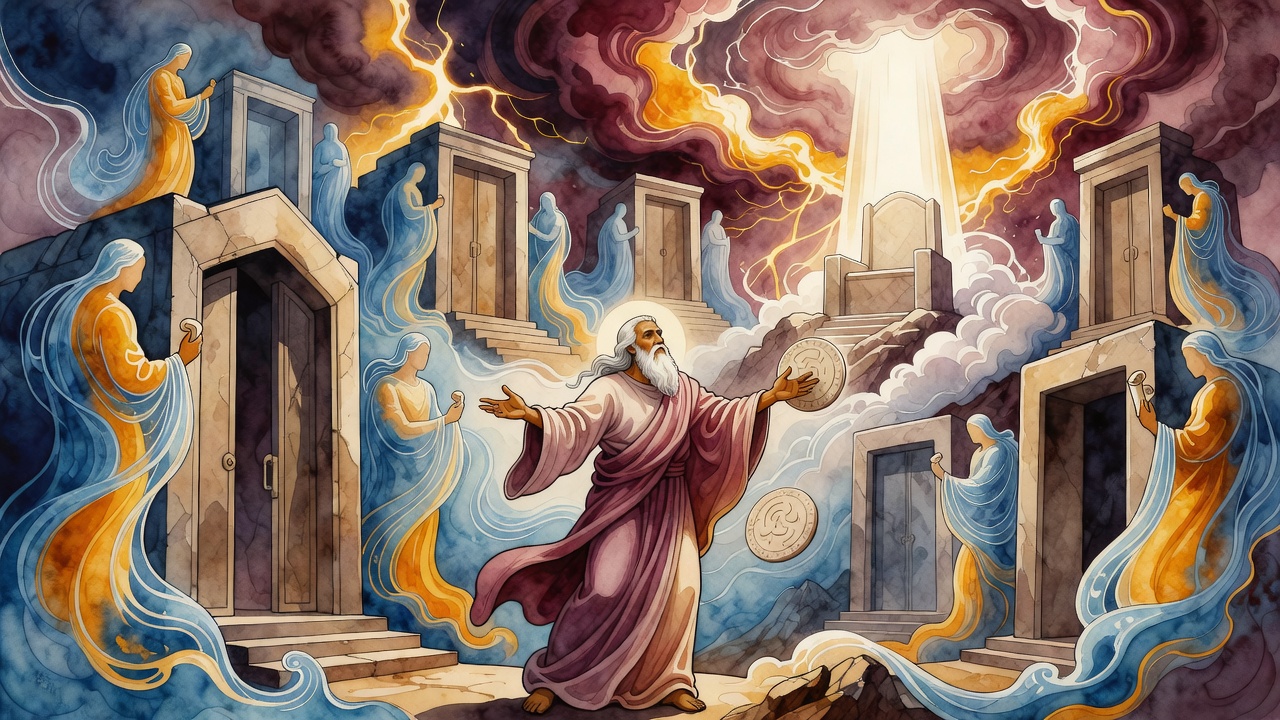
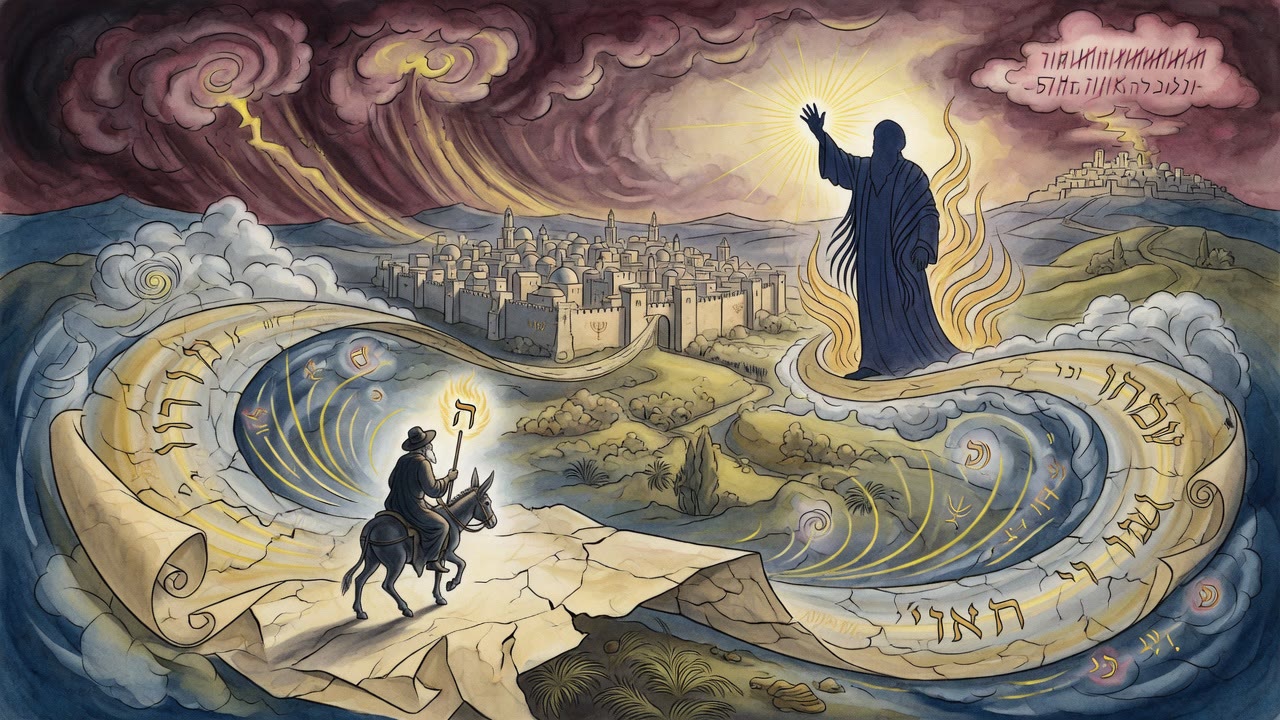
Heaven is seven palaces. The Hebrew word hekhal (היכל) means temple and palace both. Outer courts. Inner chambers. A Holy of Holies at the center that only certain people enter, and only if every threshold behind them was crossed in the right order.
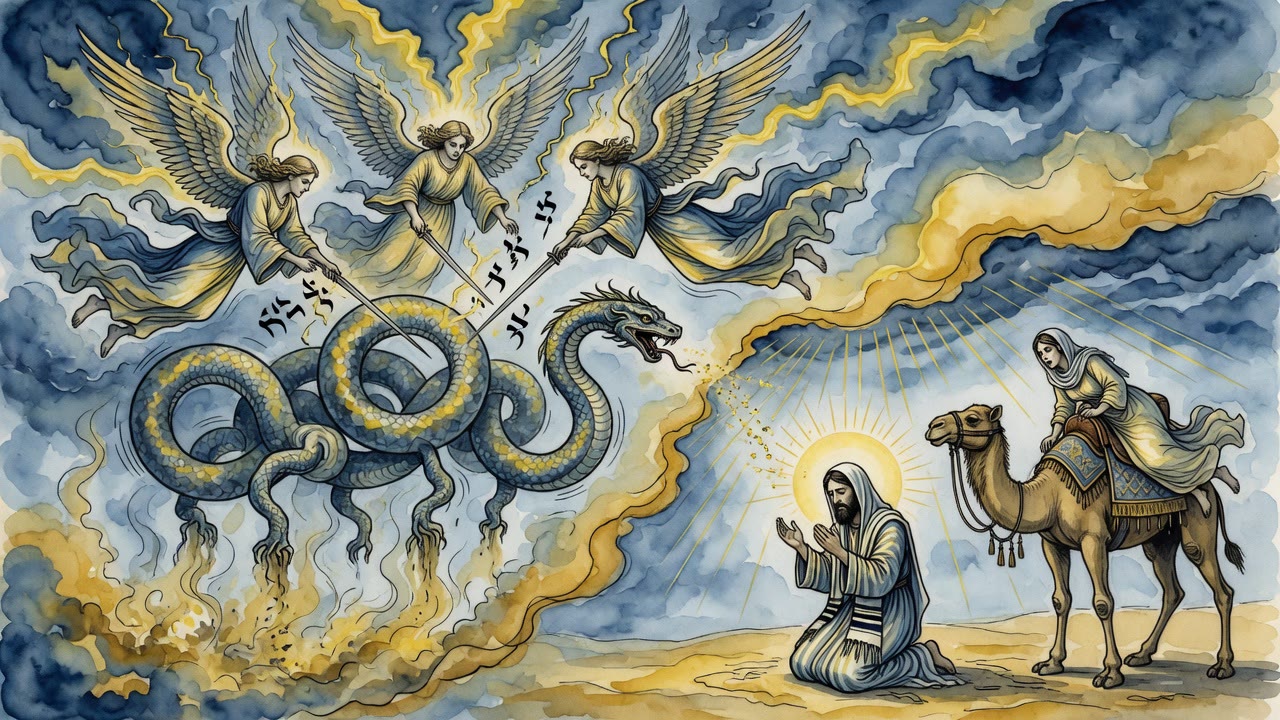
The guards demand seals. Two of them have names. The seal of Totrakhiel the Lord is shown to those on the right. The seal of Zehaphtariai, the Prince of the Presence, is shown to those on the left. Flash them in the wrong hands and the guards do not step aside. They destroy the one who got it wrong.
The first palaces can be crossed by someone prepared, someone who has the songs and the seals and does not falter. Then comes the sixth. The gatekeepers there are ready to ruin anyone who "does and does not" descend, the ones who try the chariot without the authority to finish it.
Do Not Say Water
The entrance to the sixth palace looks like an ocean. Waves. A crash of water high enough to drown a man who has already survived five gates of fire and sound. Ishmael stood there with the seals still in his hands and saw a sea where a door should be.
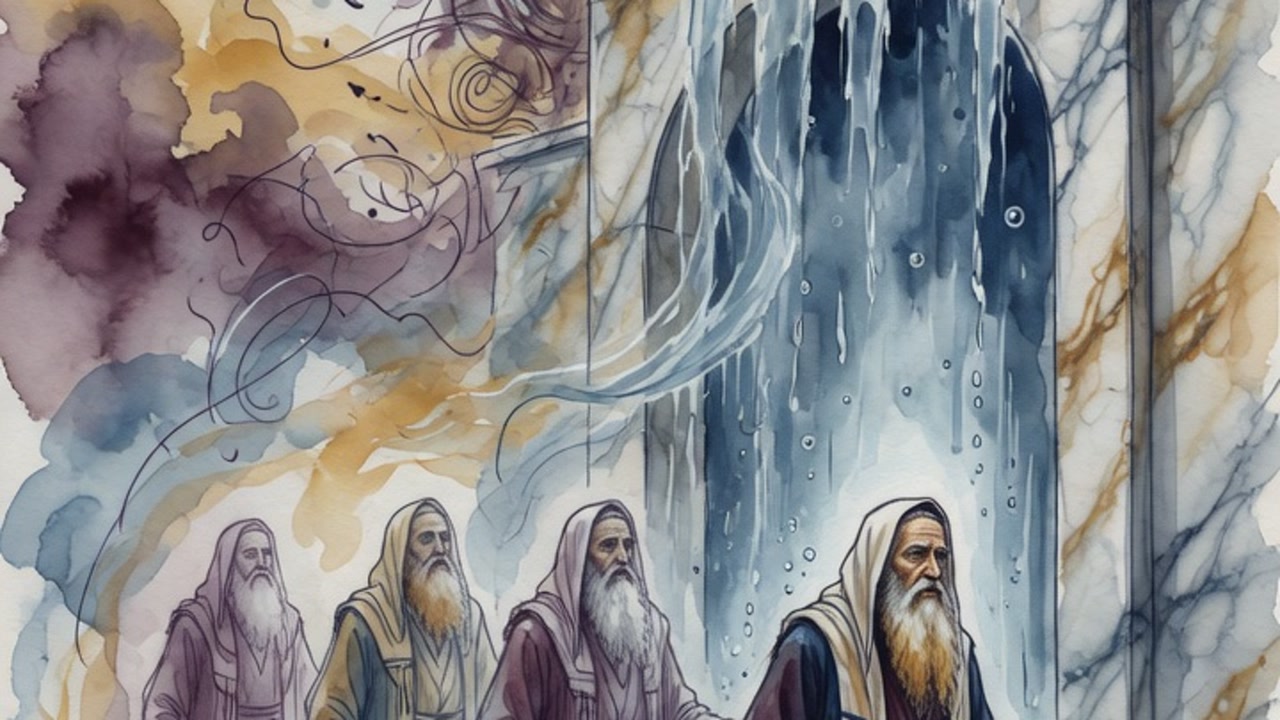
There is no water. A thousand thousands of waves are unleashed at that door, and there is not a single drop in the place. The marble shines like a sea. The test is whether the mystic believes his eyes or the teaching that got him this far.
The ones who cried "Water, water!" died there. The guards stoned them and accused them of coming from the people who danced around the Golden Calf. Unfit, they said, to see the King and His throne in its beauty.
Rabbi Akiva had warned him. "When you come to the place of pure marble stones, do not say Water, water." The ones who said it did not come back. Ishmael shut his mouth on the word. He walked forward on dry floor that still looked wet.
He Came Back Knowing
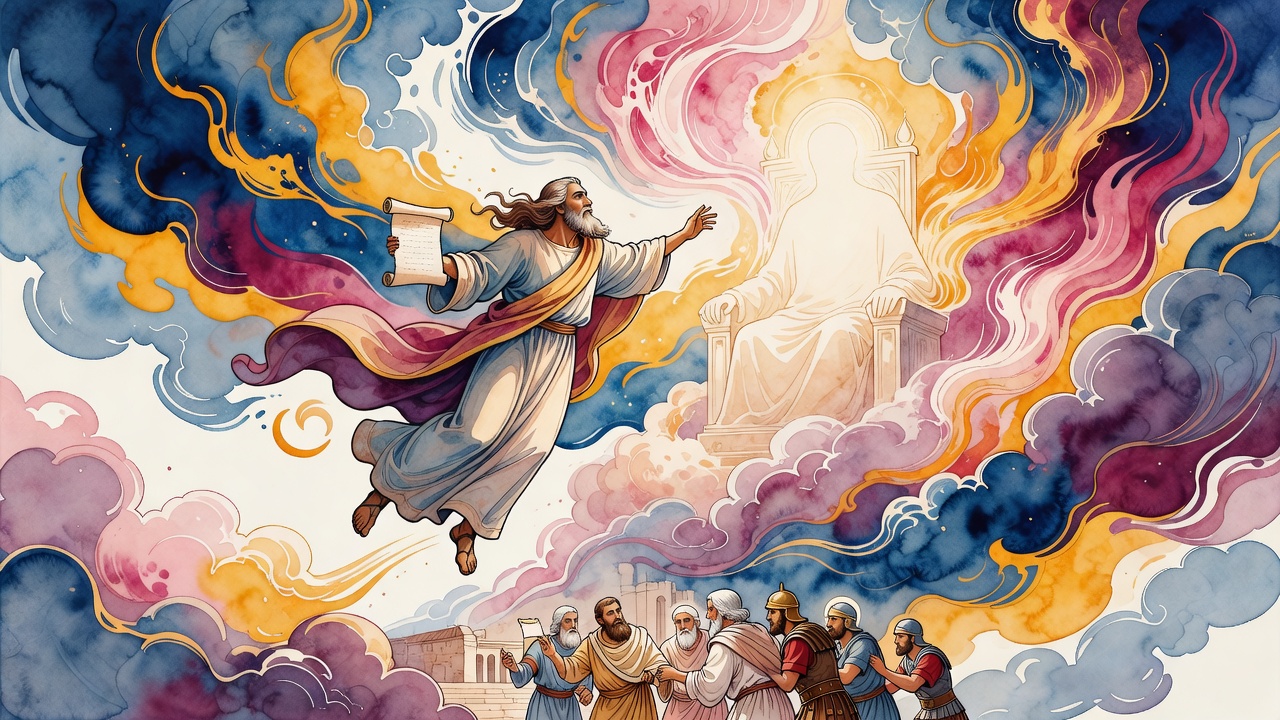
Ishmael's own ascent was not curiosity. Rome had condemned ten sages to death. The emperor had read the law against kidnapping a man and selling him, then pointed at Joseph's brothers, who had never been executed for that sale. If the first offenders were gone, he said, the sages who stood for the tribes would pay in their place. The decree was already moving.
Ishmael went up to ask whether that sentence was sealed in the record. He showed the seals. He did not cry water. He reached the place where questions of that kind can be asked.
The angel he met did not comfort him. It told him what was written. He descended knowing what was coming for him and for the others.
The songs and the seals and the seven palaces were not a road out of history. He climbed through the guarded doors and came back with the knowledge that the world below would not spare him. The passwords got him in. They did not get him a reprieve.
← All myths