5 min read

The Peddler Who Sold Life From a Psalm Scroll

A man went through the towns shouting that he had the drug of life for sale. Rabbi Yannai's daughter heard him from the house and ran to her father.

Curated by Arthur · Told by Maggid ·
Table of Contents
  1. Who Wants the Drug of Life
  2. The Students Objected
  3. What the Verse Was Holding Back
  4. The Skin Tells On the Mouth
  5. The Mouth That Sings Afterward
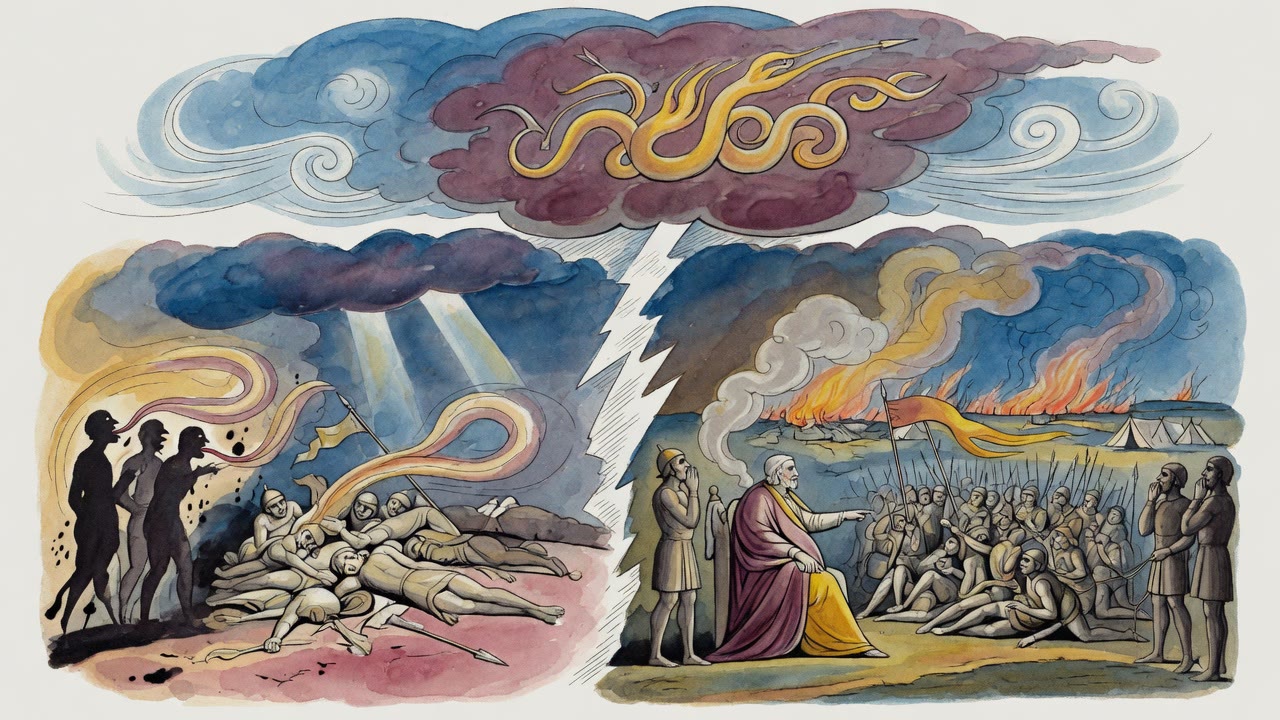
The Peddler Who Sold Life From a Psalm Scroll Click for full size

Who Wants the Drug of Life

A peddler worked the towns with a pack on his back, and what he called out was not thread or pins or dye.

"Who wants the drug of life? Who is buying the drug of life?"

The daughter of Rabbi Yannai heard him from inside the house and went to her father. There is a man going past, she said, and he is calling that he sells the drug of life.

"Go and bring him to me."

She went out into the road and brought him in.

"What is this drug of life you are selling?"

The peddler looked at him. "You do not know what this drug is."

"Even so. Show me."

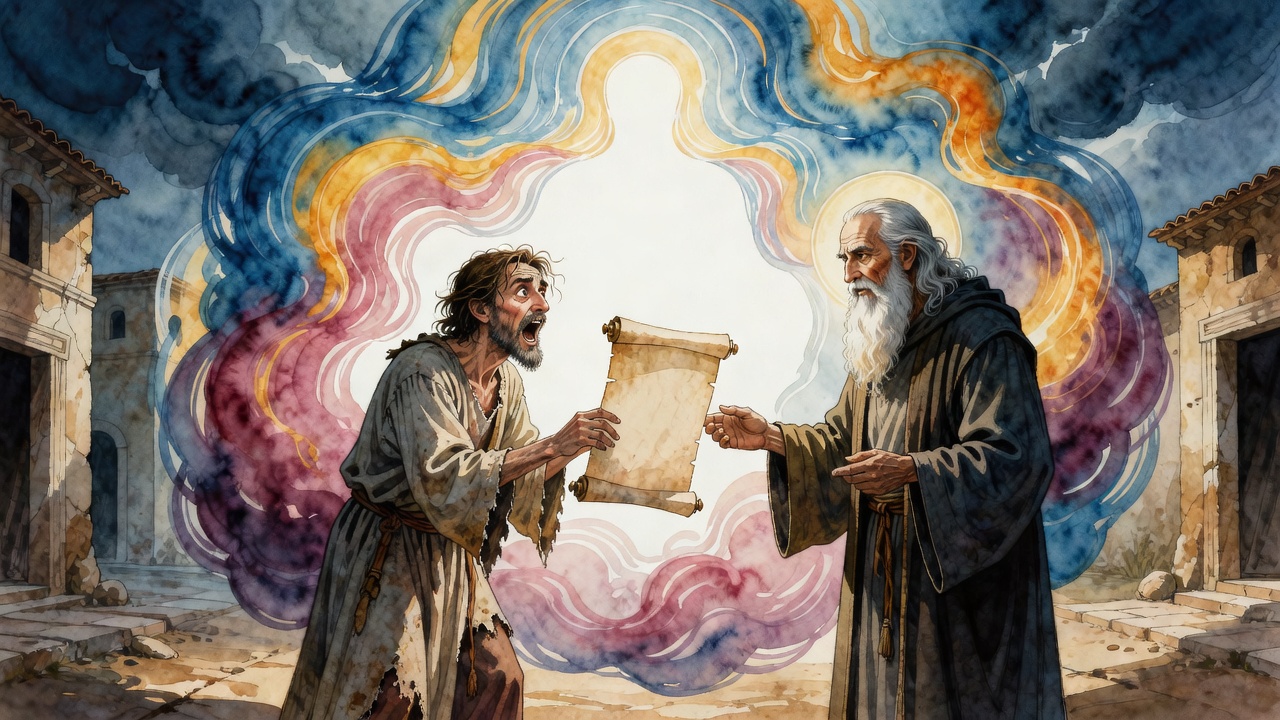
He asked for a scroll of Psalms. They brought one and he unrolled it in front of the rabbi, put his finger on the place, and read it out. "Who is the man who wants life, who loves days, to see good? Guard your tongue from evil and your lips from speaking deceit."

Yannai paid him six sela'im.

The Students Objected

They waited until the peddler was down the road with the money.

"Rabbi. Did you not know that verse already?"

"I knew it."

"Then what did you buy?"

"This man came," Yannai said, "and made it plain in my hand."

What the Verse Was Holding Back

Death and life are in the hand of the tongue.

An evil tongue is so heavy that a man cannot get the words out of his mouth without denying the root of everything. With our tongue we will prevail, they said. Our lips are our own. Who is lord over us.

Heaven called out over them: who will rise up for Me against the evildoers? Who can stand against these people?

Gehinnom (the realm of judgment after death) answered from underneath. "Not I. I cannot stand against them either."

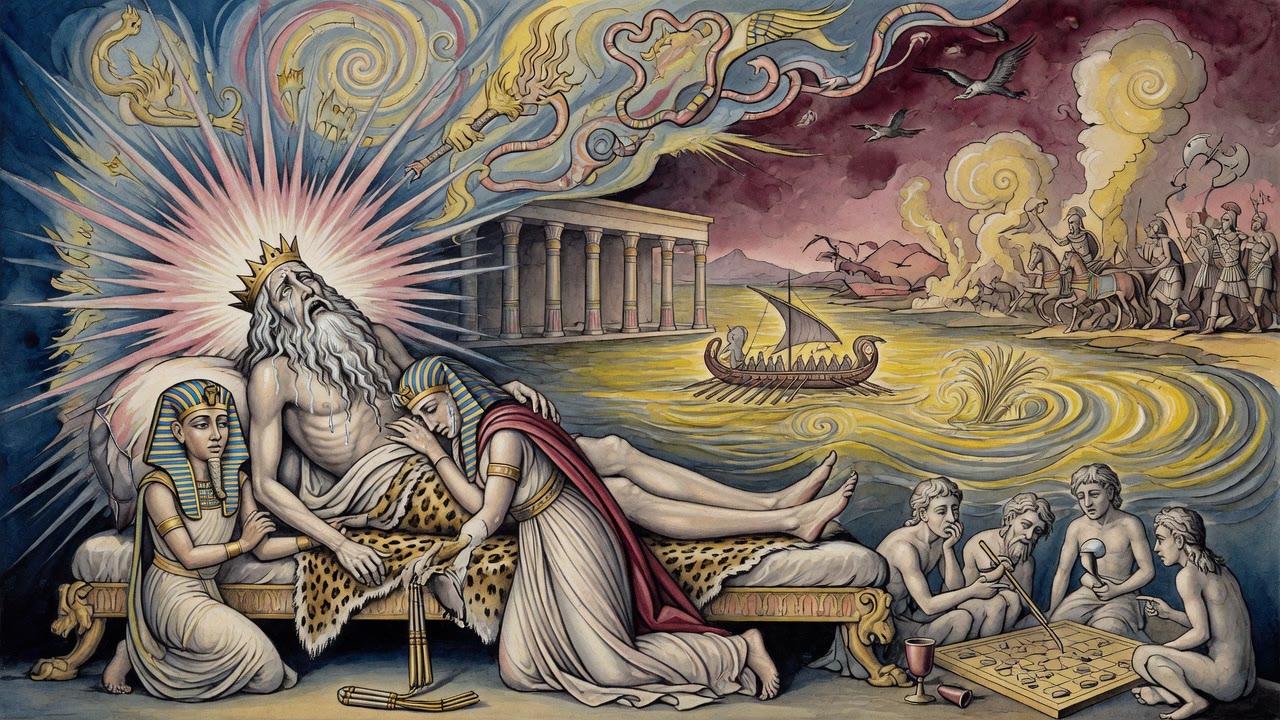
So the two of them divided it between them. I from above, said the Holy One, and you from below. I will shoot sharpened arrows of a warrior down at them, and you will turn coals of broom-wood up at them from beneath.

Then, to anyone still listening: do you want out from under Gehinnom? Get clear of the evil tongue, and you take this world and the next one both. Which is where the peddler's verse comes from. Who is the man who wants life, and loves days, to see good. He wants life here. He loves the days that come after.

The Skin Tells On the Mouth

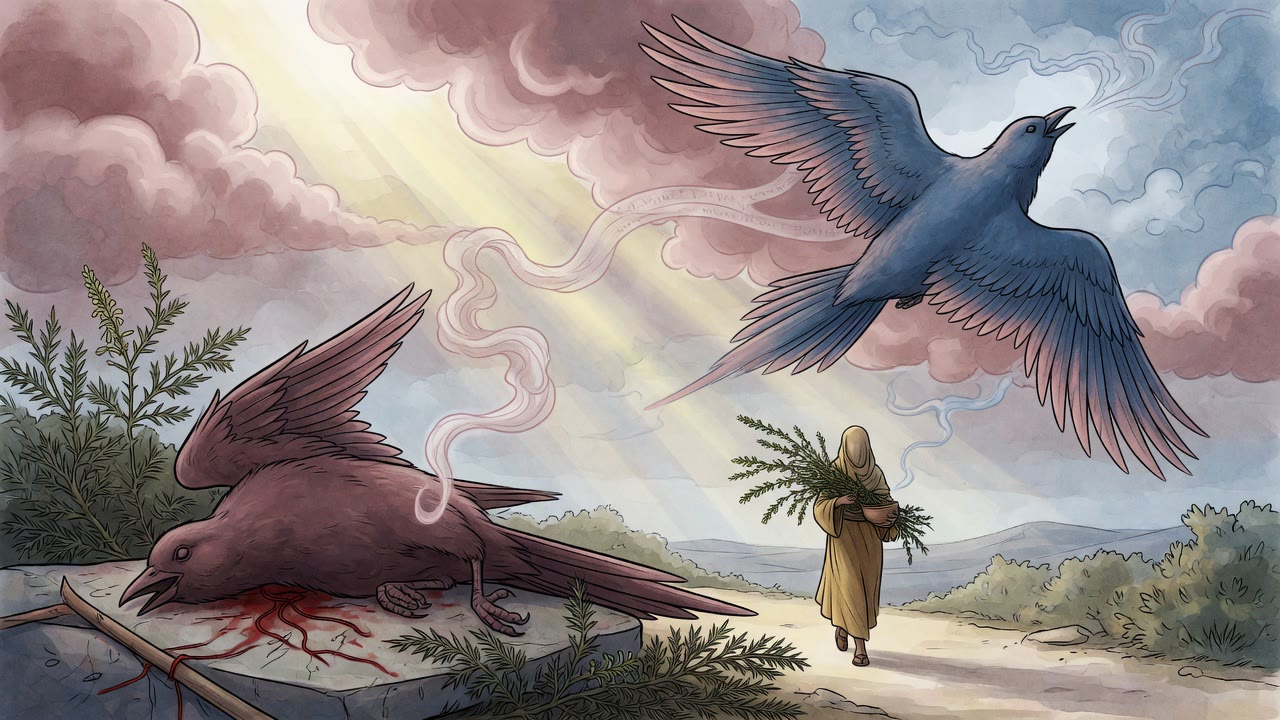
The affliction that whitens a man and puts him outside the camp comes down on the one who carries an evil tongue. This shall be the law of the metzora, the scaled one, and metzora gets heard as motzi ra, the one who brings evil out.

He tears his clothes himself. He lets his hair go loose, covers his lip, and calls out a warning to anyone walking toward him. He lives alone with his tent set up outside the tents. What he did with his mouth in a room full of neighbors has become the shape of his whole day, and he does it now from a distance where nobody is obliged to listen.

The Mouth That Sings Afterward

Not everyone who wants to sing gets to sing. Rabbi Simon put it plainly: a man who has a miracle done for him and says a song over it is forgiven every sin he has and made into a new creature.

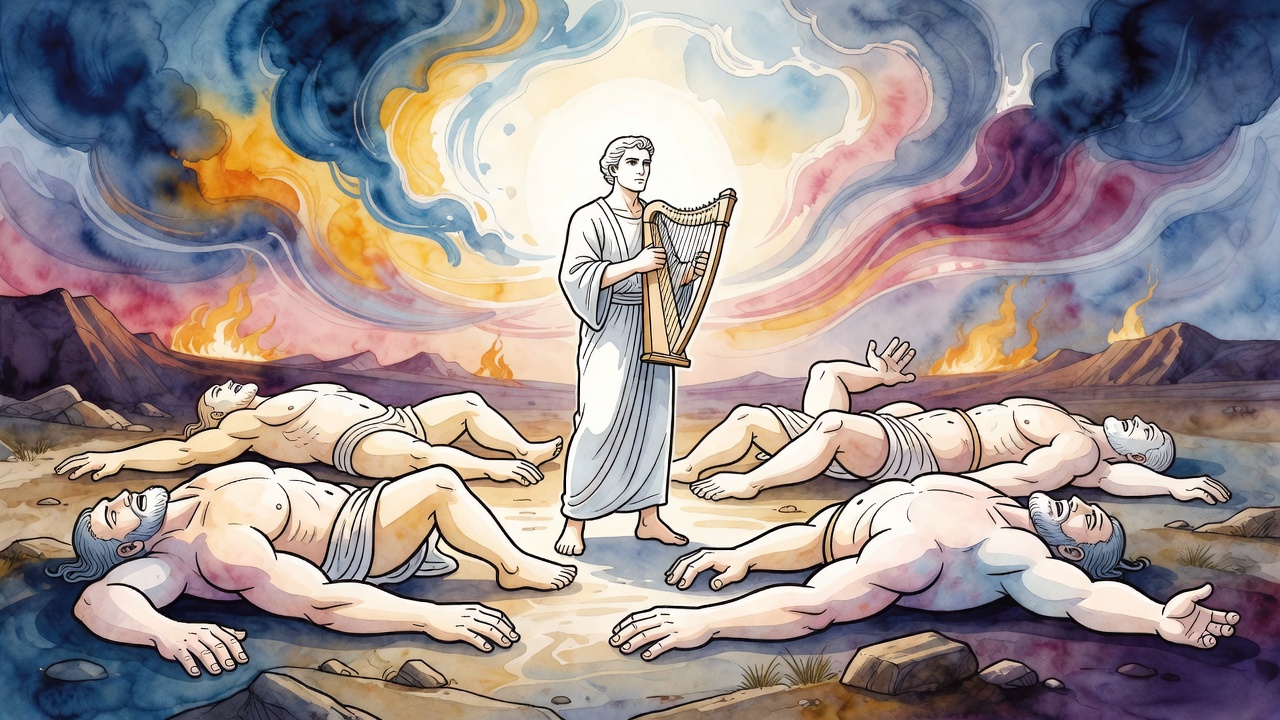
Israel came up out of the sea and sang, and the verse says Moses made Israel journey on from the sea, and that journeying gets read as moving them off their own sins. Deborah and Barak sang after the battle, and afterward the book drops the phrase it always uses, that Israel again did evil, and says only that Israel did evil, a first time, with nothing standing behind it, because what stood behind it had been cancelled. David sang, and what follows the song is called the last words of David, which leaves open the question of where the first ones went.

One mouth, both ways. Six sela'im to learn how to shut it, and nothing at all to pay for the other thing it can do.


← All myths
From the tradition

Sources

2 sources

The texts behind this telling. Some cards carry a translation of the source; others are our own retelling of it, and each card says which. Every card links out to the original.

Midrash Tanchuma Buber, Metzora 5:1Midrash Tanchuma Buber, Metzora

Translation of the source text.Midrash Tanchuma (Buber), Public Domain, on Sefaria · CC-BY-SA

Another interpretation: "Death and life are in the power of the tongue" (Proverbs 18:21). So harsh is slanderous speech (lashon hara), for a person does not bring it out of his mouth until he denies the fundamental principle, as it is said, "Those who say, 'By our tongue we will prevail; our lips are with us, who is lord over us?'" (Psalms 12:5). As it were, the Holy One, blessed be He, cries out against those who speak slander: "Who will rise up for me against the evildoers?" (Psalms 94:16). Who can stand against them? And who shall stand against them? Gehinnom. But Gehinnom also cries out: I too am unable to stand against them. The Holy One, blessed be He, said: I from above and you from below. I cast arrows upon them from above, and you turn coals upon them from below, as it is said, "Sharp arrows of the mighty, with coals of broom-wood" (Psalms 120:4).

The Holy One, blessed be He, said to them: Do you wish to be delivered from Gehinnom? Keep yourselves far from slanderous speech, and you will merit in this world and in the world to come, as it is said, "Who is the man who desires life and loves days, to see good?" (Psalms 34:13). "Who desires life" in this world; "loves days" in the world to come. Therefore it is said, "Guard your tongue from evil," etc. (Psalms 34:14).

Our Rabbis said: There is a story about a certain peddler who would go around the towns, and he would proclaim and say: Who seeks the elixir of life? The daughter of Rabbi Yannai heard him. She said to her father: A certain peddler is going around and saying, "Who seeks the elixir of life?" He said to her: Go and call him. She went and called him to Rabbi Yannai. He said to him: Which elixir of life is it that you are selling? That peddler said to him: Sir, you do not know what this elixir is. He said to him: Even so, make it known to me. He said to him: Bring me a book of Psalms. They brought it to him, and he unrolled it, and he showed him what David said, "Who is the man who desires life... Guard your tongue from evil," etc. (Psalms 34:13-14). What did Rabbi Yannai do? He gave him six sela'im. His disciples said to him: Rabbi, did you not know this verse? He said to them: Yes, but this one came and clarified it in my hand.

(Therefore leprosy comes upon one who speaks slander, "This shall be the law of the leper" [Leviticus 14:2].) This is to teach you that one who speaks slander, plagues come upon him, as it is said, "This shall be the law of the leper (metzora)" (Leviticus 14:2) - the one who brings forth evil (motzi ra).

Full source
Yalkut Shimoni on Torah 254:1Yalkut Shimoni on Torah

Translation of the source text.Torat Emet (Yalkut Shimoni) · CC-BY-NC

"And Moses caused Israel to journey" (Exodus 15:22). Rabbi Simon said: Not everyone who wishes to recite a song recites a song; rather, whoever has a miracle performed for him and recites a song, it is known that he is pardoned for all his iniquities and becomes a new creation. When Israel had a miracle performed for them and recited a song, their iniquities were pardoned, as it is said, "And Moses caused Israel to journey" (Exodus 15:22), that he caused them to journey away from their iniquities.

And so you find with Deborah and Barak, for whom a miracle was performed and they recited a song. And how do we know their iniquities were pardoned? Rabbi Aibo in the name of Rabbi Abba: Everywhere it is said, "The children of Israel again did evil," but here it is written, "And the children of Israel did" (Judges 6:1), a beginning of doing. And where is what they had done previously? Rather, the Holy One, blessed be He, pardoned them for what they had done before. And so you find with David, for whom a miracle was performed and he recited a song. And how do we know he was pardoned for all his iniquities? For it is written after his song, "Now these are the last words of David" (2 Samuel 23:1). Where are the first ones? Rather, this teaches that the Holy One, blessed be He, pardoned him.

Full source