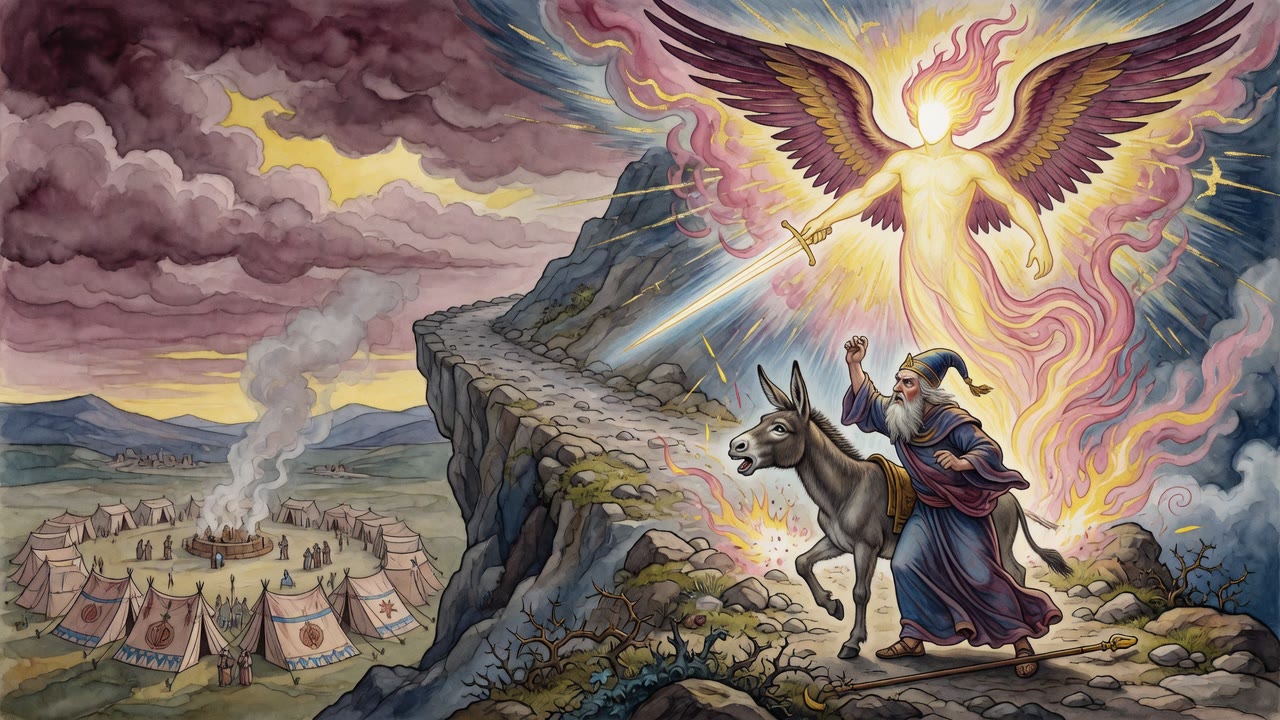
Angels Carry Every Human Word Upward, and David Becomes His Own Psalm
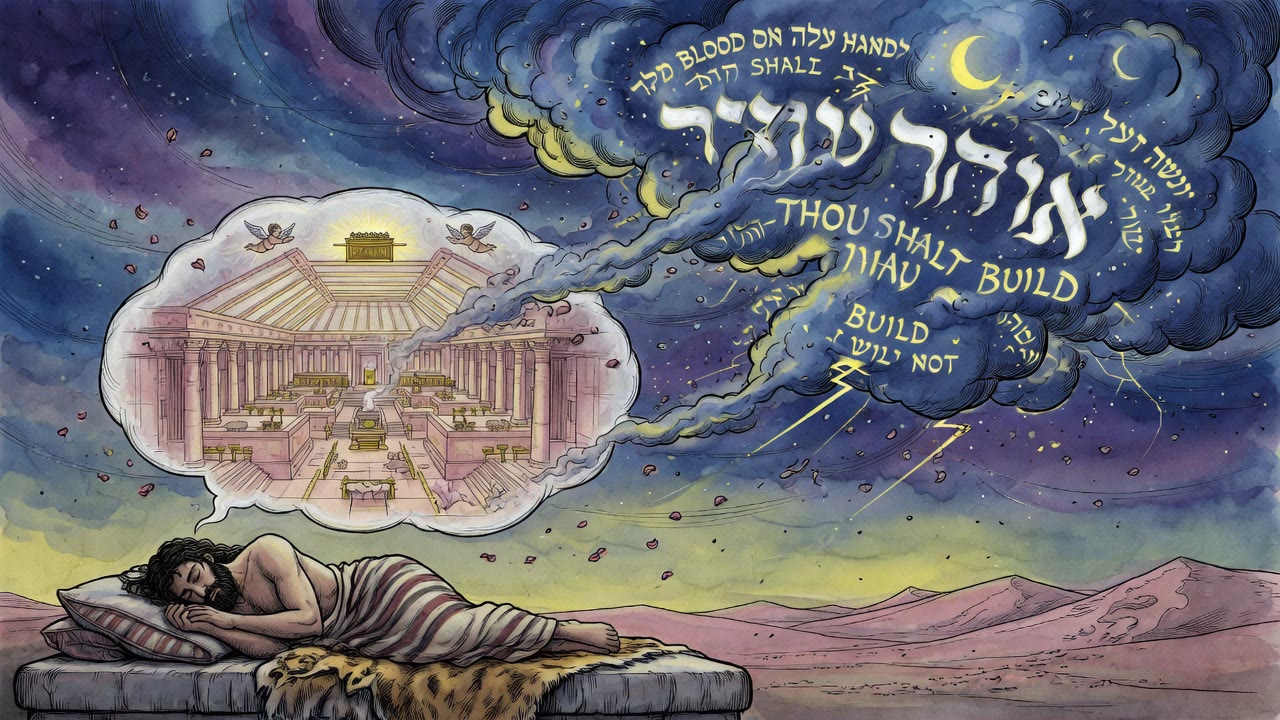
Solomon warned that a bird of heaven carries the voice. The midrash says that bird is an angel, and Saul's curse reached heaven as soon as he said it.
Table of Contents
Solomon knew about the bird. He wrote it into Ecclesiastes as a warning: do not curse the king even in your private thought, because a bird of heaven will carry the voice. The verse unsettles in a general way, the unease of living in a universe where private speech is not private. Rabbi Yirmiyah found it more specific than that.
 Click for full size
He split the verse into two registers.
The Raven and the Angel Above It
The earthly bird in Solomon's verse, the one whose flight ancient diviners read for augury, is the raven. Every culture that watched birds for omens watched the raven in particular. Its movements were legible. It carried information in its path through the sky even if the information was only the direction of the wind or the location of something dead.
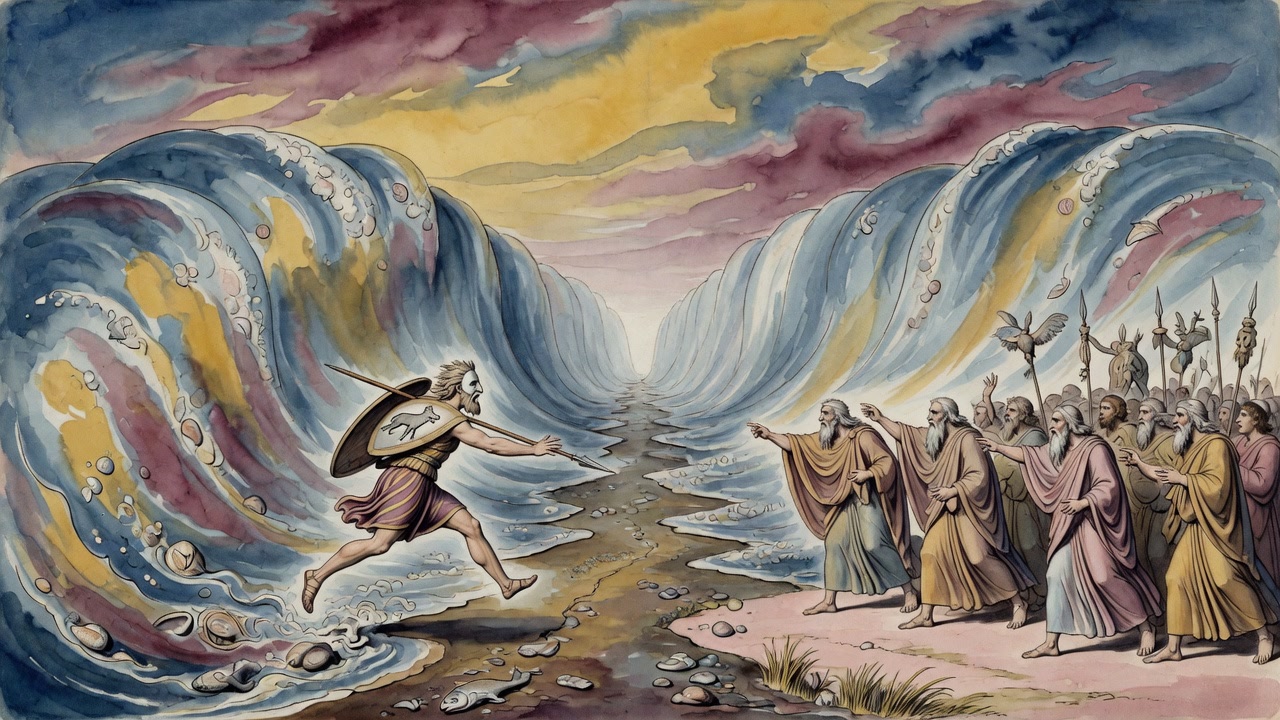
The winged one above the raven is not a bird at all. It is a class of angel whose single function is the collection of human speech. These angels do not judge. They do not adjudicate. They gather what is said and carry it upward to the place where all speech is held in record. The curse spoken in private arrives there. The word of praise spoken in the morning service arrives there. The careless remark made between prayers arrives there. Every sound the human mouth produces has a destination the speaker is not usually aware of.
The Word That Outran Saul
The consequence for Saul is the subject of the first passage in Midrash Tehillim. Saul spoke in ways that reached ears he did not intend to reach, and the words he thought were private were already in transit before he finished saying them. The curse left his mouth and the winged one had it before the breath of it had cooled, carrying it past the raven and past the visible sky to the place that keeps every utterance. The midrash is not interested primarily in punishing Saul. It is interested in the mechanics. It wants to establish that speech is a physical force in the world, subject to the same laws of movement and arrival as any other force, and that a theology of prayer requires first a theology of speech.
The Man Who Becomes His Own Psalm
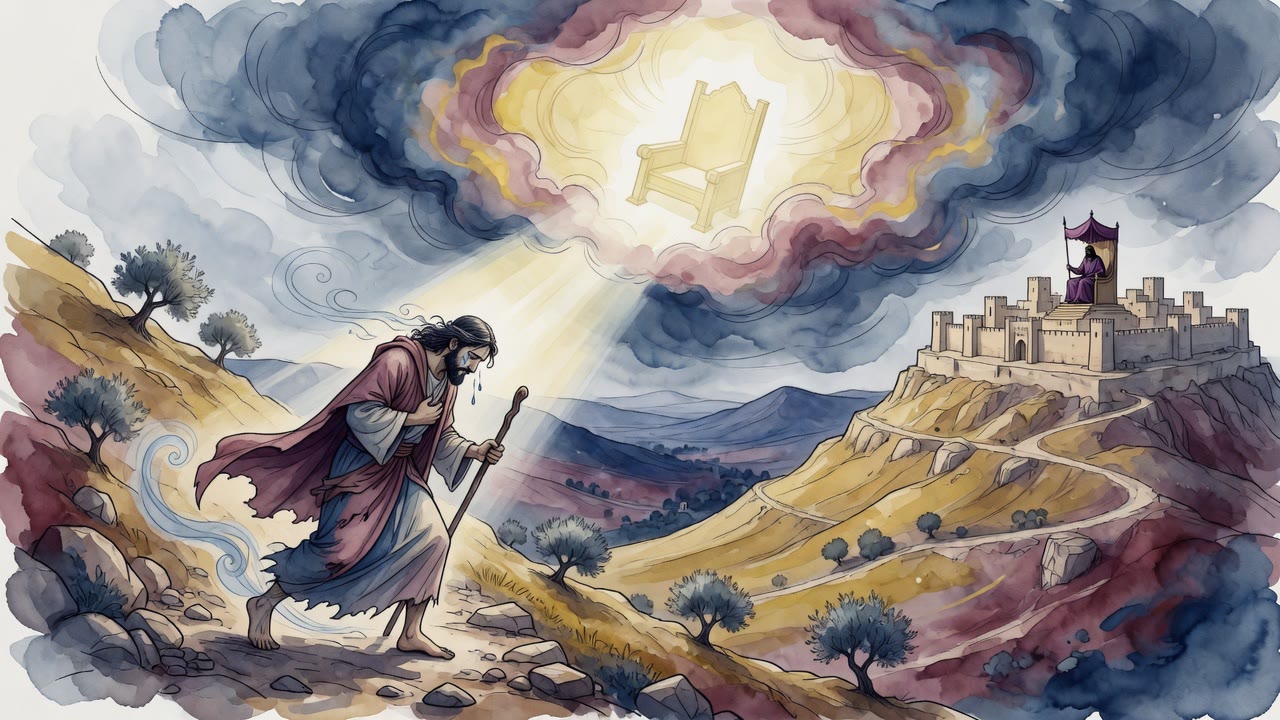
Job stands beyond the firmament. This is the image the second passage offers, and it requires opening. The firmament is the boundary between the visible sky and the heavens where the angels operate. Job, in this reading, has been lifted by his righteousness to the other side of that boundary. He is no longer simply a man who has prayed well. He has become, in some sense, the prayer itself.
The midrash uses the image of a garment so well-fitted that the wearer and the clothing become indistinguishable. A new garment has a visible relation to the body: here is the fabric, here is the person wearing it, the seam between them is visible. A garment that has been worn long enough and has adapted over years to the precise shape of the body becomes something else. You cannot see where the garment stops and the person begins. Job's righteousness and Job himself have achieved that kind of integration. He is not a righteous man who also praises the Holy One. He is the praise.
This is the end point of the mechanics that the first passage describes. The angel who collects speech collects a world's worth of words, most of them casual, some of them careless, a fraction of them genuine address. What Job sends upward is not a fraction. It is the whole weight of a person who has been refined past the ordinary division between word and intention, between speaker and speech.
David as the Hinge Between Both Teachings
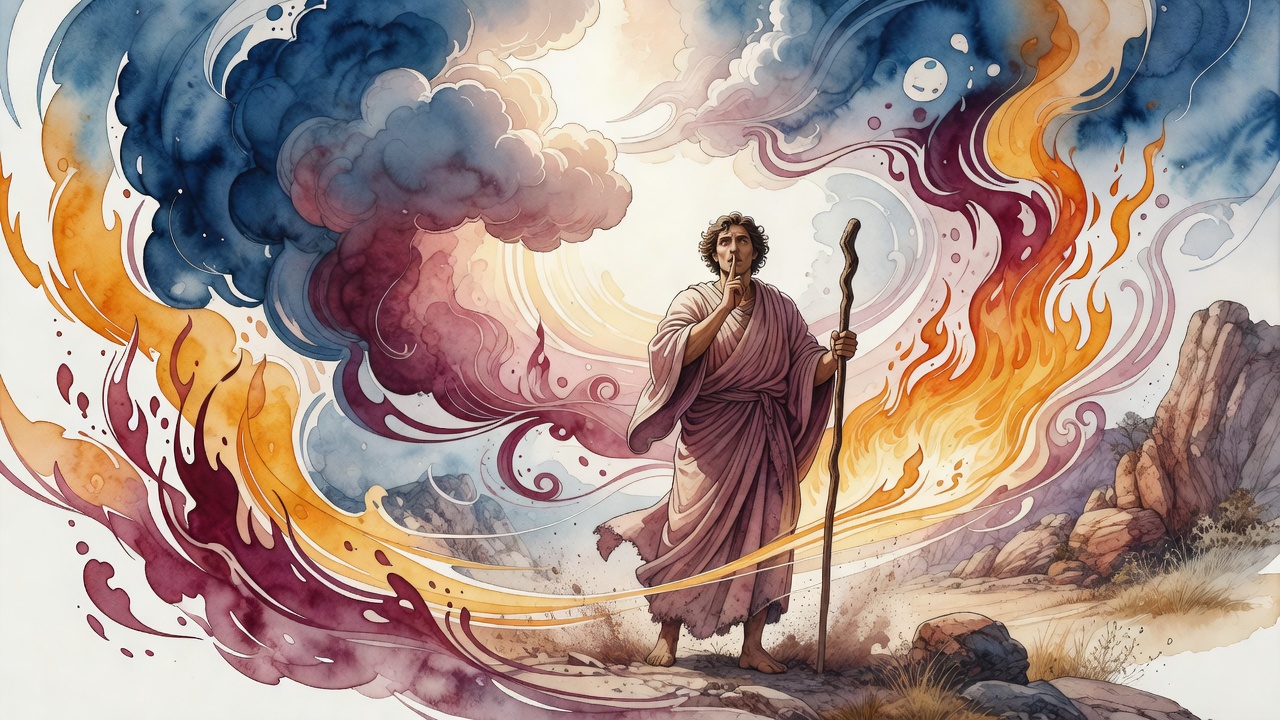
Midrash Tehillim places David at the center of both passages because David is the model of a person who lived the entire trajectory. He began as a young shepherd whose private thoughts were already in transit to the recording angels. He ended as someone whose psalms were not merely his words but his life in transmitted form. The Psalter is the garment that eventually became indistinguishable from the person who wore it.
Every time the congregation recites a psalm in the morning service, they are borrowing David's garment. The angels who record speech record the congregation's recitation as continuous with the original. The man who became his psalm is still, in this sense, speaking.
← All myths