12 myths
Each story names the sources it was written from.
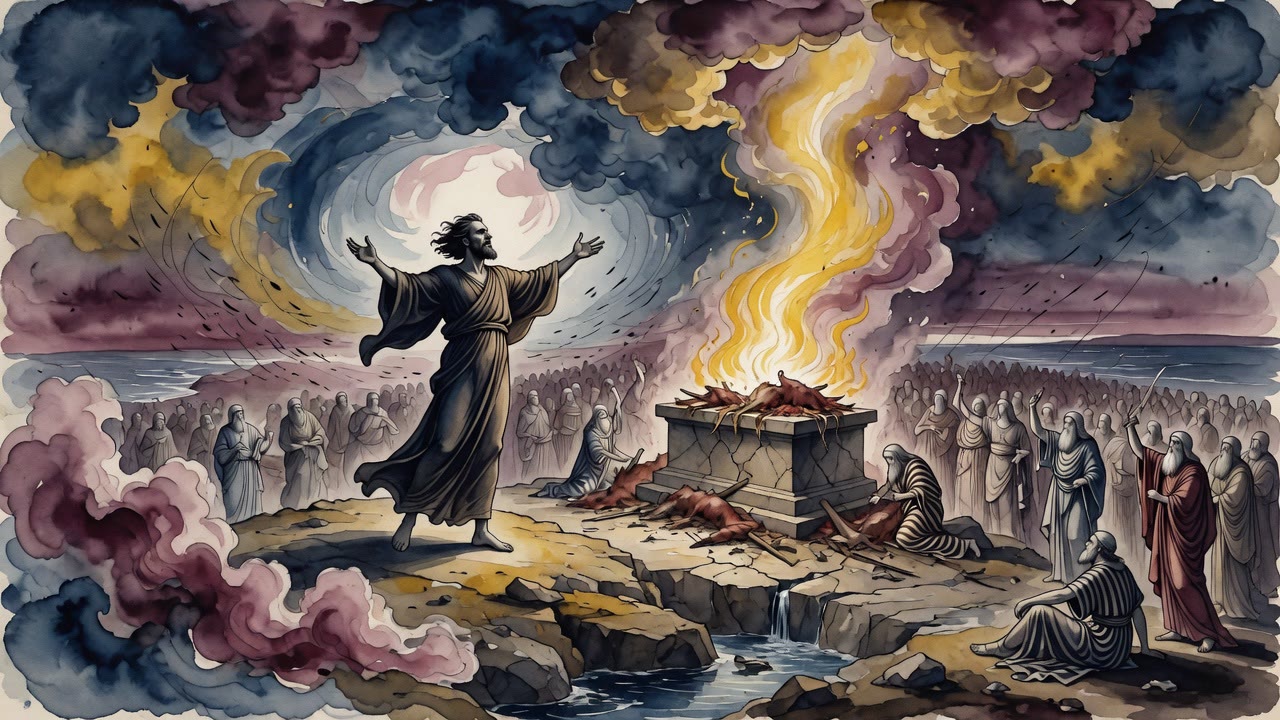
Baal's prophets cut themselves until noon and nothing burned. Elijah poured water until the trench was full. Then he asked for fire.
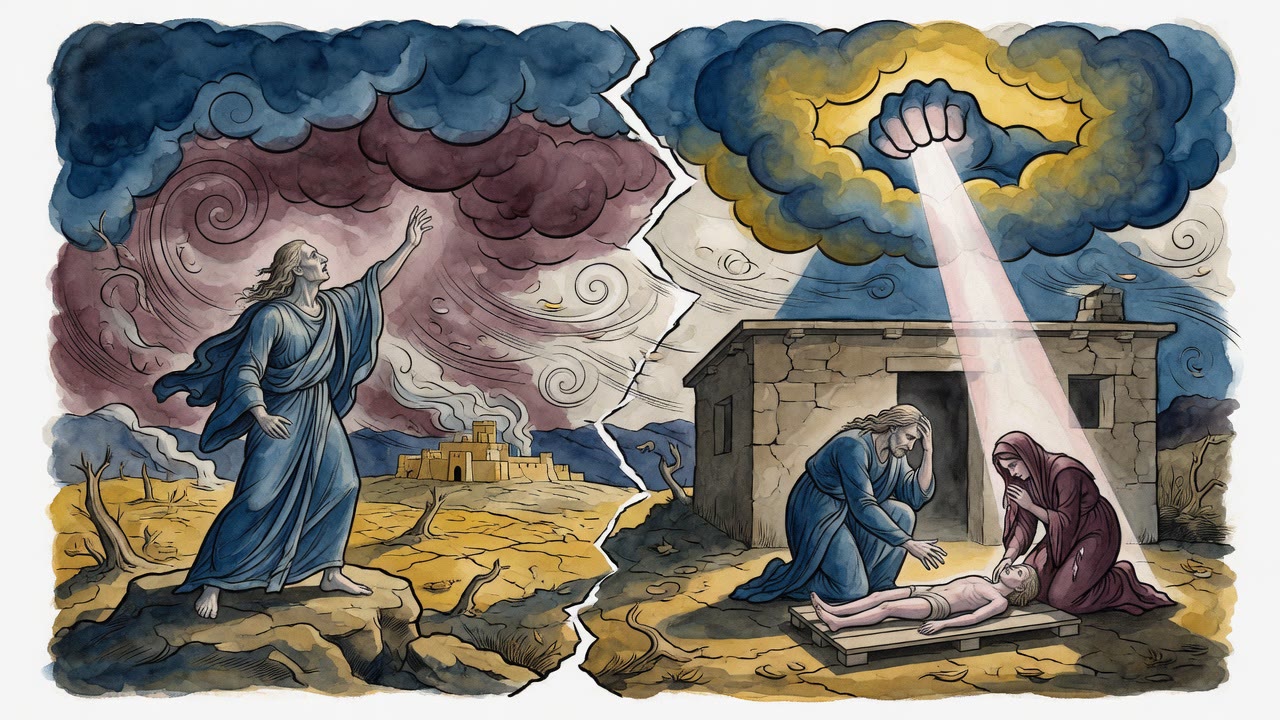
Ahab hunted the prophet through dry ravines. Elijah would not return while the king still stood unbent. Heaven answered with soil.
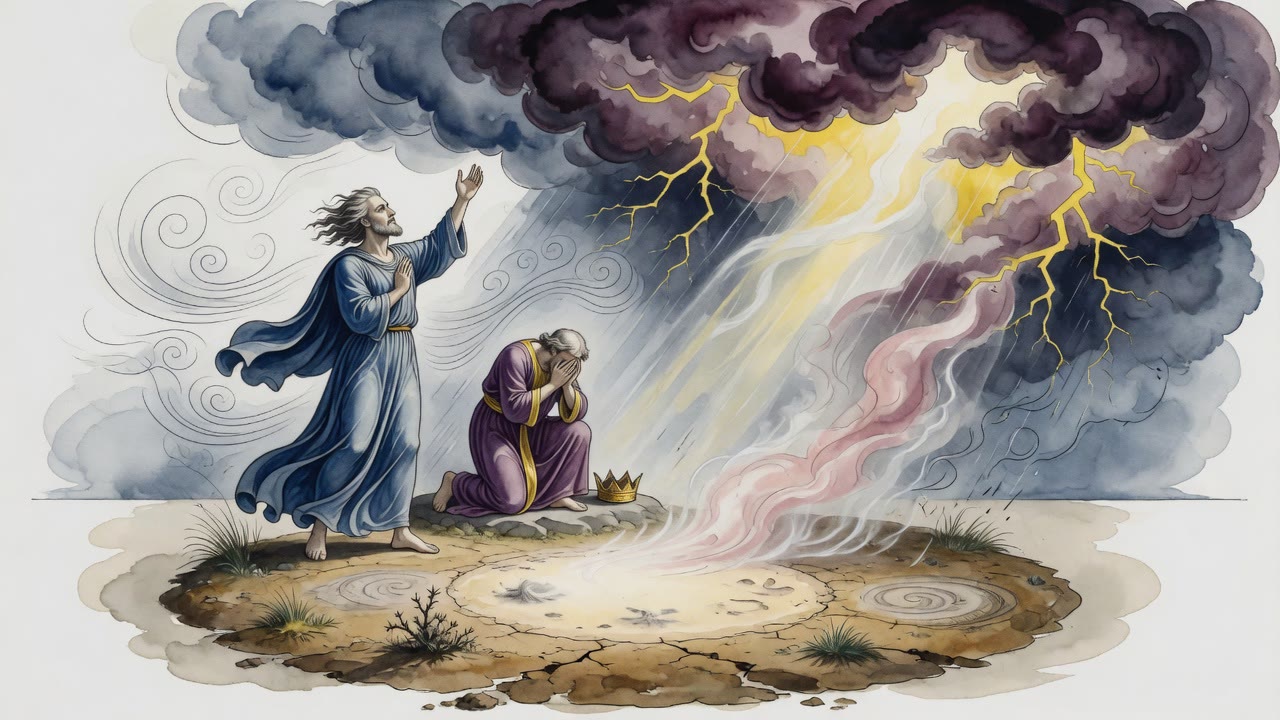
A dead child can only be raised by dew, and Elijah had sworn the dew away himself. God let the boy die in the one house where the prophet was sleeping.
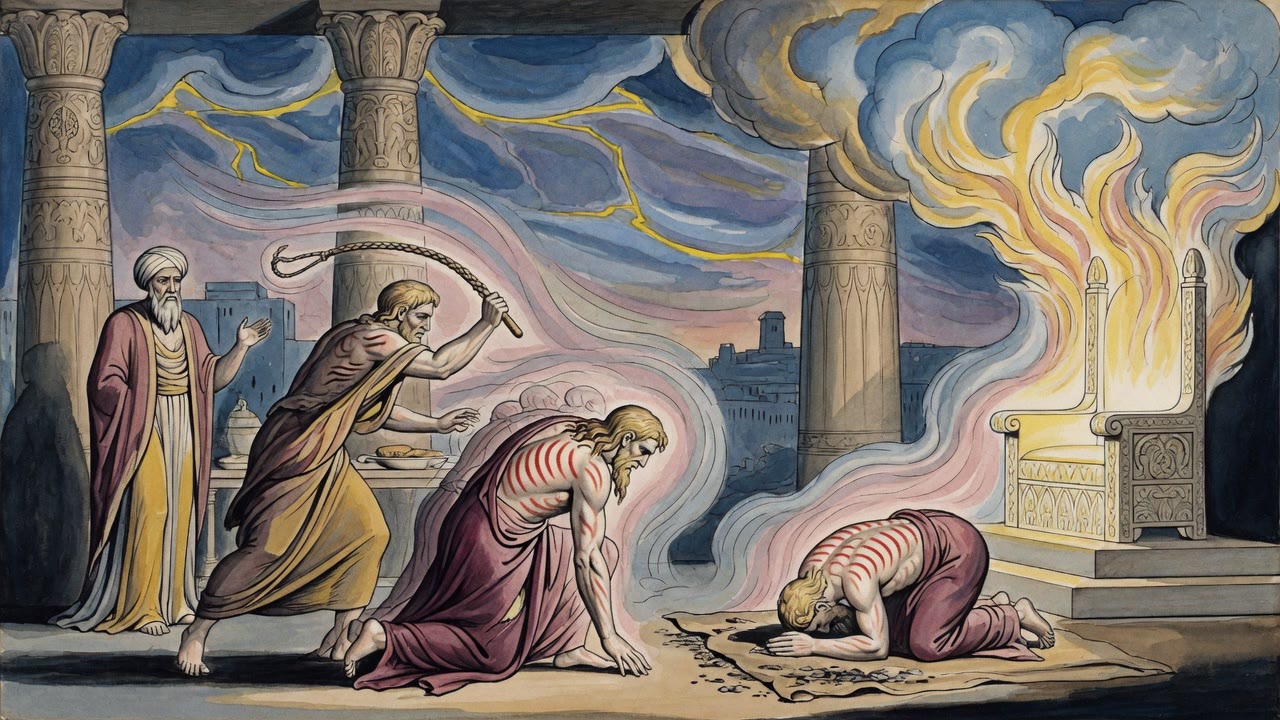
Ahab wanted a vineyard, so he had Naboth killed for a crime he never did. In the court of heaven the dead man stepped up and tipped the scales.
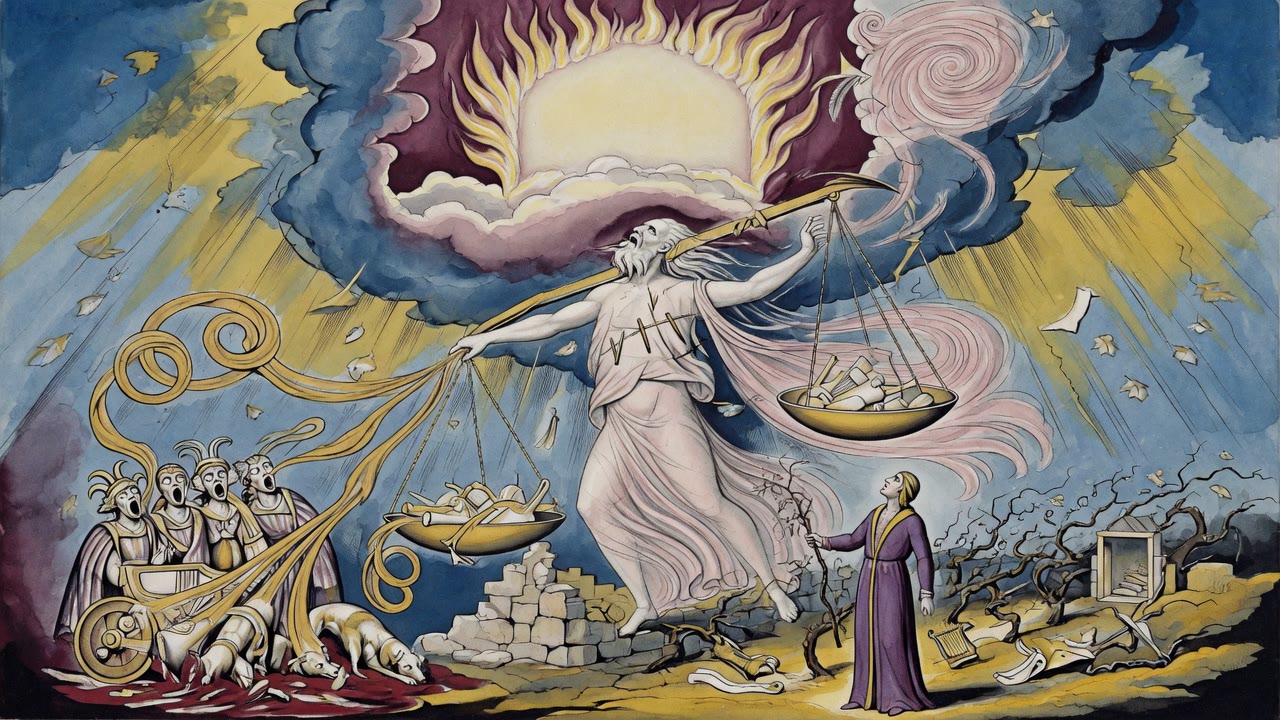
Ahab killed Naboth to steal his vineyard. Then he asked King Jehoshaphat to whip him, and he fasted and prayed, and God put off the punishment.
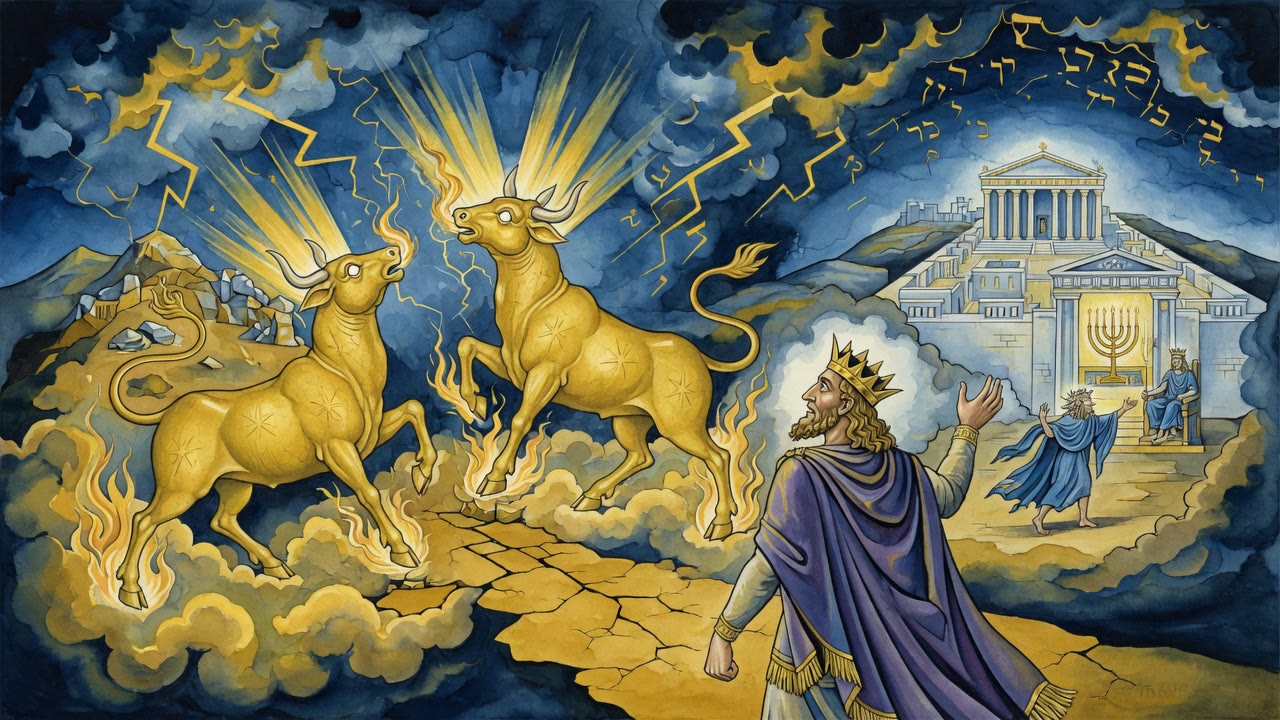
Jeroboam closed the road to Jerusalem and set guards on it, with death for anyone who passed. A second Abijah, his son, took them away and went up himself.
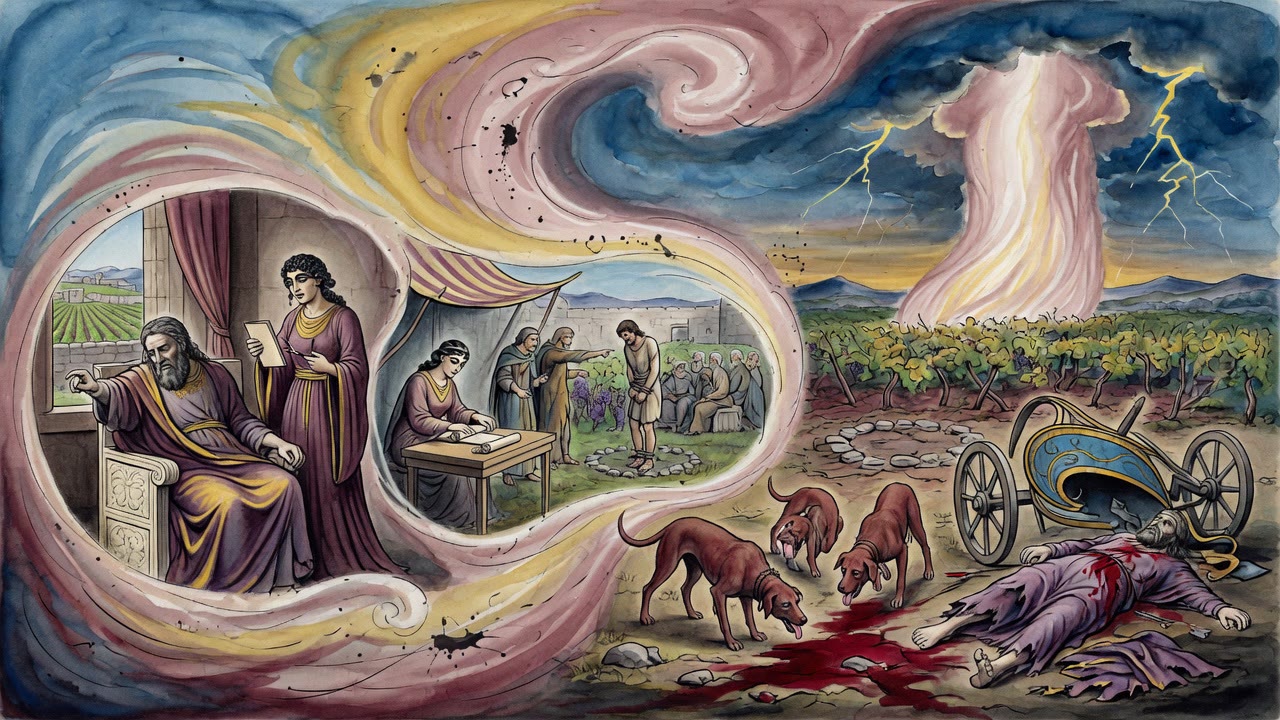
Naboth would not sell the vineyard that pressed the palace wall. Ahab turned his face to the wall and left the bread.
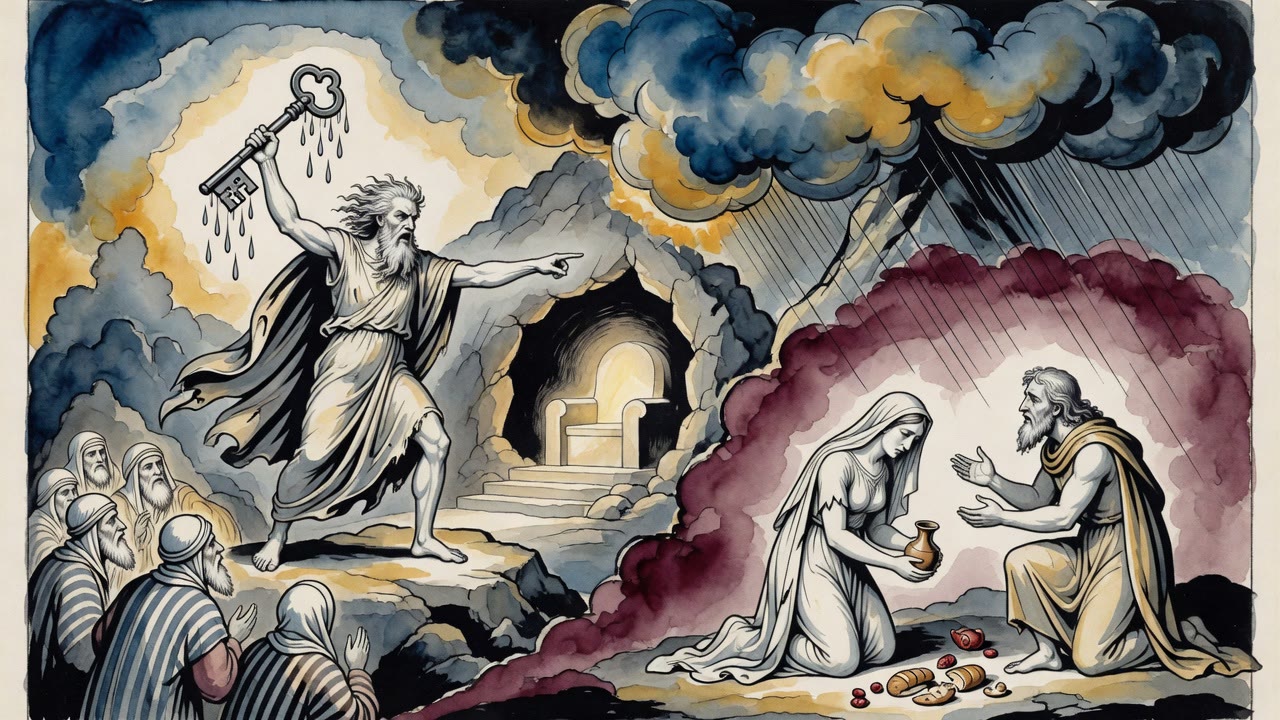
Elijah seizes the key of rain and accuses Israel at Horeb, while Hosea learns on his own marriage why a prophet must plead before he condemns.
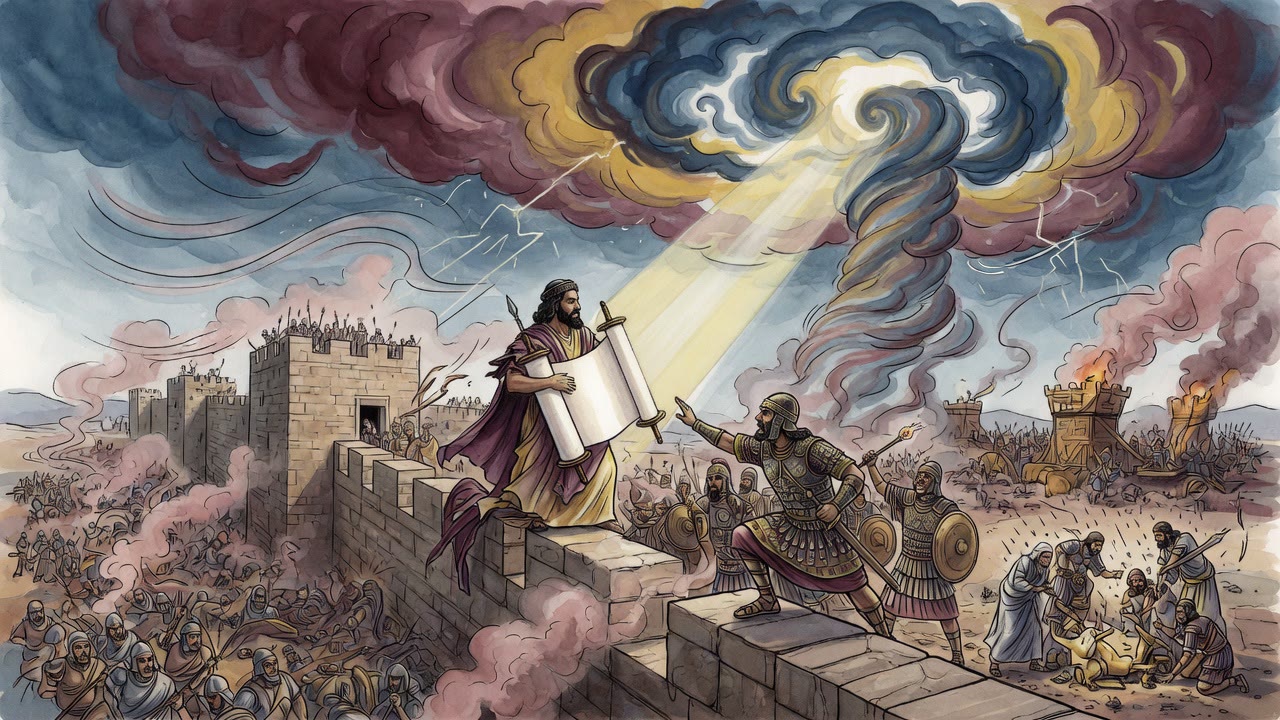
Ben-Hadad asked for silver, gold, wives, and the Torah scroll last. Ahab kept a house for Baal. He still would not hand the scroll over.
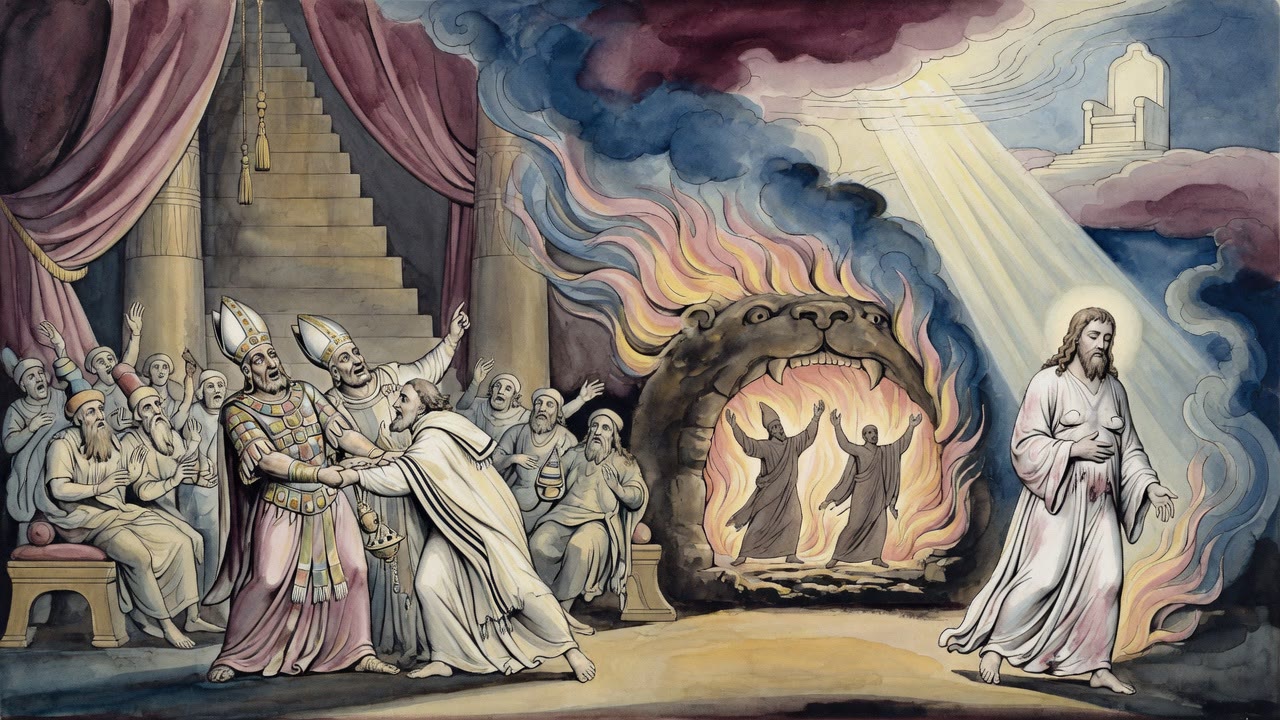
Ahab and Zidkiah seduce a court with borrowed holiness, then pull the high priest into a furnace test. They burn. Joshua walks out singed.
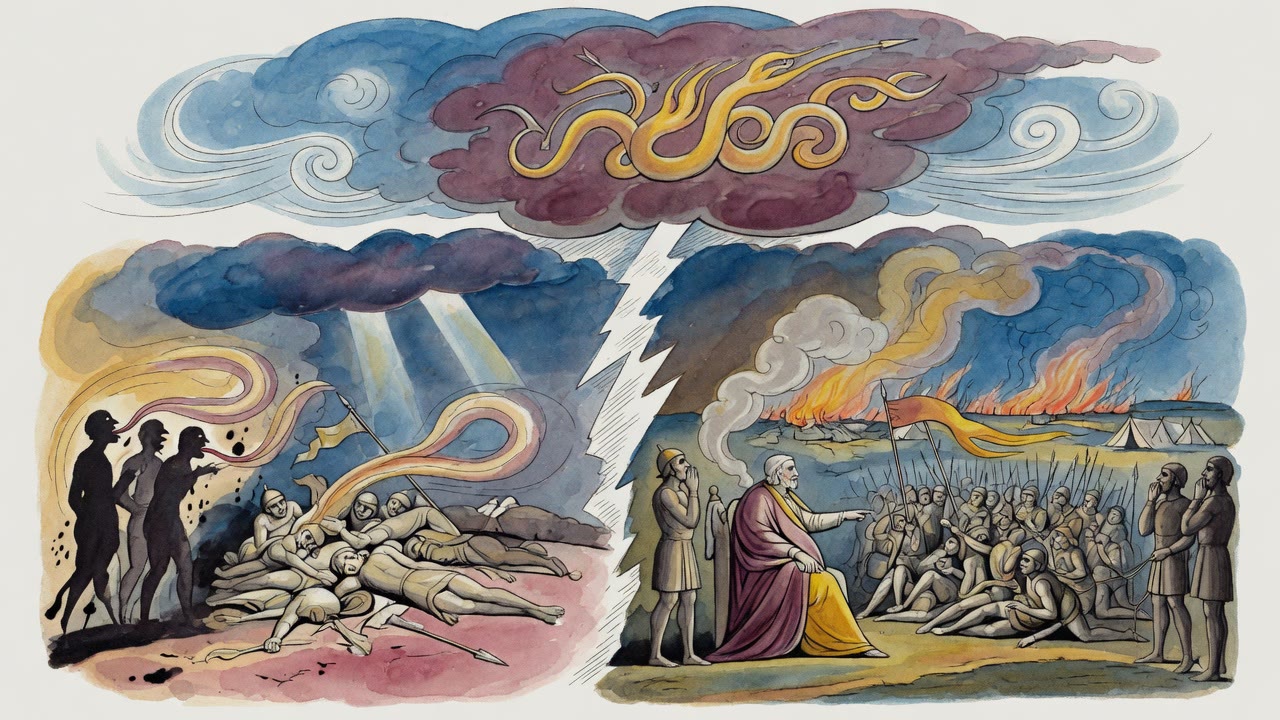
David's children could parse forty-nine faces of purity. They marched out and fell because a mouth in their own camp had already opened.
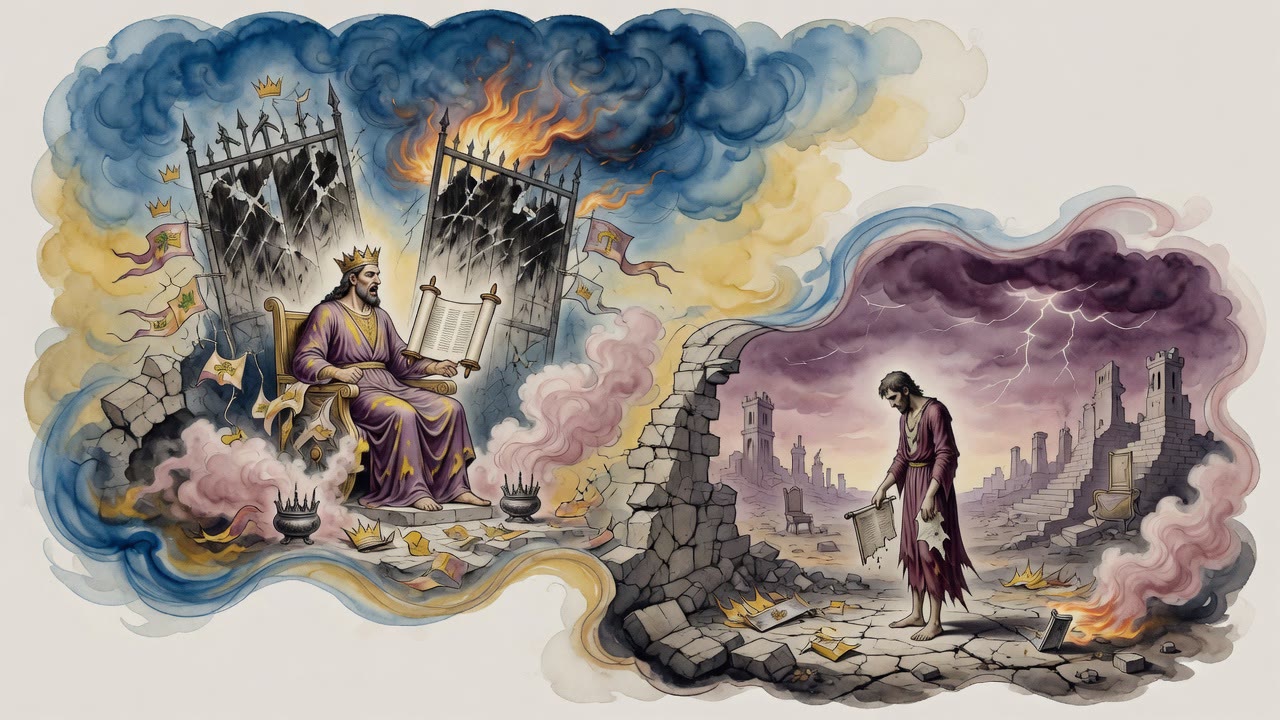
Ahab ruled two hundred and fifty-two kingdoms and denied God on his own gates, yet clutched the Torah. His son Joram kept only the ruin.
